

Pollinator Post 10/3/23 (2)
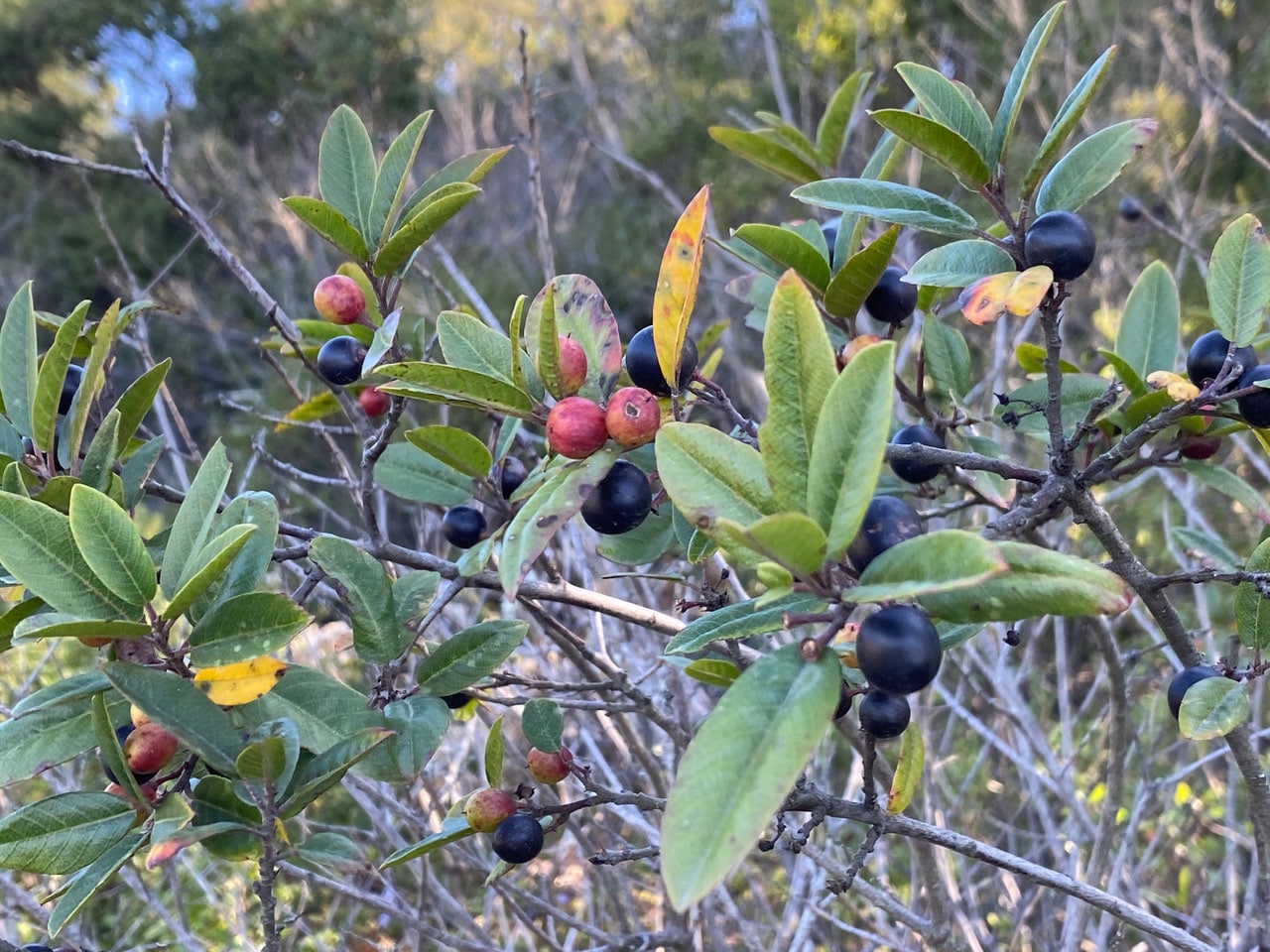
Some of the larger, older Coffeeberry shrubs are still holding on to their ripening berries. I don’t see much fruit set on the younger shrubs. Why?
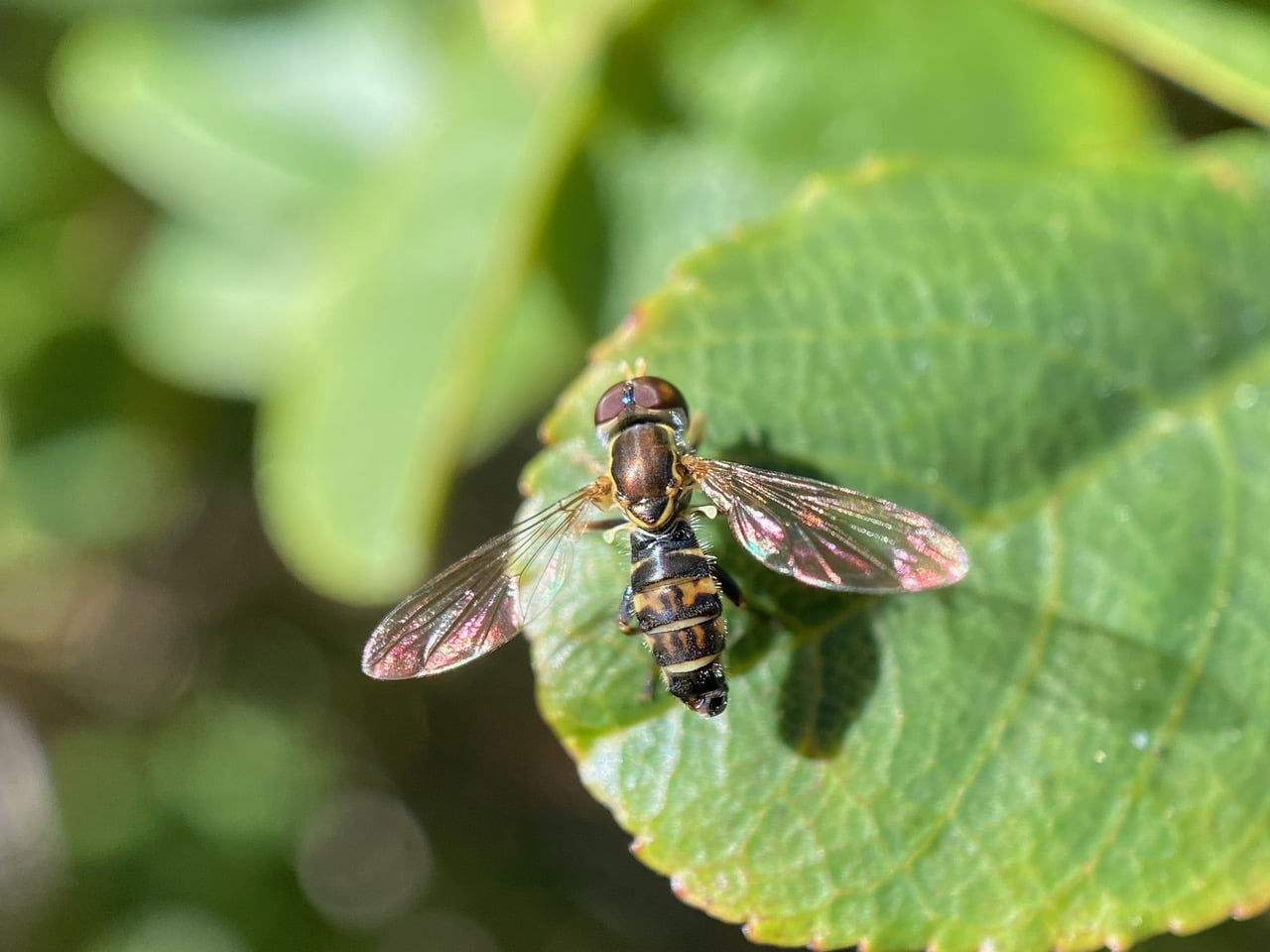
A male Western Calligrapher, Toxomerus occidentalis (family Syrphida) has landed on a Coffeeberry leaf. While the females of the species are plump and beautiful, most of the males I have seen are scrawny, almost deformed in appearance. Why the crooked abdomen?
Toxomerus is a very large genus of Hover Flies. They are found in North and South America. The majority of species are only 6-9 mm in length. They are notable for their mimicry of stinging Hymenoptera to avoid predators. Their unique abdominal patterns are diagnostic at the species level within the genus. Most larvae feed on soft bodied insects, such as aphids; a few feed on pollen. Adults feed on the pollen of a wide range of flowers. A female can lay up to hundreds of eggs at a time and will place them where prey or pollen food sources are readily available. They can be found in a wide variety of habitats, often in dense ground cover.

Spotting this the silk pad on a leaf, I stop by a scrawny Coffeberry by the trail, barely 3 feet tall.
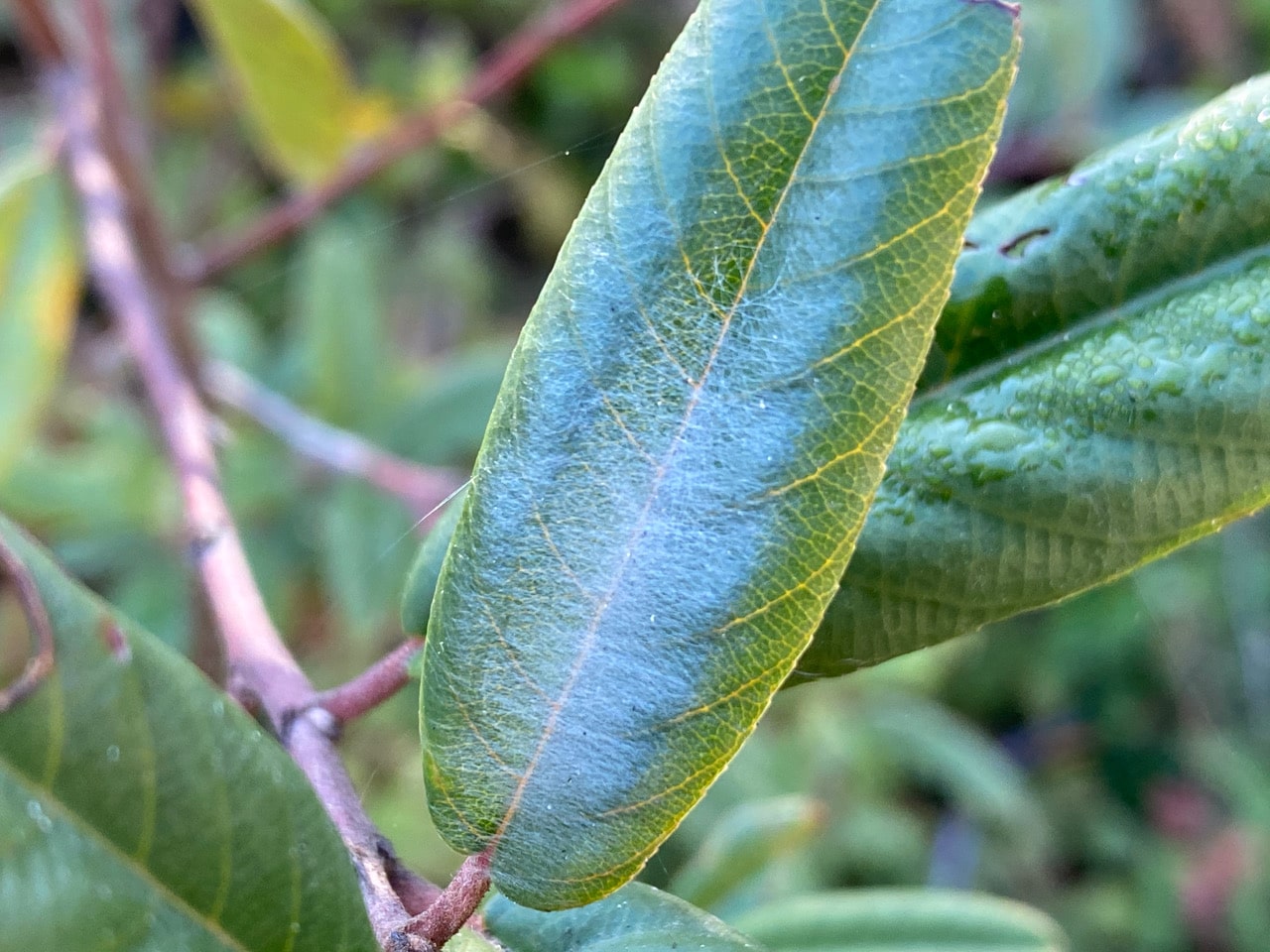
Here’s a small silk pad on an adjacent branch.
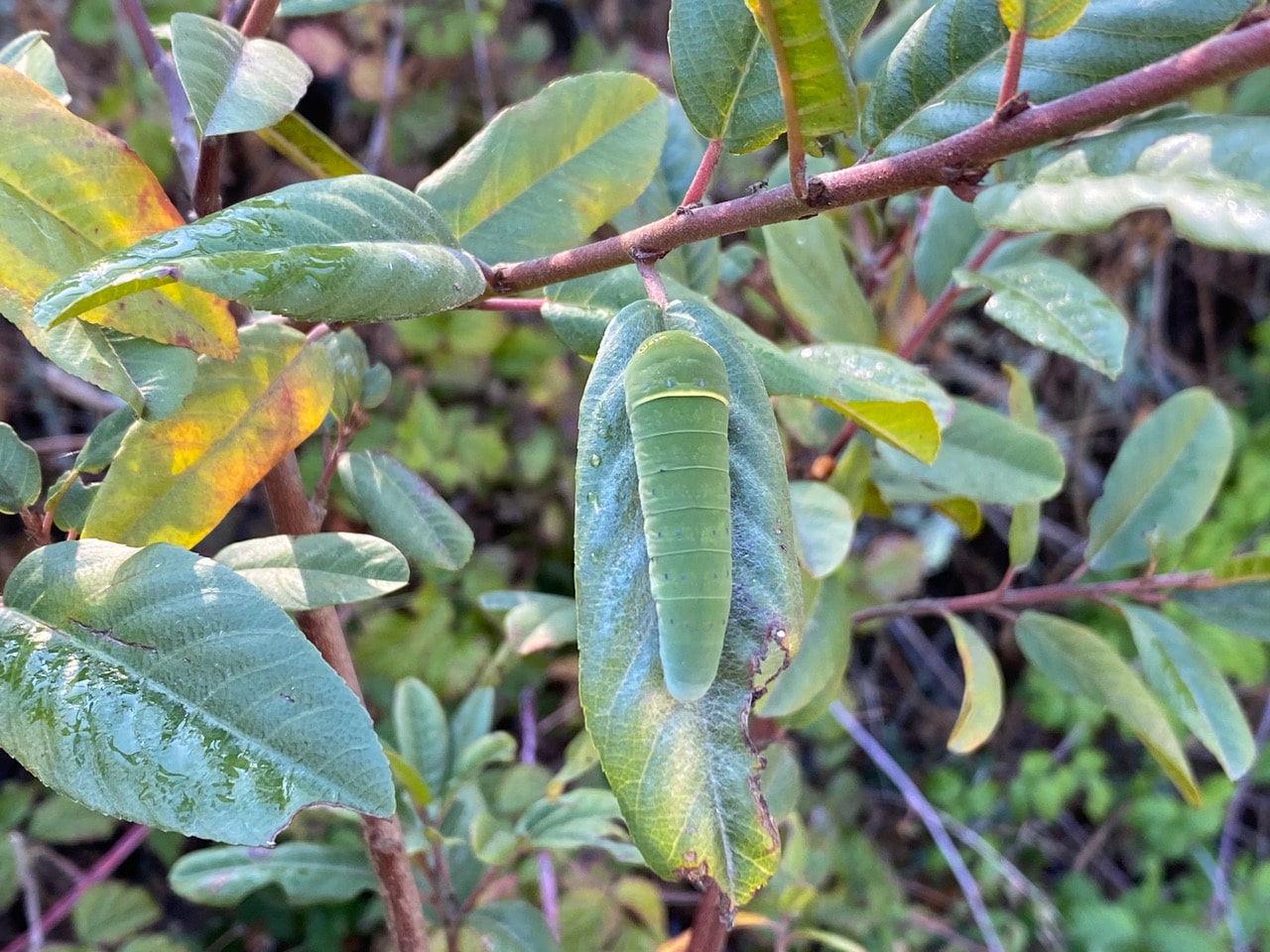
I am compelled to scan the shrub for Pale Swallowtail caterpillars. Sure enough, here’s a mature one in its fifth instar, almost 2 in. long, resting on its own silk pad!
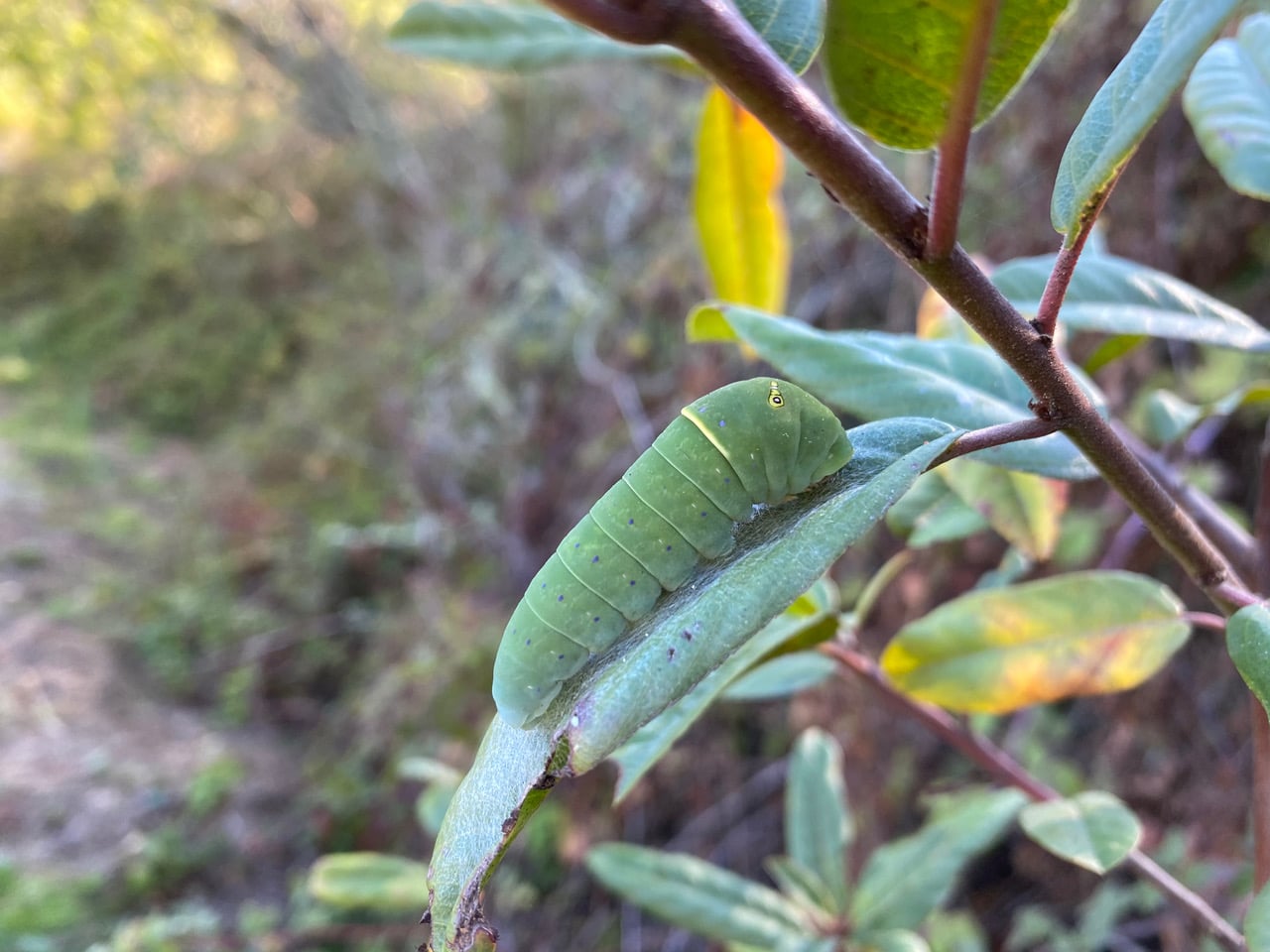
Wow, it looks like it is ready to pupate soon!
I am baffled by how the Pale Swallowtail caterpillars, and their host plant, the Coffeeberry keep turning up in my life even when I am not looking for them. The strange entanglement has been going on since I discovered the first two caterpillars, Blue and Cinch on July 29. For that matter, why was I the first person to come across the Coffeeberry shrubs that have been erroneously cut down by the brush clearing crew at Skyline Gardens? I have come to Inspiration Point today simply for a walk, and to get away from the commotion of brush clearing, and yet here they are – Coffeeberry bushes and their caterpillars!
It dawns on me that the insects and their host plants need a voice. If I don’t speak up for them, who will? My purpose is not to point fingers and lay blames. My role here as a volunteer has been to observe and share information on the plant-insect interactions. It pains me to the core to see my friends destroyed so mindlessly and unnecessarily in the brush clearing incidence. Skyline Gardens is an alliance of three groups of people working for a common cause (combination botanical survey and restoration) – CNPS, EBMUD and the volunteers. I believe that if we put our hearts and minds together, we can come up with better solutions for tackling the ever-evolving environmental challenges of our times to safeguard the life and vigor of all in the garden.