

Pollinator Post 10/11/23 (2)
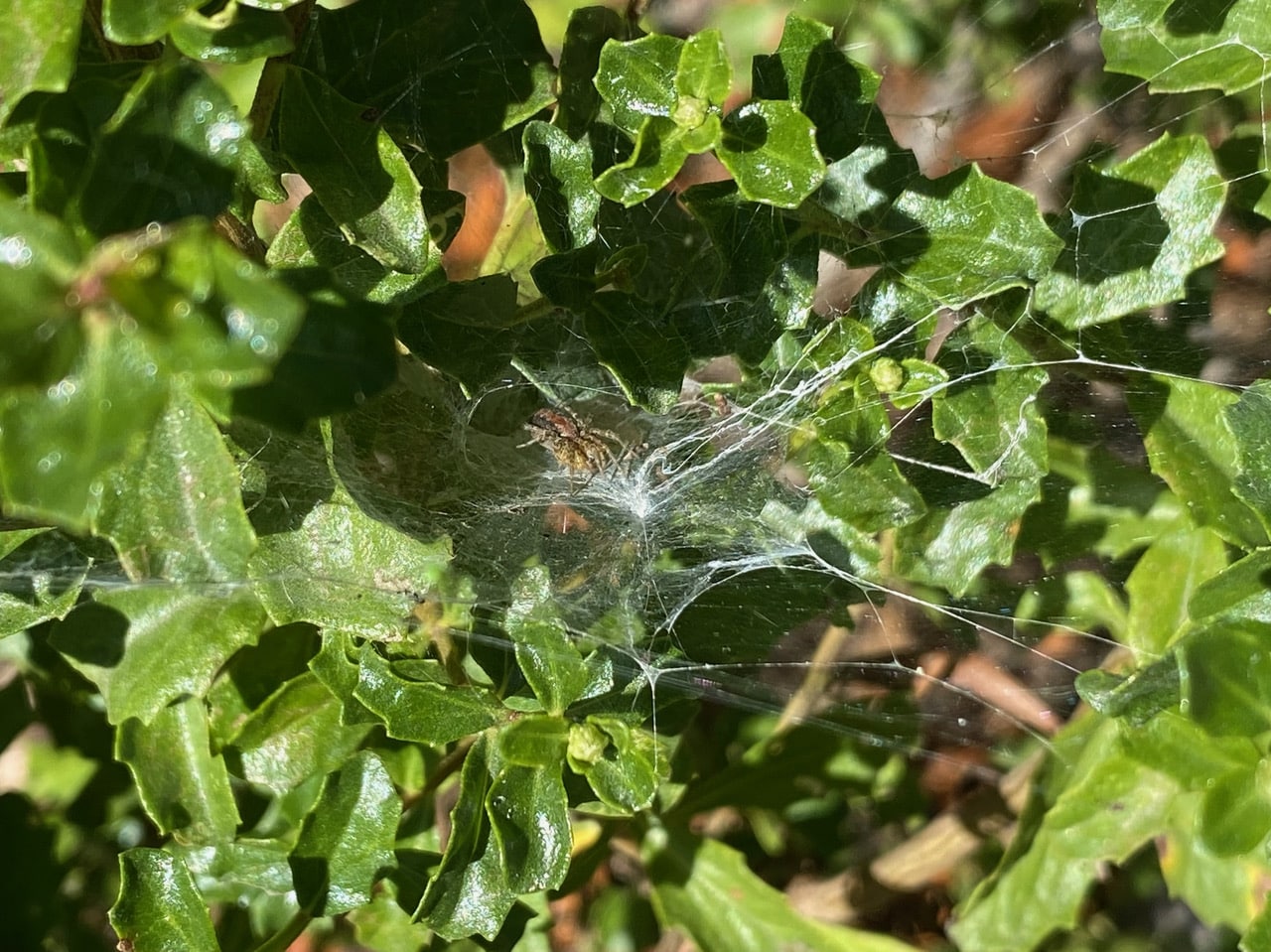
A Funnel Weaver Spider (family Agelenidae) is resting on its horizontal web right outside its funnel retreat on a Coyote Brush, Baccharis pilularis. This is a rare sight, as these fast and elusive spiders are hardly ever seen.
A funnel-weaver is most easily identified by its web, which is constructed of a flat sheet of webbing that narrows into a funnel or tube shape in the back. The funnel often bottlenecks into a shrub, hollow crevice, or into the corners of a structure. Agelenids are not active predators, preferring to “sit-and-wait” in their funnel for unsuspecting prey to be intercepted by the web. Their webbing is not sticky. Rather, the spider relies on lightning fast speed to quickly dart from its hiding place to capture its prey. The spiders bite and paralyze their prey and often drag it back into the safety of the funnel to consume it.
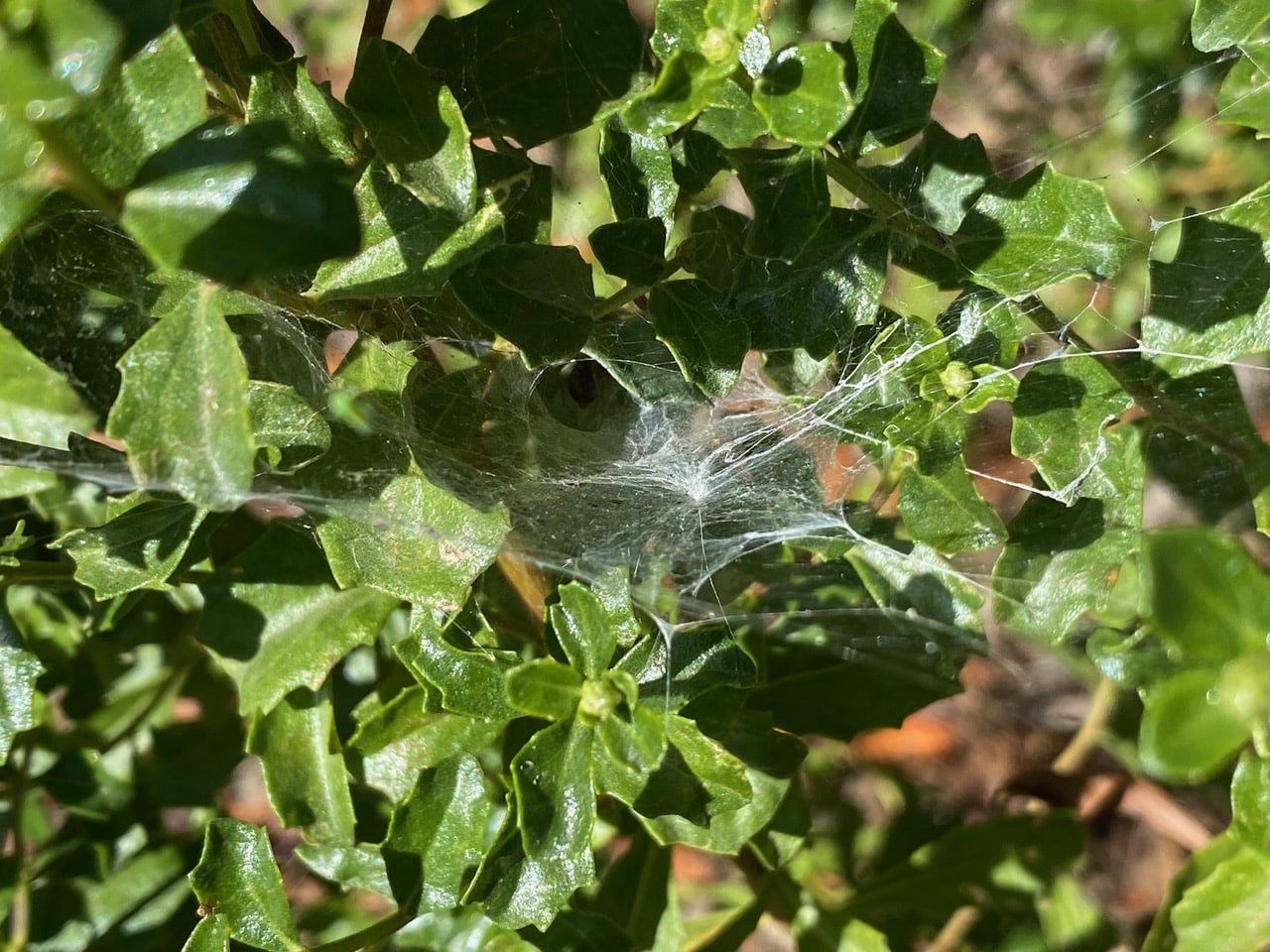
The moment I snap the picture, the spider disappears into its funnel retreat.
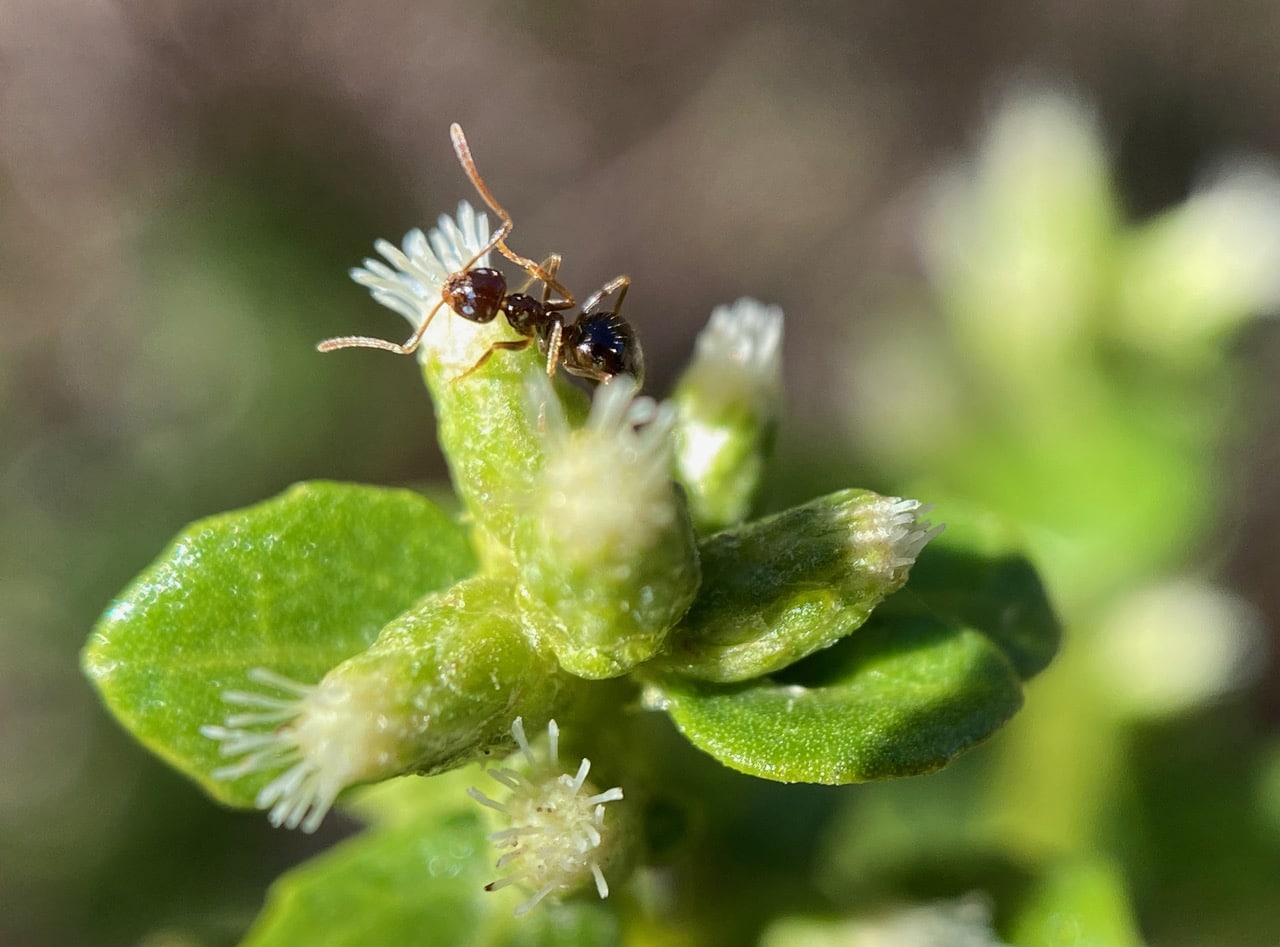
An American Winter Ant is foraging among the female flowers of Coyote Brush.
The American Ant, Prenolepis imparis is a widespread North American ant. A dominant woodland species, it is most active during cool weather, when most other ant species are less likely to forage. This species is one of a few native ants capable of tolerating competition with the invasive Argentine Ant, Linepithema humile. They are also aggressive toward other ants and produce abdominal secretions that are lethal to Argentine Ants. Prenolepis imparis is a generalist omnivore. Foragers are known for tending to aphids or scale insects from which they consume excreted honeydew, aggregating on rotting fruit, and exploiting protein-rich sources such as dead worms. The colony enters estivation (a hibernation-like state) and becomes inactive above ground for the warmer months, during which time eggs are laid and brood are reared. Reproductives overwinter and emerge on the first warm day of spring for their nuptial flight.
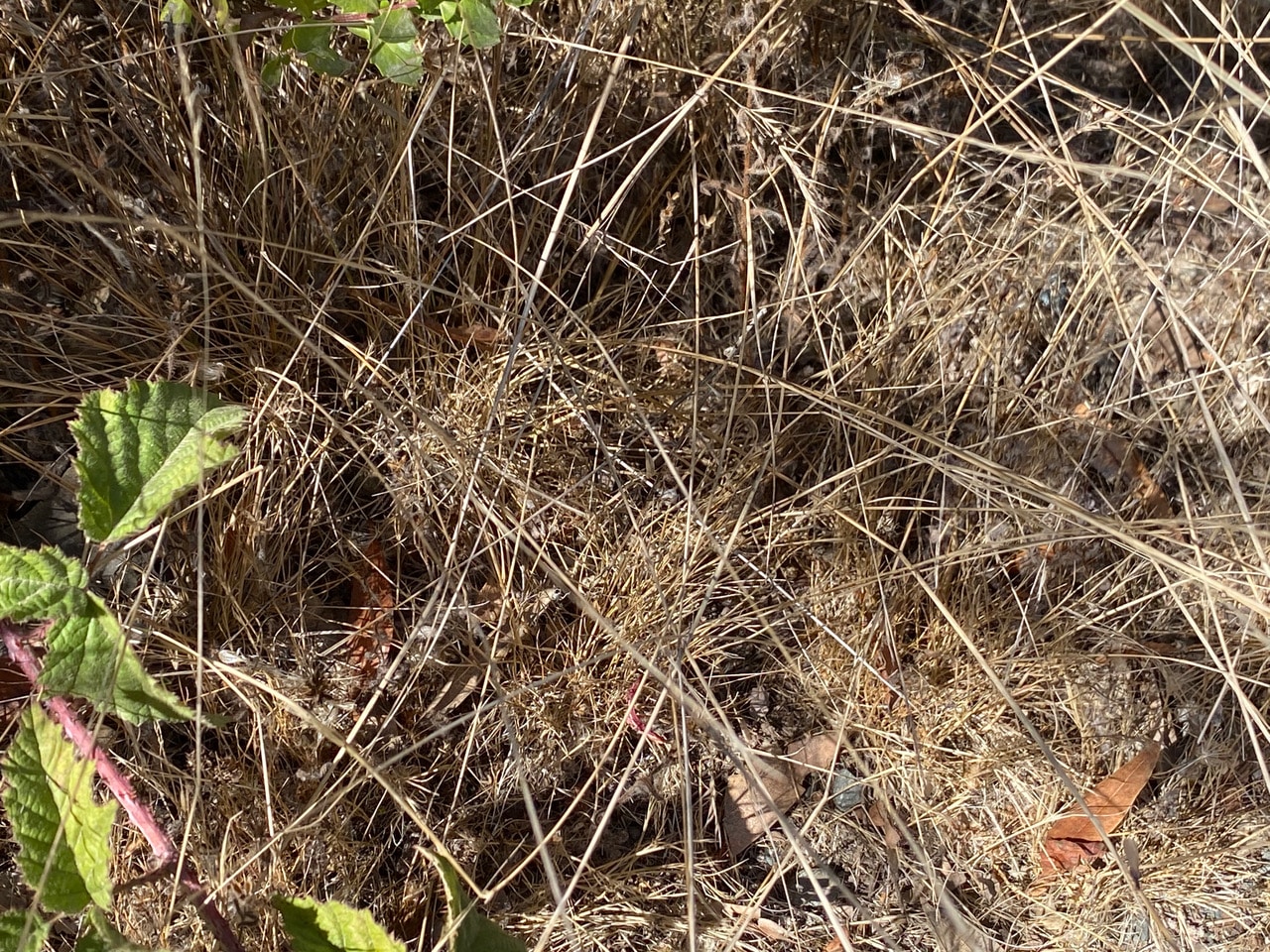
As I approach the gate of the Steam Train entrance, I notice movements in the grassy underbrush at the edge of the trail.
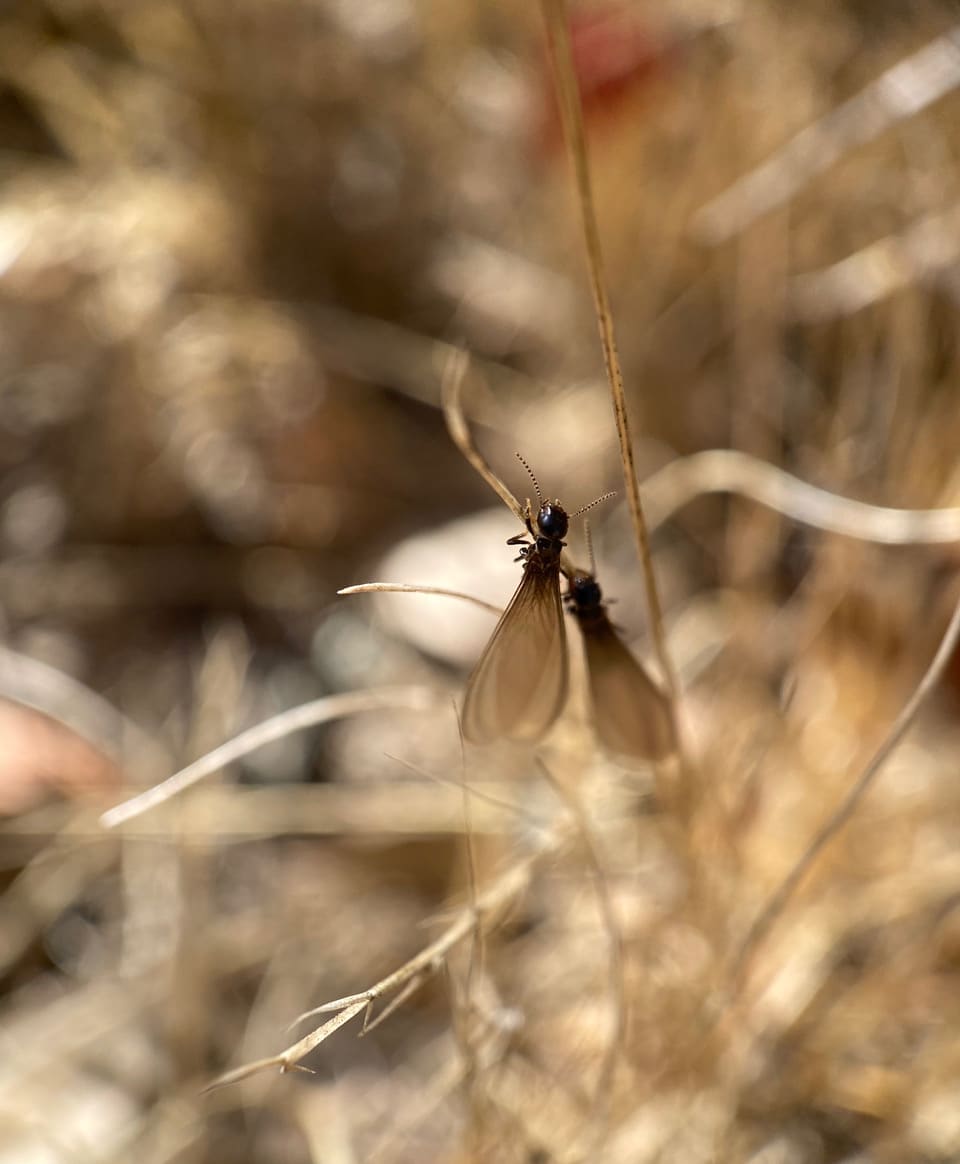
Insects with long wings are flying out from the underbrush. Many are racing to the climb on the dried grasses to launch themselves into the air.

These are the Western Subterranean Termites, Reticulitermes hesperus (family Rhinotermitidae), same as the ones I saw earlier south of Siesta Gate. It is fun to watch them take off on their nuptial flight!
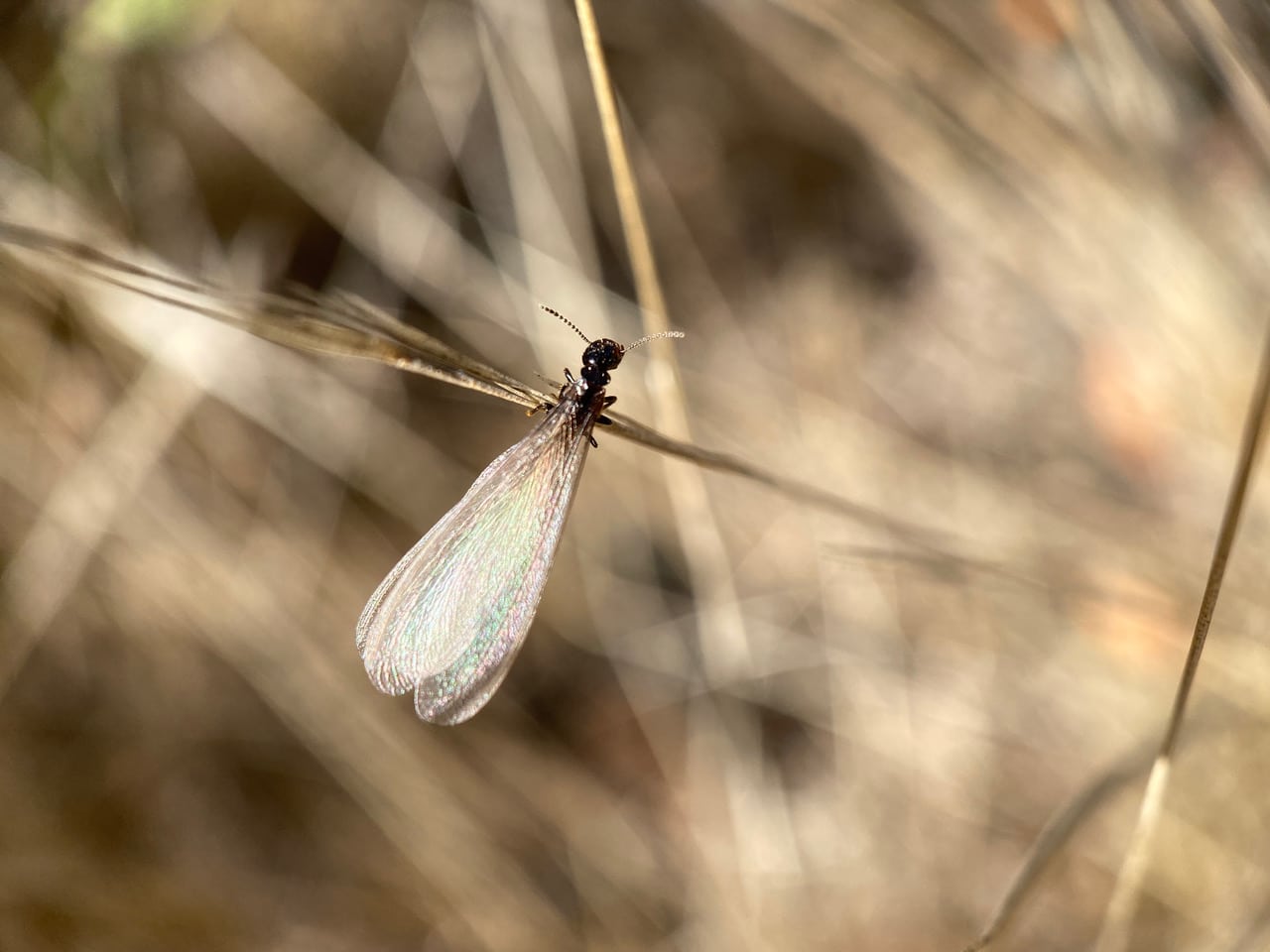

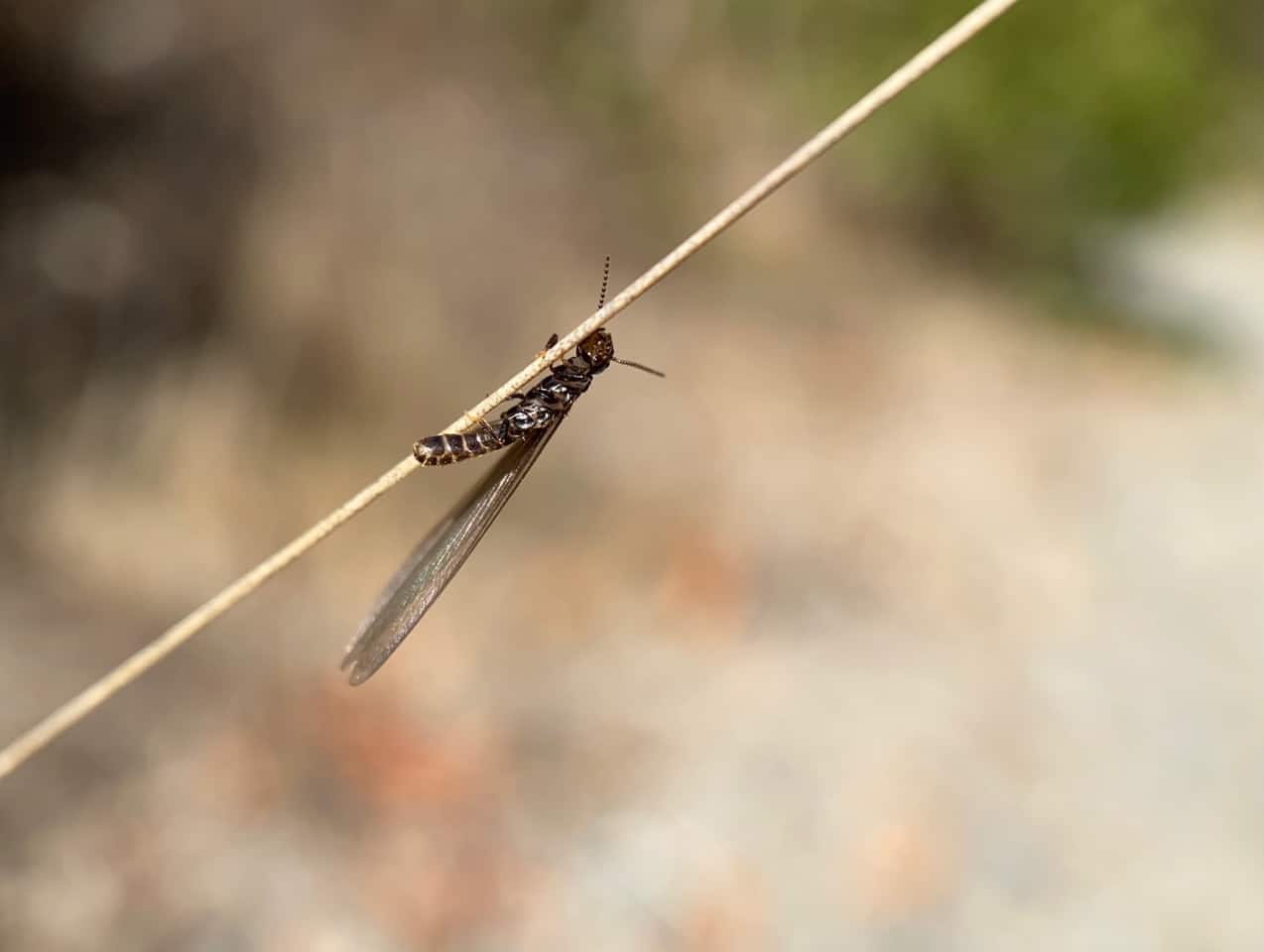
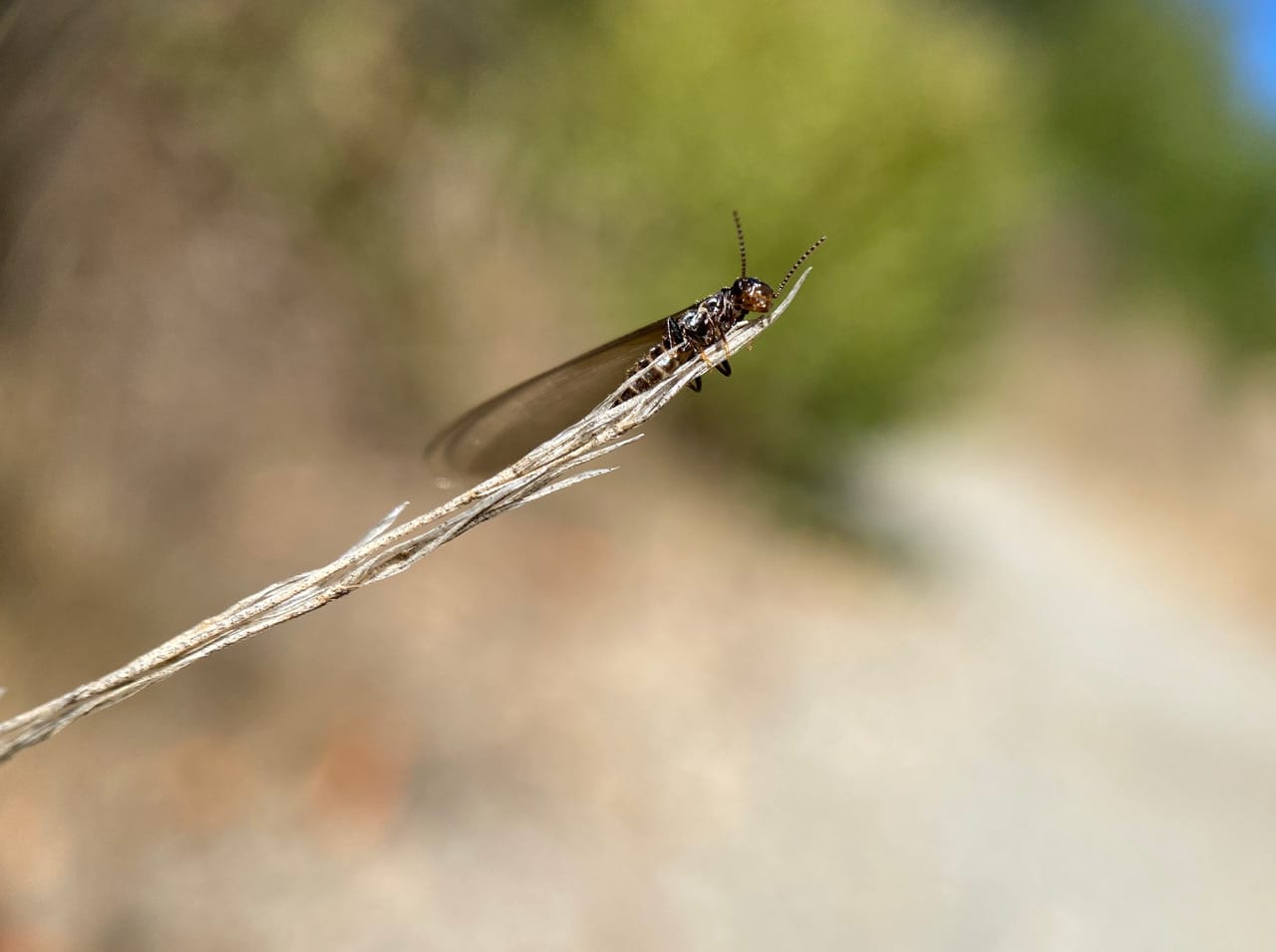

Bon voyage, Termites!
Termites are “green machines”- they are hands-down nature’s best recyclers. They feed on the cellulose found in dead plants, and their sticky excretions hold the soil together, preventing soil erosion. They burrow tirelessly and aerate the soil, allowing rainwater to seep in and enabling the mixing of nutrients to support new plant growth. Termites are also food for a host of predators such as lizards and birds.
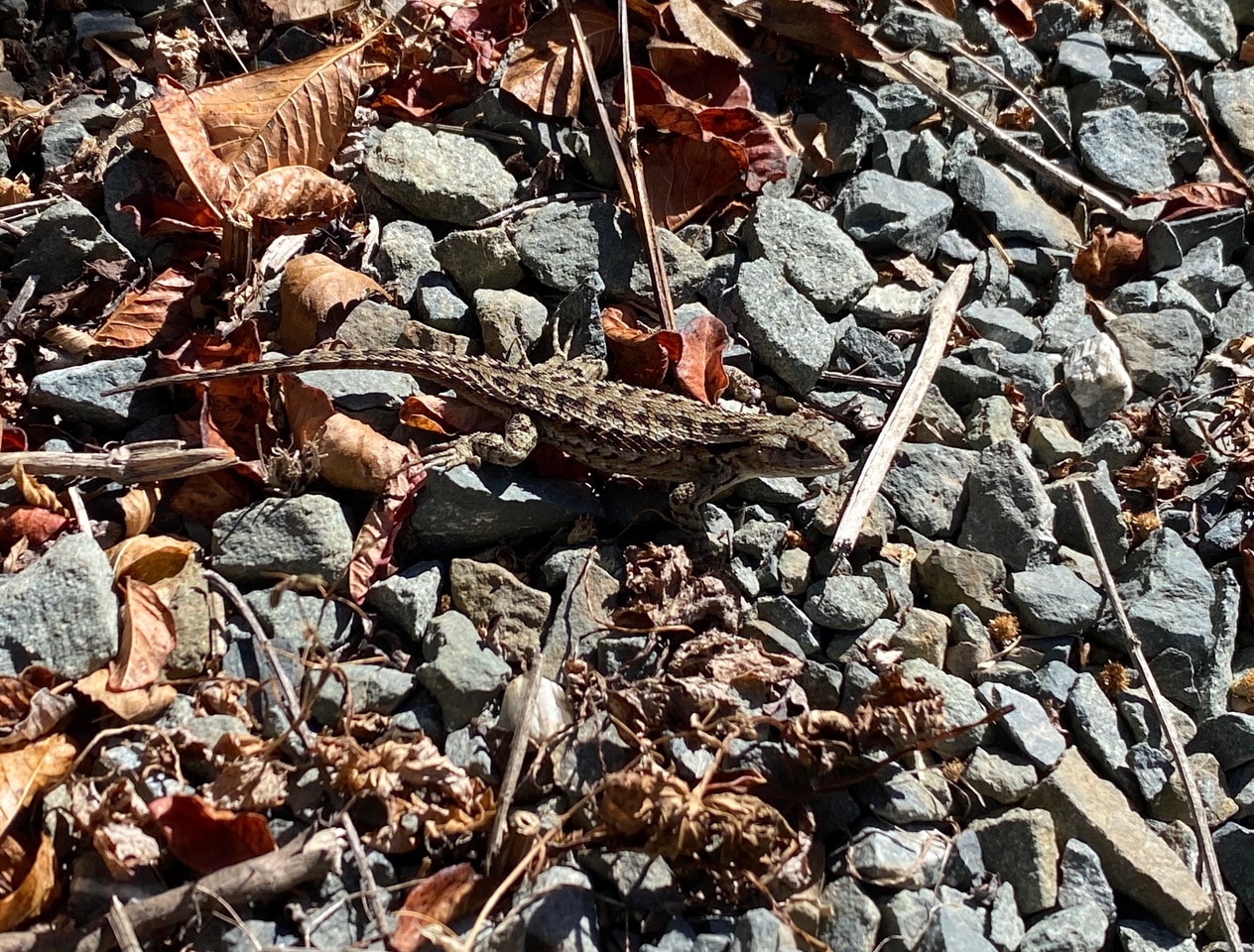
Swarming termites are a windfall for the local predators such as this Western Fence Lizard.
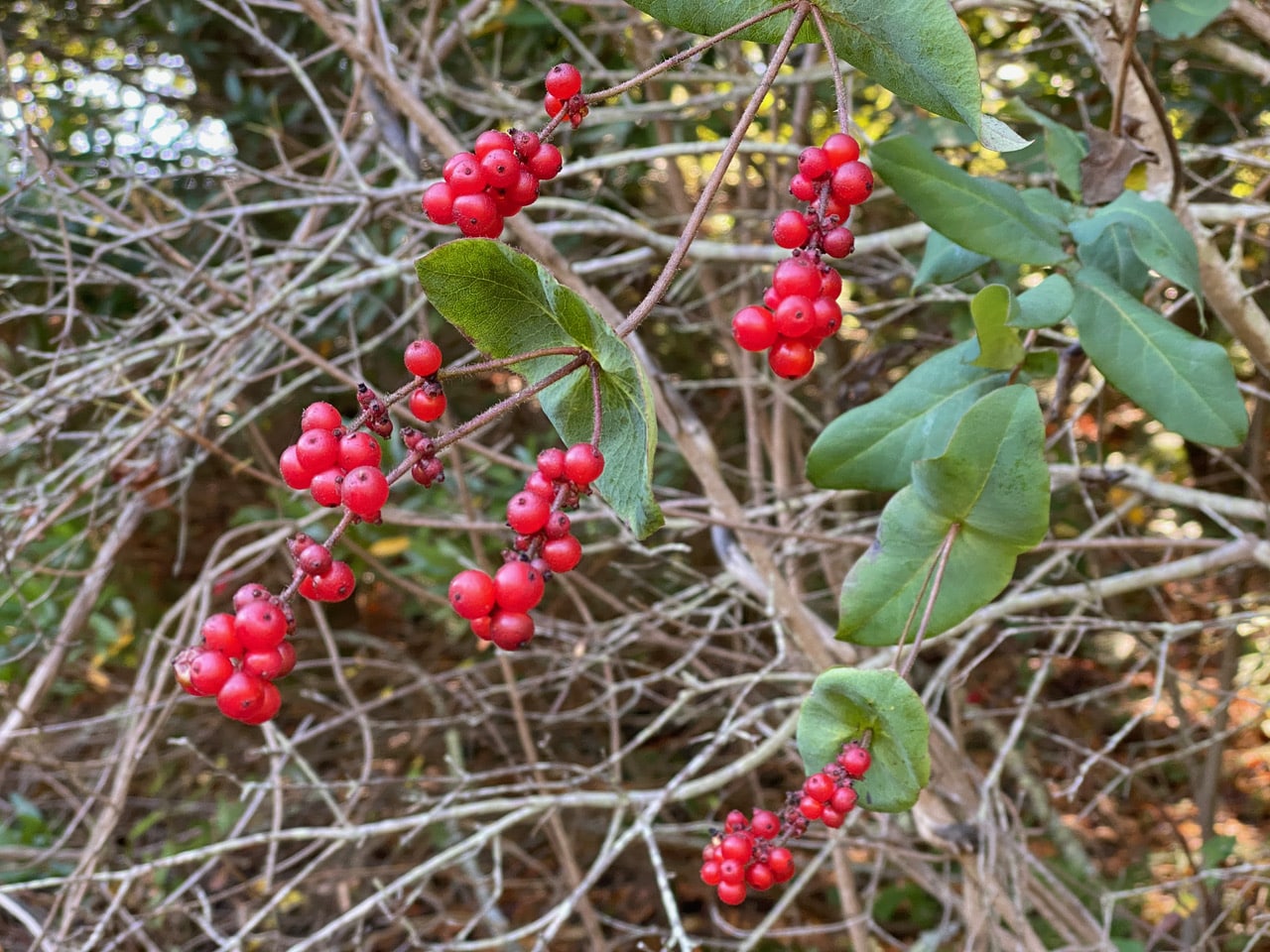
Hanging from a bay tree, the red berries of the Pink Honeysuckle, Lonicera hispidula cheer up the parched surroundings. I am rather surprised that the fruits have hardly been touched. The berries are edible, but reportedly quite bitter, although apparently relished by the birds.
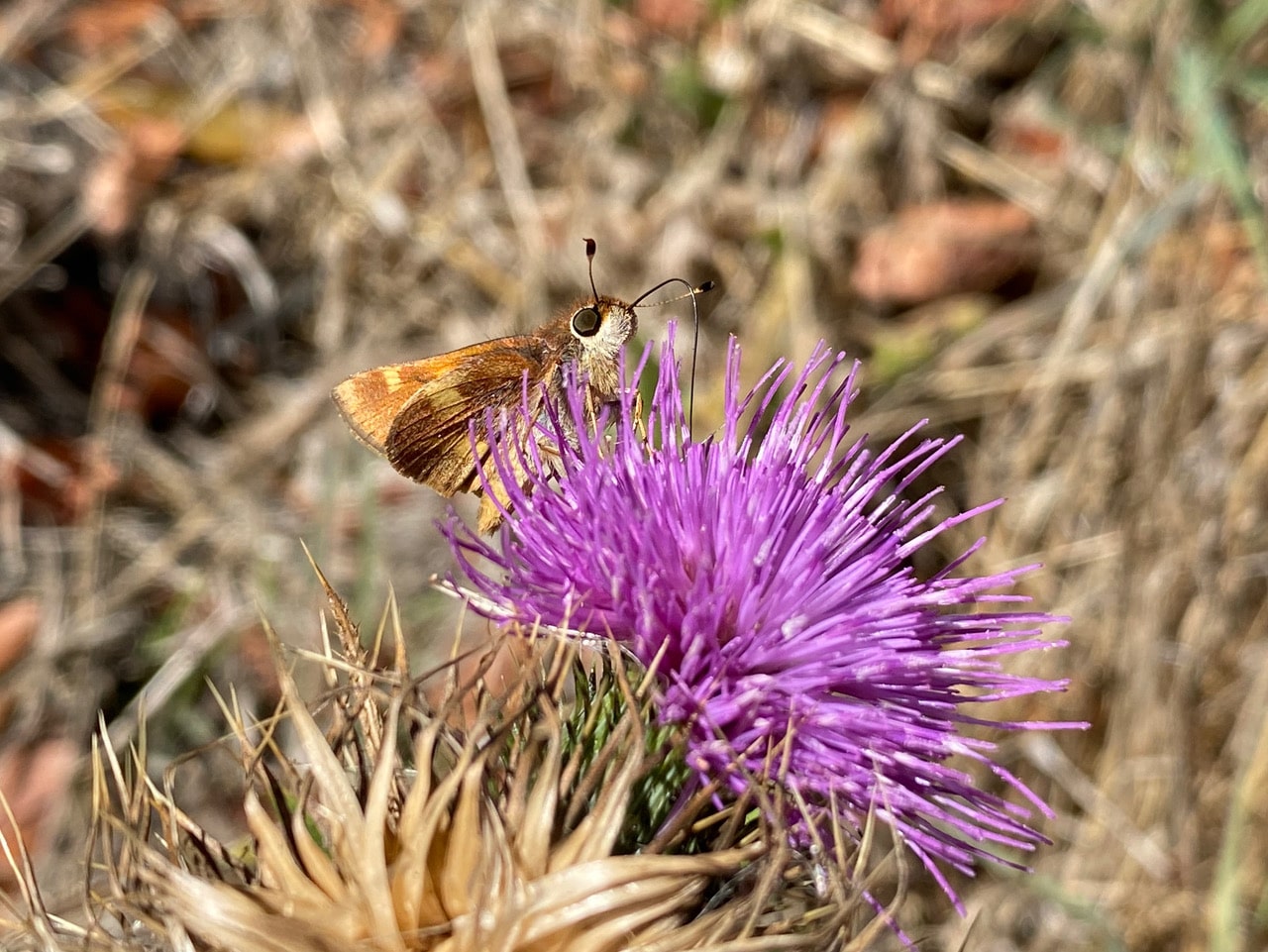
Perched on the edge of one of the very last fresh flowerheads of Bull Thistle, Cirsium vulgare, a Skipper is probing for nectar with its long, flexible proboscis.
A tubular sucking organ, the proboscis enables a butterfly to extract sweet nectar from flowers, regardless of the shape of the blossom. When not in use, the proboscis is rolled up out of the way. Unlike caterpillars, adult butterflies do not have any chewing mouthparts, and therefore must obtain their nutrition from sipping liquids. Hydrostatic pressure extends the curled proboscis which is inserted deep into the tubes of flowers. At emergence from the chrysalis, the proboscis initially consists of two parts that appear like a forked tongue. Almost immediately the two tubes are “zipped” together to form the single tube. In addition to flower nectar, butterflies also use the proboscis to suck up moisture from puddles, liquids from fermenting fruits, rotting animal flesh or animal excrements.
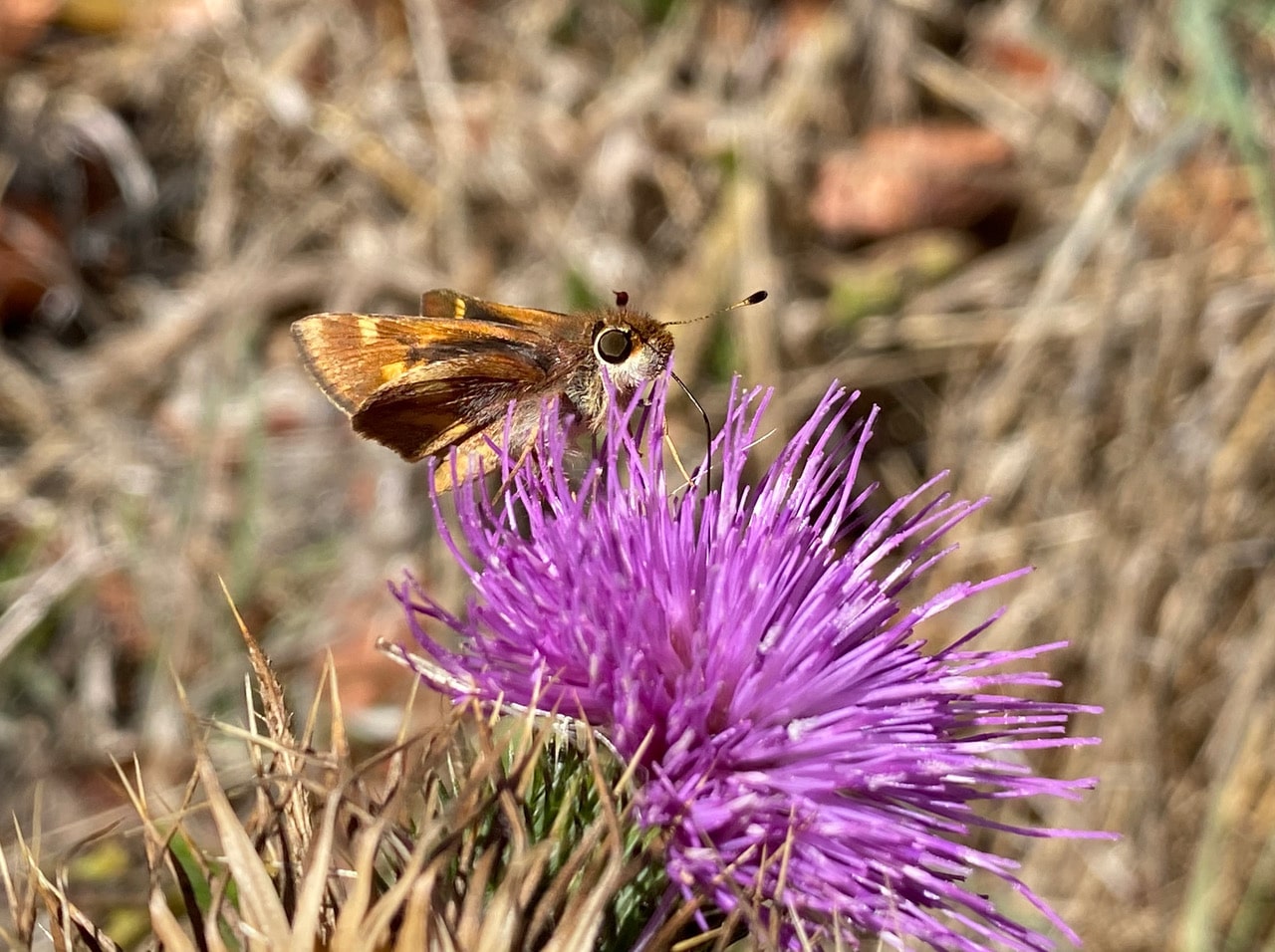
Skippers are butterflies in the family Hesperiidae. They are distinct from the typical butterflies in having antennae with clubs that hook backward like a crochet hook; they have generally stockier bodies and larger compound eyes; their wings are usually small in proportion to their bodies. When at rest, skippers keep their wings usually angled upwards or spread out, and only rarely fold them up completely.
Skipper caterpillars are usually green or brown, sometimes yellowish, never brightly colored. They have a distinctive “collar”, a narrow ring around the body right behind the head. Caterpillars are camouflaged and often hide during the day. Many species make nests of leaves and silk for additional protection. Most North American species feed on grasses, but some common species eat shrubs and trees, especially in the bean family. Most species are limited to a single group of food plants. Adult skippers are only active during the day, but Skipper caterpillars feed mainly when it is dark or partly light.
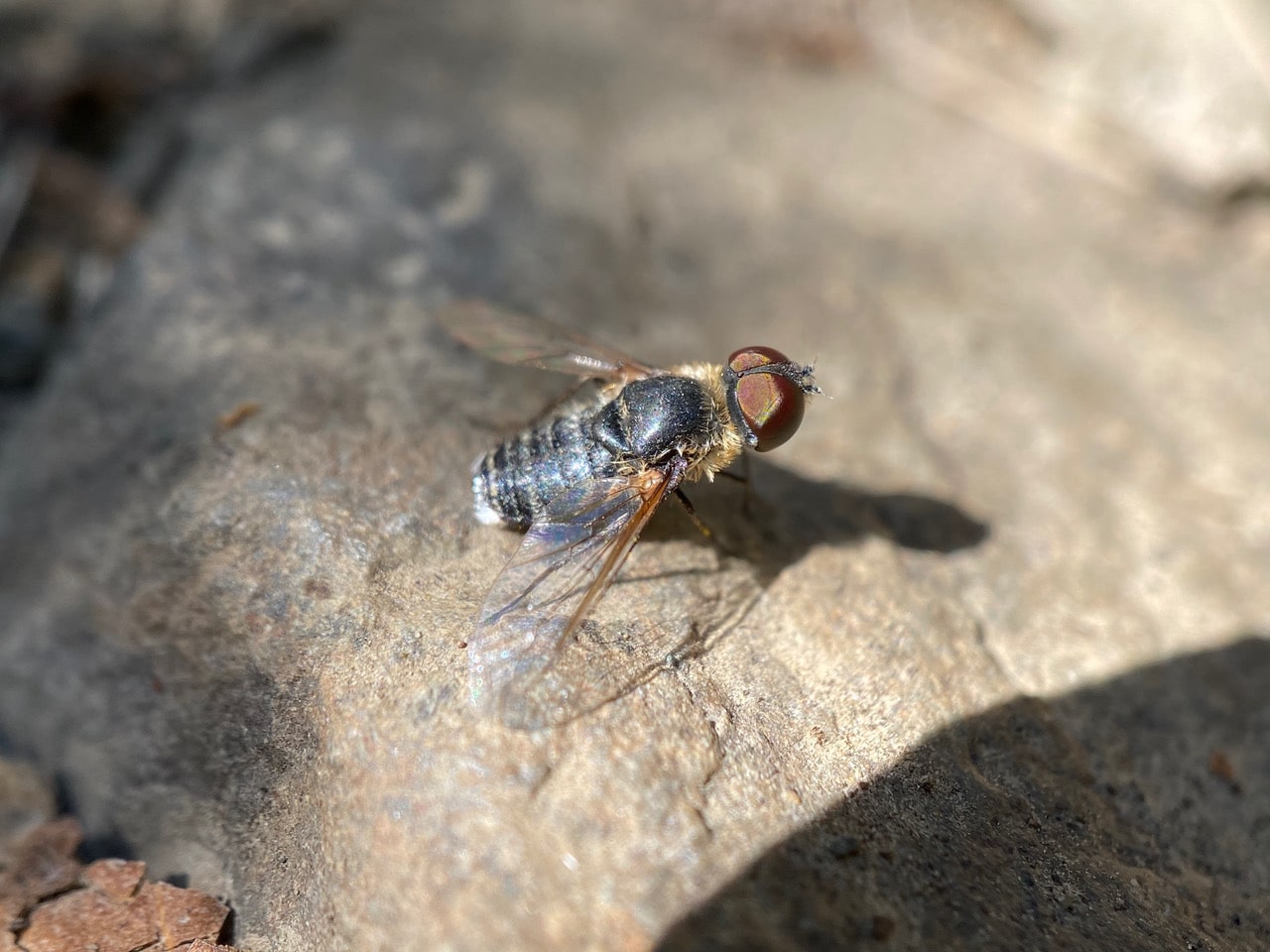
A scruffy Bee Fly, Villa sp. (family Bombyliidae) lands on a rock in the middle of the trail.
The Bee Flies belong to the family Bombyliidae. Adults generally visit flowers for nectar and pollen, some being important pollinators. Larvae generally are parasitoids of other insects. When at rest, many species of bee flies hold their wings at a characteristic “swept back” angle. The adult females usually deposit eggs in the vicinity of possible hosts, quite often in the burrows of beetles or ground-nesting bees/wasps. Bombyliidae parasitism is not host-specific, but rather opportunistic, using a variety of hosts. Adult females of the genus Villa lay eggs in mid-air and flick them towards the nest entrances of their hosts. They typically have an eversible pouch near the tip of their abdomen known as a sand chamber, which is filled with sand grains gathered before egg laying. These sand grains are used to coat each egg just before their aerial release, presumably to improve the female’s aim by adding weight.