

Pollinator Post 10/23/23 (4)
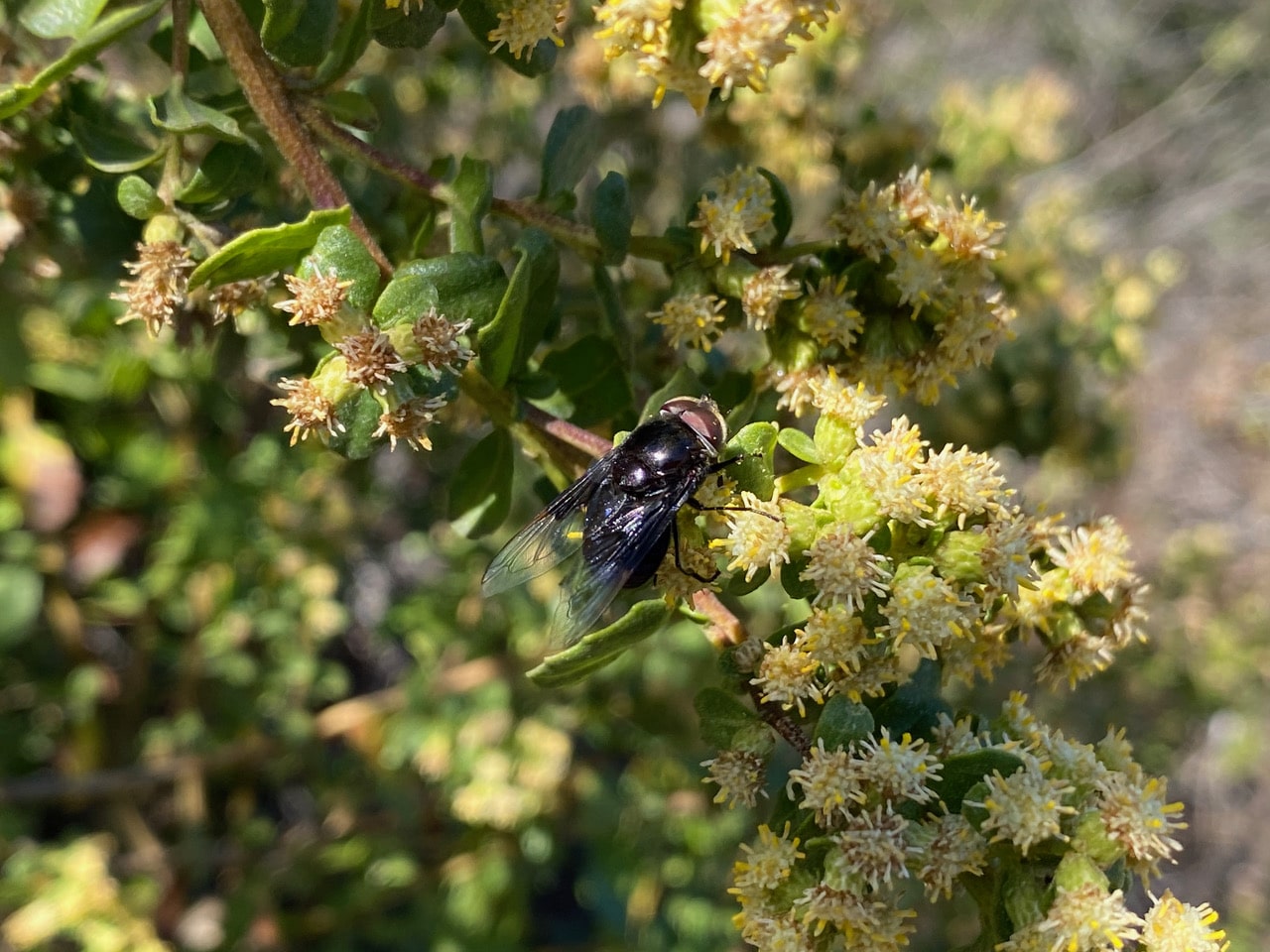 There seems to be more insect activity on the mature Coyote Brush, Baccharis pilularis along Skyline Trail near the Steam Train entrance than anywhere else in the garden right now. I wonder why? Maybe less human disturbance?
A Purple Bromeliad Fly, Copestylum violaceum (family Syrphidae) lands on a cluster of flowerheads of a male Coyote Brush. Big, and glossy black, this hover fly is easily mistaken for a Carpenter Bee, Xylocopa sp. when in flight. Copestylum females lay eggs in wet rotting plant materials and rot holes in trees. The larvae are rat-tail maggots.



Rat-tail maggots are the larval stage of many species of hover fly (family Syrphidae) in the tribes Eristalini. The maggots are most commonly found in dank and decaying environments such as compost, pond margins, and tree rot holes. The larvae feed on the decomposing material which is poor in oxygen but rich in organic matter. The “tails” are the siphons or breathing tubes that extend from their rear end to enable the larvae to breathe while submerged in the wet substrate. When mature, the larvae climb out to pupate on dry land. The larvae are important decomposers/recyclers and the adult flies are important pollinators. What’s not to love about Syrphids?
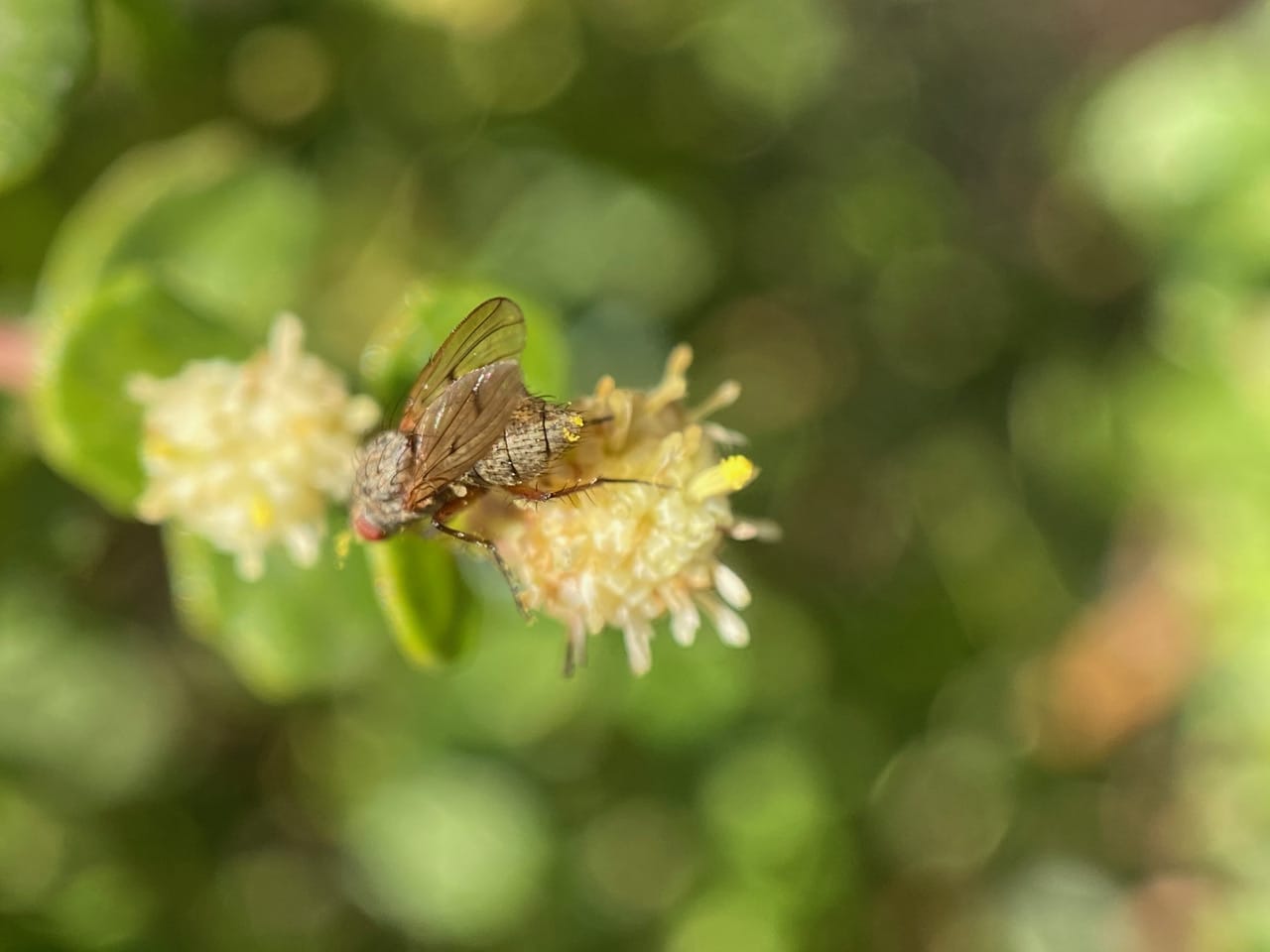
A Dung Fly (family Scathophagidae) visits a male Coyote Brush flowerhead.
Some of the sticky pollen of the flowers has adhered to the fly’s body. With the exception of hover flies (family Syrphidae), most flies are not commonly acknowledged as effective pollinators. We might have to change that perception. Many flies are decomposers/recyclers as larvae, but the adults can be pollinators as they visit flowers.
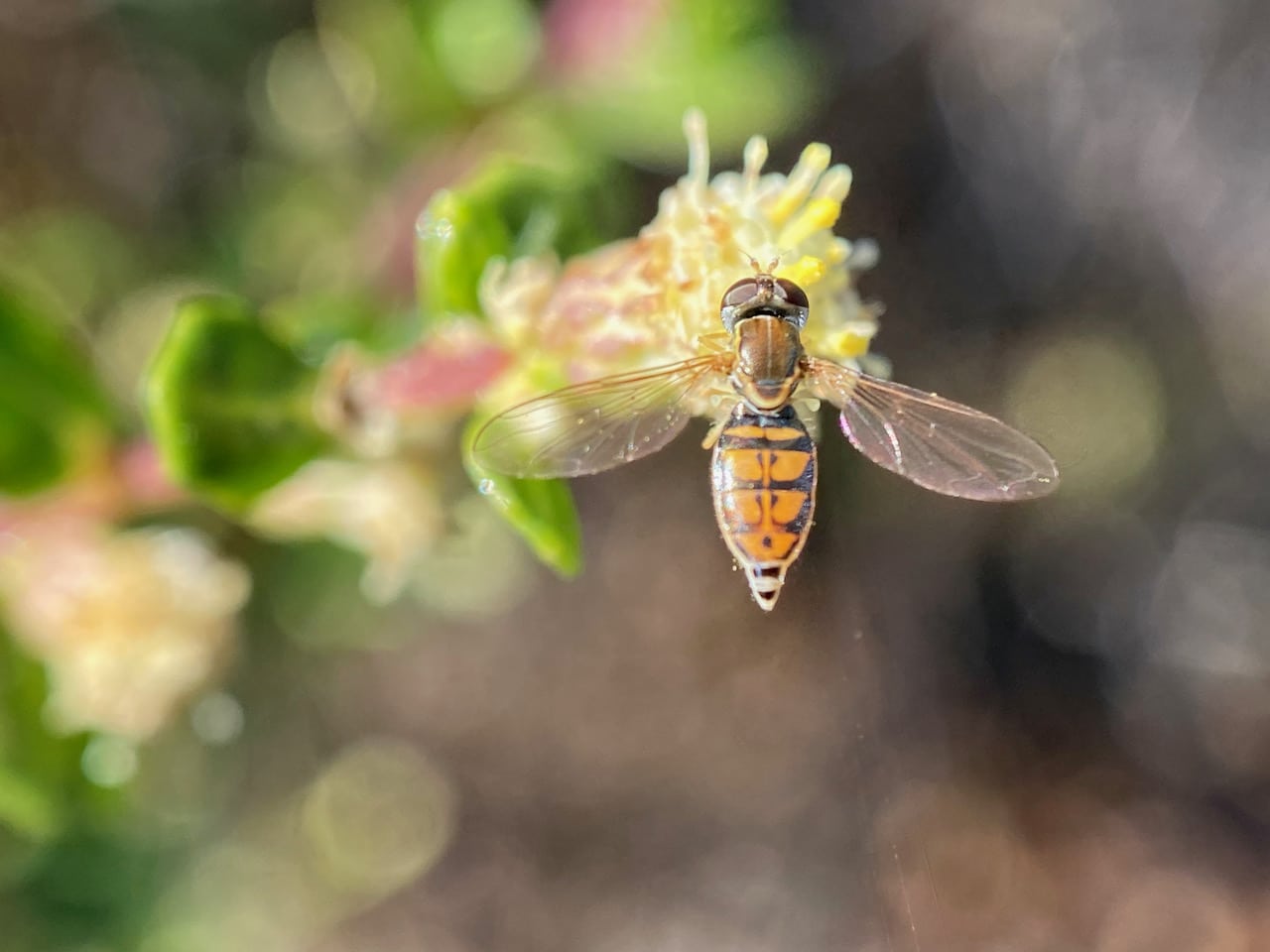
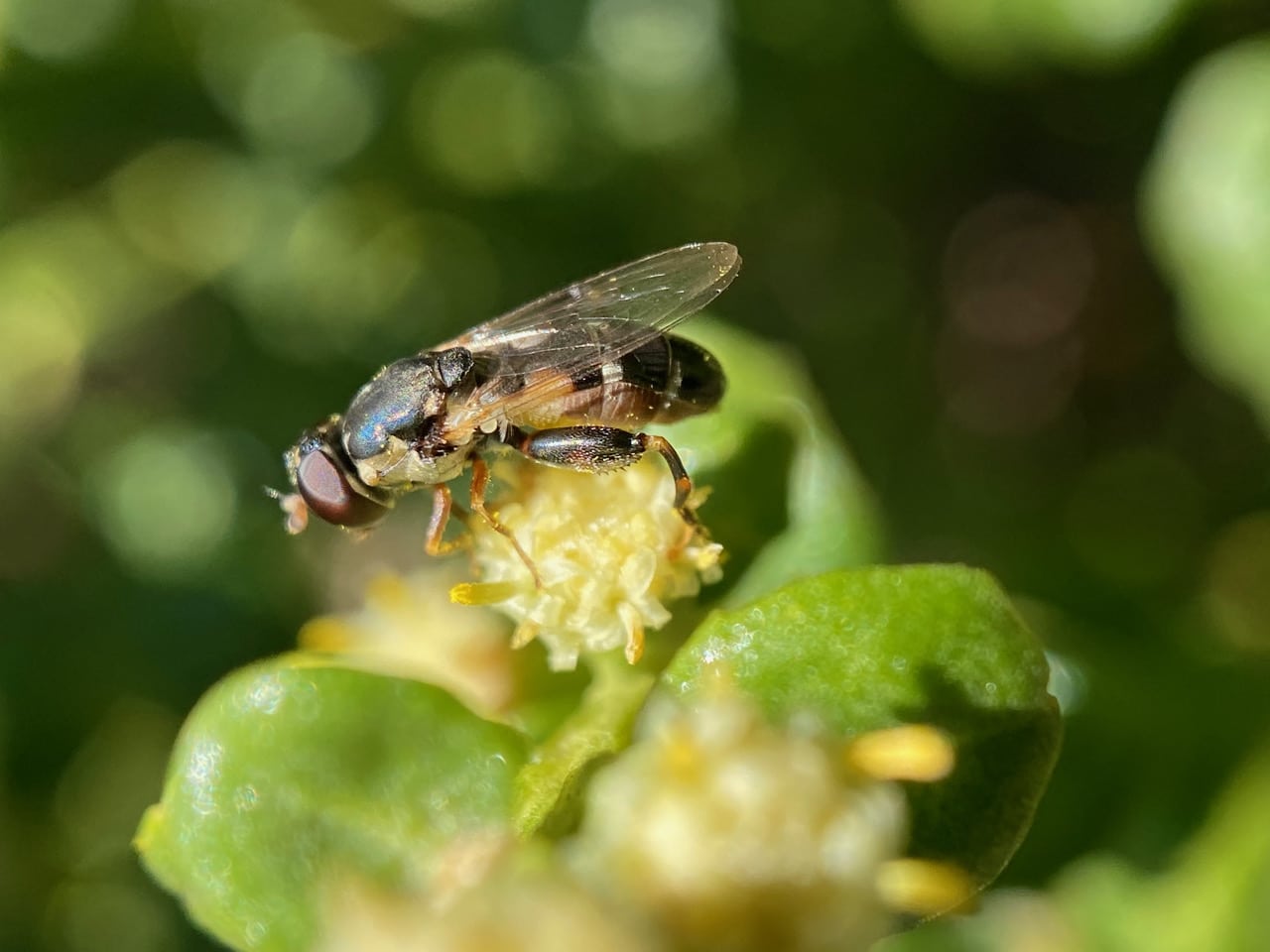
A Western Calligrapher, Toxomerus occidentalis (family Syrphidae) has landed on a male Coyote Brush flowerhead.
Toxomerus is a very large genus of Hover Flies. They are found in North and South America. The majority of species are only 6-9 mm in length. They are notable for their mimicry of stinging Hymenoptera to avoid predators. Their unique abdominal patterns are diagnostic at the species level within the genus. Most larvae feed on soft bodied insects, such as aphids; a few feed on pollen. Adults feed on the pollen of a wide range of flowers. A female can lay up to hundreds of eggs at a time and will place them where prey or pollen food sources are readily available. They can be found in a wide variety of habitats, often in dense ground cover.
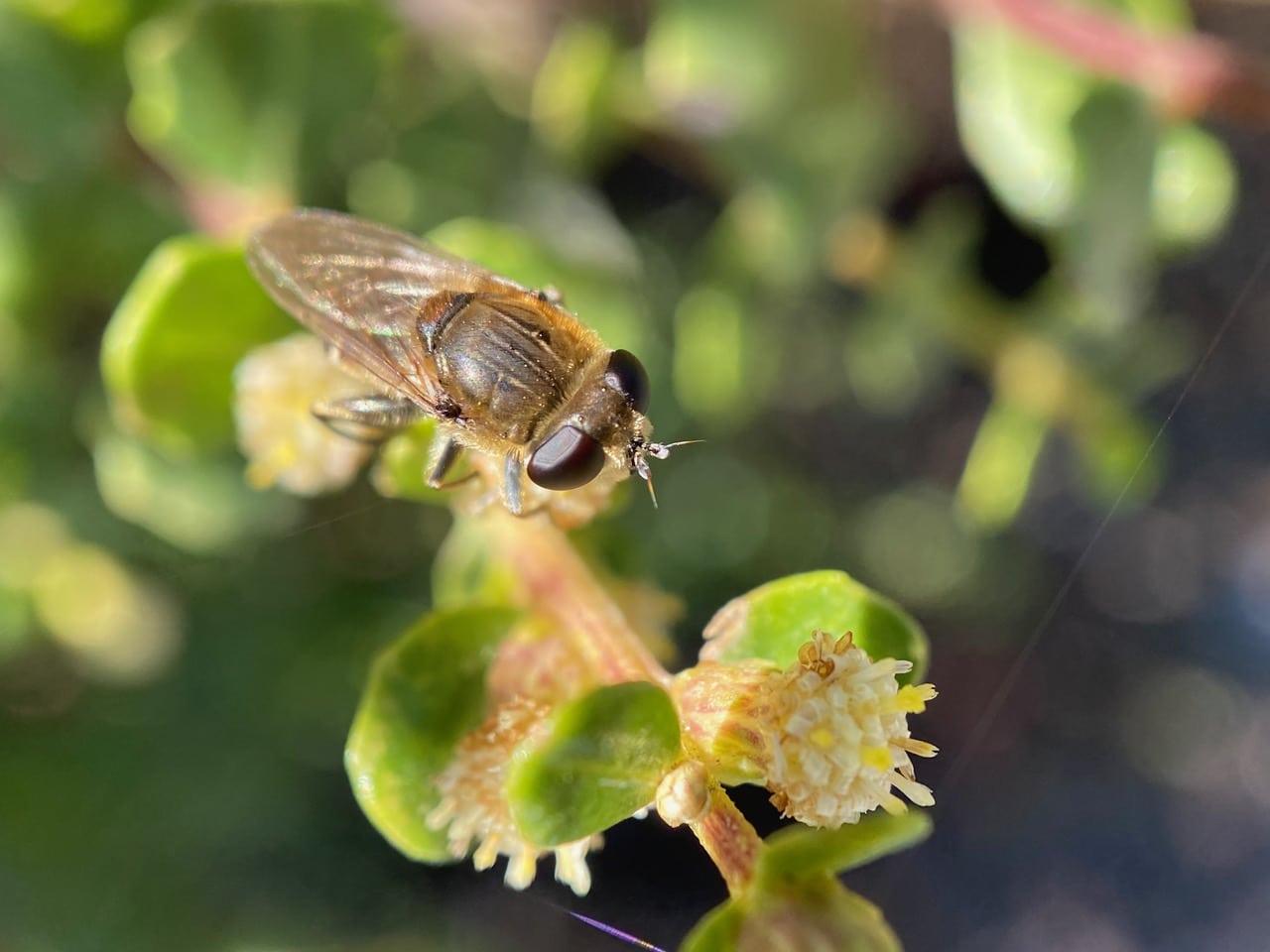
A Common Sickleleg, Asemosyrphus polygrammus (family Syrphidae) joins the assemblage of flies on the Coyote Brush. Lately I have been seeing the Sickleleg frequently, although I have hardly seen them earlier in the year.
Rat-tail maggots are the larval stage of many species of hover fly (family Syrphidae) in the tribes Eristalini. The maggots are most commonly found in dank and decaying environments such as compost, pond margins, and tree rot holes. The larvae feed on the decomposing material which is poor in oxygen but rich in organic matter. The “tails” are the siphons or breathing tubes that extend from their rear end to enable the larvae to breathe while submerged in the wet substrate. When mature, the larvae climb out to pupate on dry land. The larvae are important decomposers/recyclers and the adult flies are important pollinators.
A Thick-legged Hover Fly, Syritta pipiens (family Syrphidae) is enjoying the floral offerings of a male Coyote Brush.
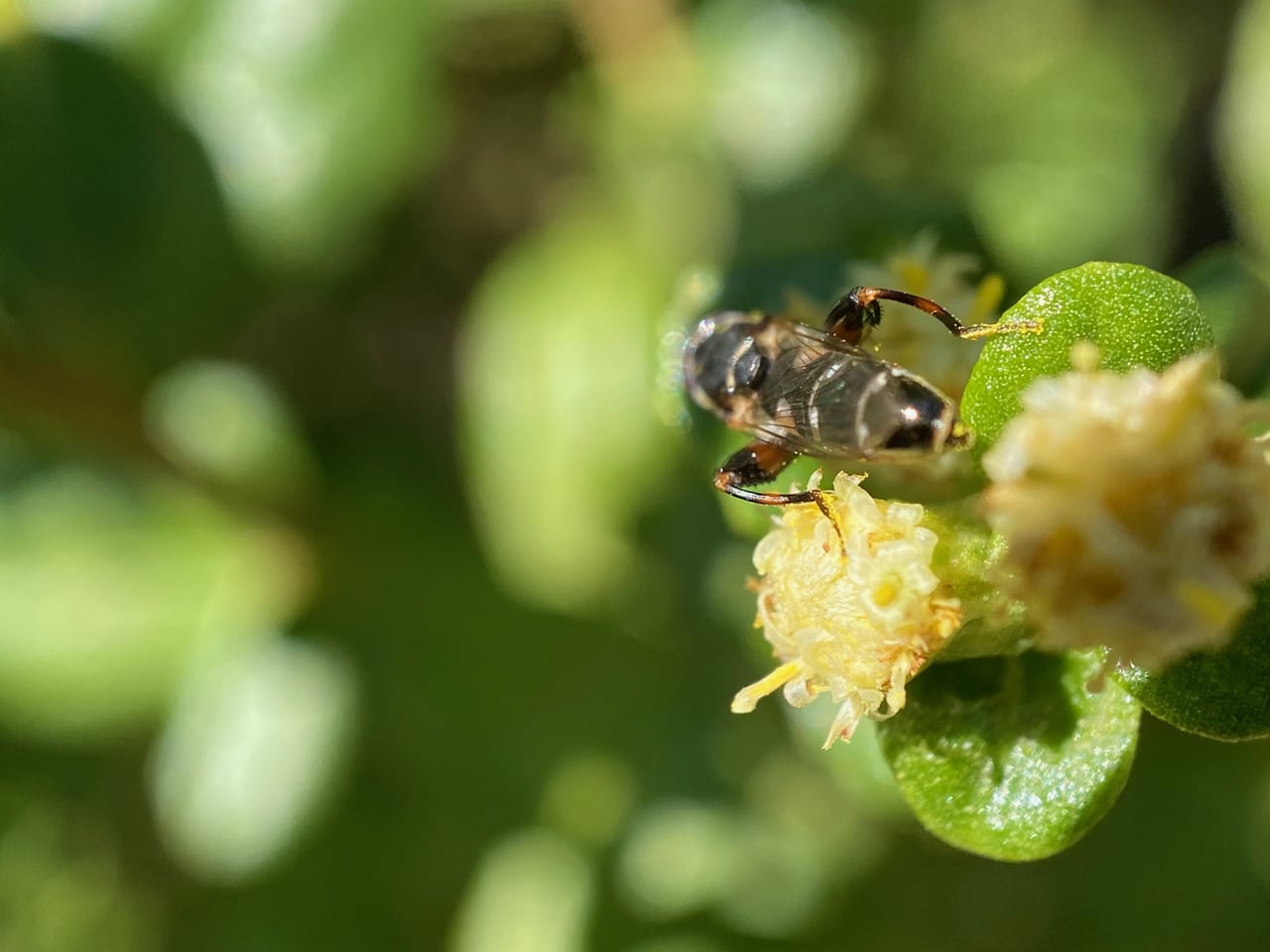
Hind view of the Thick-legged Hover Fly, Syritta pipiens (family Syrphidae), showing its broad femora and bow-shaped tibia.
Syritta pipiens originates from Europe and is currently distributed across Eurasia and North America. They are fast and nimble flyers, and their larvae are found in wet, rotting organic matter such as garden compost, manure, and silage. The flies are important pollinators for a variety of flowering plants.
The Thick-legged Hover Flies are often found on flowers, where the adult males primarily feed on nectar and adult females eat protein-rich pollen to produce eggs. The common name comes from the fly’s distinctively broad femora. The fly is about 6.5 -9 mm long. The species flies at a very low height, rarely more than 1 m above the ground. Males accurately track females, aiming to attempt forced copulation.
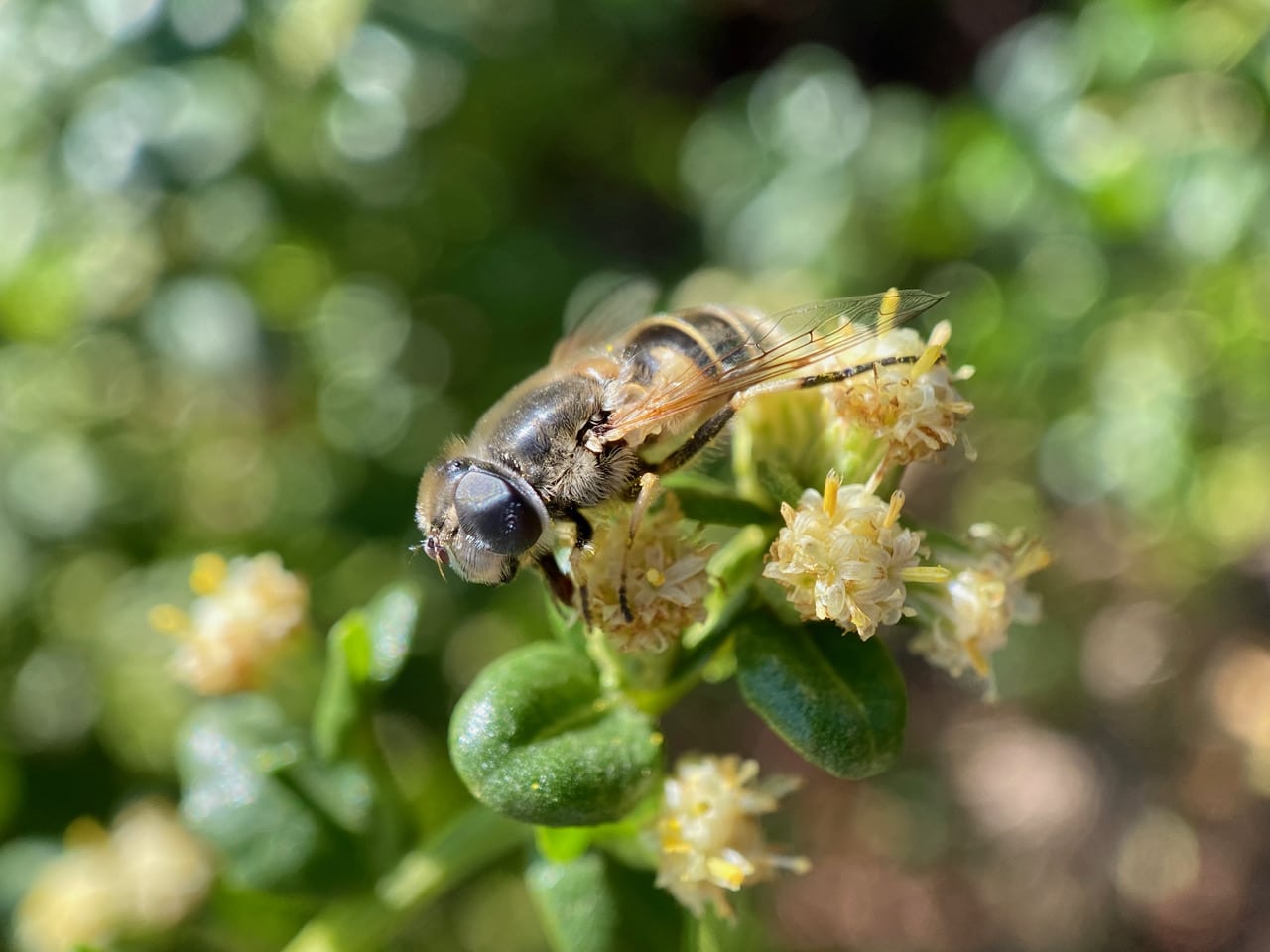
By far the most commonly seen hover fly on the Coyote Brush is the Black-footed Drone Fly, Eristalis hirta (family Syrphidae).
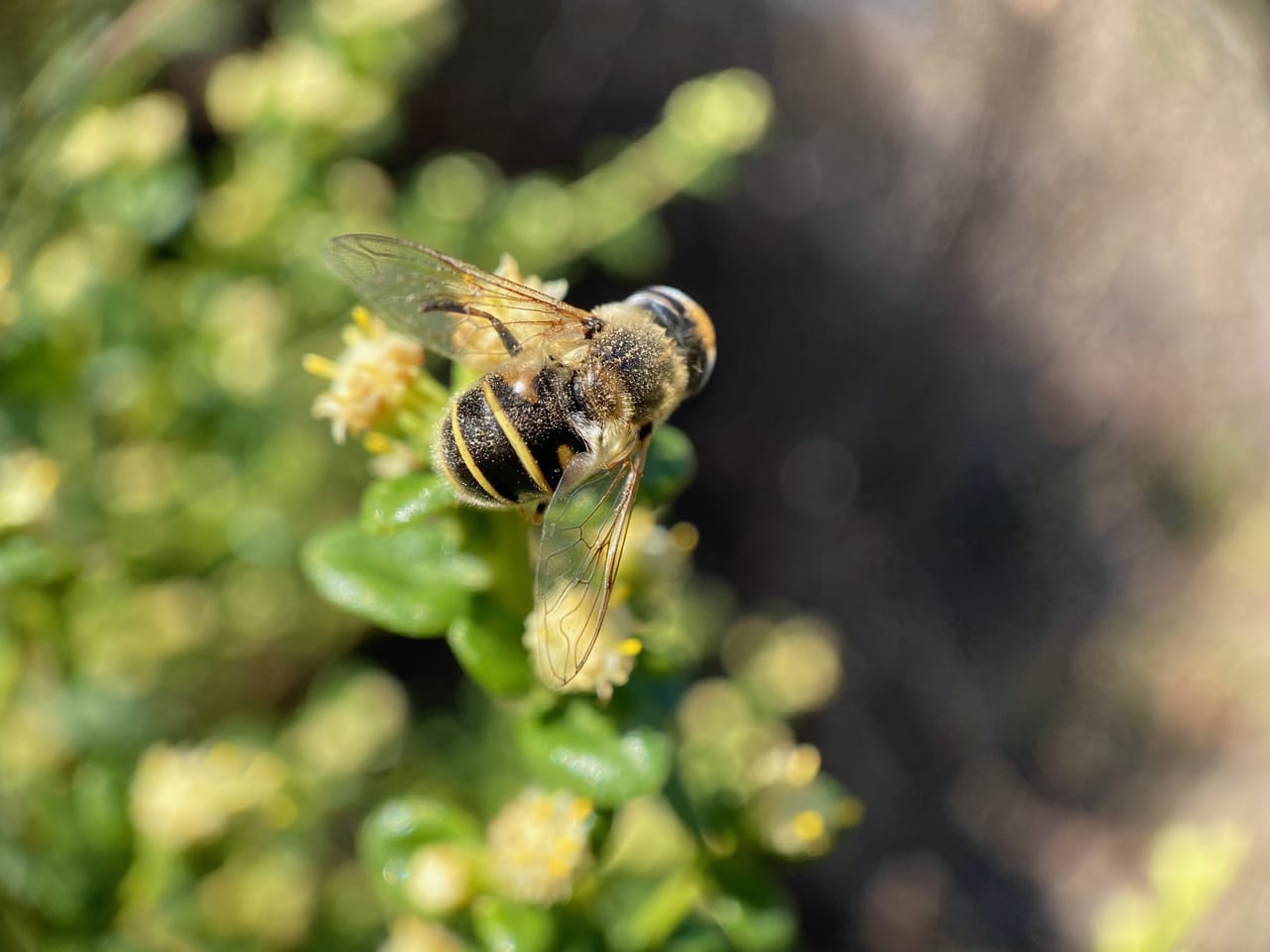
Close-up of the Black-footed Drone Fly, Eristalis hirta (family Syrphidae).
The Black-footed Drone Fly, Eristalis hirta (family Syrphidae) is a common Western North American species of hoverfly. The adults visit flowers for nectar and pollen. Larvae are aquatic filter-feeders of the rat-tailed type.
I have been noticing this trend over the past month or so – most of the hover fly species observed in the garden lately tend to belong to the group that have rat-tailed maggots. It makes sense that these species are active close to our wet season – their larvae develop in wet habitats. These flies have to closely synchronize their egg laying to the rains.
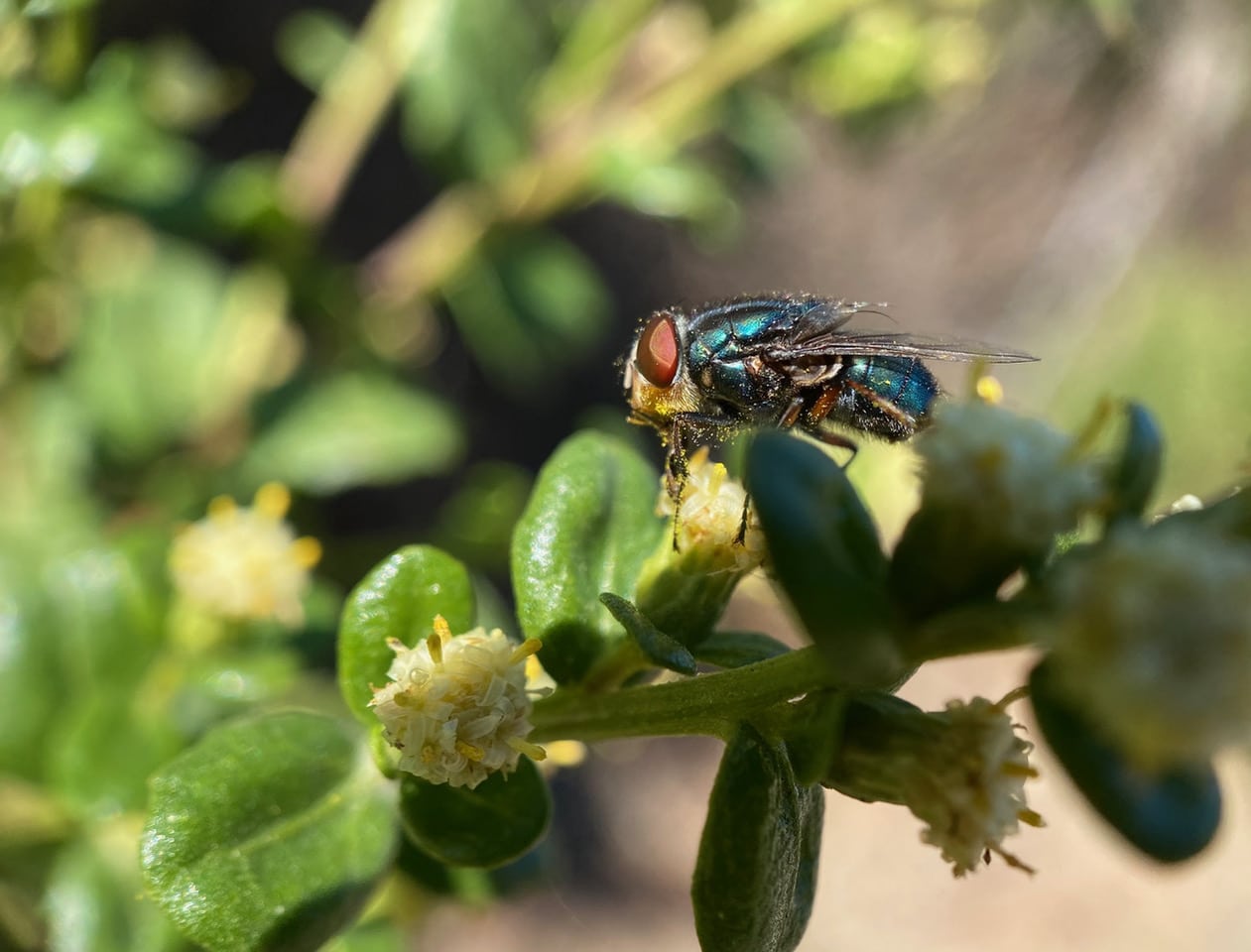
A Secondary Screwworm Fly, Cochliomyia macellaria (family Calliphoridae) is foraging on the flowers of a male Coyote Brush.
The Secondary Screwworm, Cochliomyia macellaria (family Calliphoridae, commonly known as blow flies) ranges throughout the United States and the American tropics. The body is metallic greenish-blue and characterized by three black longitudinal stripes on the dorsal thorax. Females are attracted to carrion where they lay their eggs. These screwworms are referred to as “secondary” because they typically infest wounds after invasion by primary myiasis-causing flies. While the flies carry various types of Salmonella and viruses, C. macellaria can also serve as important decomposers in the ecosystem. In a lifetime, a female may lay up to 1000 or more eggs. Females may also lay their eggs with other females, leading to an accumulation of thousands of eggs. The larval stage of C. macellaria is referred to by the common name of secondary screwworms; this is due to the presence of small spines on each body segment that resemble parts of a screw. The larvae feed on the decaying flesh of the animal that they have been laid on until they reach maturity. Eventually the larvae fall off the food source to pupate in the top layer of the soil. Adult females will continue to feed on tissues of animals; however, now they preferentially feed off of live tissues and tissue plasma. Adult males will no longer consume tissue, but instead will eat nearby vegetation and take nourishment from floral nectar.
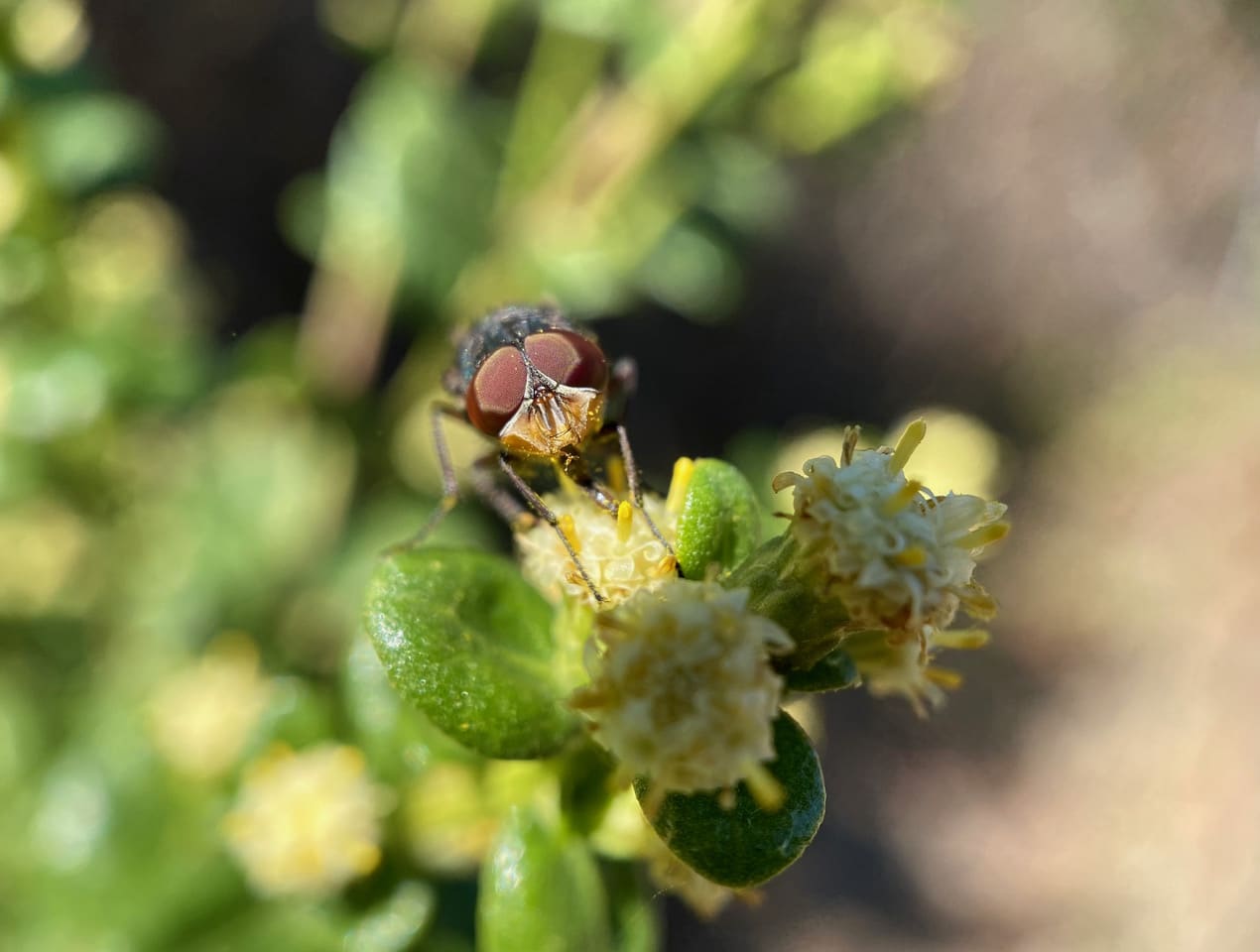
Close-up of the head of the Secondary Screwworm Fly. What strange mouthparts!
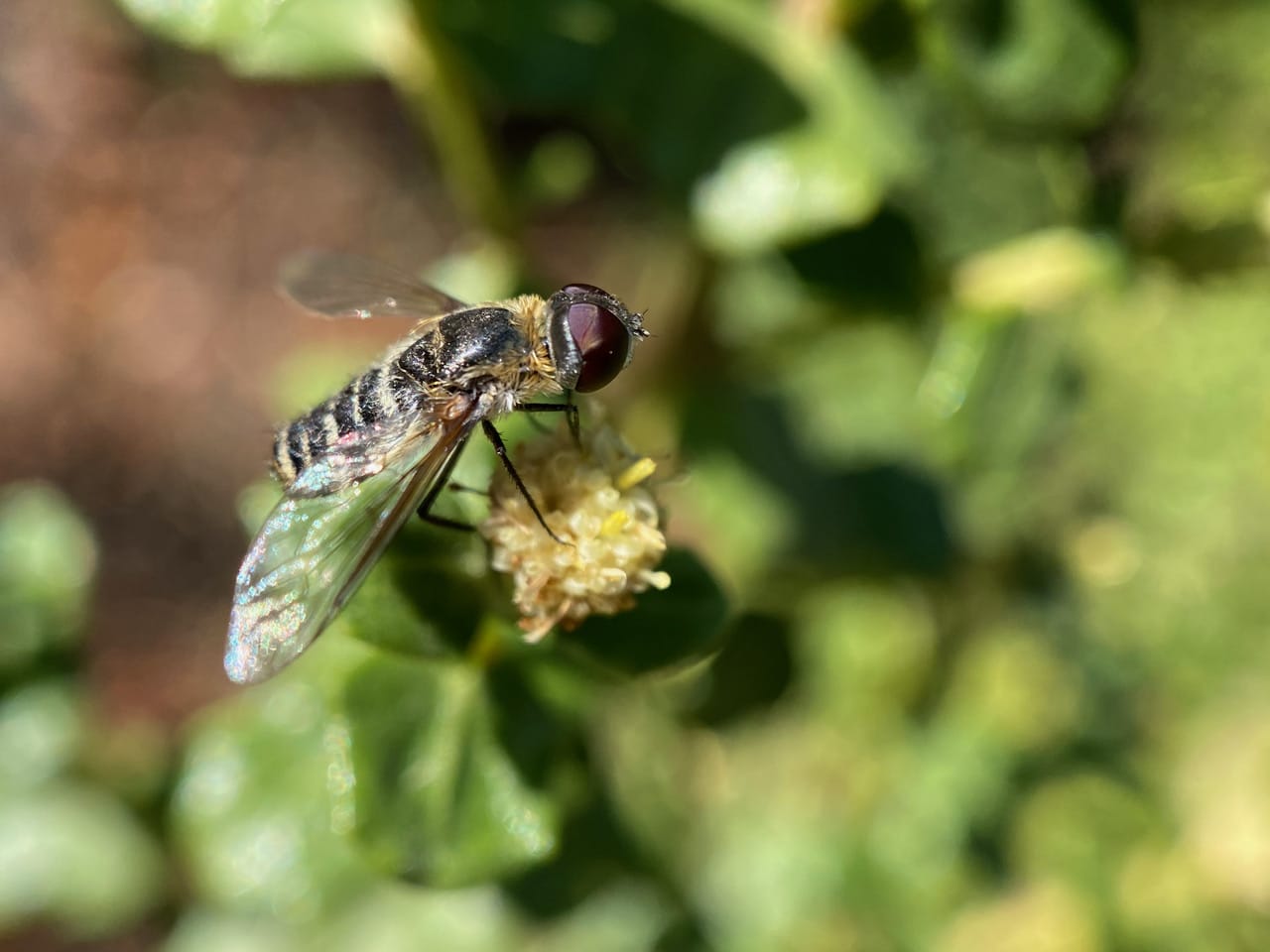
A scruffy Bee Fly, Villa sp. (family Bombyliidae) lands on a flowerhead of Coyote Brush.
The Bee Flies belong to the family Bombyliidae. Adults generally visit flowers for nectar and pollen, some being important pollinators. Larvae generally are parasitoids of other insects. When at rest, many species of bee flies hold their wings at a characteristic “swept back” angle. The adult females usually deposit eggs in the vicinity of possible hosts, quite often in the burrows of beetles or ground-nesting bees/wasps. Bombyliidae parasitism is not host-specific, but rather opportunistic, using a variety of hosts. Adult females of the genus Villa lay eggs in mid-air and flick them towards the nest entrances of their hosts. They typically have an eversible pouch near the tip of their abdomen known as a sand chamber, which is filled with sand grains gathered before egg laying. These sand grains are used to coat each egg just before their aerial release, presumably to improve the female’s aim by adding weight.
A female Red-backed Jumping Spider, Phidippus johnsoni (family Salticidae) is hunting among the foliage of a Coyote Brush.
Salticids are free-roaming hunting spiders. They do not weave a web to catch prey. They stalk, then pounce on their prey. Just before jumping, the spider fastens a safety line to the substrate. It can leap 10-20 times their body length to capture prey. Their movement is achieved by rapid changes in hydraulic pressure of the hemolymph (insect version of blood). Muscular contractions force fluids into the hind legs, which cause them to extend extremely quickly.
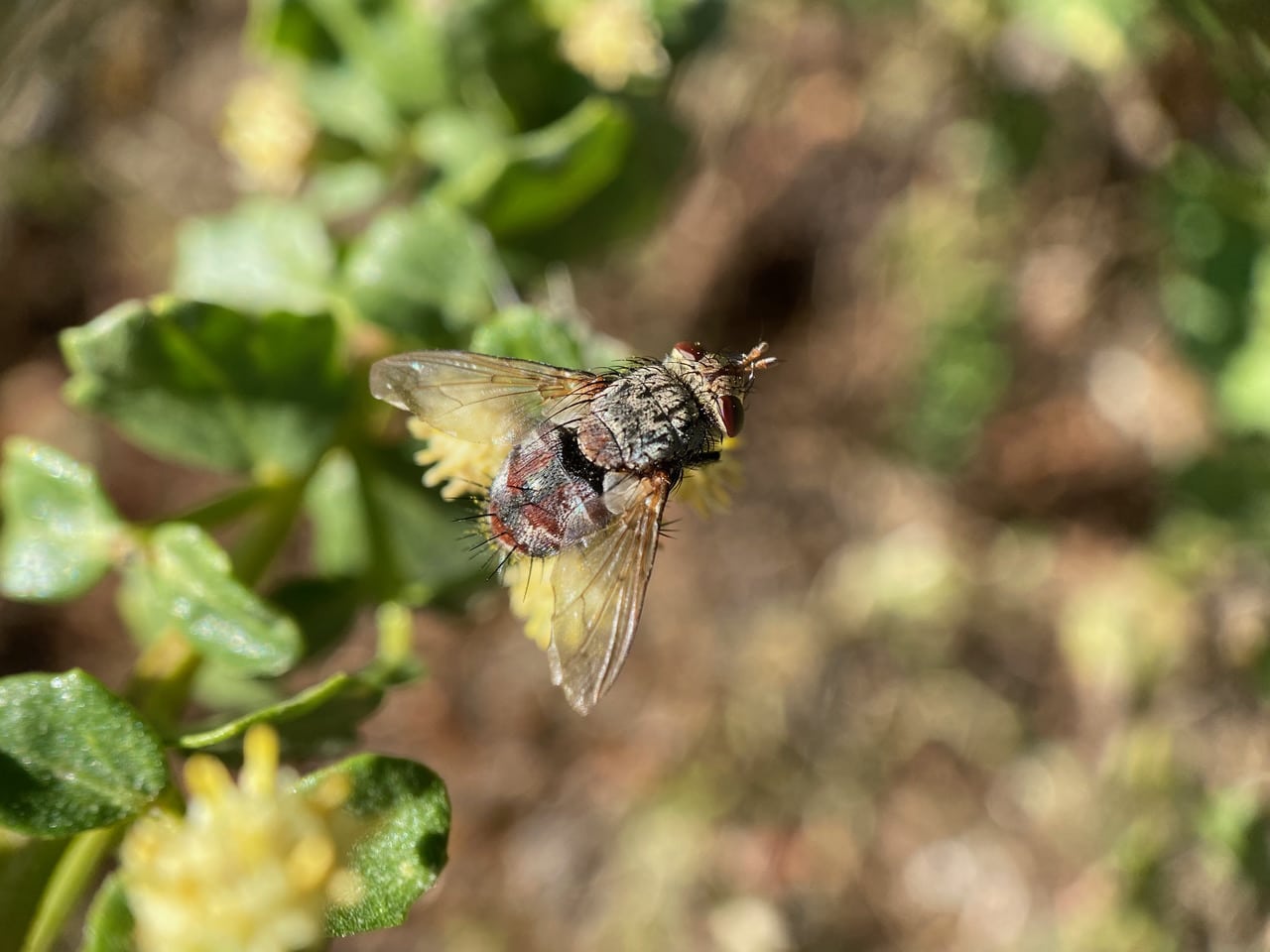
Hey, that’s a Bristle Fly, Peleteria sp. (family Tachinidae)!
The family Tachinidae is by far the largest and most important group of parasitoid flies, with over 1,300 species in North America. All species are parasitic in the larval stage. The appearance of Tachinid Flies varies considerably, but most have distinct abdominal bristles. Adults feed on liquids such as nectar and the honeydew of aphids and scale insects. They can be found resting on foliage, feeding at flowers or searching for hosts.
Most tachinids attack caterpillars, adult and larval beetles, true bugs, grasshoppers, and other insects. Egg laying varies considerably. In some species, eggs are deposited on foliage near the host insect. After the eggs hatch, the maggots are ingested during feeding by the host, and then develop within the host. In other species, the adult fly glues her eggs to the body of the host. After the eggs hatch, the maggots penetrate into the host body. Some adult female tachinids possess a piercing ovipositor that she uses to inject the eggs into the host body. Tachinid larvae live as internal parasites, consuming their hosts’ less essential tissues first and not finishing off the vital organs until they are ready to pupate. The larvae leave the host and pupate on the ground. Tachinids are very important in natural control of many pests, and many have been used in biological control programs.
The genus Peleteria has a worldwide distribution, including most of North America (mostly western and boreal).
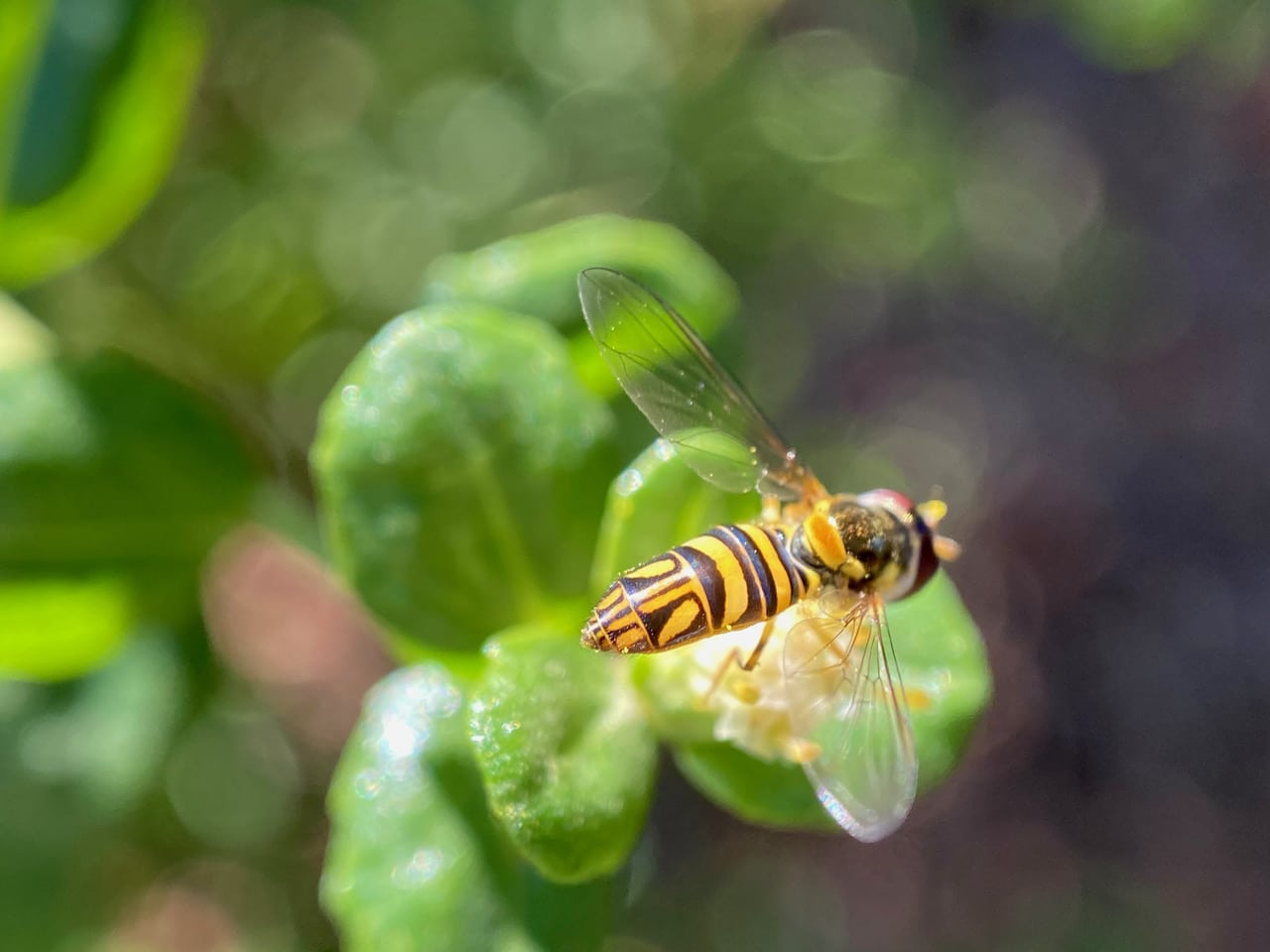
An Oblique Streaktail, Allograpta obliqua (family Syrphidae) visits the flowers of a male Coyote Brush. Although small, the species is easily distinguished by their unique markings – transverse yellow bands on the abdomen, and two oblique yellow marks near the tip..
The Oblique Streaktail is a common North American species of hoverfly. Adults are 6-7 mm long. Eggs are laid on surfaces of leaves or stems near aphids. The larvae are important predators of aphids while adults are pollinators. Typically the fly is active in summer to early fall.
A Mylitta Crescent, Phyciodes mylitta (family Nymphalidae) is taking nectar from a flowerhead of Pacific Aster, Symphyotrichum chilense.
The common name “crescent” derives from the crescent-shaped markings near the margin of the hind wings. Mylitta was an ancient Babylonian goddess of fertility, and perhaps the butterfly is named because they often produce multiple broods each year. These are small butterflies with predominantly orange wings. The wing span of crescent butterflies rarely exceeds 11/2 in. The Mylitta Crescent, one of the smaller crescent butterflies in the United States, live in both fields and residential settings of Western North America. Though small, the butterfly is a bit of a bully and is often seen chasing other butterflies away from its territory where it will stay feeding for several days. The species flies for a long period during the year, from spring all through the summer until fall, during which time they produce several overlapping broods. Eggs are deposited on underside of host plant species that include various thistles (native as well as non-native) and various monkeyflowers, Mimulus sp. Caterpillars eat leaves. Young caterpillars may live in a small silken nest; partially-grown caterpillars hibernate.
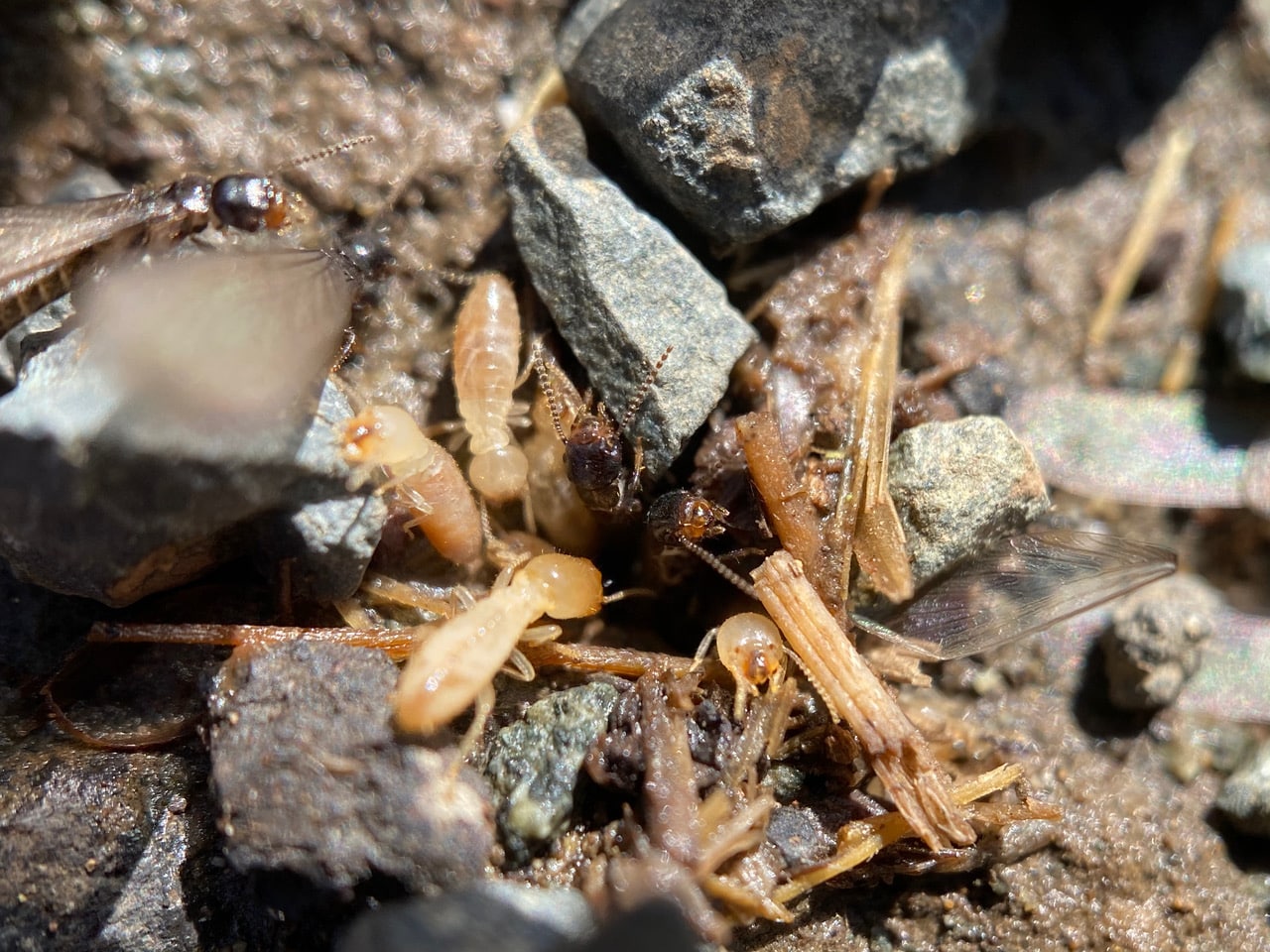
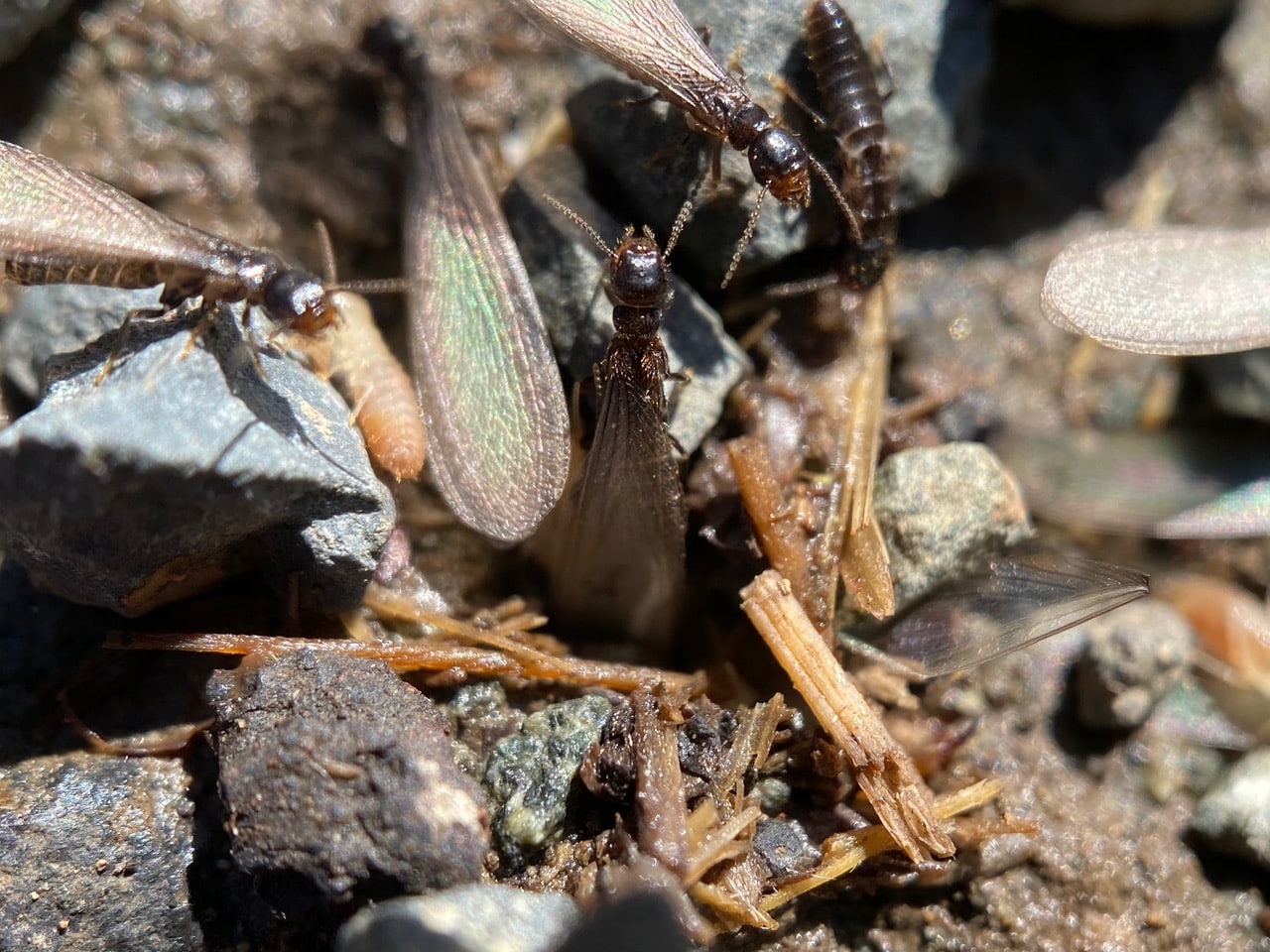
As I approach the Steam Train gate, I encounter yet more Western Subterranean Termites emerging from the ground for their nuptial flight. This colony seems to have an abundance of workers who accompany the alates to the surface, fussing over them. What an exciting morning this has been!
Although most people dread termites for feeding on our homes and other wooden structures, the insects are an important component of our ecosystem. Termites are “green machines”- they are hands-down nature’s best recyclers. They feed on the cellulose found in dead plants, and their sticky excretions hold the soil together, preventing soil erosion. They burrow tirelessly and aerate the soil, allowing rainwater to seep in and enabling the mixing of nutrients to support new plant growth. Termites are also food for a host of predators such as lizards and birds. Live and let live!