

Pollinator Post 1/28/24 (2)

There are several species of mosses within this small area along the trail. See the dark patches that look like someone has spilled grease on the mosses? Actually the dark patches are not mosses. They are the gametophytes of a Hornwort, a plant in its own phylum, the Anthocerotophyta. The Anthocerotophyta are characterized by their long, horn-shaped sporophyte, from which they get their common name “hornworts”. Over the past couple of years, I have been watching out for the hornwort to produce sporophytes on this mossy bank, but they never made an appearance.
Phylum Anthocerotophyta | Introduction to Bryophytes
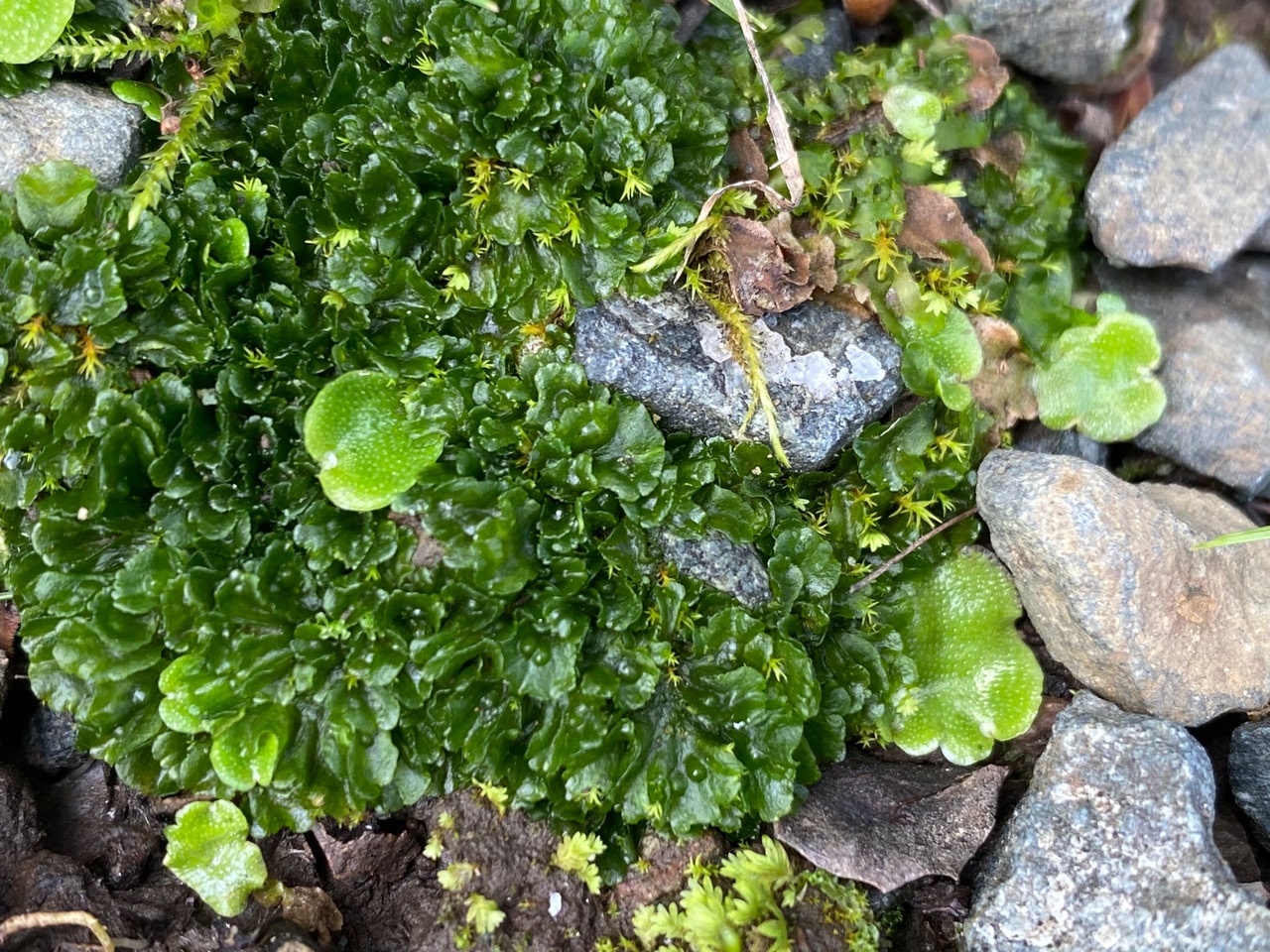

Close up of the Hornwort and a few scattered thalloid liverwort we saw earlier, Lunularia cruciata. The life cycle of liverworts and hornworts follows alternation of generations: gametophytes that produce gametes alternate with sporophytes that produce spores. I am still hoping to see the hornwort sporophytes this year.
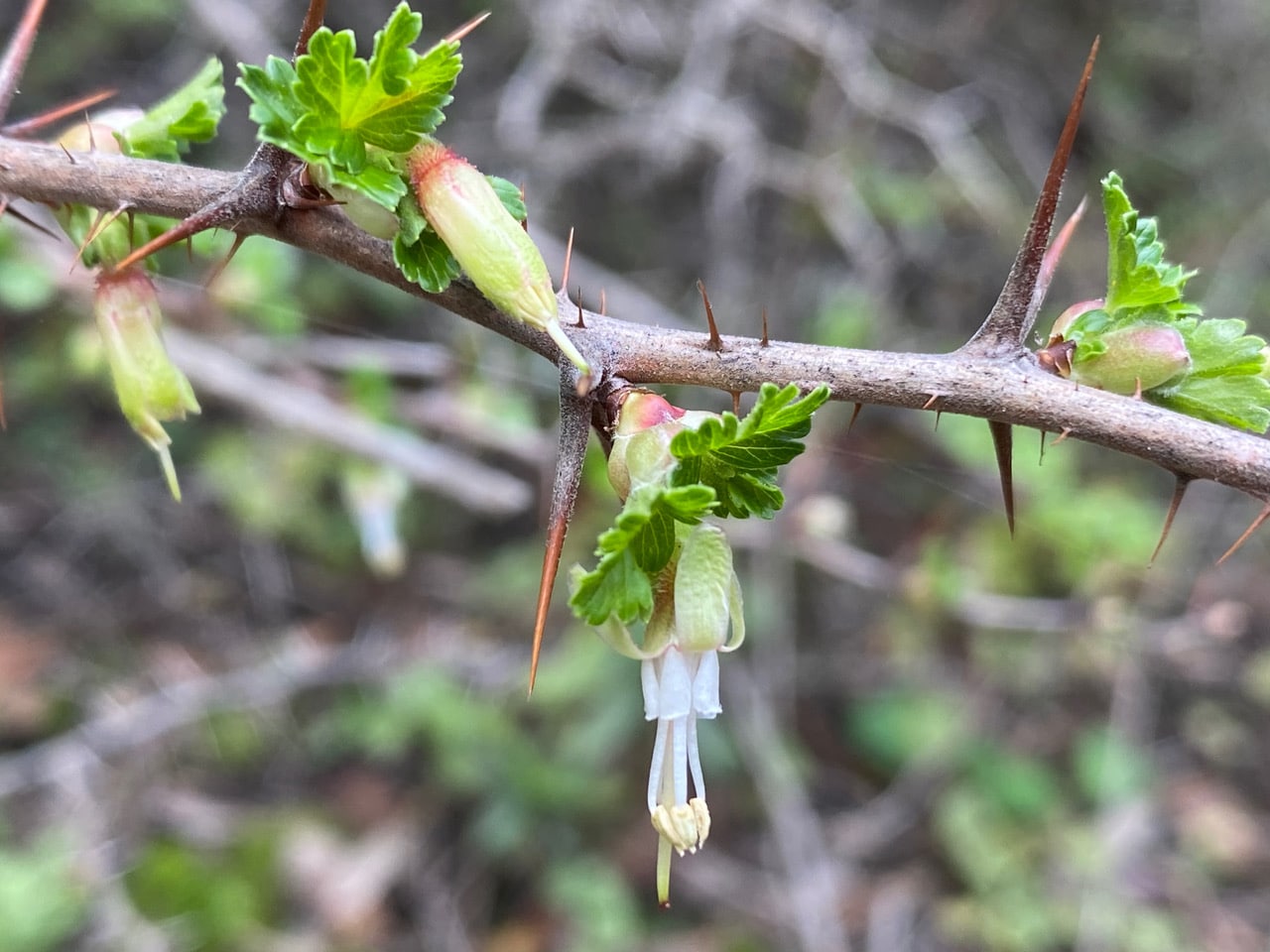
Hey, a Gooseberry shrub, Ribes sp. already in bloom! The reproductive parts are fully exserted, extending way beyond the corolla. Early spring last year I saw native mining bees (family Andrenidae) forage on the Gooseberry flowers, hanging from the stamens. Most Andrenids are specialist pollinators whose life cycle is timed to correspond precisely to the blooming of specific flowers. Because of this, andrenids are some of the first bees to emerge in spring, and many are active in March and April, as they visit early spring wildflowers. Is this Gooseberry blooming too early for its pollinator?
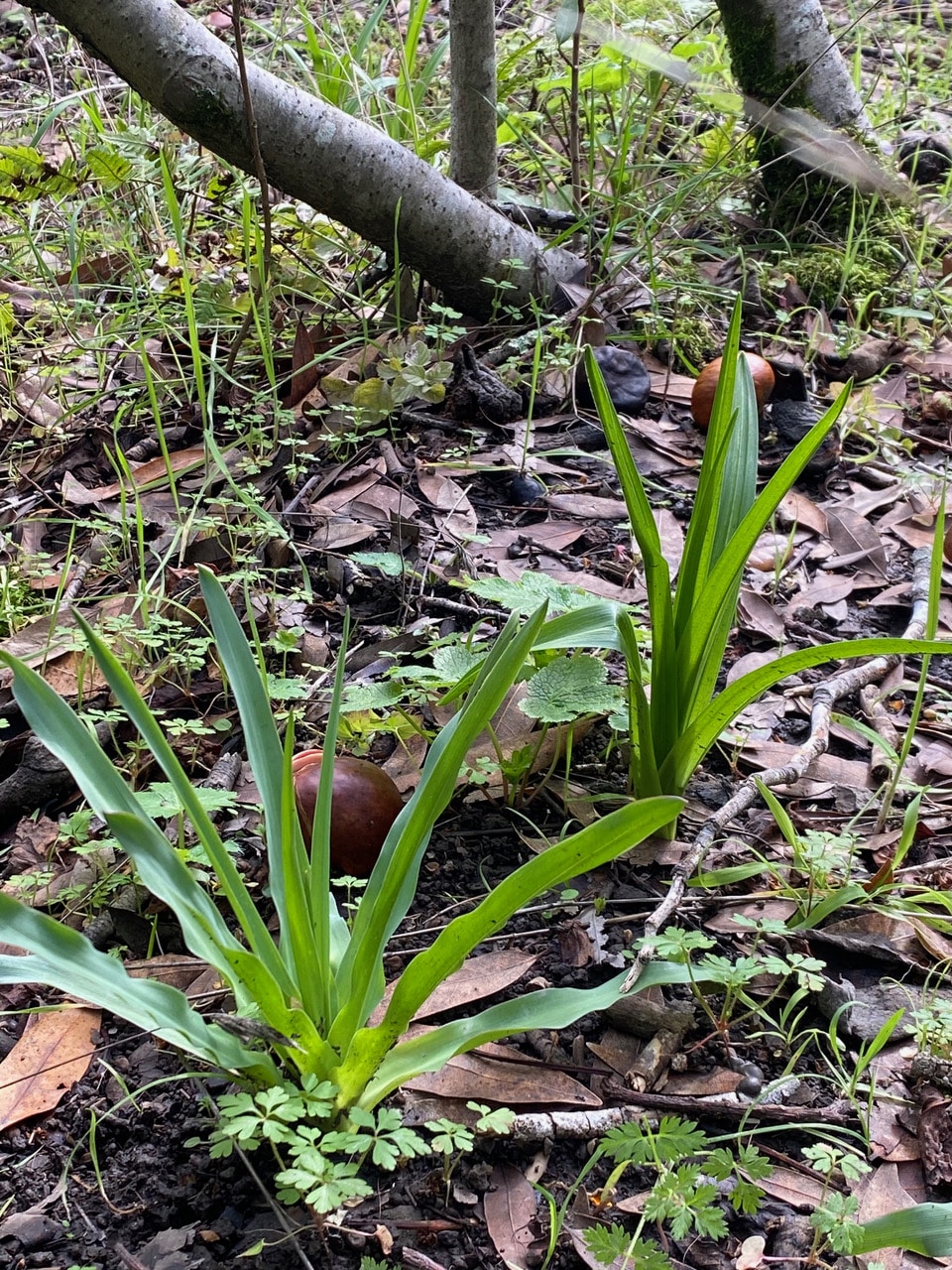
Strolling through the woodland section of Skyline Trail, I am greeted by a few of these fresh plants of Fremont’s Star Lily, Toxicoscordion fremontii. It won’t be long before we see the white sprays of flowers on these early bloomers.
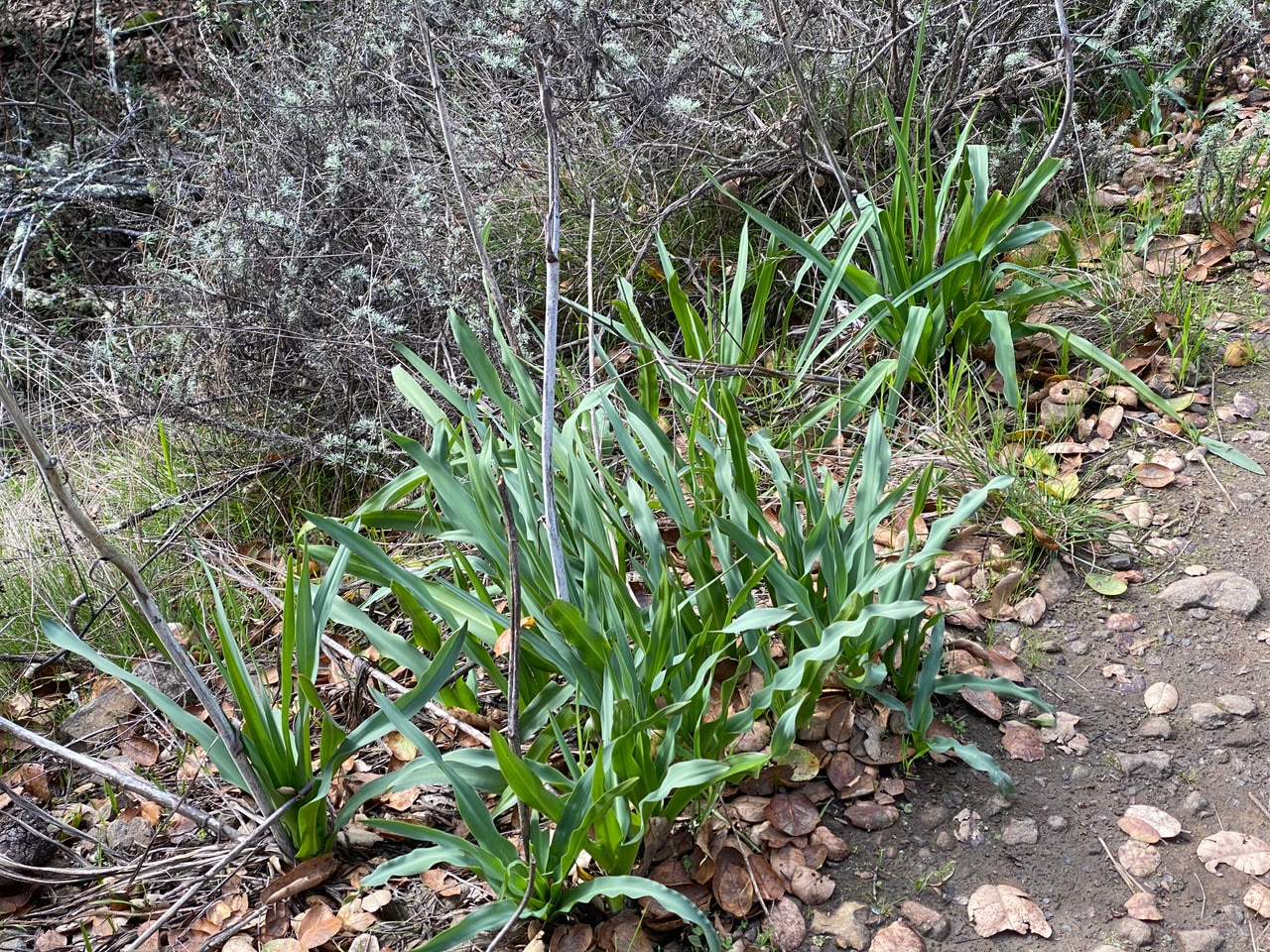
Further along the trail, I find these look-alike plants. These are actually Soap Plant, Chlorogalum pomeridianum.
Here’s how to tell the two apart at this stage: Soap Plant has wavy leaves, matte on upper surface, blue-green in maturity. Fremont’s Star Lily has straight-edged, shiny, bright yellow-green leaves; plus the whorl of leaves has a strongly triangular base that you can feel.
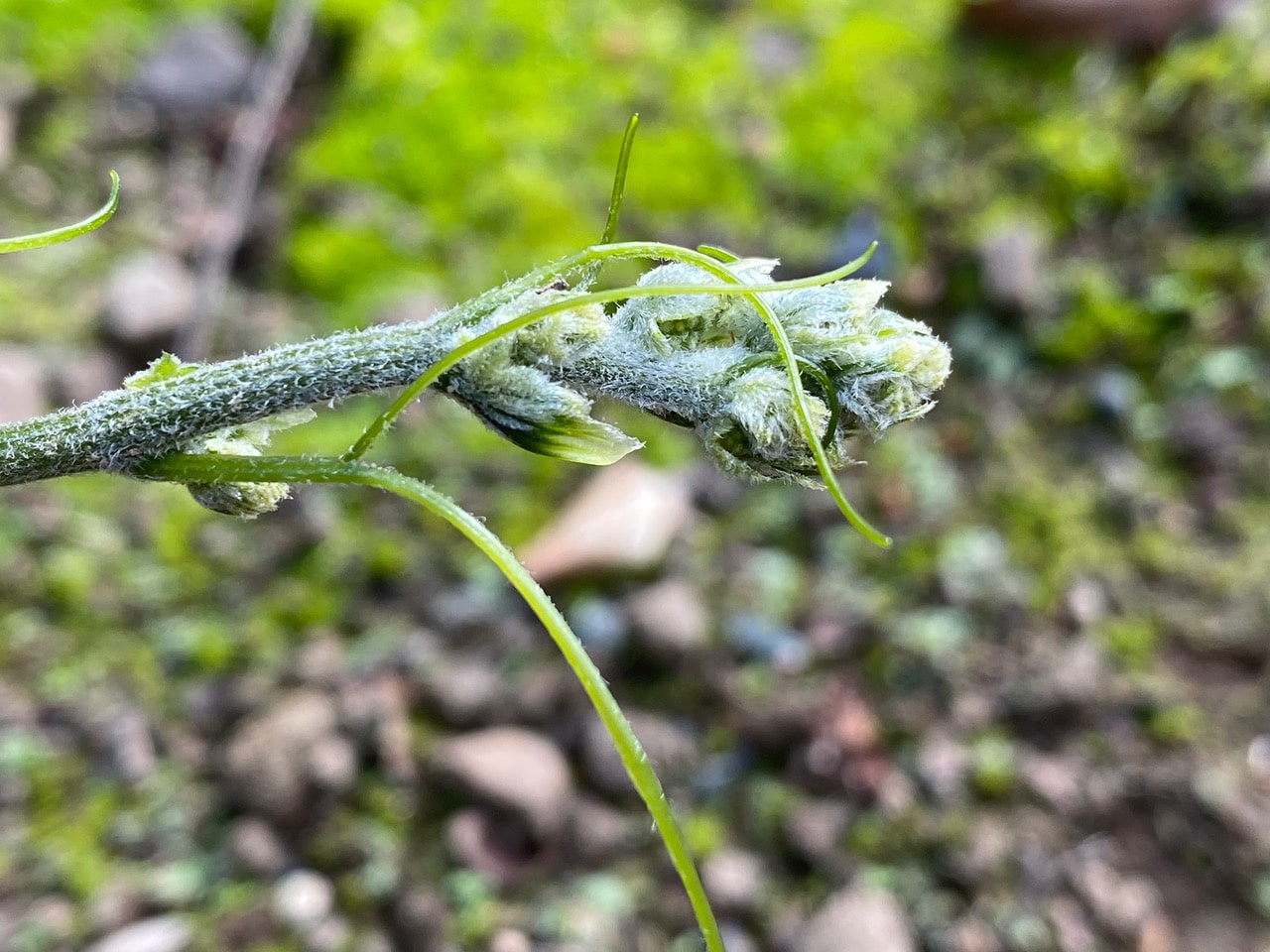
Wild Cucumber, Marah sp. has emerged from the ground, rambling branches with tendrils ready to latch onto its neighbors for support.
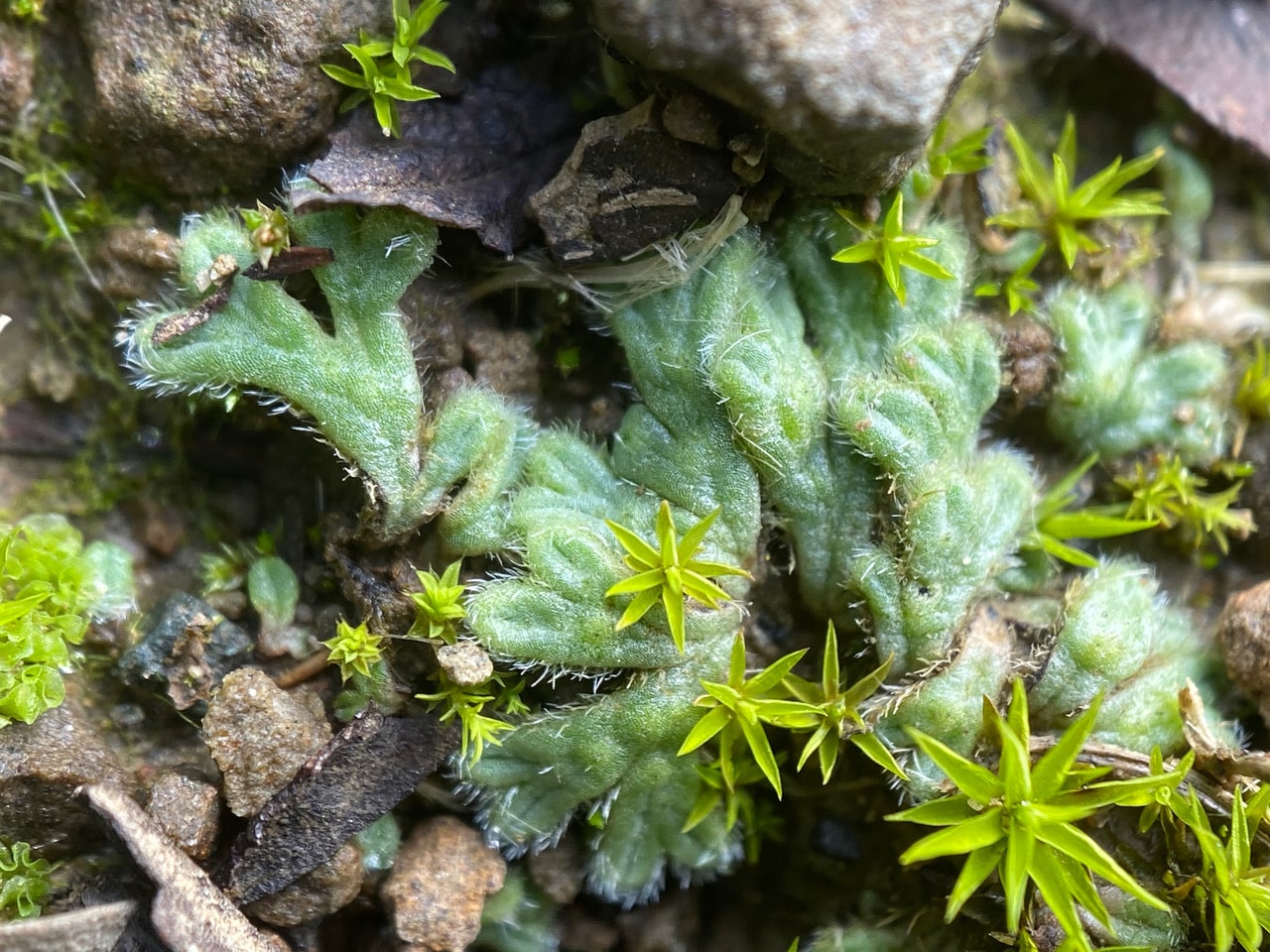
A small liverwort, the Hairy Crystalwort, Riccia trichocarpa is growing among some mosses on wet soil in the open ground at Siesta Nose.
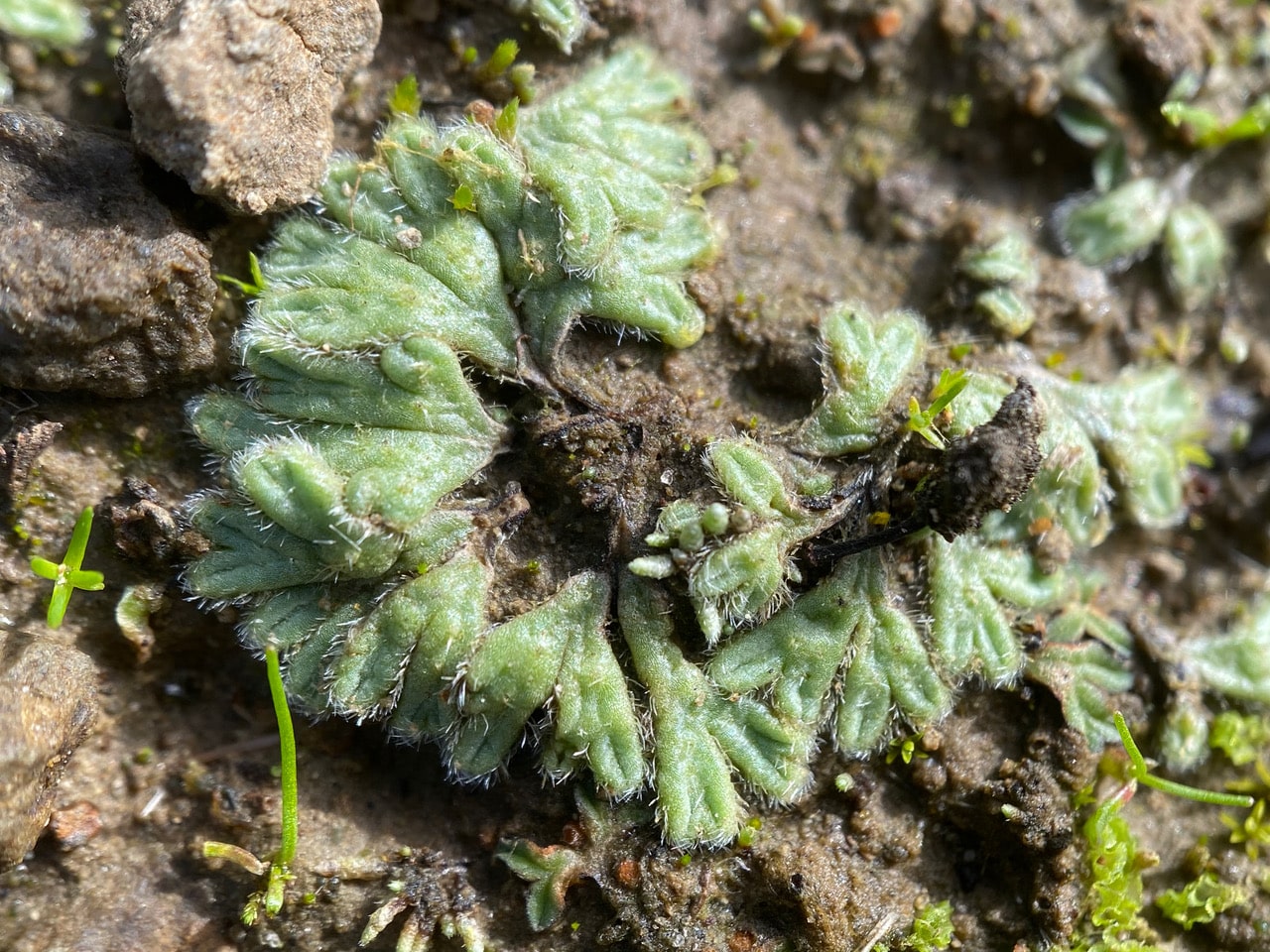
This is more typical growth form of Riccia, spreading out in widening circles or rosettes.
Riccia is a genus of liverworts in the order Marchantiales. The plants are small and thalloid, i.e. not differentiated into root, stem and leaf. Dichotomous branching may form rosettes or hemirosettes up to 3 cm in diameter, that may be gregarious and form intricate mats.
All this talk about mosses, liverworts and hornworts (collectively known as the Bryophytes) must be overwhelming for those not familiar with them. Often overlooked because of their small size and lack of colorful flowers, they are possibly the most ancient terrestrial plants. They are non-vascular, which means they have no roots or vascular tissue, but instead absorb water and nutrients from the air through their surface. Bryophytes thrive in damp, shady environments, but they can be found in diverse and even extreme habitats, from deserts to arctic areas.
The Bryophytes show an alternation of generation between the haploid gametophyte generation, which produces the sex organs and sperm and eggs, and the diploid sporophyte generation, which produces the spores. The long-lived and conspicuous generation is the gametophyte. Sperm are flagellated and must swim in search of the egg which may be on a different plant. Because their reproduction is tied to water, Bryophytes are often called the “amphibians of the plant world”. The sporophyte releases spores, from which the gametophytes ultimately develop. The sporophytes appear only occasionally and remain attached to and nutritionally dependent on the gametophyte.
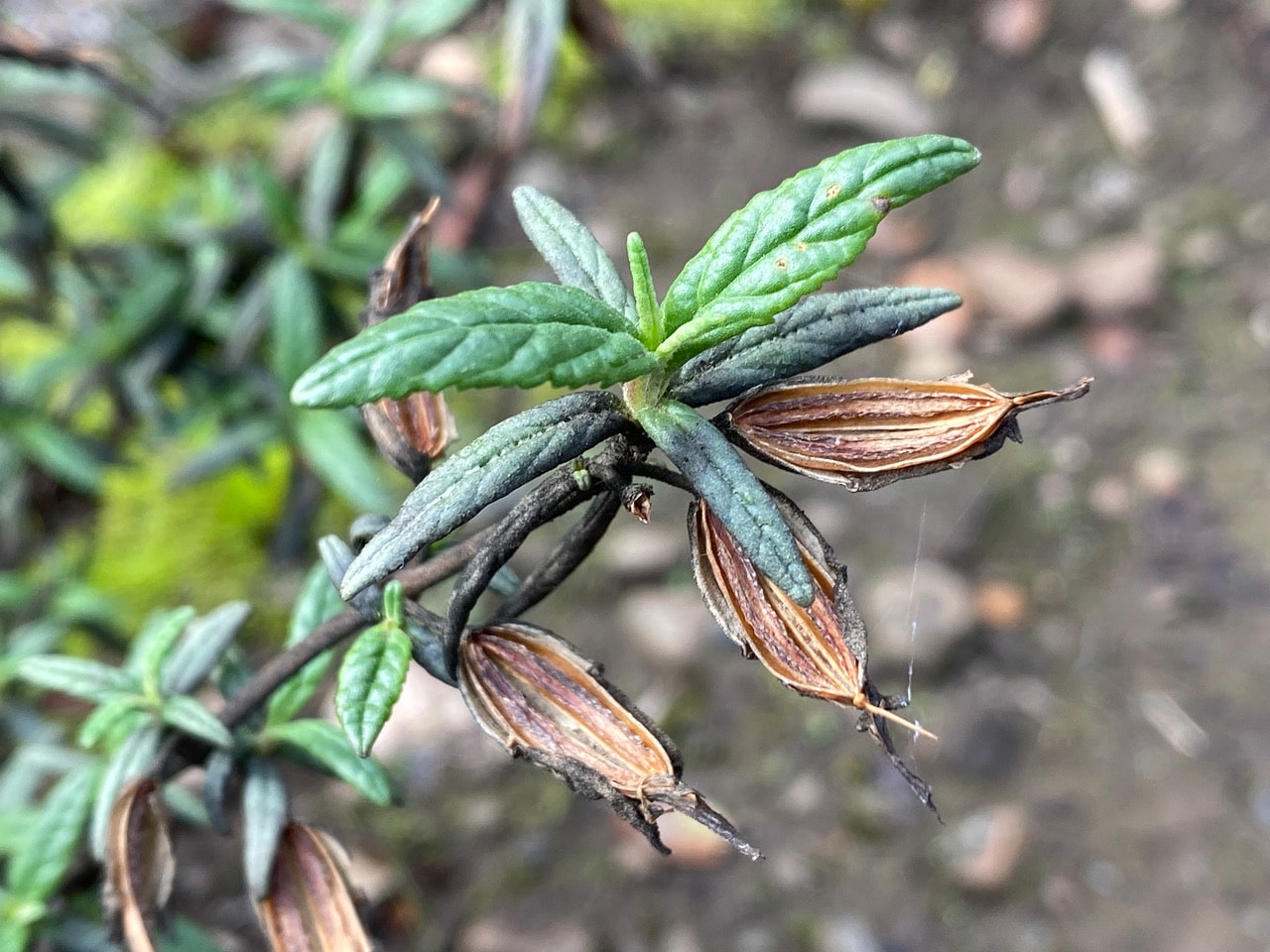
While still holding on to spent seed capsules and old leaves, a Sticky Monkeyflower, Diplacus aurantiacus has sprung back to life with fresh green leaves at the branch tips.
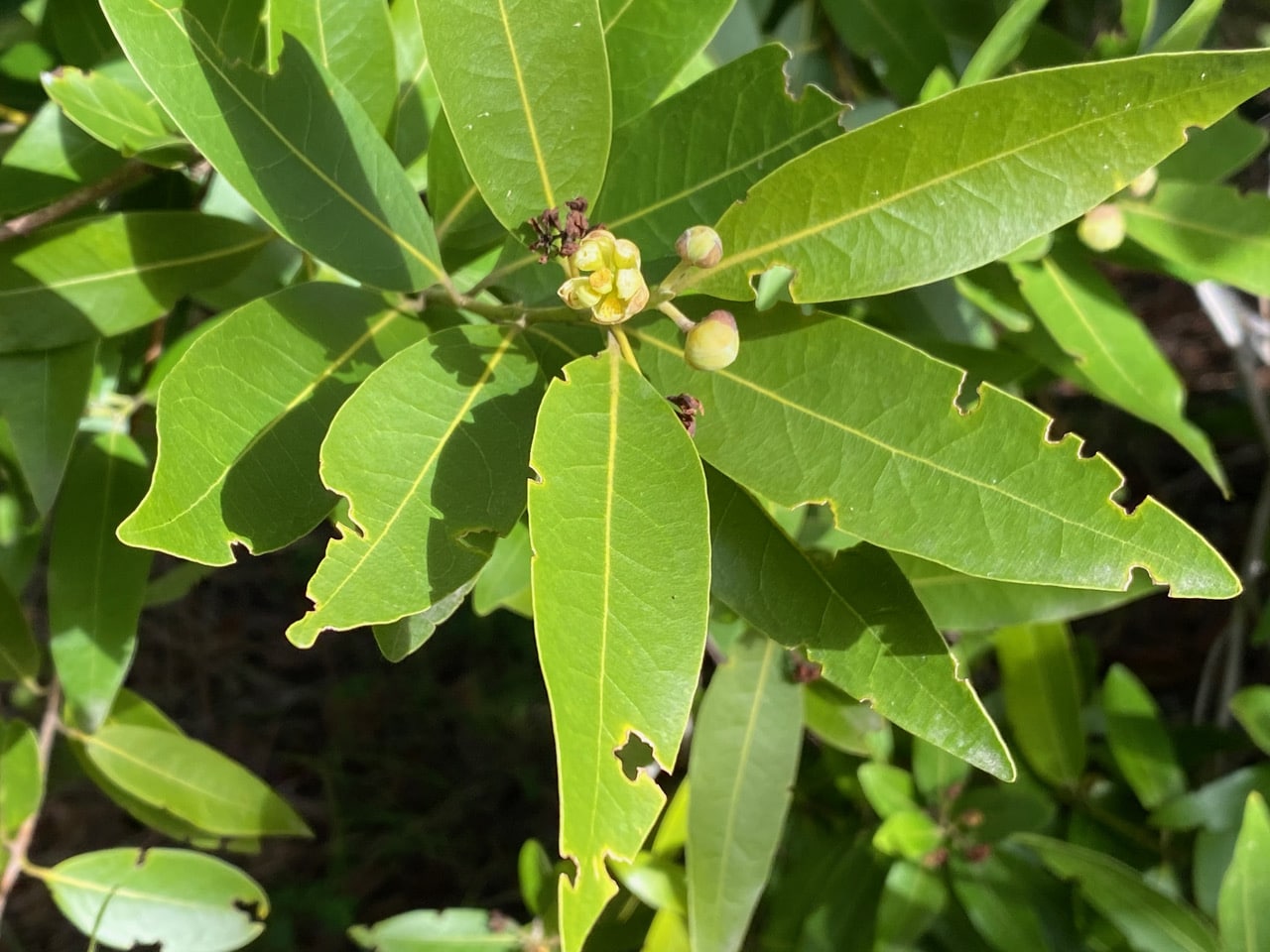
Who has been making these angular notches on the leaf margins of the California Bay? Some kind of beetle? It is hard to believe that anything can possibly feed on these strongly aromatic foliage. But then, if you would recall, last summer we did find the little moth caterpillars that fashioned distinct triangular boxes out of these leaves within which they live and feed. No plant defense is totally invincible.
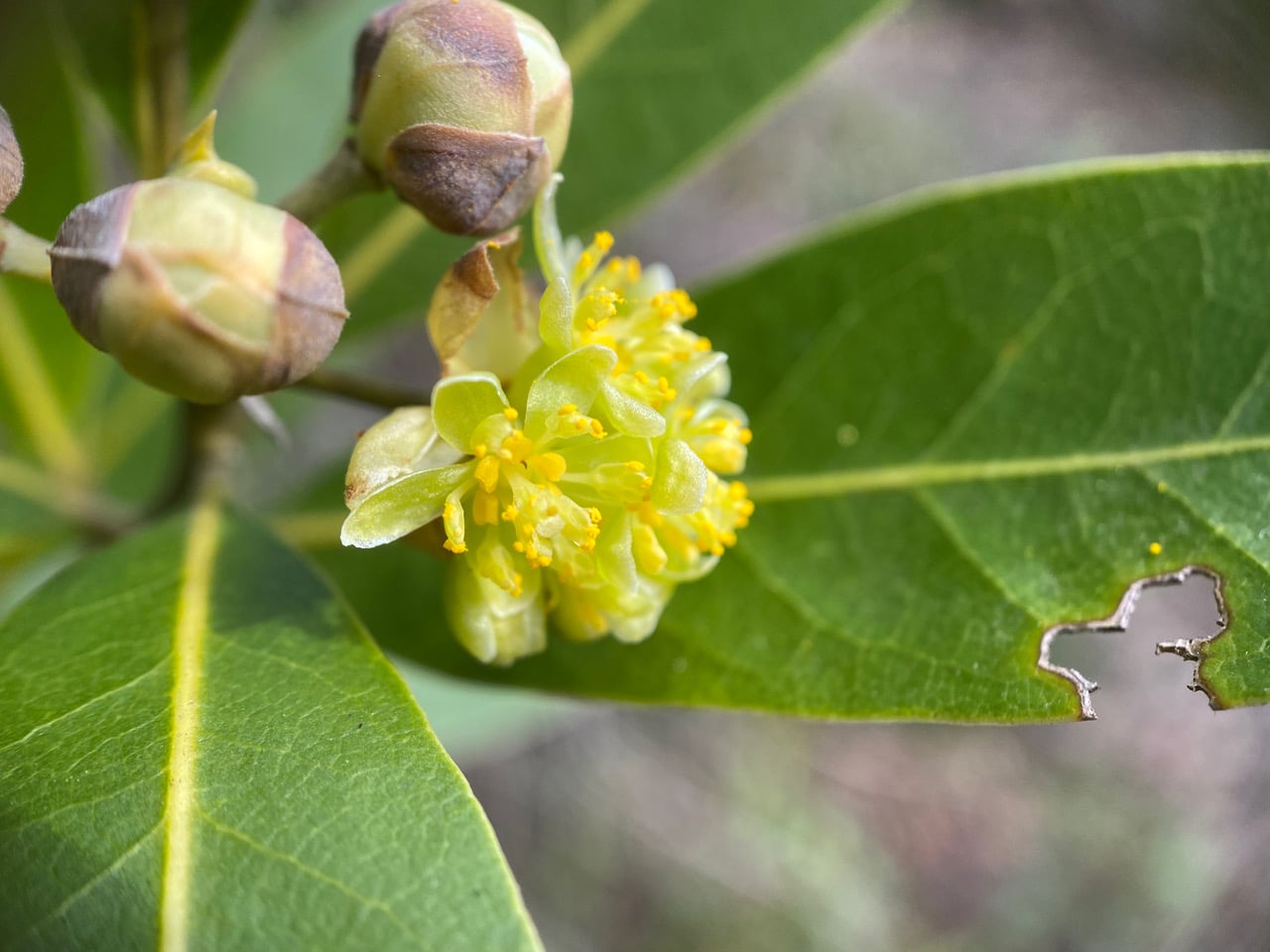
The Bay trees are blooming gloriously along Skyline Trail. I pause at several trees and wait for insects to appear. No such luck. Will I ever find out who pollinates these trees that bloom in winter?
The Bay flowers exhibit every feature that suggests that they are pollinated by insects. They have sticky pollen strategically positioned to adhere to small insects that come in to take nectar at the base of the flower. The pollinator has to be winter active, of the appropriate size and cold-hardy. Why am I not seeing any insect? Does the pollination happen at night? Might it be the Dance Fly I saw yesterday visiting the bay flowers at Leona Canyon? Last summer I have documented a species of Dance Fly that pollinates the evening-blooming Soap Plant along this very trail. Hmm, there are nocturnal Dance Flies…. It is fun to speculate.
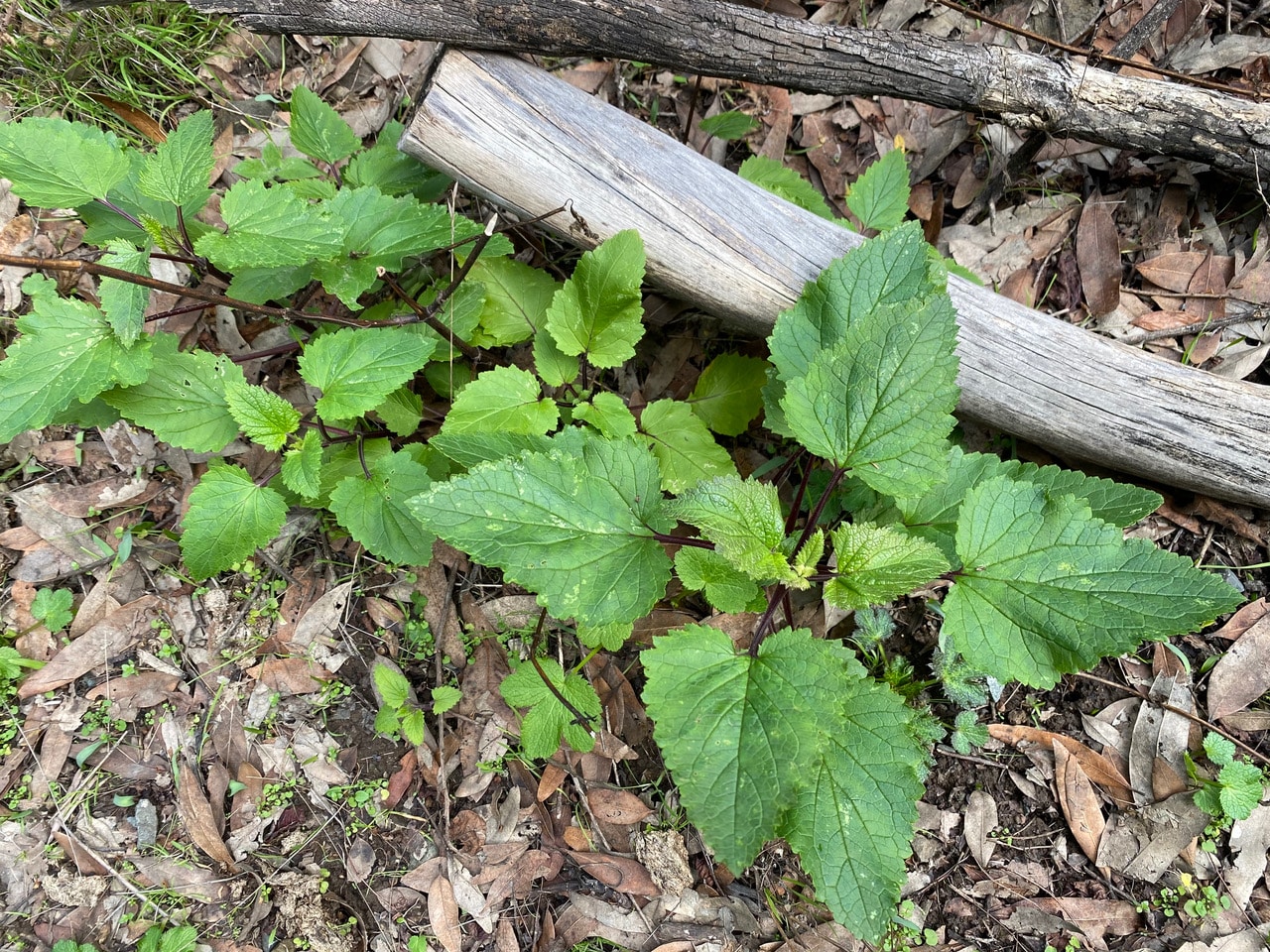
A fresh bumper crop of Bee Plant, Scrophularia californica has appeared along Skyline Trail.
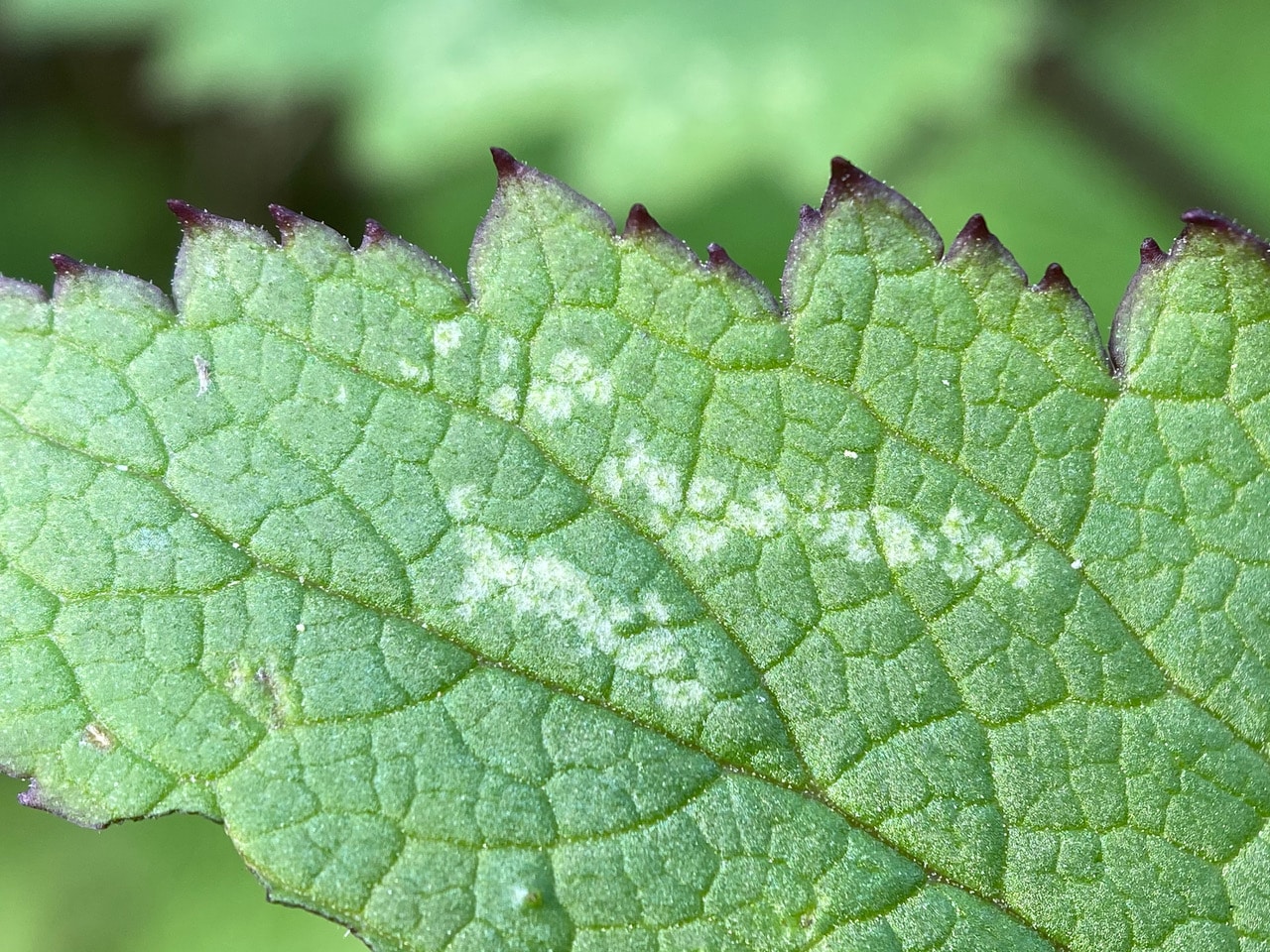
Close up view of a Bee Plant leaf showing fine stipplings, where chlorophyll has been extracted from the cells. These are probably feeding scars left by some insects with piercing-sucking mouthparts, such as true bugs (order Hemiptera) or thrips (order Thysanoptera). In past years, I have witnessed these scars rendered by a species of small Stink Bug. Incredibly, these insects are already active even though the Bee Plants have only freshly appeared, in winter no less!