

Pollinator Post 3/7/24 (2)
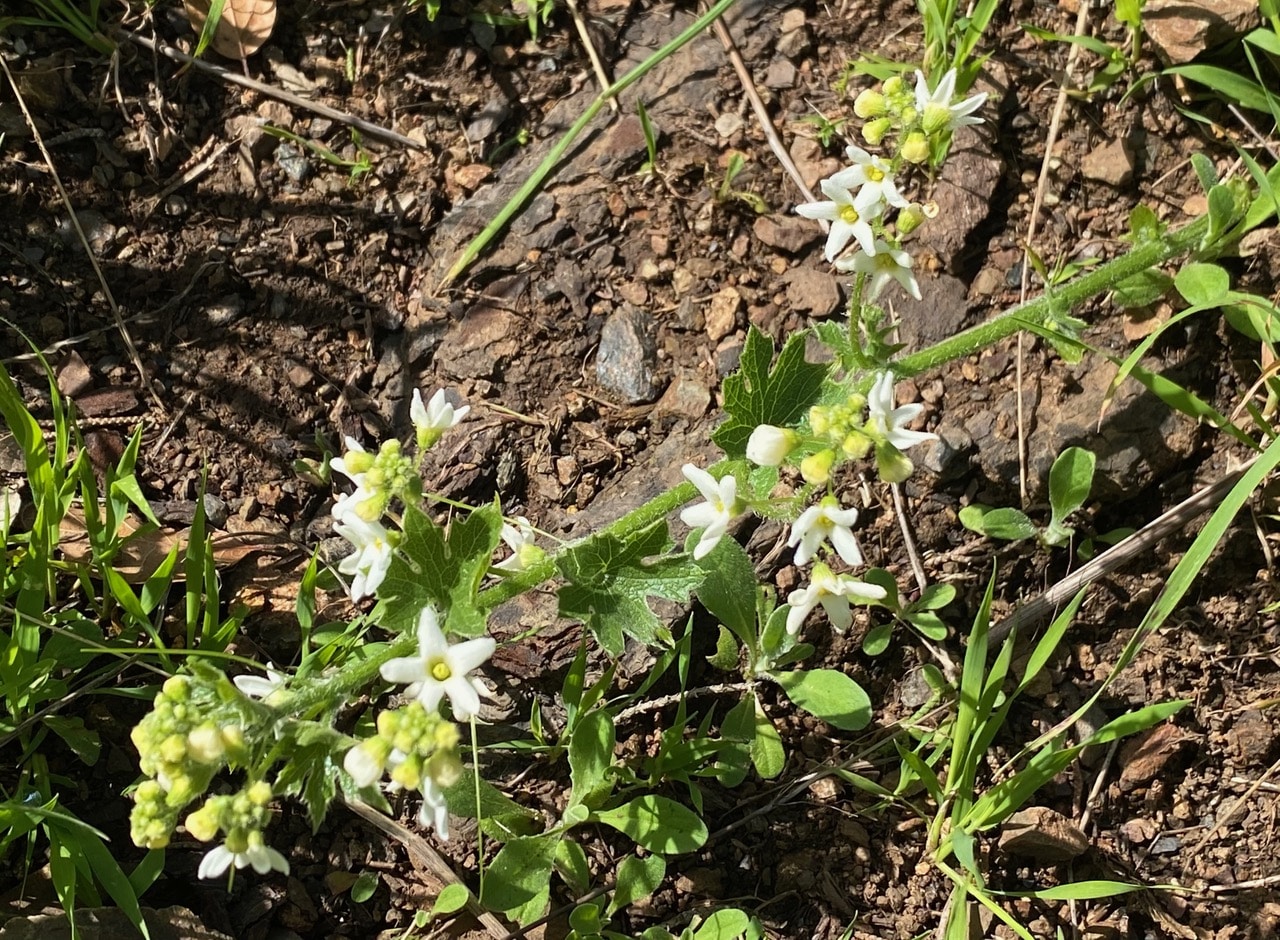
On the grassy hills along Sanborn Drive at Joaquin Miller Park, the trailing vines of the Wild Cucumber, Marah oregana are putting on their own little floral displays if one cares to stop and look.
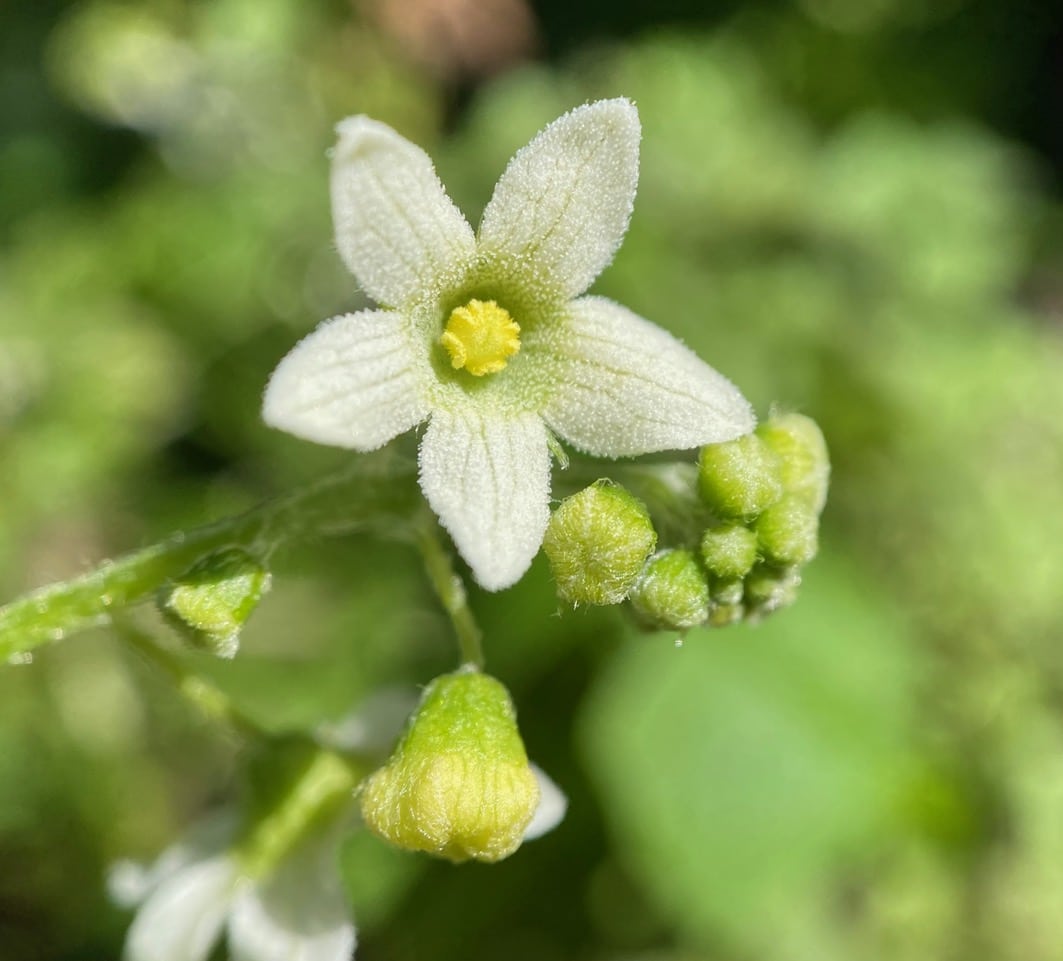
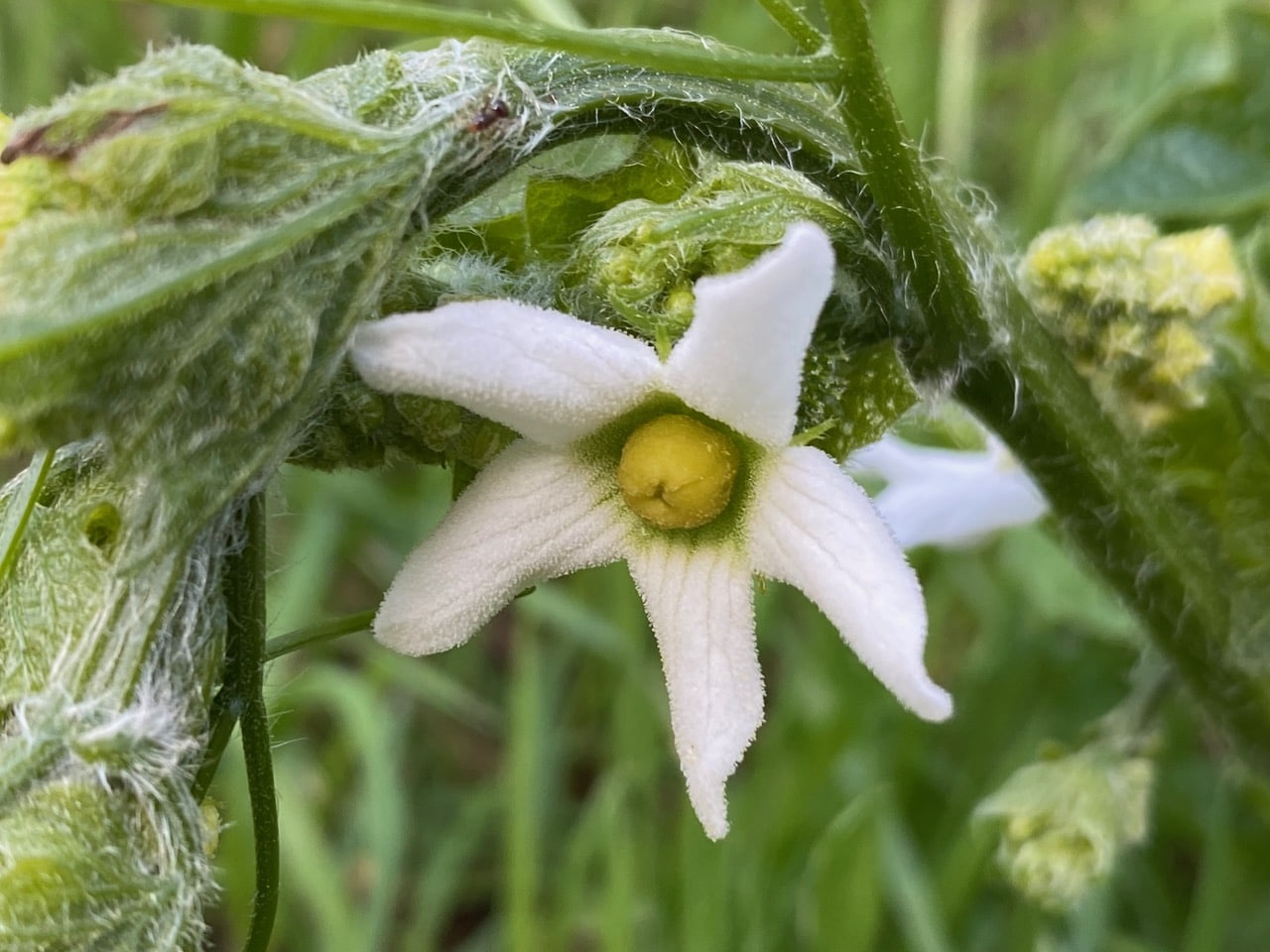
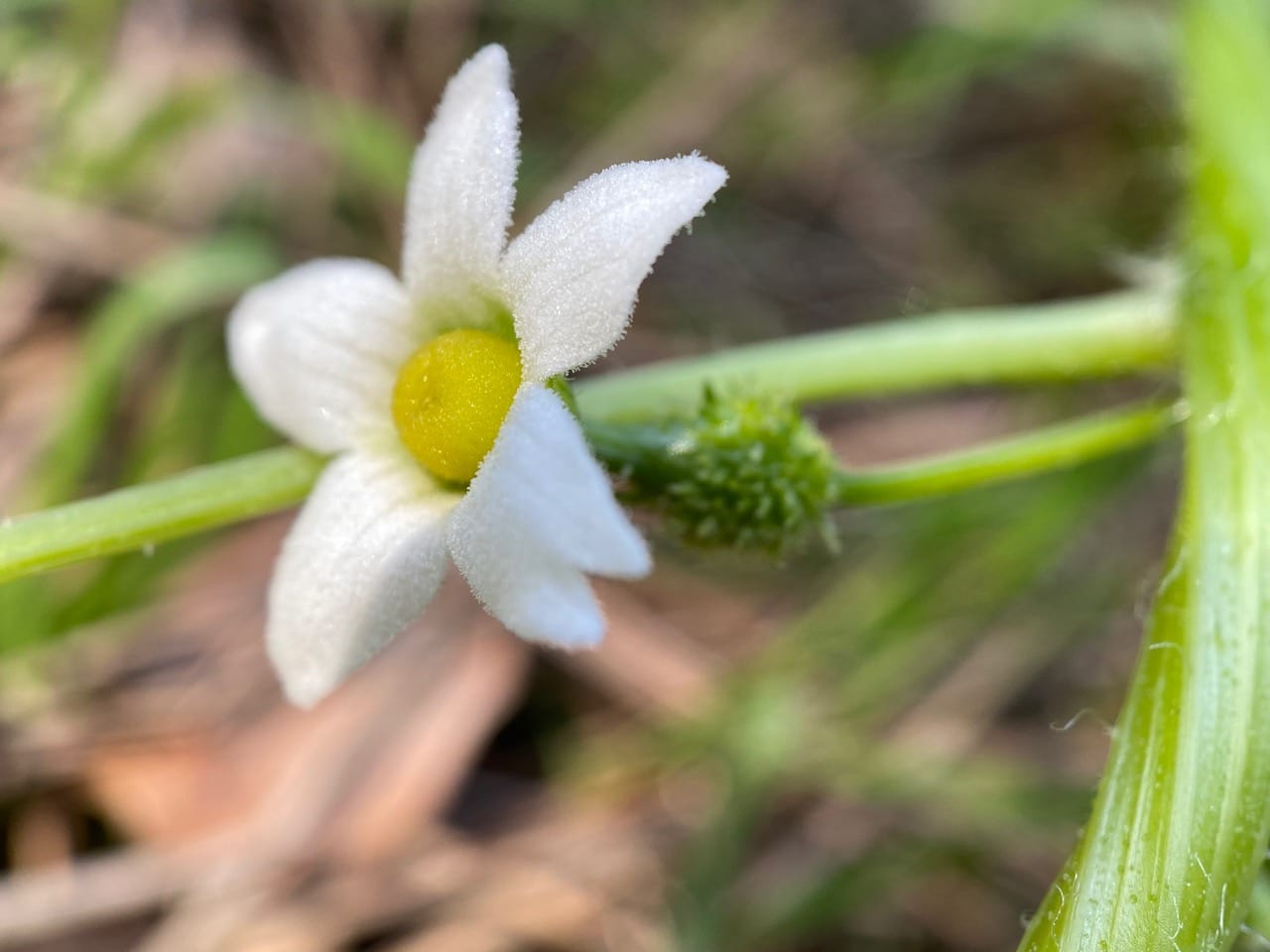
The Wild Cucumber is monoecious, with separate male and female flowers borne on the same plant. Male flowers far outnumber the female flowers. The staminate (male) flowers are borne on vertical panicles arising from a leaf axil. The five white petals are fused at the base to form a cup. The stamens are fused with the anthers twisted together in a mass to form a yellow center. The corolla is densely covered with short glandular hairs.

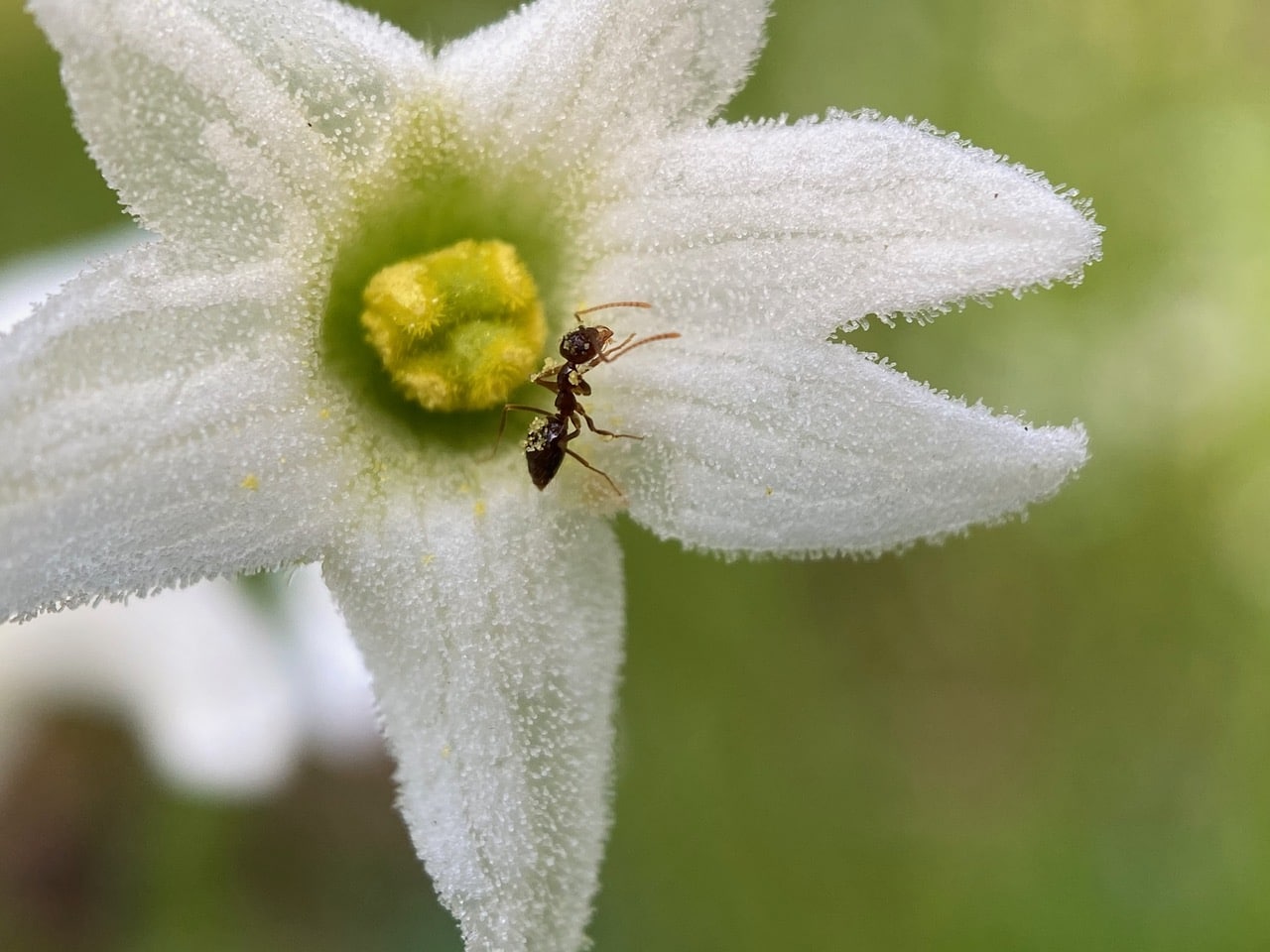
An American Winter Ant, Prenolepis imparis moving on a male flower of Marah catches my attention. There’s some yellow pollen grains stuck to its head and abdomen.
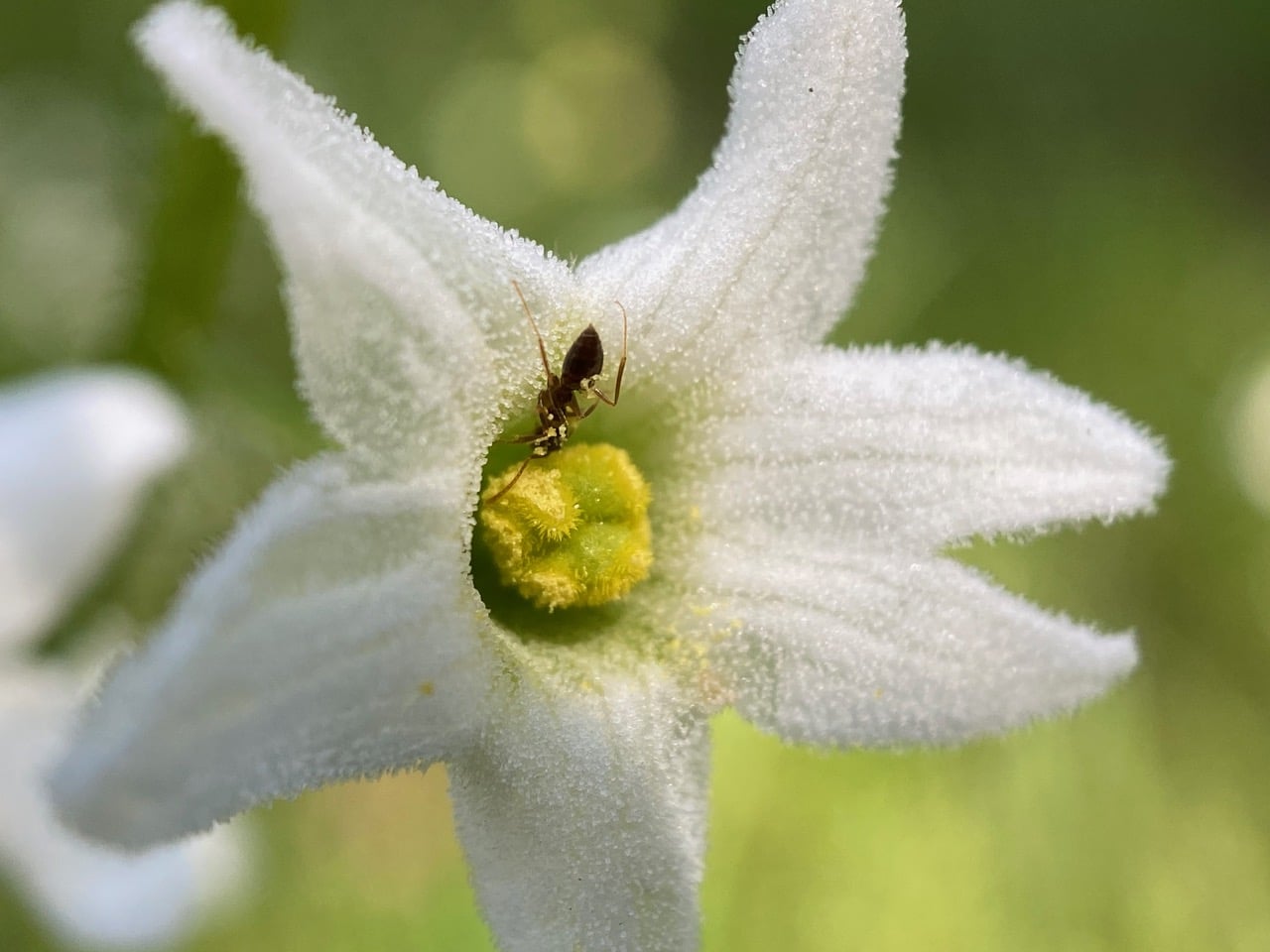
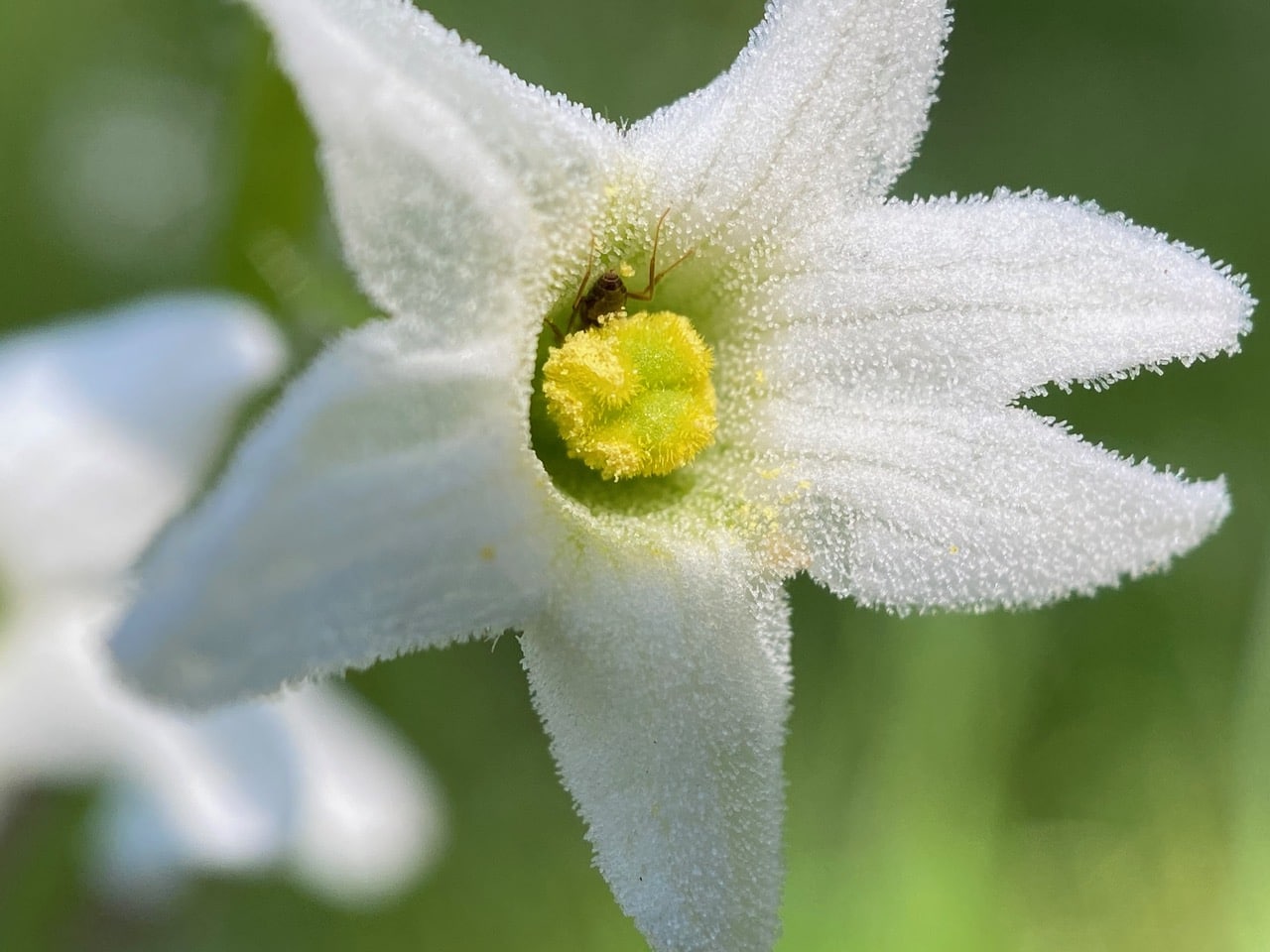
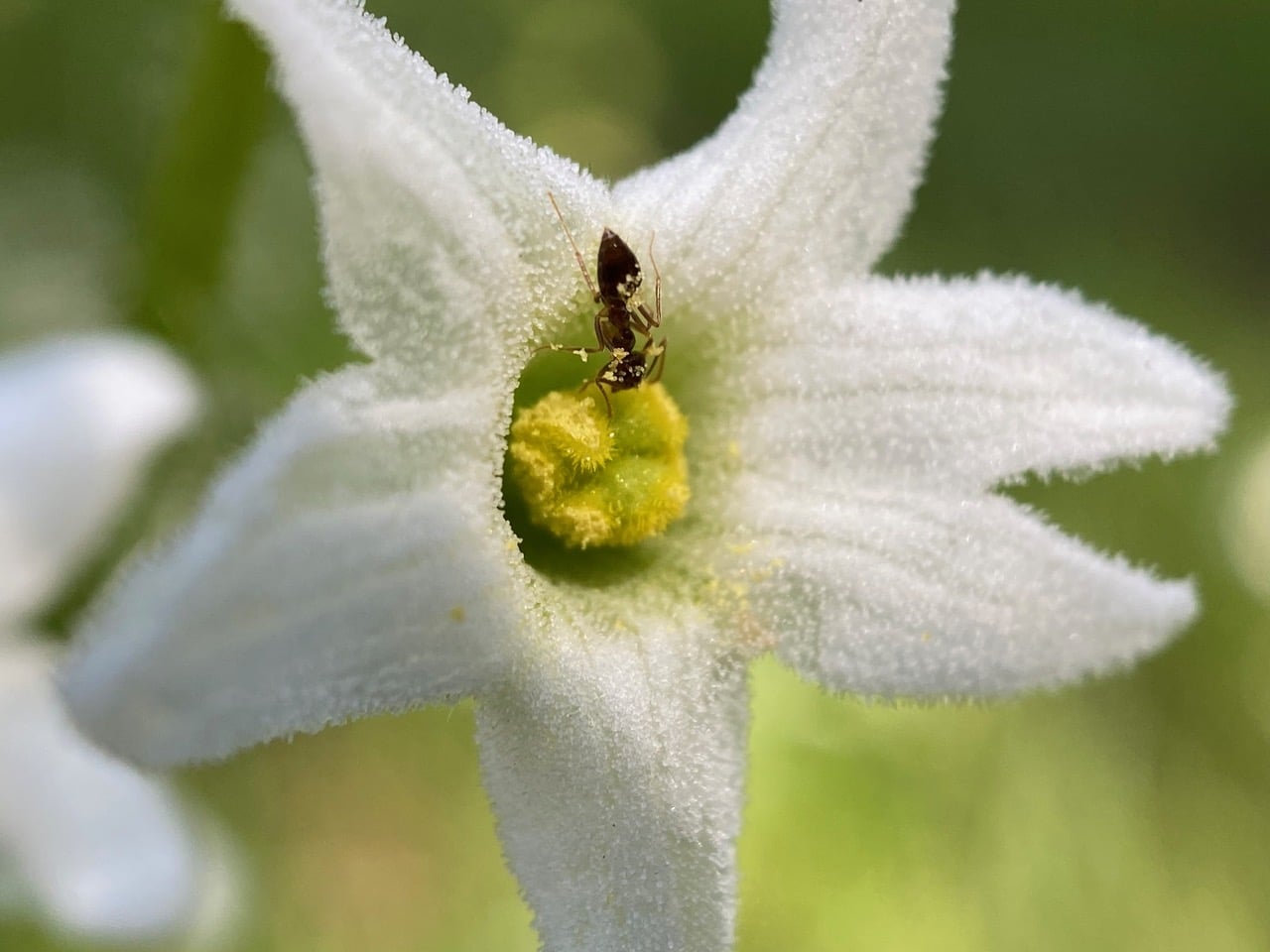
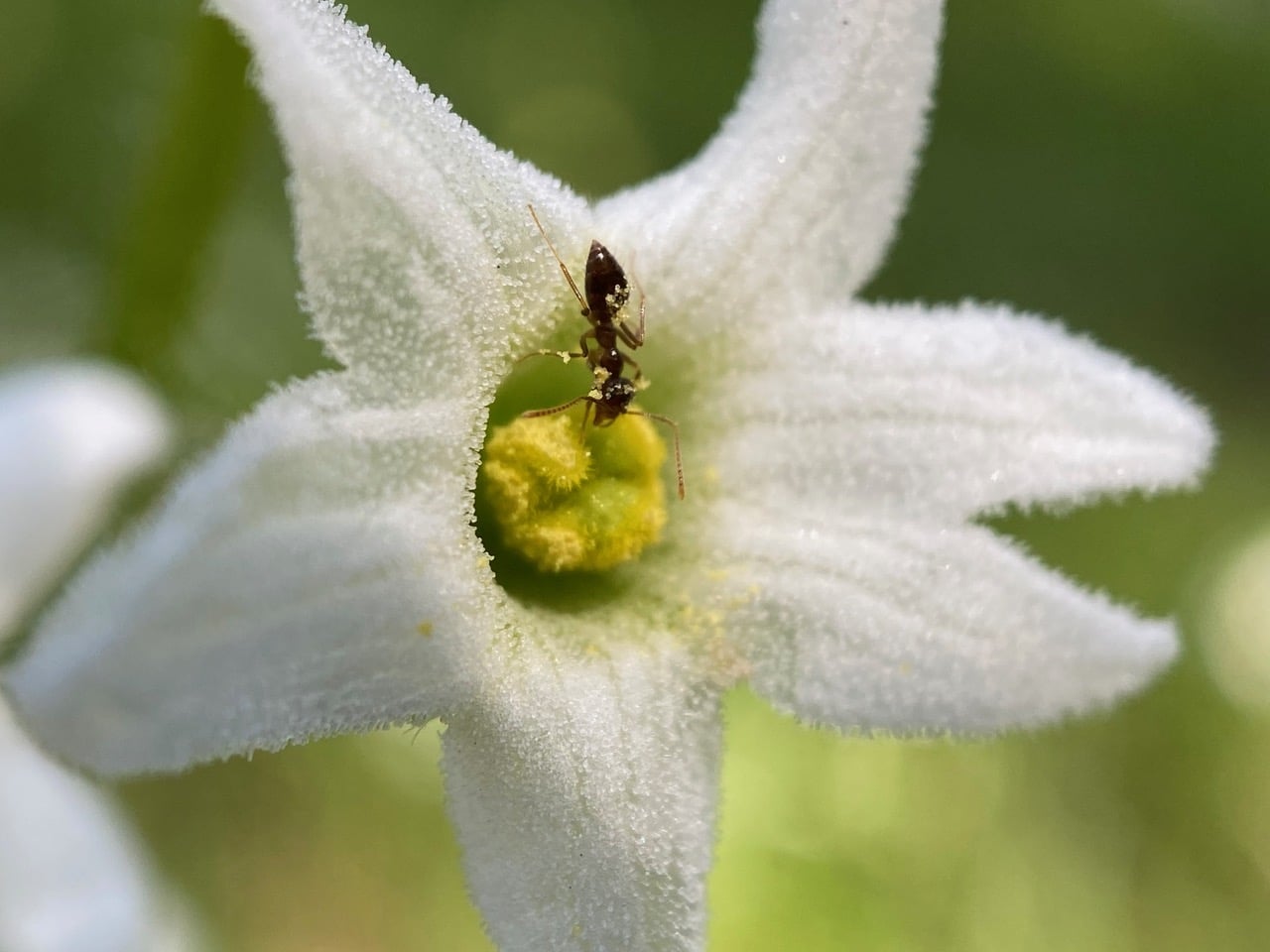
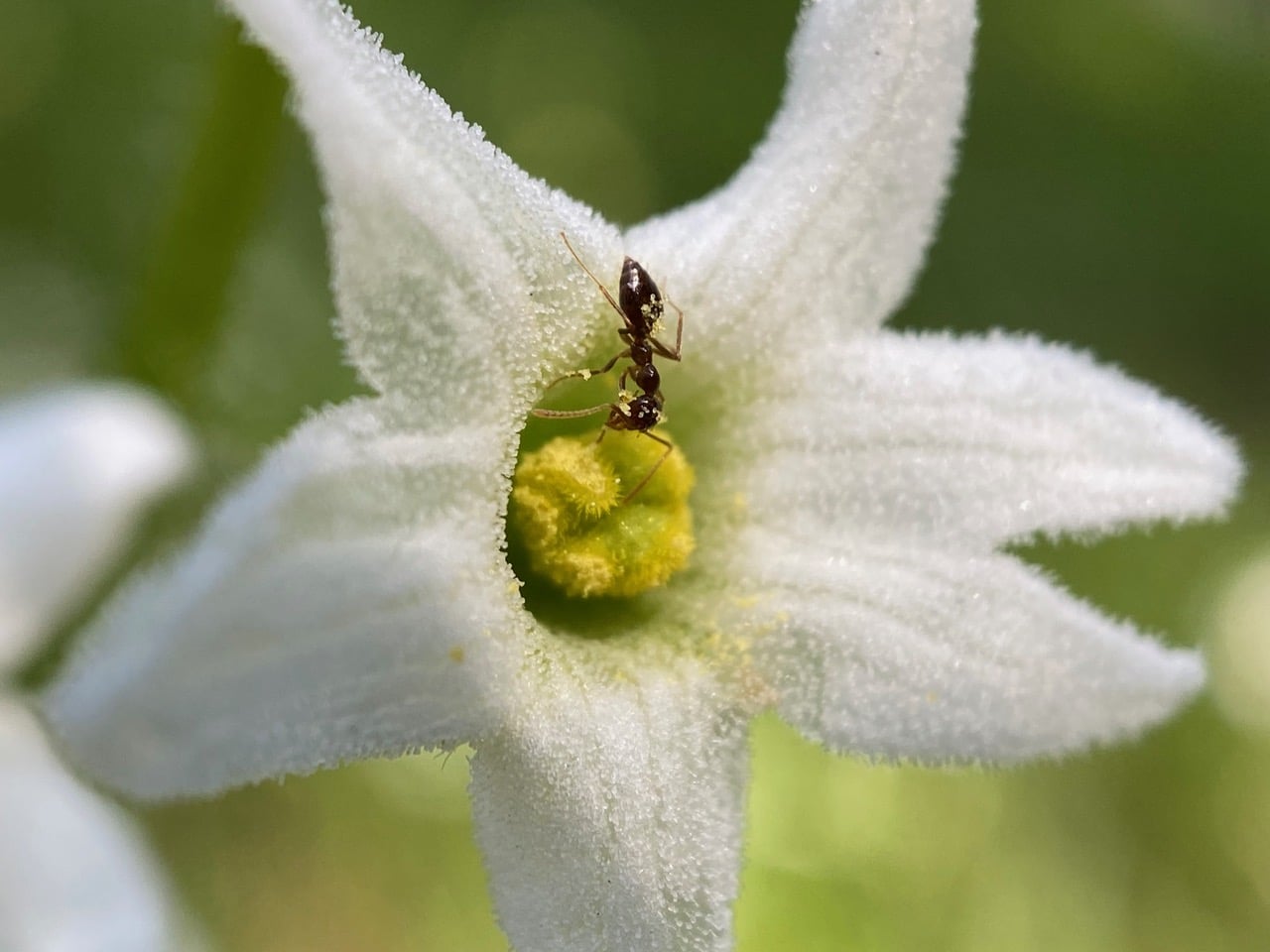
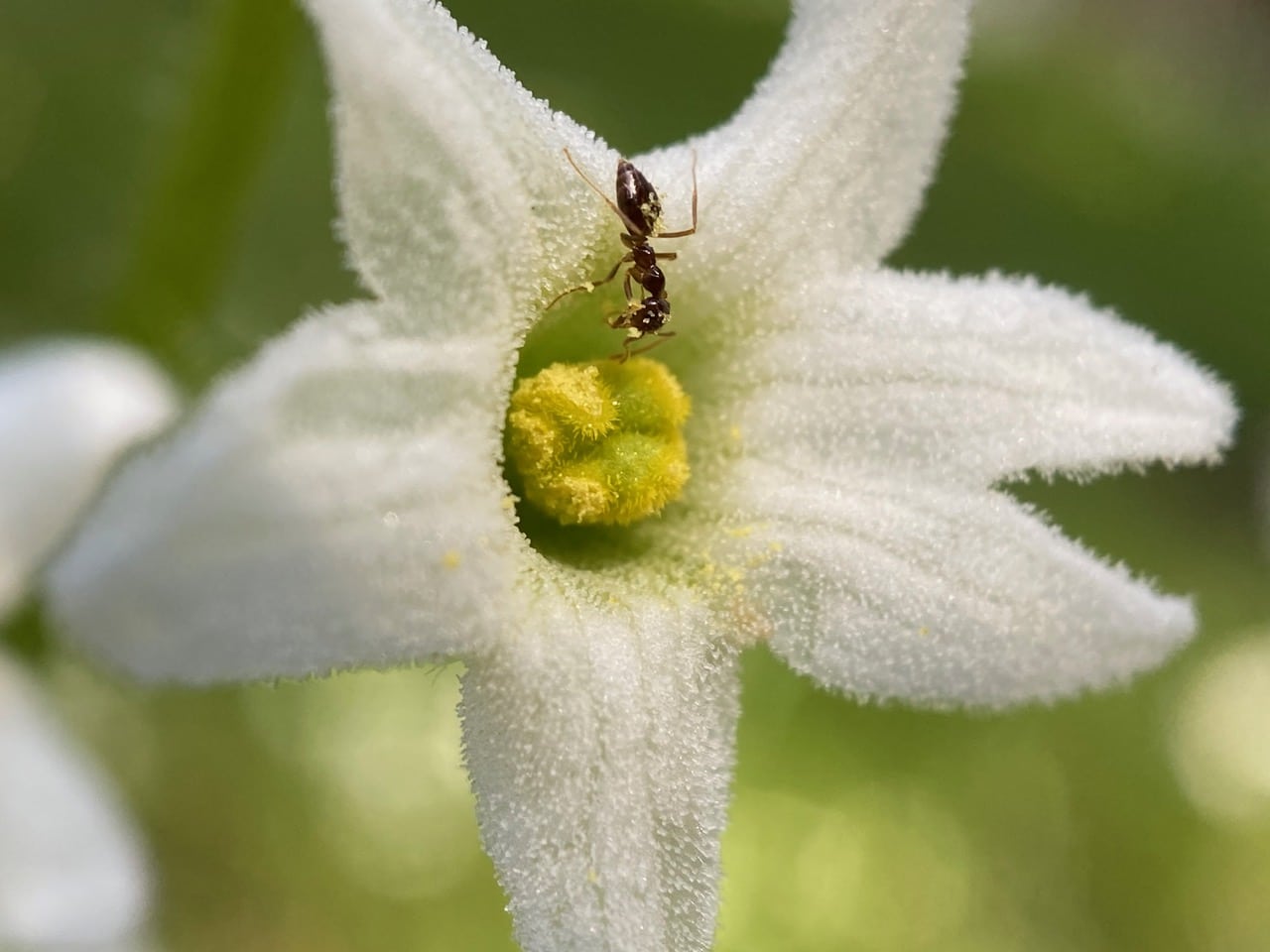



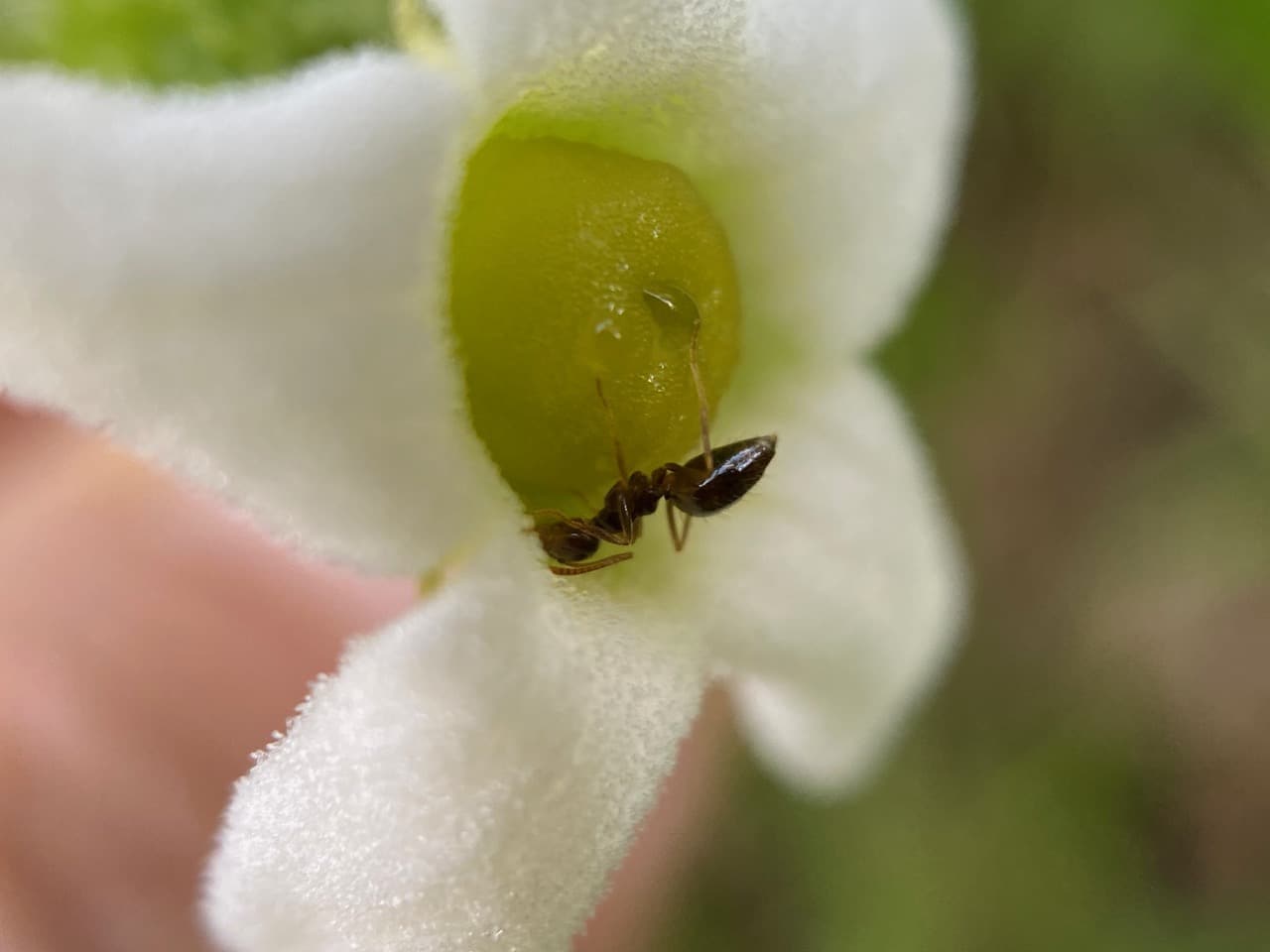

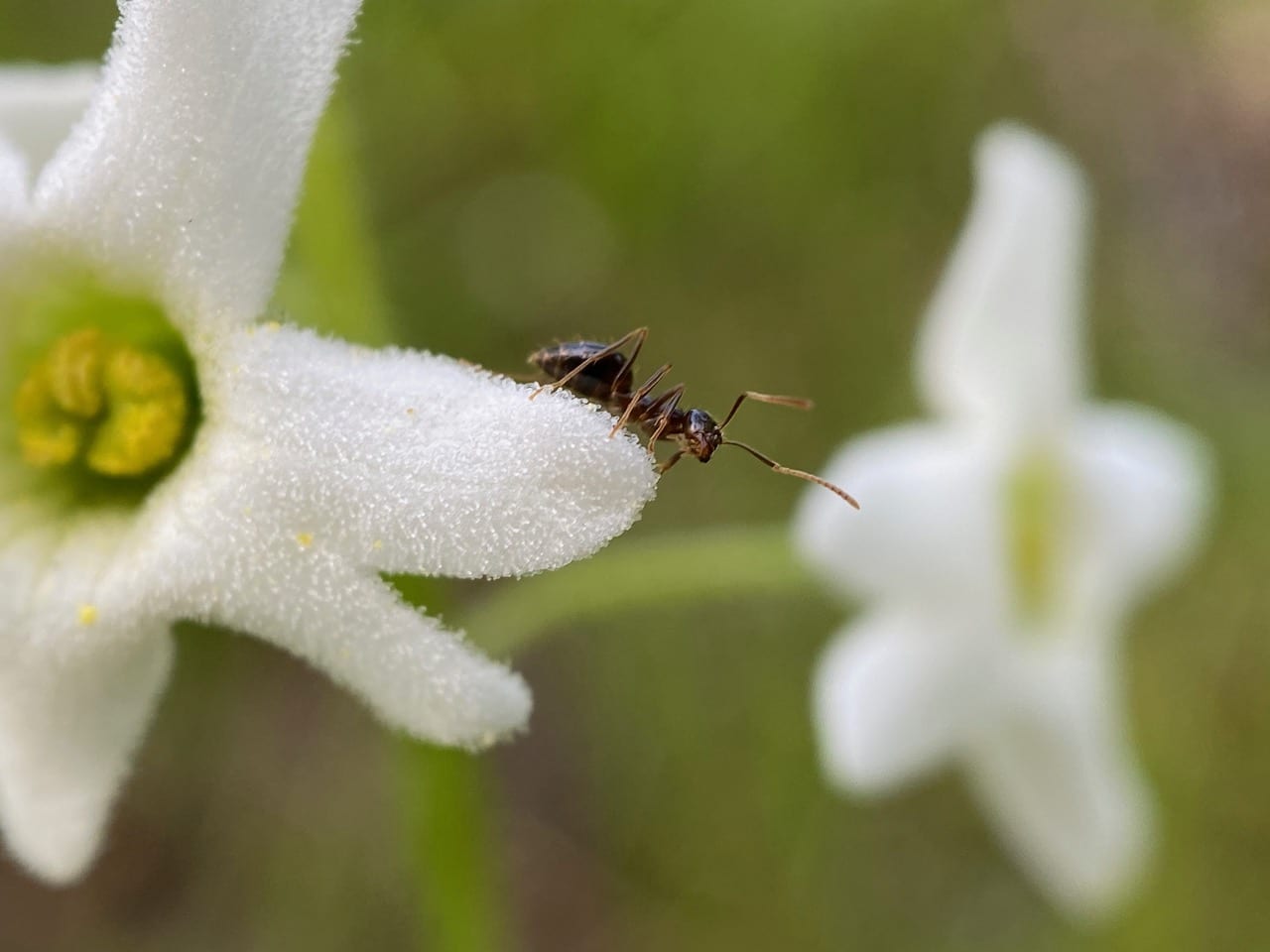
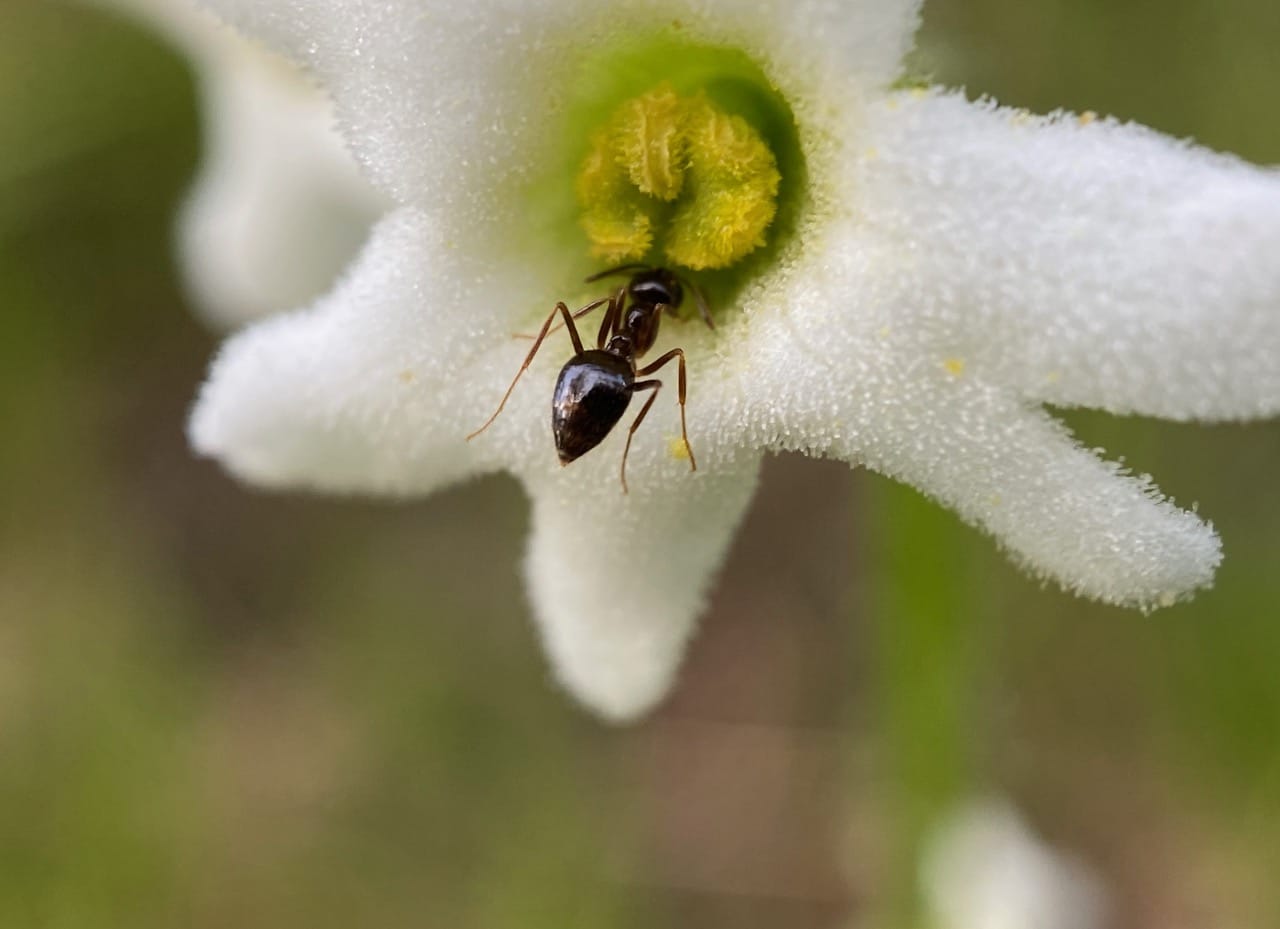 Marah and the ants (and perhaps other small nectar-seeking insects) have apparently evolved an interesting dance around the transfer of pollen that benefits both plant and insect, a mutualism so to speak. A sweet reward that comes with pay-back.


The ant lowers its body to enter the male flower…
… and disappears into the narrow gap between the corolla and the fused stamens in the center of the flower. Apparently it is searching for nectar at the base of the flower.
When the ant finally backs out of the flower, it is coated with more pollen that has been rubbed off the stamens.
The ant appears agitated and begins to groom the pollen off its face.
The grooming goes on for quite a while.
Its eyes finally cleared of pollen, the ant again descends to the base of the flower for more nectar. I watch with bemusement as the ant repeats this behavior three times on the same flower. Apparently the nectar of Marah is irresistible to the ants. Much as it hates the sticky pollen, the ant keeps coming back for more nectar.
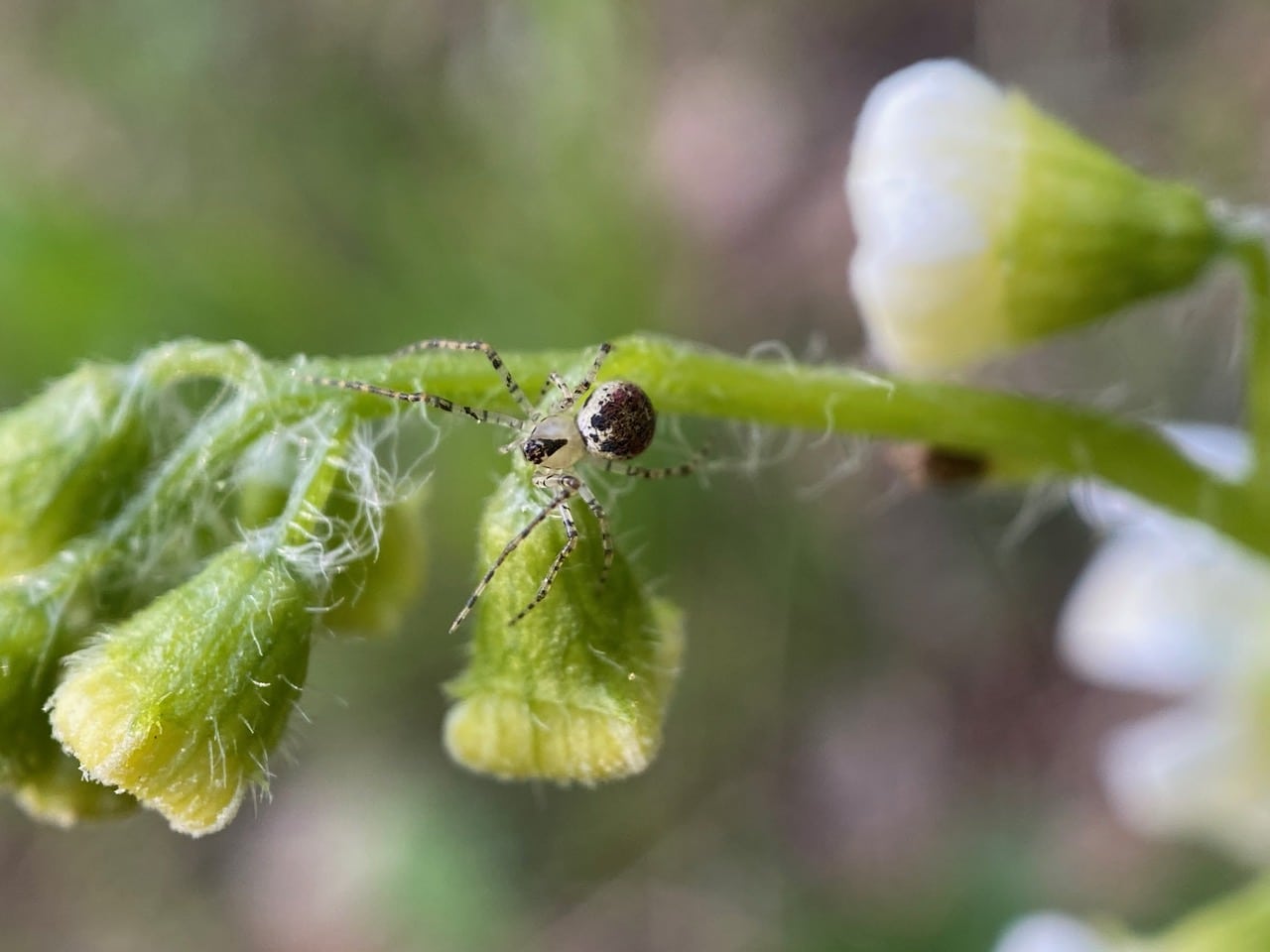
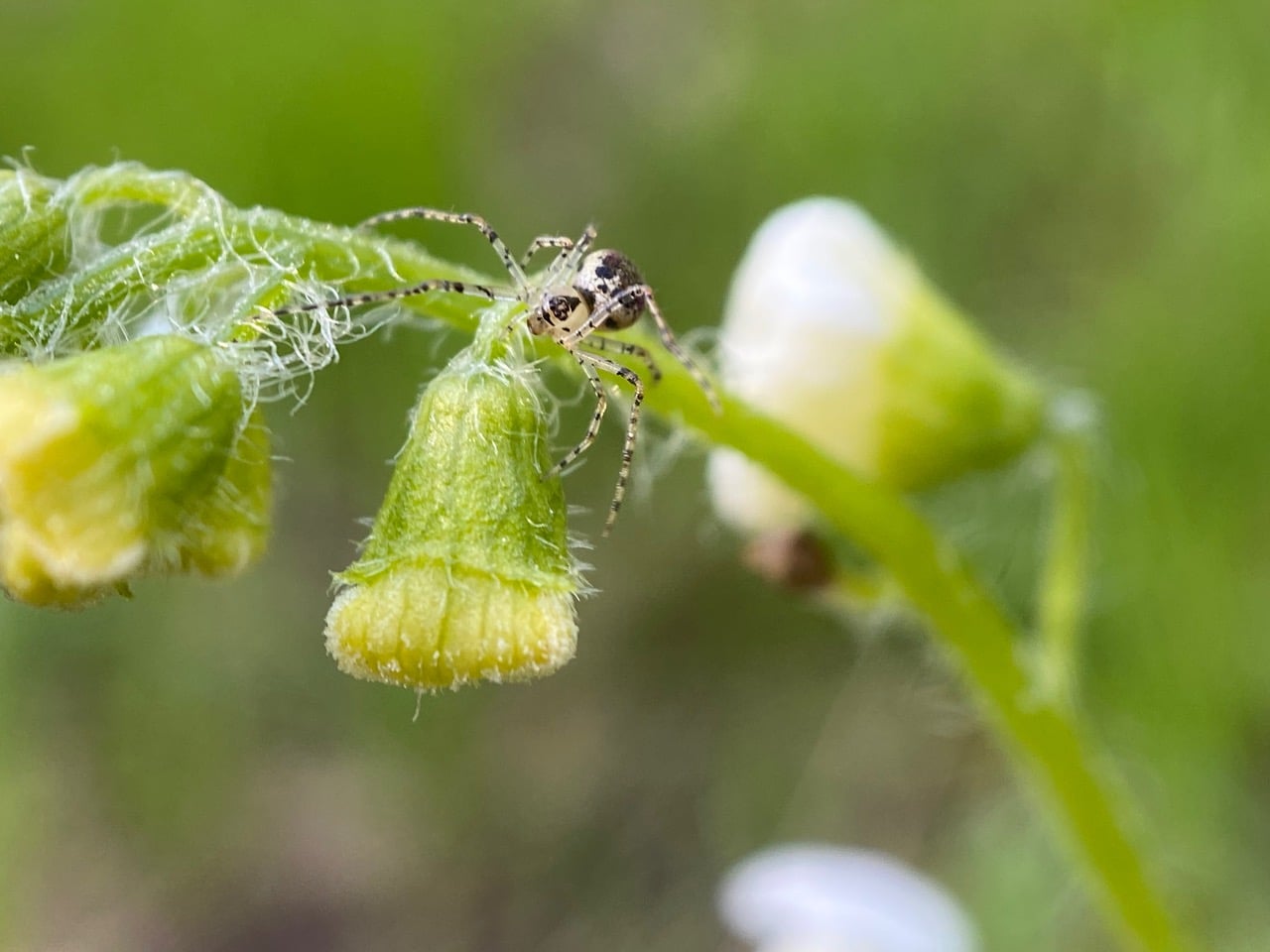
Look, there’s a tiny spider on the flower buds of the Marah vine. According to iNaturalist, it is a False Pirate Spider, Platnickina tincta (family Theridiidae).
Spiders in the family Teridiidae are called Cobweb Spiders. They make a messy, tangled scaffold with a central area consisting of a three-dimensional trellis of silk. From the web to the ground are vertical threads with sticky glue at the bottom. If an insect crawls against the thread it will break and the prey will hang in the air awaiting the attack of the spider. Although Cobweb Spiders are small, they are violent attackers that can take down prey much larger than themselves.
Members of the Theridiidae family are also called Comb-footed Spiders because they have a “comb” on their last pair of legs. The comb is a series of serrated spines which they use to comb out the silk from the spinnerets. Theridiids are cribellate spiders with a specialized organ called a cribellum, which makes silk with “mechanical stickiness” instead of the liquid glue of other spiders. Unlike a typical spinneret, the cribellum has thousands of tiny spigots, all producing extremely thin threads that the spider combs into a single, wooly fiber. Instead of glue, nanofibers from this silk seem to trap prey by fusing with a waxy coating on an insect’s body.
It is time to look for the female flowers to figure out how pollination occurs on Marah.
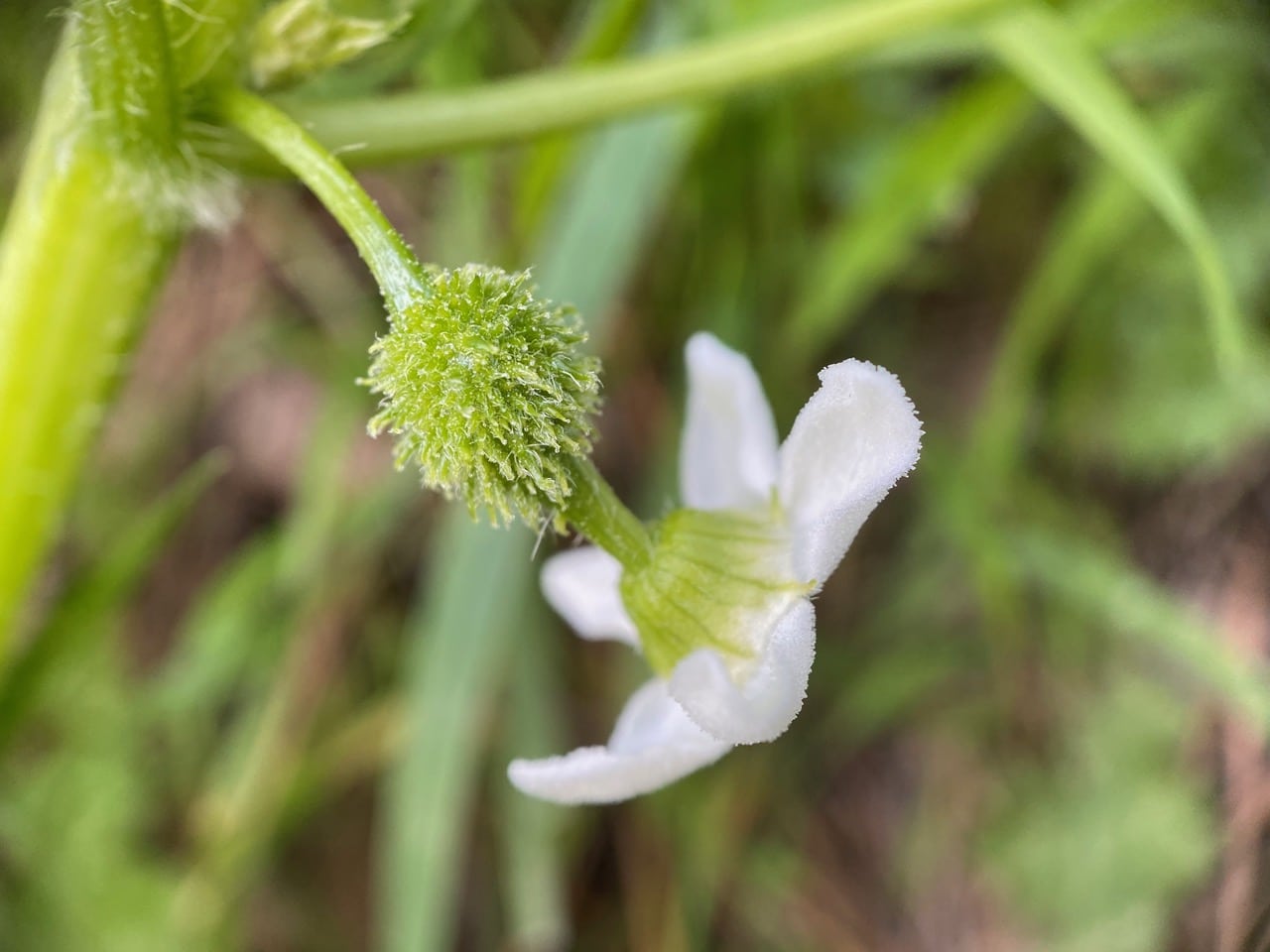
As we have seen, the Wild Cucumber is monoecious, with separate male and female flowers borne on the same plant. The male flowers are borne on vertical panicles, while the solitary female flower emerges from the same leaf axil at the base of the male flowers. The female flower has an inferior ovary, from which the spiky fruit develops below the flower.
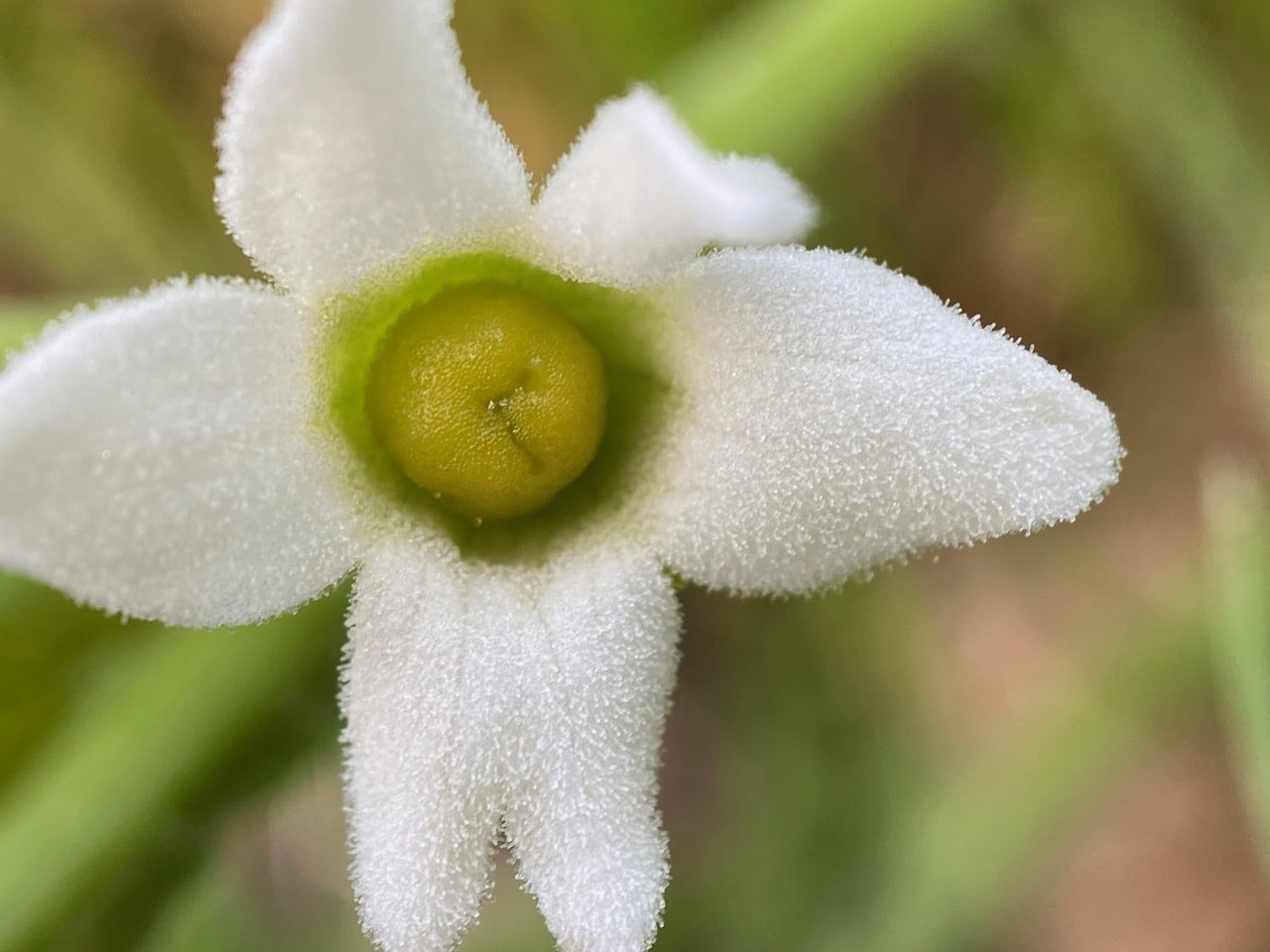
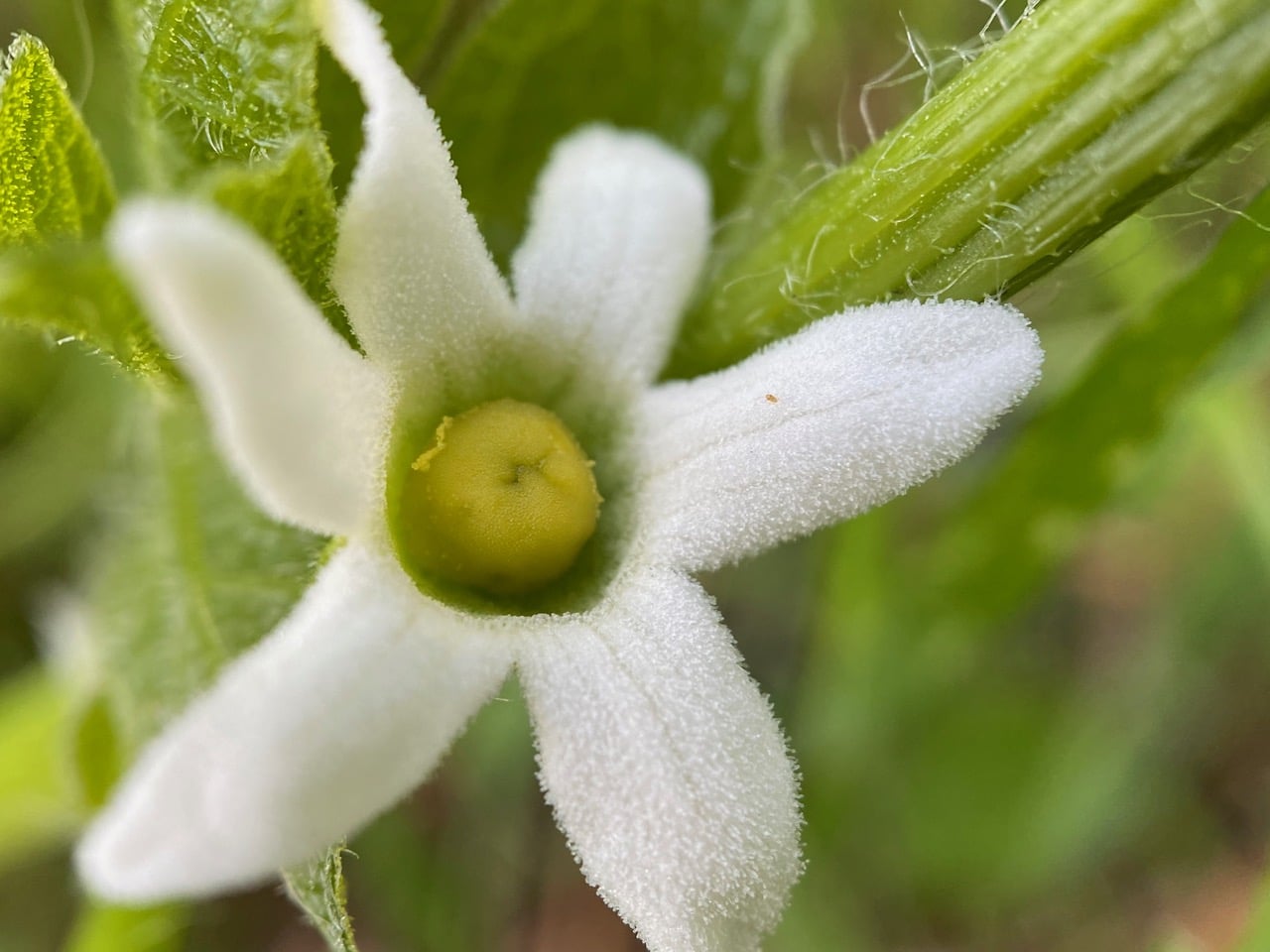
In the Marah, the female flowers apparently matures before the male flowers above them. Here’s a fresh female flower that has opened while the male flowers above it are still in buds. While the male and female flowers look similar at first glance, a close examination reveals that the yellow globular structure in the middle of the female flower is a bulbous stigma for receiving pollen.
When the female flower is freshly open, the stigma is moist, the better to capture any incoming pollen.
Did some insect deposit the pollen on the stigma of this female flower?
I am happy to find an ant on a female flower. Note that the stigma is actually oozing liquid. I watch as the ant goes down the gap between the stigma and the cup-shaped corolla. If the ant has some pollen on its body from a previously visited male flower, it could easily be rubbed off on the moist stigma of this flower. Dichogamy (separation of genders in time) is a floral strategy for avoiding self-pollination.
There is quite a bit of ant activity on the Wild Cucumber flowers right now as the plant is in peak bloom.
I spend half an hour sitting on the ground, simply enjoying the antics of the American Winter Ants on the Marah flowers.
Marah and the ants (and perhaps other small nectar-seeking insects) have apparently evolved an interesting dance around the transfer of pollen that benefits both plant and insect, a mutualism so to speak. A sweet reward that comes with pay-back.Of course, larger insects such as hover flies with sufficiently long tongues to reach the nectar may also pollinate the Marah flowers. They don’t necessarily have to climb down the corolla to have pollen adhere to their body. All they have to do is make contact with that structure in the middle of the flower. The strategy works for larger insects too. Hooray for Marah pollination!
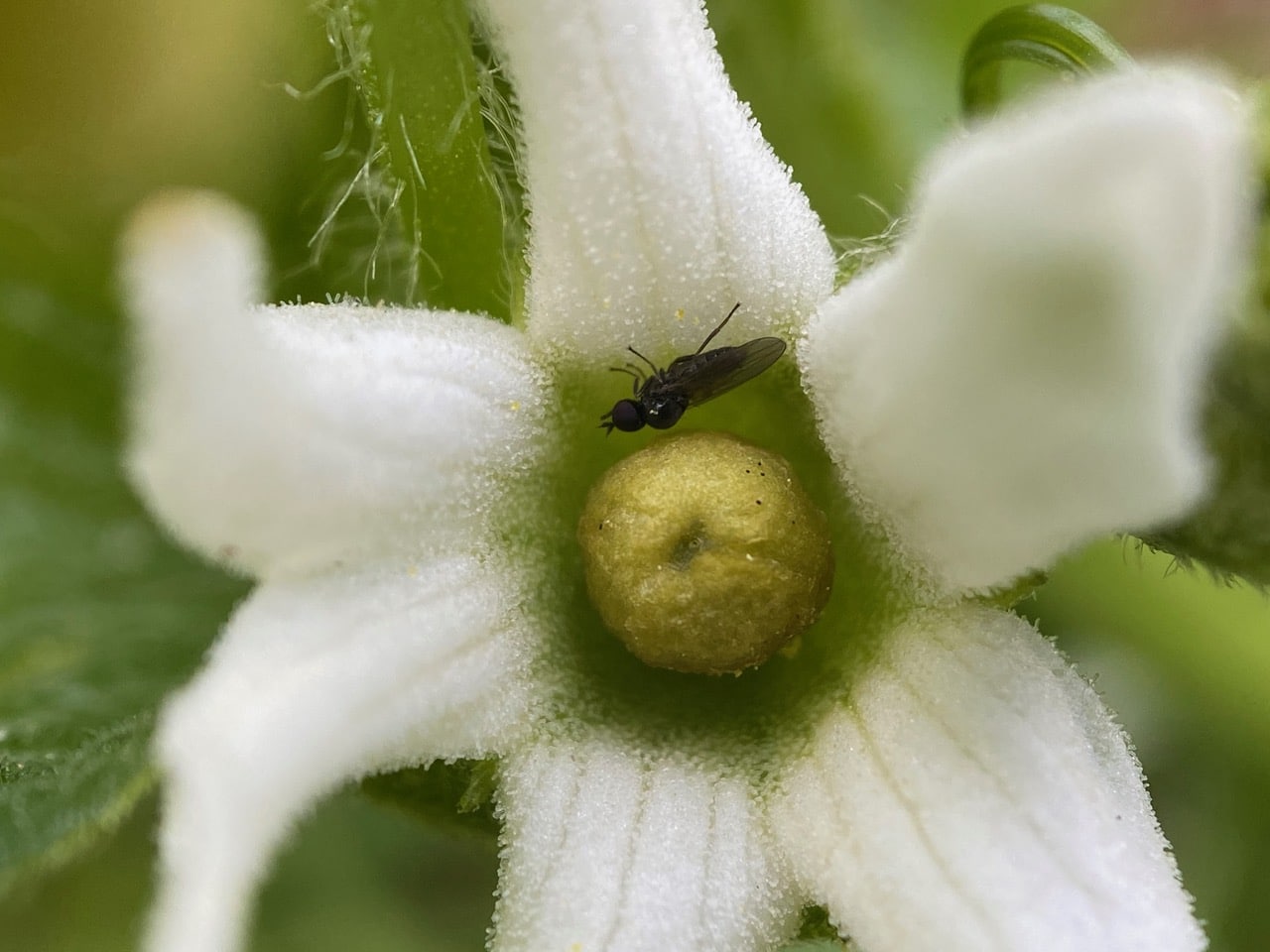
Hey, look, a Hybotid Dance Fly (family Hybotidae) in a female flower! The fly appears to have some pollen grains on its thorax. Perhaps Marah can be pollinated by these tiny flies too!
A Hybotid Dance Fly on a fading male flower. Note yellow pollen grains adhering to the sides of its thorax.