

Pollinator Post 3/17/24 (2)
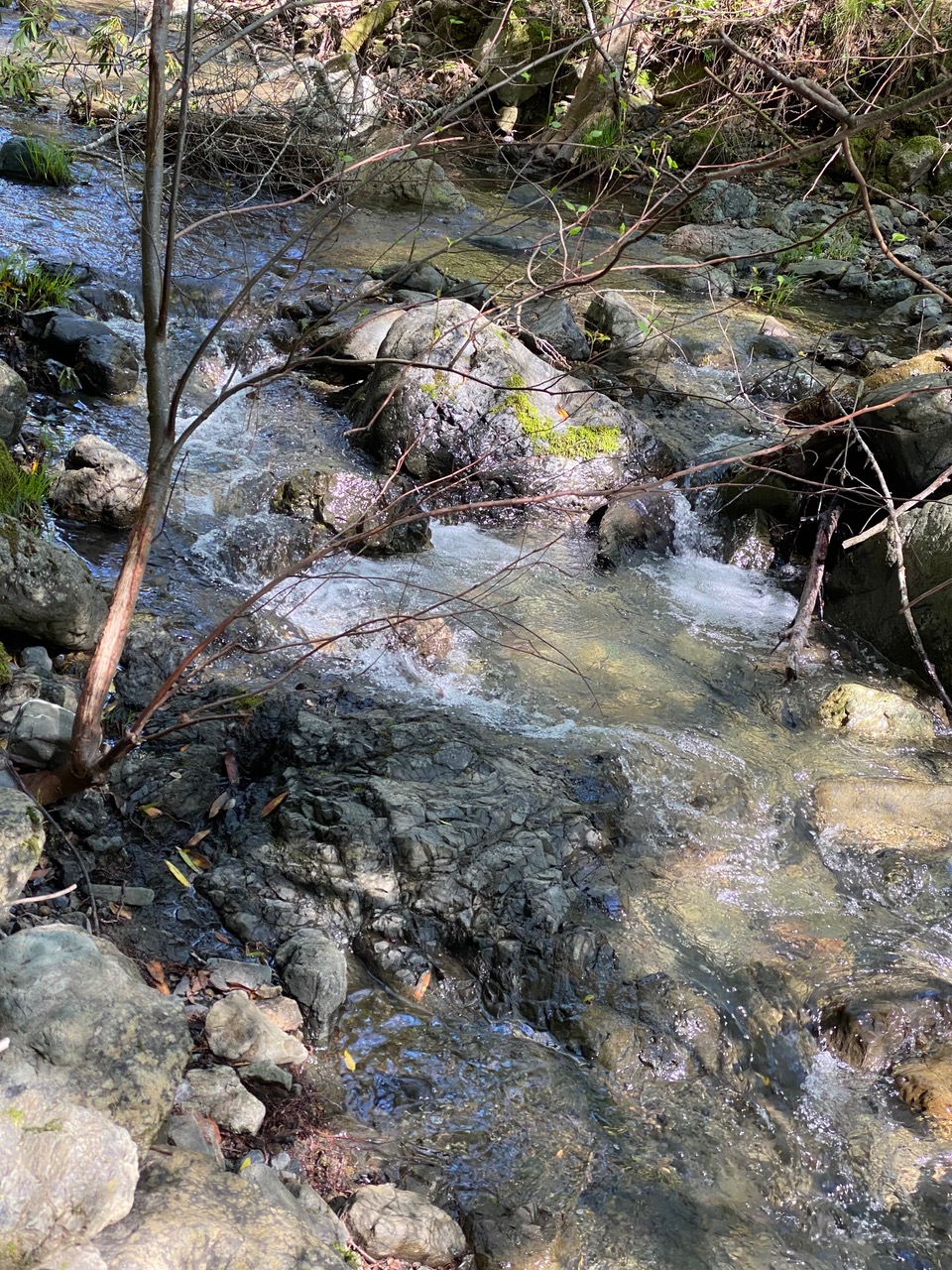
Andy and I amble along the fast-running creek towards the waterfall at Cascade Canyon, enjoying the lush flora and insect fauna.
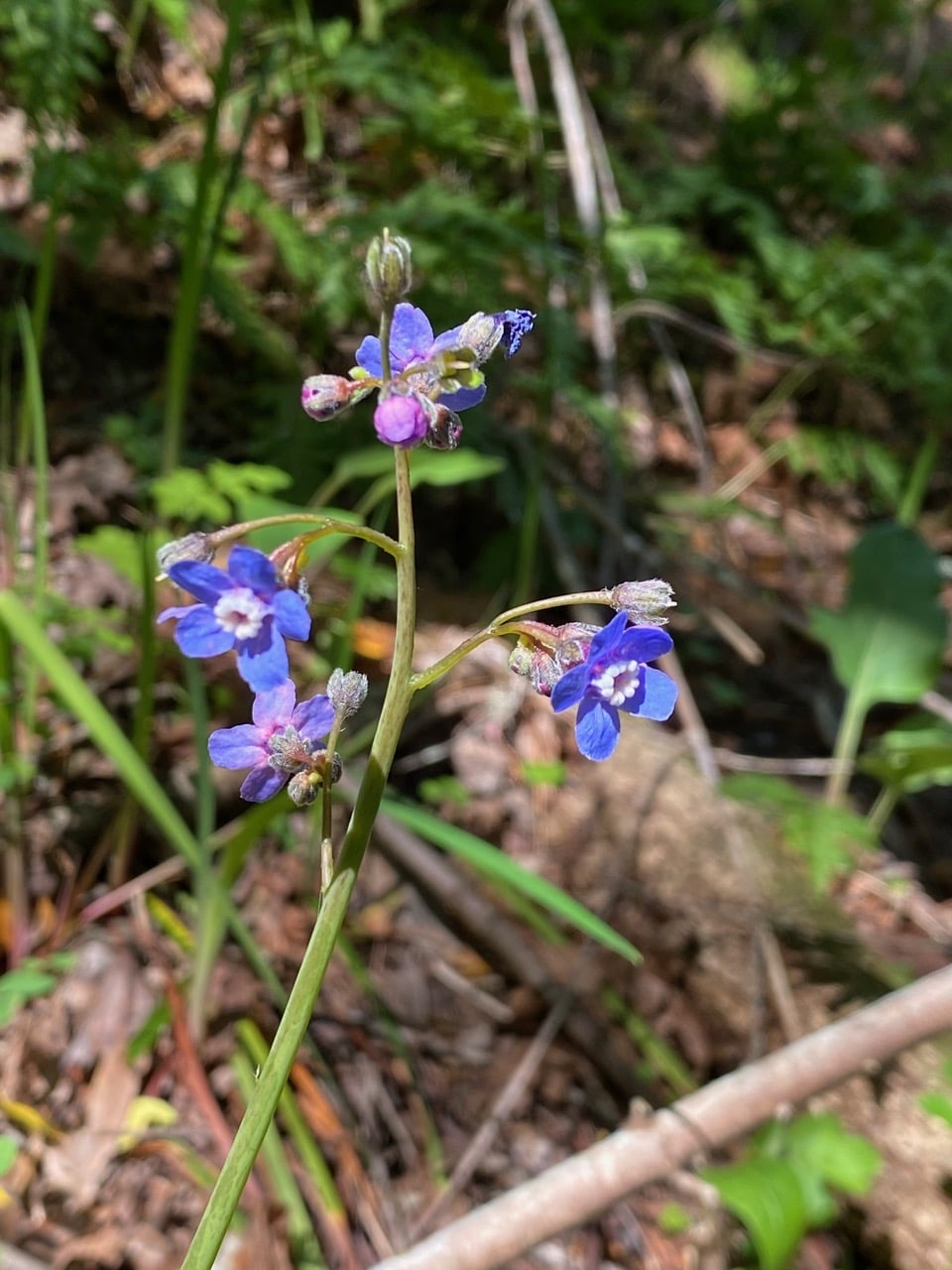
Most of the Western Hound’s Tongue, Adelinia grandis are past their prime, but in the shady undergrowth we can still find an occasional fresh plant in bloom.
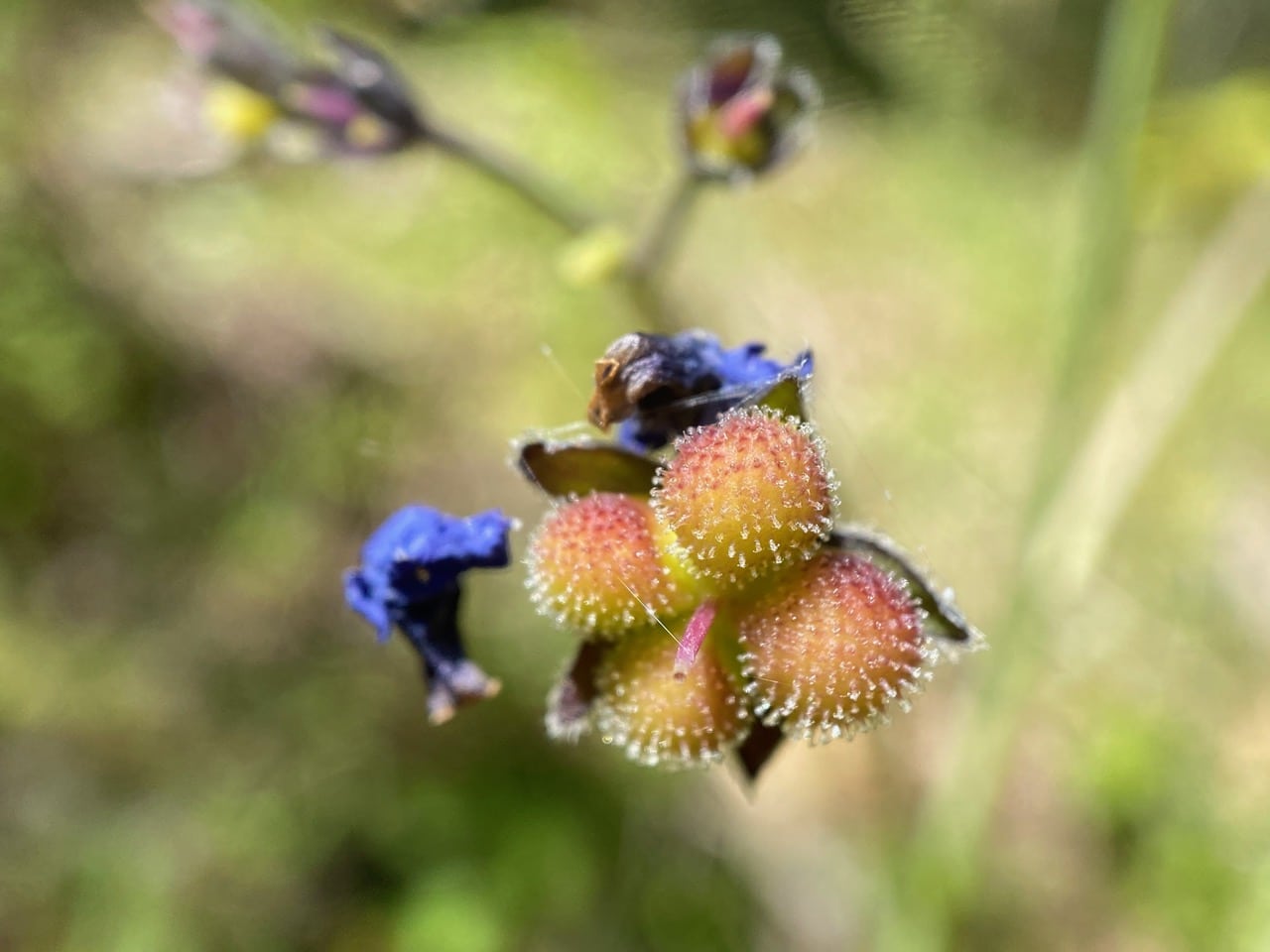
Some fruits are already developing on the Hound’s Tongue after the petals drop off. The fruit comprises a set of 4 nutlets (small, dry fruit that does not split open, derived from a multi-chambered ovary). The seed has evolved hook-like appendages on the seed coat that grab onto anything that brushes against it, including animals or human socks.
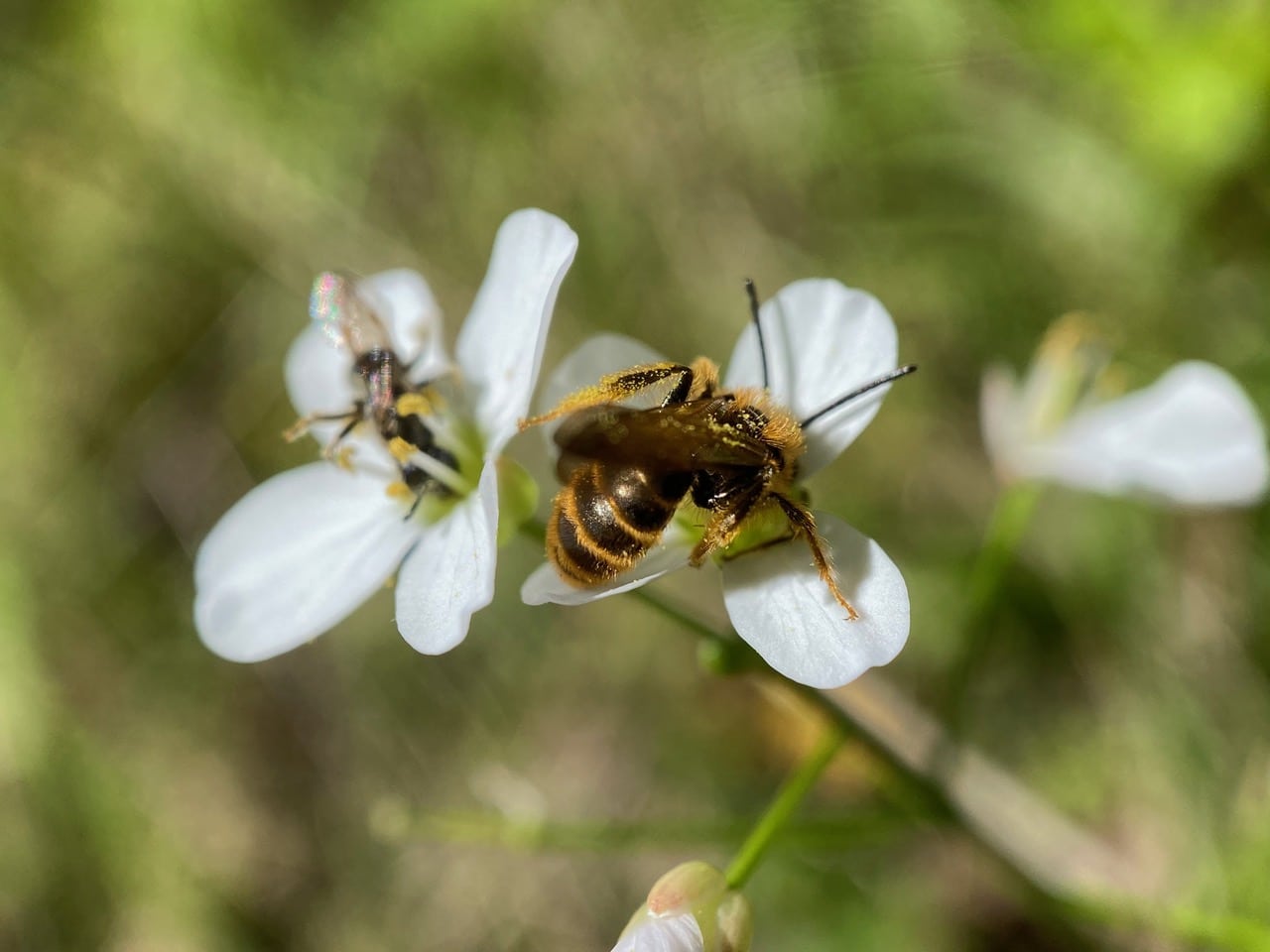
There’s a sudden burst of activity close to me. Two bees of different sizes land on the Milk Maid flowers, Cardamine californica on the same plant. I have time only to focus on the one closest to me – a golden-haired beauty.
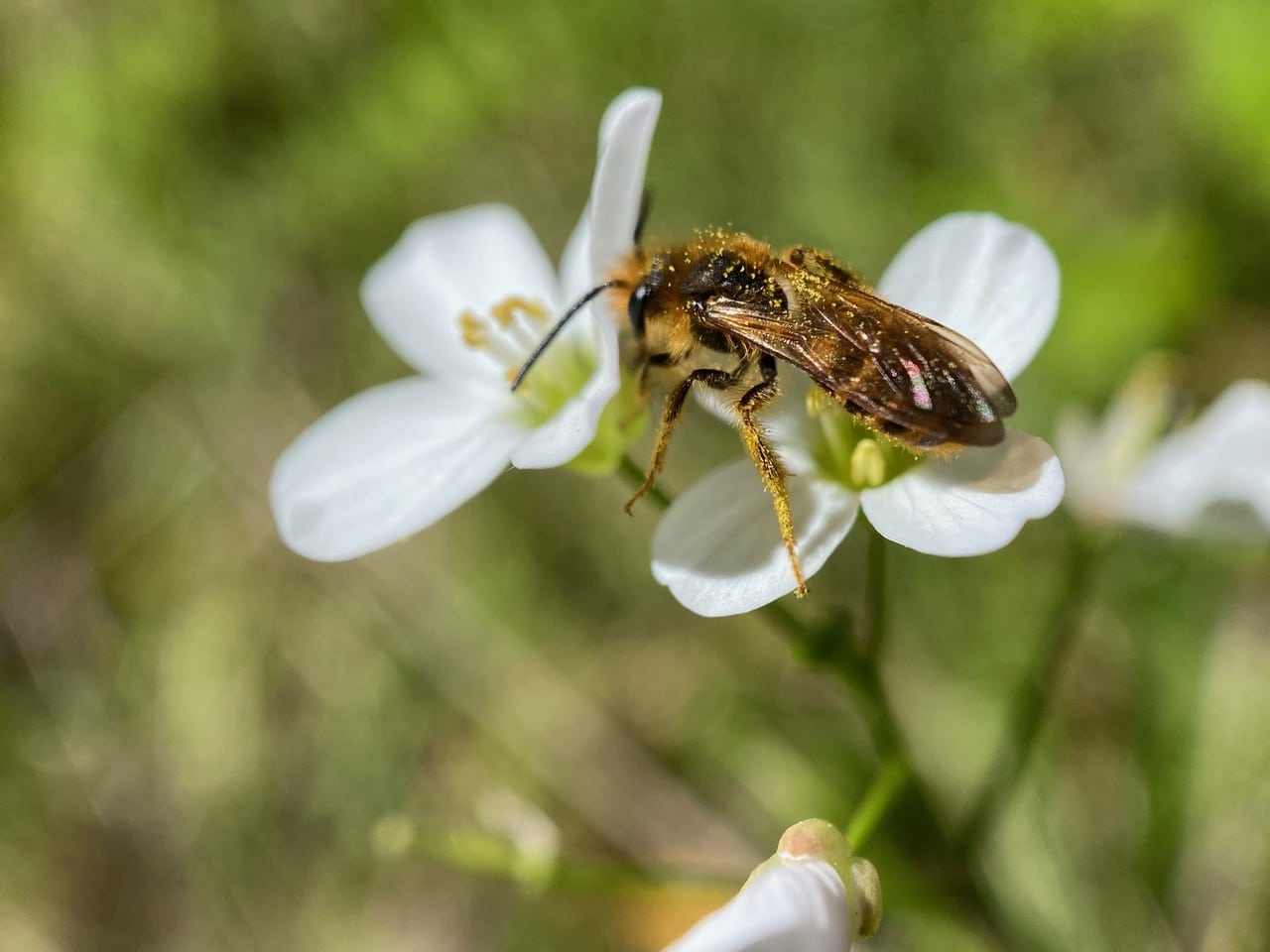
By its long antennae, slender body, and absence of scopae, I figure it is a male.
The antennae of male bees are often much longer than their female counterparts. Male antennae have an extra segment and the segments themselves are longer. This is because male antennae are specialized to pick up the subtle scent of female pheromones.
Male bees do not collect pollen to provision the nest, neither do they have the equipment for the job. They do, however visit flowers for nectar, and can be good pollinators in transferring pollen between flowers.
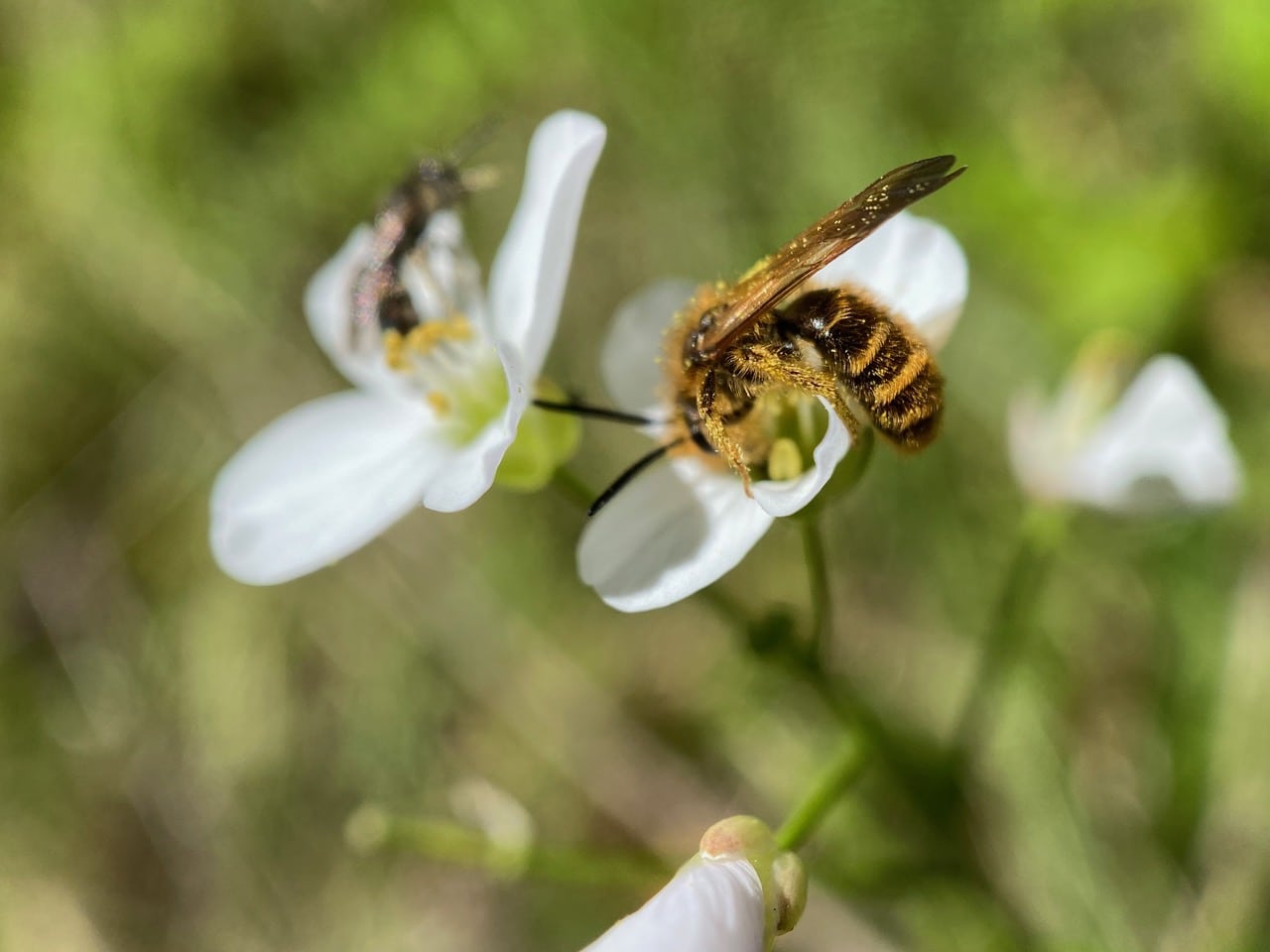
The golden hairs are quite visible against the black integument of the bee. The “fuzz” on a bee (or any fuzzy insect) is a collection of bristles made of the same material as their exoskeleton – chitin. This is distinct from the material that the “true” hair or fur on a mammal is made of – keratin. The hairs on the bees are also branched, the better to hold on to pollen grains by electro-static attraction.
Bees are generally “hairy”, a significant distinction from their relatives, the wasps. Bees have evolved from the wasps as the Angiosperms (flowering plants) became prevalent on the planet. The body of the bees evolved to gather flower pollen as a source of proteins for their young, while the wasps continue to hunt for animal proteins to feed their larvae. Essentially bees are wasps that have converted to a vegetarian diet, thanks to the evolution of flowers. In return, the flowering plants have the bees to thank for their pollination services that ensure the plants’ reproductive success. It is an amazing mutualism. Although many other insects can pollinate flowers, bees are by far the champions in this regard given the suite of anatomical and behavioral adaptations they have undergone.
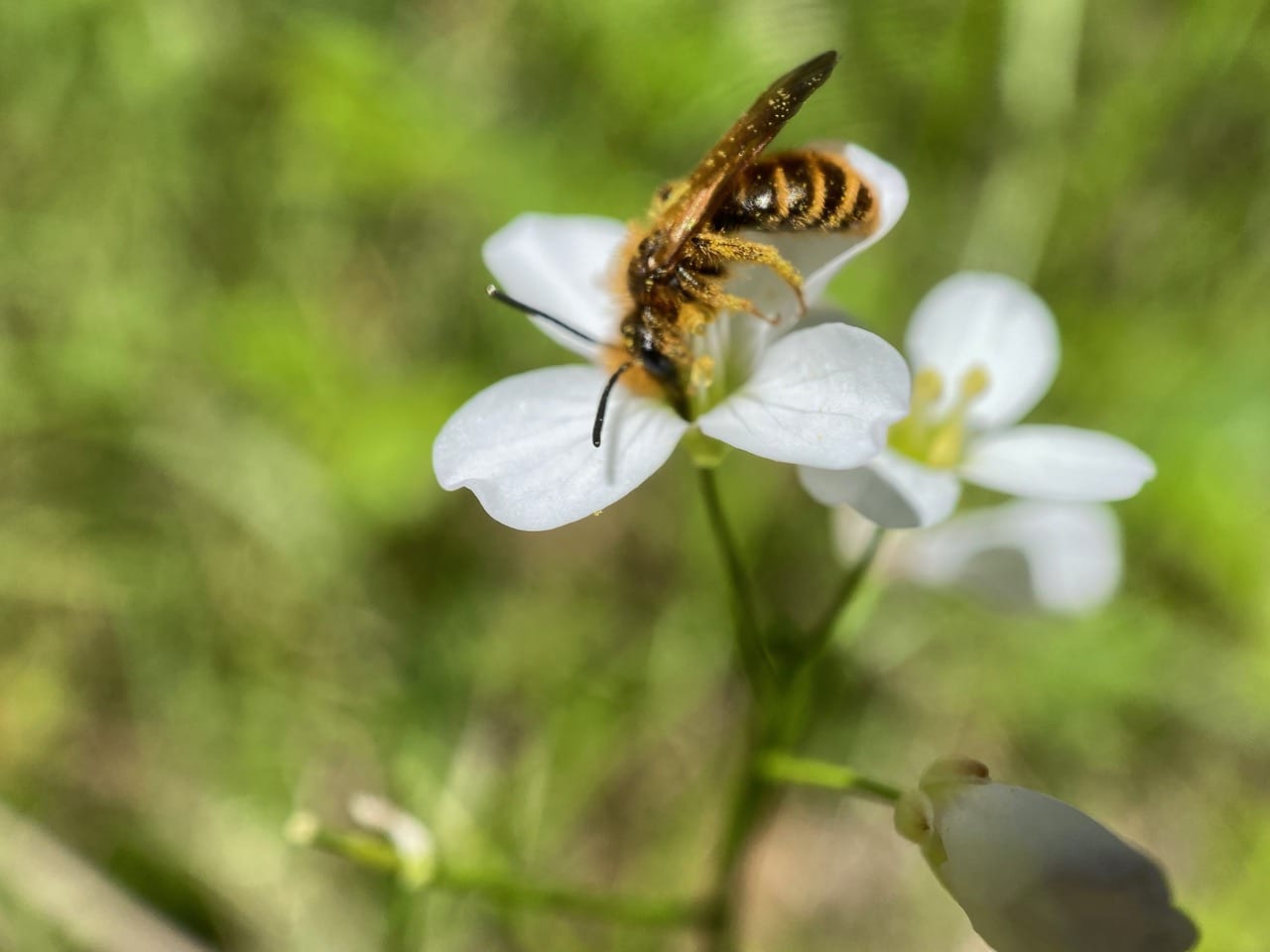
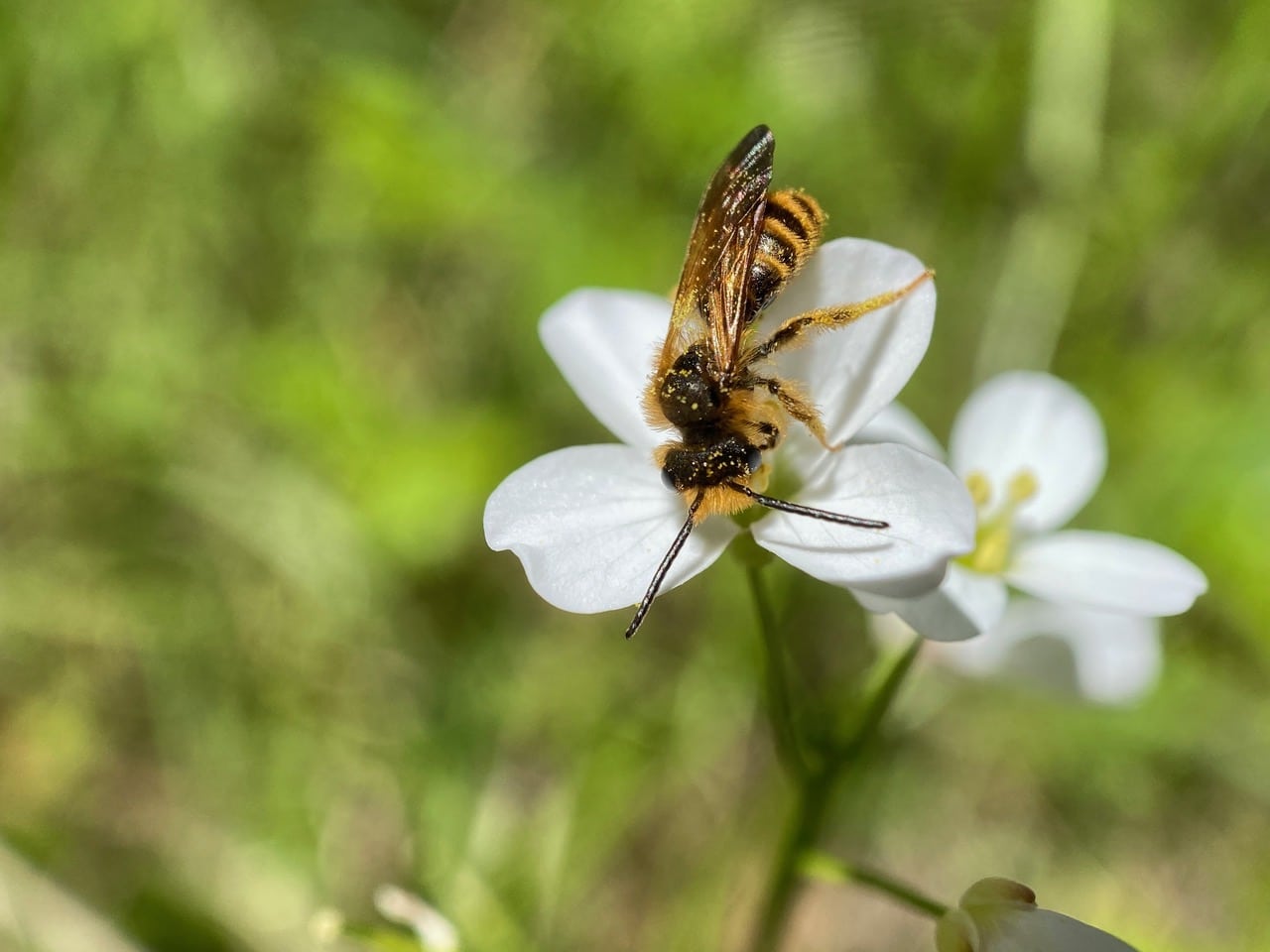
Ooh, love the bushy tuft of hairs on its head! The bee appears to be a member of the genus Andrena (family Andrenidae). Maybe Andrena auricoma?
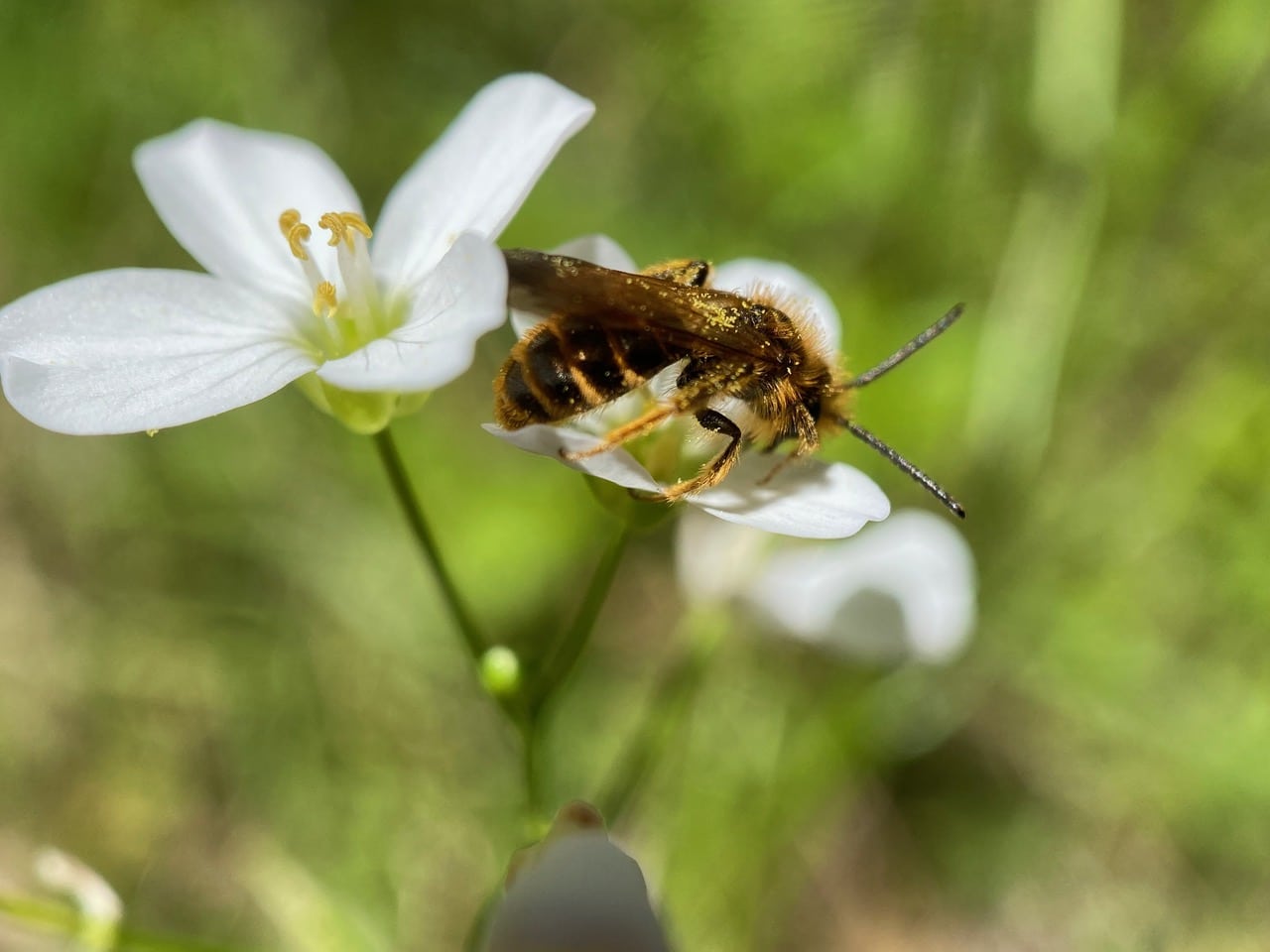
The Golden-haired Miner Bee, Andrena auricoma is a species of Miner Bees in the family Andrenidae. It is found in the western U.S., and is relatively rare outside California. The females are slightly larger, 8-10 mm long, compared to the males’ 6-9 mm. Females carry pollen in the scopae on their hind legs.

Bees in the family Andrenidae, commonly called miner bees or mining bees, are solitary ground-nesters. Andrenids are fairly small bees, usually dark-colored, and often banded. They are identified by the dense bristles (scopae) at the bases of the legs and the shin-like sections (tibias) of the legs, as well as by certain creases and grooves on the face and head and by unique wing venation. Many Andrenids resemble wasps – slender with long abdomen.
Most andrenids are specialist pollinators whose life cycle is timed to correspond precisely to the blooming of specific flowers. Because of this, andrenids are some of the first bees to emerge in spring, and many are active in March and April, as they visit early spring wildflowers.

The bee seems enthralled by the Milk Maid’s nectar, and spends an inordinate amount of time accessing it. I keep on photographing as long as the bee is still on the flower.
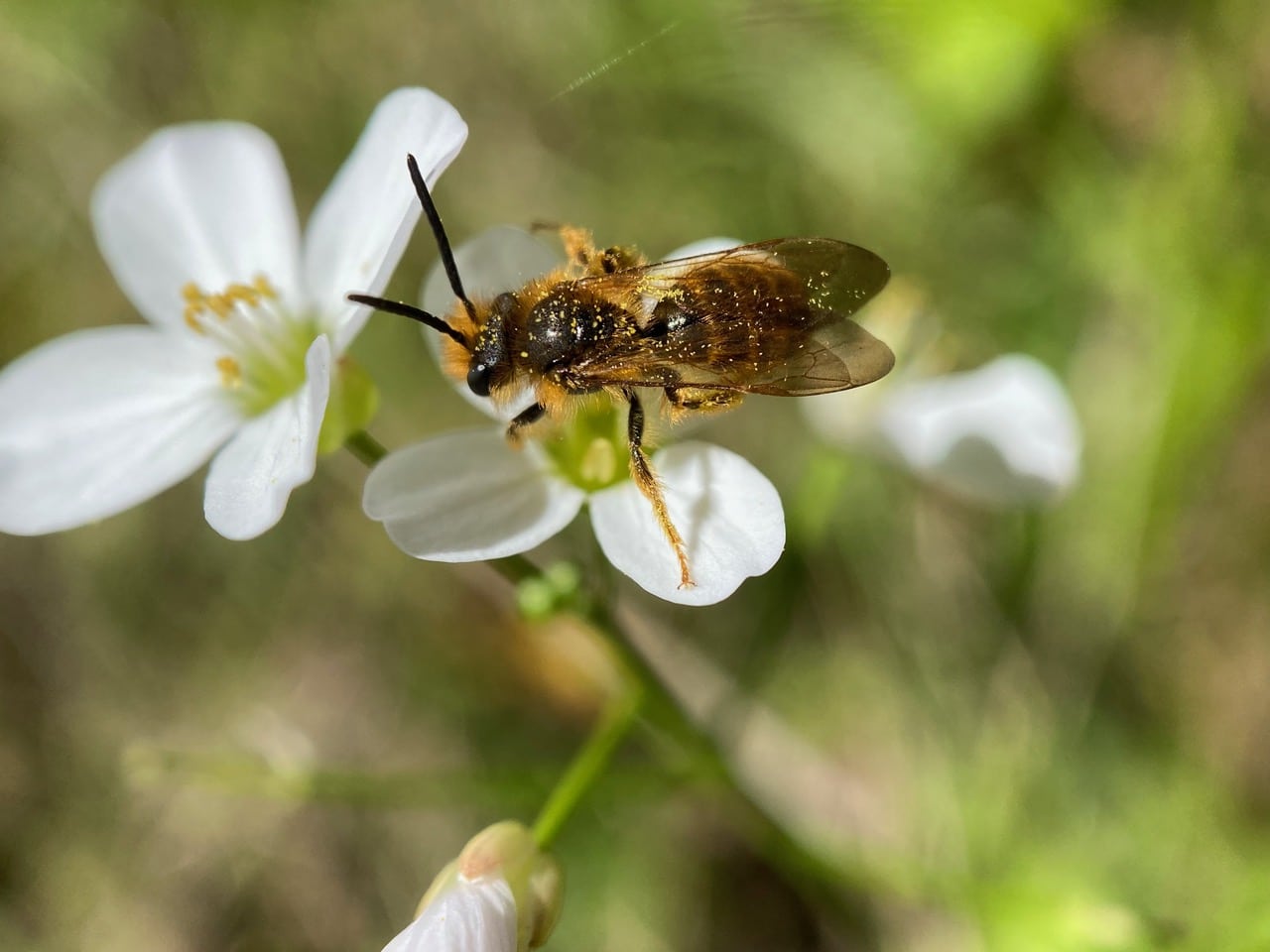
Although male bees do not intentionally collect pollen to provision for the young, their hairy body makes contact with the flowers’ productive parts while they seek nectar. Hence males are effective pollinators too.

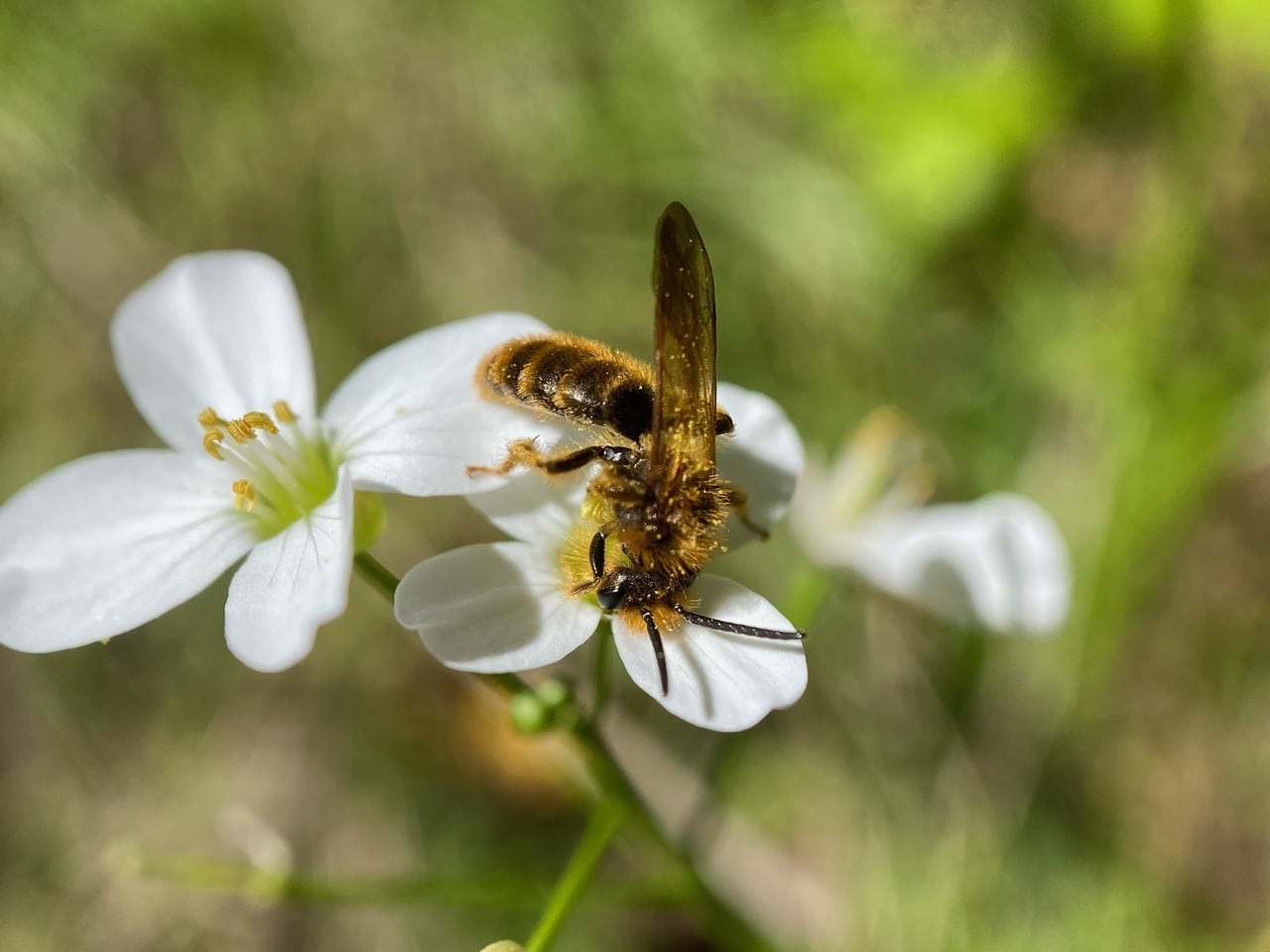
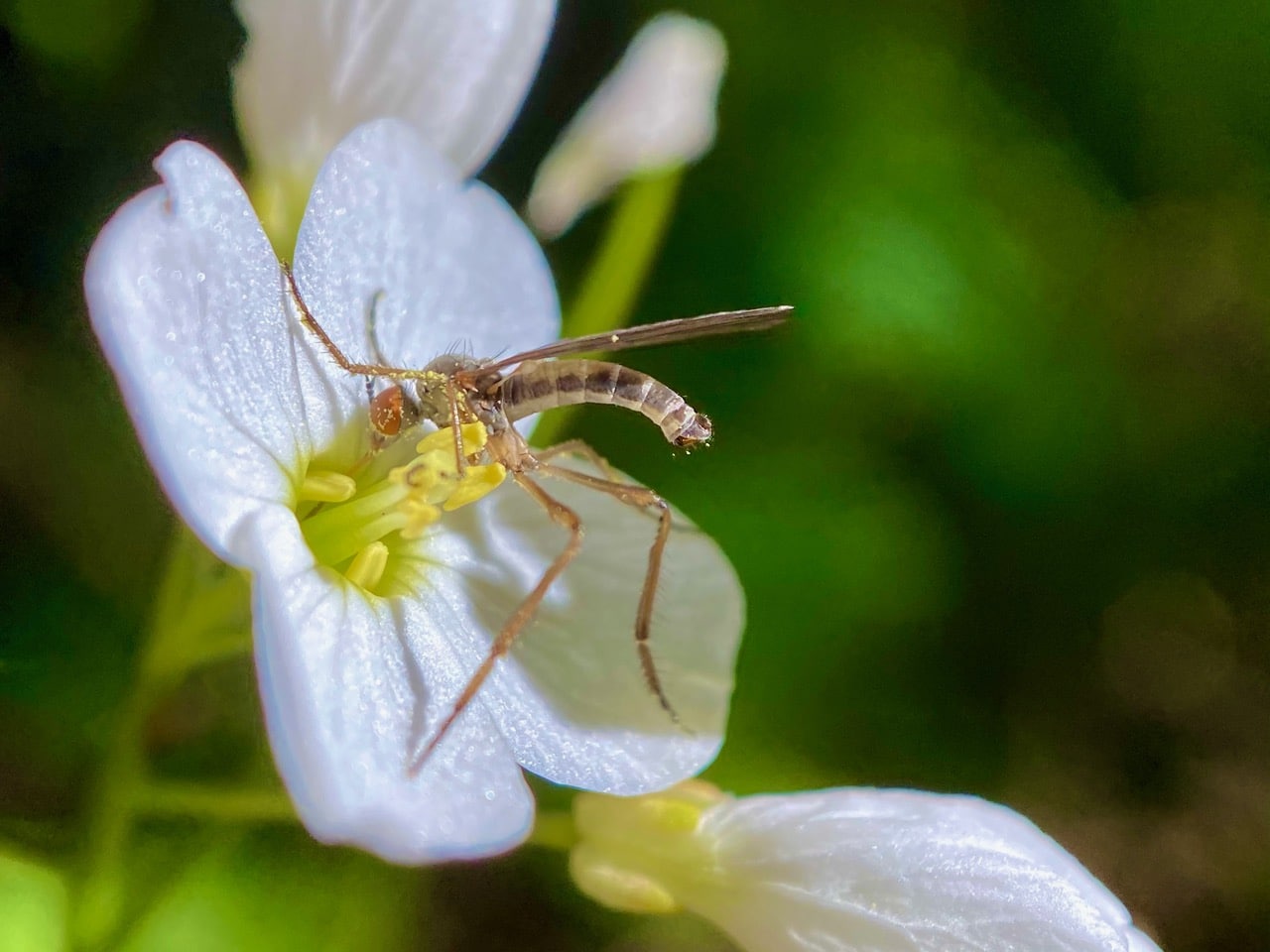
On a fresh Milk Maid flower, a Dance Fly (family Empididae) is probing for nectar with its long proboscis. Invariably, the small fly comes into contact with the reproductive organs of the flower in the process, gathering pollen on its body inadvertently.

A tiny black bee is foraging on a California Buttercup flower, Ranunculus californicus . Although I don’t see enough details for an identification, I am willing to bet that it is another Miner Bee (family Andrenidae). It is a male with long antennae, and no scopa on the hind leg.
In many solitary bees, males tend to emerge from their nests before the females. The female is able to determine the sex of her offspring while she’s laying her eggs. The fertilized eggs will develop into females, while those not fertilized with sperm will develop into males. This system of sex determination is termed haplo-diploidy. Female bees tend to lay female eggs first, in the back of the nest, while the male eggs are deposited in the cells closer to the entrance of the nest. The males, usually smaller, develop faster and emerge before the females, conveniently freeing the path for their sisters.

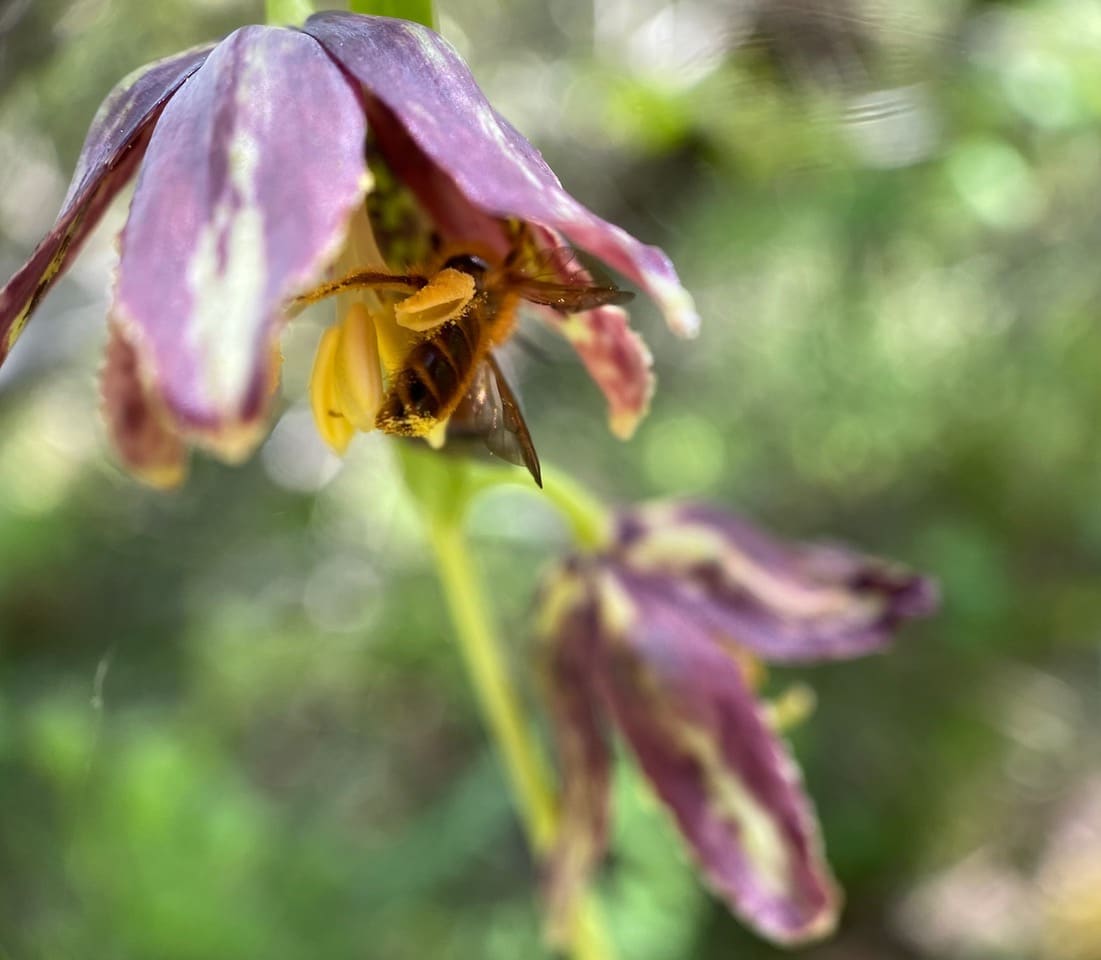
Although the photo is fuzzy and out of focus, it is the most satisfying one I have captured today.
A Mission Bells flower, Fritillaria affinis is shaking as if being visited by an insect. I quickly bend down, just in time to see a Golden-haired Miner Bee, Adrena auricoma (family Andrenidae) making its way through the anthers to get up to the back of the drooping flower. An anther has been disturbed, spilling its pollen. With pollen-smeared abdomen, the bee is probably trying to reach the nectaries further up on the inside of the tepals. In the dim light under the inverted flower, I watch as the bee goes from one tepal to the next before flying away. The action is over before I can get another picture. At least now I know that the Mission Bells are visited by Andrenid Bees!