

Pollinator Post 3/19/24 (1)

I decide to go for an afternoon walk at the Sequoia Arena in Joaquin Miller Park in the Oakland hills.
There’s a big, healthy patch of Miner’s Lettuce, Claytonia perfoliata. Time to look for small pollinators.


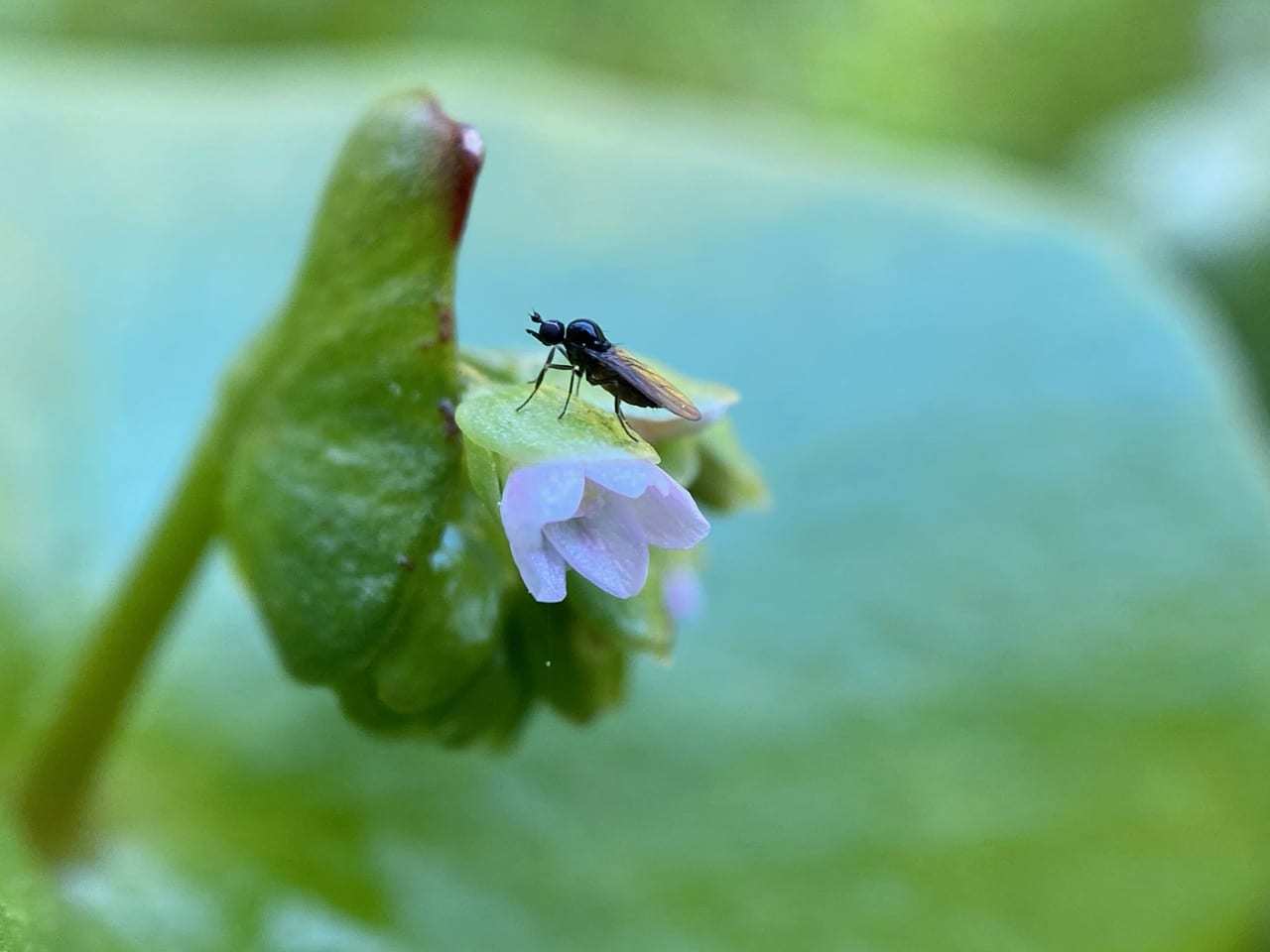
The usual suspects are there – the Hybotid Dance Flies (family Hybotidae) taking nectar and pollen from the wee flowers. There’s pollen on the thorax of the fly on the left.
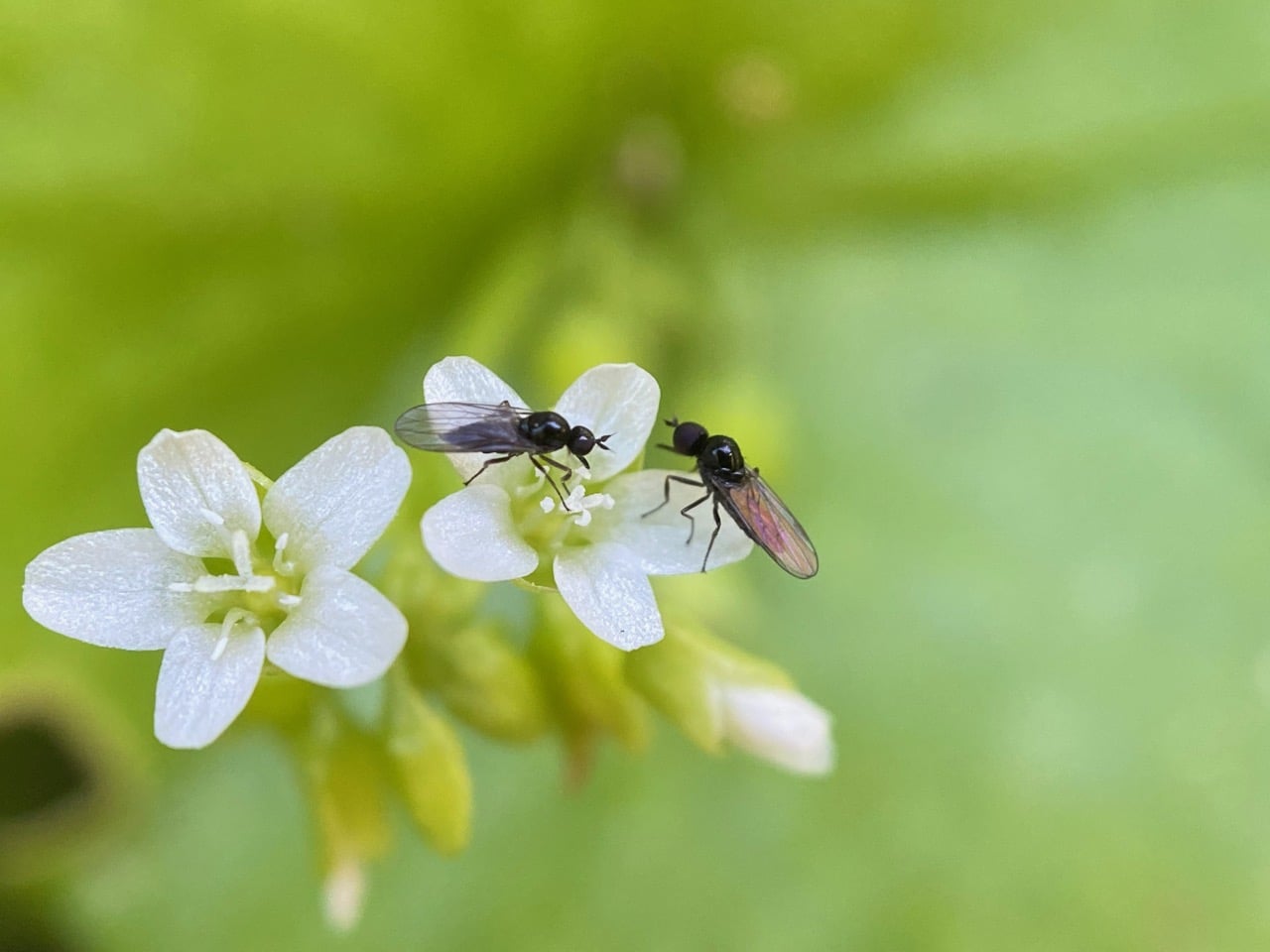
Sexual dimorphism? The one on the right has a larger head, almost as broad as its thorax – a male?
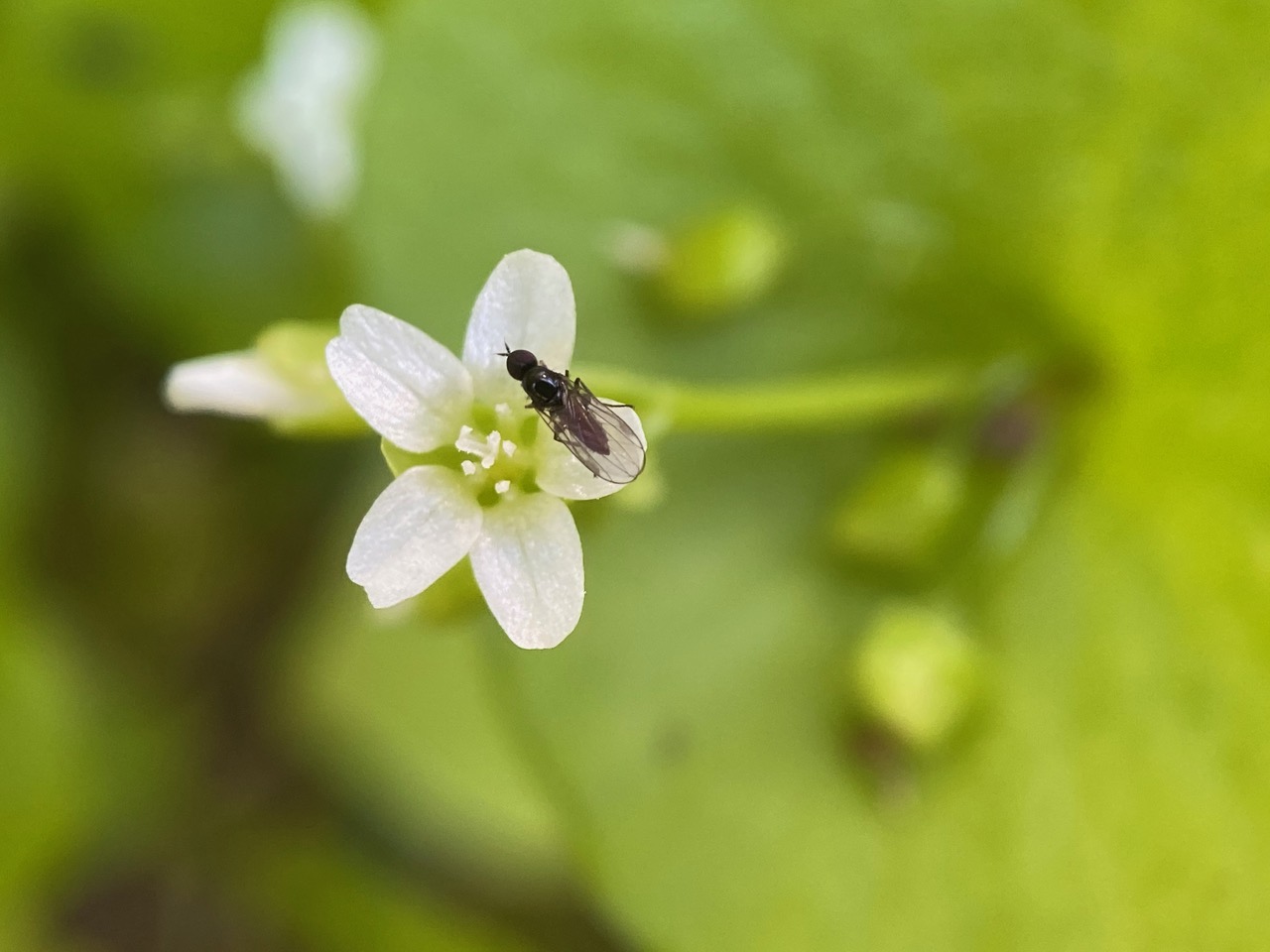
Male?

Female?
There’s precious little information I can find on this group of insects. It would be great to elucidate their ecological role, as they seem to be common and numerous everywhere, visiting small wildflowers.
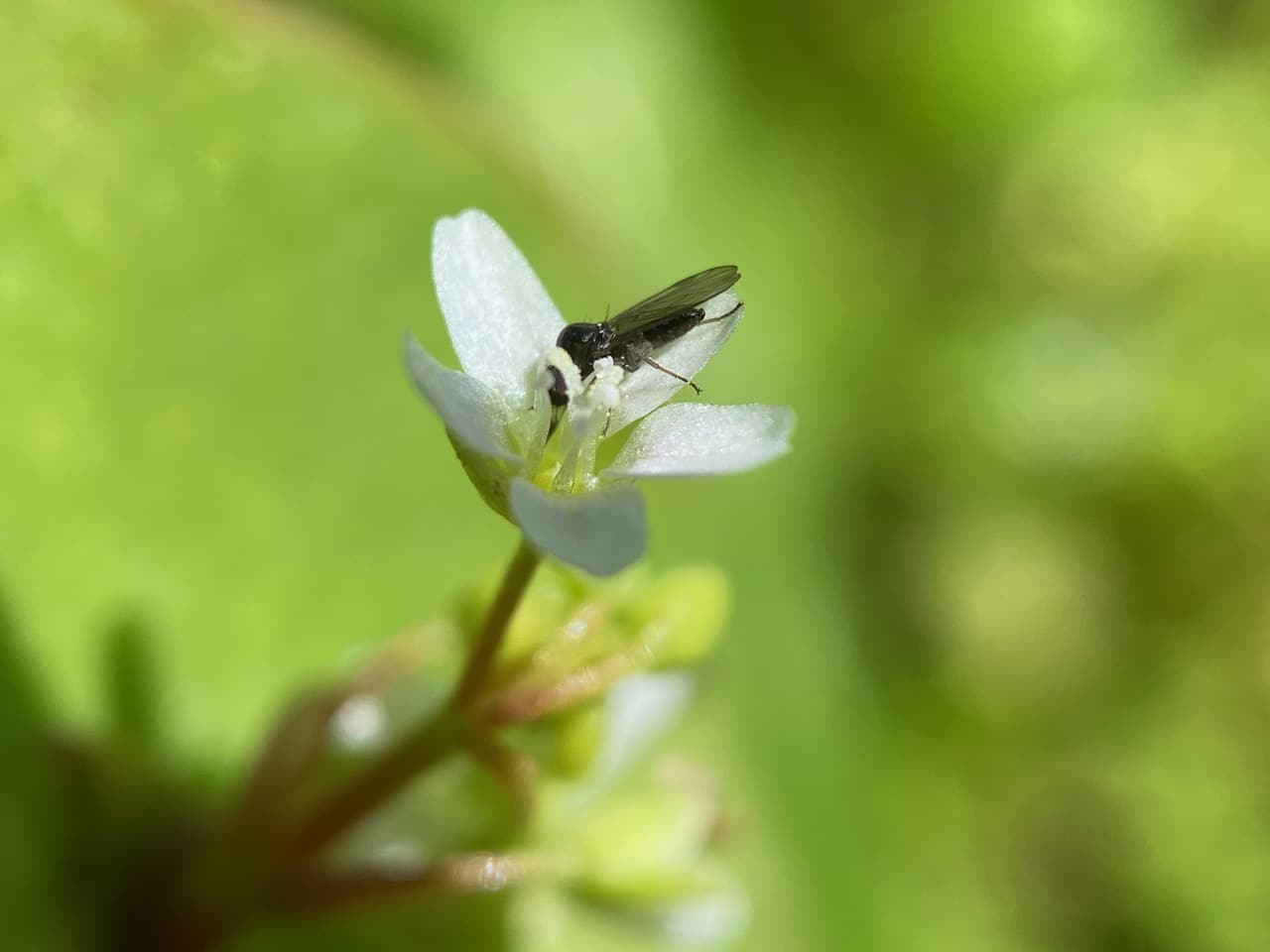 The Hybotids seem to be closely associated with the Miner’s Lettuce, and about just the right size for accessing the flower’s nectar and pollen.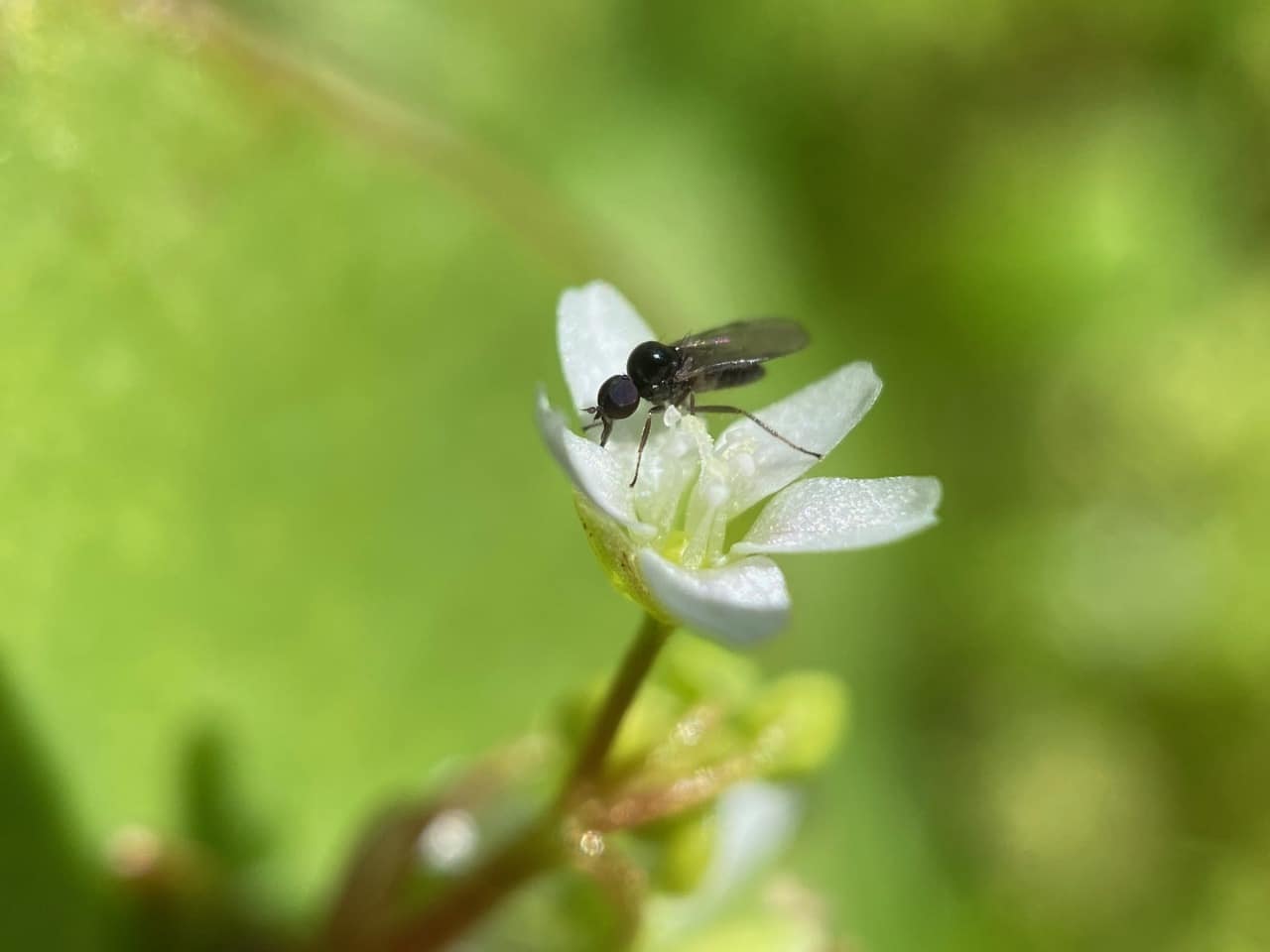

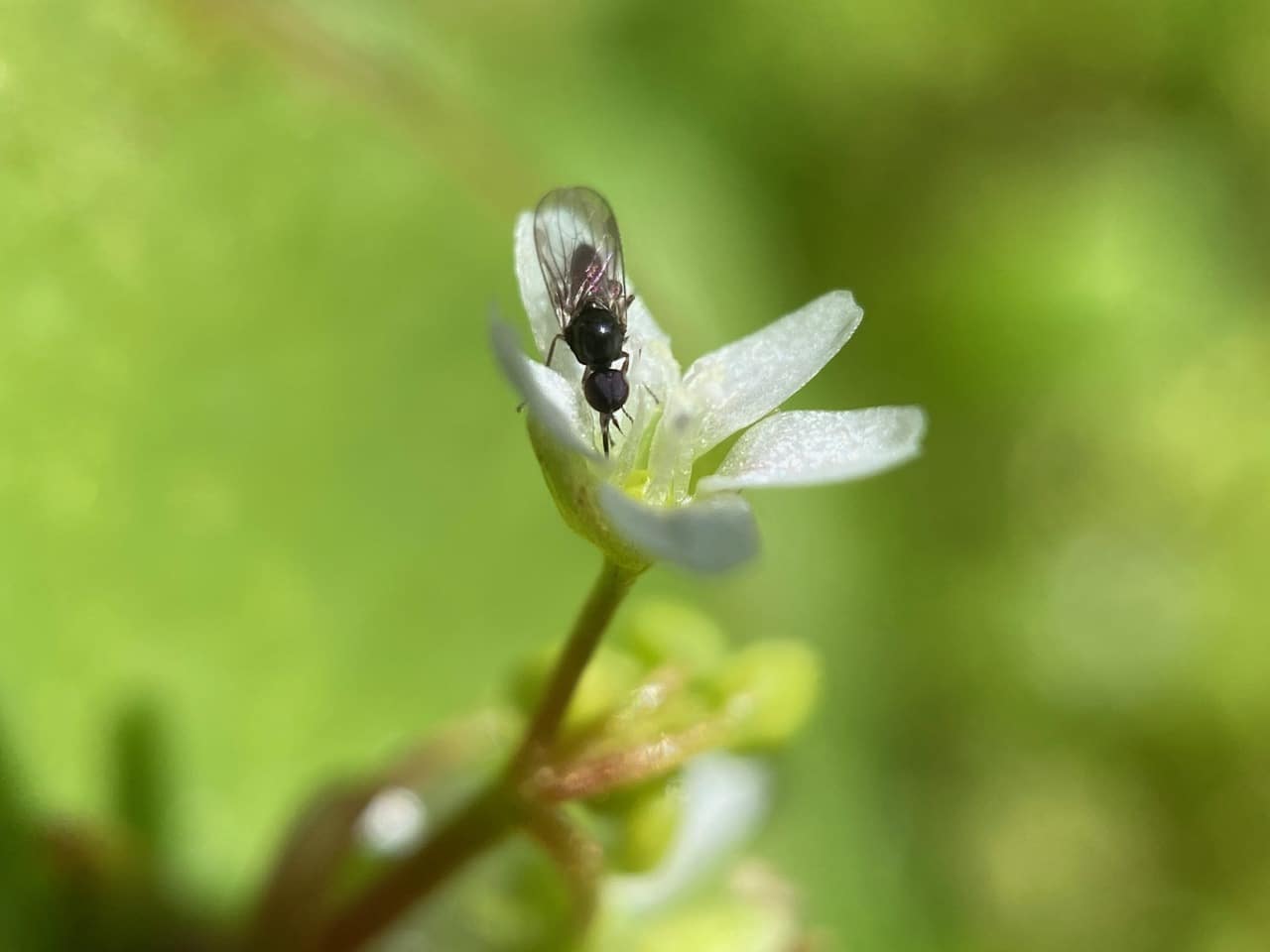
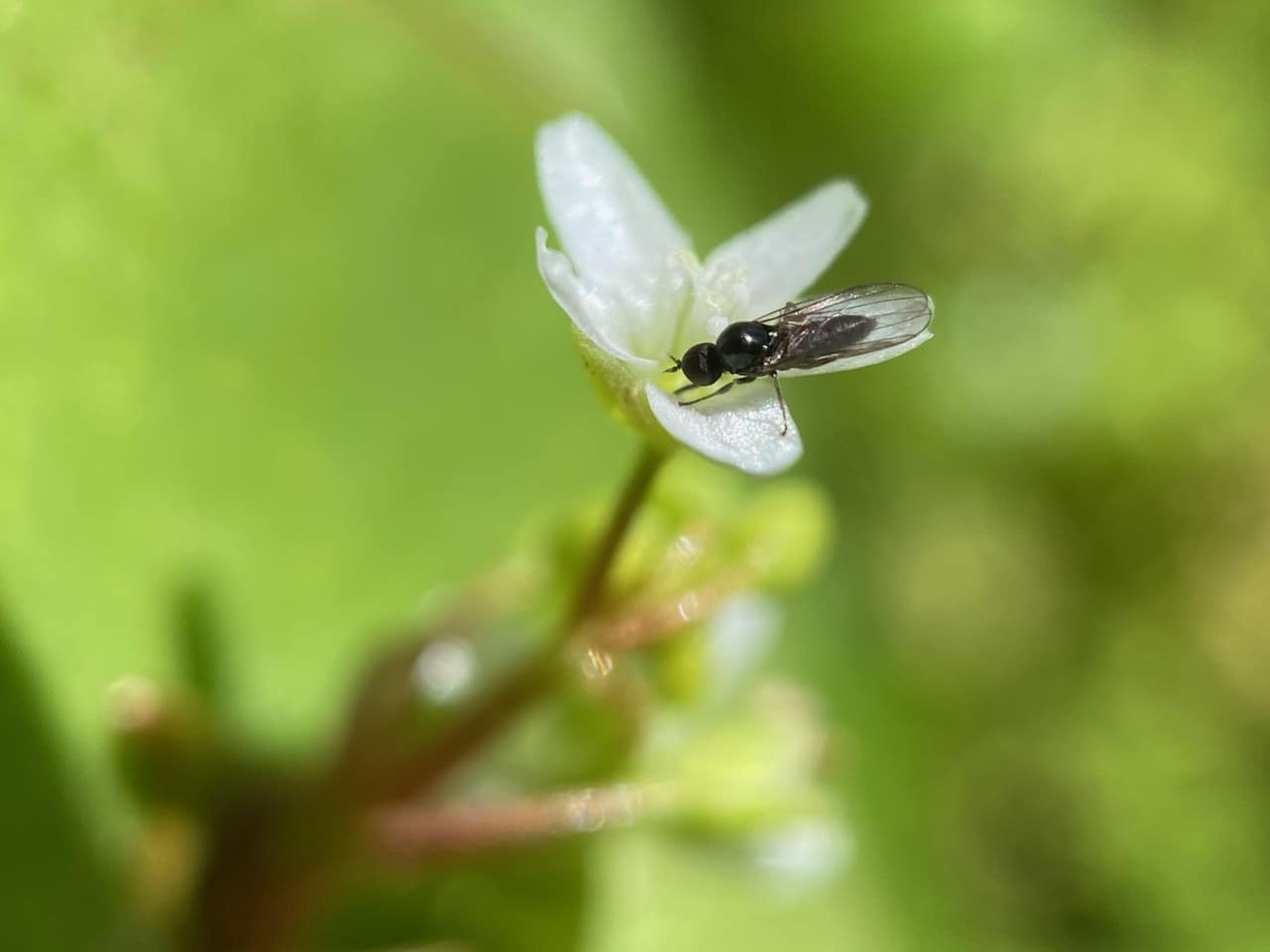
I wish I have better magnification on my camera to see details on the Hybotids.
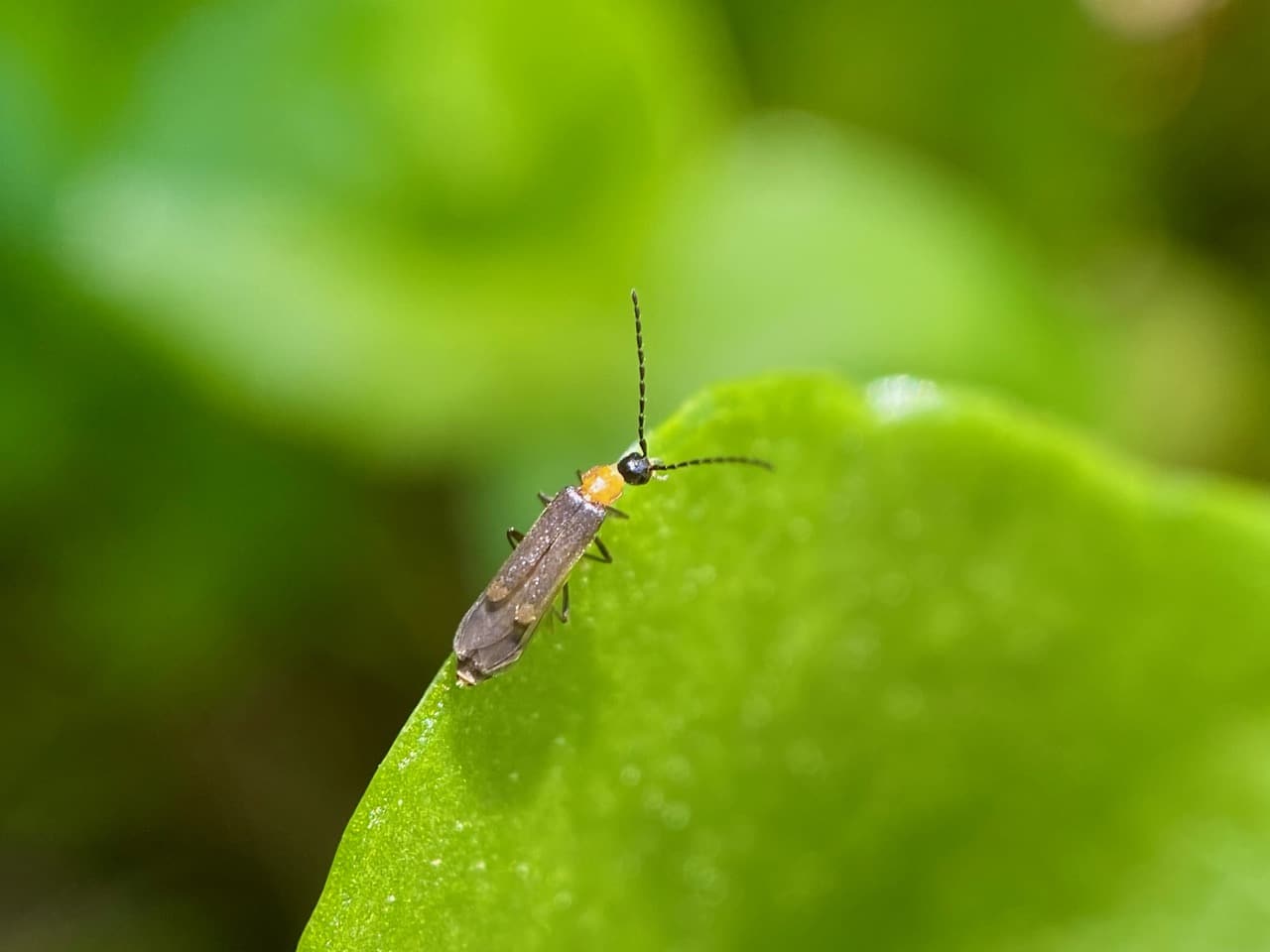
Who’s this walking on a leaf of Miner’s Lettuce? It appears to be a Soldier Beetle, but it is tiny. Indeed, it is a Soldier Beetle (family Cantharidae) in the genus Malthodes.
The Soldier Beetles, family Cantharidae are relatively soft-bodied, straight-sided beetles. One of the first described species has a color pattern reminiscent of the red coats of early British soldiers, hence the common name. They are also known commonly as Leatherwings because of their soft elytra.
Soldier beetles often feed on both nectar and pollen as well as predating on other small insects. The larvae are often active, and feed on the ground, hunting snails and other small creatures. Soldier beetles are generally considered beneficial insects by gardeners.
Malthodes is the most speciose Cantharidae genus, with about 130 ssp. in our area. It is distinguished by small size (1-4 mm) and having short elytra which leave the inner wings partly exposed and folded along the dorsal surface of the abdomen.
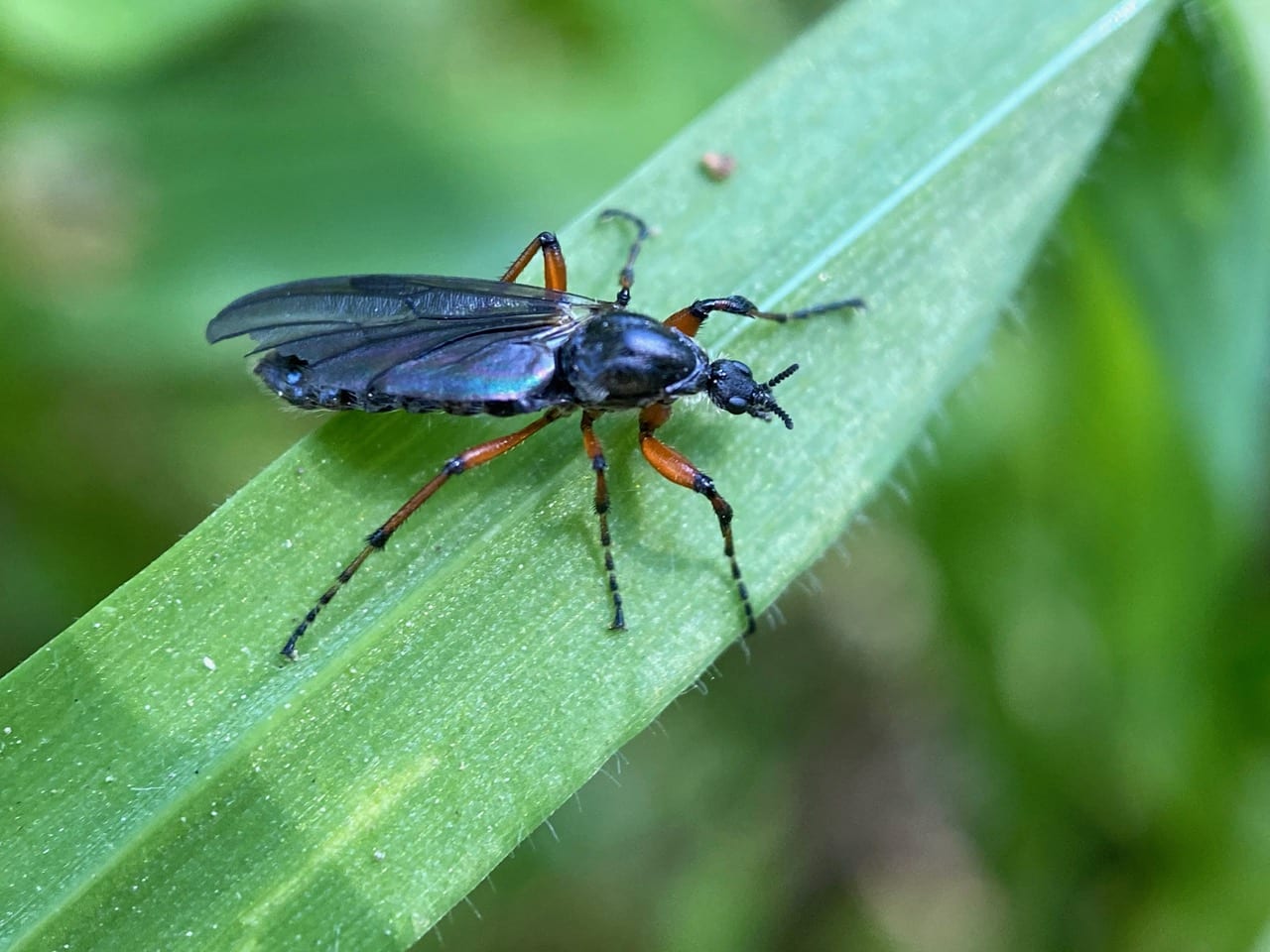
A dark fly is resting on a blade of grass. It is a female March Fly, Bibio xanthopus (family Bibionidae).
March Flies (family Bibionidae) generally live in wooded areas and are often found on flowers – adults of some species feed on nectar, pollen, and honeydew, while adults of other species don’t feed at all; and in either case, they are very short-lived. They are considered important pollinators in orchards. They are also important food for other insects and spiders. The larvae feed en masse on rotting organic materials like leaves, wood, compost, and rich soil.
March flies exhibit extreme sexual dimorphism – the sexes are morphologically distinct. The female is usually more colorful, has small eyes on the sides of long, narrow head, while the all-black males have huge eyes that touch in the middle and are split in half horizontally. Scientists speculate that the split makes it easier for them to see the other males that are above and below them in a mating swarm. Males gather in swarms that can blanket the ground and low vegetation. Female are attracted to the party and select mates in the frenzy of fly bodies.
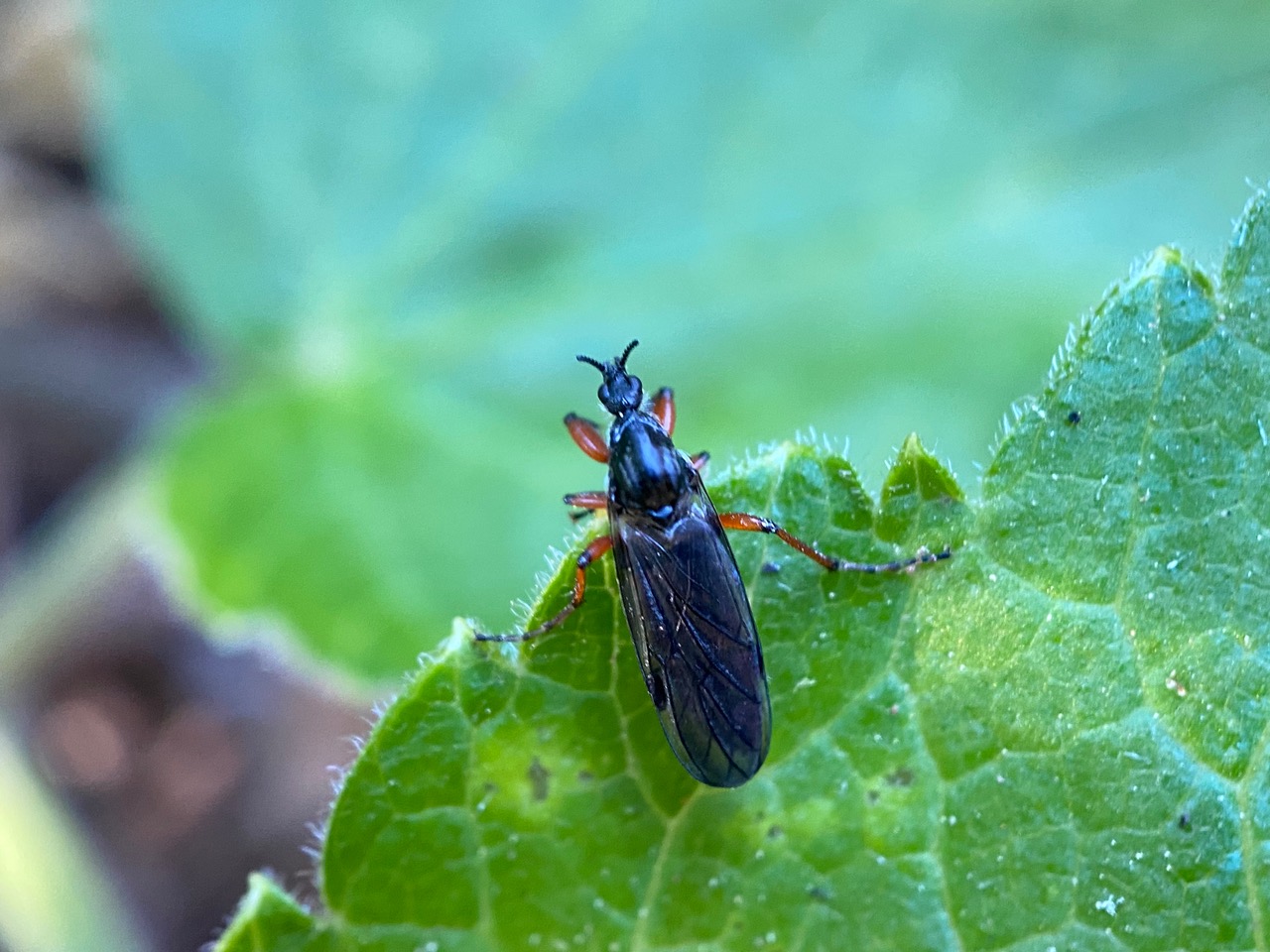
In the deep shade under the forest canopy, I come across this other female Bibio xanthopus, giving me a view from the back.
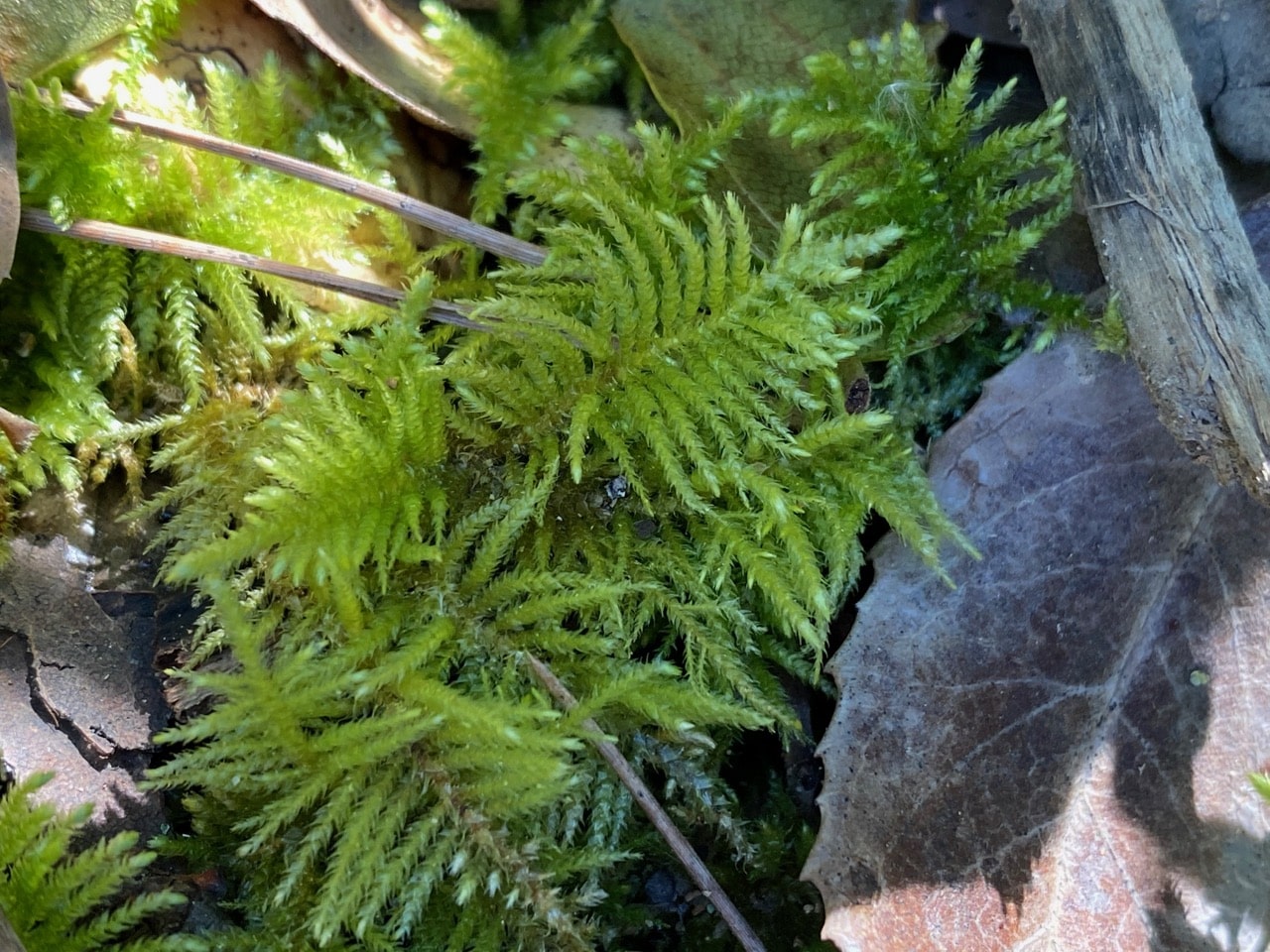
On a short shady section of the trail, I find this beautiful, large, feathery moss on the ground. It is the Oregon beaked Moss, Kindbergia oregana.
The moss is a common species along the west coast, stretching from northern British Columbia to California. It grows at low elevations on rotting logs, humus and on tree trunks. It is a large, yellow-green moss with a feather- or fern-like shape. Its creeping stems form loose mats. The red-brown sporophytes are capsules tipped the long beaks, hence the common name.
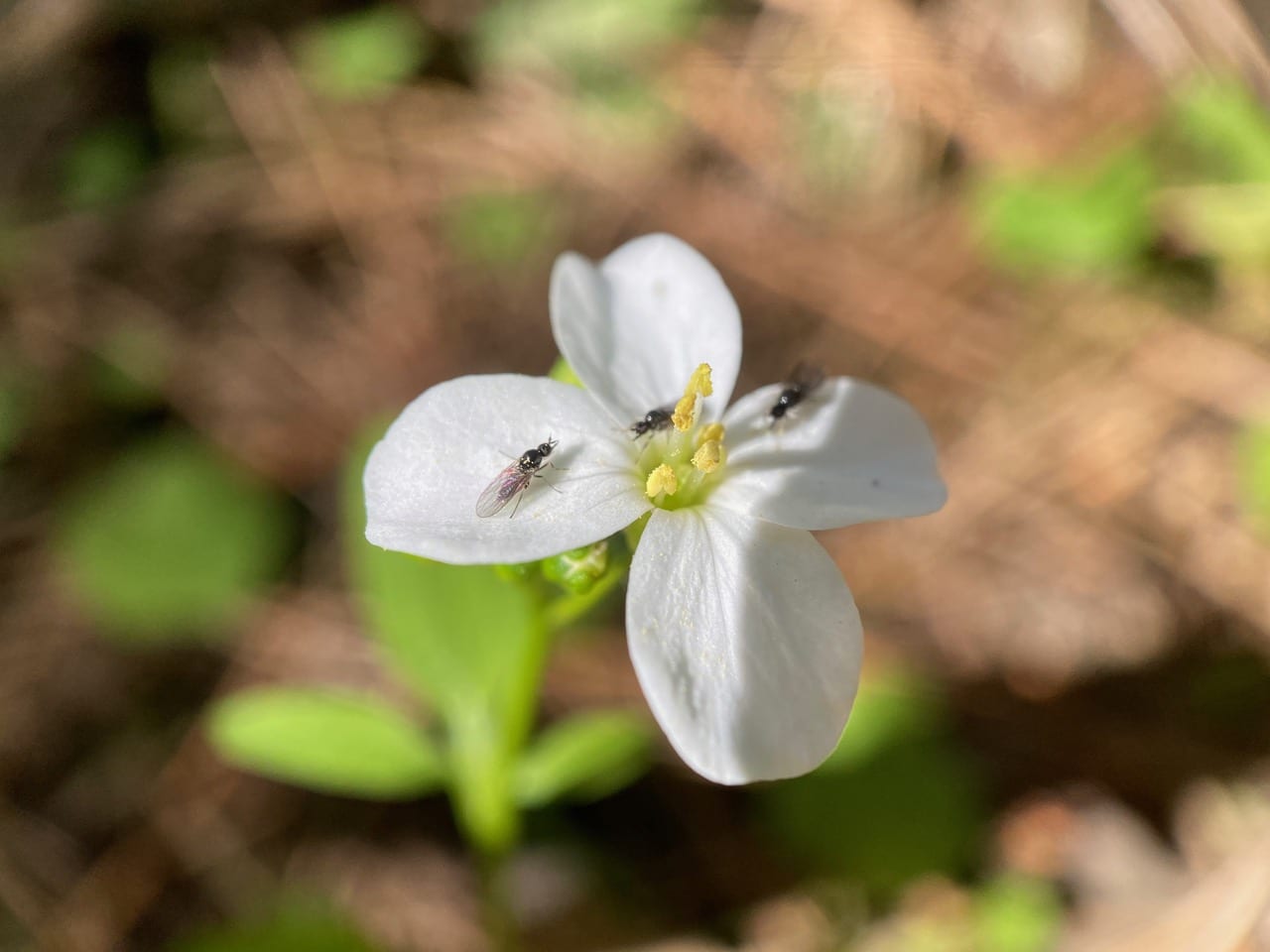
Hey, those Hybotid Dance Flies again, this time on a Milk Maid flower, Cadamine californica.
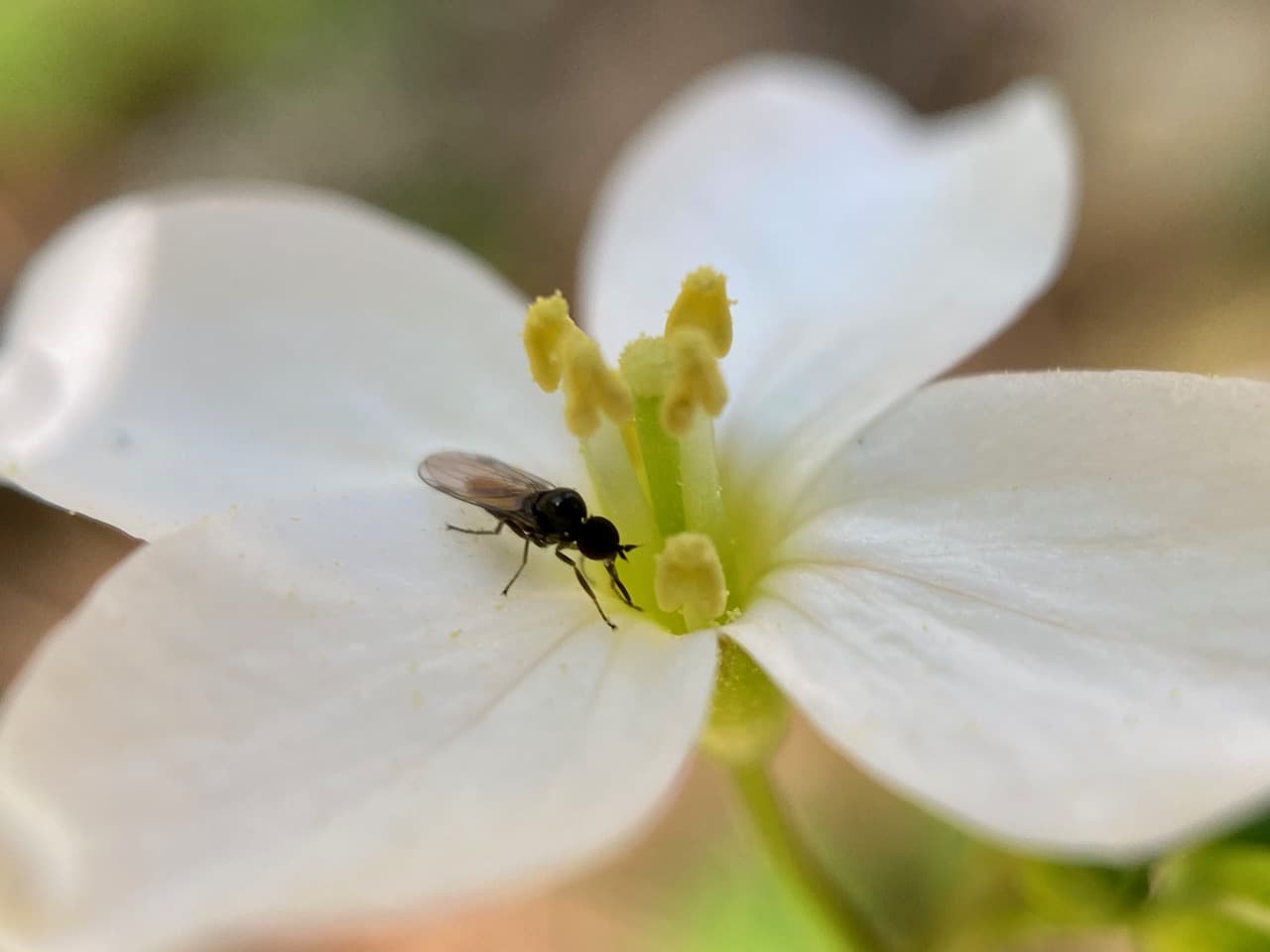
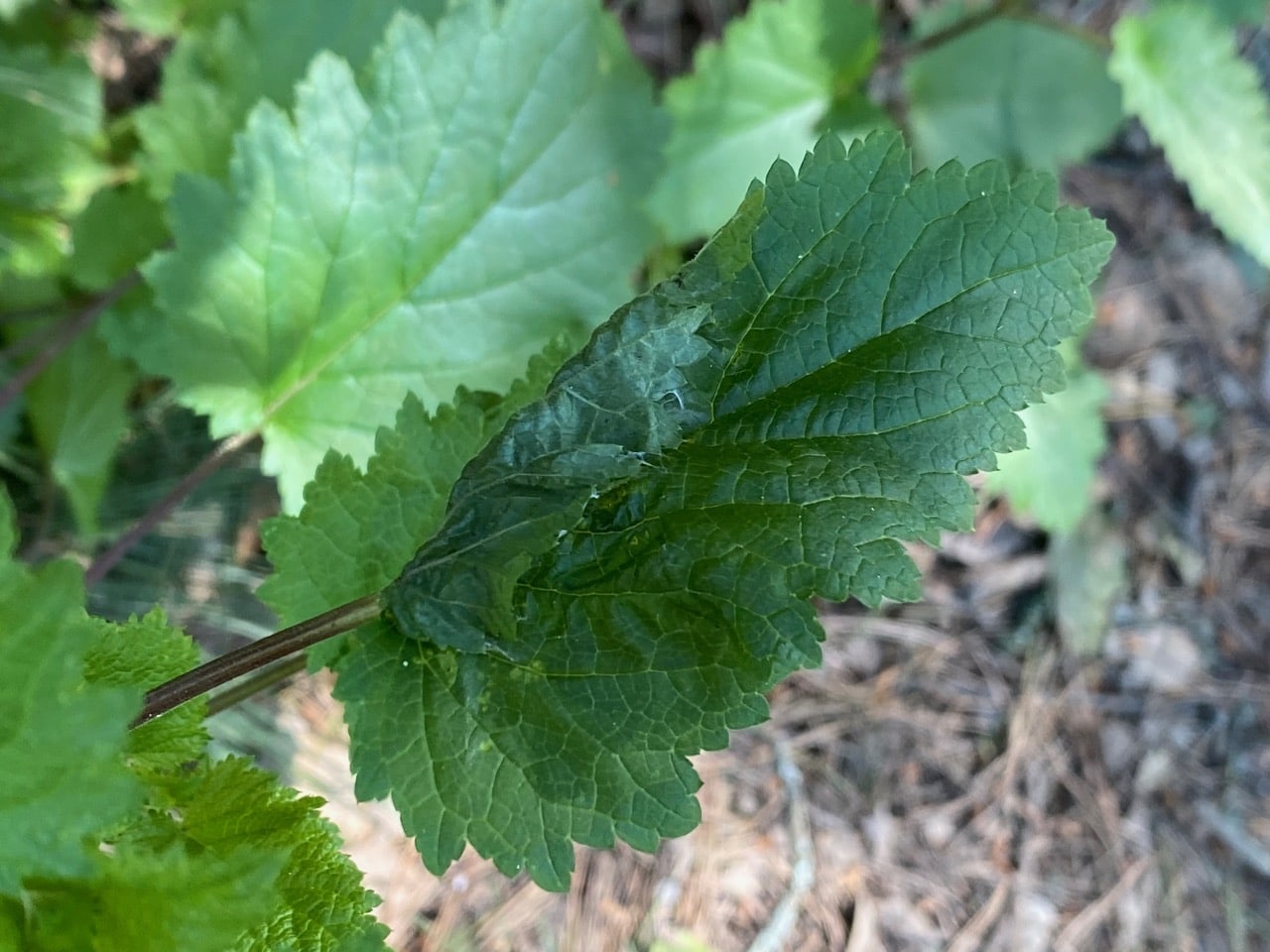
This leaf of a California Bee Plant has been folded along the edge.
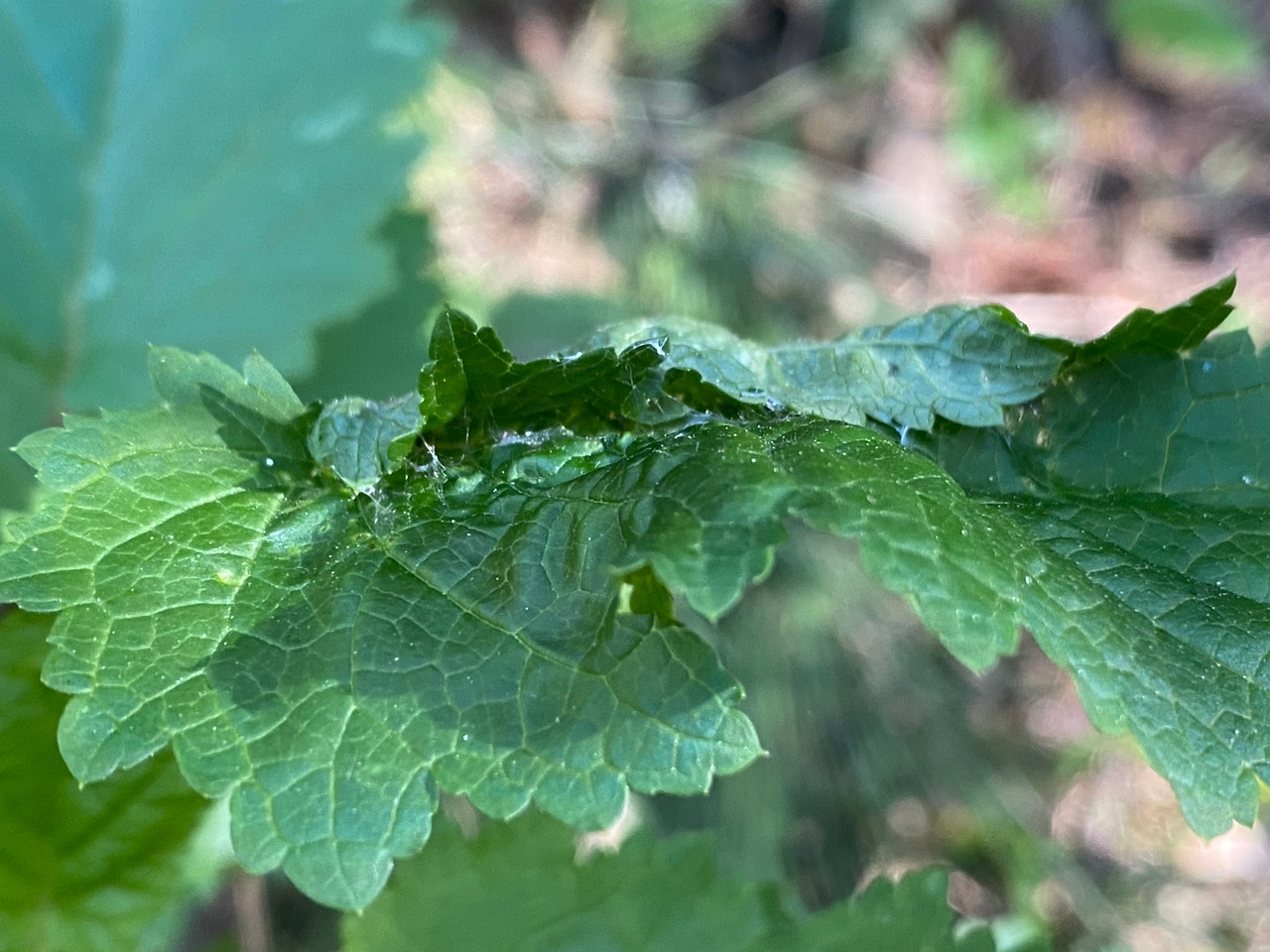
I look side-ways and find that part of the fold has been loosened.
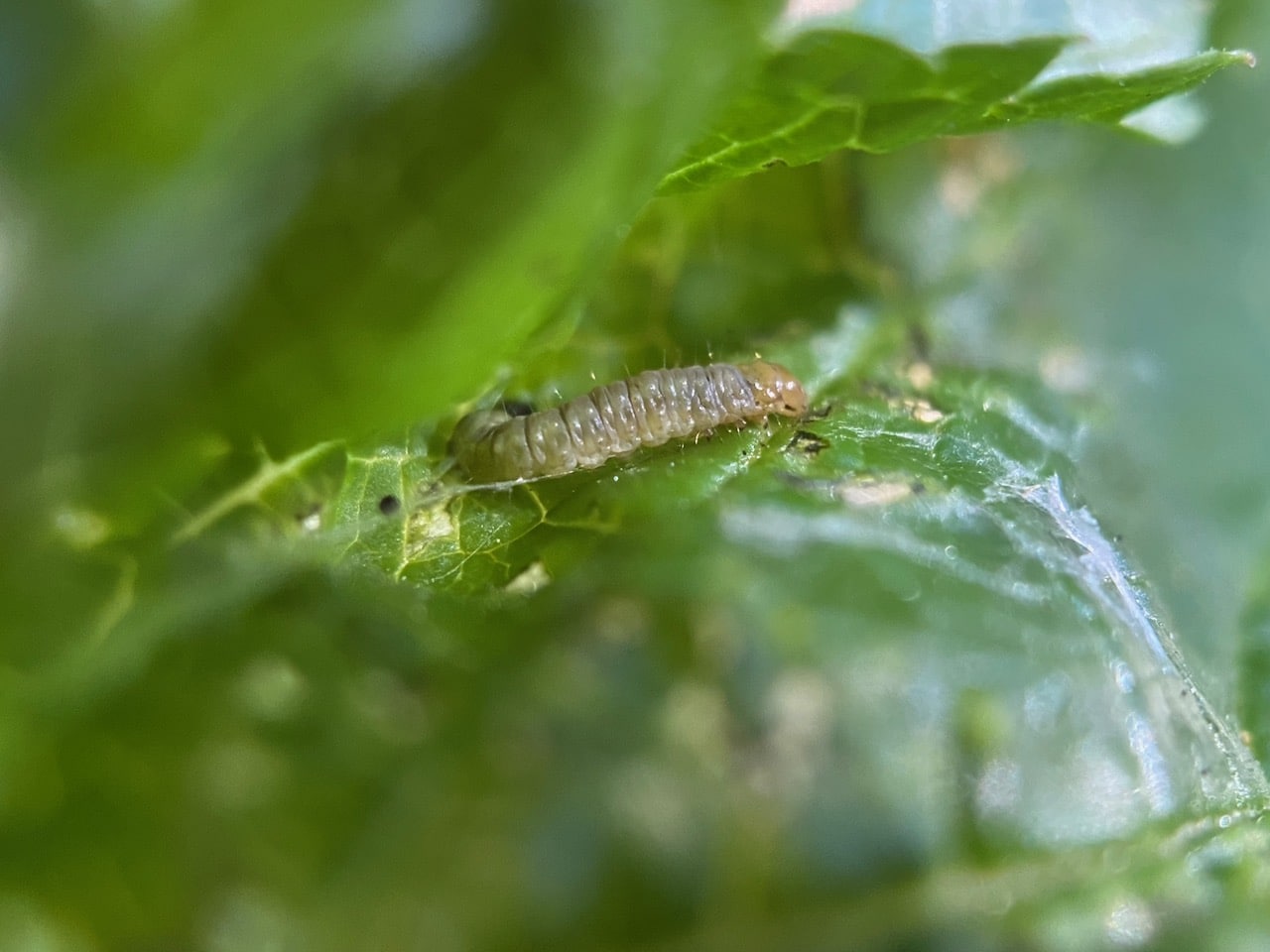
I gently lift the edge of the leaf to open the gap a little more. There’s a little caterpillar inside the fold, most likely a member of the family Tortricidae, commonly known as tortrix moths or leafroller moths. Many are economically important pests. The typical resting posture is with the wings folded back, producing a rather rounded profile. Tortricid moths are generally small, with a wingspan of 3 cm or less. Many species are drab and have mottled and marbled brown colors. Larvae of some species feed by boring into stems, roots, buds or seeds. Others feed externally and construct leaf rolls.
Leaf shelter-builders, either leaf-tiers or leaf-rollers, do not manipulate leaves directly but use their silk to draw plant surfaces together. The caterpillars impart potential energy to their silk strands by stretching them beyond their equilibrium length as they are spun out. Axial retraction of the stretched strands then draws the bound plant surfaces together. Although a single stretched strand exerts only a minuscule force, the combined force generated by many such strands attached to the same opposable plant surfaces is substantial and allows the caterpillars to manipulate leaves many times their size and mass.

A small fly lands on a Bee Plant leaf, opening and closing its wings slowly. iNaturalist has helped identify it as a Druid Fly in genus Clusia (family Clusiidae).
Clusiidae or Druid Flies are small (about 3.5 mm), thin, yellow to black acalyptrate flies with a characteristic antenna. The wings are usually partially obfuscated (darkened with a brownish tinge). Larvae are found in the bark of trees, and are notable for their ability to jump. Adult flies are often found on tree trunks. Males of many species engage in lekking behavior. Lekking is a mating system whereby male animals gather to engage in competitive displays and courtship rituals; females survey prospective partners with which to mate.
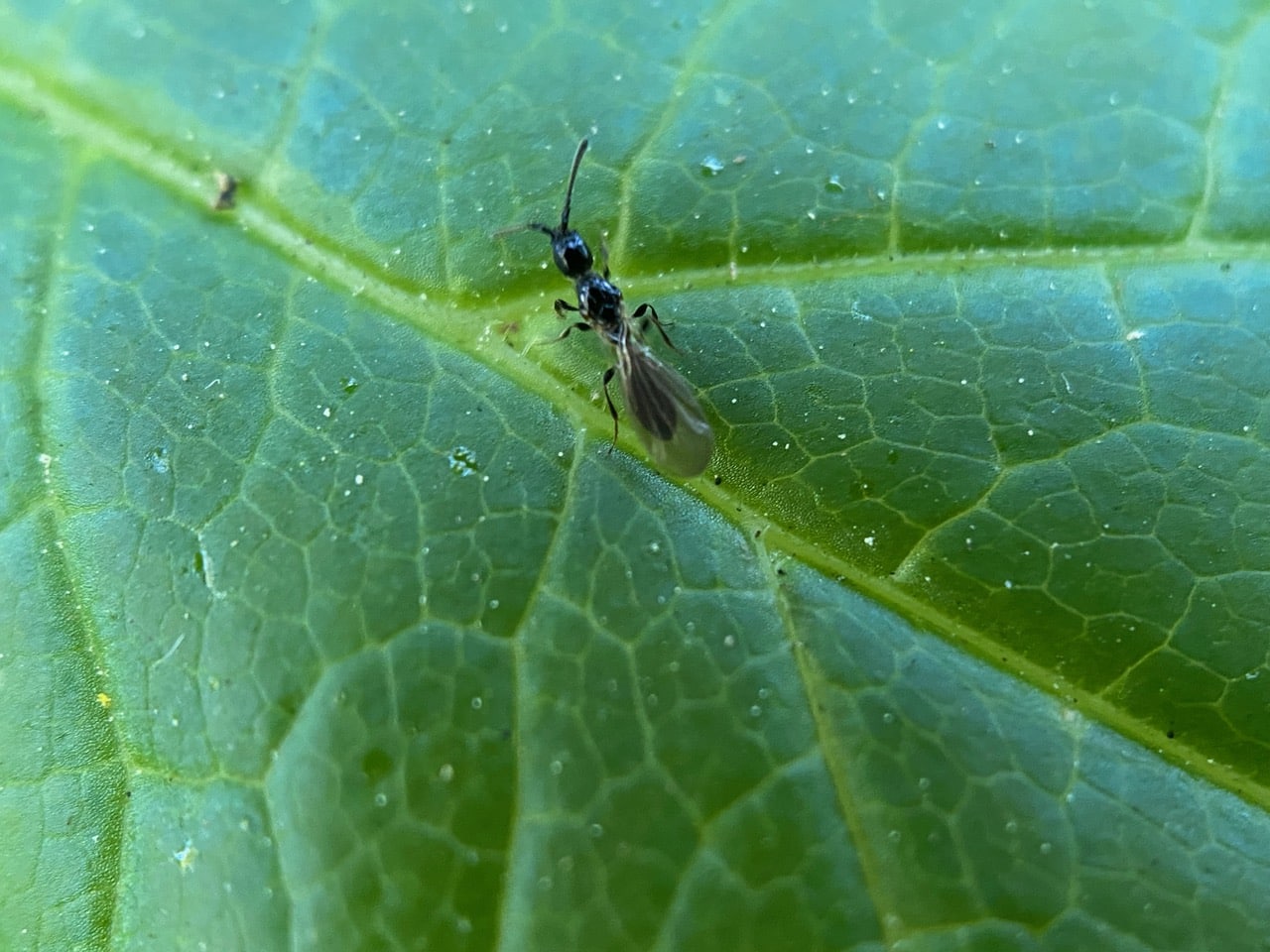
Who’s this tiny, slender insect on the Bee Plant leaf?
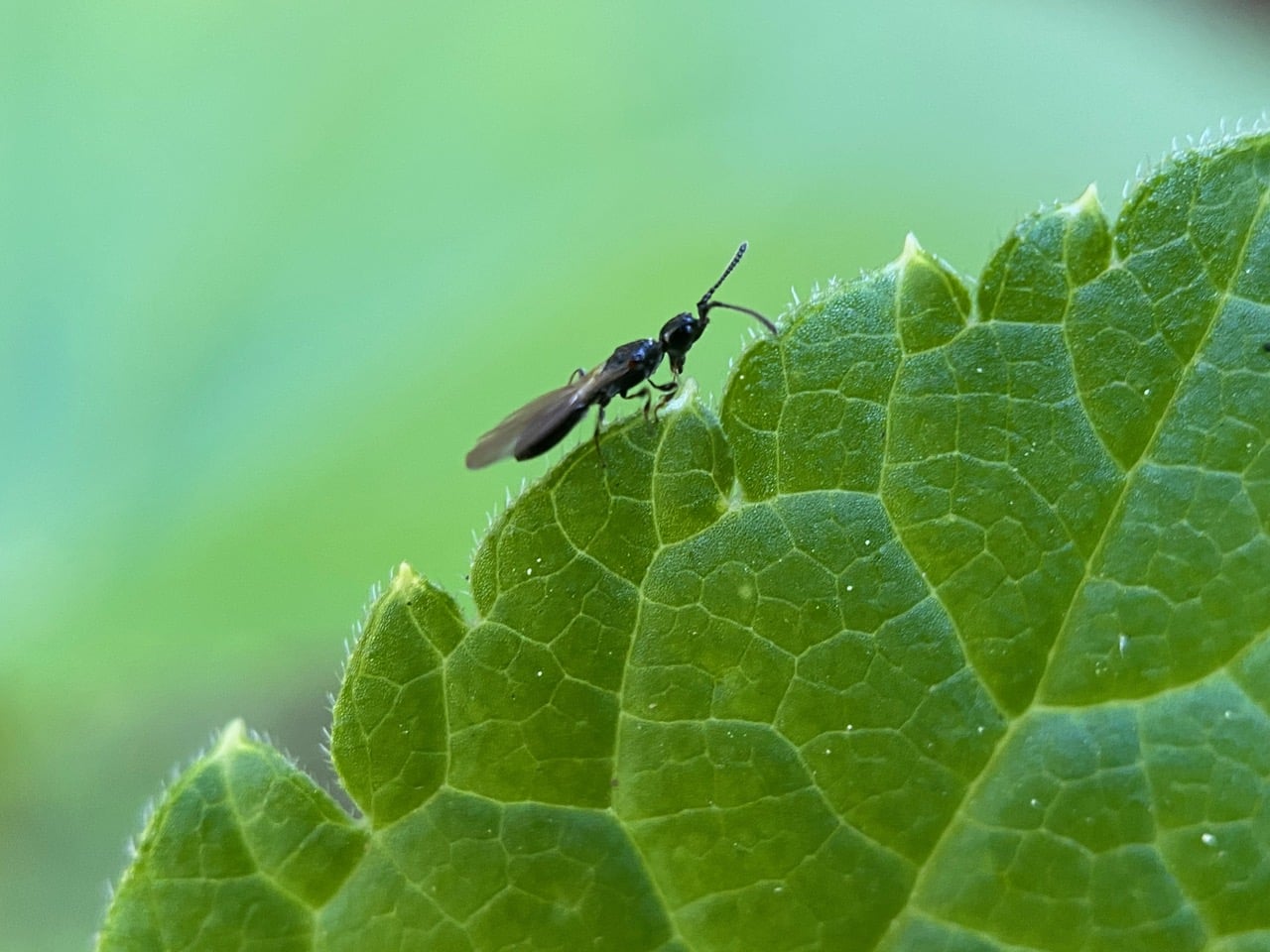
Whoa, what an interesting profile! I’m not even sure what order it belongs to – a new species for me! iNaturalist has helped identify it as a member of the family Diapriidae.
The Diapriidae are a family of parasitoid wasps with a global distribution. These tiny insects are generally 2-4 mm long. They typically attack larvae and pupae of a wide range of insects, especially flies. Nearly all species exhibit marked sexual dimorphism, with males and females often mistaken for separate species.
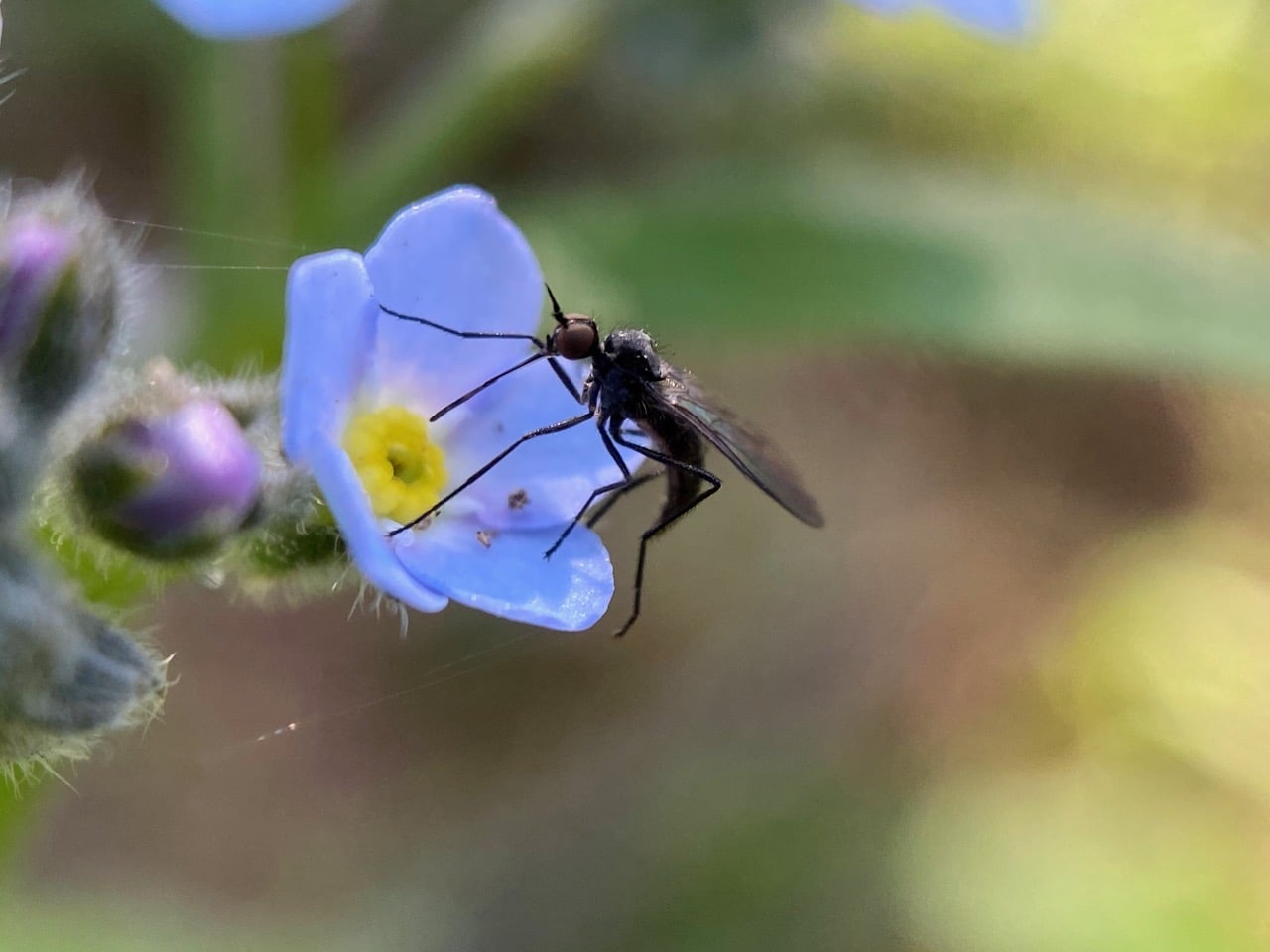
In the deep shade under a grove of Monterey Pines, a Dance Fly (family Empididae) lands on a flower of Forget-me-not, Myosotis sp. As I watch in amazement it proceeds to aim its long proboscis into the narrow tube of the flower.
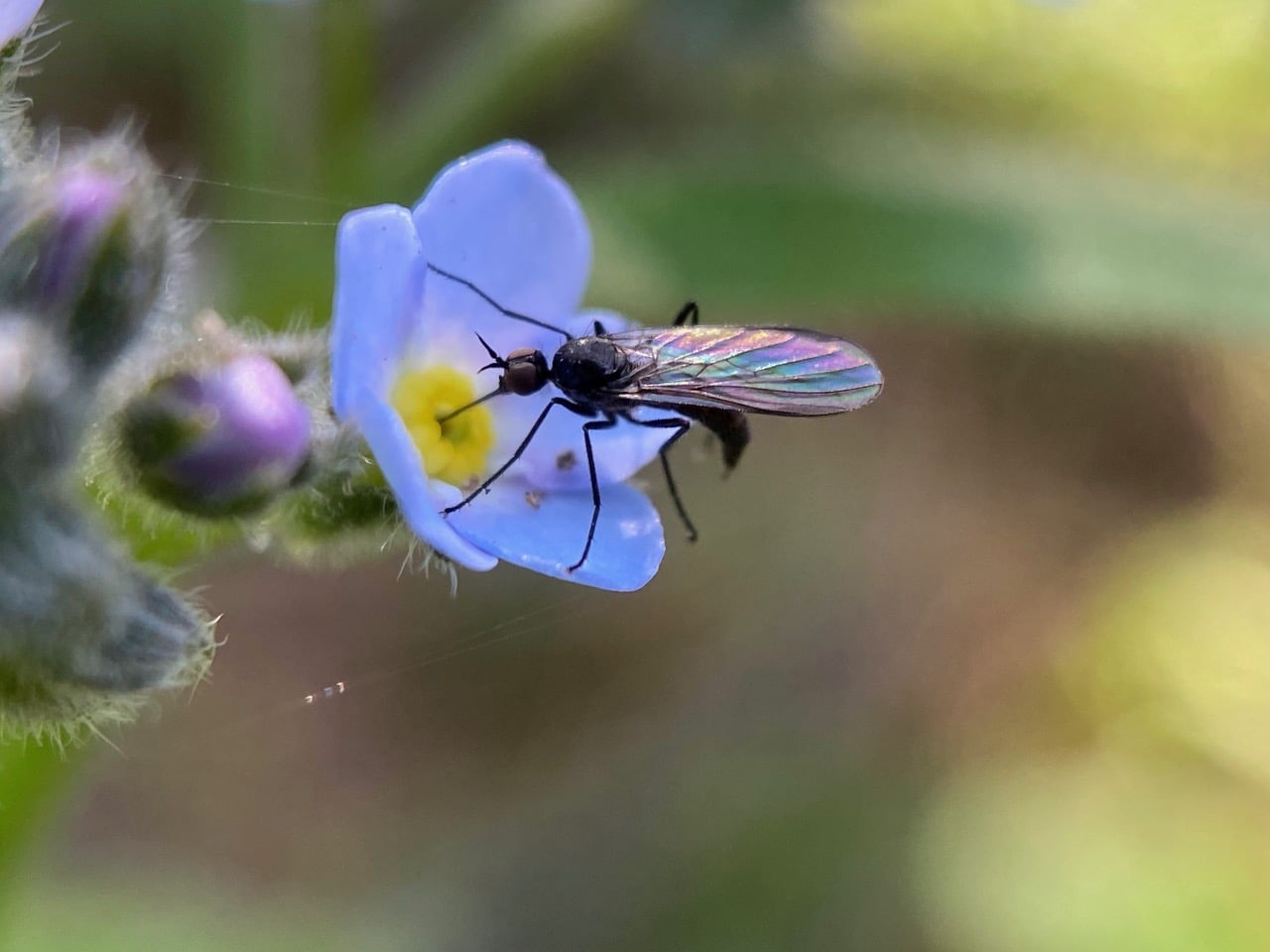
The whole length of the proboscis is inserted into the flower while the fly sucks up the nectar. The Empidid repeats this process several times before it flies away satiated.
Empididae is a family of flies commonly called Dance Flies, Dagger Flies (referring to the sharp piercing mouthparts of some species) or Balloon Flies. They are small to medium-sized, non-metallic and rather bristly. The body is slender, the head often small and rounded with relatively large eyes. The legs are usually long and slender, and in some the forelegs are raptorial, adapted for catching and holding prey. Adult Empidids are found in a variety of forest habitats, and open grasslands. They are predominantly predator, often found hunting for small insects on and under vegetation in shady areas. Both genders may also drink nectar. A few species obtain all their protein needs by feeding on pollen. Larvae are generally found in moist soil, rotten wood, dung, or in aquatic habitats and also appear to be predaceous on various arthropods, particularly other Diptera larvae.
Dance Flies get their name from the habit of males of some species to gather in large groups and dance up and down in the air in the hopes of attracting females. Male dance flies give their sweeties a nuptial gift to eat while they mate. The gift is thought to enable her to complete the development of her eggs. Males may wrap their gifts in balloons of silk or spit, hence the other common name of Balloon Flies.
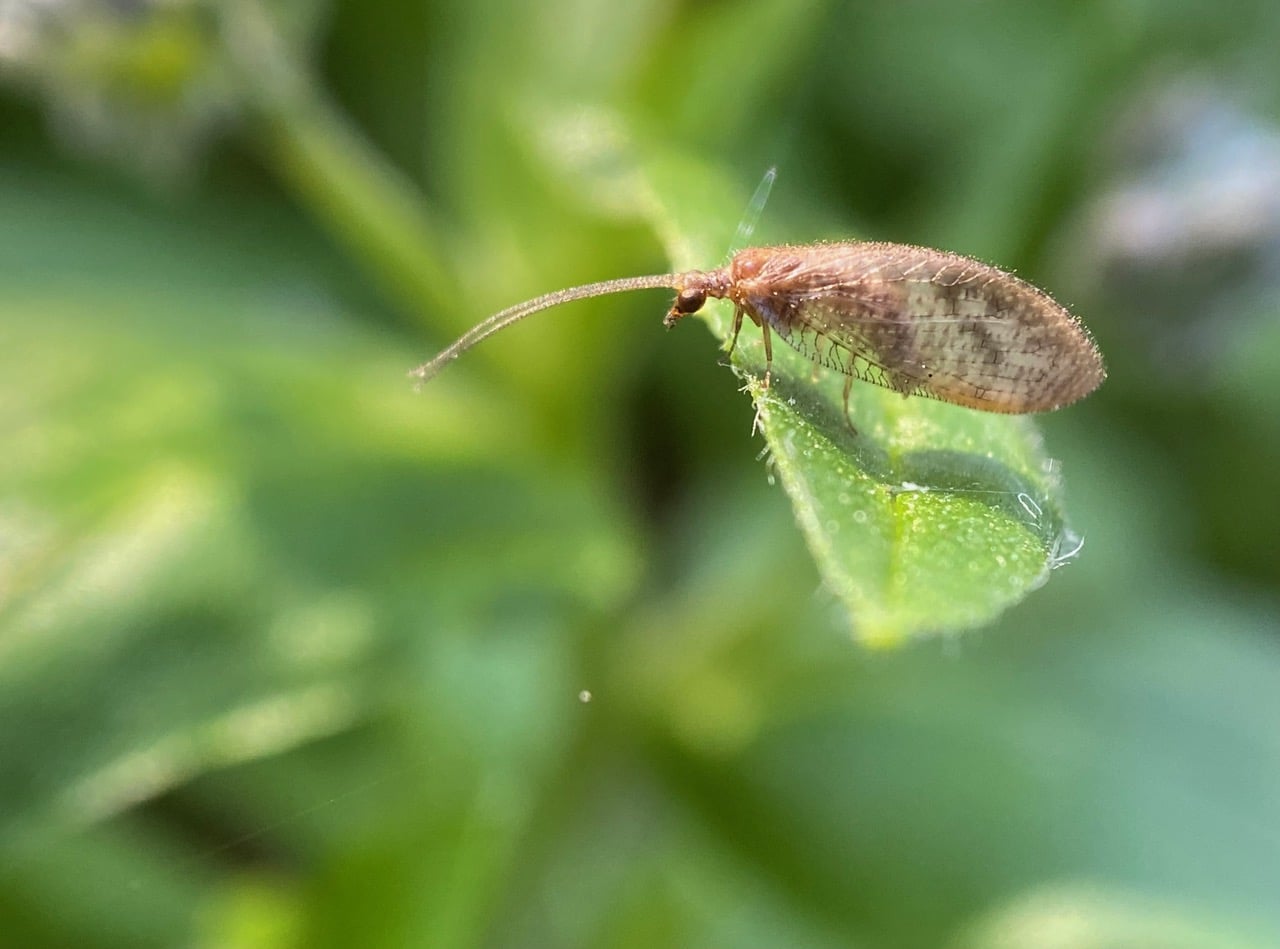
Perched on a Forget-me-not leaf, a Brown Pine Lacewing, Hemerobius stigma (family Hemerobiidae) is lit up beautifully by the low afternoon sun.
Hemerobiidae is a family of Neuropteran insects commonly known as Brown Lacewings. Most are yellow to dark brown, but some species are green. They are small; most have forewings 4-10 mm long. These insects differ from the more familiar Green Lacewings (family Chrysopidae) not only in the usual coloration, but also by wing venation. Adults have long slender antennae. Larvae are elongate, flattened, and tapered at the rear, resembling tiny alligators. They have sickle-shaped mandibles that they use to impale their prey and suck out the body contents. Unlike the Green Lacewings, Brown Lacewing eggs are not stalked, and their larvae are usually less hairy.
Like the Chrysopidae, Brown Lacewings are predatory both as adults and as larvae, especially on aphids and other soft-bodied insects.

There’s another patch of Miner’s Lettuce by the fence of the Horse Arena. It is in the shade, and many Hybotid Dance Flies (family Hybotidae) have gathered on the flowers as sunset approaches. I wonder if they aggregate for the night? Last week while exploring Inspiration Point on a cool morning, I came across many of these aggregations on Miner’s Lettuce, and have wondered if the flies have spent the night together.

A March Fly, Bibio xanthopus (family Bibionidae) is scrambling up a Miner’s Lettuce leaf. From its large eyes, I can tell it is a male. March Flies are sexually dimorphic, the males have much larger eyes than the females.
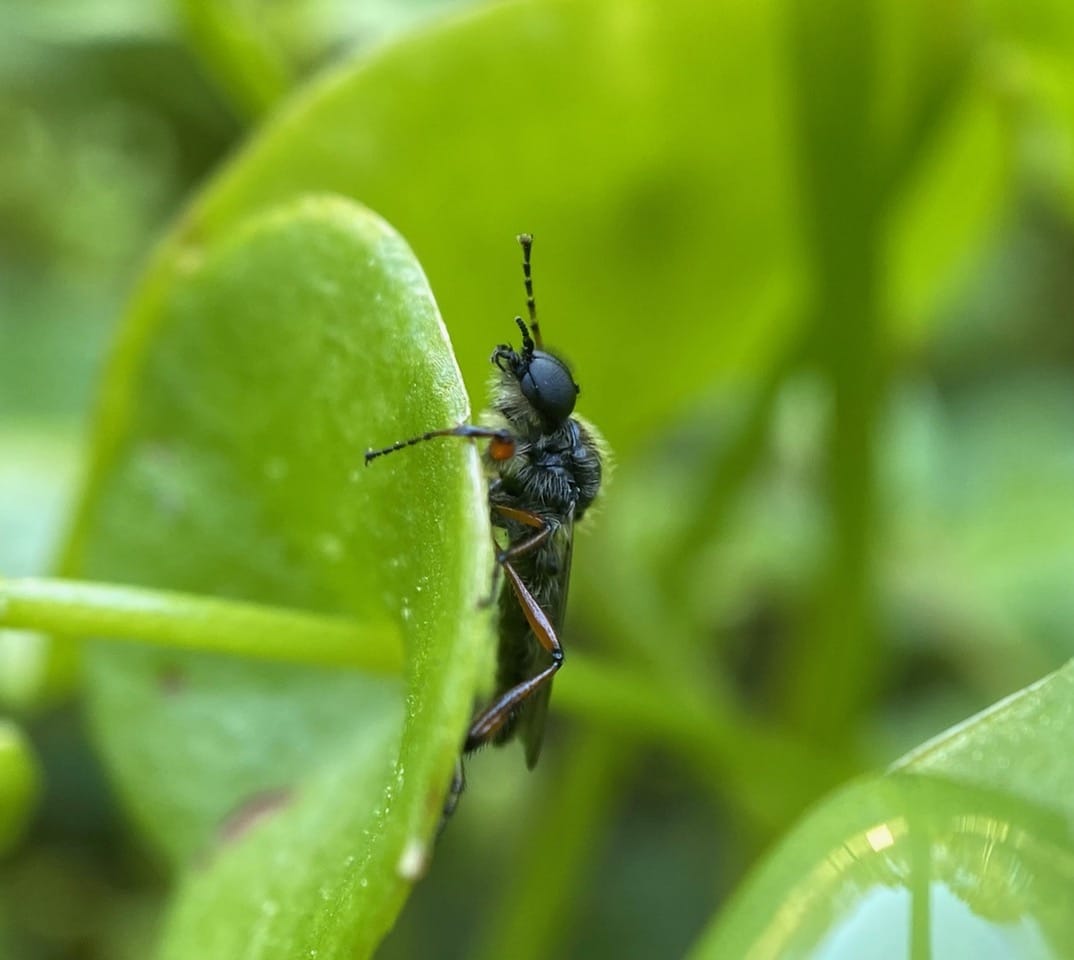
From this angle, I am thrilled to see the famous “split” eye of the male March Fly. I hadn’t realize that there’s actually an external line demarcating the upper and lower eyes.
March flies exhibit extreme sexual dimorphism – the sexes are morphologically distinct. The female is usually more colorful, has small eyes on the sides of long, narrow head, while the all-black males have huge eyes that touch in the middle and are split in half horizontally. Scientists speculate that the split makes it easier for them to see the other males that are above and below them in a mating swarm. Males gather in swarms that can blanket the ground and low vegetation. Female are attracted to the party and select mates in the frenzy of fly bodies.

Top view of the male March Fly, Bibio xanthopus (family Bibionidae).