

Pollinator Post 4/5/24 (1)
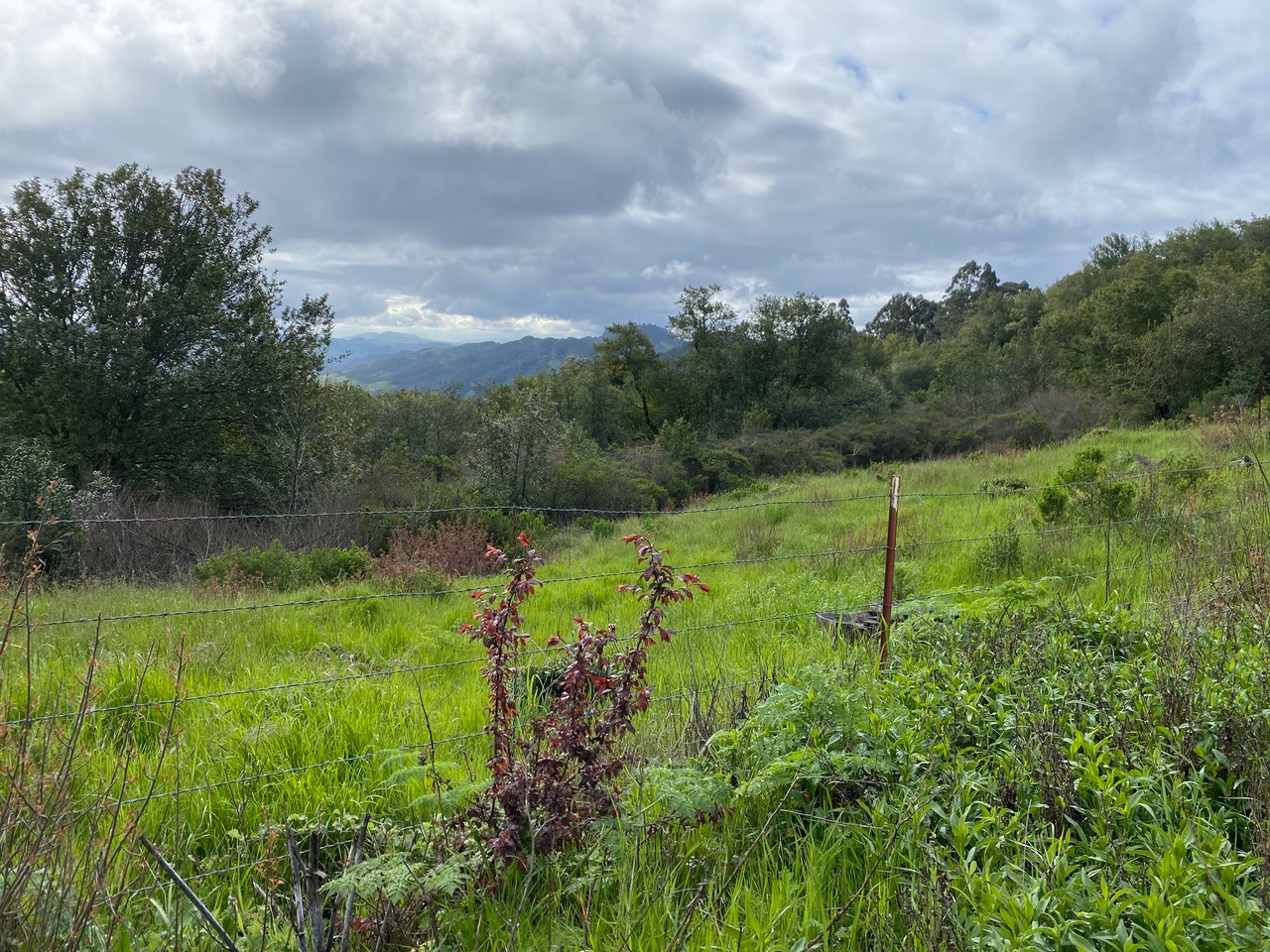
I have not expected to be back at Skyline Gardens again so soon, but yesterday’s cold storm had me wondering about those male Mining Bees (family Andrenidae). How did they fare through such challenging weather? Did they find alternative shelter for the night? Snow was reported on Mt.Tamalpais and Mt. Diablo, and I wouldn’t be surprised if Grizzly Peak got some too. After all, it did snow here last year.
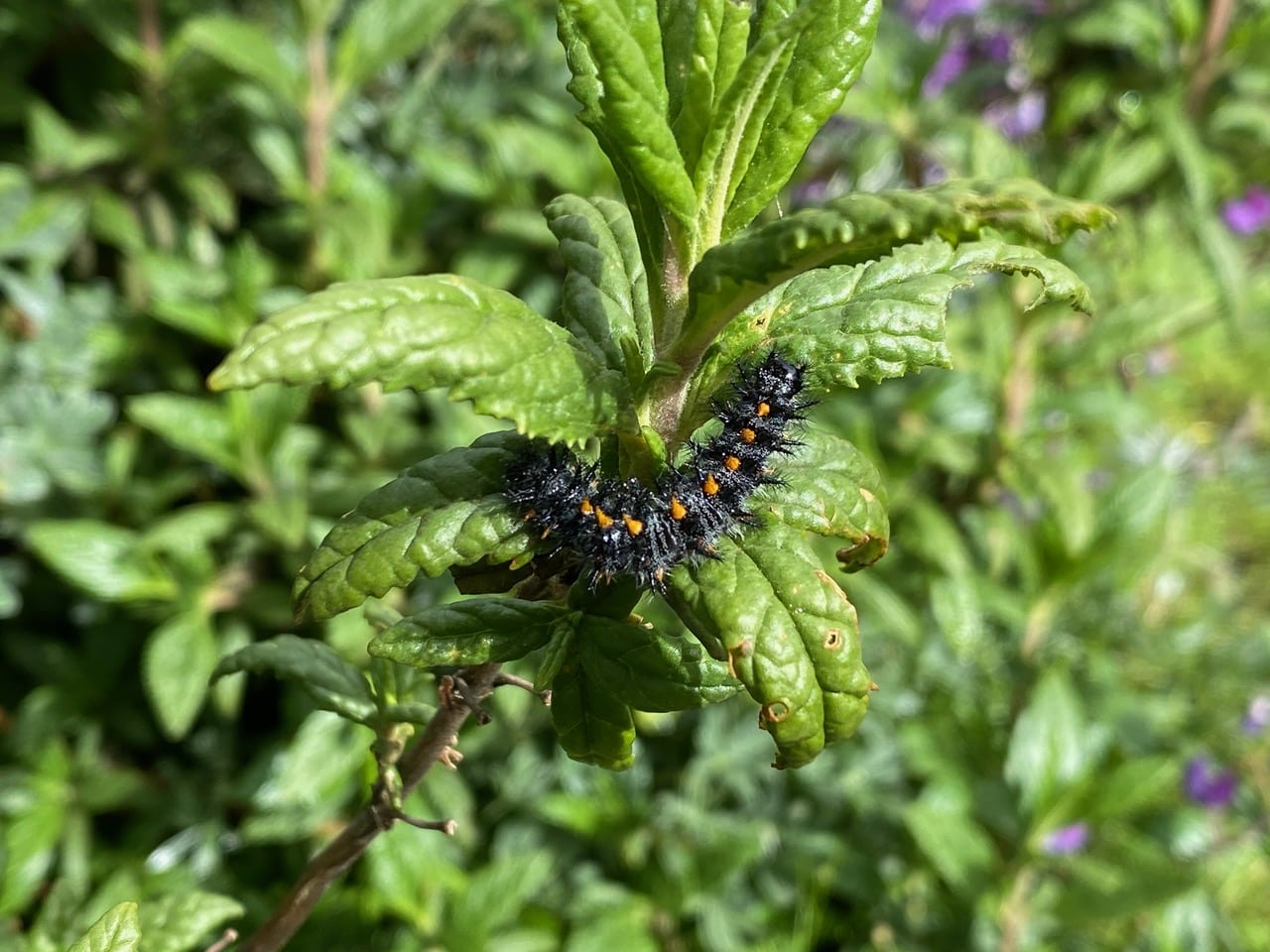 At the Steam Train entrance, a large Variable Checkerspot caterpillar is resting on the leaves of Sticky Monkeyflower, Diplacus aurantiacus. Both caterpillar and its host plant have weathered the storm well.

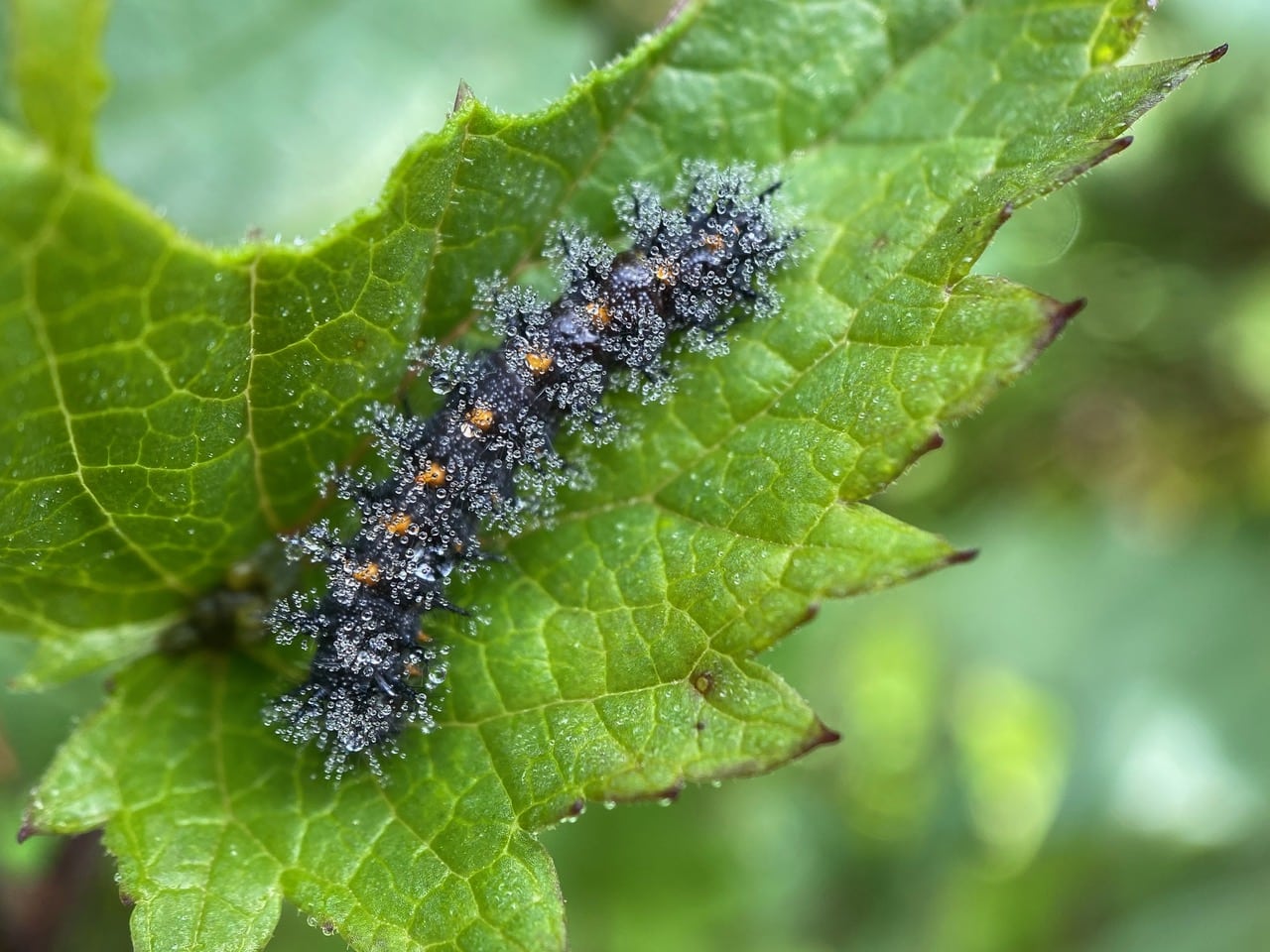
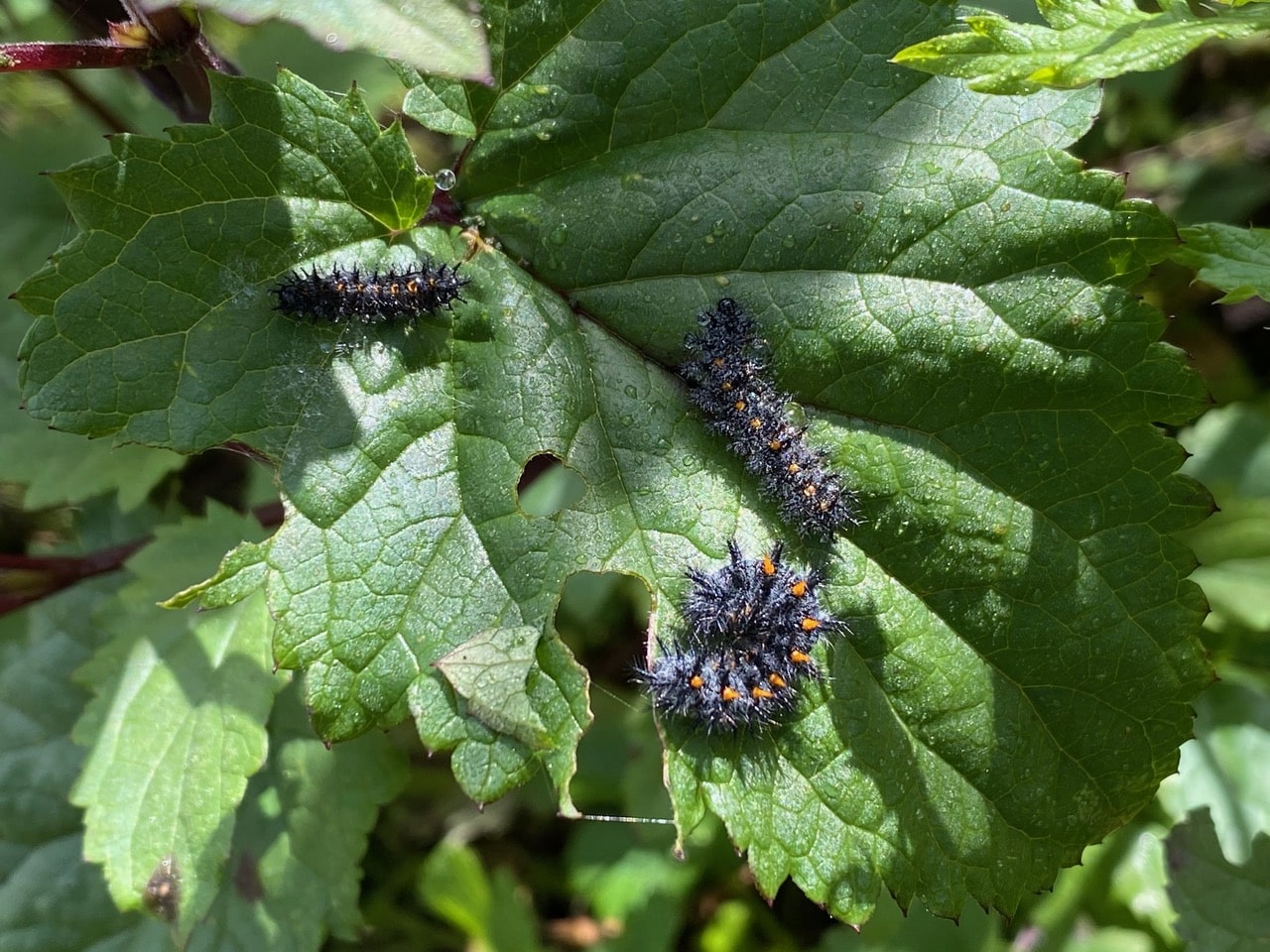 Apparently caterpillars do not seek shelter during rain storms. These Variable Checkerspot caterpillars are resting on a leaf of their host plant, California Bee Plant, Scrophularia californica.
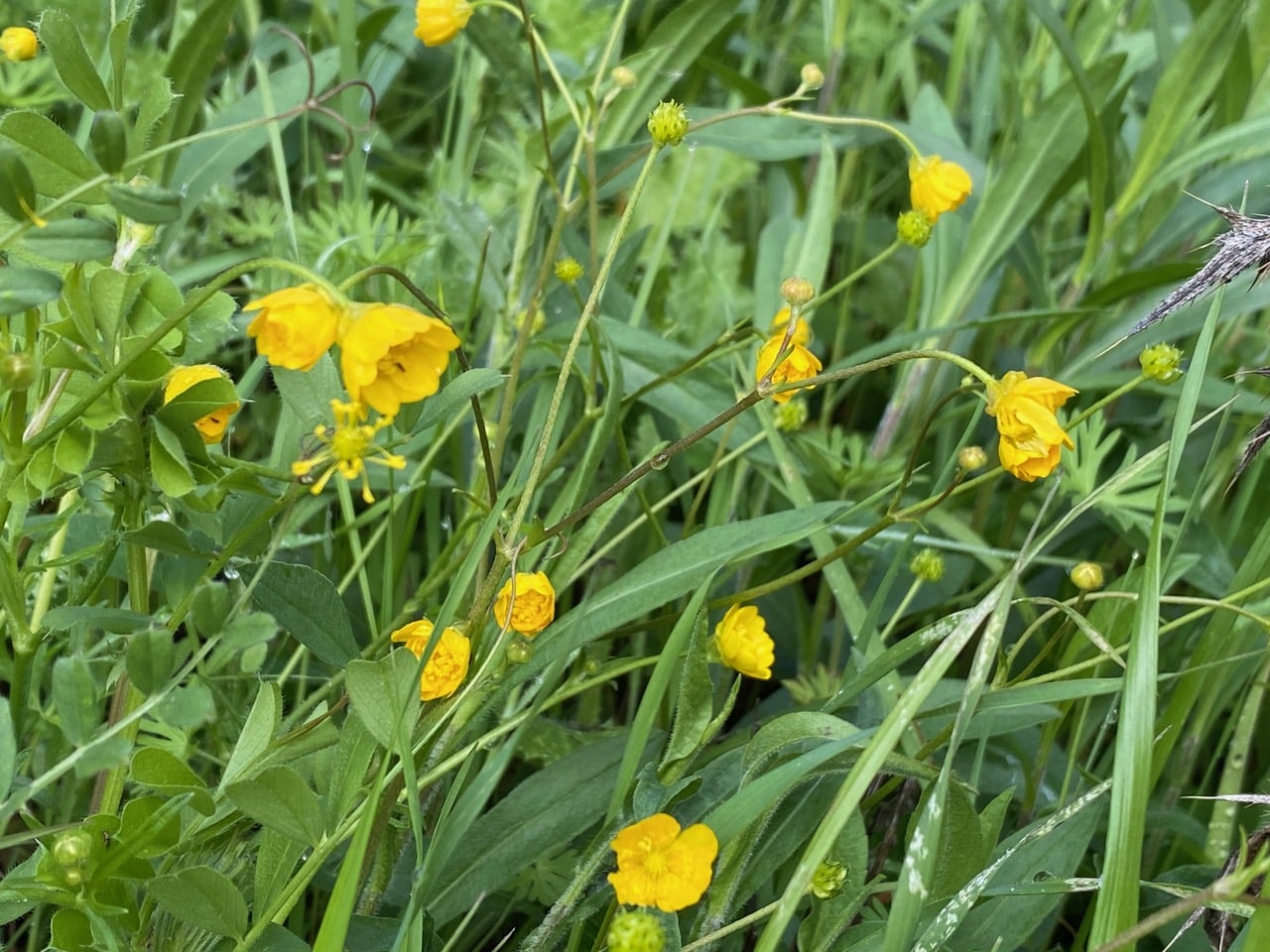
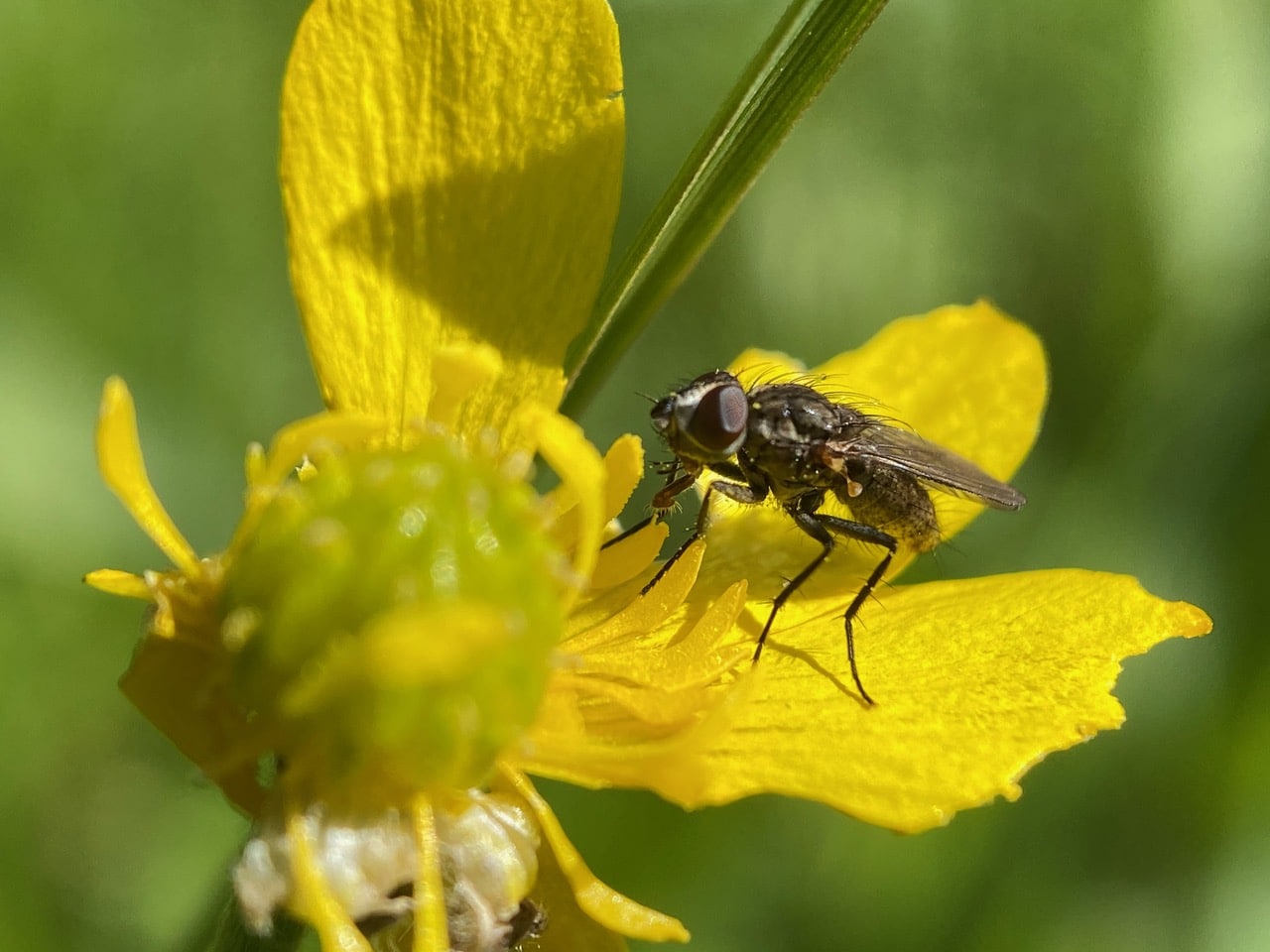
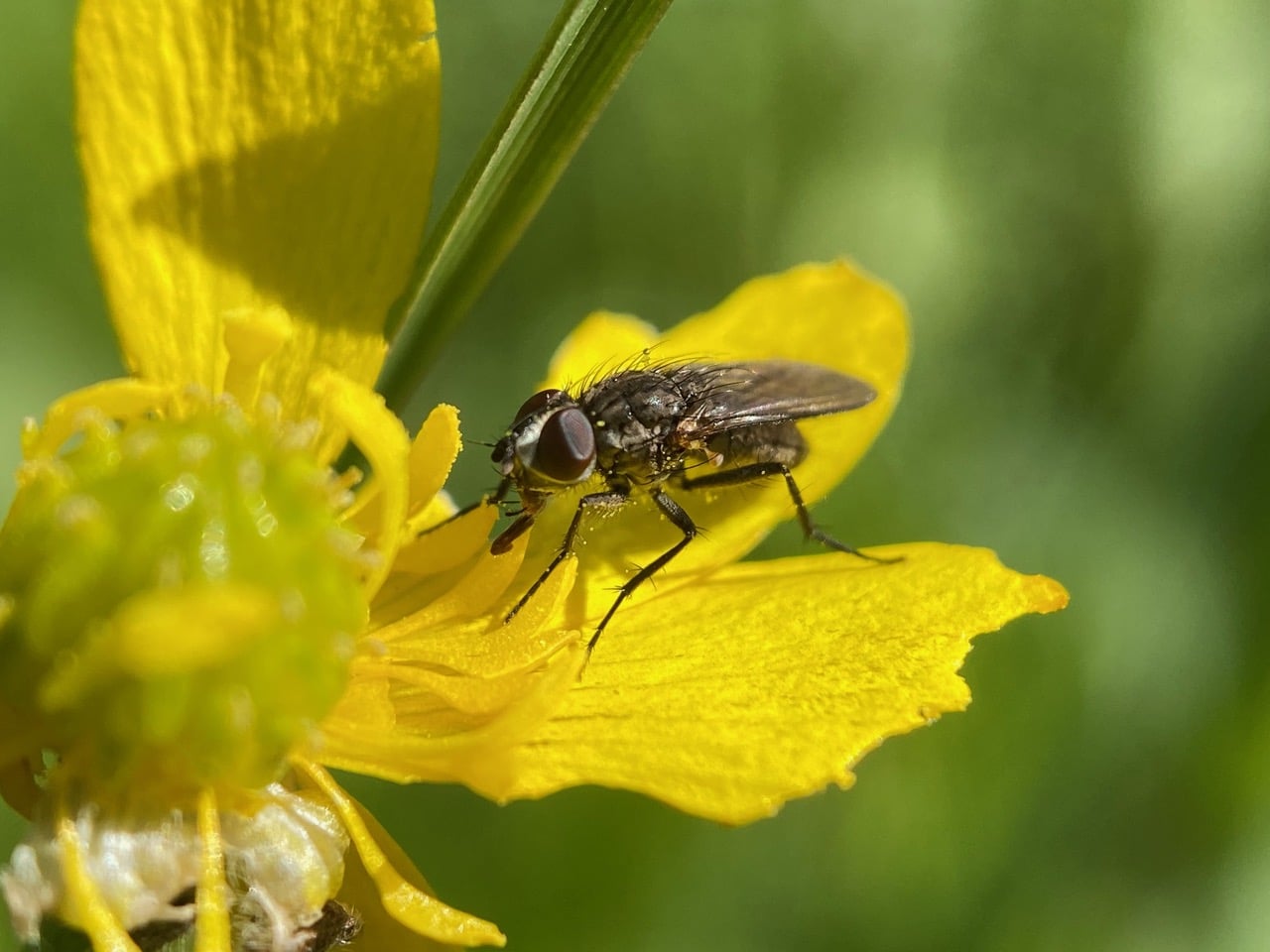
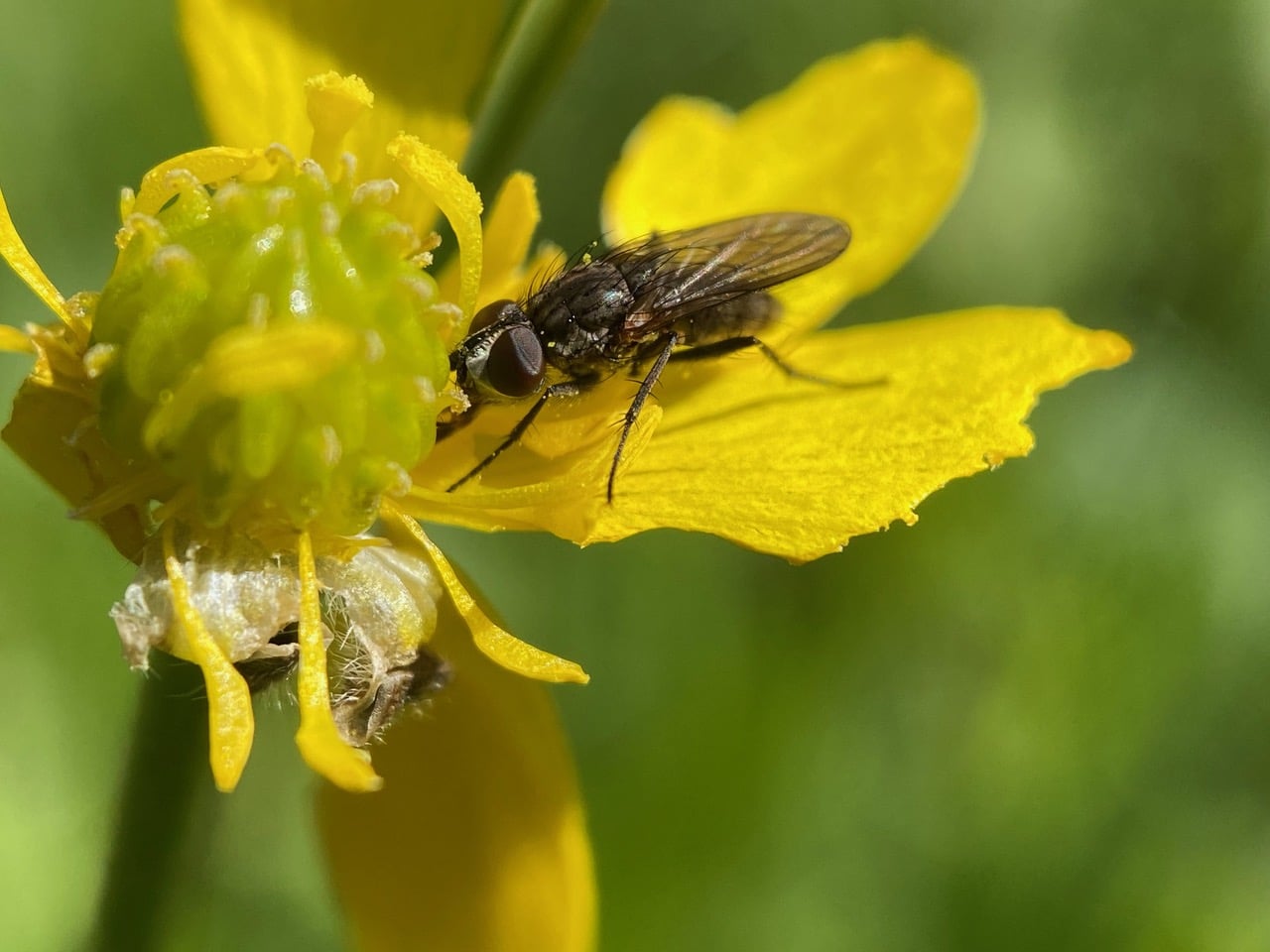
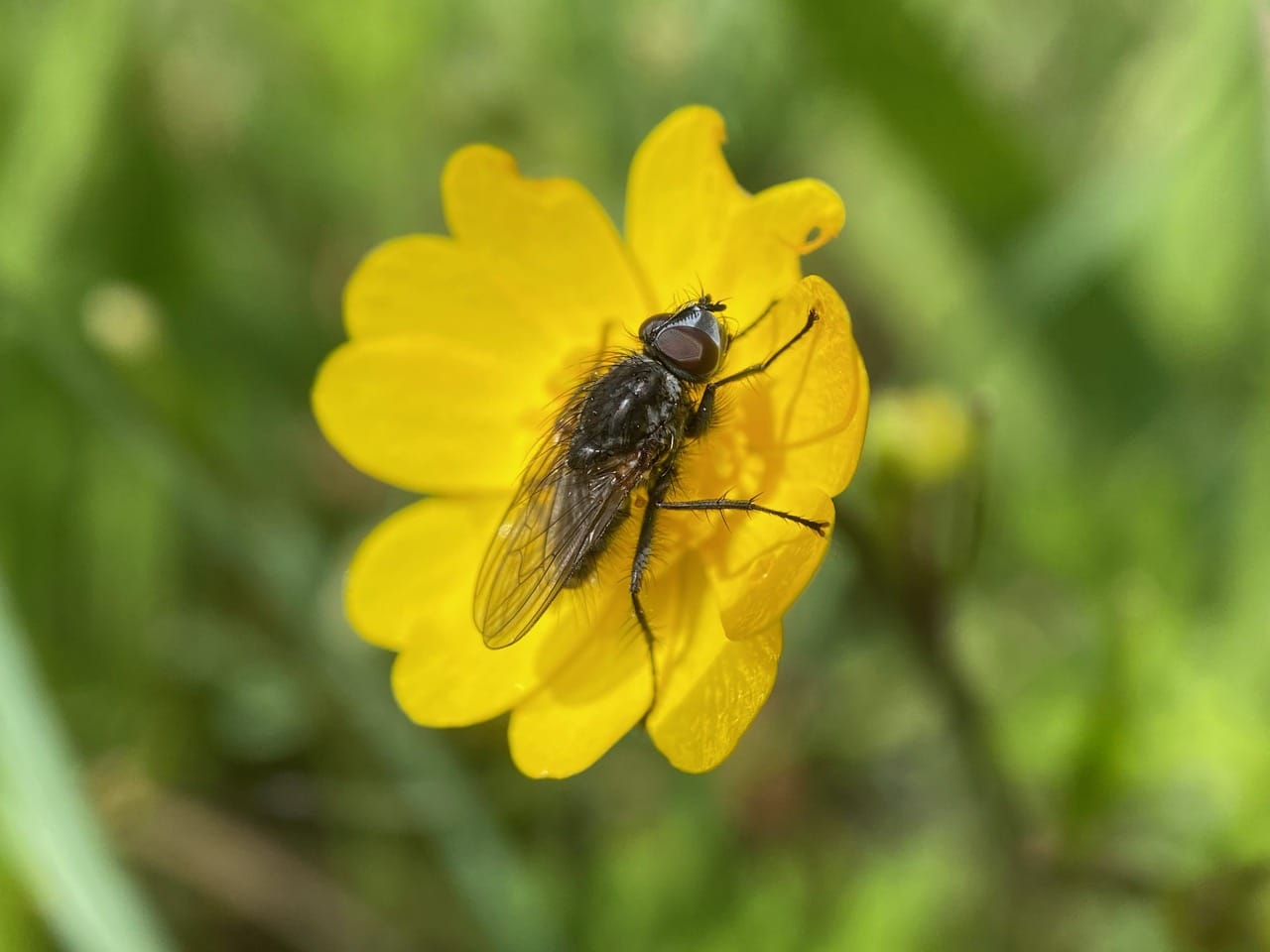 I turn my attention to the buttercups across the trail. A Root Maggot Fly (family Anthomyiidae) is already foraging on the flowers.
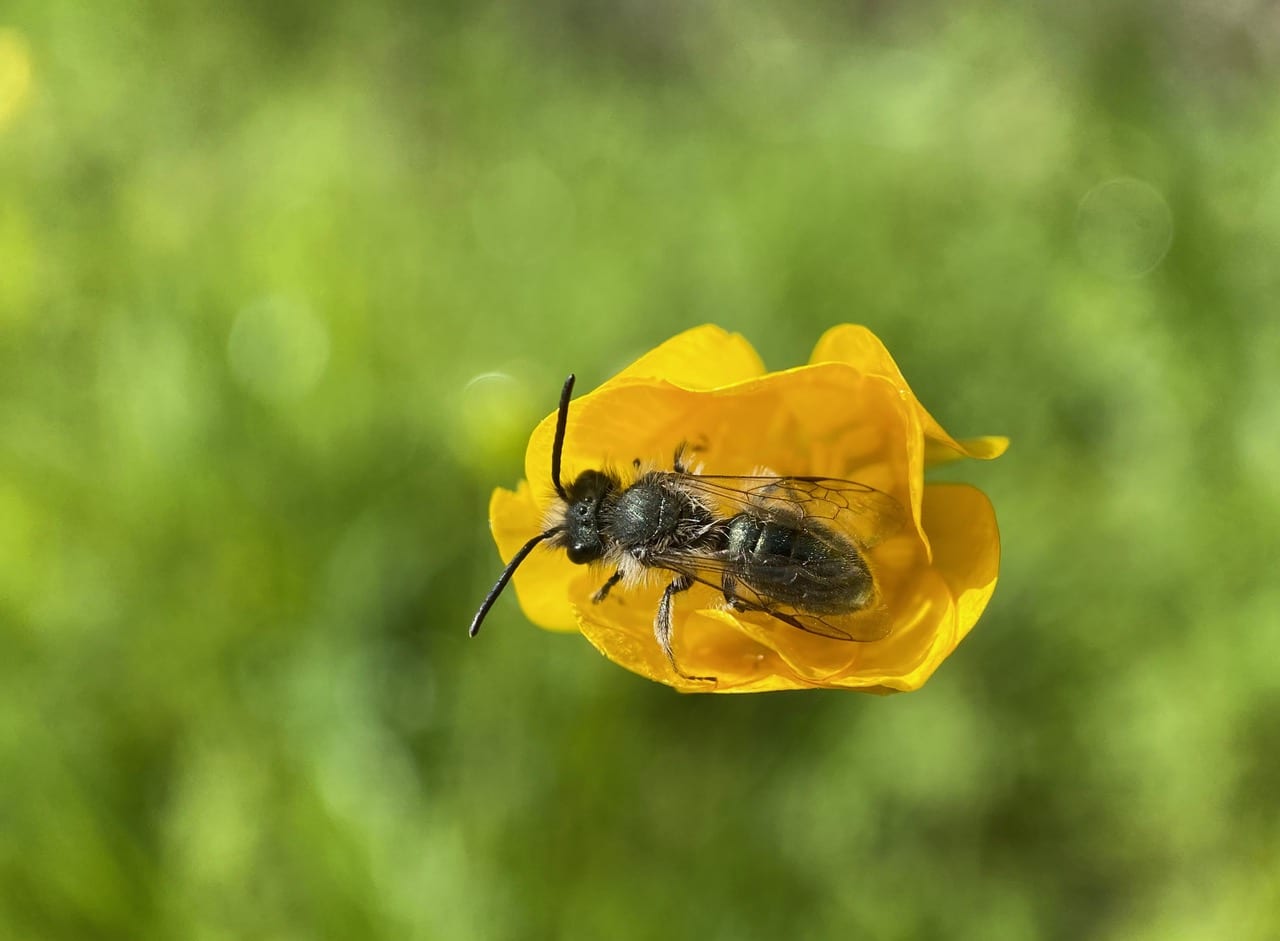
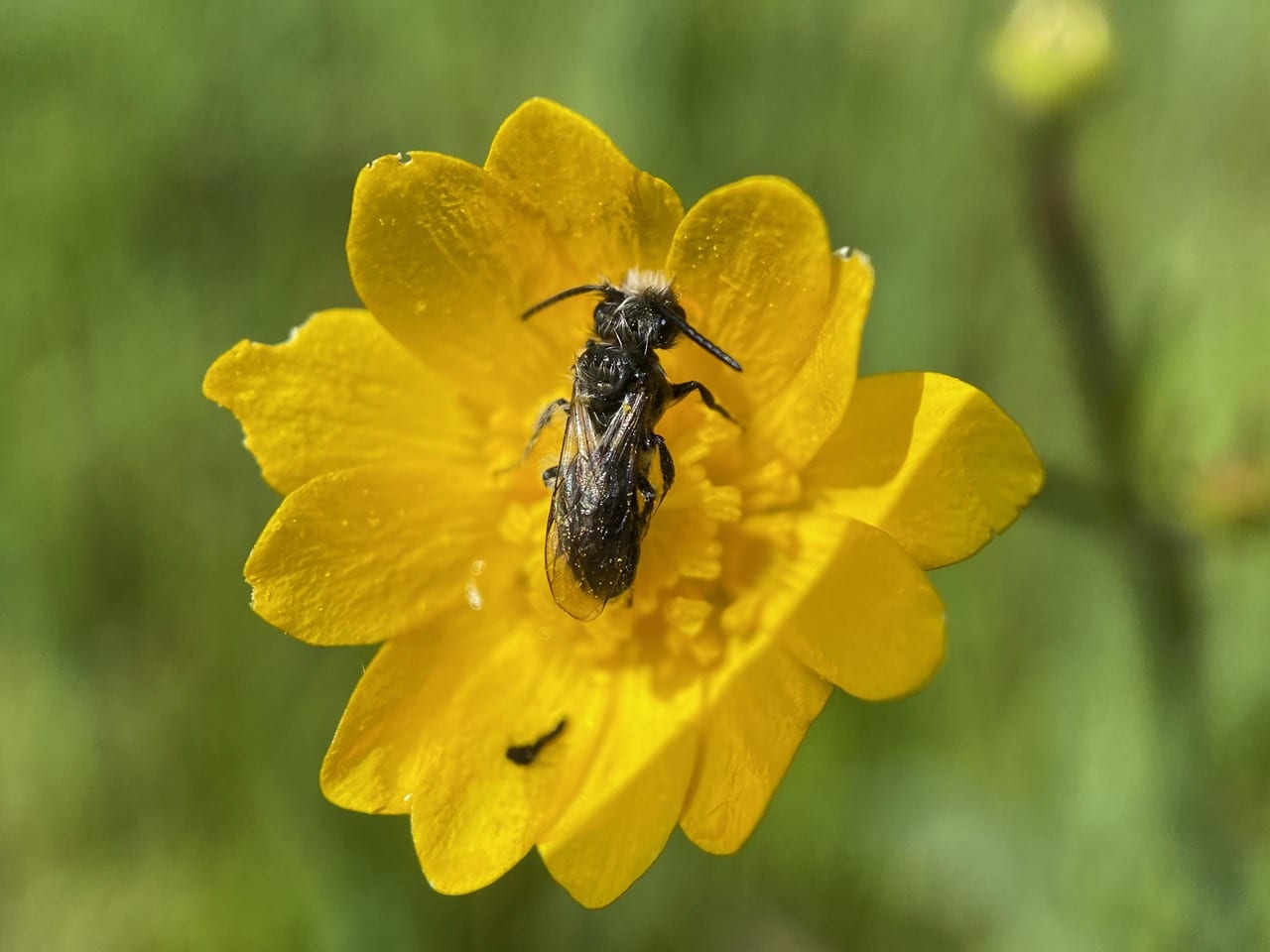

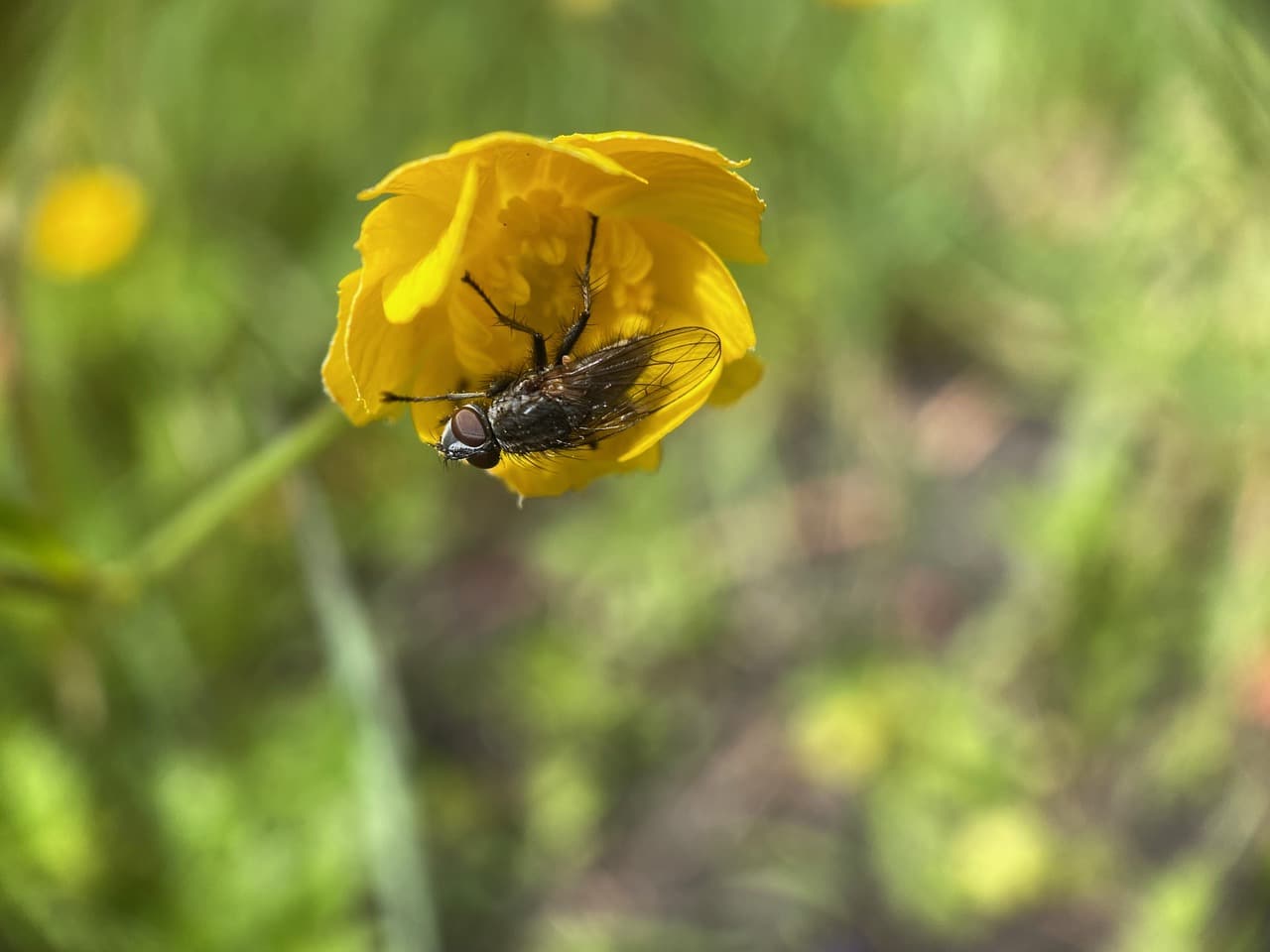
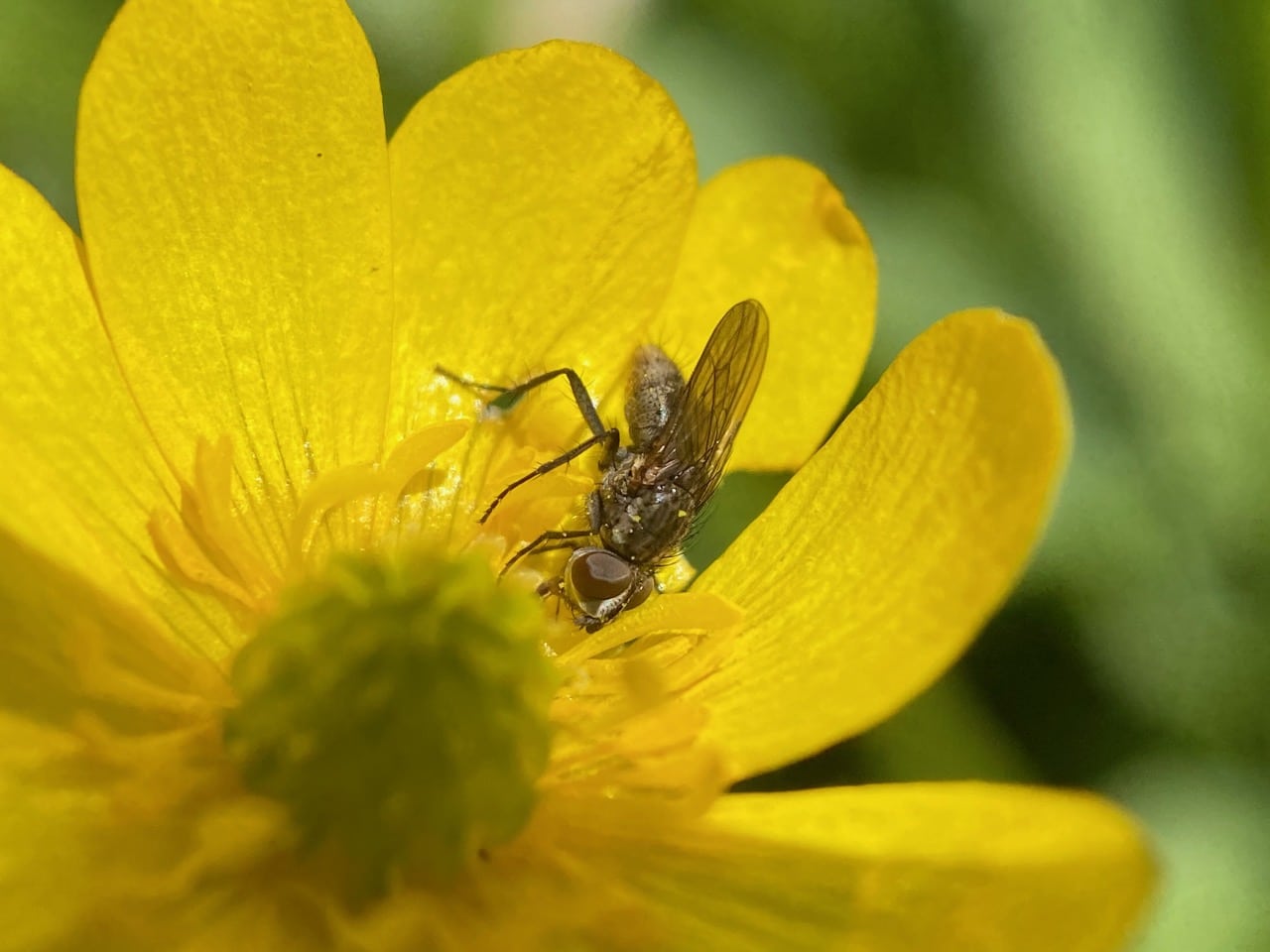
 Even a fading buttercup with missing petals is attractive to the Root Maggot Fly.

At 9:30 am, the sky is still moody with clouds. Thankfully the rain has stopped. It is a chilly 41 F out here.
At the Steam Train entrance, a large Variable Checkerspot caterpillar is resting on the leaves of Sticky Monkeyflower, Diplacus aurantiacus. Both caterpillar and its host plant have weathered the storm well.All the spikes of flowers on the Silverleaf Lupine are intact, albeit wet.
The Buttercup flowers are in a state of disarray, and all are drooping from the storm. Most are still half closed. Everything is quiet.
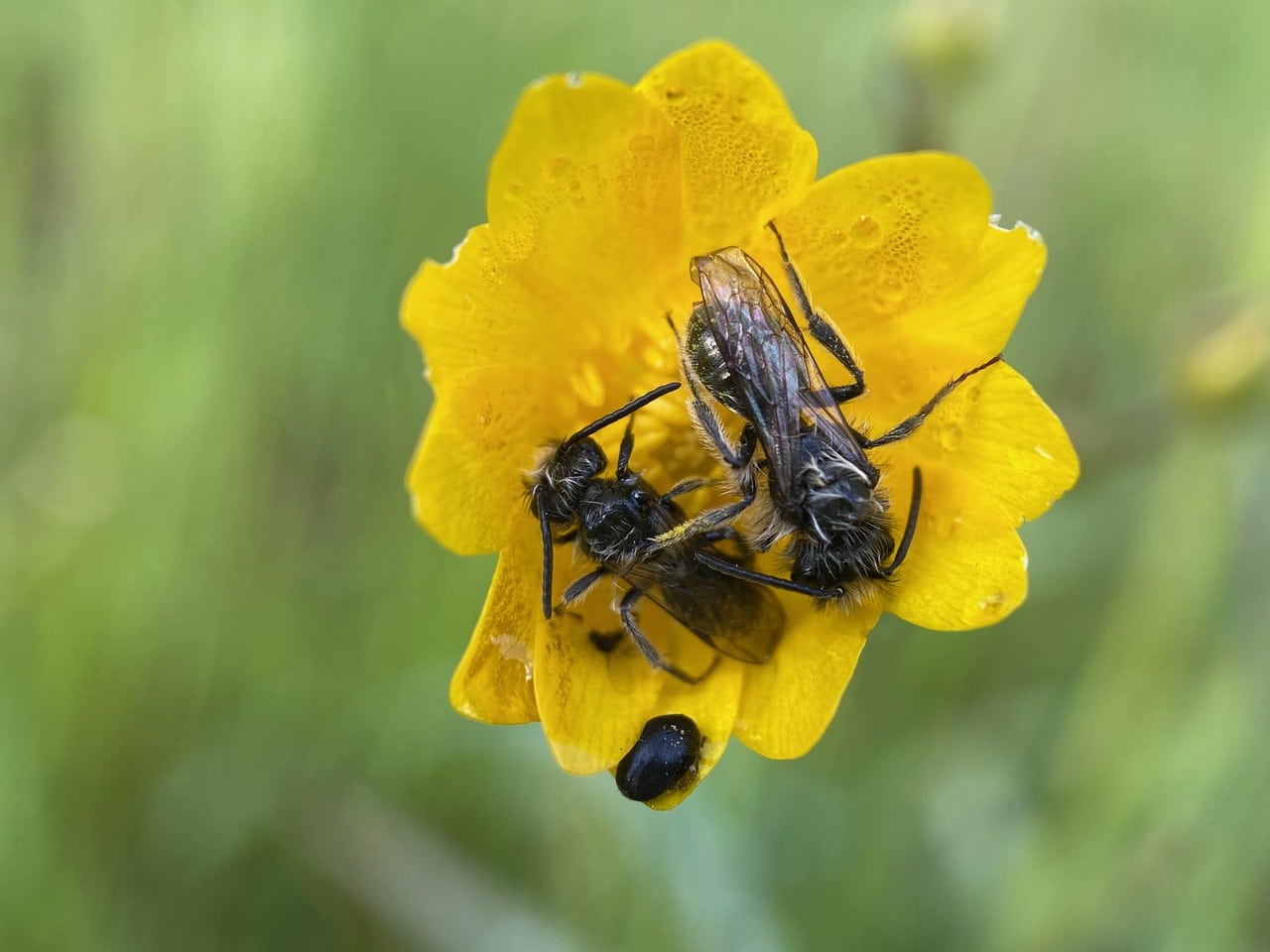
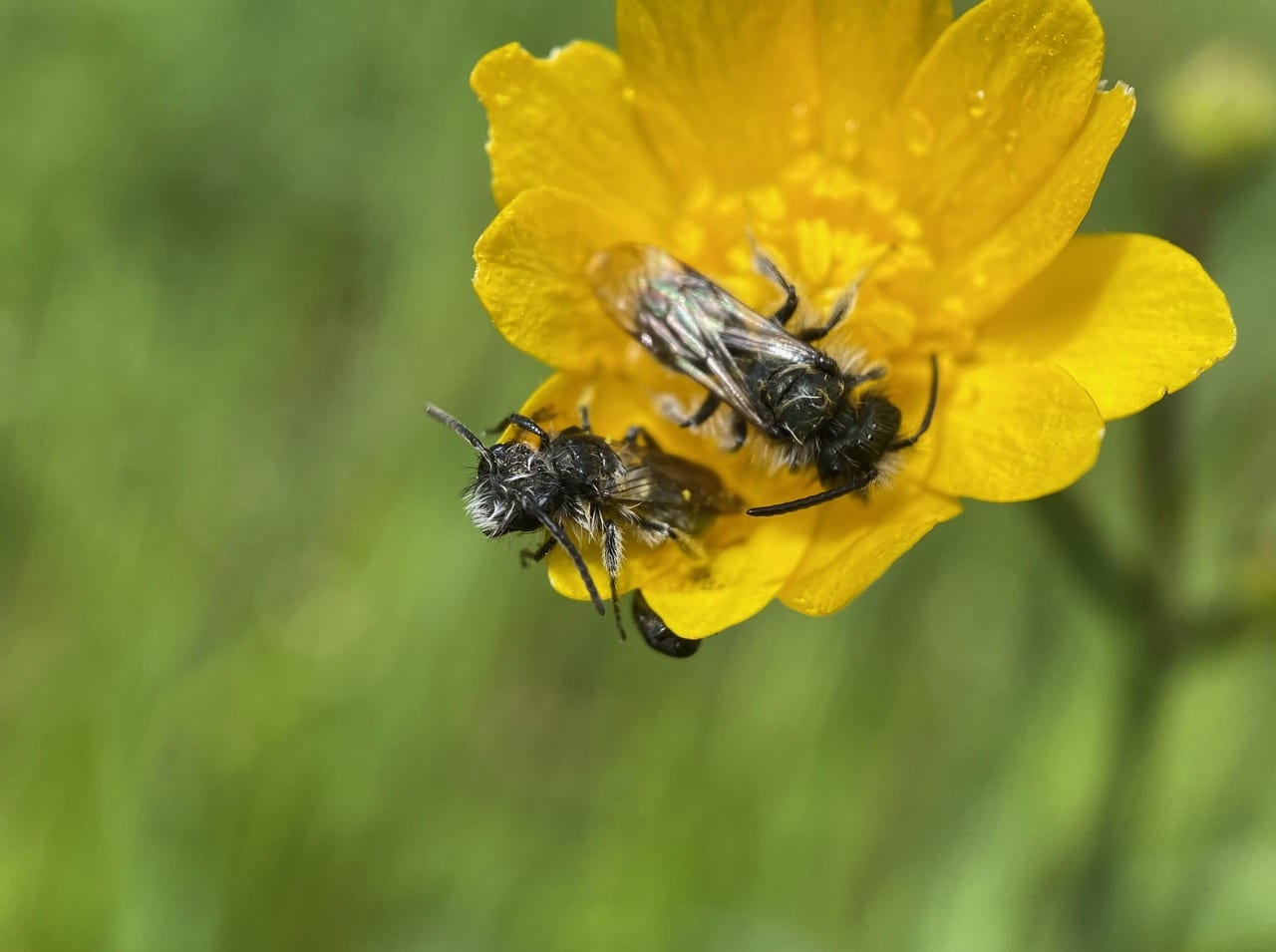
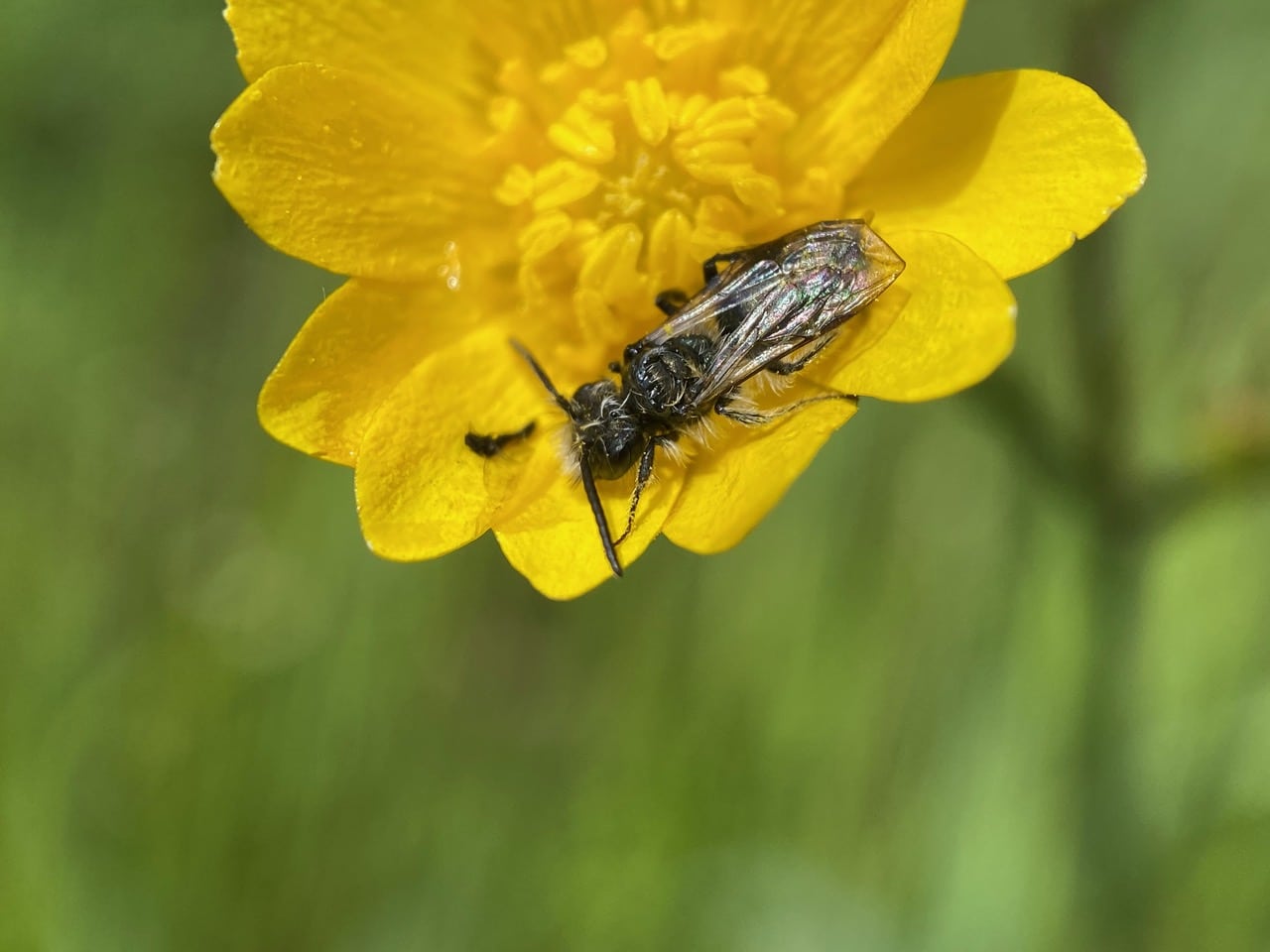
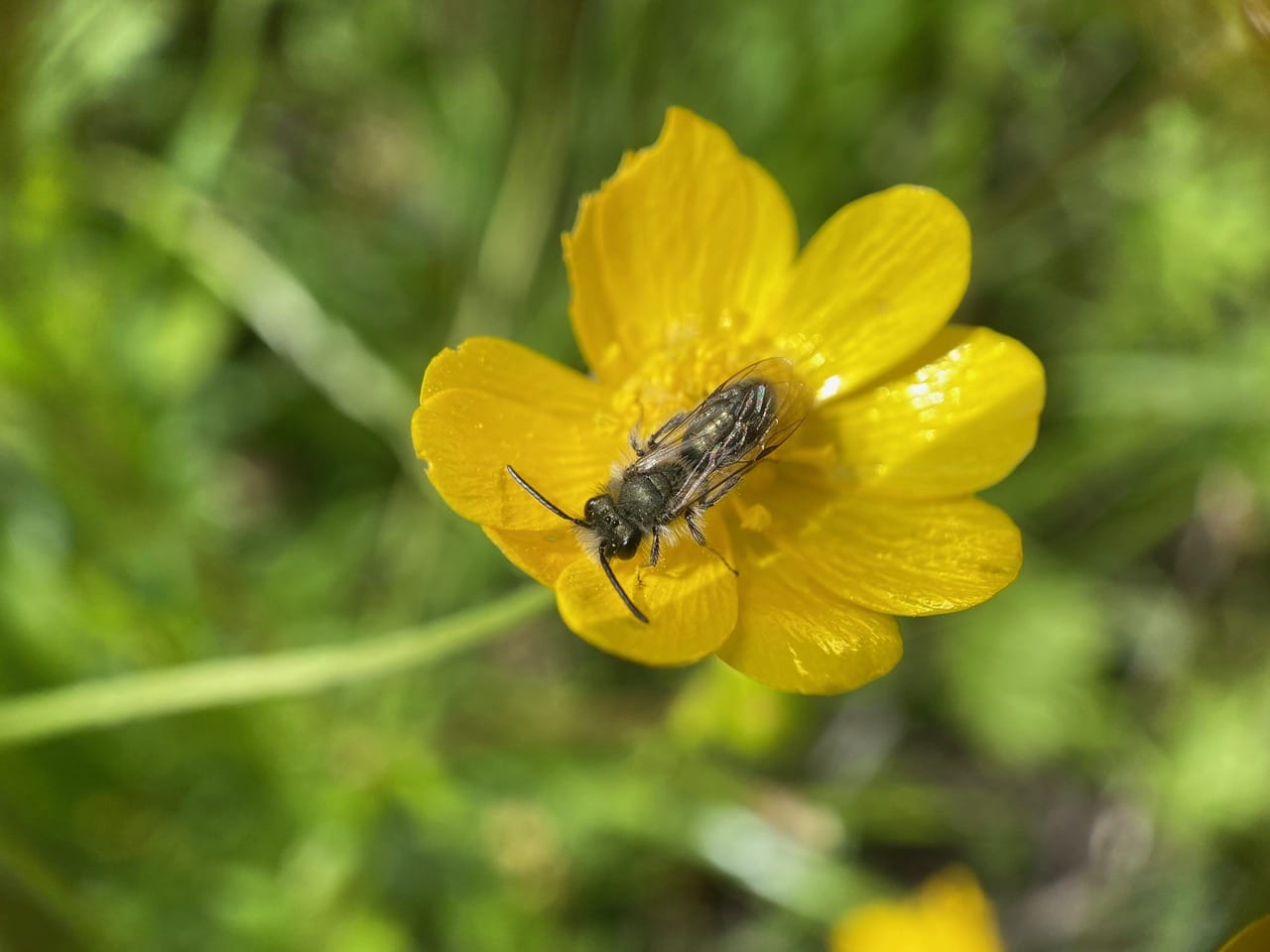
9:40 am At Sleepy Head’s favorite roost, I find two wet Mining Bees (family Andrenidae) resting motionless on the same buttercup flower that faces the east. Not surprisingly they are both males, but one is much larger than the other. I think the smaller one might be Sleepy Head. On a petal next to the bees is a pollen beetle that has been displaced. Unlike females, male solitary bees do not construct nests, and do not have a home to which to return at the end of the day. They sleep out in the open at night, often on flowers.
Since it is too cold to sit around and wait for the bees to wake up, I opt to walk on.
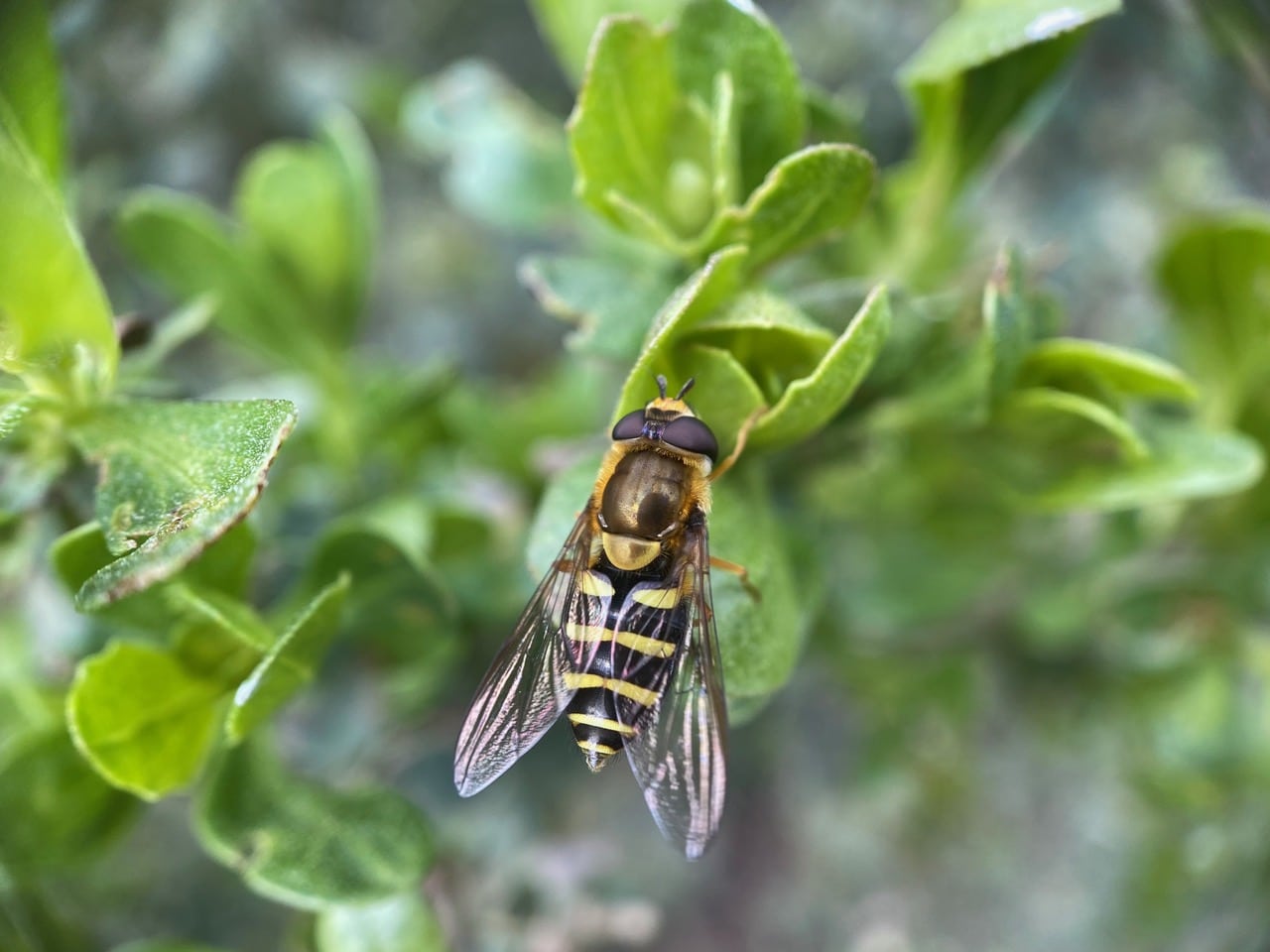
A Black-margined Flower Fly, Syrphus opinator (family Syrphidae) is perched on the foliage of Coyote Brush, with its back facing east. Although these flies are cold-hardy, they are fond of basking. The insects seem to know their directions even though the sun is not out. Many insects, including honeybees, locusts and monarch butterflies can sense the polarization of light in the sky and use it to estimate the sun’s position even when the sun is not visible. They depend on the position of the sun to guide their travels.
Apparently caterpillars do not seek shelter during rain storms. These Variable Checkerspot caterpillars are resting on a leaf of their host plant, California Bee Plant, Scrophularia californica.This caterpillar looks frosted, with tiny drops of water clinging to the tips of its branched bristles. Besides protecting the caterpillar from predators, perhaps the bristles serve to protect it from direct contact with water as well?
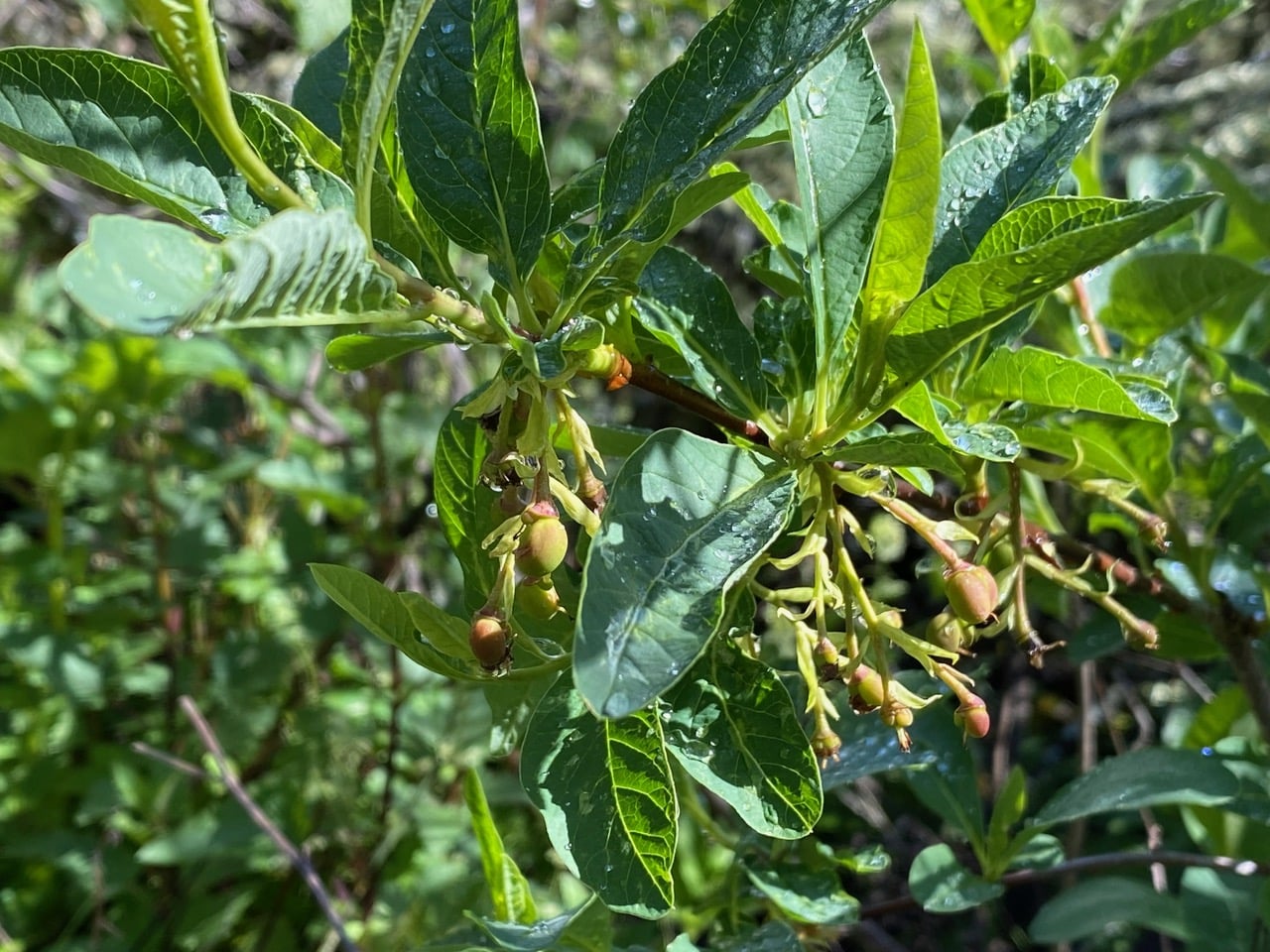
Hey, this female Osoberry, Oemleria cerasiformis is already developing fruits! The species is dioecious, with male and female flowers borne on separate plants. It is a treat to find a female plant, as they are much rarer than the males.
10:18 am Back at the buttercup, the two wet bees are still on the flower, but they have shifted positions. They are waking up!
I turn my attention to the buttercups across the trail. A Root Maggot Fly (family Anthomyiidae) is already foraging on the flowers. Did I miss this male Mining Bee earlier? It looks nice and clean, not wet. Did it just crawl out of the flower that is barely opening now? The closing of the buttercup flowers at night offers additional protection to the sleeping bees.
10:28 am The smaller of the Mining Bees has disappeared, leaving its groggy companion on the buttercup flower.
10:30 am The bee is moving around very slowly on the flower.
10:36 am Six minutes later, the male Andrenid begins to actively groom itself. Time to start the video camera!
The morning ritual involves brushing the abdomen with the hindlegs, flapping the wings, cleaning the face, antennae, and mouthparts. Finally, all warmed up, the little bee lifts off for the day!
It is heartening that these early season bees are tough enough to handle the challenging weather conditions this time of year.
A drooping flower presents no problem for the agile Root Maggot Fly. It is just as comfortable working upside down.
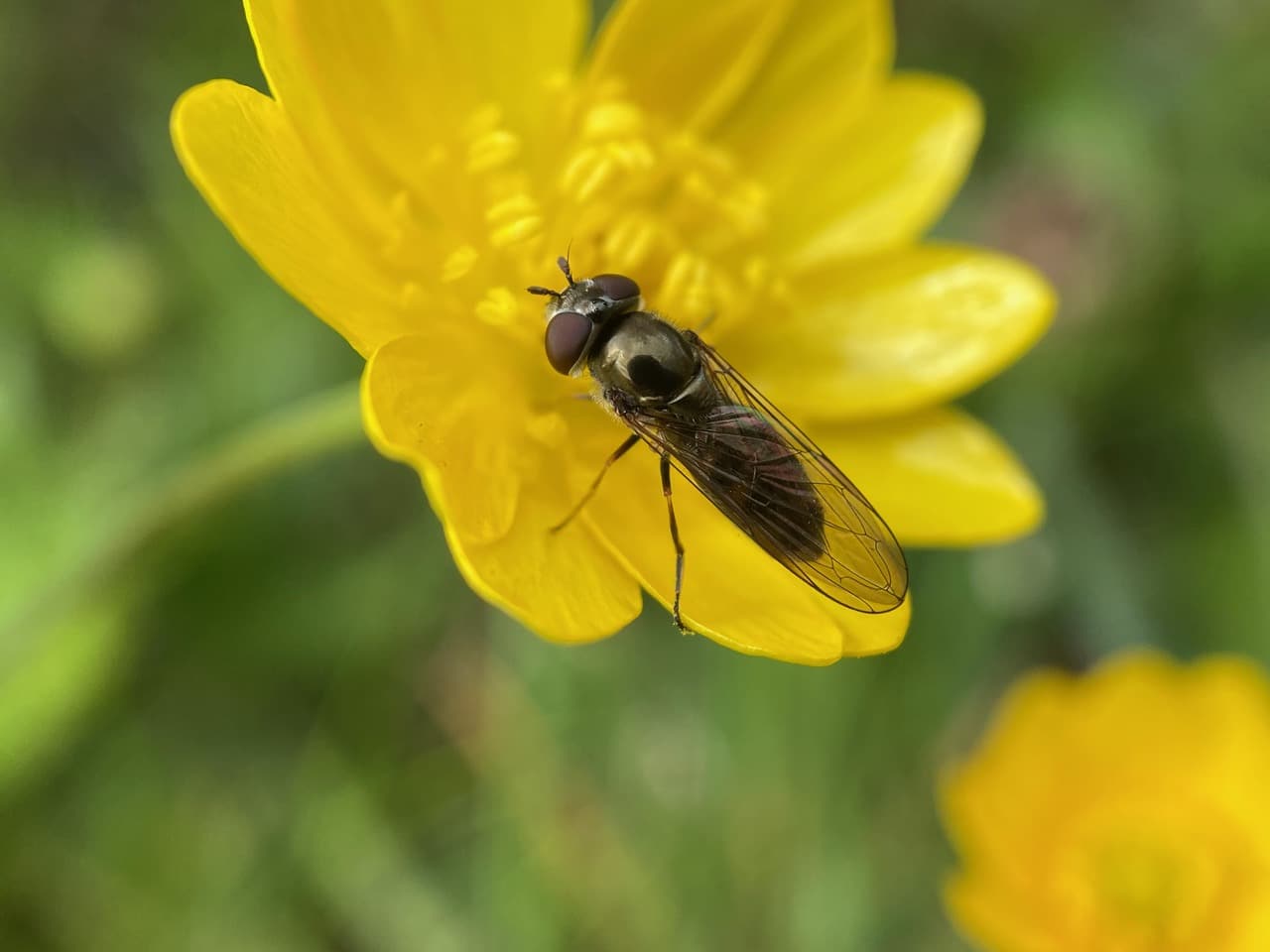
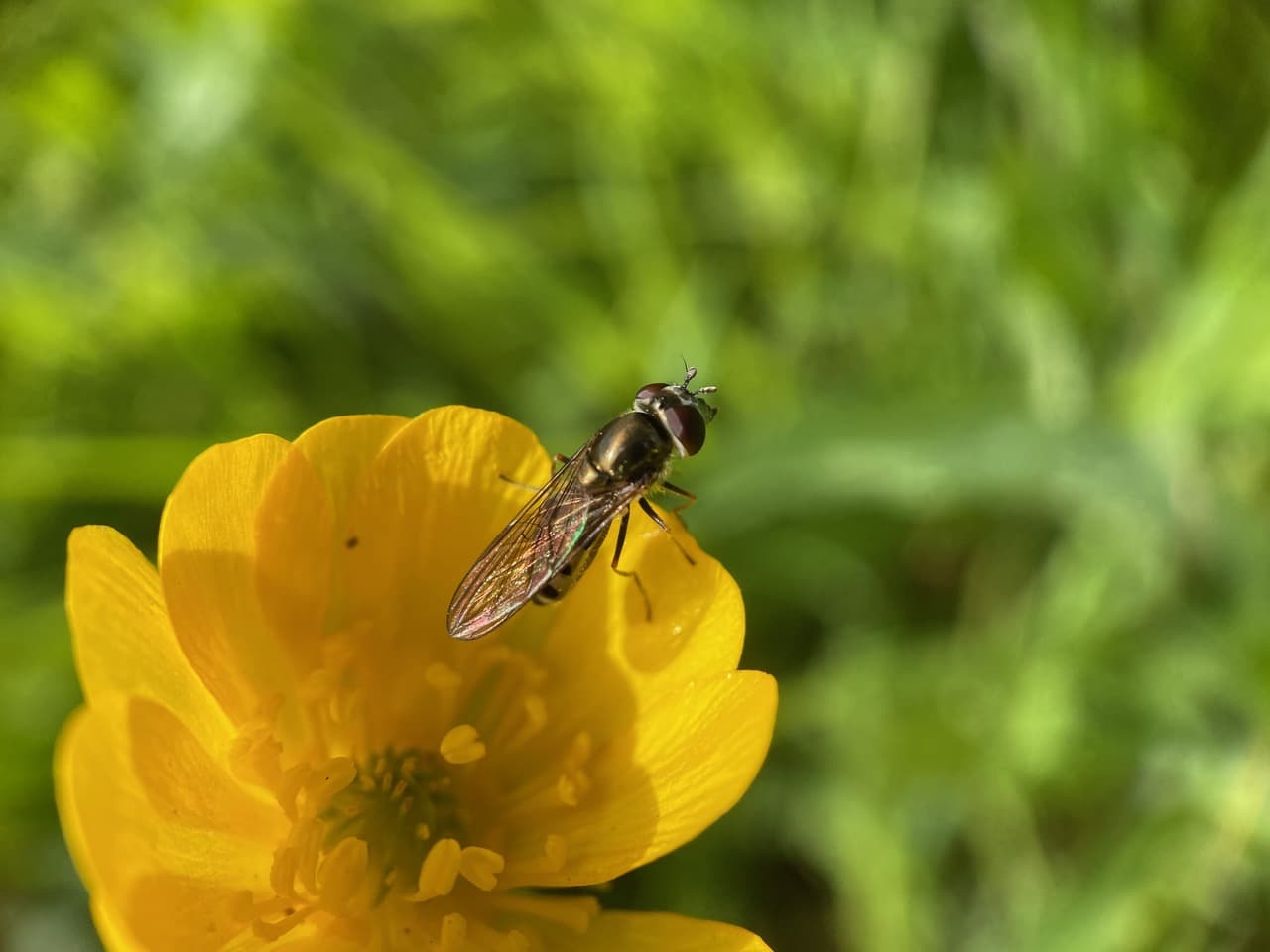
A Sedgesitter, Platycheirus sp. (family Syrphidae) is feeding on pollen of a buttercup flower.
Platycheirus is found in grass and herb vegetation. Adults of many species feed on pollen of wind-pollinated plants, such as Salix, Plantago, Poaceae, Cyperaceae, but they visit other flowers also. Many stay active during cold and rainy weather. Larvae feed on aphids.
Here’s another Sedgesitter.
As the morning progresses, I begin to see more of the Mining Bees (family Andrenidae) on the buttercups. I am on the look out for females, but these are all males.
In many solitary bees, males tend to emerge from their nests before the females. The female is able to determine the sex of her offspring while she’s laying her eggs. The fertilized eggs will develop into females, while those not fertilized with sperm will develop into males. This system of sex determination is termed haplo-diploidy. Female bees tend to lay female eggs first, in the back of the nest, while the male eggs are deposited in the cells closer to the entrance of the nest. The males, usually smaller, develop faster and emerge before the females, conveniently freeing the path for their sisters.
A small fly lands on a buttercup flower. It appears to be smaller and less dark than the usual Root Maggot Flies visiting the flowers, but it knows the drill. It heads straight for the nectary at the base of each petal.
Even a fading buttercup with missing petals is attractive to the Root Maggot Fly.After probing for nectar, it cleans its hinged mouthparts with its front legs.
The fly turns its attention to the next petal…
… and aims for the nectary.
Photo from 4/2/21
I pick a petal from a fresh buttercup flower and look for the nectariferous spot – it is a cup-like scale that holds the nectar at the base of each petal, usually hidden under the stamens. Unlike most flowers that have a pool of nectar in a single nectary, the buttercup dispenses her sweet treats discreetly in these pockets, ensuring that the visiting pollinator would probe meticulously and thoroughly around the flower, and get covered with her sticky pollen. Note the faint, greenish nectar guides, lines on the petal that direct the pollinator to the sweet reward.