

Pollinator Post 4/8/24 (2)
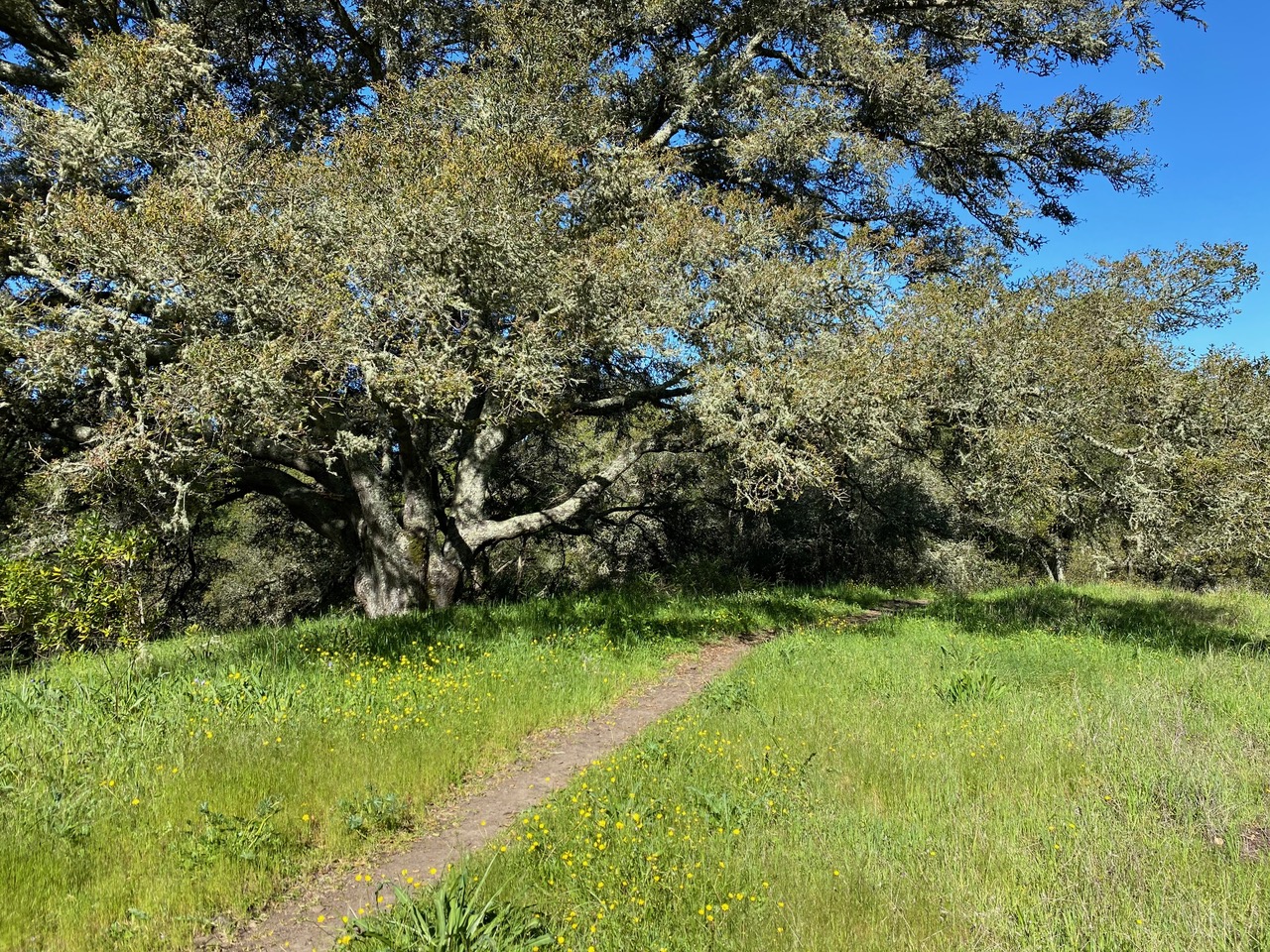
I walk a narrow path through the grassy knoll, finding more Buttercups blooming along the trail. This is a particularly beautiful spot, graced by a magnificent oak tree.
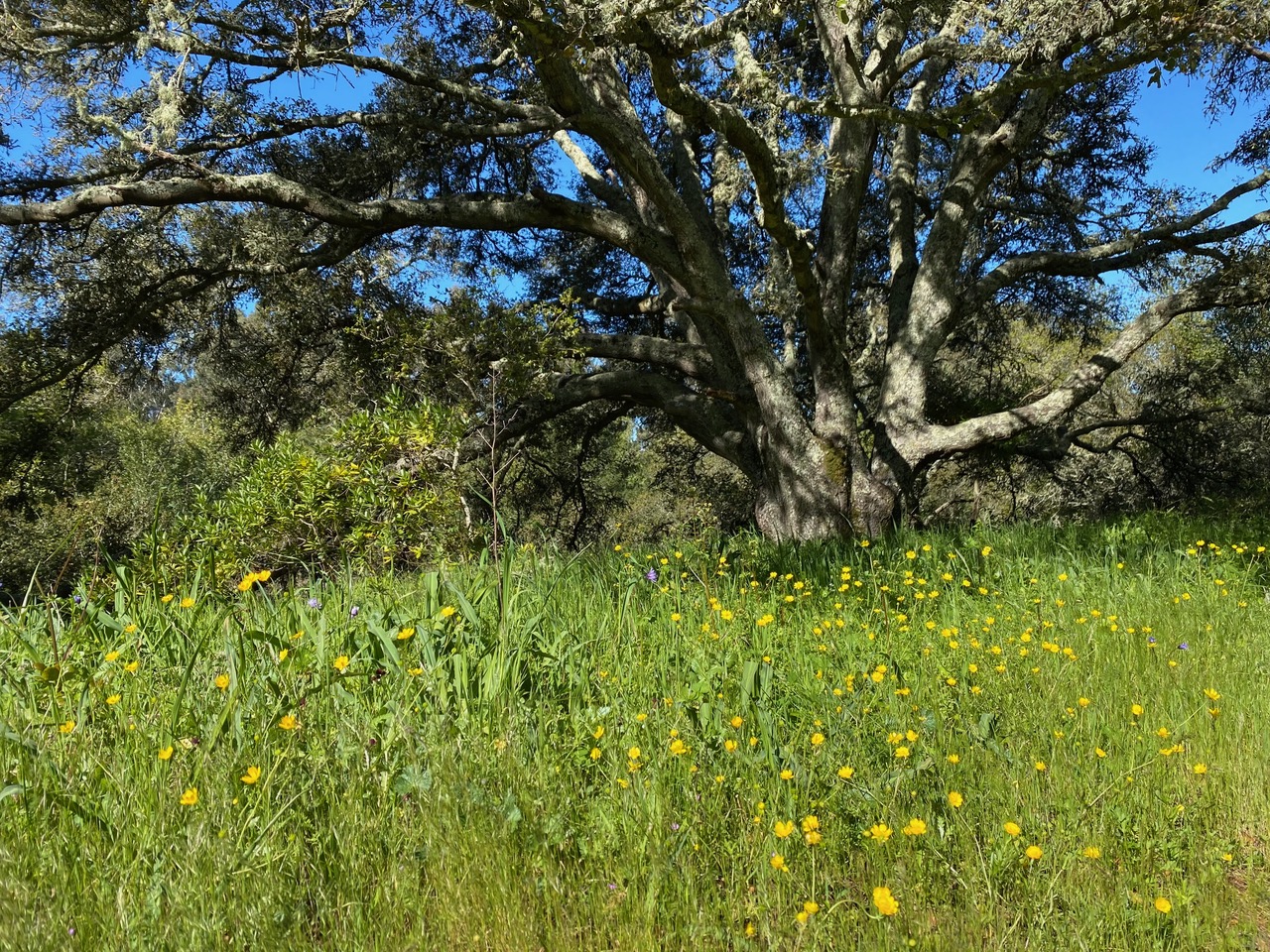
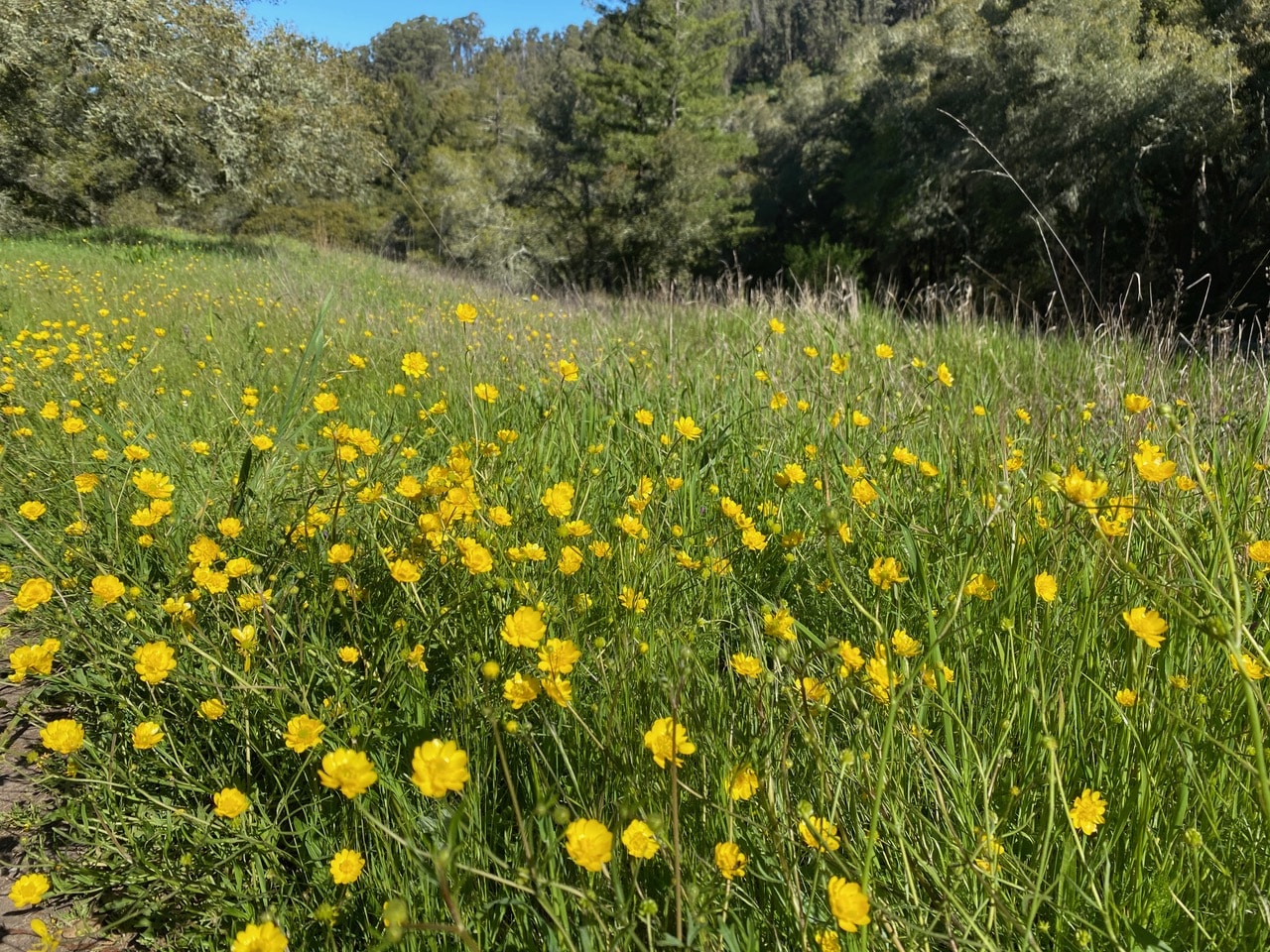





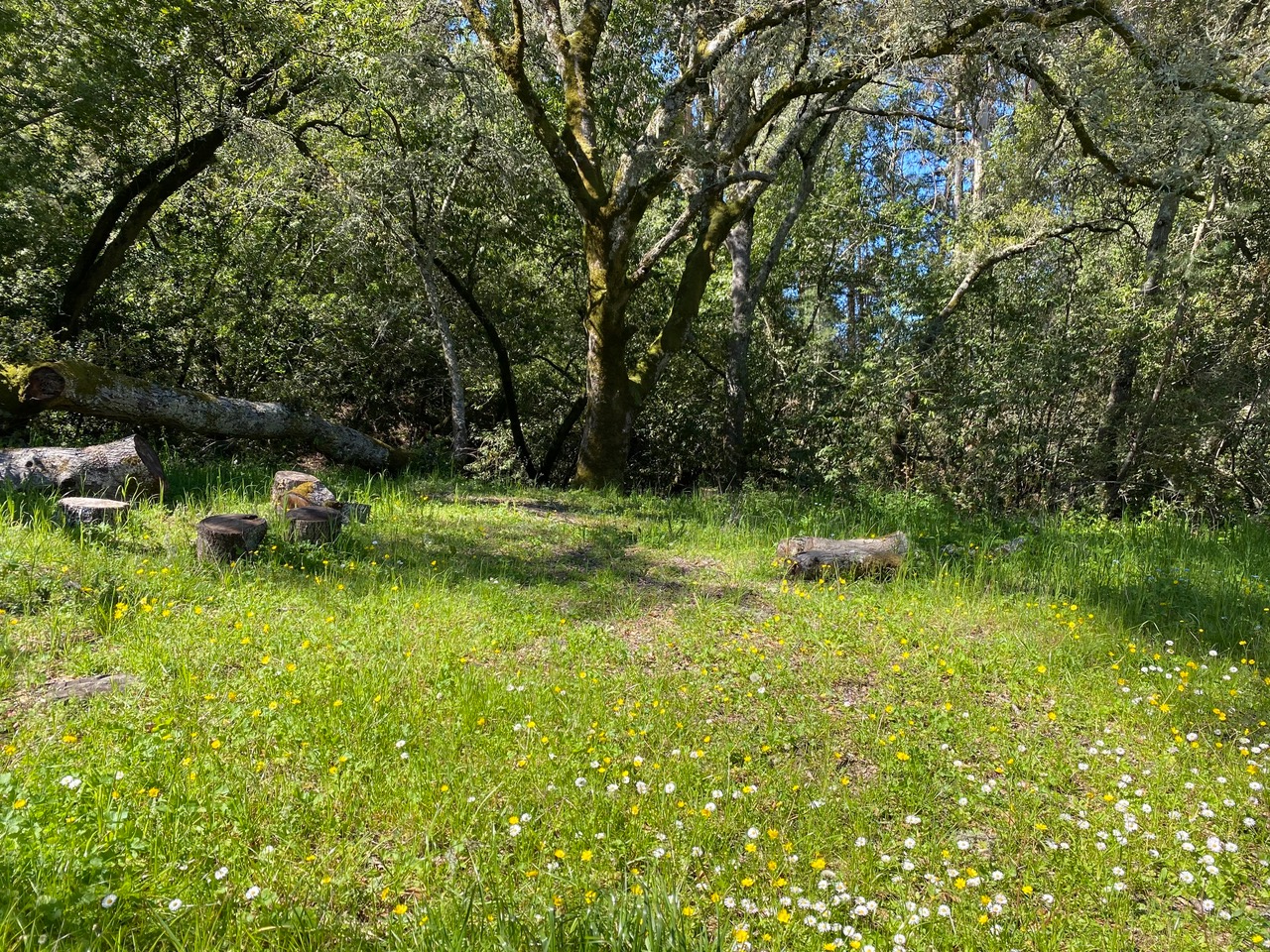
If anybody wants to observe insects on California Buttercup, this is the place! Thank you, Nancy, for directing me here!
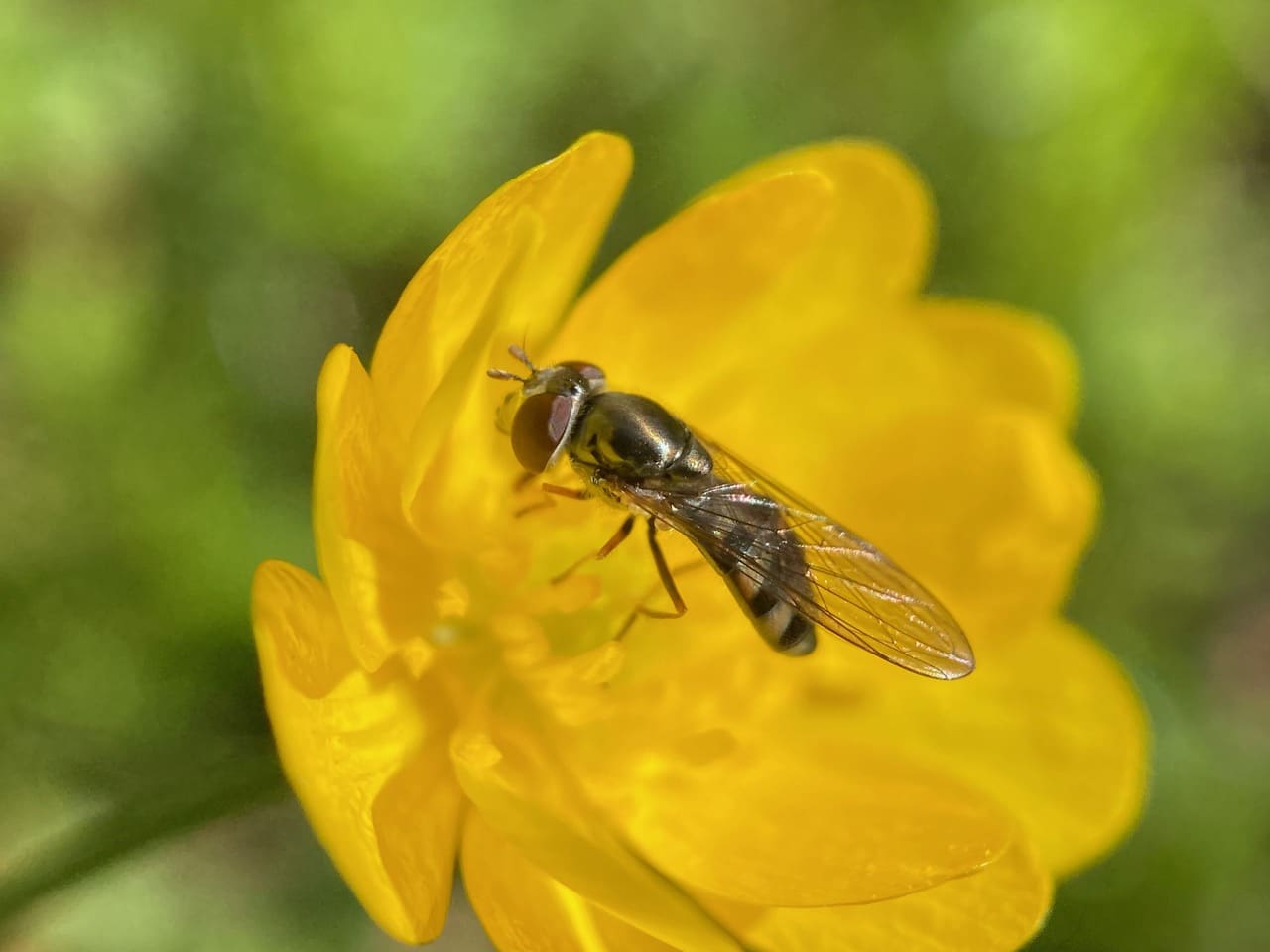
There are many hoverflies that look like the Blacklets on the buttercups, but in certain light, some take on a bronze sheen on their thorax. I am glad to get confirmation from the iNaturalist experts that these are indeed Blacklets.
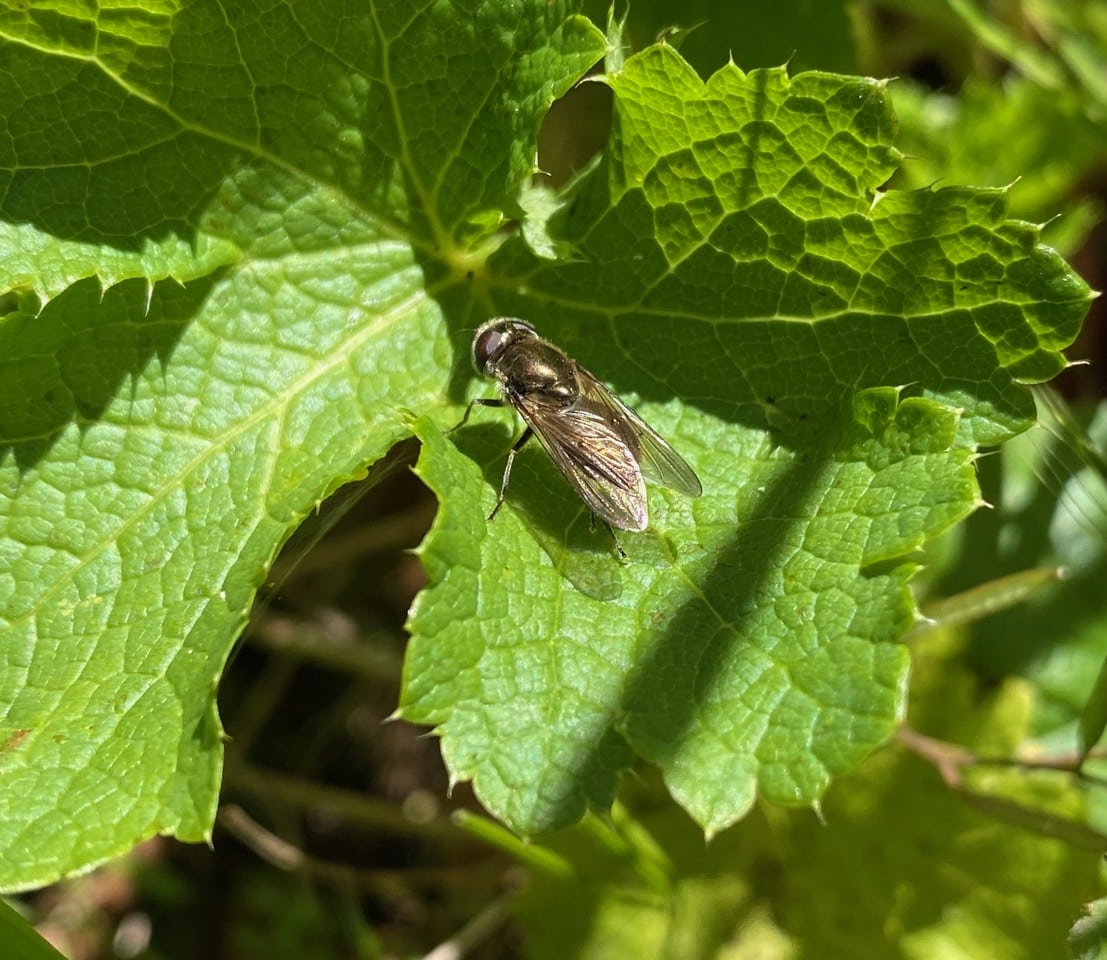
Blacklets, Cheilosia sp. (family Syrphidae) tend to hold their wings folded over their wings, instead of spread out at an angle, fighter-jet style like most other hoverflies. Although it is one of the most species diverse genera of Syrphidae, its biology is little understood. Where known, the larvae of Cheilosia species feed in the stems of plants or in fungi.
Is this a Blacklet? Even the experts are not sure.
A Blacklet lands on a leaf of Pacific Sanicle.
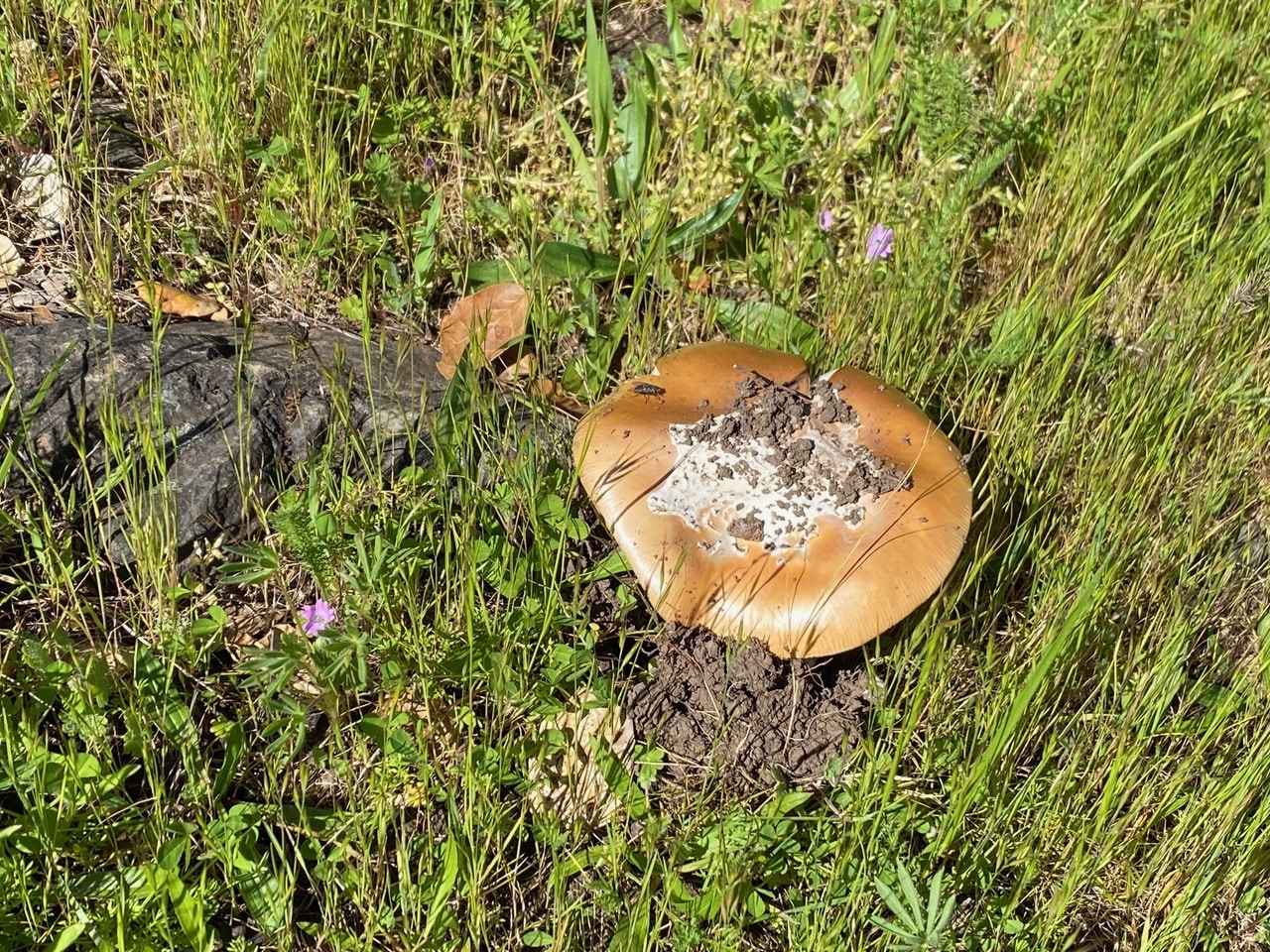
A large mushroom, almost 6 in. across, has broken through the ground, clods of soil still left on its cap. The white stuff on the cap is the remnants of its universal veil.
One of the most beautiful early season mushrooms in the Bay Area is the distinctive Amanita calyptroderma, or Coccora. These mushrooms are found under Live Oak and Madrone, with which they have a mycorrhizal relationship. The thick universal veil is always white, and forms a loose sac at the base of the stipe, and a thick patch of tissue on the cap. When young, all amanitas are covered by a membrane called a universal veil. In the case of Coccora, this veil is extremely thick and cottony, and the top of the mushroom egg is wider than the bottom – a useful distinction from the local deadly species of amanita. I am in no mood to dig out this beautiful mushroom to find out. The darker fall version of the Coccora is one of the most commonly eaten West Coast amanitas. The pale spring form is not recommended for the table, since it can be difficult to distinguish from the poisonous species.
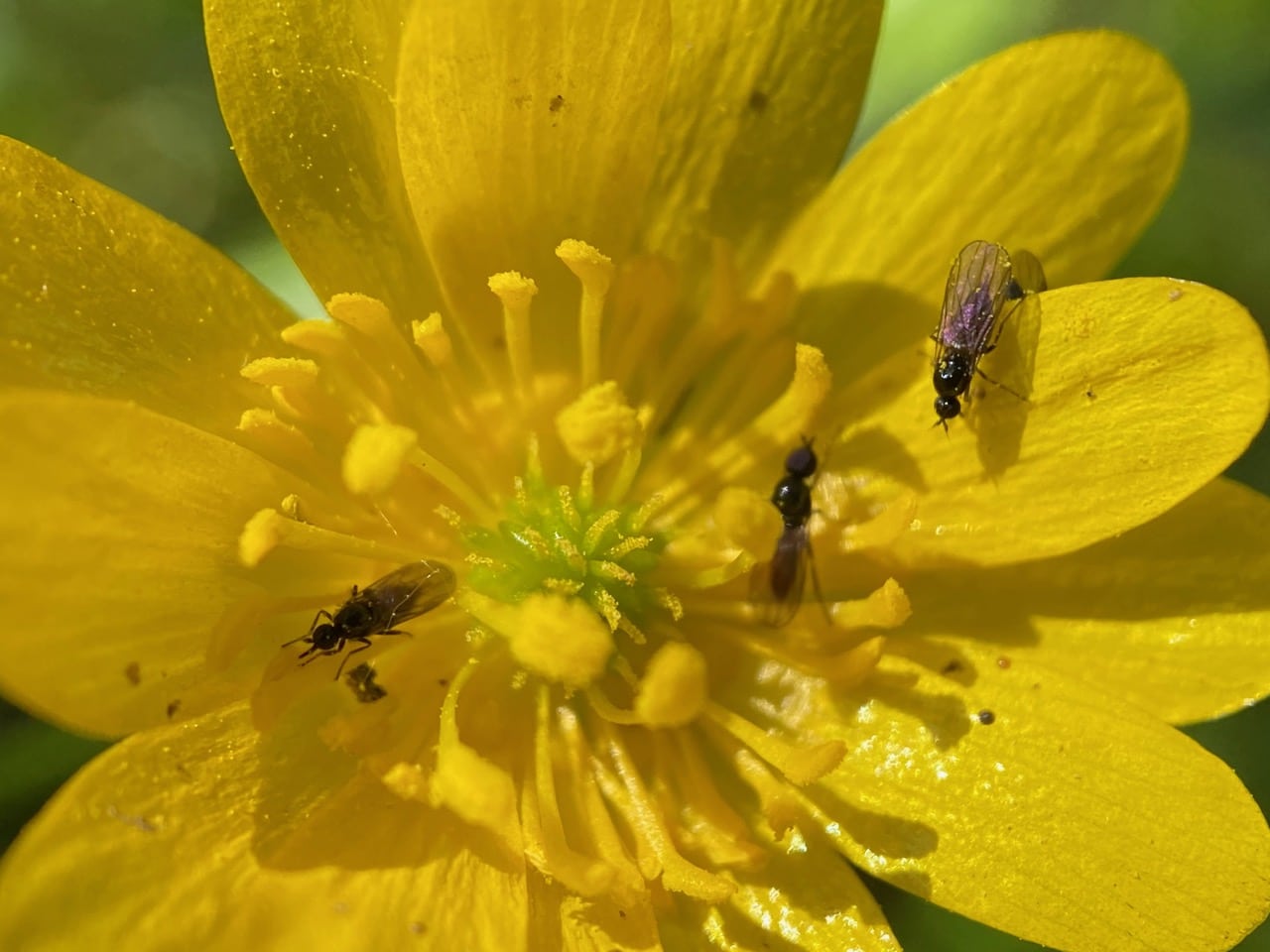
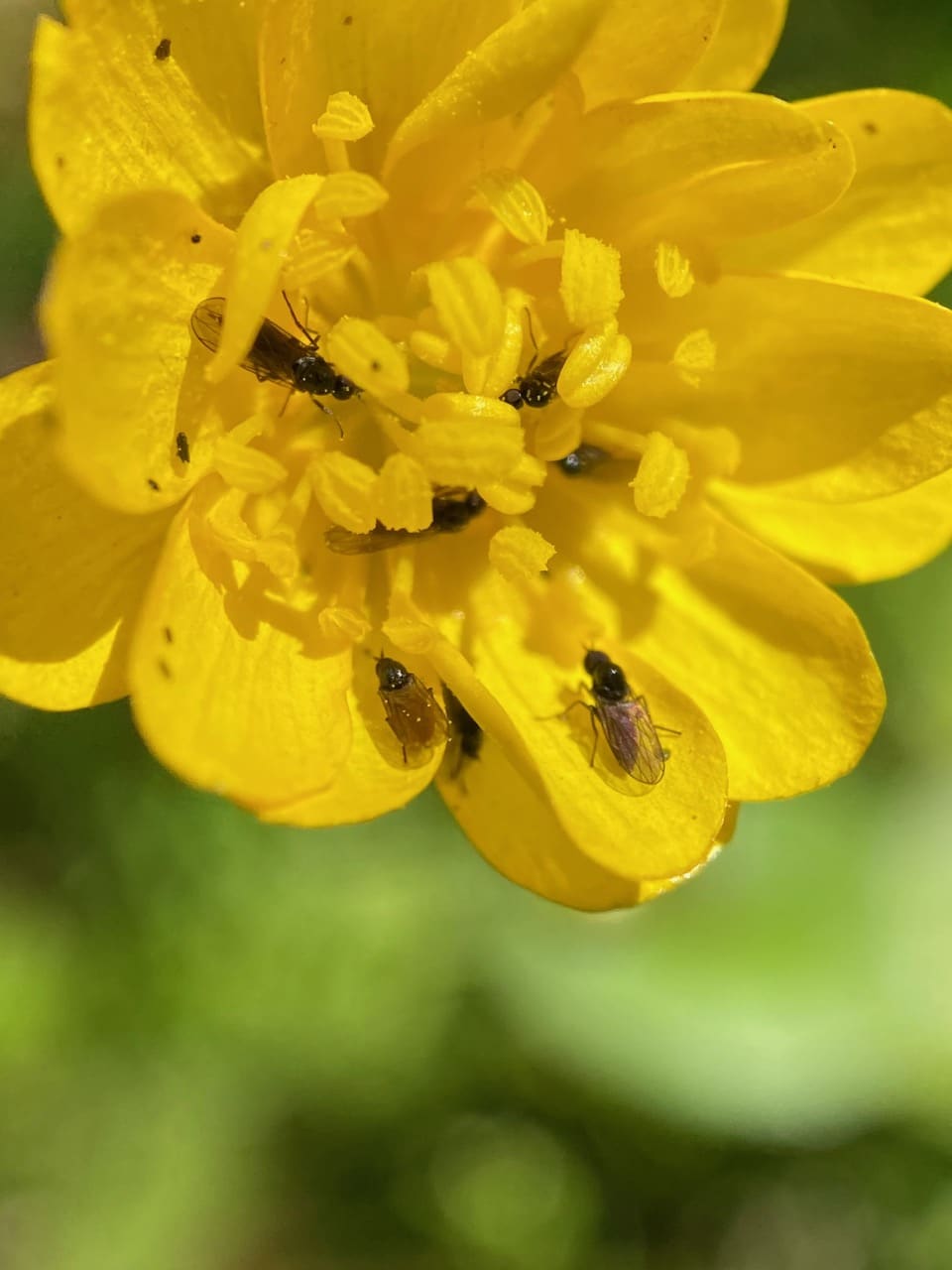
In the shady spots under the oak trees, many Hybotid Dance Flies occupy the buttercup flowers, sometimes in large numbers.
These pollen lovers in the family Hybotidae are small, under 3 mm long. They are commonly found on our small native wildflowers when in bloom. The flies belong to the superfamily Empidoidea and were formerly included in the Empididae as a subfamily. Empididae generally have a thick beak pointing down, while Hybotidae have a thinner beak, or a thick beak pointing forwards or diagonally. Some crucial wing venation further distinguishes the two families. Precious little is known about the life cycle and biology of Hybotids because they are not considered of economic consequence. Since their forelegs are generally not raptorial, I wonder if they’re predaceous like the Empidids. I have seen the Hybotids visit flowers for nectar and pollen, notably on Soap Plant, Miner’s Lettuce, California Saxifrage, and Wild Geranium, and I believe they may contribute to the pollination of these flowers.
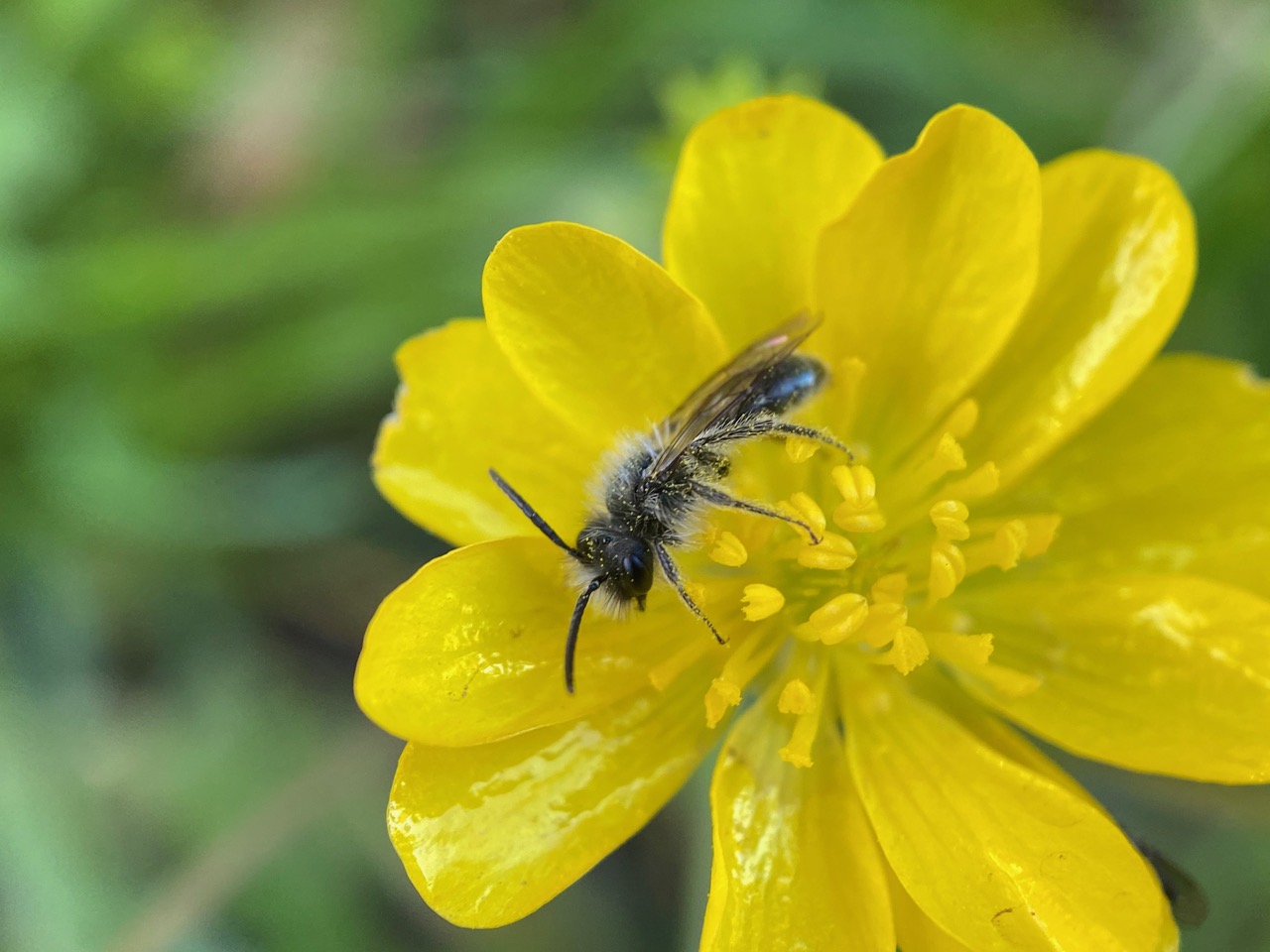
A male Mining Bee, Andrena sp. (family Andrenidae) is out foraging on a buttercup flower. Note its long antennae, slim body, and absence of scopa on the hindleg. Scopae consists of special pollen collecting hairs, found exclusively on female bees. Males do not collect pollen to provision the nest, neither do they possess the necessary equipment. They visit flowers mainly for nectar or to meet foraging females. In most species, the male bees are just as hairy as the females, and are capable of carrying pollen on their body from flower to flower. Hence they are good pollinators too.
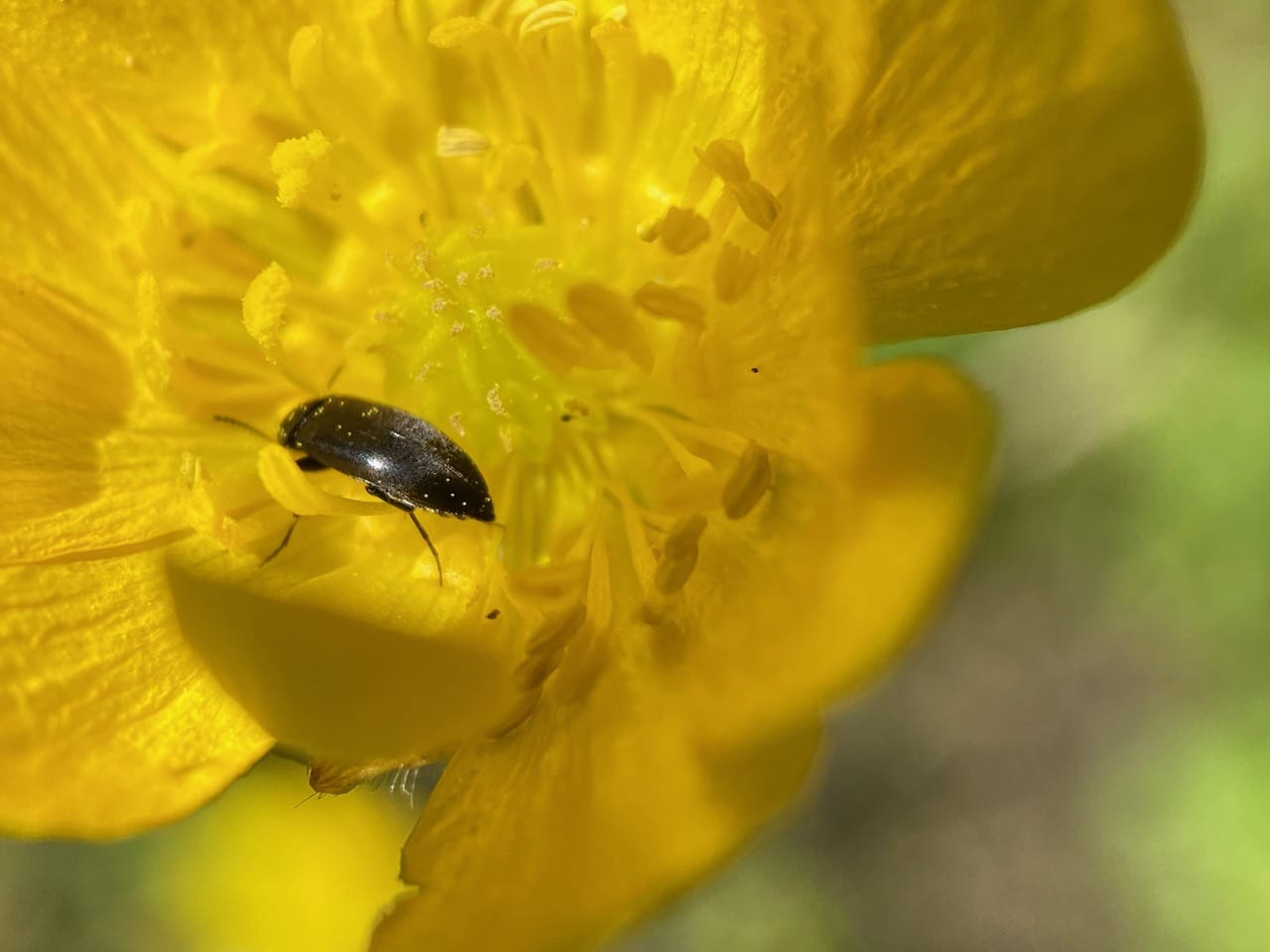
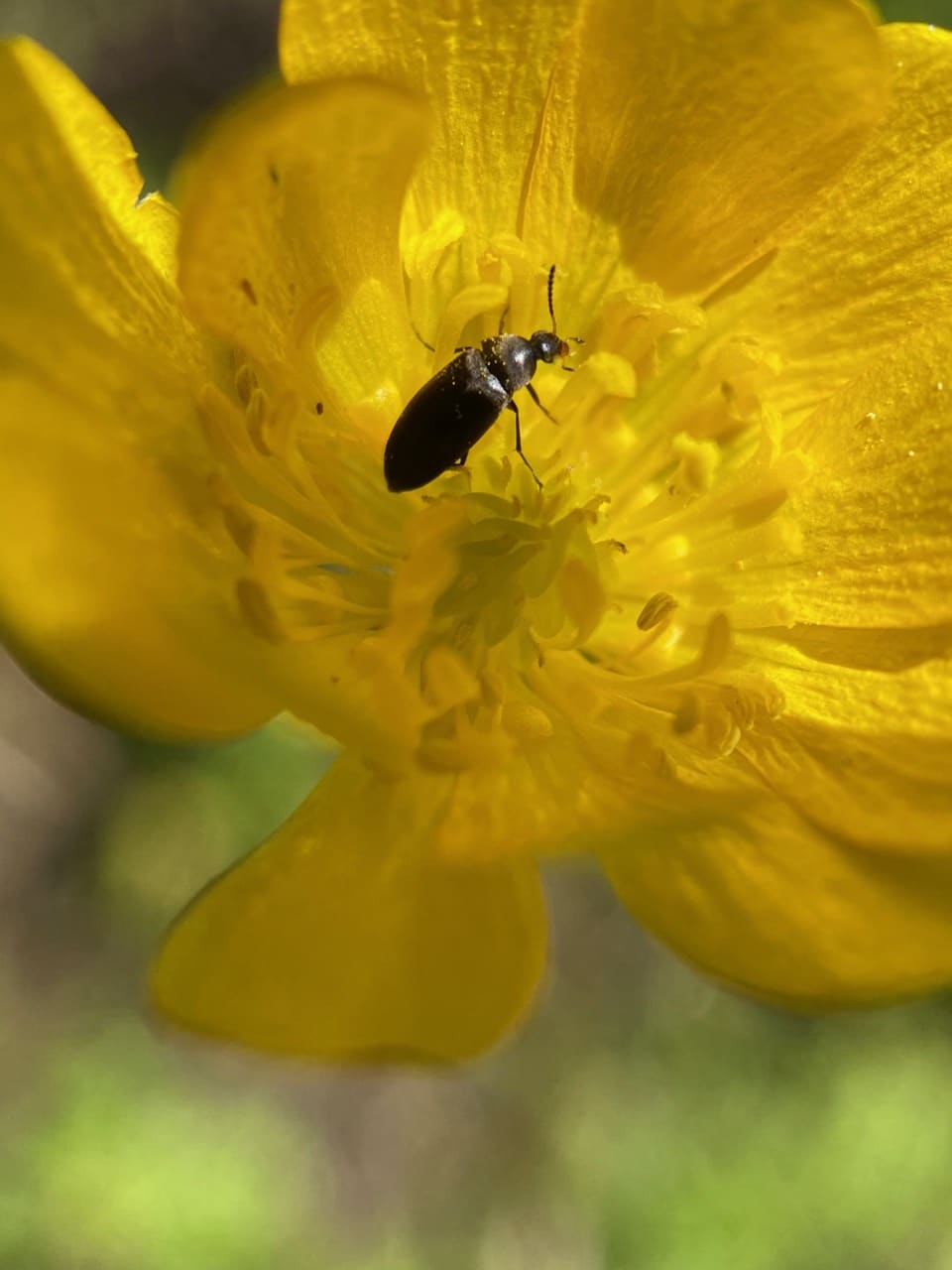
A small beetle is moving through the stamens of a buttercup flower.
It appears to be a False Flower Beetle, Anaspis sp. (family Scraptiidae).
The family Scraptiidae is a small group of Tenebrionoid beetles sometimes call False Flower Beetles. Anaspis atrata is commonly found in western North America. The adults feed on pollen, and are found on flowers, sometimes in large numbers. The larvae are typically found under the bark of dead trees, or among decaying wood or are associated with various fungal fruiting bodies.
Her thorax reflecting a beautiful bronze sheen, a female Sedgesitter, Platycheirus sp. (family Syrphidae) is feeding on pollen on the buttercup flower.
Platycheirus is found in grass and herb vegetation. Adults of many species feed on pollen of wind-pollinated plants, such as Salix, Plantago, Poaceae, Cyperaceae, but they visit other flowers also. Many stay active during cold and rainy weather. Larvae feed on aphids.
In the shade, this male Andrena is still asleep on its buttercup flower.
Back at the picnic site, I look around on the ground to check for nesting sites for the Mining Bees. There are bare patches between the low ground cover at the edge of the woodland. Might these be ideal places for the ground-nesting females to excavate their nests? I have no idea, but I’d better be careful where I step.

Around the picnic table, the ground is dotted with perky English Daisies, Bellis perennis (family Asteracea). The yellow buttercup flowers are scattered among them. I scan the daisies to see if the Mining Bees visit them. Not at all.
Bellis perennis is native to Europe, but has become widely naturalized in most temperate regions, including the Americas. The perennial herbaceous plant grows flat to the ground, and habitually colonizes lawns. It blooms from March to September, and exhibits the phenomenon of heliotropism, in which the flowerheads track the position of the sun in the sky. Though not native, the species is considered a valuable ground cover in certain garden settings, where low growth and some color is desired in parallel with minimal care and maintenance while helping to crowd out noxious weeds.