

Pollinator Post 4/19/24 (1)
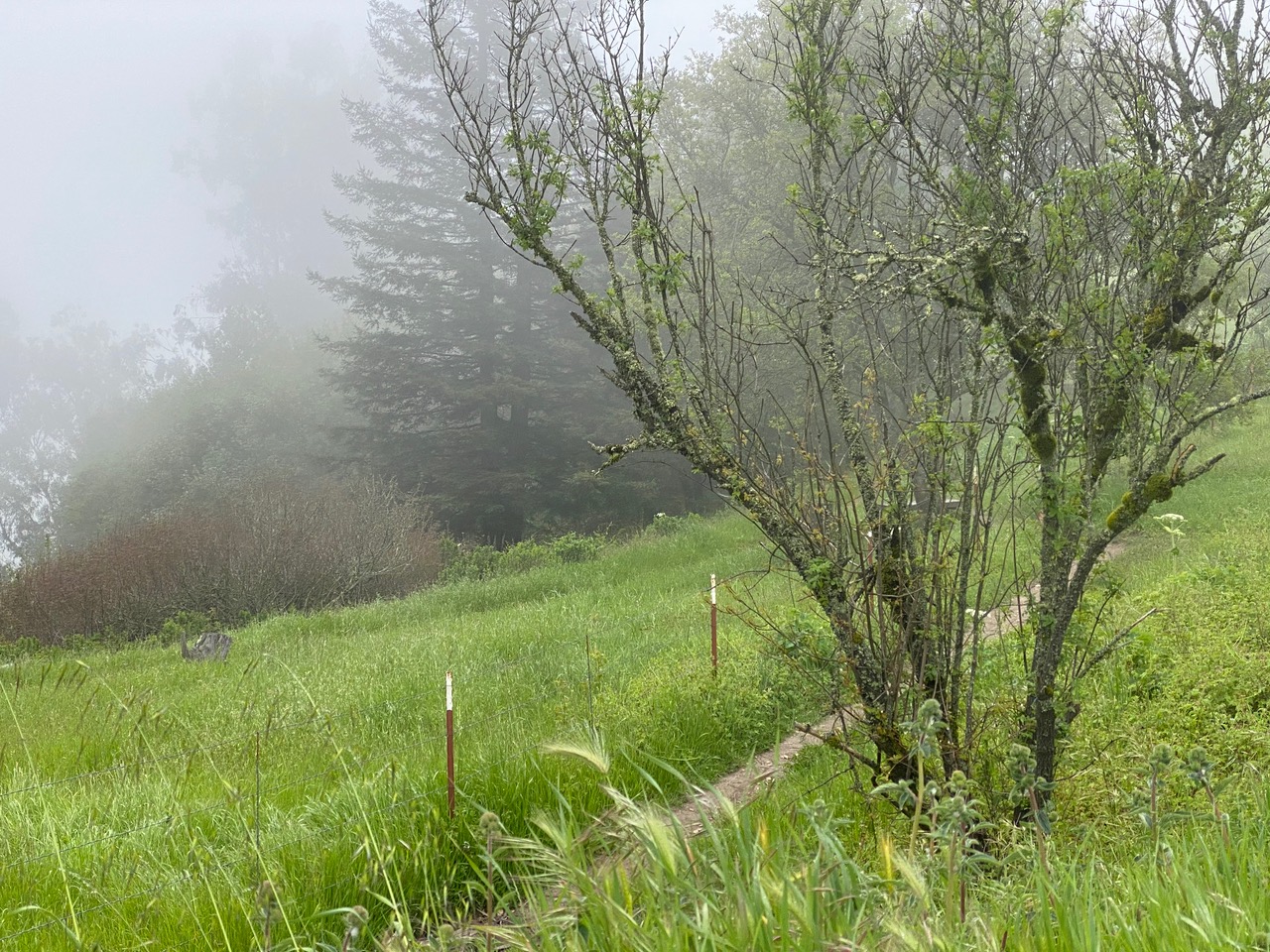
What difference a day makes! I arrive at Siesta Gate a little before 10 am to find the place still shrouded in fog. Temperatures are back in the 50s F again!
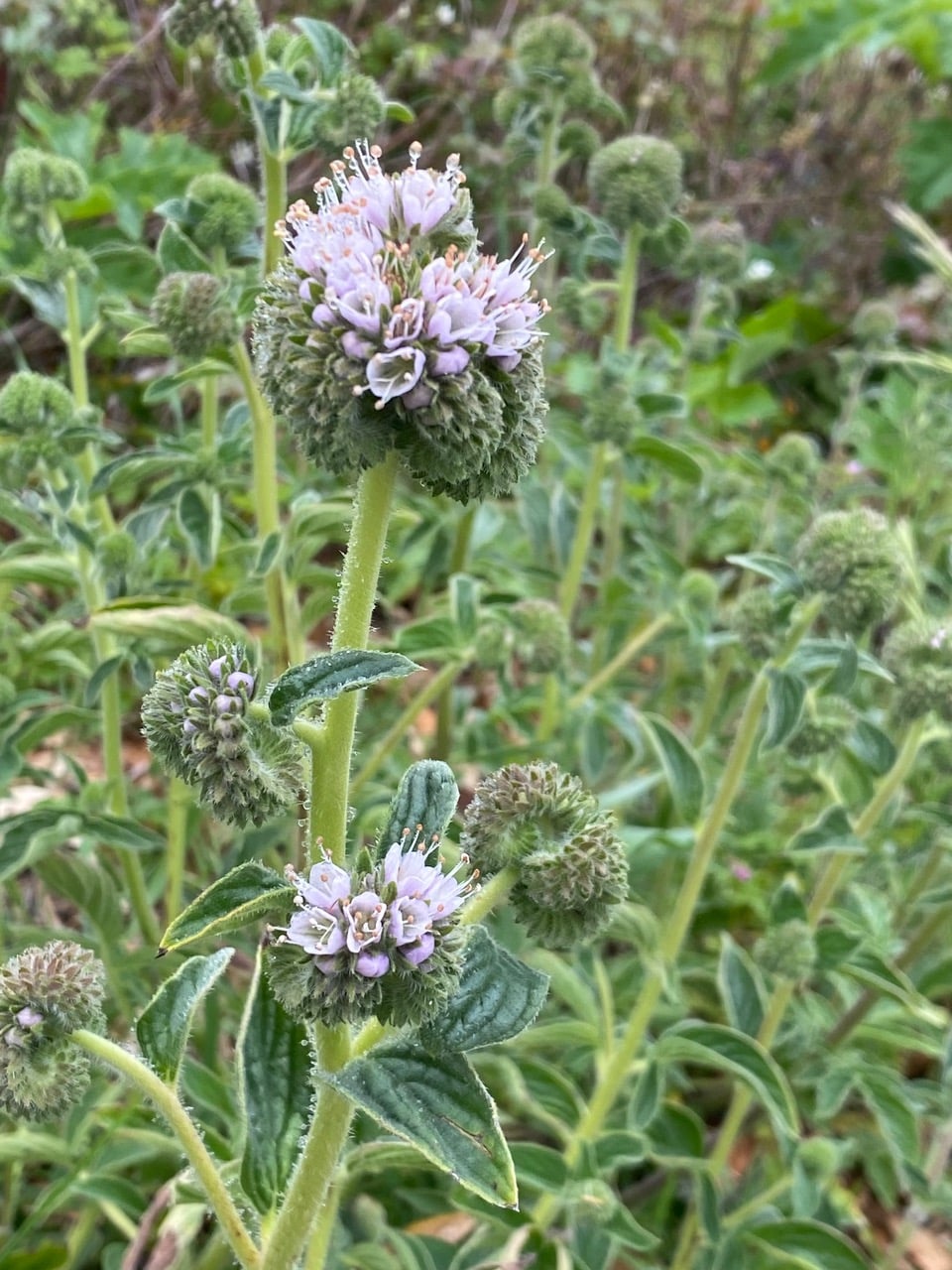
Before I even enter through the gate, I notice to my delight that the California Phacelia, Phacelia californica lining the paved road has just started to bloom.
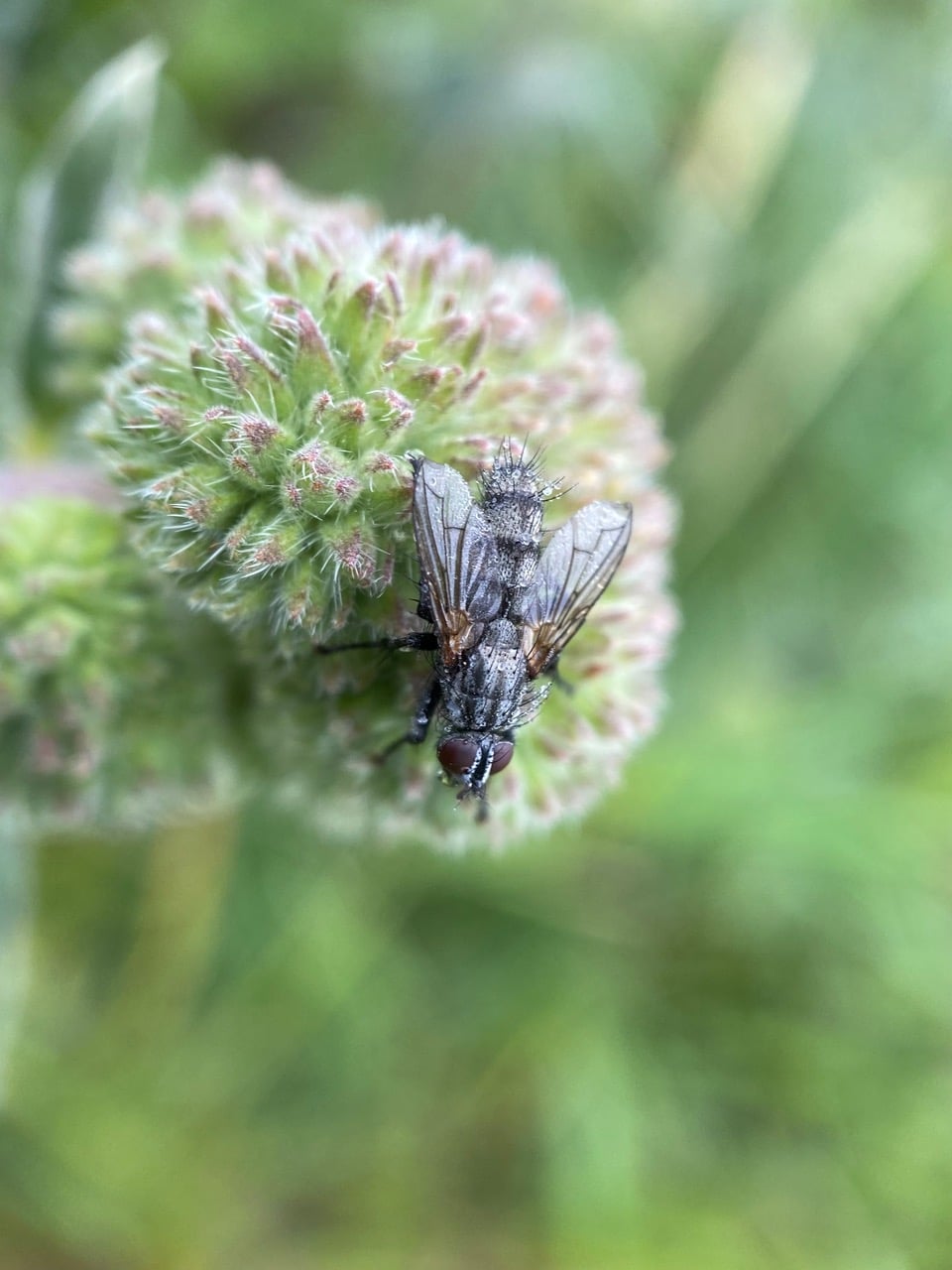
Fog droplets still clinging to its hairs, a Woodlouse Fly, Stevenia deceptoria (family Rhinophoridae) is perched motionless on an immature flower cluster of California Phacelia, Phacelia californica. These small, slender, black, bristly flies are somewhat related to the Tachinidae. The larvae are mostly parasitoids of woodlice (pill bugs), beetles, spiders and other arthropods, and occasionally snails.
Native to Europe, Stevenia deceptoria is now widespread in the US. The flies are parasitoids of terrestrial woodlice (roly polies) of the order Isopoda (Oniscoidea).

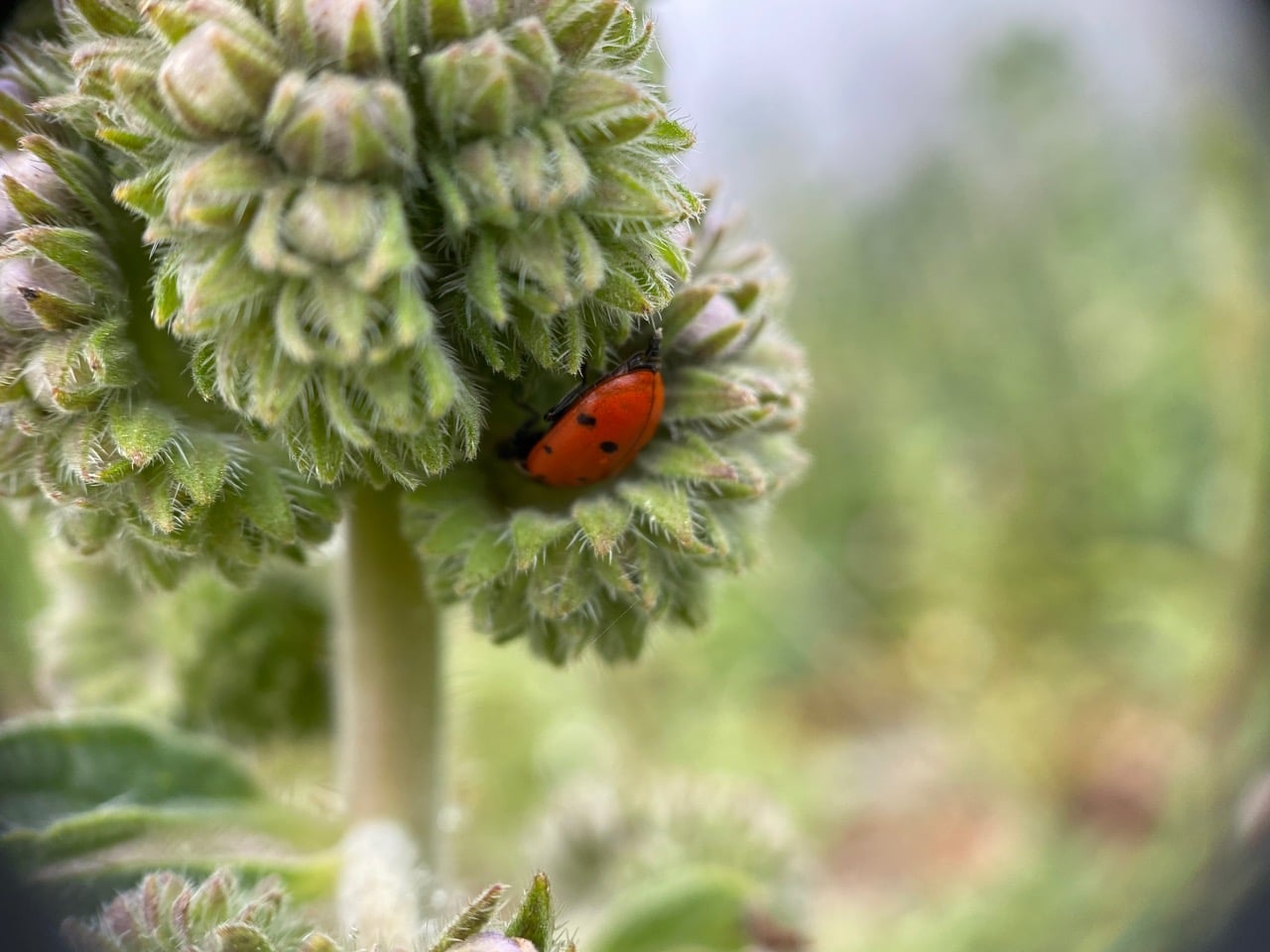
A Ladybeetle (family Coccinellidae) is sheltered from the elements, snugly tugged within the folds of the phacelia inflorescence.

A Sulphur Tubic, Esperia sulphurella (family Oecophoridae, or concealer moths) welcomes the morning light from behind a Phacelia leaf. The little moth has an impressive pair of antennae, and prominent yellow labial palps.
The moth is native to Europe, but has been introduced in California. Adults have a body length of 6-8 mm, are black with yellow markings. They are on wing in spring. Larvae are black and feed on dead wood.
The two labial palps extending from the mouth are considered to be modified mouthparts, and are more pronounced in some species than others. There is some debate as to the purpose of palpi with some suggesting they provide a protective cover for the proboscis while others believe that they are covered in scent detecting glands and are used for detecting food.
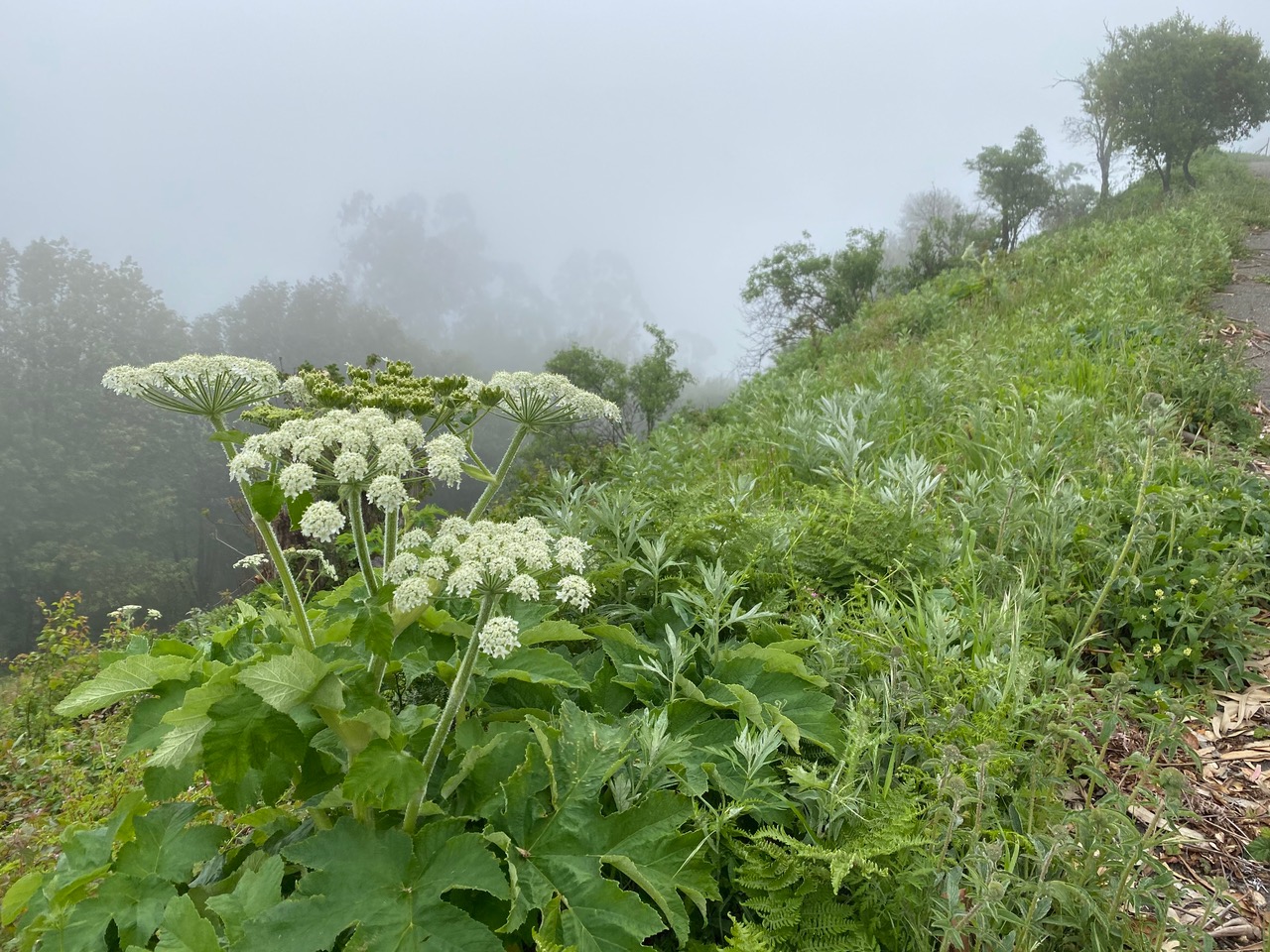
The Cow Parsnip, Heracleum maximum is blooming well along the road too!

The hairy Wood Mint, Stachys ajugoides has accumulated so much condensed fog that the plant looks frosted.
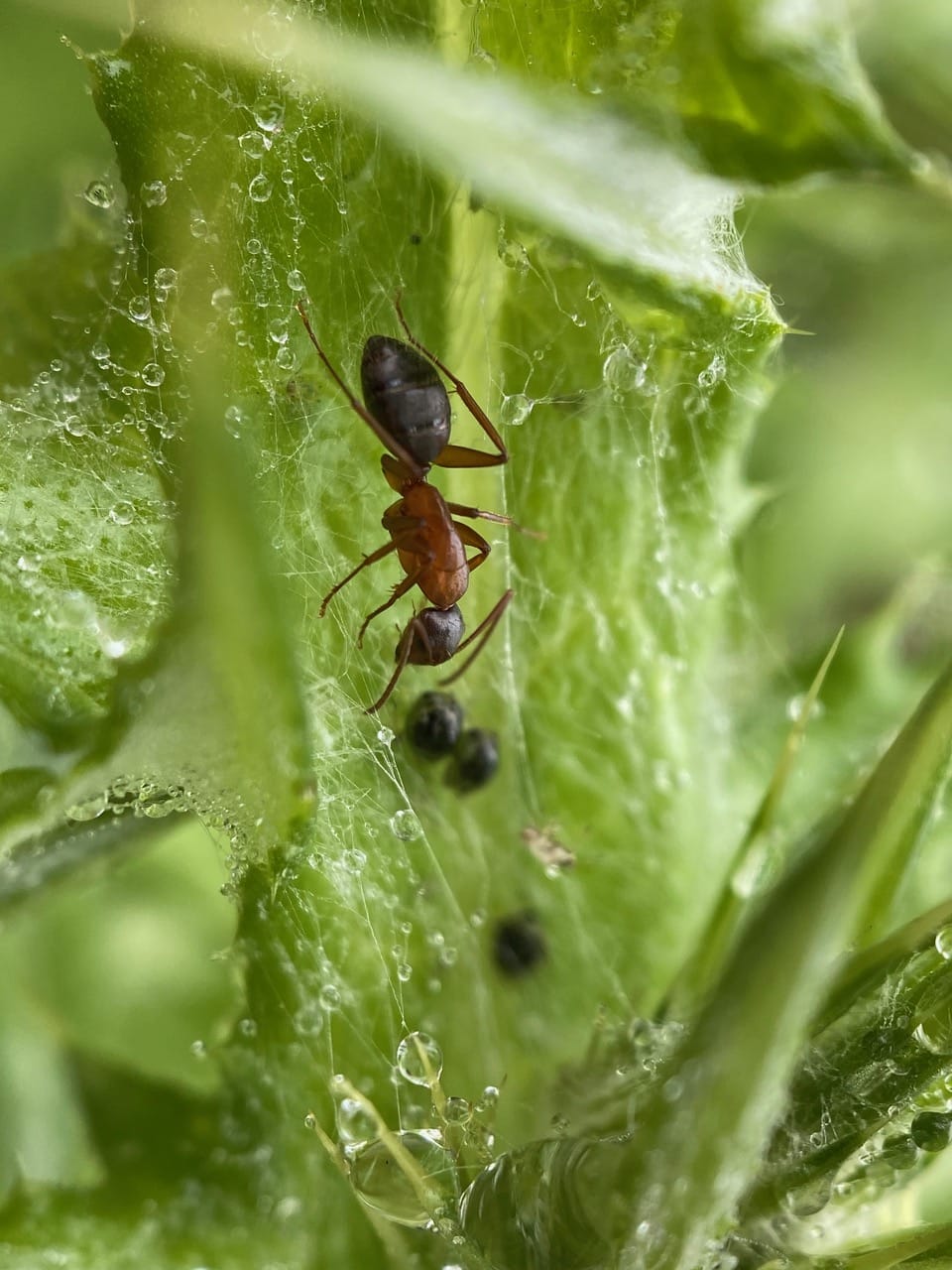
On a sheltered leaf of Italian Thistle, a large ant stands stock-still beside some aphids. The cold has halted all insect activity. The ant is a Carpenter Ant in the genus Camponotus, family Formicidae.
Carpenter Ants are so named for their skill at constructing their homes from wood. These large ants are excavators, not wood feeders.
They are among the largest ants in North America, with workers ranging from 1/4 – 1/2 inch long. They have only one bulge at their narrow “waist” (the single node on their petiole)) and an evenly rounded back, when viewed from the side. In established colonies, two castes of sterile workers develop – major and minor workers. The larger major workers defend the nest and forage for food. Minor workers tend to the young and maintain the nest.
Most carpenter ants build their nests in dead or decaying trees or logs, though they may inhabit wooden structures in people’s homes. Camponotus do not eat wood. They are generalist omnivores, and will forage for honeydew, fruits, plant juices, other small insects and invertebrates. Some herd aphids for their honeydew, and will sometimes carry aphids to new plants. Carpenter ants can’t sting but can inflict painful bites with their powerful jaws and spray formic acid into the wound, causing a burning sensation.
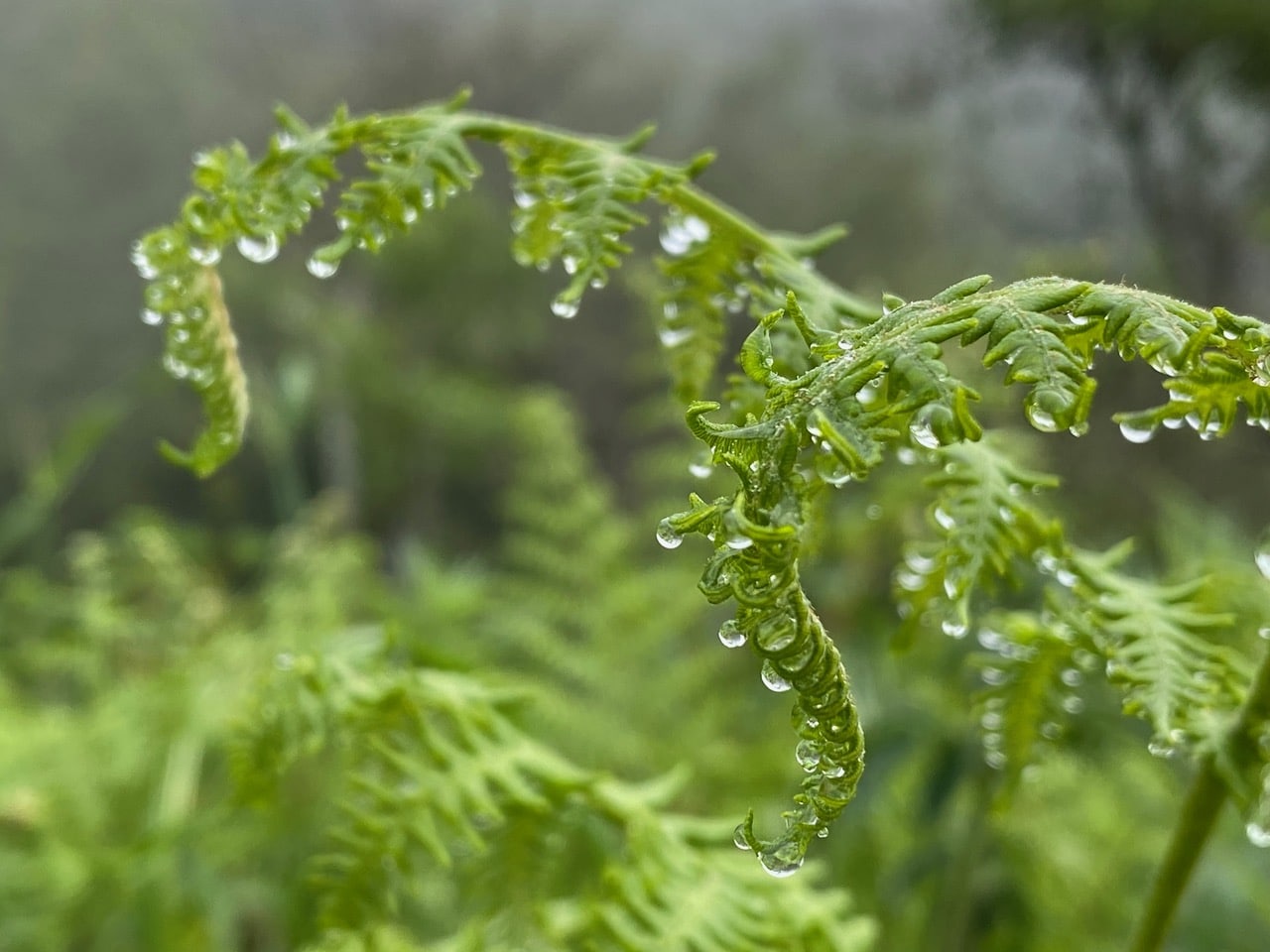
Water droplets hang on the unfurling fronds of a Bracken Fern.
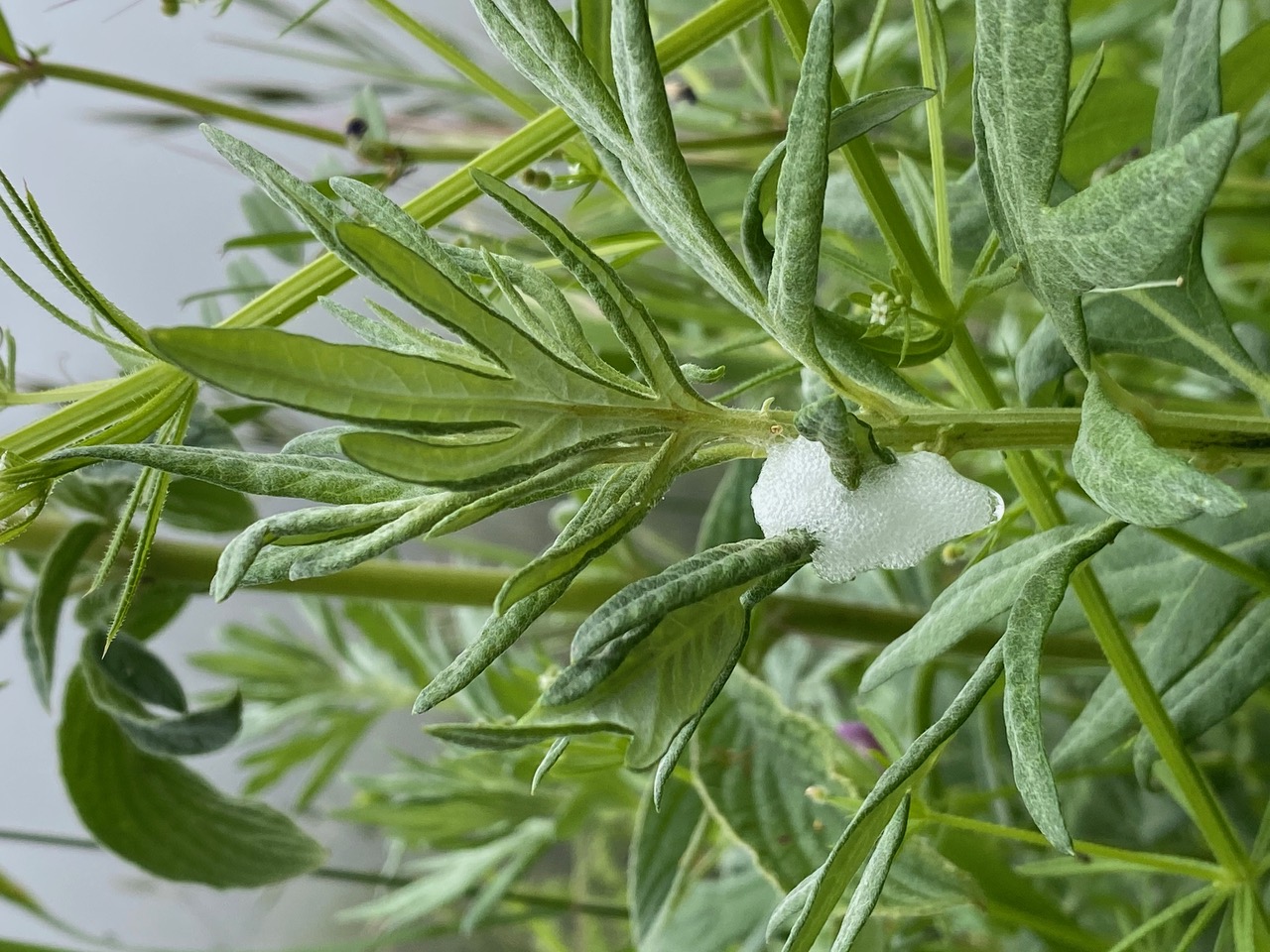
White frothy masses have appeared on many plants, including this California Mugwort, Artemisia douglasiana.
The foam mass is made by a nymph of a bug called the Froghopper (family Cercopidae). Like the adults, the nymphs use their piercing, sucking mouthparts to feed on plant juices. The nymph produces a cover of foamed-up plant sap reminiscent of saliva, hence the common name of spittlebug. Whereas most insects that feed on sap feed on the nutrient-rich fluid from the phloem, Cercopidae tap into the much more dilute sap flowing upward via the xylem. The large amount of excess water that must be excreted and the evolution of special breathing tubes allow the young spittlebug nymphs to grow in the relatively protective environment of the spittle. Symbiotic bacteria in the insects’ digestive system provides them with the essential amino acids that their diet lacks. The foam serves a number of purposes. It hides the nymph from the view of predators and parasites, and it insulates against heat and cold, and protects the delicate nymphs from desiccation. Moreover, the foam has an acrid taste that deters predators.

Here’s another Spittlebug home on a California Phacelia.
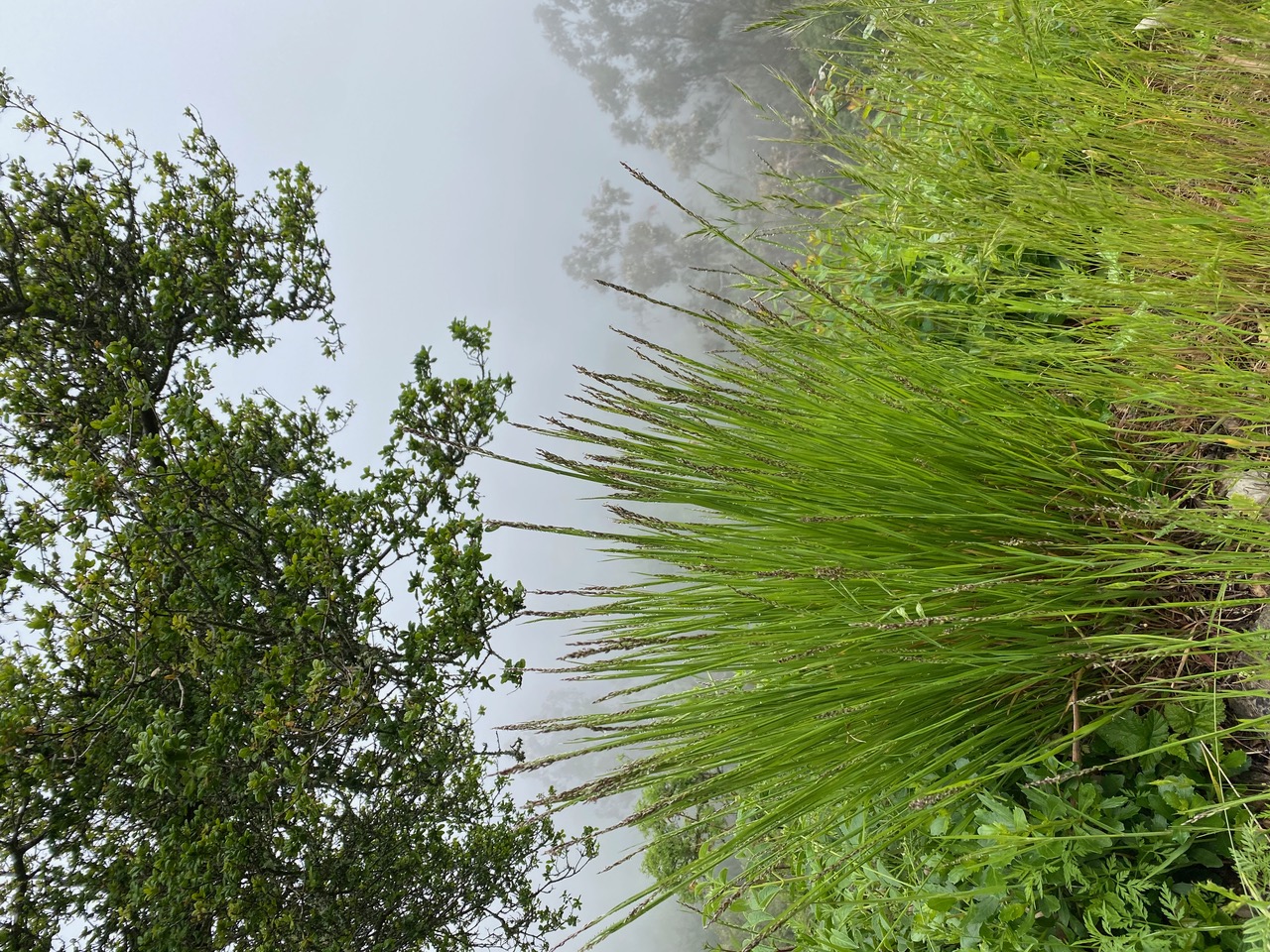
On the edge of the cliff, a perennial bunch grass California Melic, Melica californica (family Poaceae) stands proud with new flowers forming on slender, erect stalks.
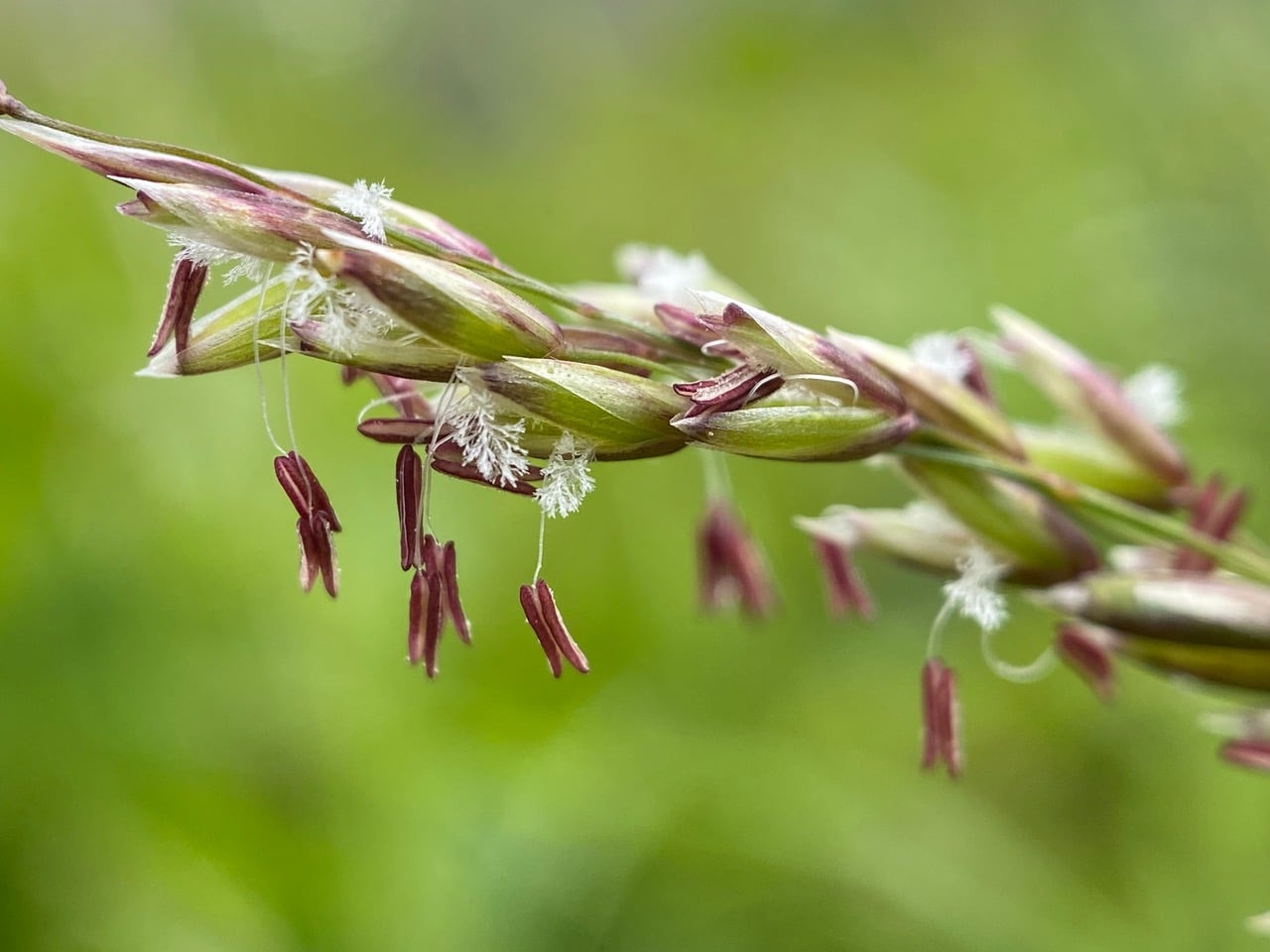
A mature California Melic is blooming in its own inconspicuous way. Reddish-brown anthers dangle on hair-like filaments to release pollen to the wind, while feathery white stigmas receive incoming pollen. No insects are required for pollination of the grass. Wind pollinated plants include grasses and their cultivated cousins, the cereal crops, and many trees. All release billions of pollen grains into the air so that a lucky few will hit their targets.
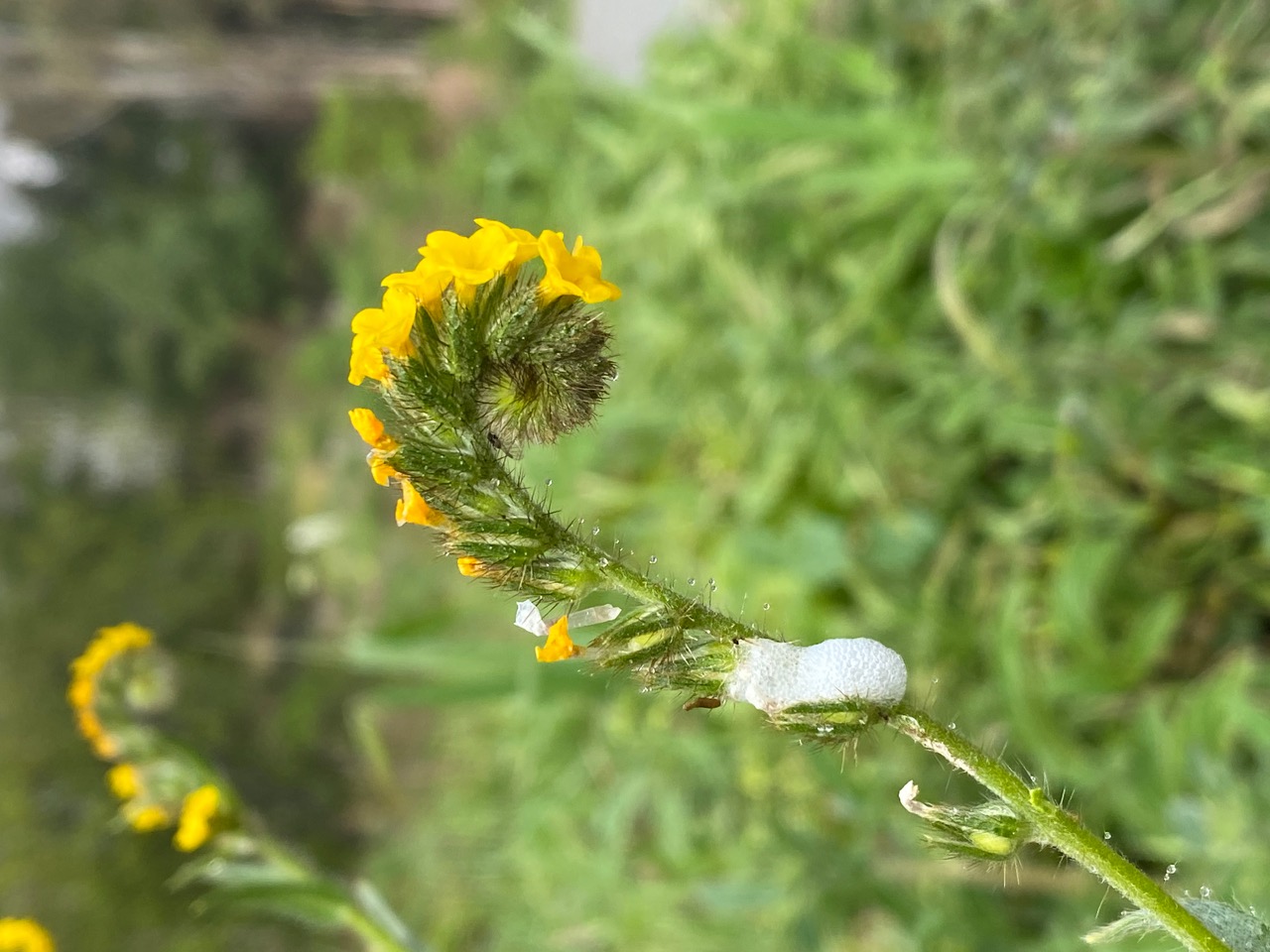
Spittlebug home on Coast Fiddleneck, Amsinckia intermedia.

Wow, an inflorescence of Coast Fiddleneck has been deformed, twisted out of shape by a tumorous gall along the stem. A couple of stunted flowers are still blooming at the tip. The gall is induced by the Fiddleneck Gall Nematode, Anguina amsinckia. The nematode causes the plant to form floral galls that replace the flowers. Apparently about 40,000 nematodes occur in an average 3/8” diameter gall! It has been proposed as a biological control of weedy Amsinckia that grow in crop fields.
Nematodes are round worms in the phylum Nematoda. They are among the most abundant animals on earth. They occur as parasites in animals and plants or as free-living forms in soil, fresh water, and marine environments. Nematodes range in size from microscopic to 7 meters long. Most nematodes feed on bacteria, fungi, or other microscopic creatures. As such, they are a major component of soil and sediment ecosystem. A small fraction of all nematode species are parasites of human, livestock or agricultural crops. Well known animal parasites with health and economic impact include pinworms, hookworms, trichina and dog heartworm.
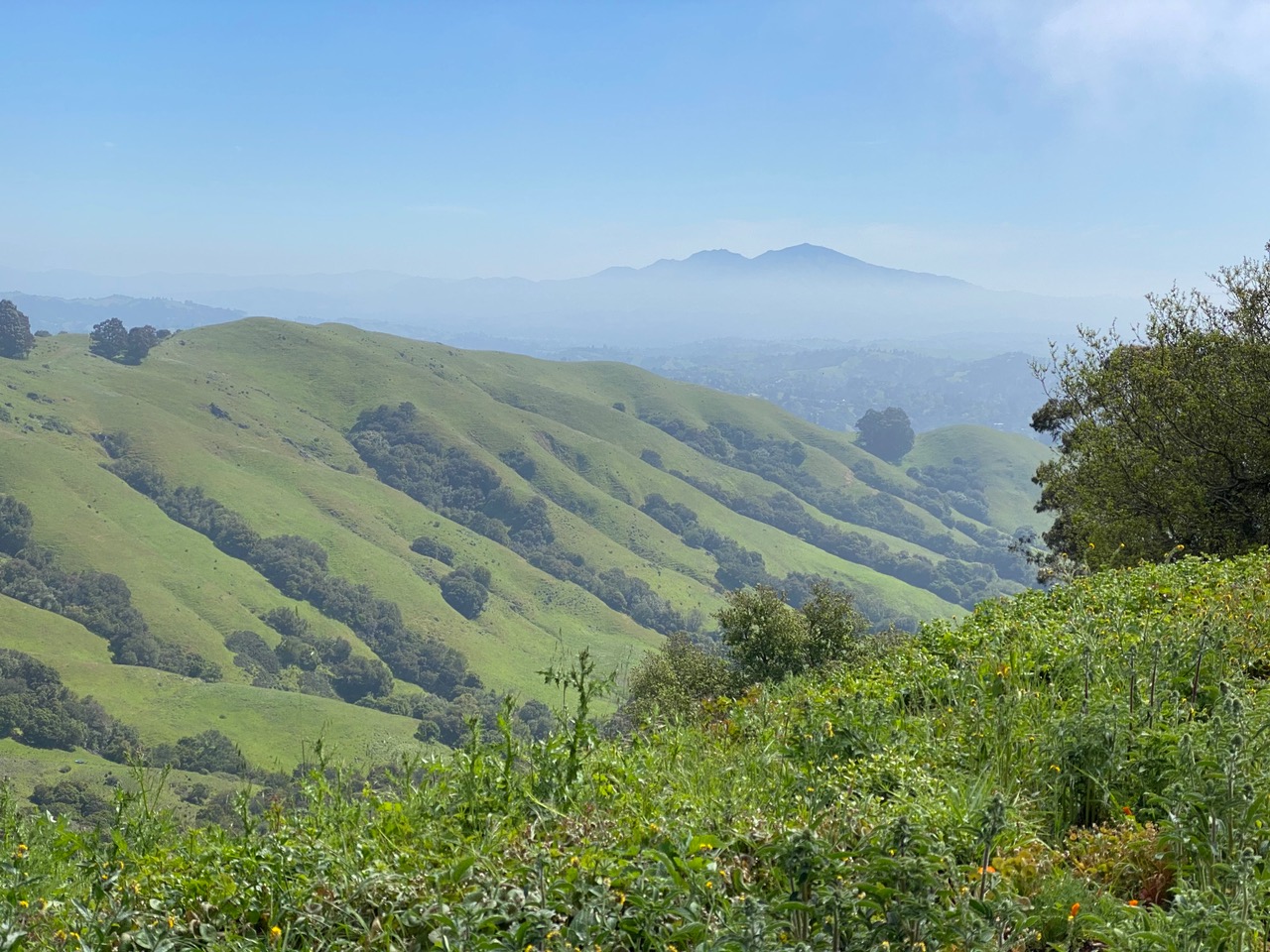
The fog is finally dispersing as I approach the top of the hill.

Decay never looks so beautiful! An oak leaf lying in the leaf litter sports concentric rings of brown discoloration. I think the pattern is made by a fungus.
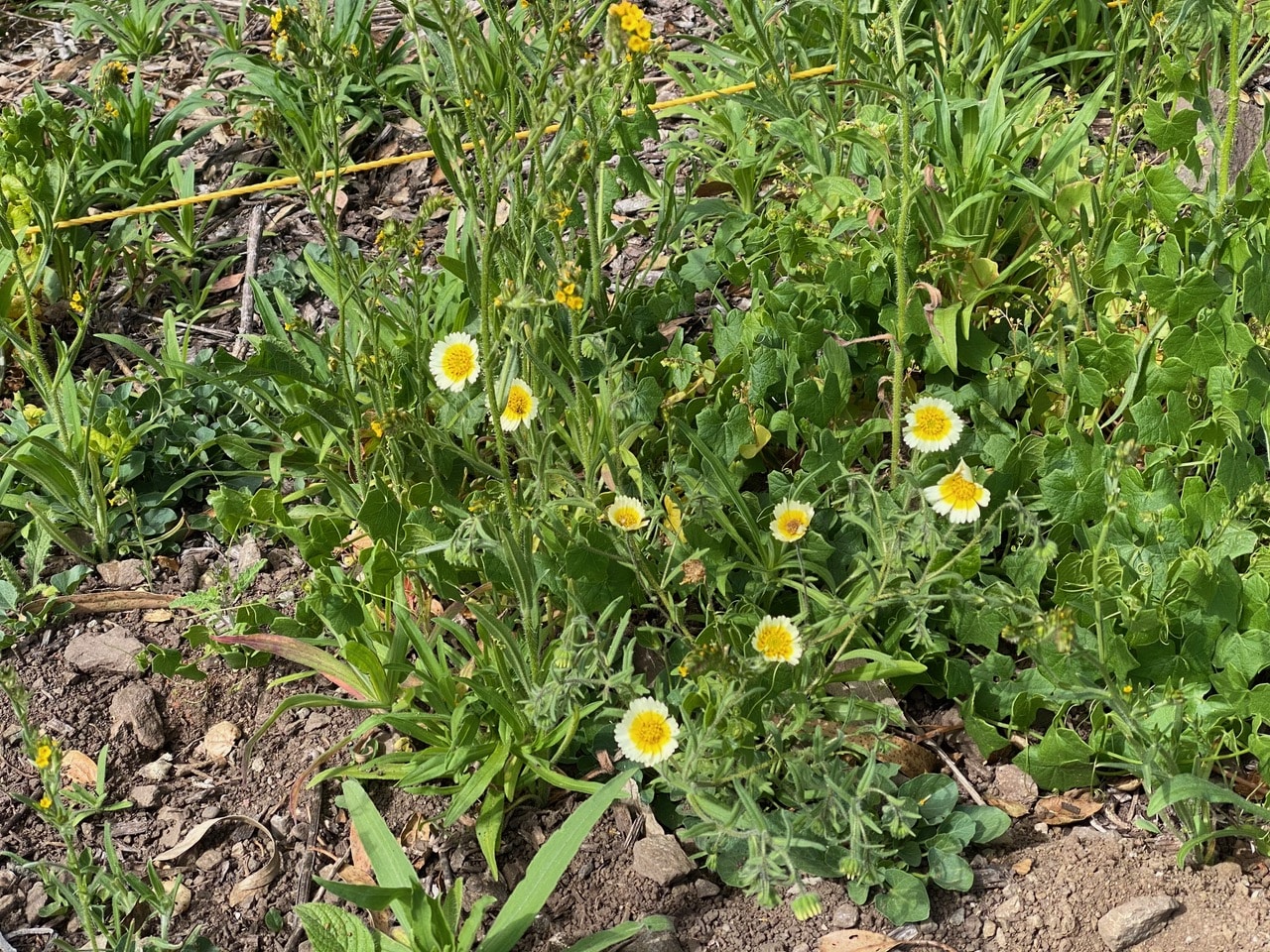
Hey, theTidy Tips, Layia platyglossa that the volunteers planted in the roped-off beds earlier this year has started to bloom!
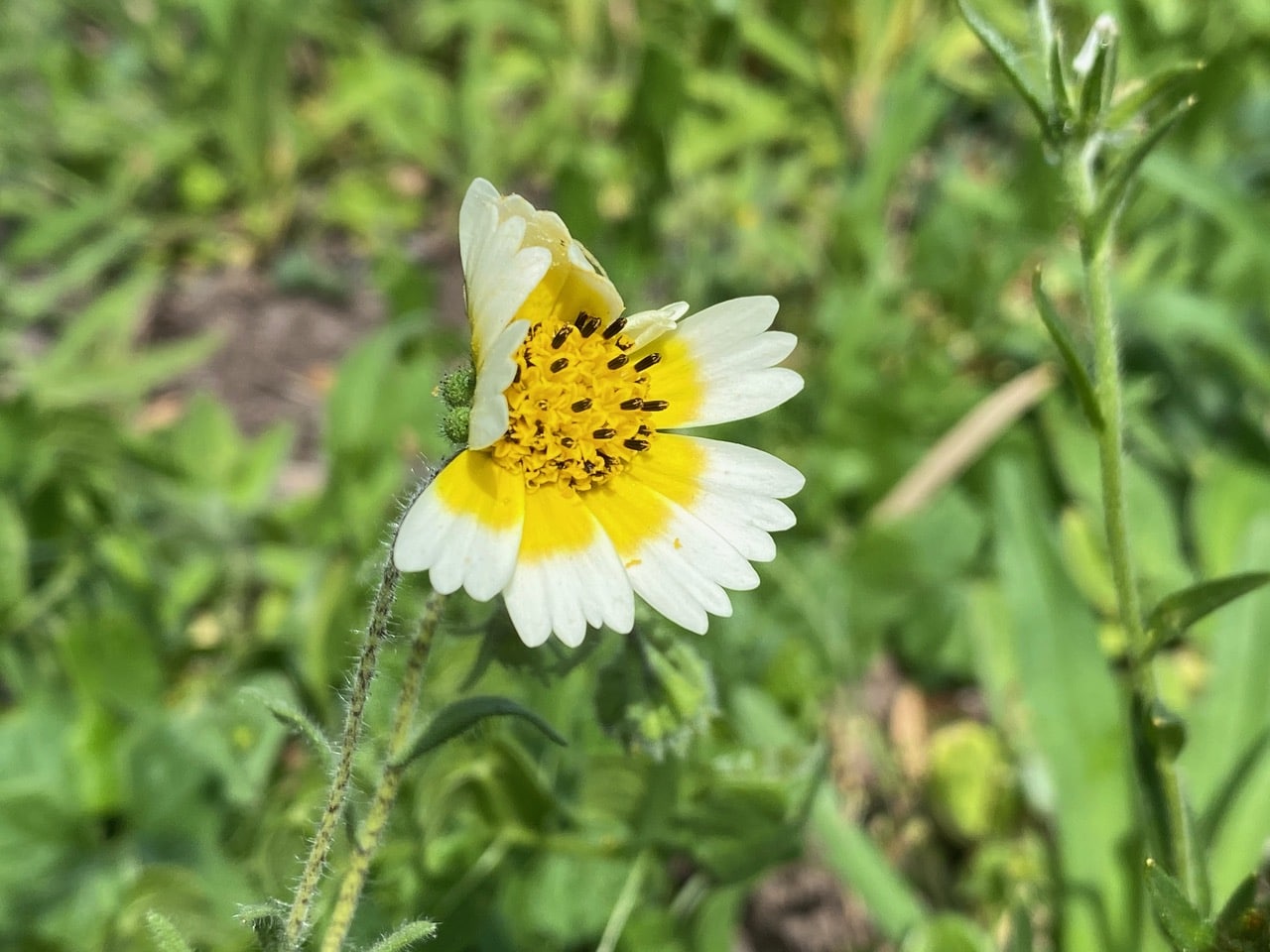 Why are two of the ray petals slightly folded together? The flowerhead is fully mature, no longer a bud.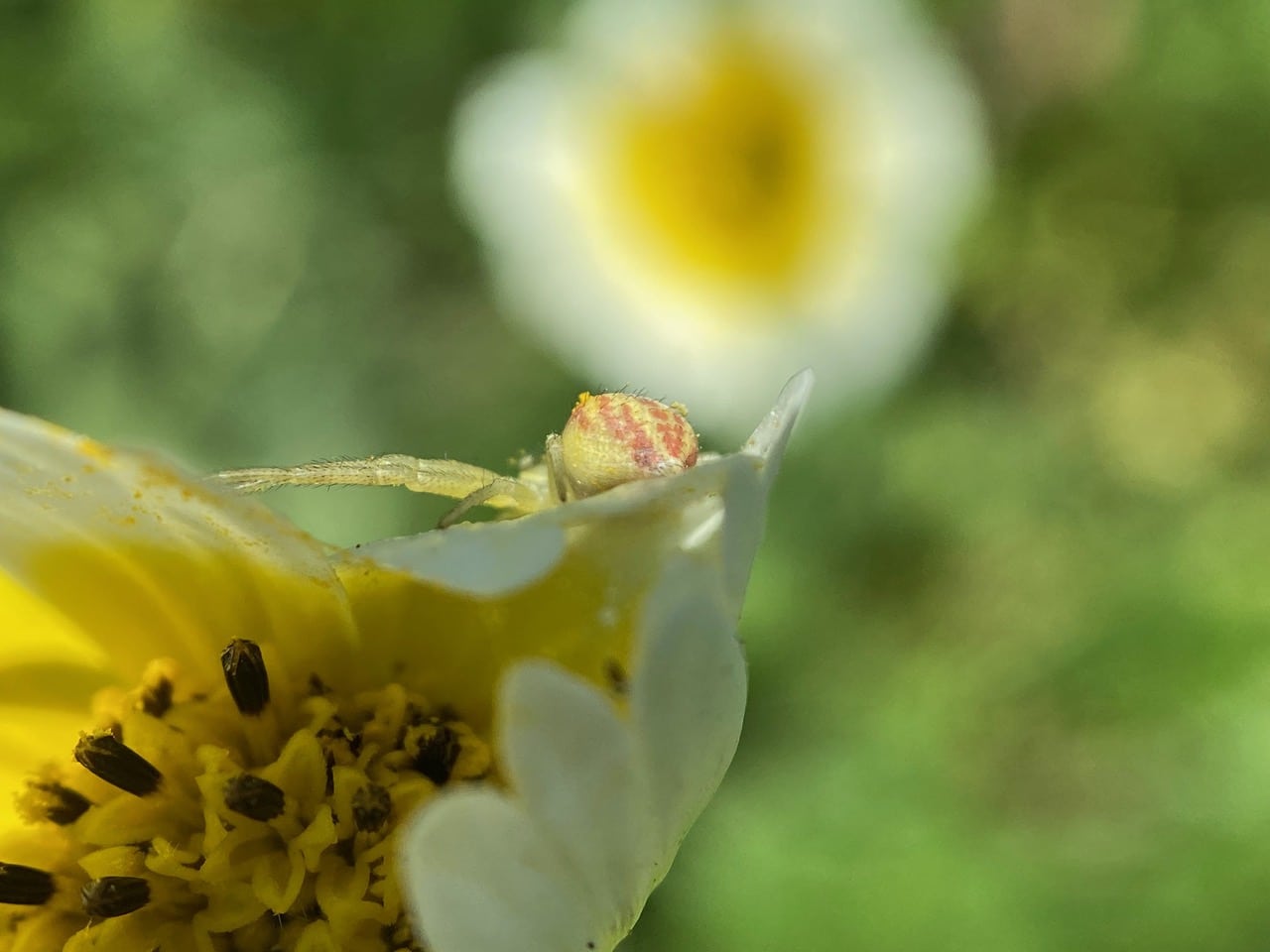
As I tilt the flowerhead to look inside, a little Crab Spider, Mecaphesa sp. runs out, its front legs outstretched in alarm.
Although Crab Spiders (family Thomisidae) are ambush predators and do not spin webs for trapping prey, they do use silk for other purposes. They often bind together flower petals to form molting retreats for themselves, or to hide their egg sacs.
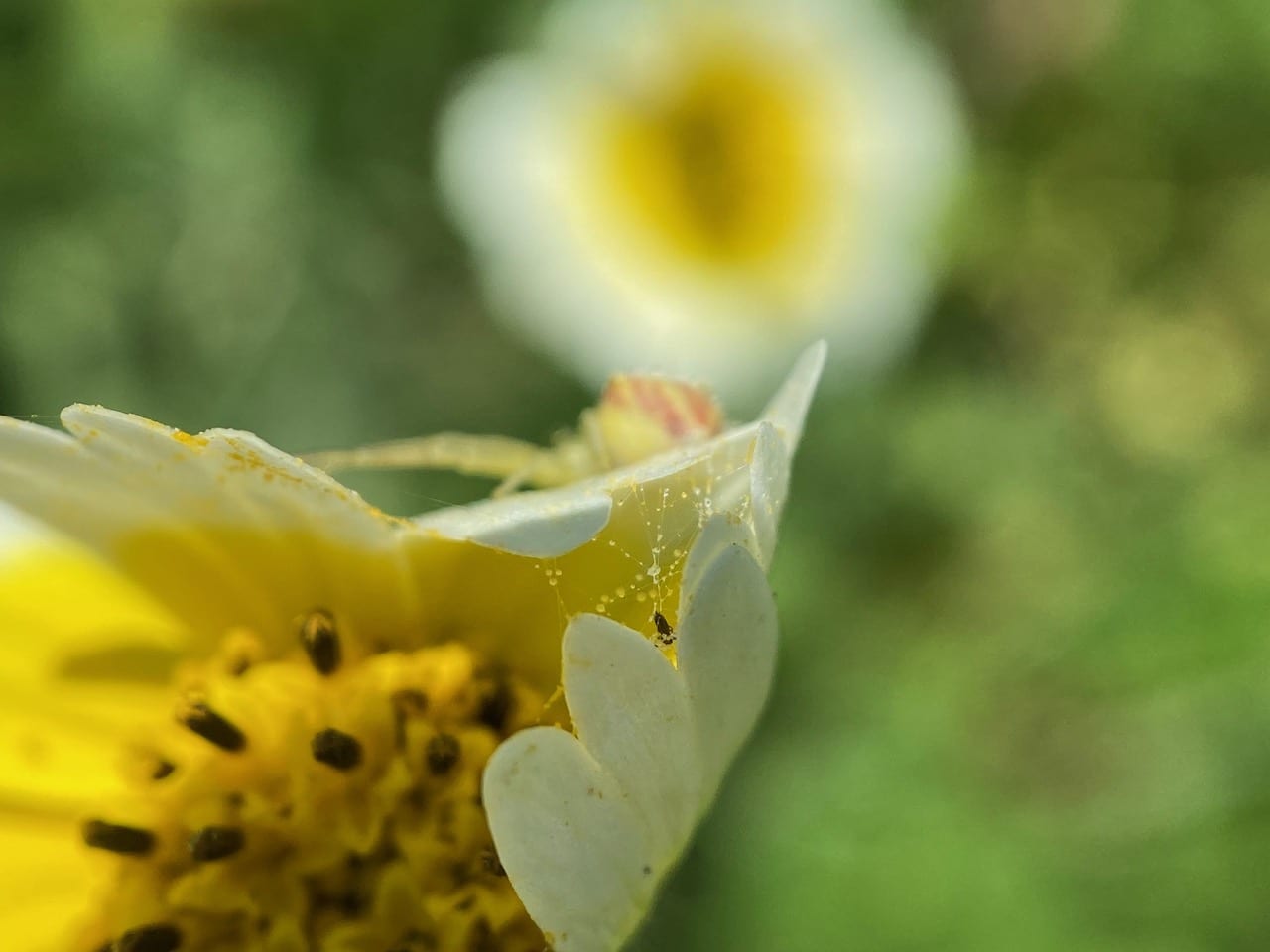
Some pollen has adhered to the silk that the spider used to bind the ray petals together.

A Western Tarnished Plant Bug, Lygus hesperus (family Miridae) is roaming an immature inflorescence of California Phacelia.
Commonly referred to a Lygus Bug, the species is a serious pest on strawberry in the Central Coast of California. Adults are about 6 mm long, oval and rather flattened. They are greenish or brownish and have reddish-brown markings on their wings. In the center of their back is a distinct, bur small, yellow or pale green triangle that helps distinguish them from other insects. The cunei (singular cuneus), triangular-shaped areas near the end of the forewings are translucent, blending with the coloration of surrounding body parts. The immature forms are pale green and resemble aphids. They can be distinguished from aphids by their more rapid movements.
In general the Lygus Bug’s abundance is highest after winters of higher rainfall. This causes more lush grows of vegetation such as mustards and other weeds that support a higher abundance and survival of the bugs during the winter and spring. Damage to crops and garden plants are caused by the bugs’ piercing-sucking mouthparts that extract fluids from the plant tissues.
One useful feature in identifying members of the family Miridae or plant bugs is the presence of a cuneus; it is the triangular tip of the corium, the firm, horny part of the forewing, the hemielytron. The cuneus is visible in nearly all Miridae.
