

Pollinator Post 4/19/24 (2)
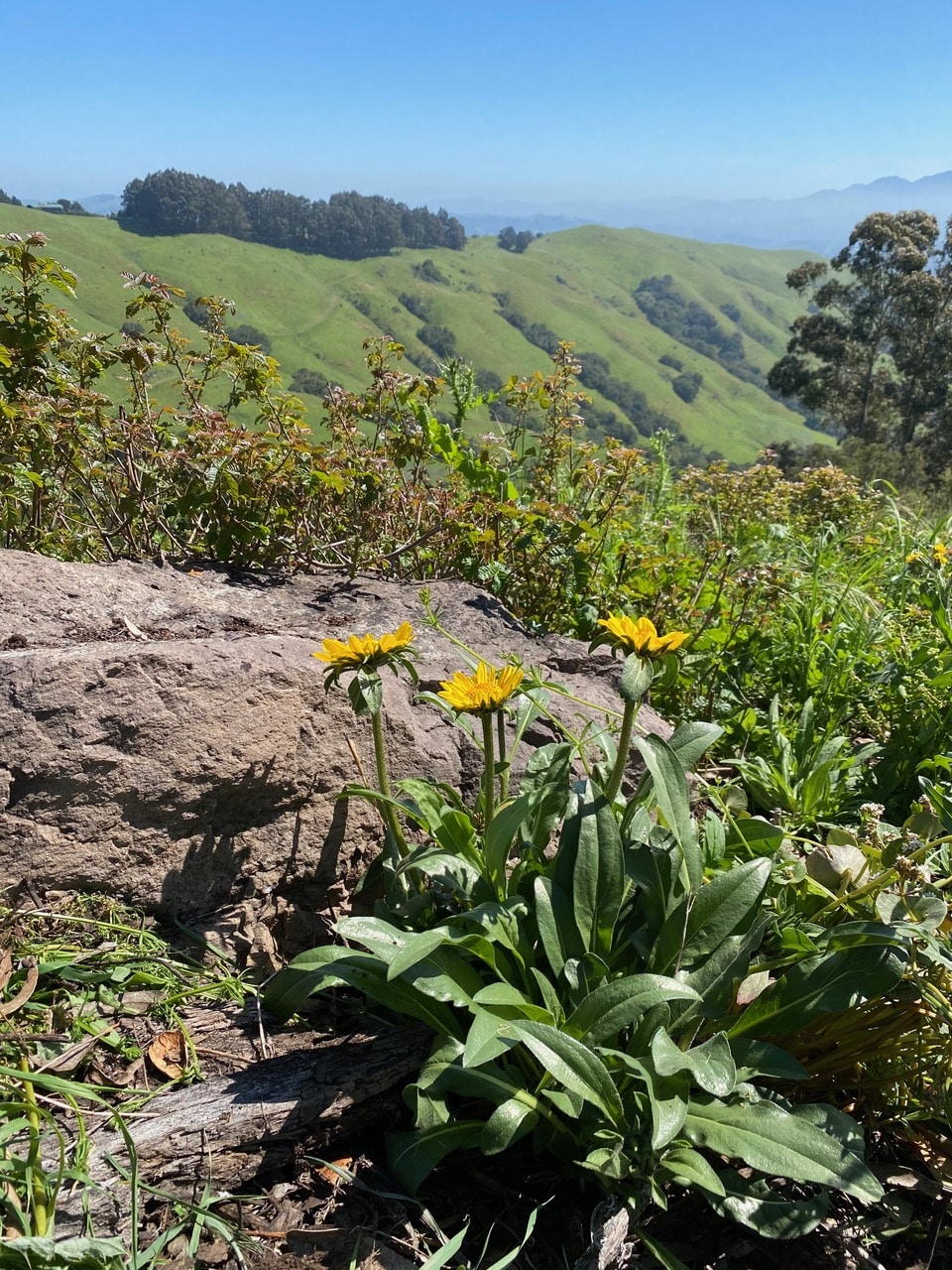
At the top of the hill, Mt. Diablo Helianthella, Helianthella castanea is in glorious bloom. This is the crown jewel of the Skyline Gardens, a restoration success story a few years in the making.
The perennial herb is a rare plant endemic to California, and is only found in the San Francisco Bay Area, occurring in the Diablo Range, Berkeley Hills, and San Bruno Mountain. The species is associated with thin, rocky, well-drained soils. It is found in grassy openings in woodlands, chaparral, and coastal scrub, often in transition zone between woodland and chaparral, blooming from April through June.
On first glance, the flowers of Mt. Diablo Helianthella resembles those of Mule’s Ears, Wyethia sp. The Diablo Helianthella is distinguished from mule ears chiefly by having sterile ray flowers, a characteristic not readily recognizable to the casual observer.
Photos of Mt. Diablo Helianthella (Helianthella castanea) · iNaturalist


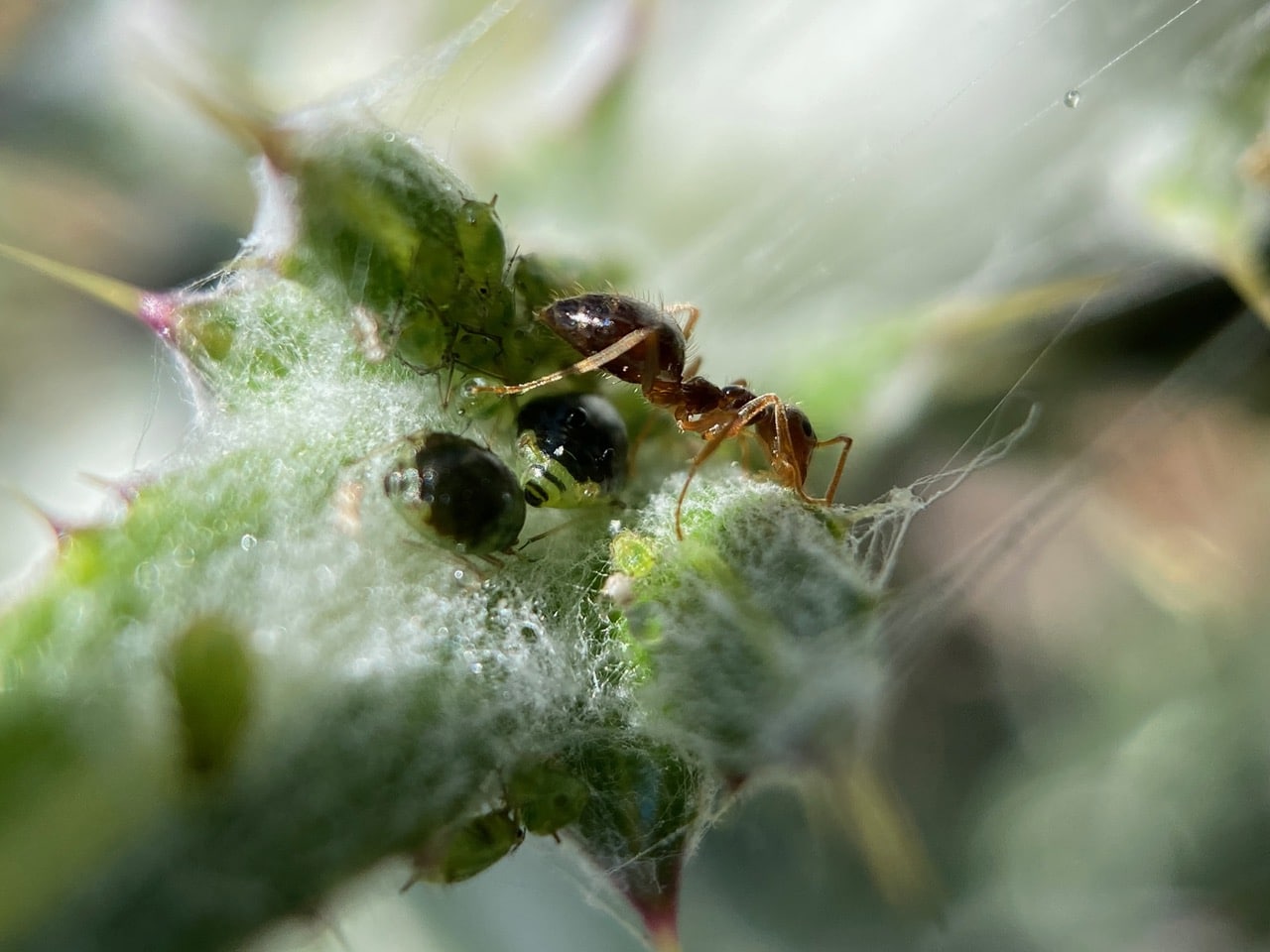
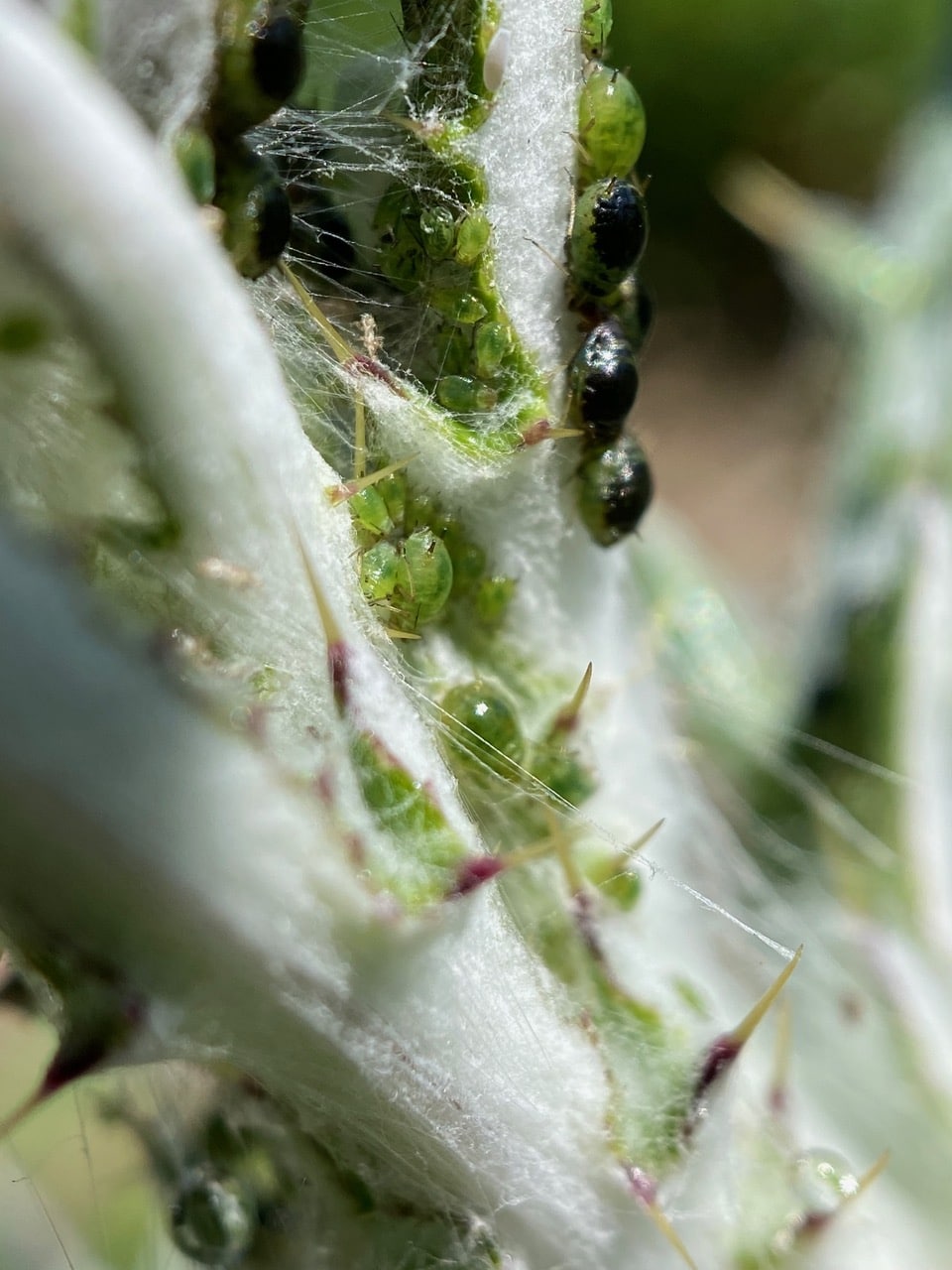

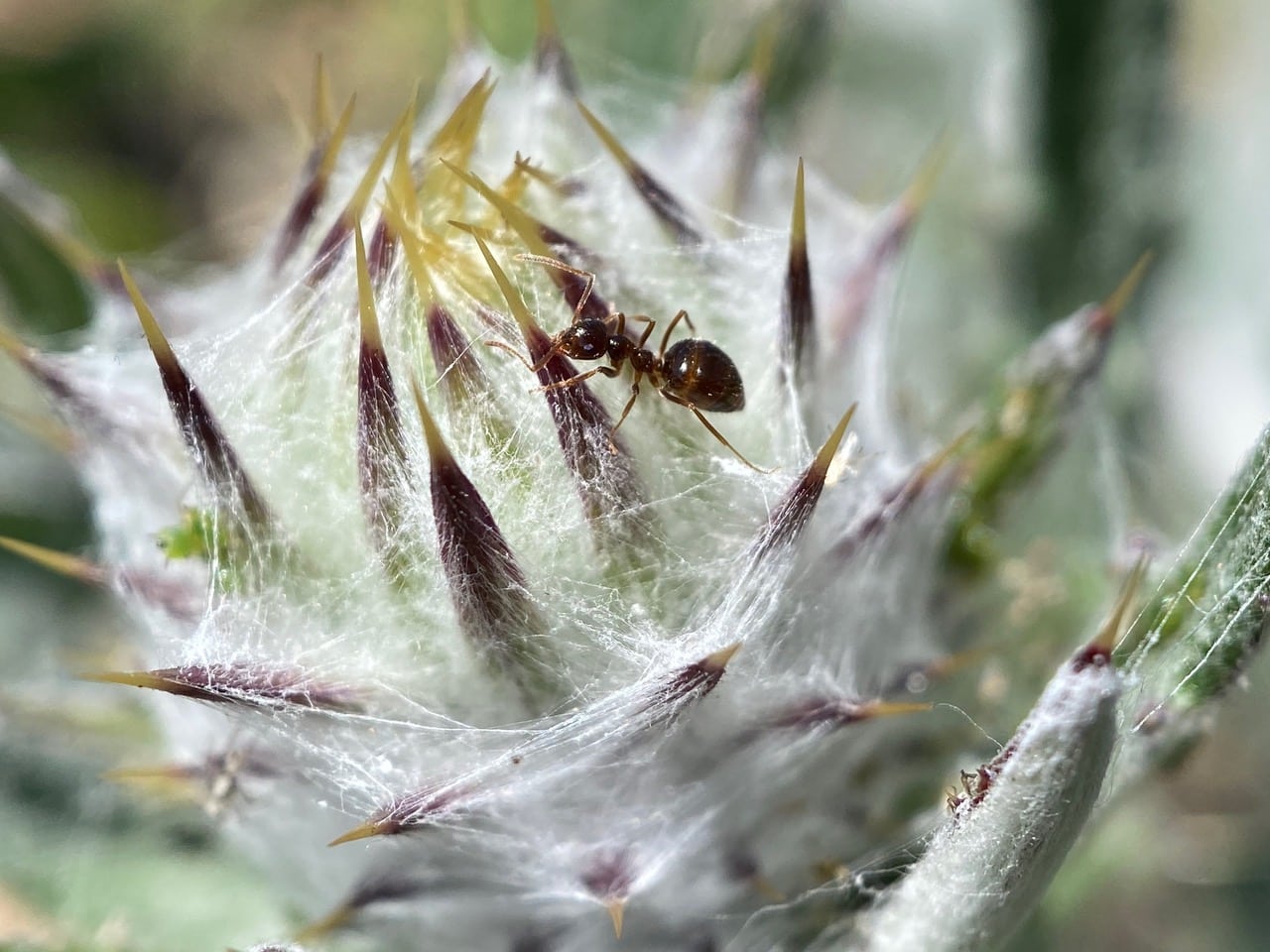
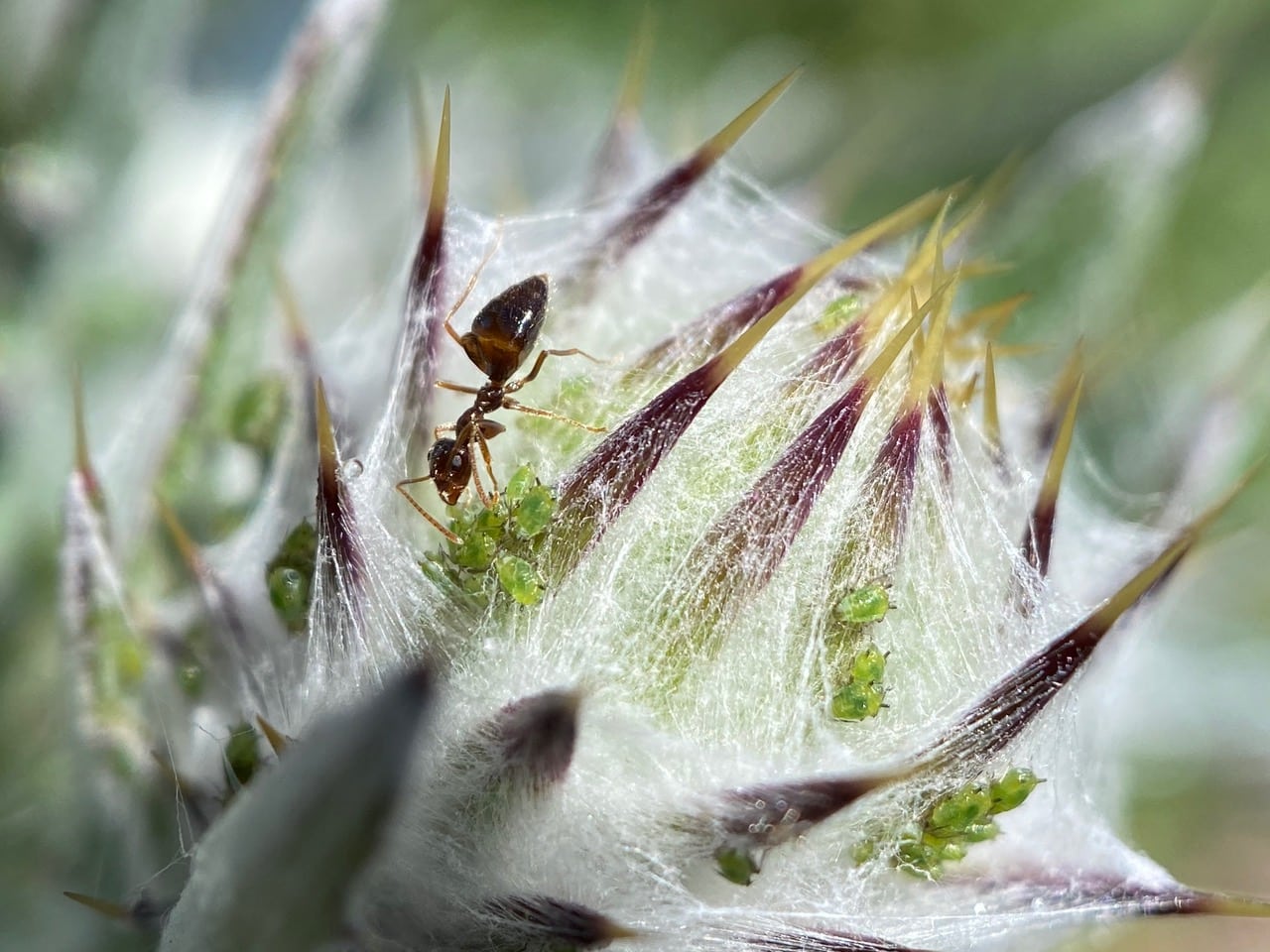 An American Winter Ant is tending young aphids on this immature Cobweb Thistle flowerhead.




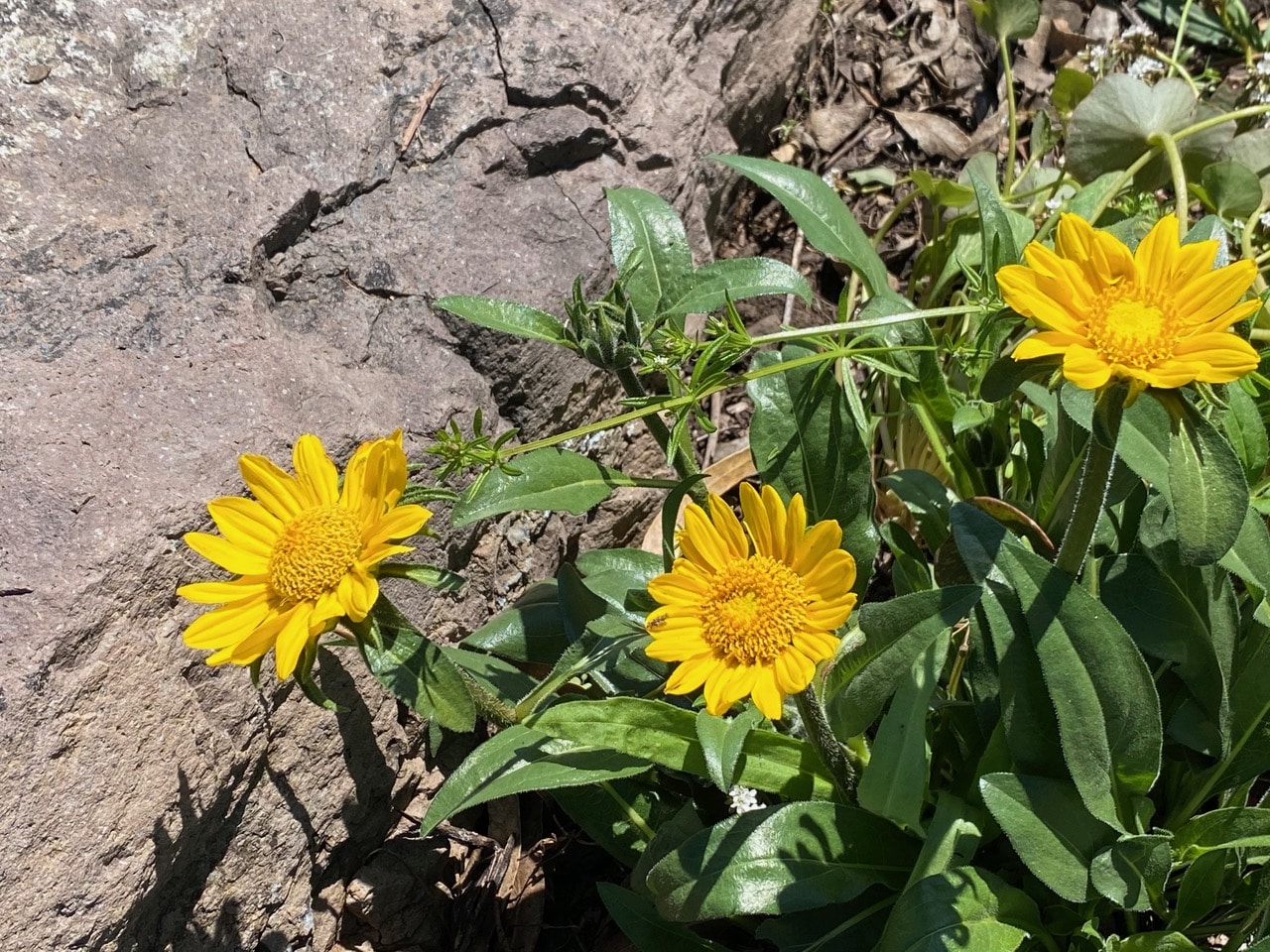
The three tall flowerheads nicely display the sequential maturation of typical “sunflowers”. As with all members of Asteracea, what appears to be a single flower is actually a composite of numerous small flowers. The disc flowers are crowded in the center, surrounded by ray flowers with petal-like ligules on the rim of the flowerhead. The disc flowers open from the outside in, maturing from the male phase through the female phase with curlycue stigmas. A quick glance at this threesome tells us that the flowerhead on the right is the youngest, while the one on the left is the oldest. Mt. Diablo Helianthella flowerhead goes from a rather flat center to a highly domed one.
A Sunflower Seed Maggot Fly, Neotephritis finalis (family Tephritidae) is perched on a ray flower of a Mt. Diablo Helianthella.
Commonly called Fruit Flies, Tephritids are small to medium-sized flies that are often colorful, and usually with picture wings. The larvae of almost all Tephritidae are phytophagous. Females deposit eggs in living, healthy plant tissues using their telescopic ovipositors. Here the larvae find their food upon emerging. The larvae develop in leaves, stems, flowers, seeds, fruits, and roots of the host plant, depending on the species. Adults are often found on the host plant and feeding on pollen, nectar, rotting plant debris, or honeydew. Tephritid flies are of major economic importance as they can cause damage to fruit and other plant crops. On the other hand, some Tephritids are used as agents of biological control of noxious weeds.
The Sunflower Seed Maggot is a sunflower specialist, found on over 20 species of Asteraceae. Larvae feed on immature seeds and pupate in flowerheads.
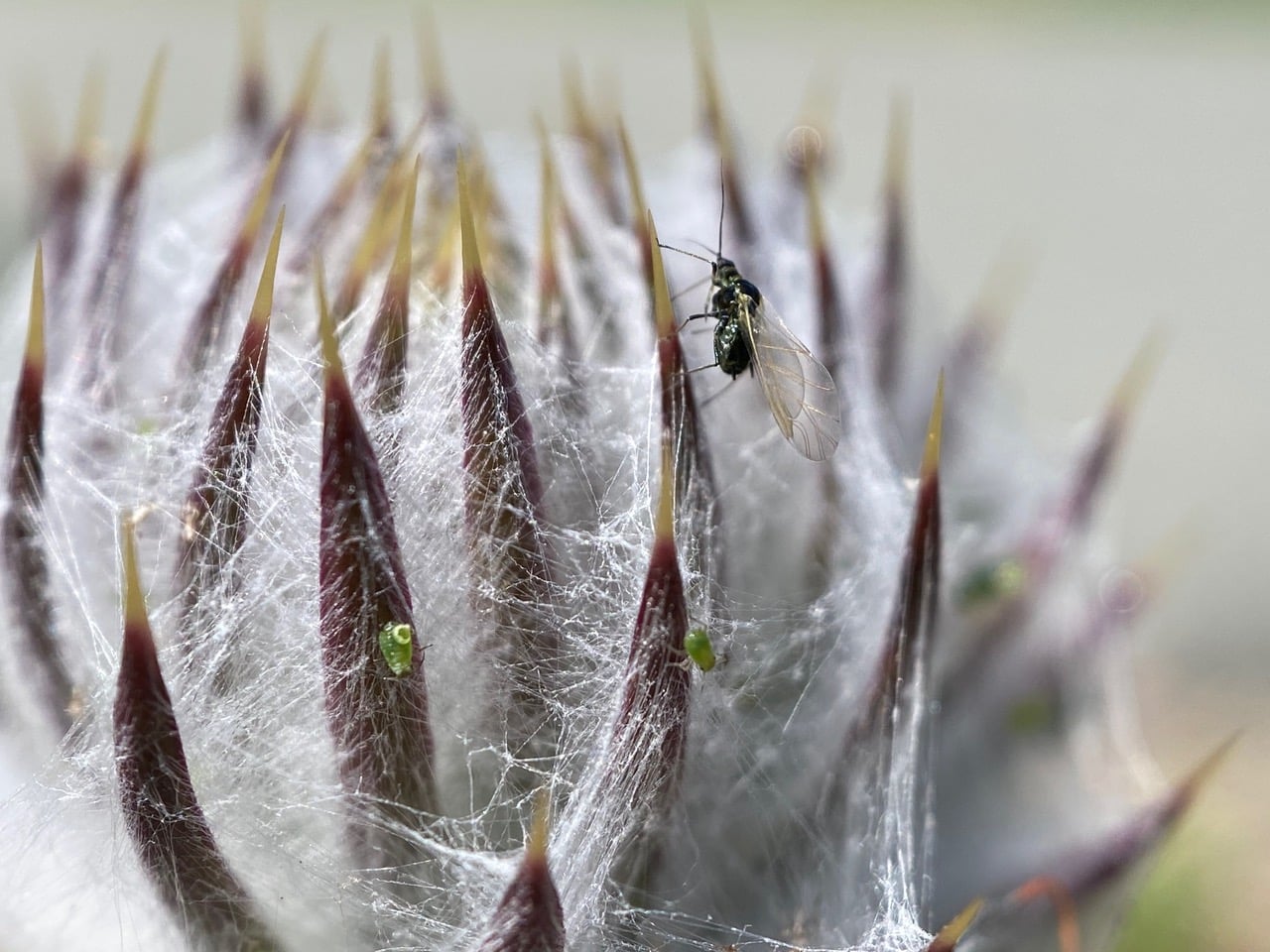
Many more young Cobweb Thistle, Cirsium occidentale have popped up on the ridge. Most are still small, no more than 2 feet tall. They all have immature flowerheads. Who is this comical creature walking on the surface of this young flowerhead? Wow, it is a mature Thistle Aphid! I have never before seen adult aphids move around – they tend to be mostly sedentary. Did an ant place the aphid there?
Aphids are small sap-sucking insects in the order Hemiptera. A typical life cycle involves flightless females giving live birth to female nymphs – who may also be already pregnant, an adaptation called telescoping generations – without the involvement to males. Maturing rapidly, females breed profusely so that the number of these insects multiplies quickly. Winged females may develop later in the season, allowing the insects to colonize new plants. In temperate regions, a phase of sexual reproduction occurs in the fall, with the insect often overwintering as eggs.
The Thistle Aphids, Brachycaudus cardui (family Aphididae) have a wide distribution in Europe, Asia, North Africa and North America. The primary host of this species is plum, cherry, apricot, or peach, but during the summer months it moves to a secondary host, often a thistle in the genera Carduus or Cirsium where it is commonly seen on the stems and flowerheads. The viviparous (live-bearing) wingless females of B. cardui have an oval or pear-shaped body and grow to a length of 1.8 to 2.5 mm. The colors varies from green, yellowing, reddish or brown. The abdomen has a dark, shining patch on the dorsal surface.
Closer examination of the flowerheads of the same plant shows that it is already heavily infested with aphids. There are young, green aphids everywhere. A bloated, brown aphid is glinting in the sun on a phyllary spine. It is an aphid “mummy”!
Aphids are often attacked by a tiny parasitoid wasp, Aphidius sp. (family Broconidae). The female wasp lays an egg in the aphid. When the egg hatches, the wasp larva feeds on the inside of the aphid. As the larva matures, the host dies and becomes slightly enlarged or mummified, often turning browner yellow. Complete metamorphosis occurs within the host. The adult parasite chews its way out of the mummy, leaving a round hole. The Aphidius wasps are often used for biological pest control of aphids on agricultural crops and home gardens.
Hey, that’s an aphid alate – a winged reproductive. Alates are produced for dispersal to new territories, usually when the aphid colony is overcrowded, when the food resources are dwindling, or when predation pressure is high.
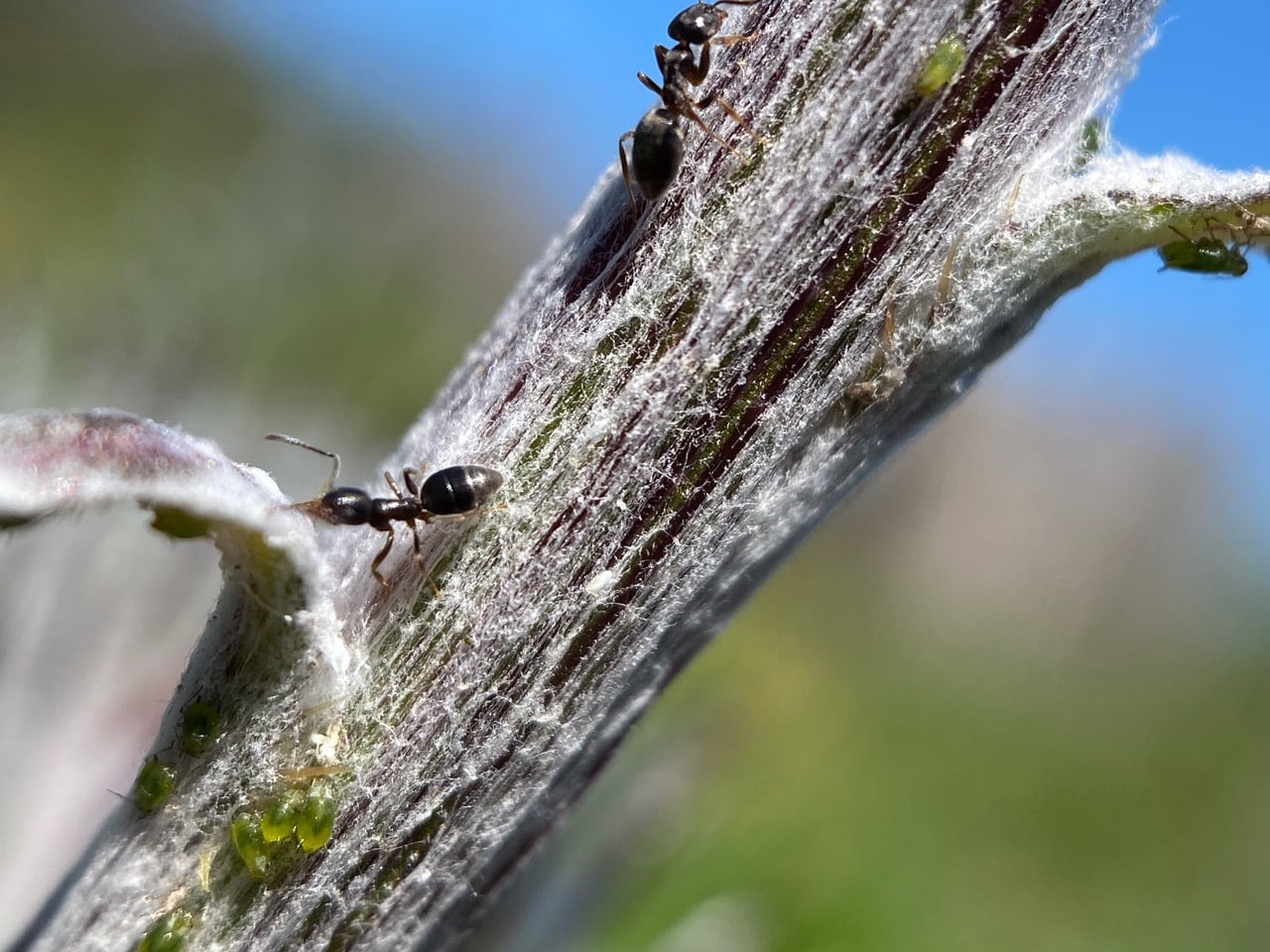
An American Winter Ant, Prenolepis imparis (family Formicidae) is tending aphids on a thistle leaf.
The American Ant, Prenolepis imparis is a widespread North American ant. A dominant woodland species, it is most active during cool weather, when most other ant species are less likely to forage. This species is one of a few native ants capable of tolerating competition with the invasive Argentine Ant, Linepithema humile. They are also aggressive toward other ants and produce abdominal secretions that are lethal to Argentine Ants. Prenolepis imparis is a generalist omnivore. Foragers are known for tending to aphids or scale insects from which they consume excreted honeydew, aggregating on rotting fruit, and exploiting protein-rich sources such as dead worms. The colony enters estivation (a hibernation-like state) and becomes inactive above ground for the warmer months, during which time eggs are laid and brood are reared. Reproductives overwinter and emerge on the first warm day of spring for their nuptial flight.
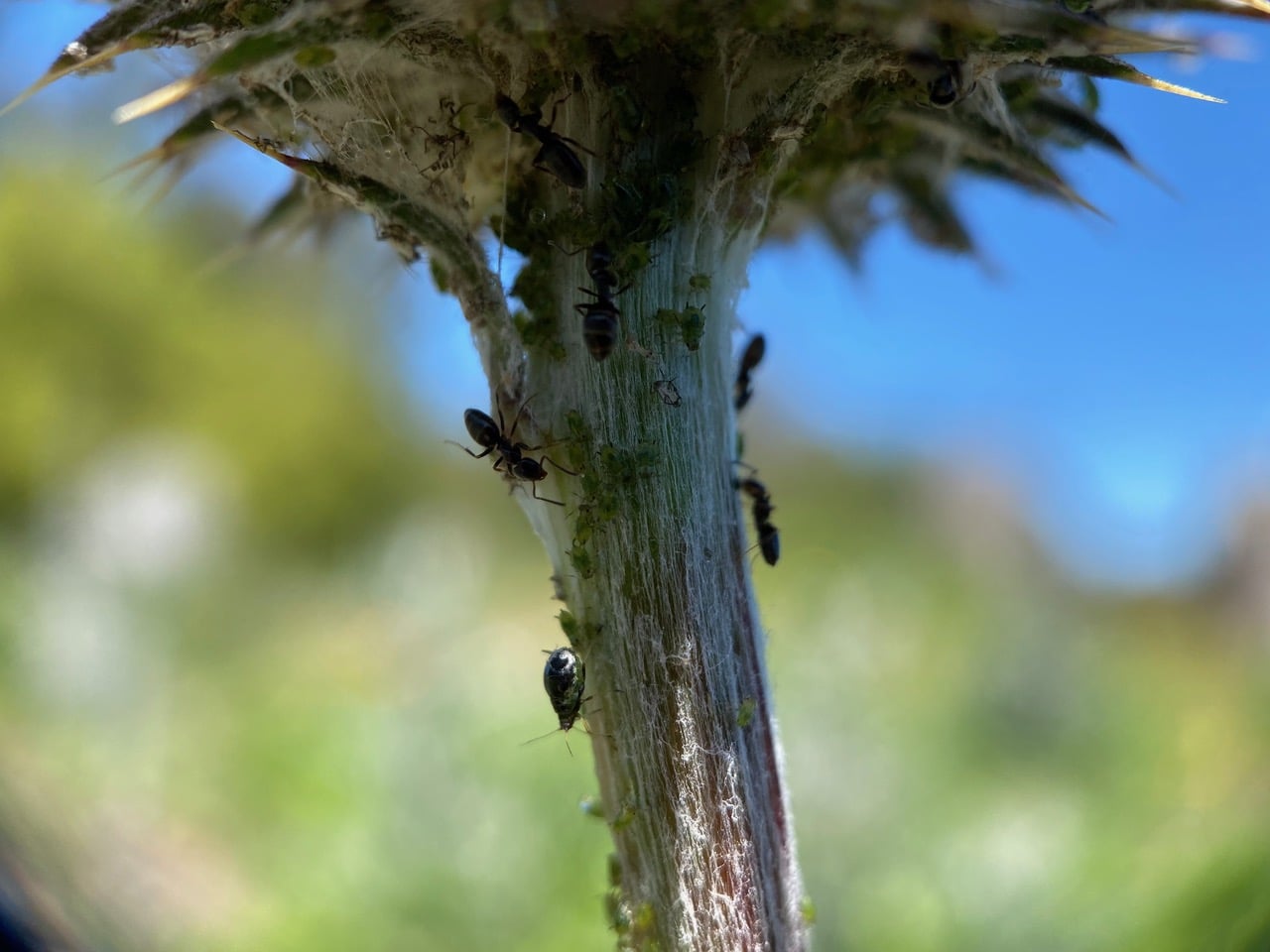
There’s a thriving colony of Thistle Aphids tugged within the nooks and crannies under a Cobweb Thistle flowerhead. The young aphids are bright green, while the mature ones take on a black coloration on their backs.
An American Winter Ant walks in to tend the aphids while I photograph this cluster.
An American Winter Ant is tending young aphids on this immature Cobweb Thistle flowerhead.Wherever there are aphids on the Cobweb Thistle, there are ants tending them.
Ants and aphids share a well-known mutualistic relationship. The aphids produce honeydew, a sugary food for the ants; in exchange, the ants care for and protect the aphids from predators and parasites. Some ants will “milk” the aphids to make them excrete the sugary substance. The ants stroke the aphids with their antennae, stimulating them to release the honeydew. Aphid-herding ants make sure the aphids are well-fed and safe. When the host plant is depleted of nutrients, the ants carry their aphids to a new food source. If predatory insects or parasites attempt to harm the aphids, the ants will defend them aggressively. Some species of ants continue to care for aphids during winter. The ants carry the aphids to their nest for the winter months, and transport them to a host plant to feed the following spring.
An American Winter Ant is tending the young aphids hidden in the cobwebby fibers of this young flowerhead.

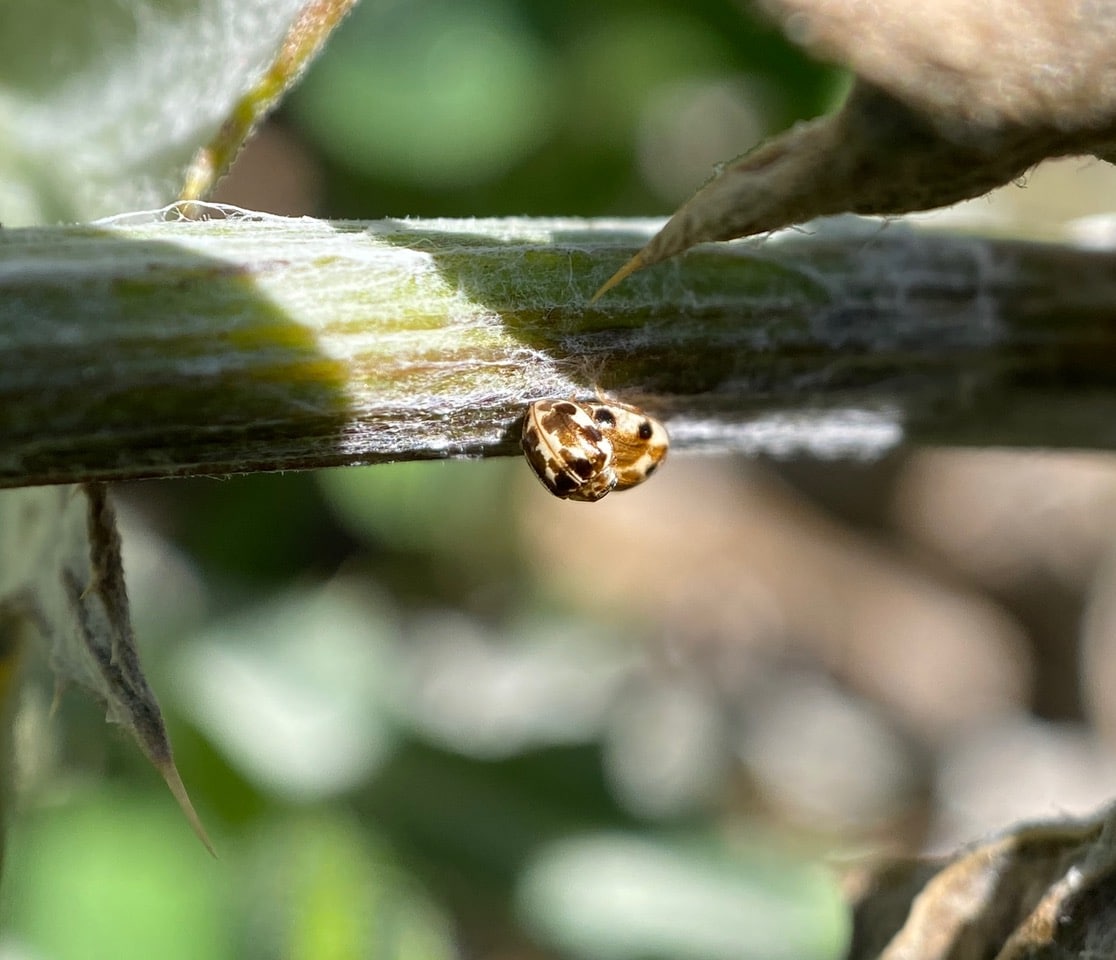
A Ladybeetle (family Coccinellidae) is perched on a phyllary spine of a young flowerhead with its head down in the webby fibers, probably feeding on aphids. Both adult and larval lady beetles are voracious predators of aphids.
Checking on a larger Cobweb Thistle, I discover another colony of aphids with their attending ants. These ants are quite a bit smaller, a different species.
It’s so hard to see the creatures under the flowerhead.
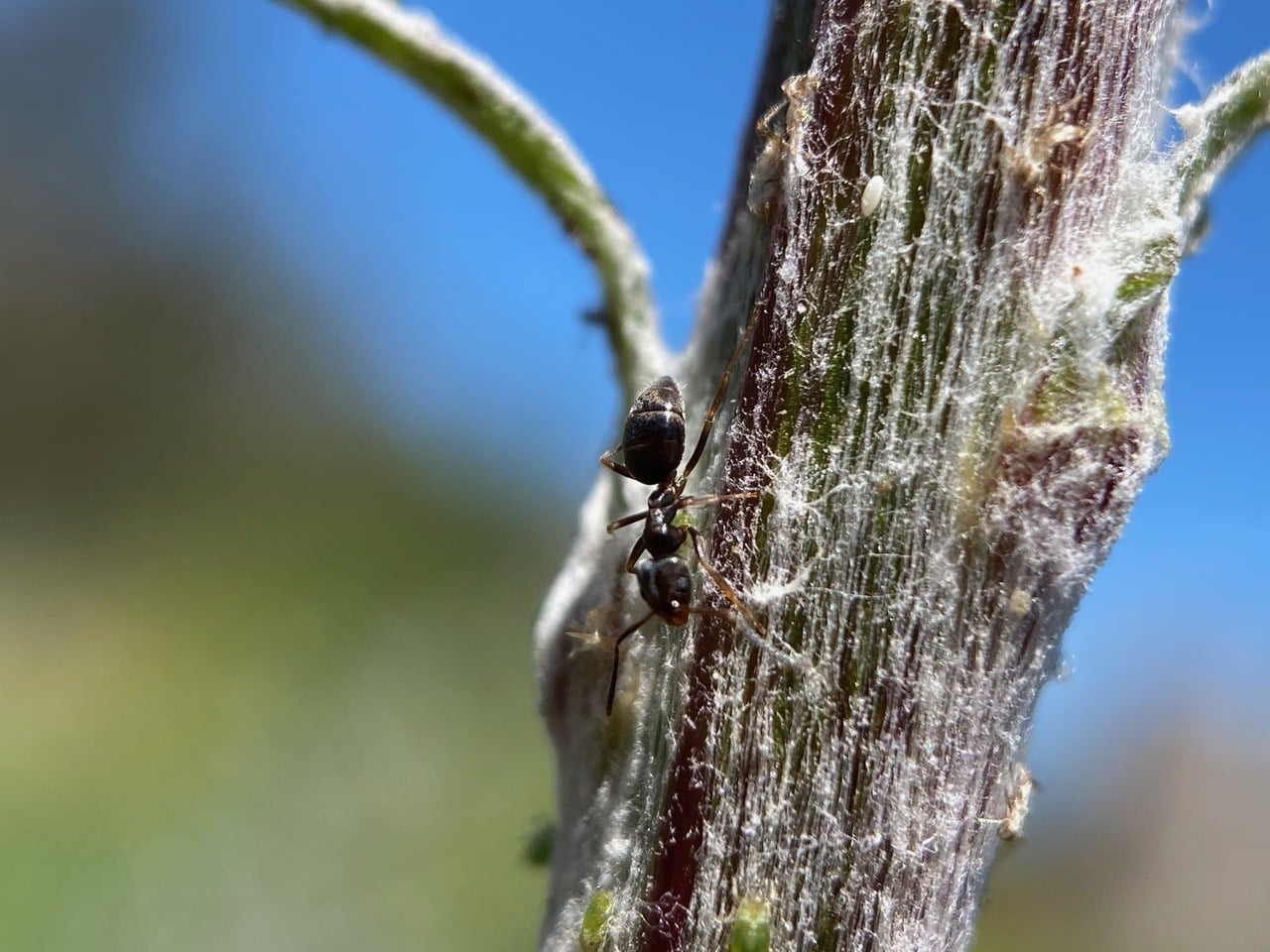
These are Odorous House Ants, Tapinoma sessile (subfamily Dolichoderinae, family Formicidae).
The ant is native to North America, ranging from southern Canada to northern Mexico. The species is found in a vast diversity of habitats, including within houses. The ants mainly feed on floral nectar and other sugary food. They also forage for honeydew produced by aphids and scale insects that they guard and tend.
Odorous House Ants are small ants, the workers measuring 2-3 mm. As in all members of the subfamily Dolichoderinae (odorous ants), this species does not possess a sting, instead relying on the chemical defense compounds produced from the anal gland. Such compounds are responsible for the smell given off by the ants when crushed or disturbed.
T. sessile colonies are polydomous (consist of multiple nests) and polygynous (contain multiple reproductive queens). The species practices seasonal polydomy – the colony overwinters in a single nest, and forms multiple nests during spring and summer when resources are more abundant and spread out.
The Odorous House Ants are rather docile, with little propensity for attack, preferring to use chemical secretions instead of biting. For this reason they are vulnerable to the invasion of the aggressive Argentine Ants, Linepithema humile.
So the two native ant species, the American Winter Ants and the Odorous House Ants co-exist in close proximity to each other (the two thistle plants are only 10 feet apart), each farming its own colony of thistle aphids! That’s a new revelation to me!
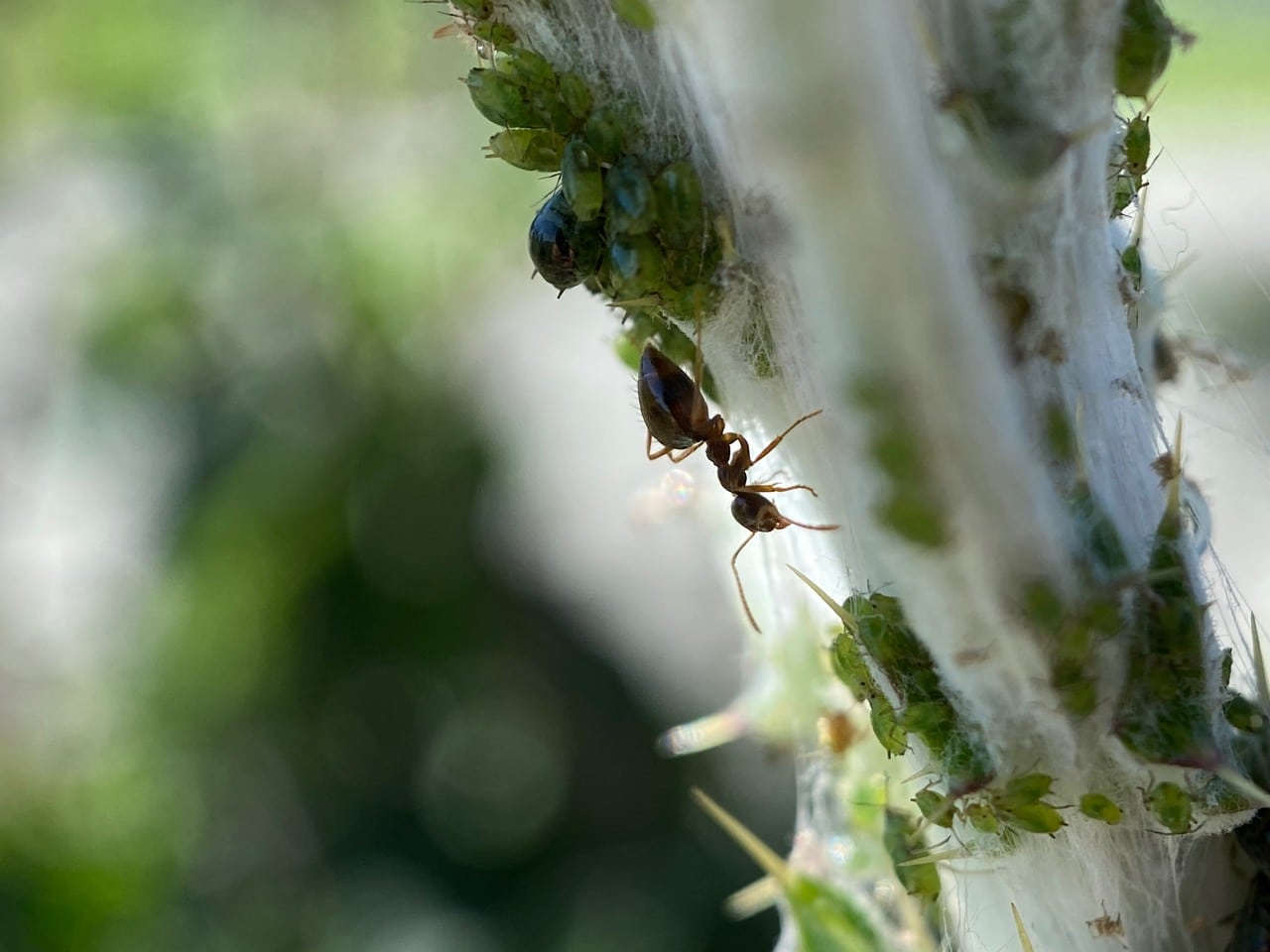
There is a loose stream of Odorous House Ants running down the stem of this Cobweb Thistle. Wait, do you see a hoverfly egg above and to the right of the ant? It looks like a miniature grain of rice. I did see a couple of female black-and-white hoverflies hovering around the aphid-infested thistles. They land with their abdomen curled forward to lay eggs, but I fail to capture the activity on camera. Females of some hoverfly species (family Syrphidae) scout out plants infested with aphids on which to lay their eggs, as their larvae feed on aphids.
Most of the aphids tended by the Odorous House Ants on this thistle seem to be rather small and immature.
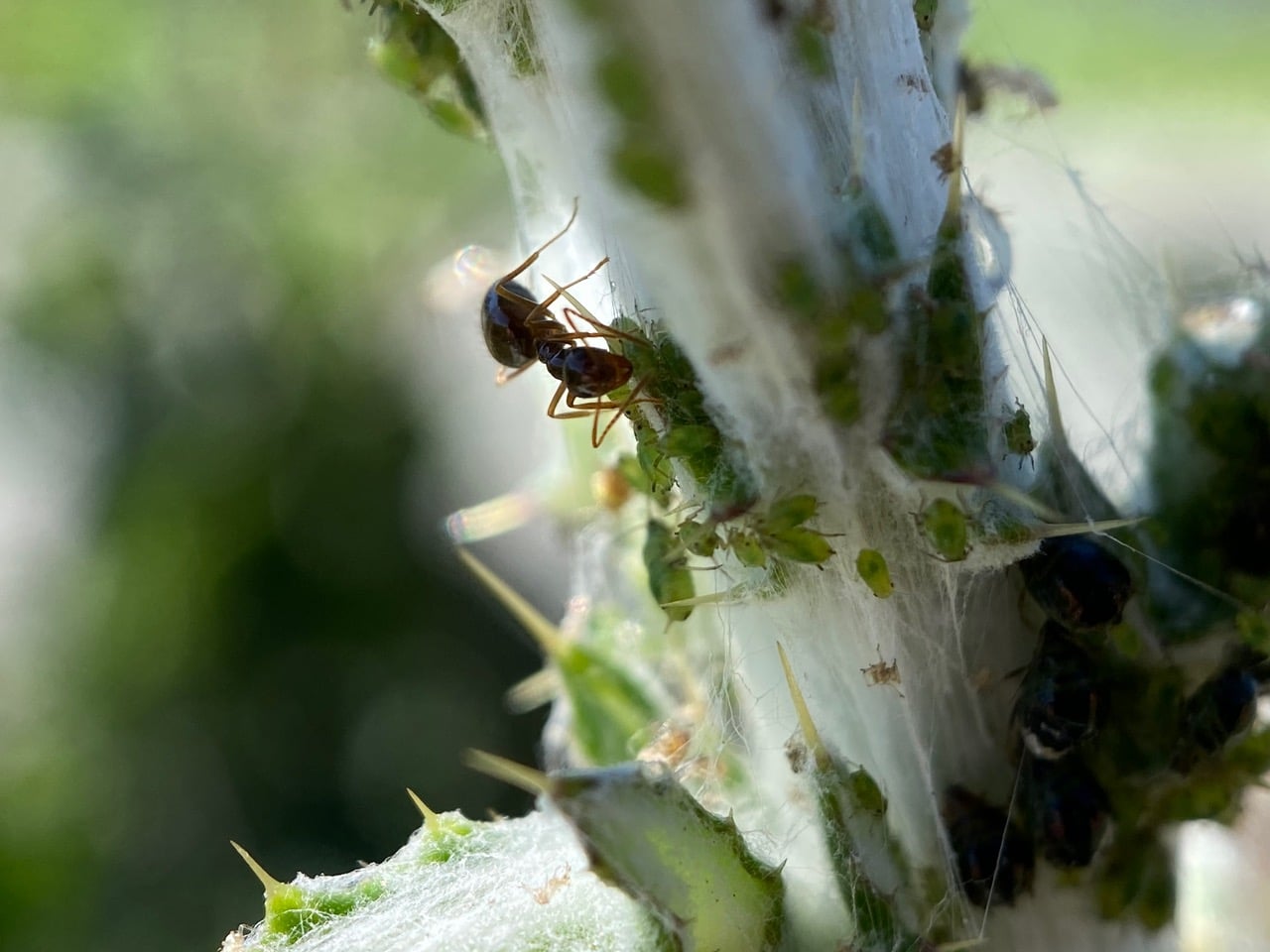
An Odorous House Ant is tending the aphids in the cobwebby recesses of a thistle flowerhead.
It is rare to get good light on the secretive denizens of the Cobweb Thistle. On top of that, there are those prickly spines to avoid!
What on earth is that, curled up in the middle of an immature flowerhead of Cobweb Thistle? It doesn’t look like a spider lying in ambush.
At the base of the Cobweb thistle, a pair of tiny beetles are mating. For their size, it is easy to mistake them for the Skin Beetles (Dermestidae). iNaturalist has helped identify it as the Twenty-spotted Lady Beetle, Psyllobora vigintimaculata (family Coccinellidae) – a mouthful of a name for a critter only 2-3 mm in length. How are the spots counted, when the markings on the beetle’s elytra are irregular blotches of two different colors?
The Twenty-spotted Lady Beetle, Psyllobora vigintimaculata (family Coccinellidae) is found in North America, especially the west coast. The elytra have dark, orange or bicolored spots on a white background. There are four or five distinctive dark spots on the pronotum arranged in an “M” shape. The patterns on the elytra are highly variable.
The species is found in early spring, occurring in numbers on the foliage of various shrubs. In summer and fall, they are often found on plants with powdery mildew on which the beetles feed. It has been proposed that the beetles be used as an alternative to fungicides for the control of the fungus in agricultural settings.