

Pollinator Post 4/25/24 (2)
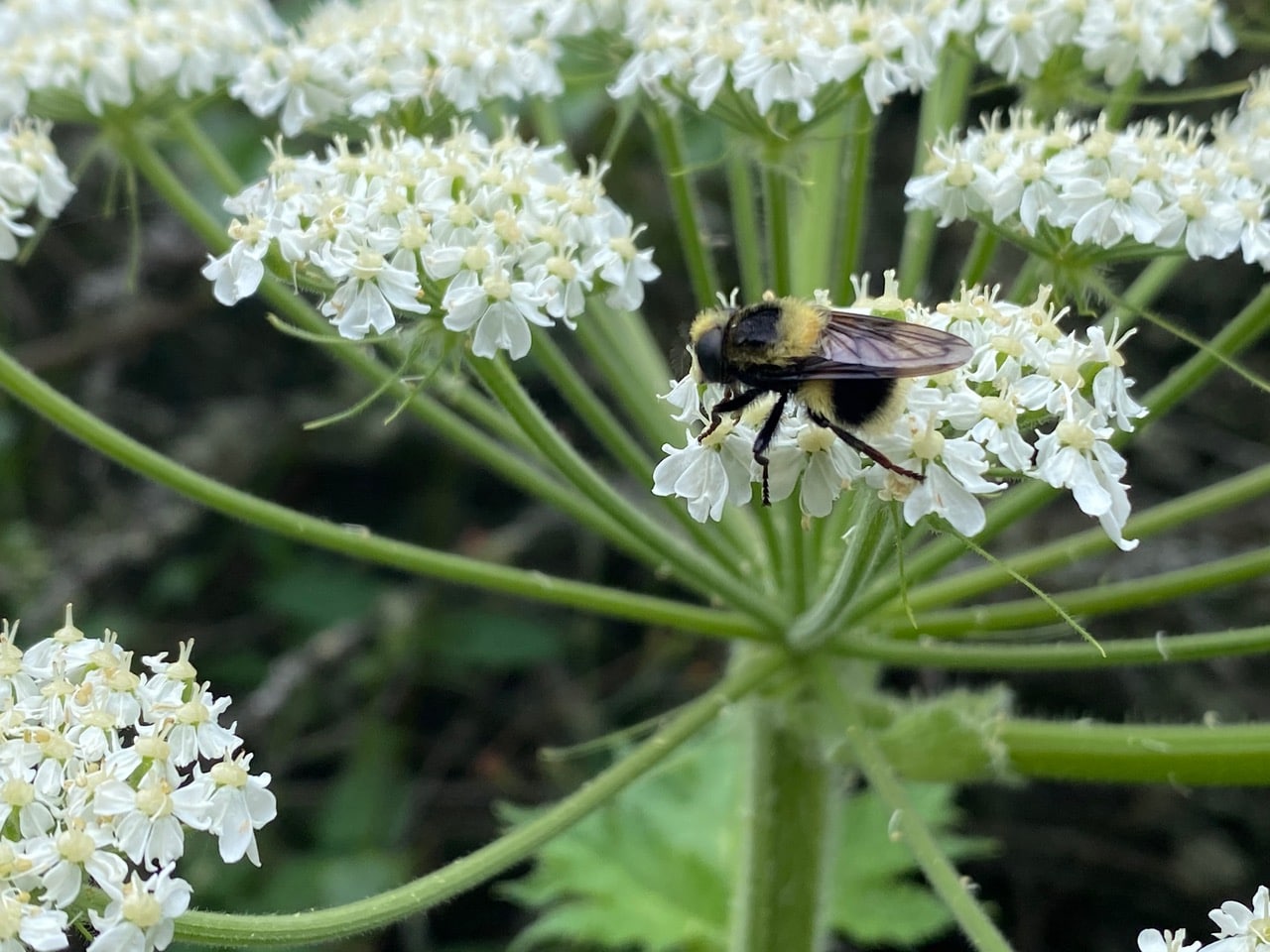
Wow, that’s the biggest Black-tailed Bumble Bee I have ever seen, the size of my thumb! But I haven’t seen a queen of that species for a while. Let me take a closer look.

It’s not a bumble bee. It’s a Bumble Bee Hoverfly, an imposter!
The fly is a member of the Volucella bombylans Complex (family Syrphidae) which comprises numerous hover flies that are bumble bee mimics, also known as Bumble Bee Hoverflies. These flies look like a bumble bee with a furry black and yellow body, but they are given away by their heads, plumed antennae, large eyes and a single pair of wings. Fast fliers, the adults feed on nectar and pollen, with a preference for blue and yellow flowers. The females lay eggs in the nests of bumble bees and social wasps. The larvae live as scavengers on the bottom of the host’s nest, feeding on waste and dead host larvae. It is a rather unusual niche for a Syrphid larva.
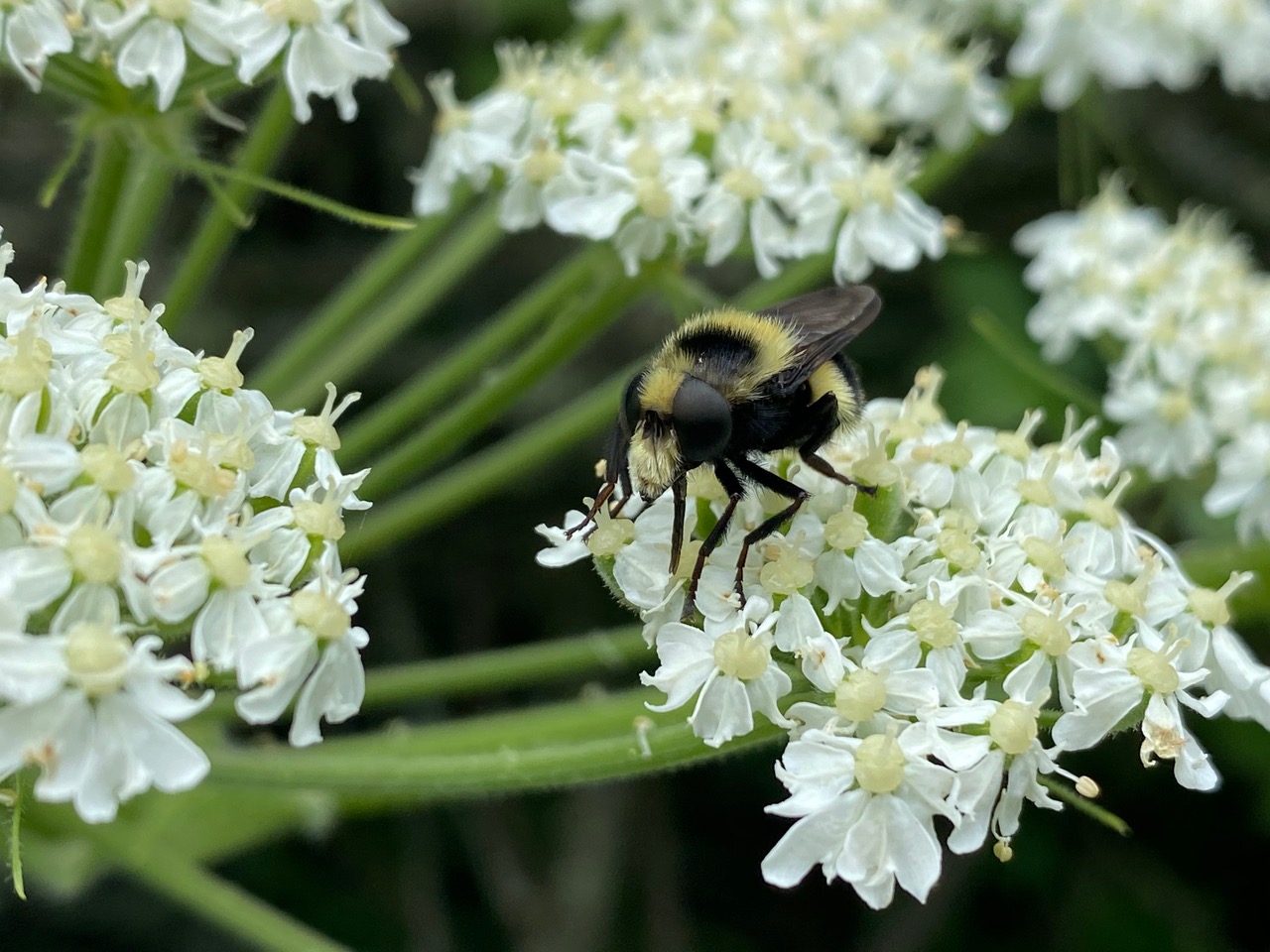
What a strange creature, with large eyes, and a hairy snout. Fortunately the fly is much easier to photograph than a real bee. It is slow in its movements on the flowers of Cow Parsnip, constantly feeding.
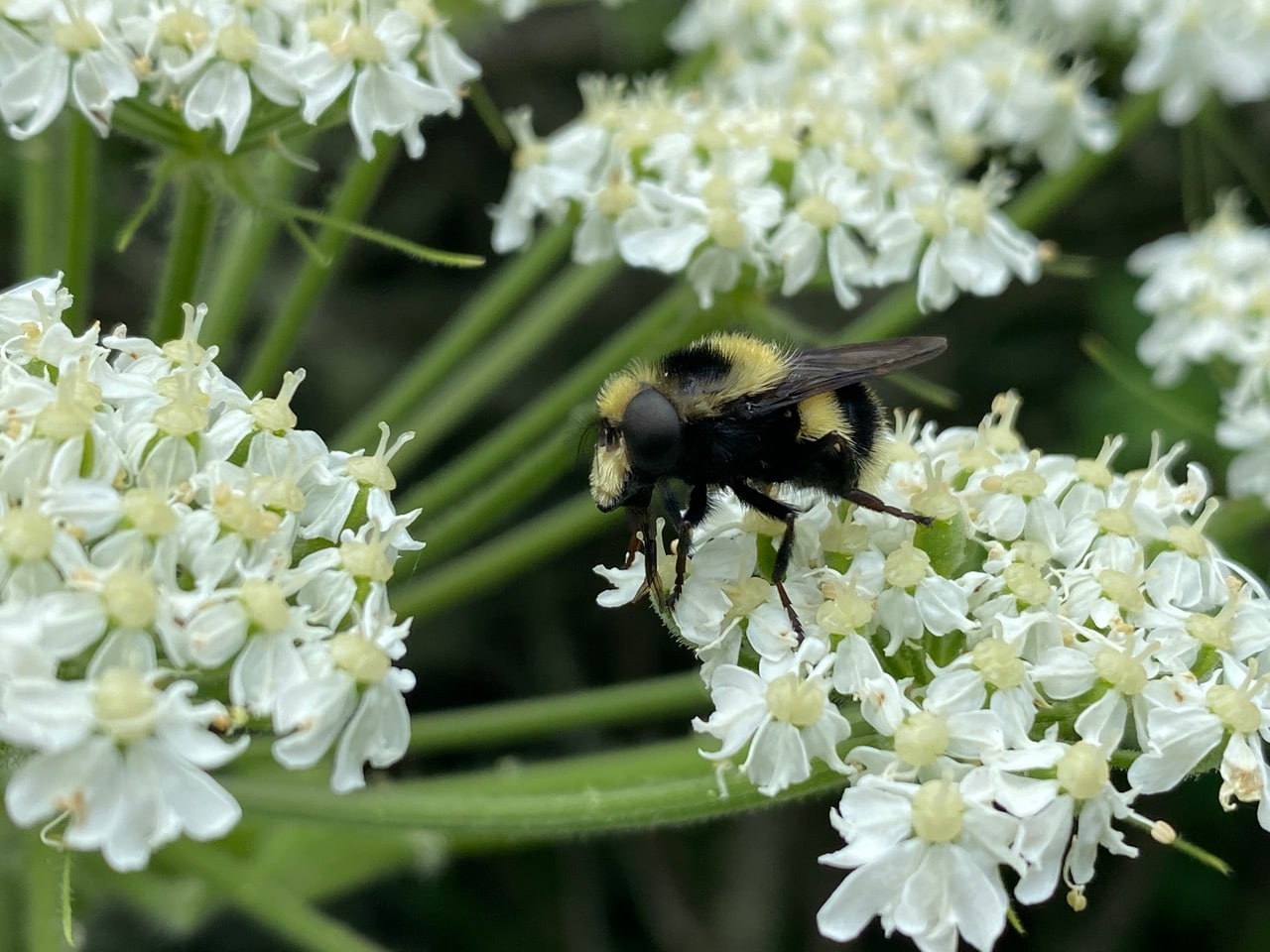
I have never seen a fly proboscis with a forked tip like that!
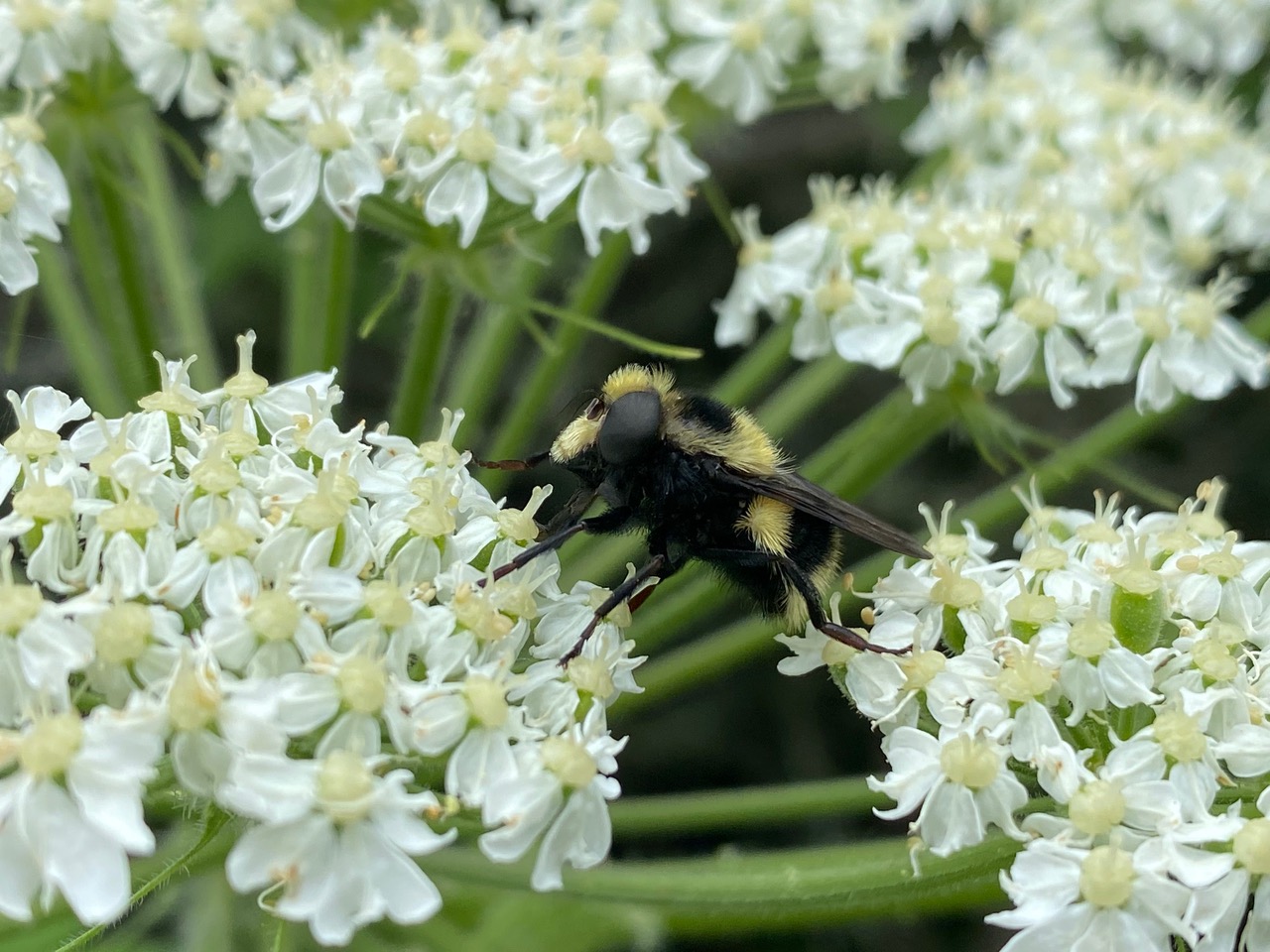
On to the next flower umbel.
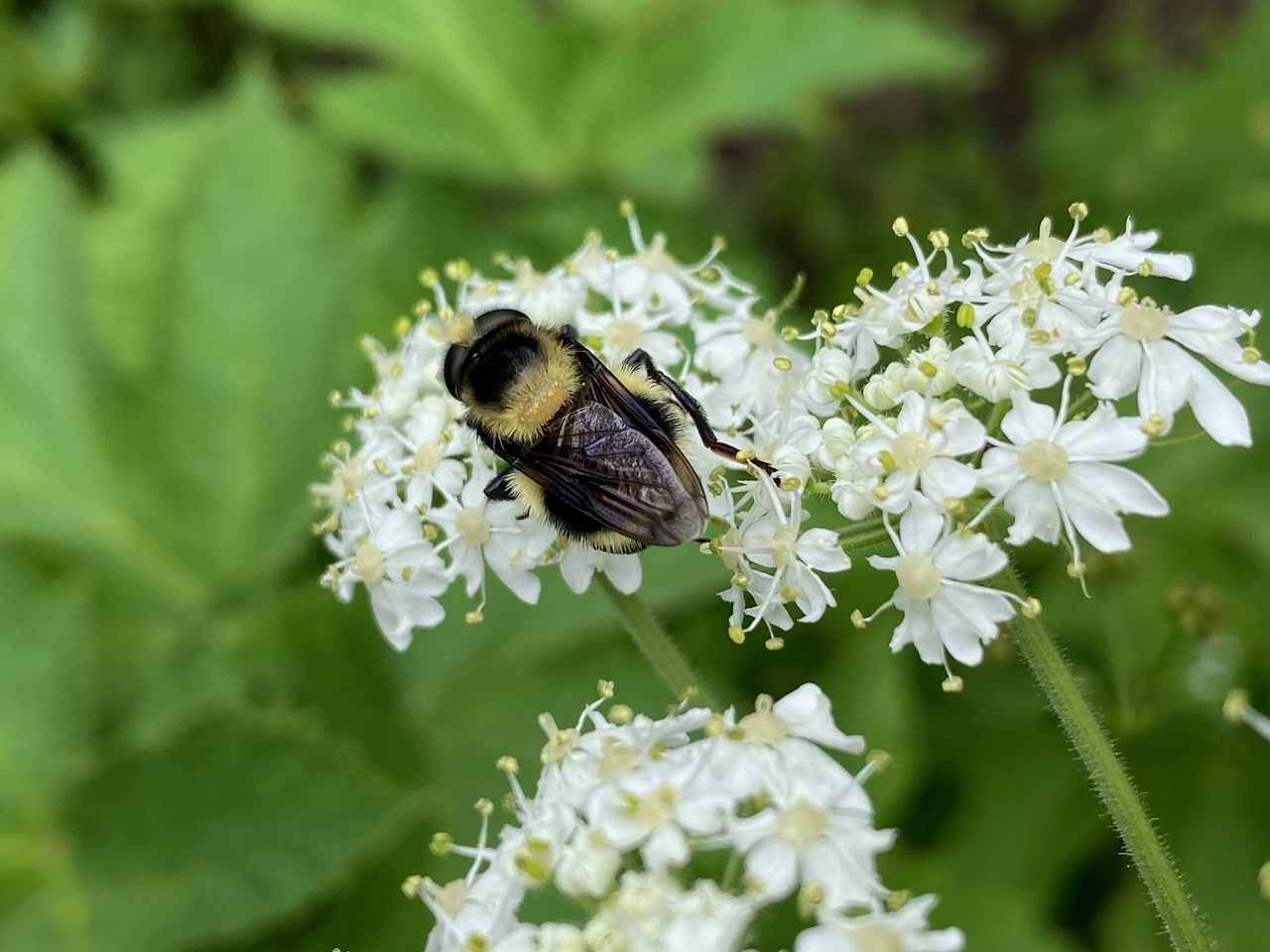 From the back, the fly is a dead ringer for a Black-tailed Bumble Bee, Bombus melanopygus.
Here we have a clear view of its long, plumose antennae.
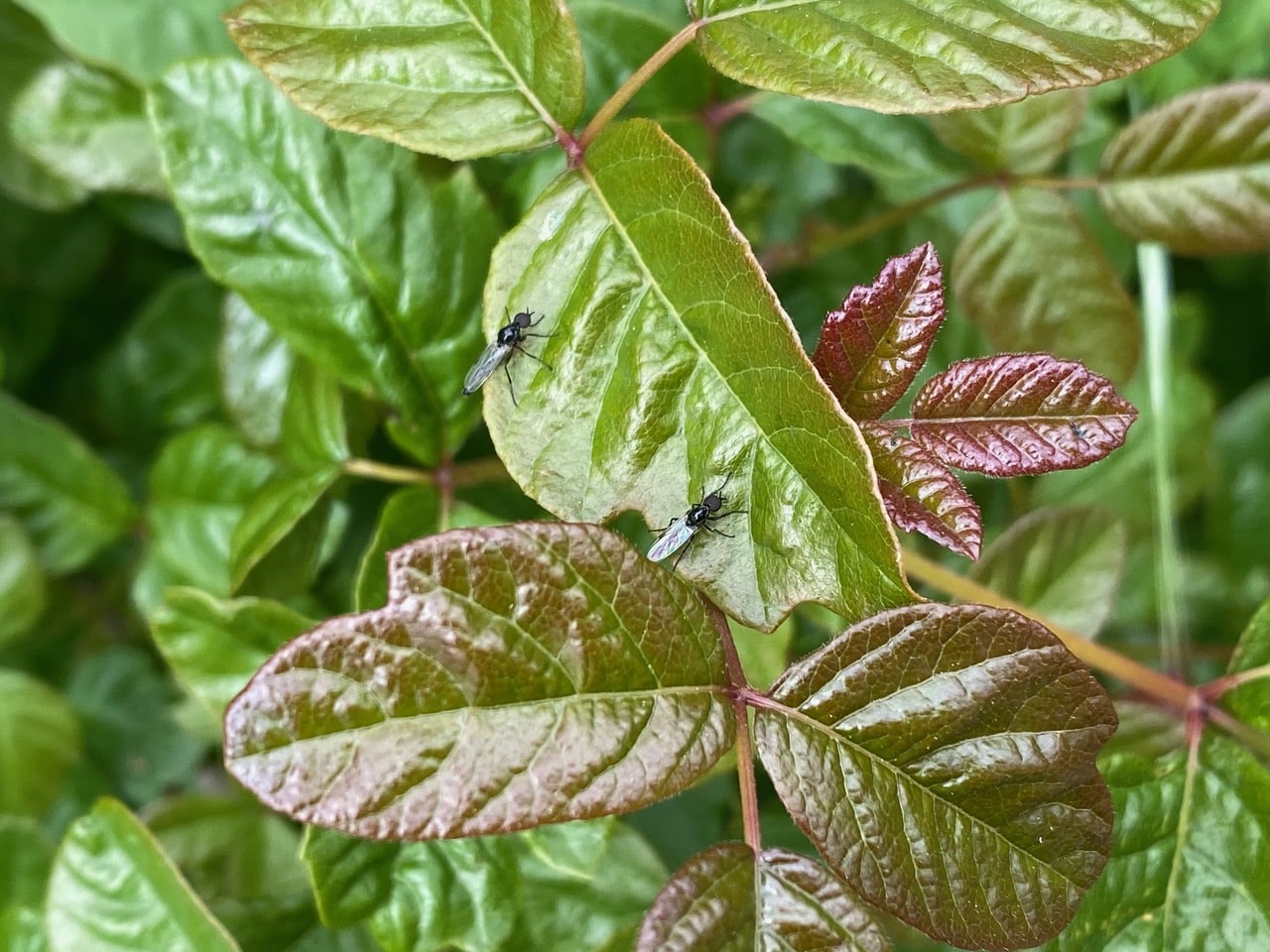
Just past the cattle gate heading towards the Steam Train entrance, I come across a cloud of small insects swarming over a large, bushy Poison Oak, Toxicodendron diversilobum. Dance Flies or March Flies? A few land on the shiny new leaves – they are March Flies.
March Flies (family Bibionidae) generally live in wooded areas and are often found on flowers – adults of some species feed on nectar, pollen, and honeydew, while adults of other species don’t feed at all; and in either case, they are very short-lived. They are considered important pollinators in orchards. They are also important food for other insects and spiders. The larvae feed en masse on rotting organic materials like leaves, wood, compost, and rich soil.
March flies exhibit extreme sexual dimorphism – the sexes are morphologically distinct. The female is usually more colorful, has small eyes on the sides of long, narrow head, while the all-black males have huge eyes that touch in the middle and are split in half horizontally. Scientists speculate that the split makes it easier for them to see the other males that are above and below them in a mating swarm. Males gather in swarms that can blanket the ground and low vegetation. Female are attracted to the party and select mates in the frenzy of fly bodies.

Then I notice snapping movements in the air. Some large flies, about 1” in length, are hunting the March Flies, trying to snatch them from the air. These flies invariably land on the poison oak after their predatory attempts, making it difficult to photograph up close. They don’t appear to be Robber Flies (family Asilidae) as I have first suspected. Instead they are Snipe Flies (family Rhagionidae).

Rhagionidae or Snipe Flies are a small family of flies. Their common name is derived from the resemblance of their prominent proboscis to the beak of a snipe (bird). Rhagionidae are medium to large flies with slender, tapered bodies and stilt-like legs. The mouthparts are adapted for piercing and many species are haematophagous as adults (feeding on mammal blood), while others are predatory on other insects. The larvae are also predatory and are mostly terrestrial, although some are aquatic.
 I do not see any successful attempts on the March Flies by the Snipe Flies. The predators would land empty-handed on a leaf and stay still for a long time, apparently watching for the next opportune moment to strike again.
This Snipe Fly is almost impossible to photograph because it is perched on a poison oak leaf that matches its own color so well.

Here we have a view of the Snipe Fly’s short but stout proboscis. The proboscis does not resemble the beak of the snipe bird at all, at least in this species.

Snipe Flies tend to be found on vegetation in damp, shady places, where they often perch head down. Adults are long-legged with a round head and a tapering abdomen, and many are patterned. They have piercing mouthparts that they may use to prey on other insects (mainly smaller flies) or to grab a blood meal from a variety of mammals. The larvae of some species are aquatic, but most others can be found in moist soil, or mosses, or decaying logs.
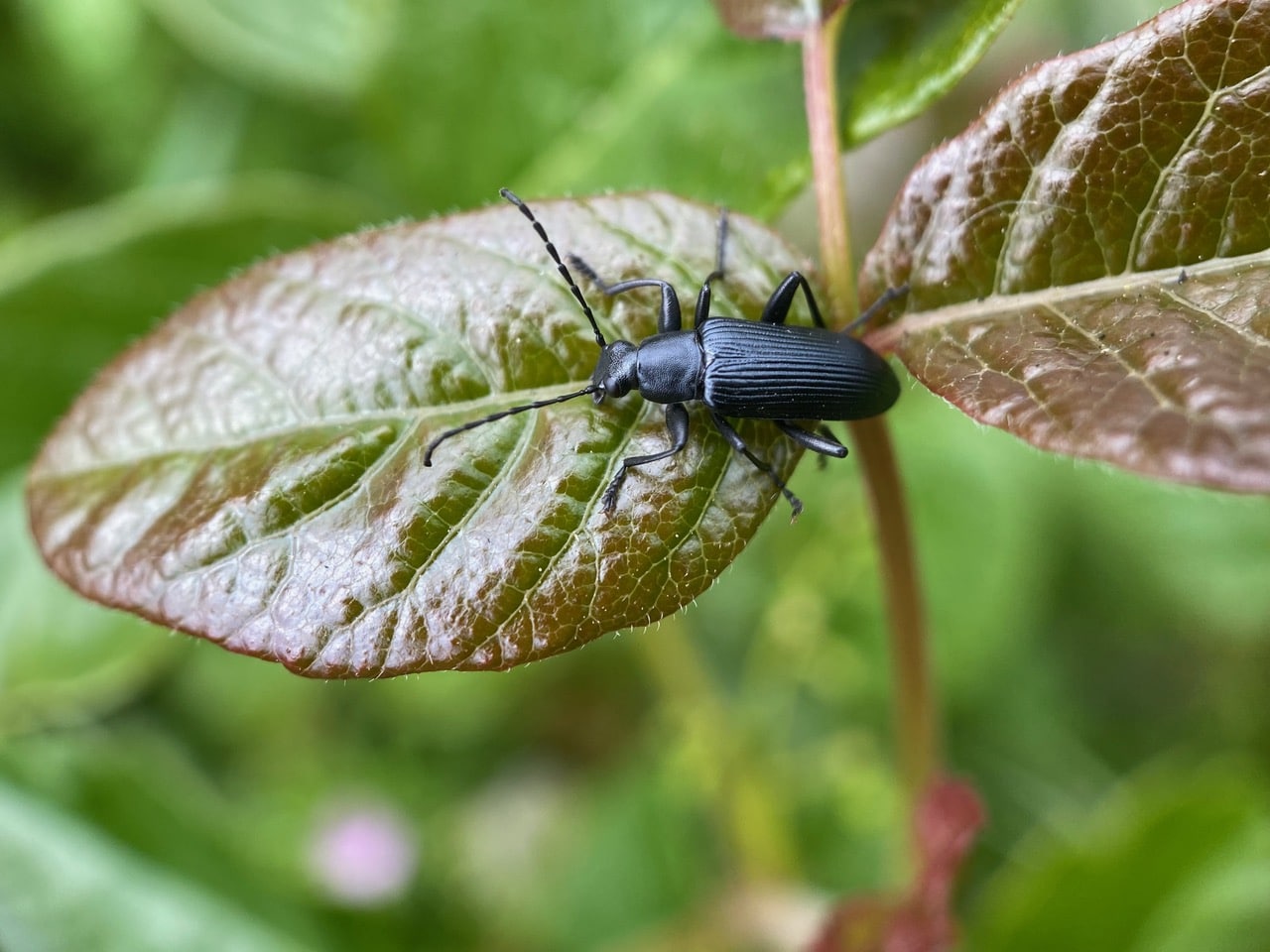
While photographing the Snipe Flies, I notice a black beetle with long antennae on the same Poison Oak.
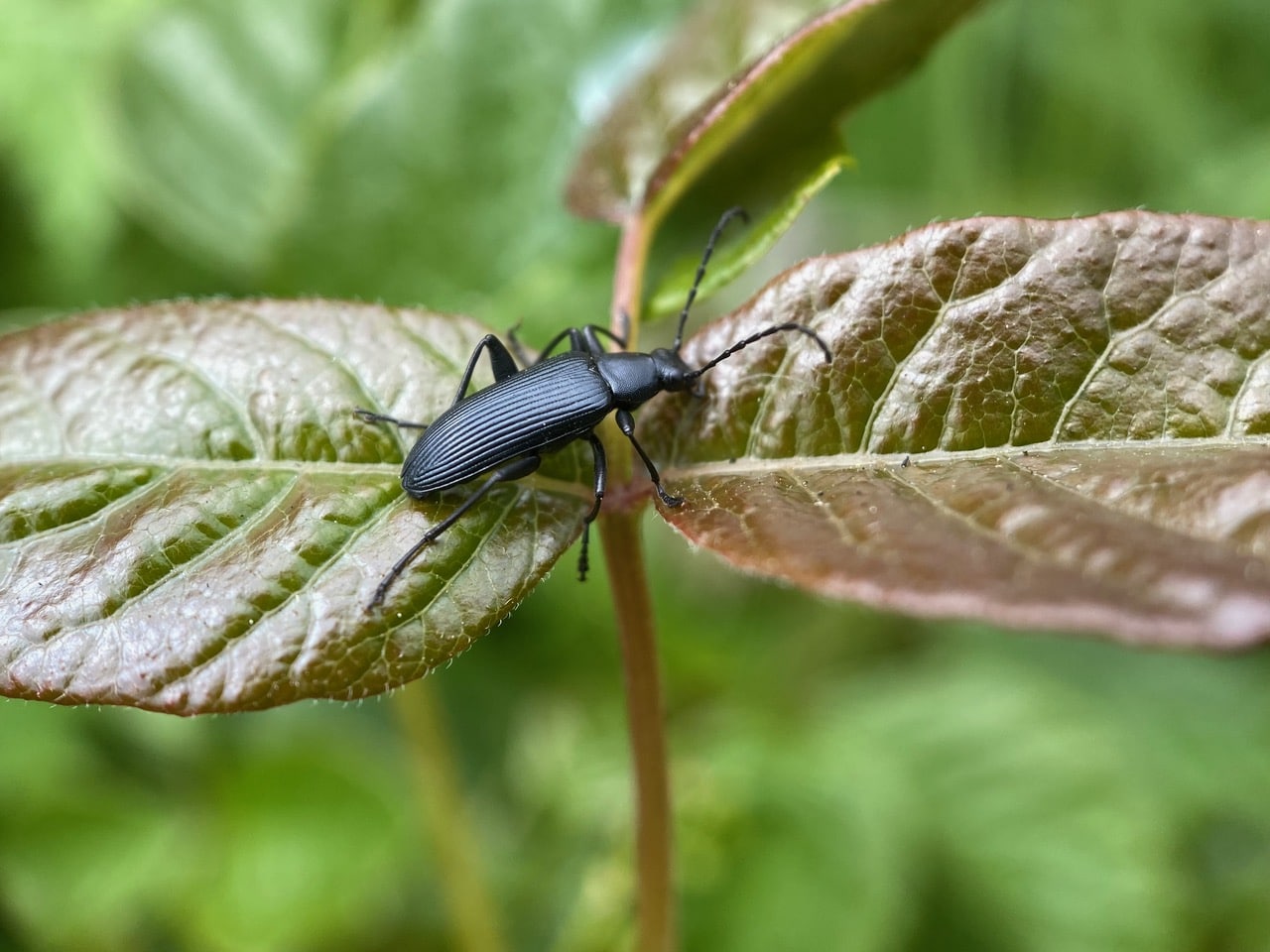
It is a Comb-clawed Darkling Beetle (subfamily Alleculinae, family Tenebrionidae).
Comb-clawed Beetles (subfamily Alleculinae, family Tenebrionidae) are known for the comblike appearance of their claws (hind tarsi). Their oval bodies are typically a glossy brown or black in color. The adults are usually found on flowers or leaves, and the larvae in rotten wood or humus.
Wow, we have encountered two different species of Darkling Beetles today. First the Stink Beetle, now the Comb-clawed Darkling Beetle, from different subfamilies of Tenebrionidae.
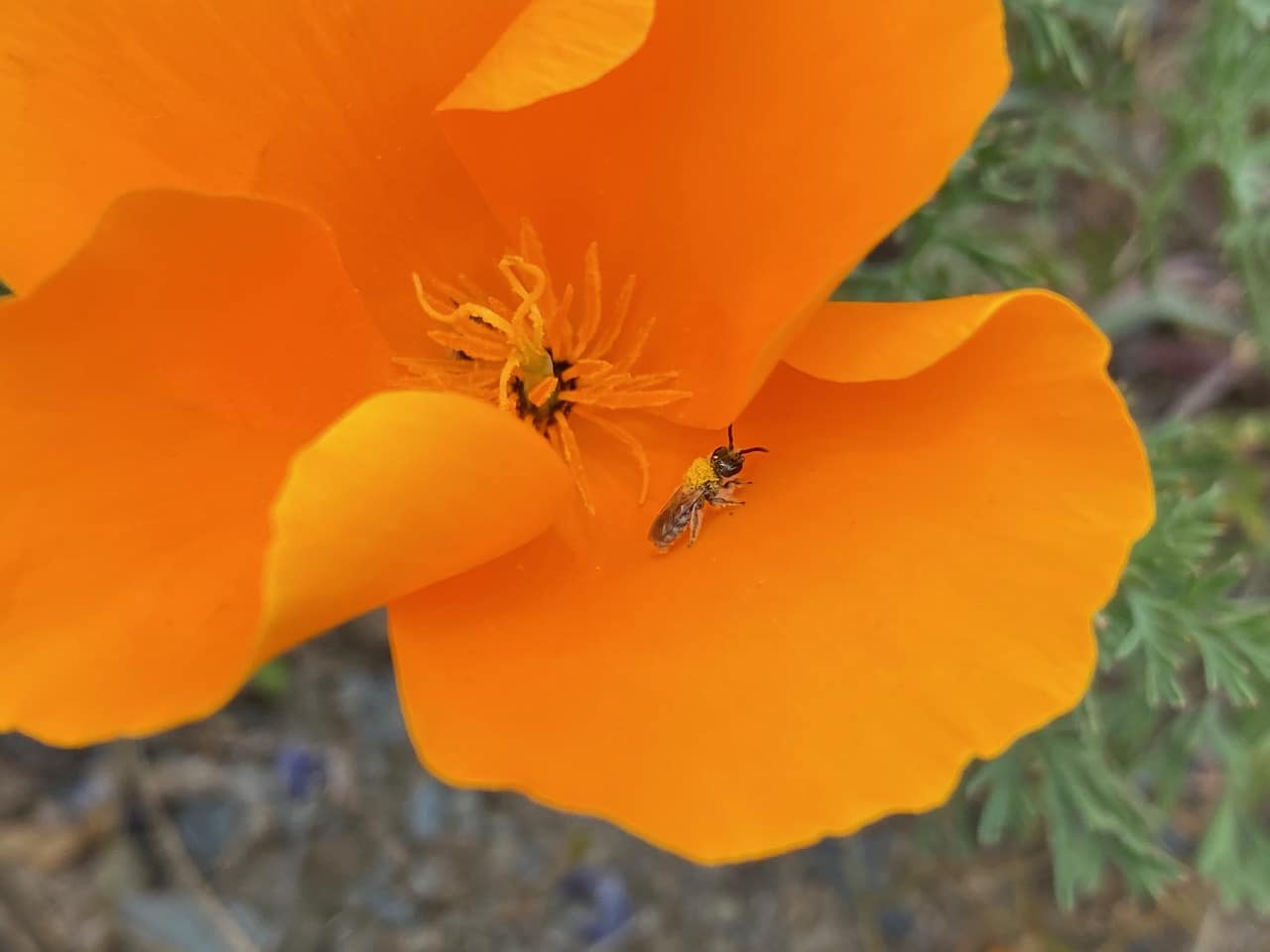
A tiny bee emerges from the bottom of a California Poppy, Eschscholzia californica, its thorax covered with orange pollen. Unfortunately I am not fast enough to get a closer look, but I think it might be a Sweat Bee (family Halictidae).

On the leaf tip of a Sticky Monkeyflower, Diplacus aurantiacus, a pair of March Flies, Dilophus sp. (family Bibionidae) is locked in copula. They are lucky to be away from the madness above the Poison Oak and the predaceous Snipe Flies.
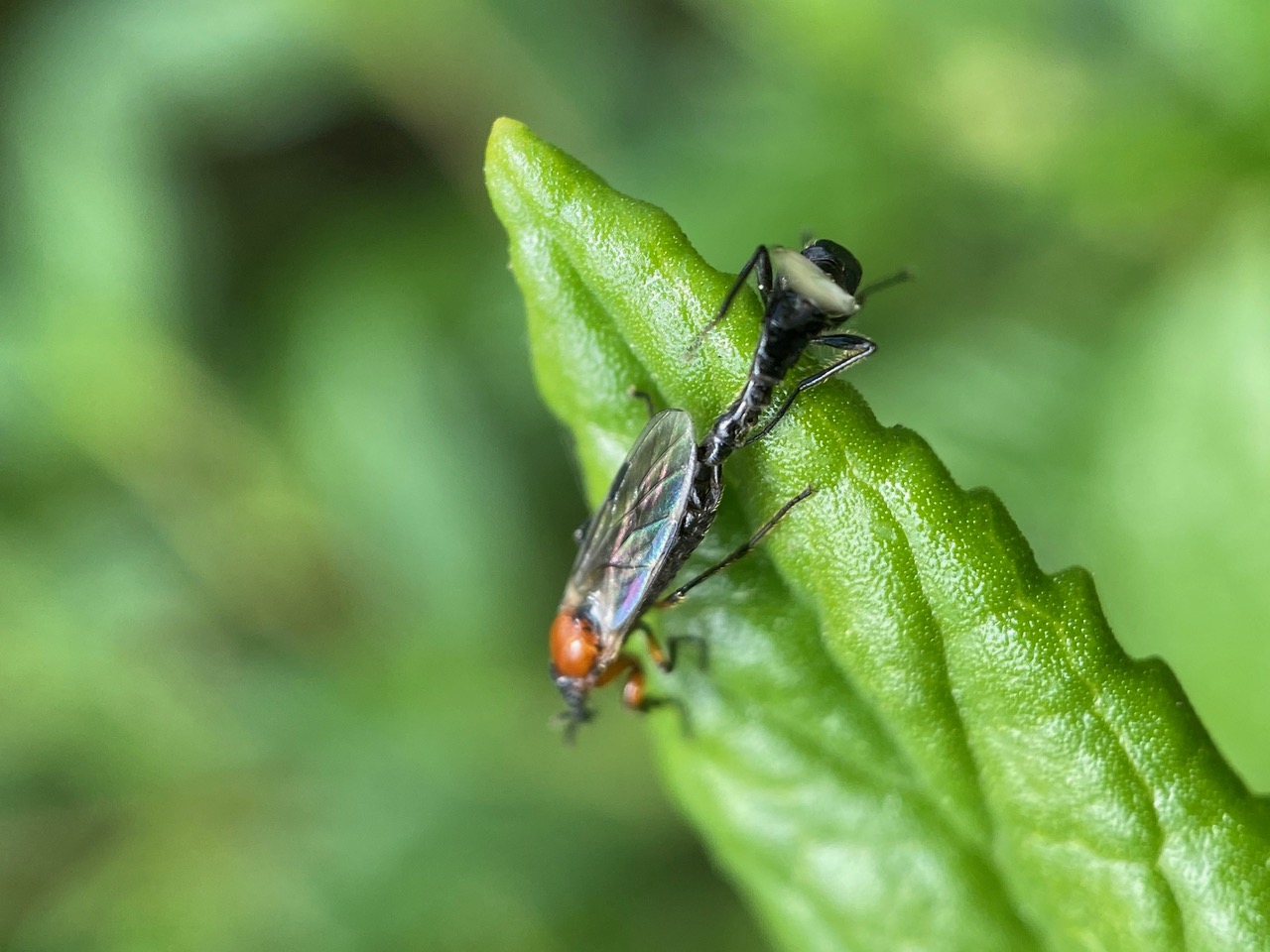
Eventually the female moves forward, pulling the all-black male up from behind the leaf.
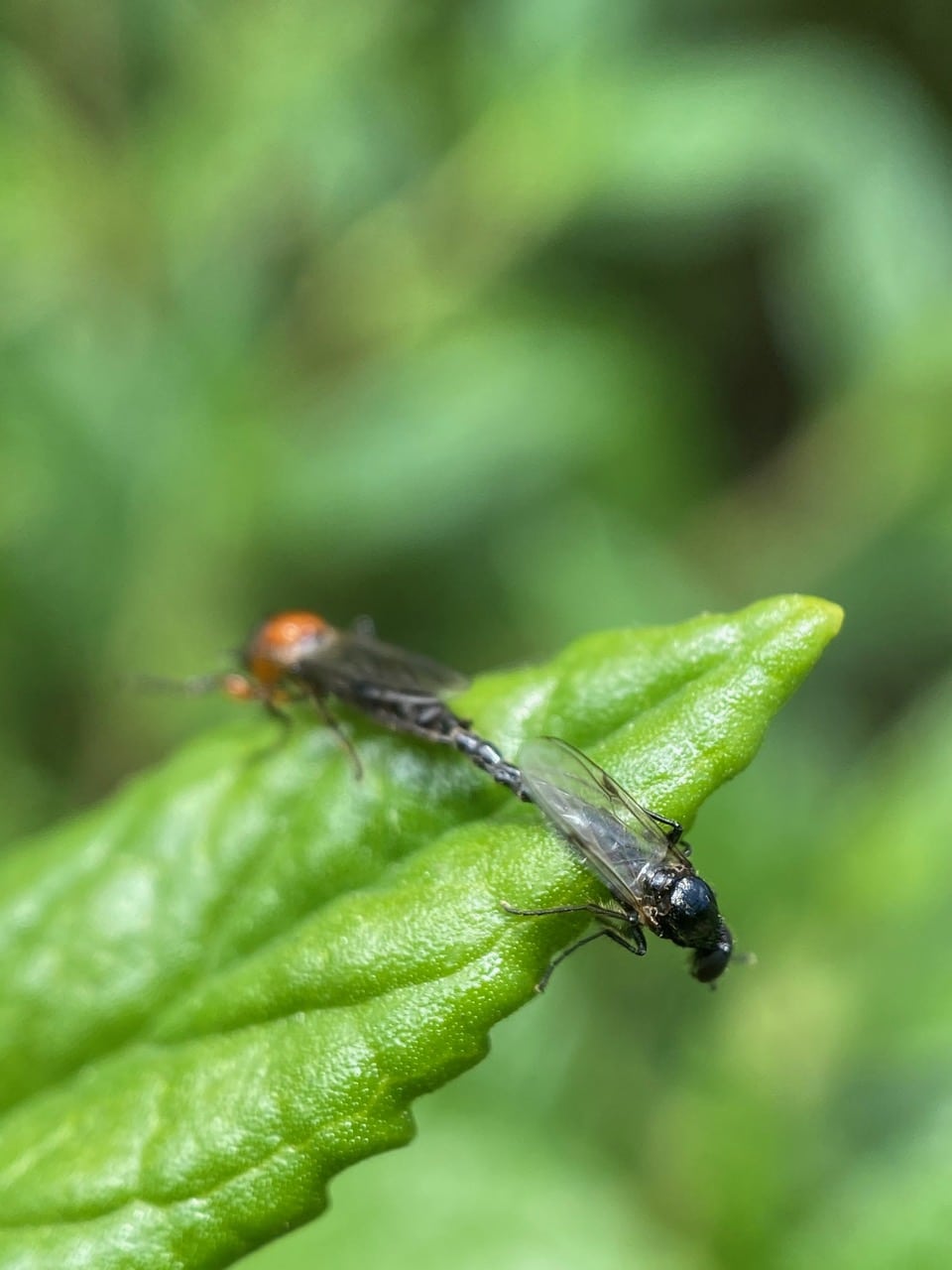
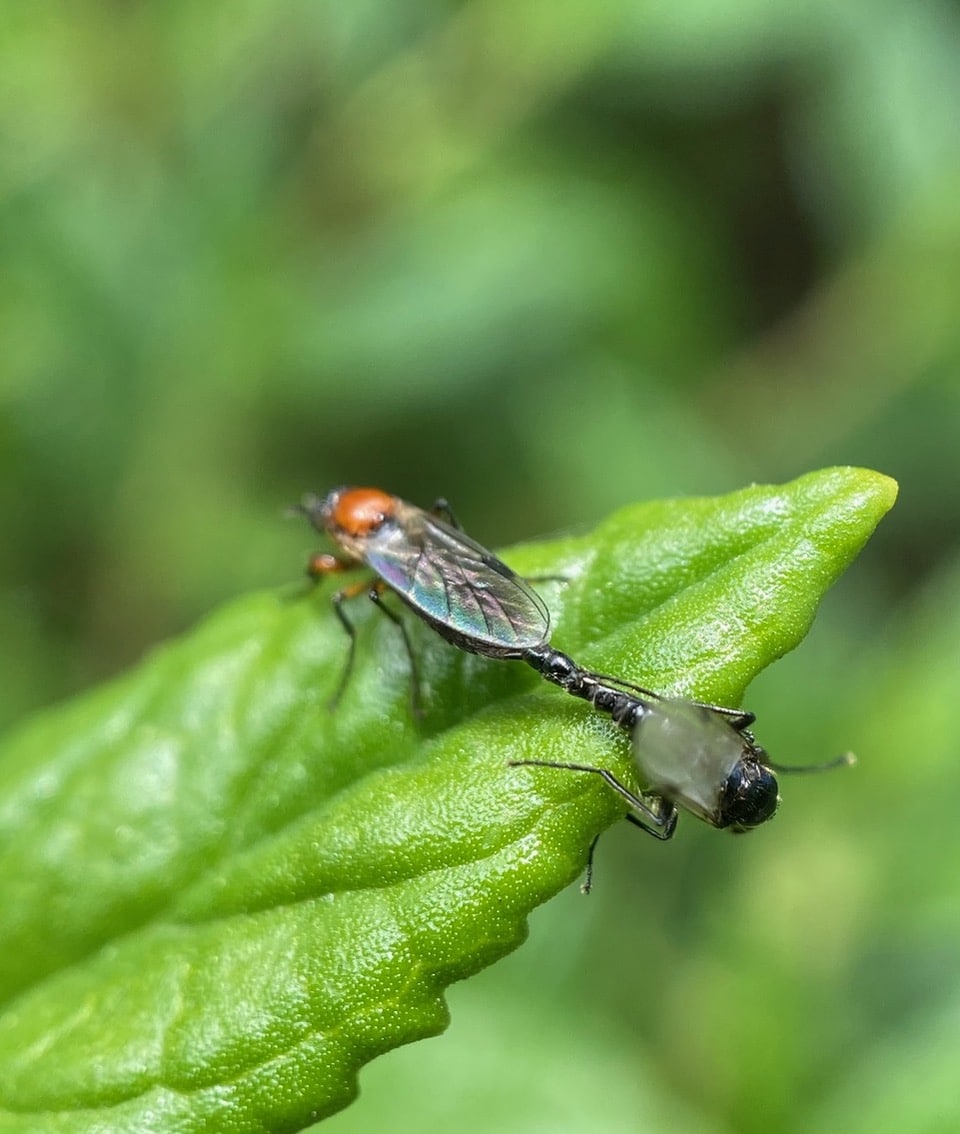
He is unwilling, but eventually has to comply. She is larger and stronger. The sexual practices of March Flies merit a chapter in the Kama Sutra!