

Pollinator Post 4/27/24 (2)
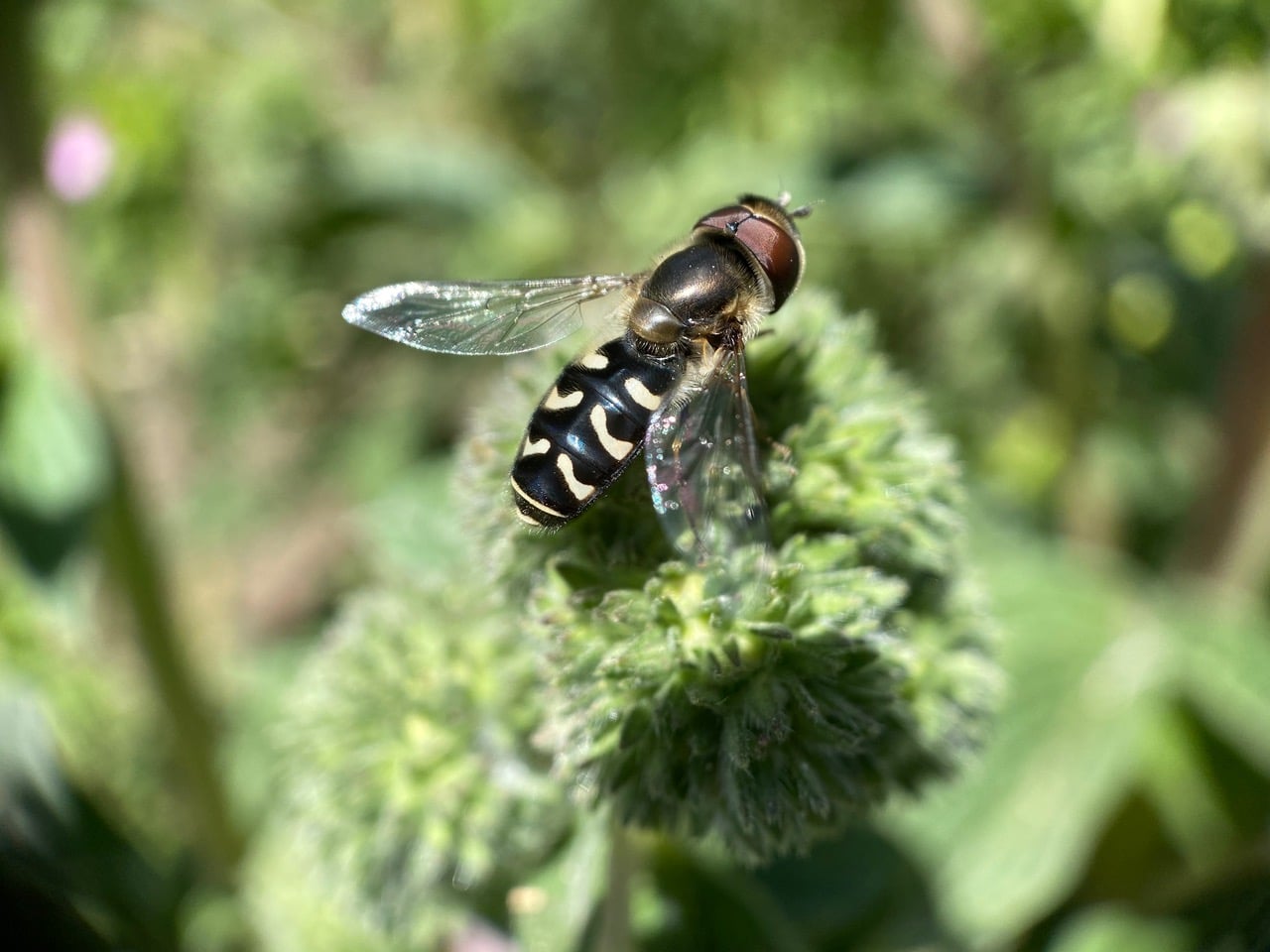 It’s not until I get close to the Water Tank in late morning that I find insects visiting the California Phacelia. A White-bowed Smoothwing, Scaeva affinis (family Syrphidae) is perched on a cluster of immature flowers.
Adult flies visit flowers for nectar and pollen, and are good pollinators. Scaeva affinis has aphidophagous larvae (that feed on aphids). Females lay eggs near aphid colonies on plants.
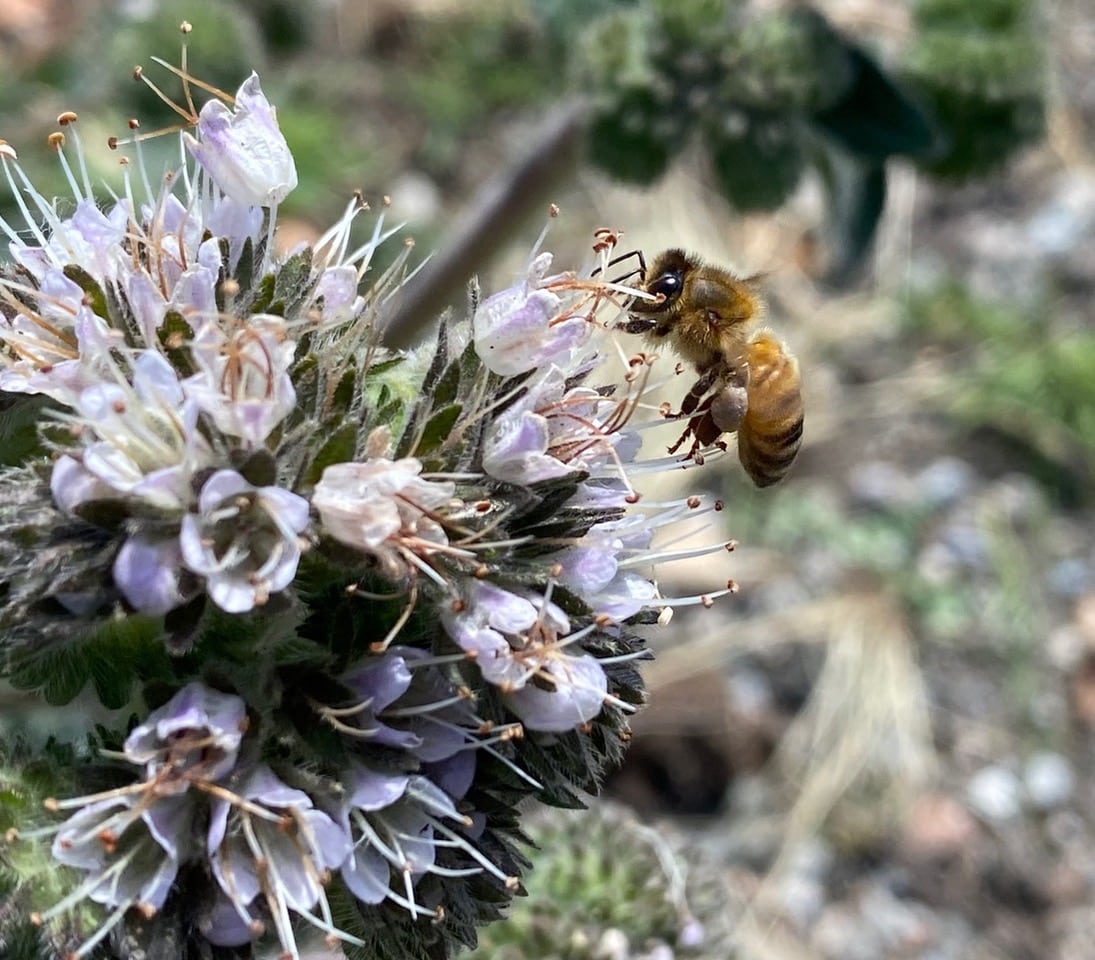
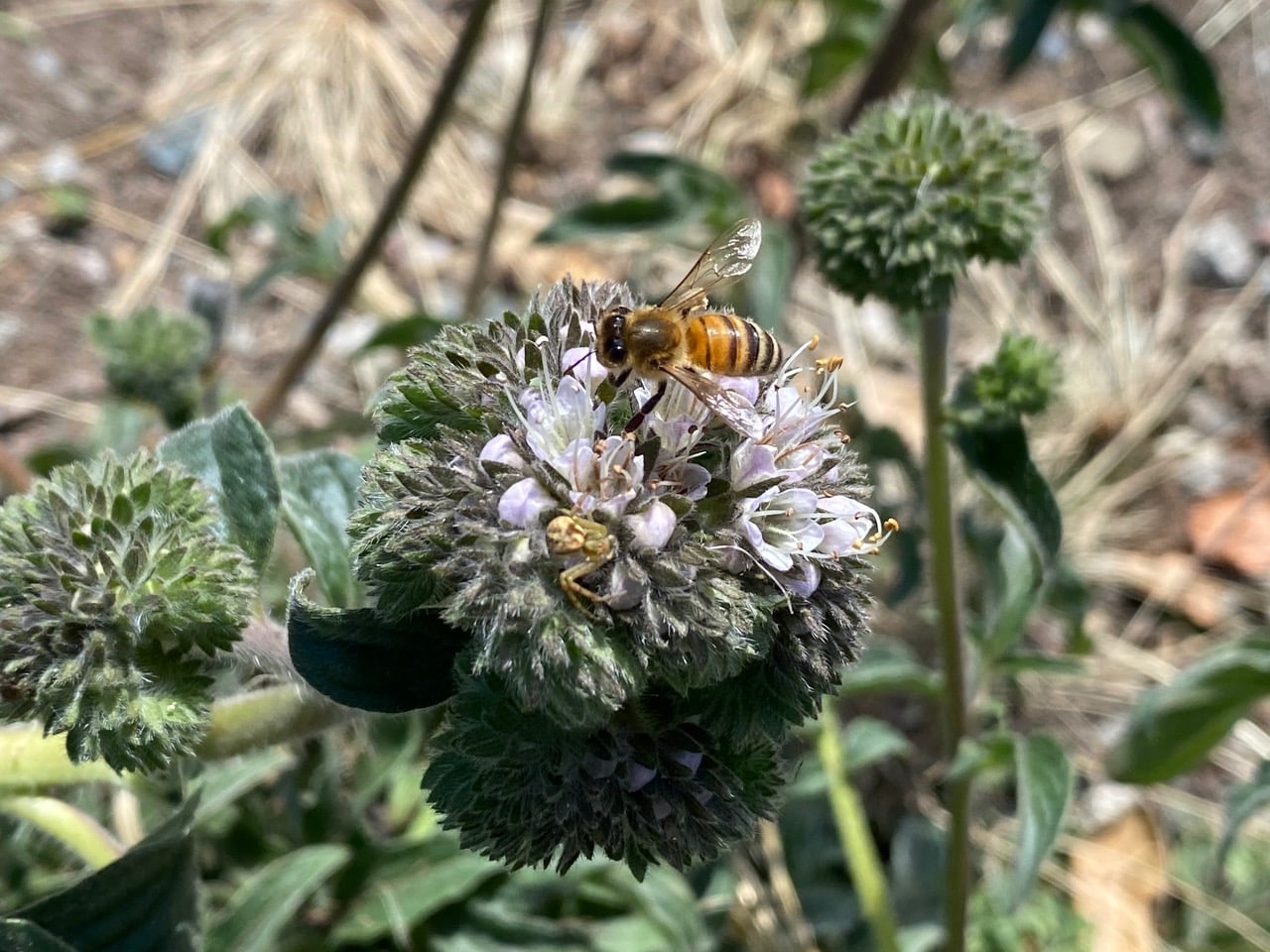
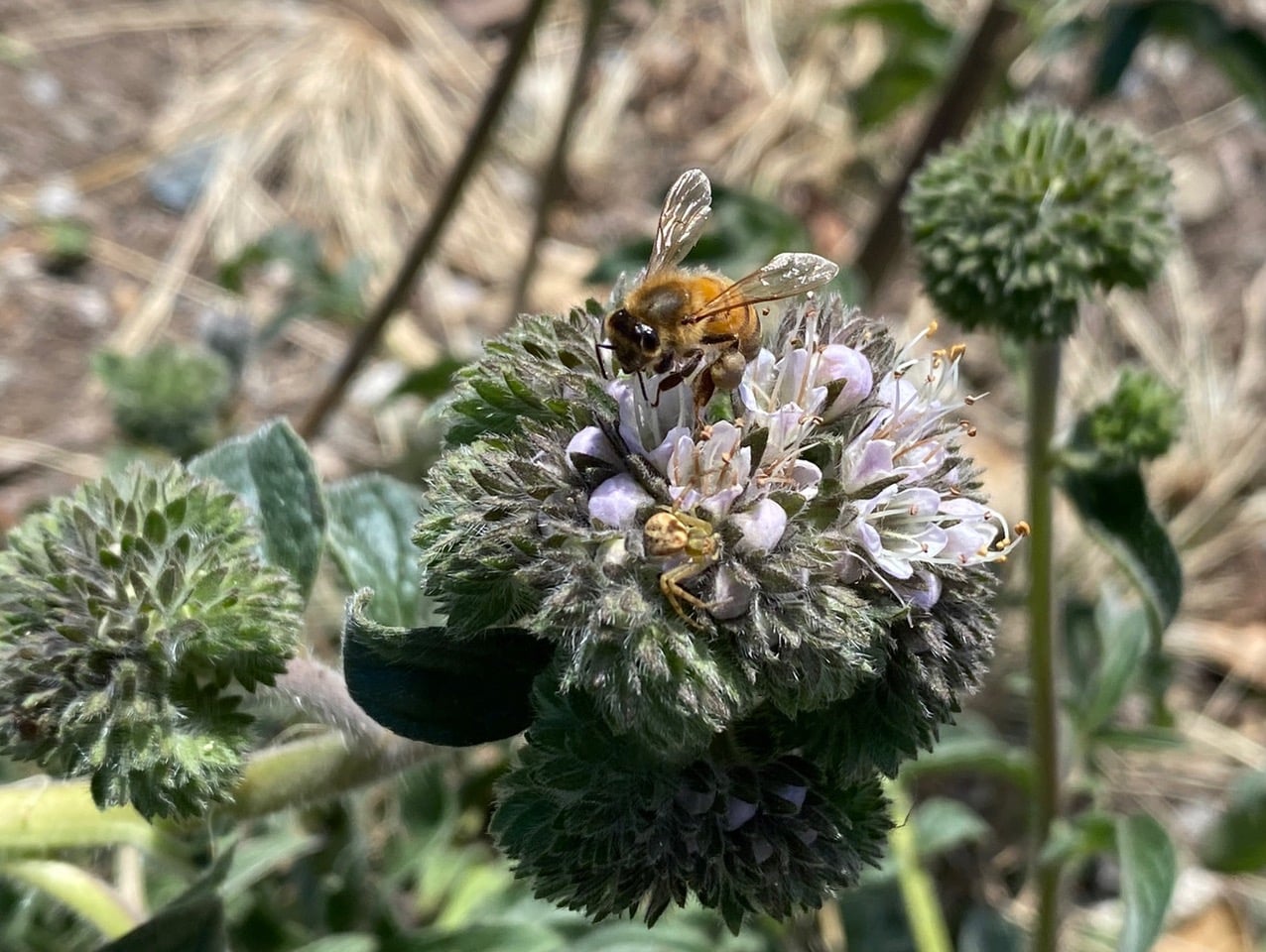



A Honey Bee, Apis mellifera (family Apidae) is collecting pollen from the flowers of California Phacelia, Phacelia californica. She already has a sizable load of the off-white pollen in her corbiculae or “pollen baskets”.
I hold my breath as the foraging bee is approaching a Crab Spider waiting in ambush.
The Honey Bee discovers the predator just in time. She literally bounces off the flowers, saving herself.
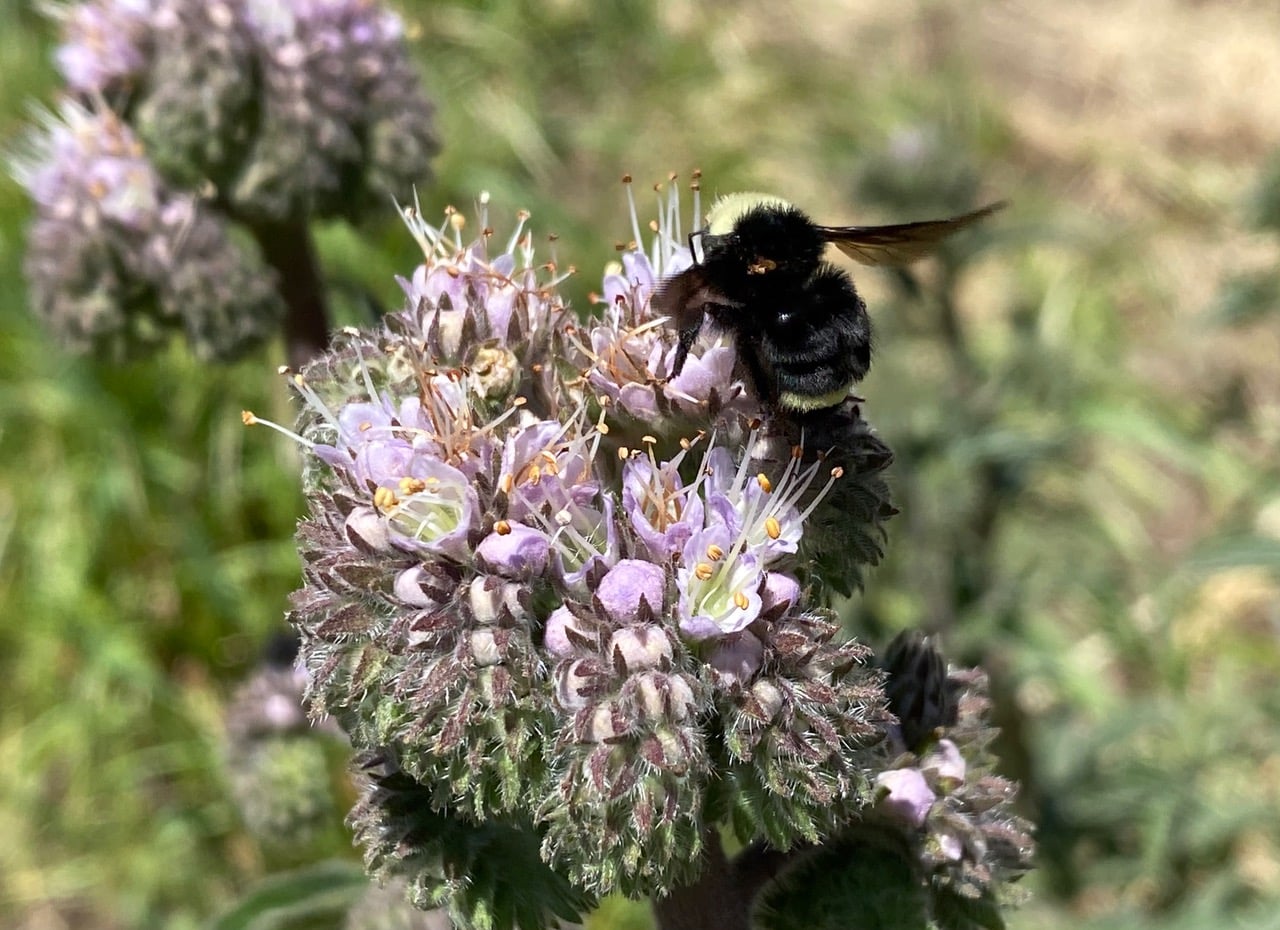
A large Yellow-faced Bumble Bee, Bombus vosnesenskii (family Apidae), probably a queen, lands on an inflorescence of California Phacelia. Is that a winged insect embedded in her thorax? A Strepsiptera?
Strepsiptera are small (1.5 to 4 mm long), rather odd looking insects. They belong to their own order and have a life cycle unique among insects. They are endoparasites of solitary bees, solitary wasps and other bees, as well as true bugs. Those that attack bees are in the family Stylopidae.
The larvae burrow into the exoskeleton of the bee, where they mature into adults. The females, who have no legs, wings, or eyes will remain there for their entire lives. The adult males, which have large eyes, branching antennae, and “twisted” wings, will leave to search for a mate. On emergence the male leaves the host while it is in flight and has about 4 to 5 hours to find a female and mate before he dies. The Strepsiptera eggs are retained within the body of the female, and when they hatch, the larvae emerge through the female’s genital tract and work their way out onto the body of the host. The small, active larvae called triungulins emerge from their host bee while the host gathers pollen from flowers. The larvae then attach to other bees in order to be carried back to the nest. At the nest, the Stylops larvae enter the bodies of bee larvae and develop along with their host, feeding on the host’s blood (hemolymph).
Although stylops do not feed on their host bodily organs, they do greatly reduce their nutrient intake, and parasitized bees, both males and females, are generally sterile. The largest number of stylops found on one host is 31, though 3 or 4 is far more common.
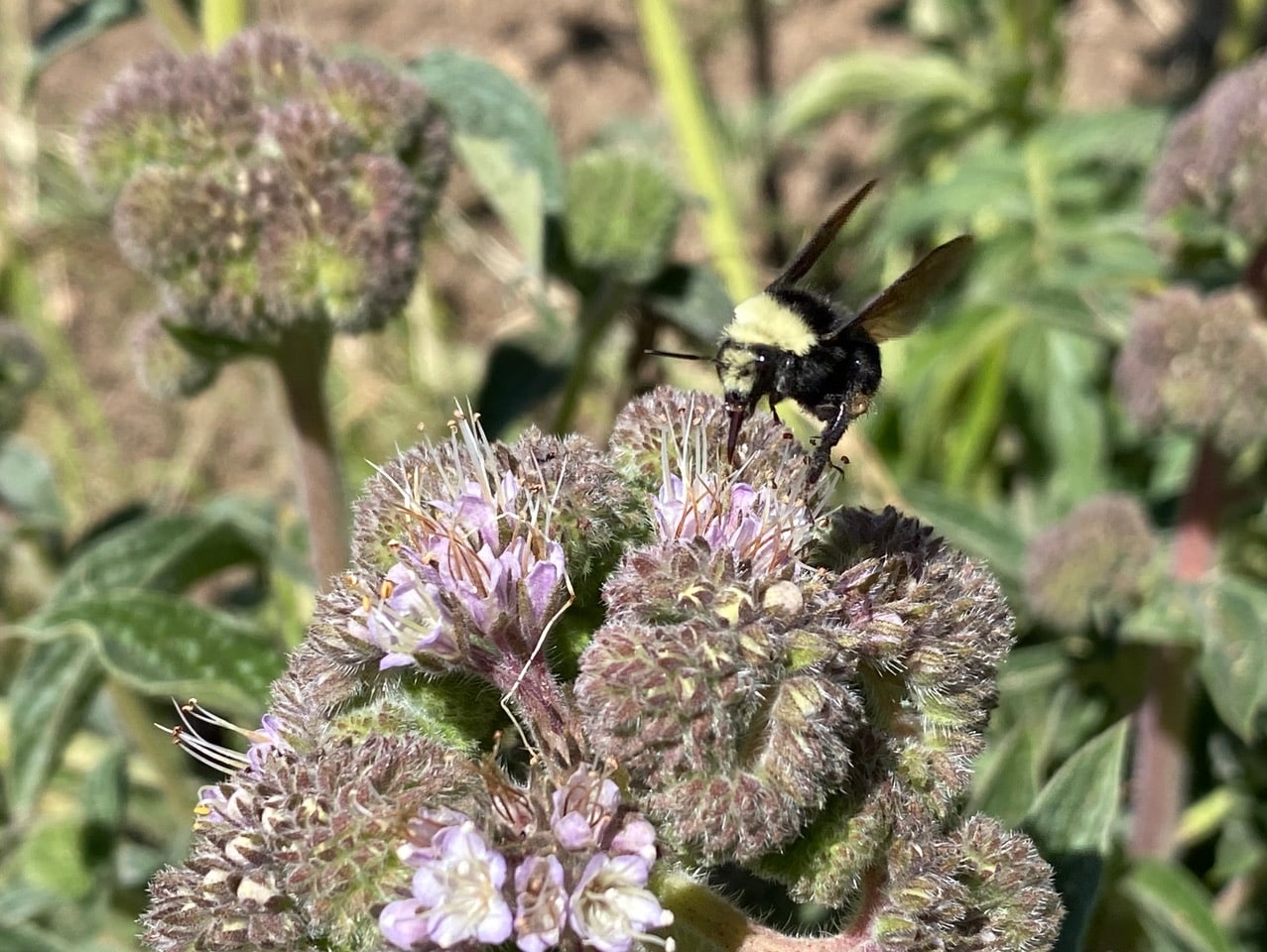
The bee has her tongue out to take nectar from the Phacelia flowers. Ooh, is that another one of those small insects on the bee’s side?
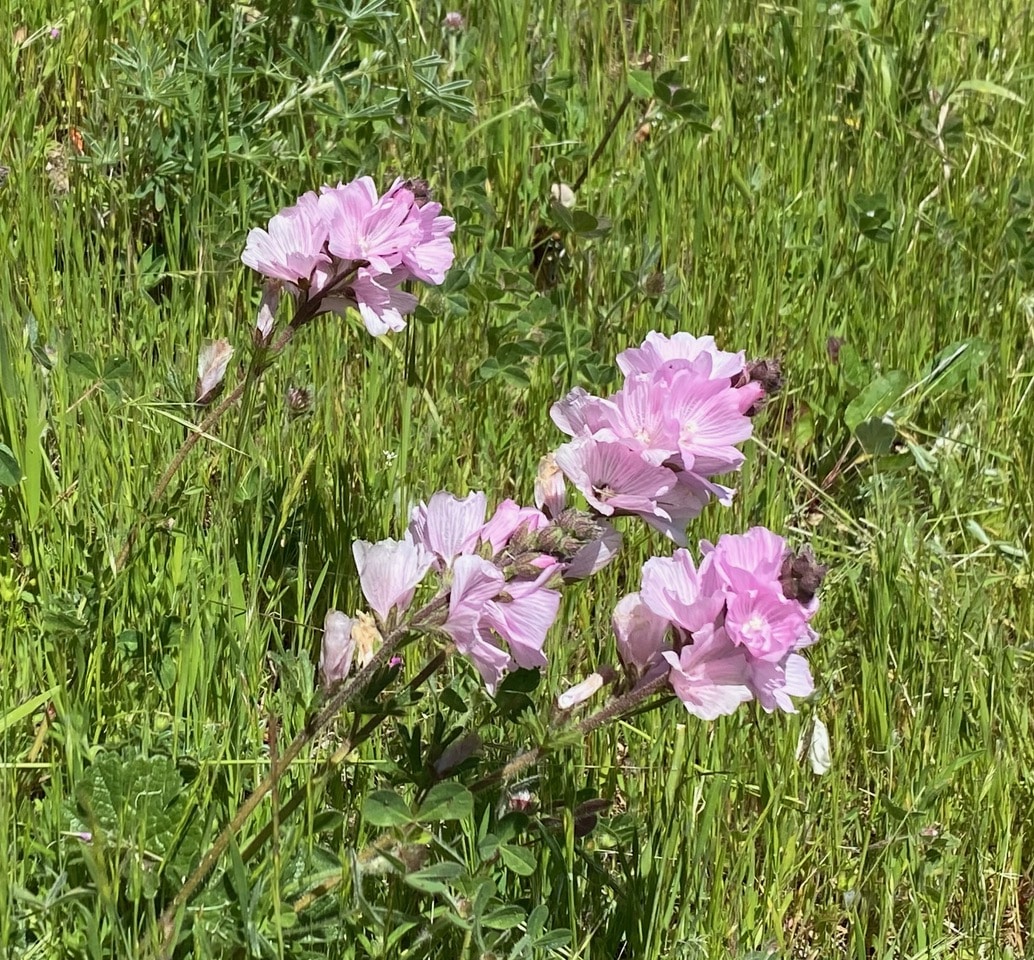
The Checkerbloom, Sidalcea malviflora is blooming gloriously on the steep grassy slopes.
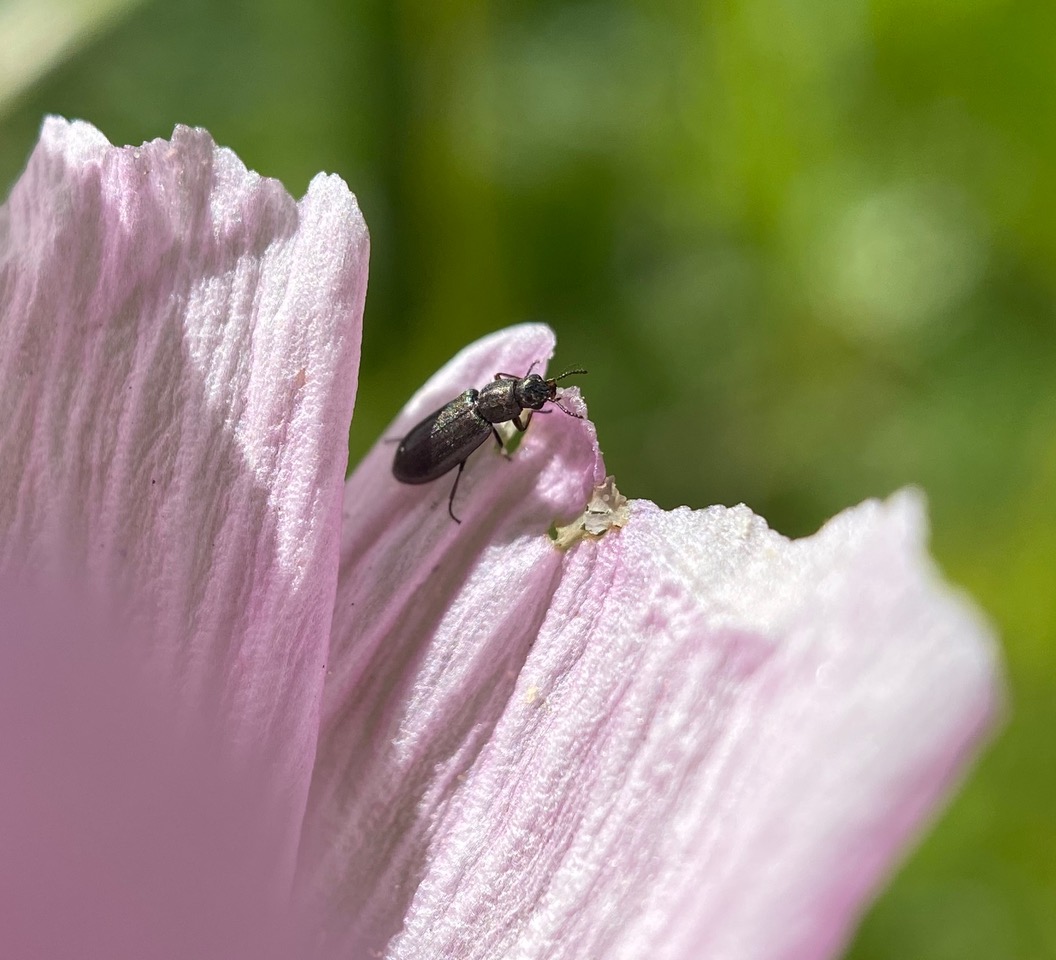
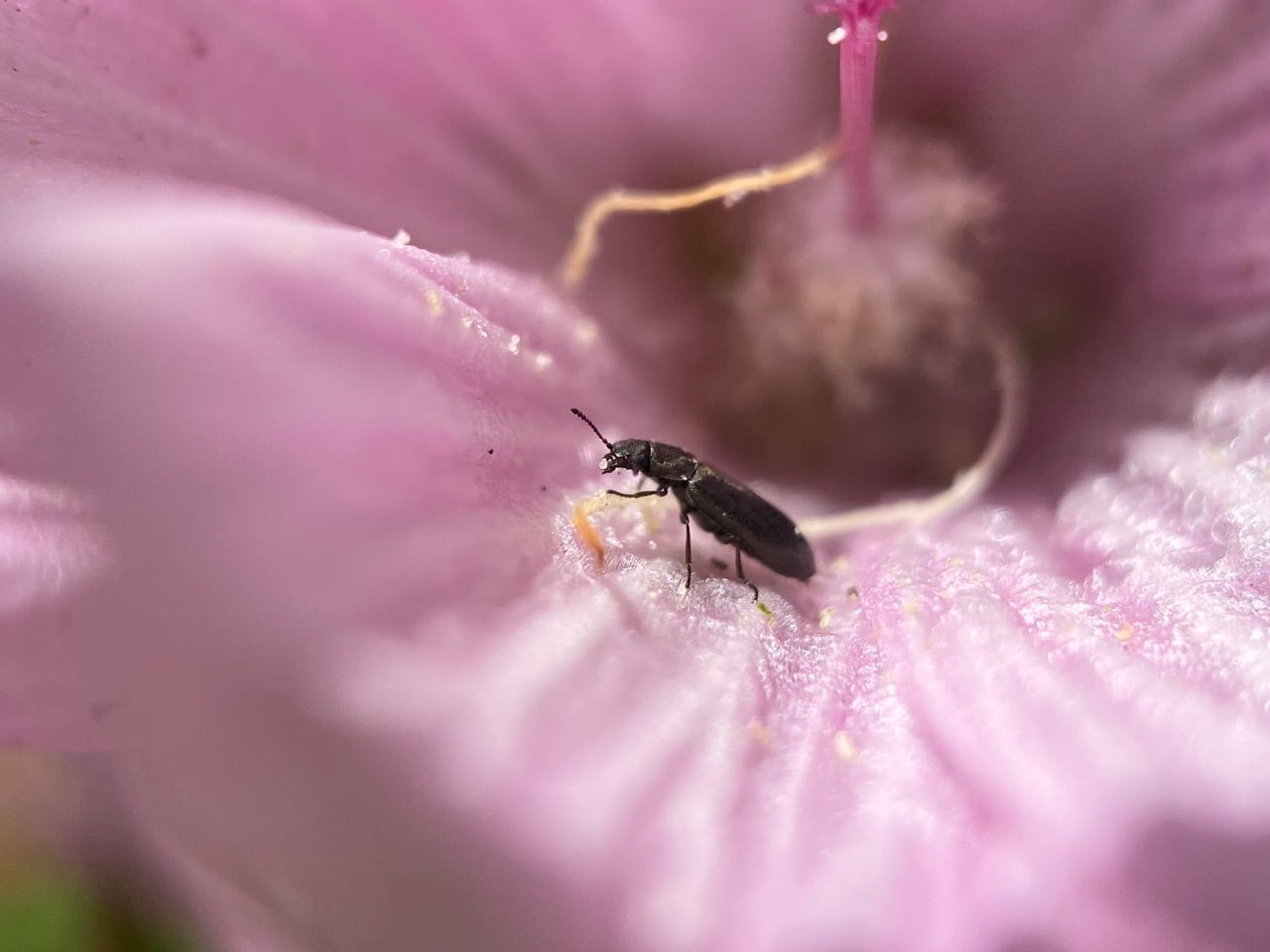
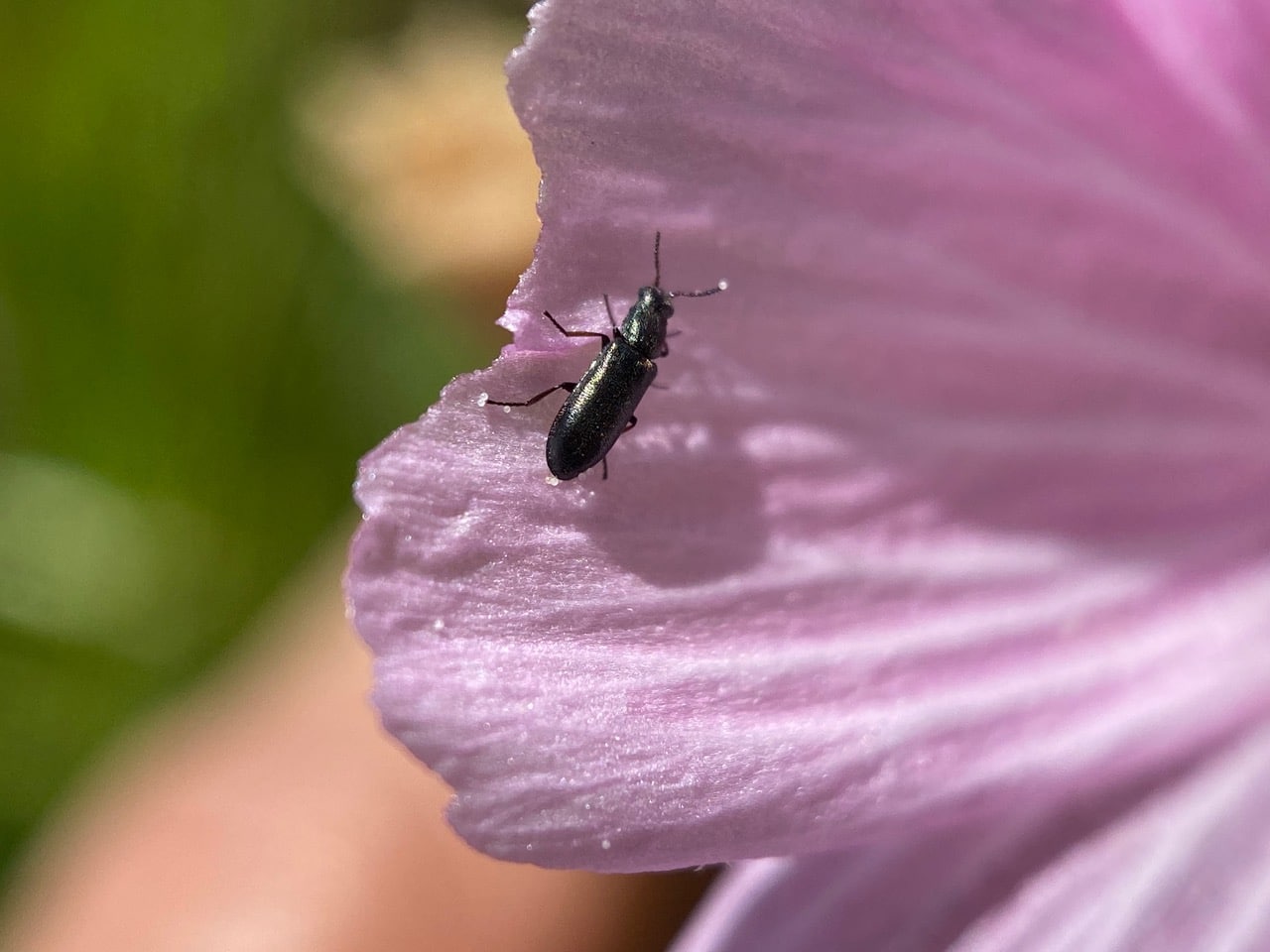
A Soft-winged Flower Beetle, Listrus sp. (family Melyridae, subfamily Dasytinae) peeks from the corolla of a Checkerbloom.
Most species of Melyridae are various shades of brown or black and just 2 to 4 mm in length. They are sometimes very abundant in spring when there is an abundance of open flowers, particularly those with an abundance of pollen. In north America, dasytine beetles are hardly represented in the east, but are enormously diverse in the west, especially in California.
11 families of Coleoptera (beetles) are known to pollinate flowering plants. In western North America, the 300+ species of the beetle subfamily Dasytinae are commonly found on flowers, where adults feed on both nectar and pollen. Their dense setae (hairs) often trap pollen grains, which are transported to other flowers during the course of normal feeding. Many dasytine beetles form large feeding aggregations.
The pollen grains of Sidalcea are large and spherical. The beetle has one in its mandibles. The beetle appears to be scavenging pollen that has fallen on the petals.
As the Listrus beetle leaves, it has some pollen grains adhering to its legs and antennae.
Hey, there’s a bee in that Checkerbloom flower! It looks like a male bee with long antennae and no scopa on the hind legs. It is taking nectar at the base of the flower. In doing so, the bee is coming into contact with both the male and female reproductive structures of the flower.
A foraging Yellow-faced Bumble Bee, Bombus vosnesenskii (family Apidae) has a large load of pollen in her pollen baskets. The orange pollen is obviously gathered from the Silverleaf Lupine, Lupinus albifrons. The pollen has also been moistened with nectar and saliva while being packed into the corbiculae, rendering it a darker color.
It is amazing that the bumble bee is still able to fly with that huge load. We have a good view of her corbiculae.
The pollen collecting apparatus in Apidae bees, which include honey bees and bumble bees, is commonly called a “pollen basket” or corbicula. This region is located on the tibia of the hind legs and consists of hairs surrounding a concave region. After the bee visits a flower, she begins to groom herself and brushes the pollen down toward her hind legs and packs the pollen into her pollen basket. A little nectar mixed with the pollen keeps it all together like putty, and the stiff hairs surrounding the pollen basket hold it in place. A honey bee can fly with a full pollen load that weighs as much as a third of her body weight.
.jpg)
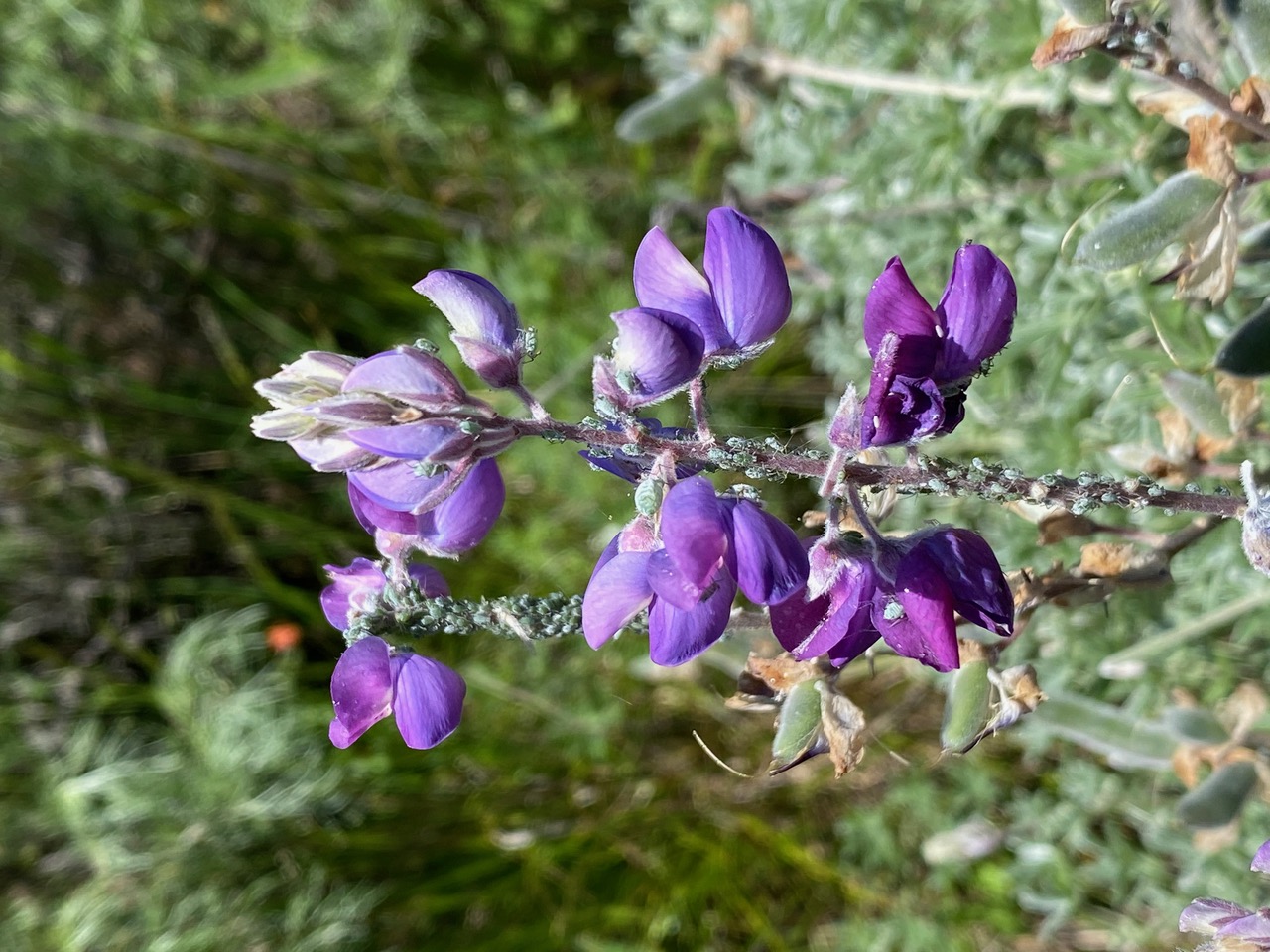
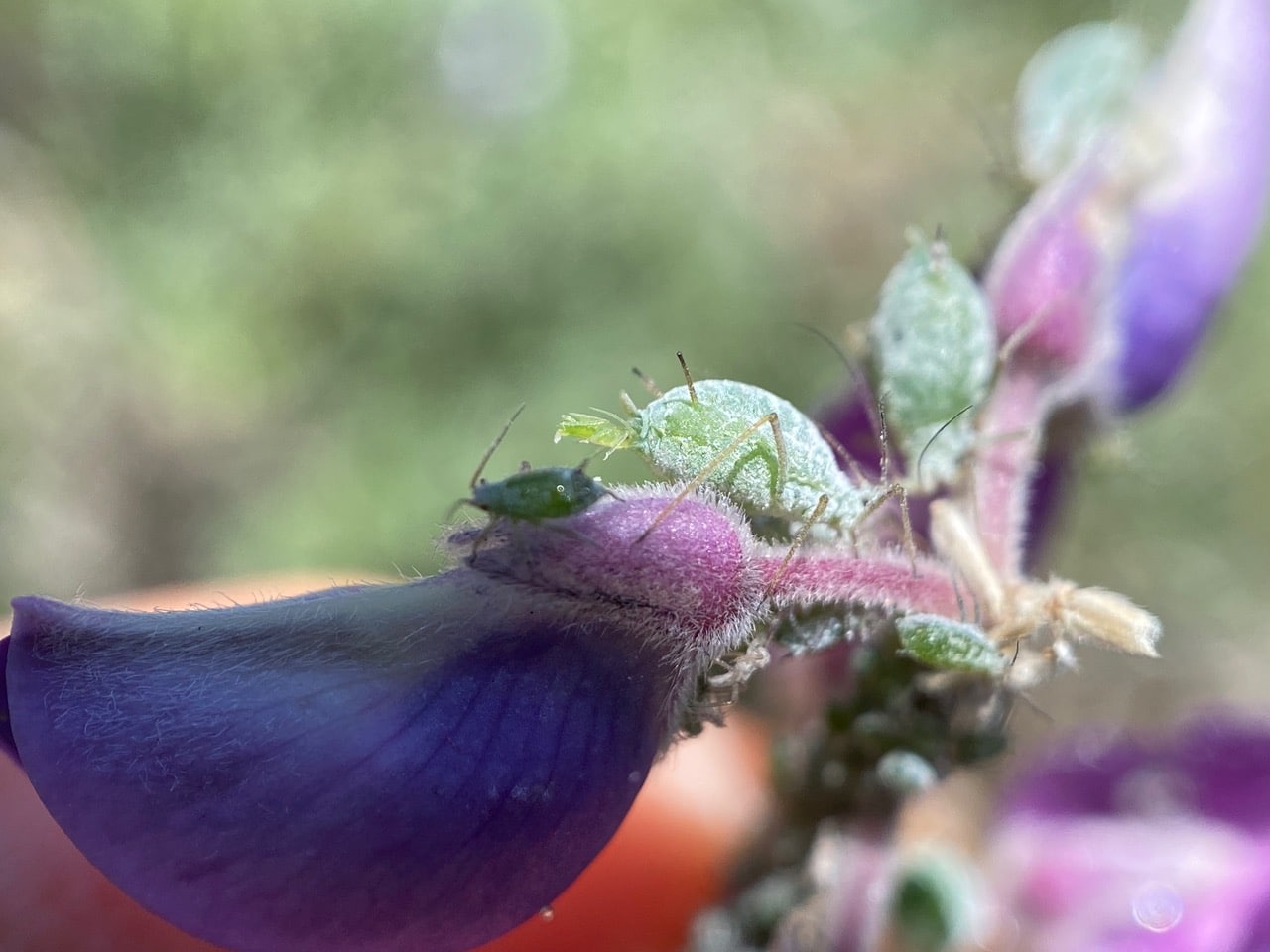
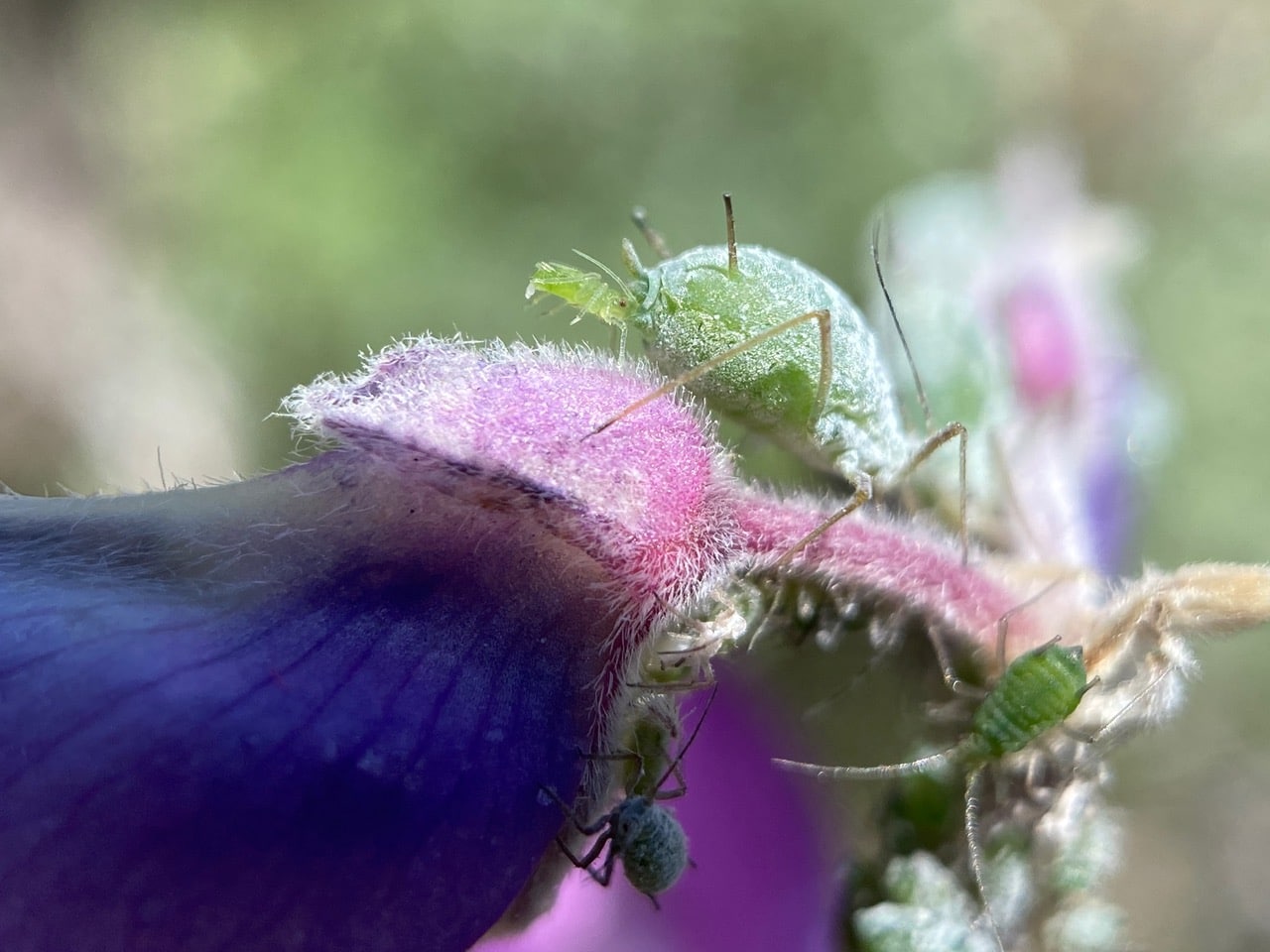
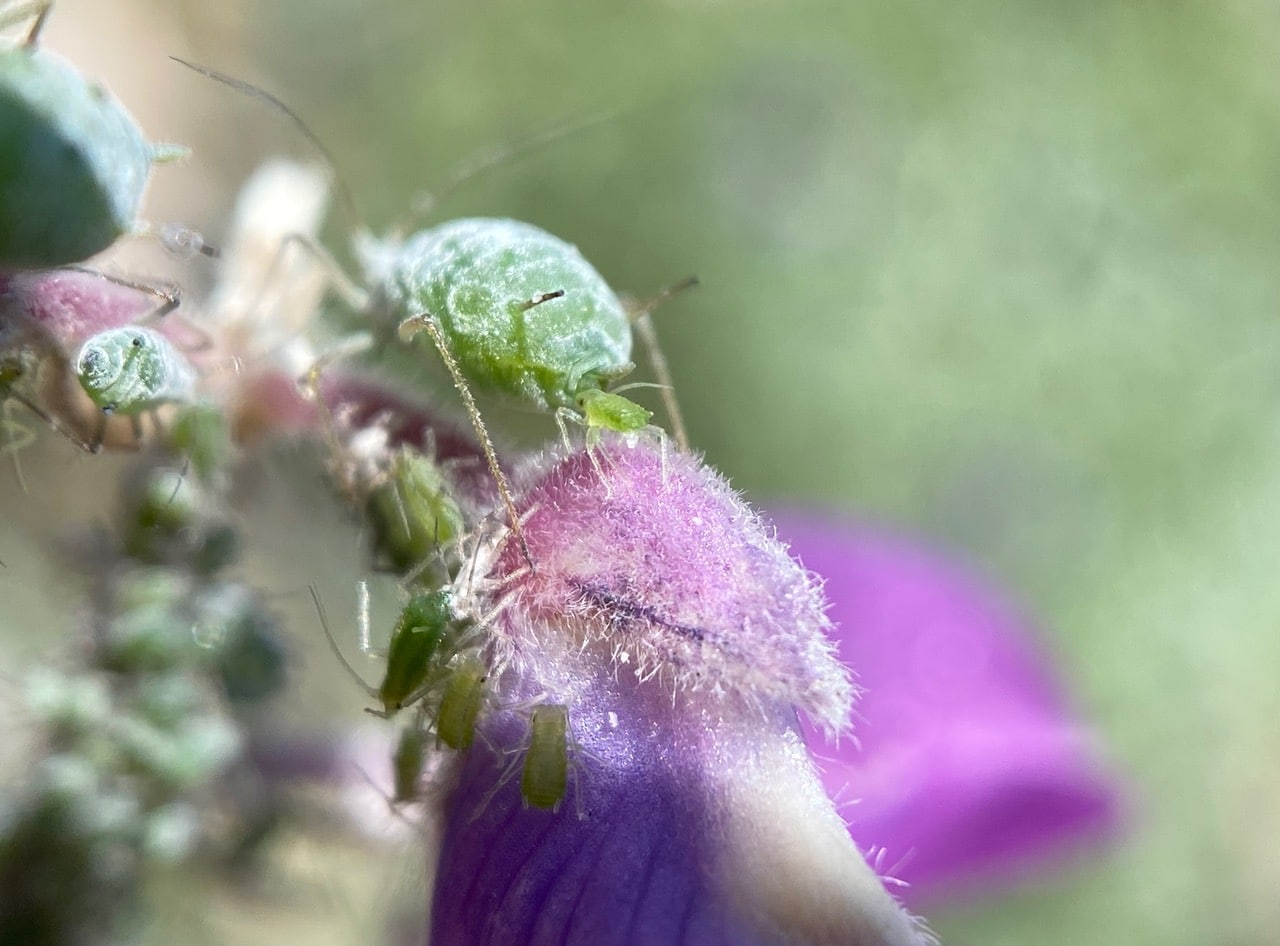
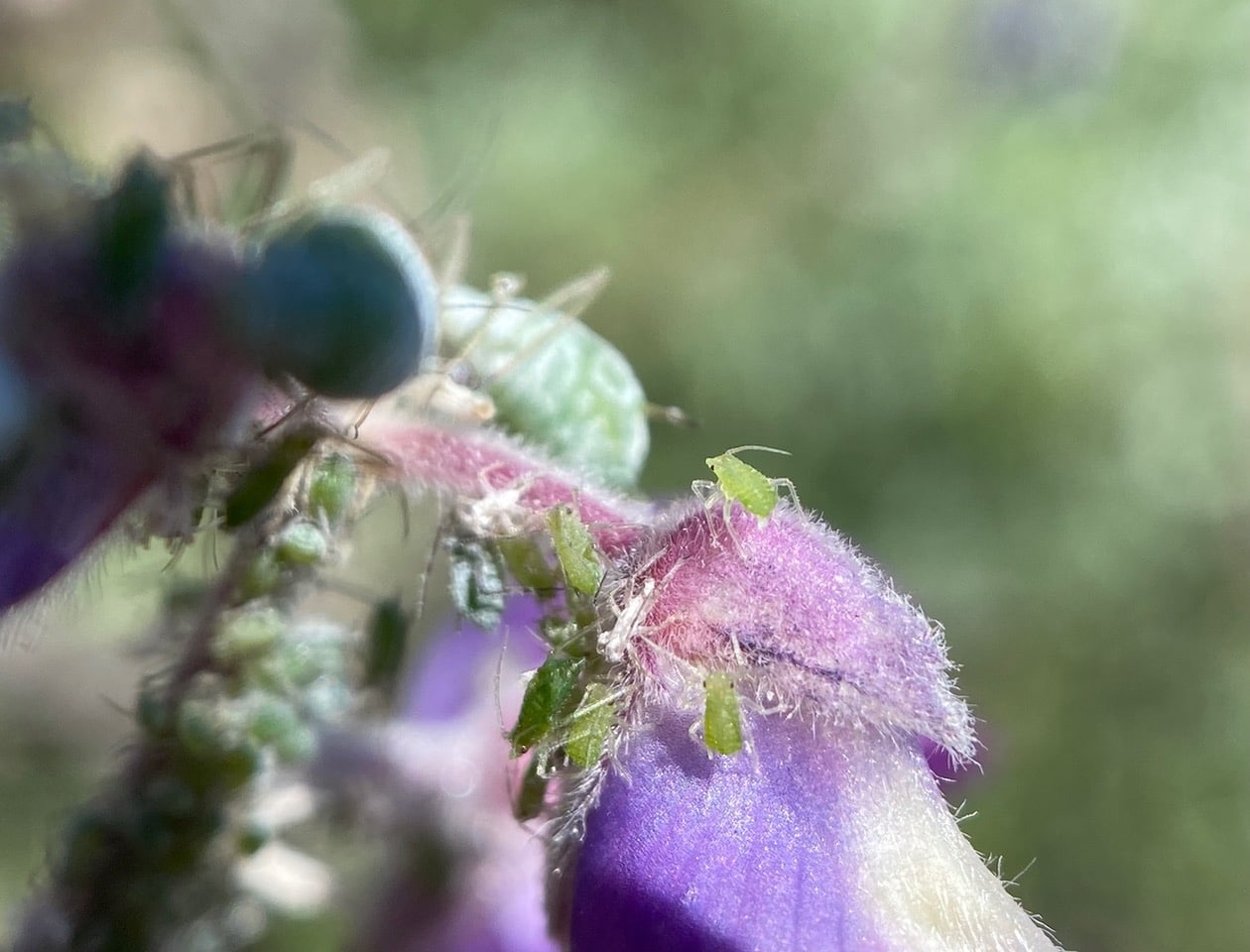
There’s a population explosion of the Lupin Aphids on this Silverleaf Lupine, Lupinus albifrons.
The Lupin Aphid, Macrosiphum albifrons (family Aphididae) is specific to lupines and spends its entire life cycle on lupines. It has been recorded from 21 Lupinus species. It lives mainly on the leaves, stems and flower spikes. Originating in North America, it has spread to England and much of Europe, where it is considered an invasive pest. The aphids sequester the toxic alkaloids of their host plant for their own defense. As aphids go, this species is rather large, and they are dusted with a powdery white wax.
A big mama aphid is giving birth to a baby on a pedicel.
As the baby lowers its landing gear….
Mama gently lowers the baby onto the calyx of the flower.
Goodbye, Mama! There are several young aphids here, maybe from the same mama aphid. She can give birth to a dozen babies in a day, all clones of herself.
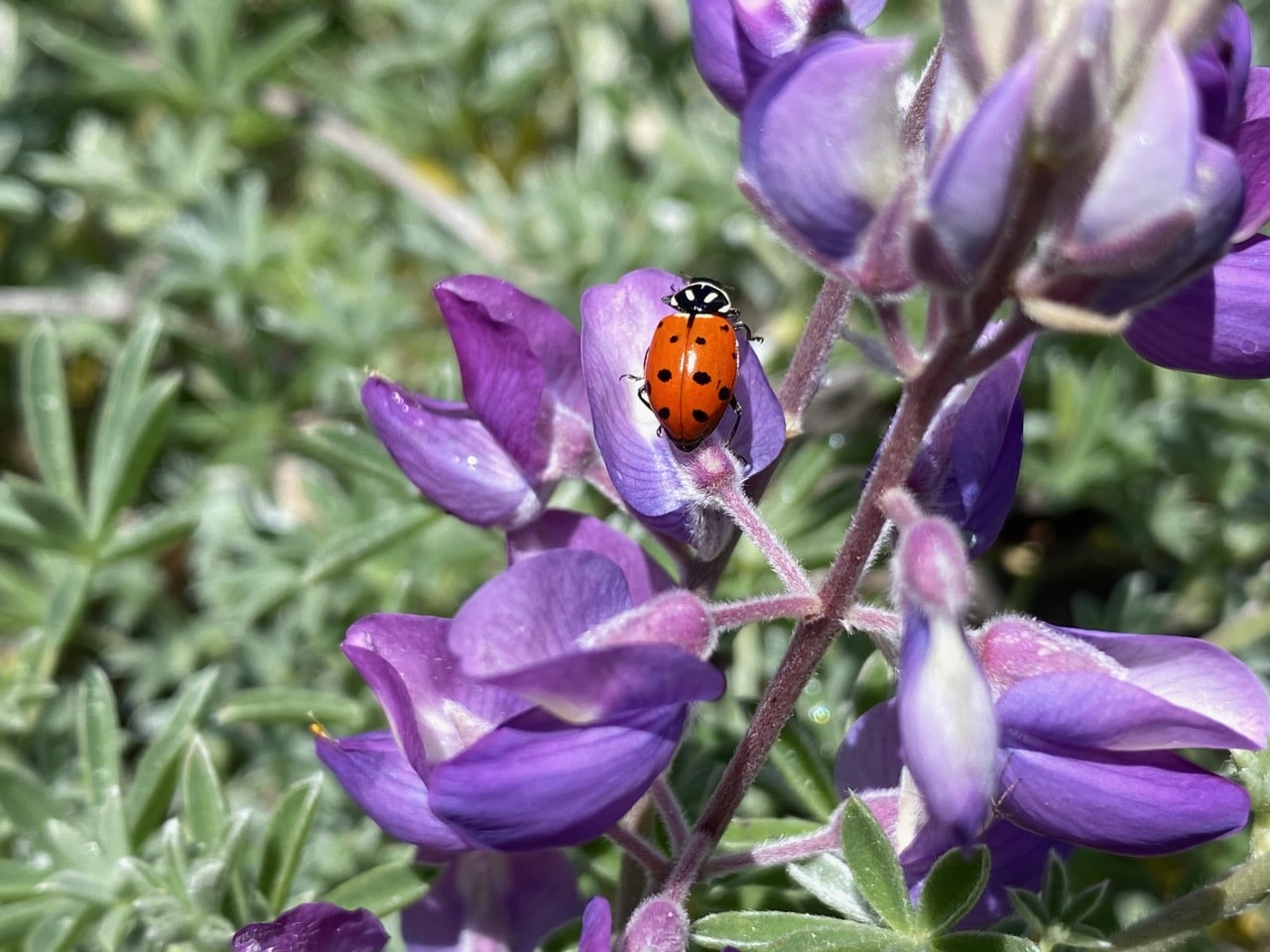
A Convergent Ladybeetle, Hippodamia convergens (family Coccinellidae) is hunting among the lupine flowers. Both adult and larval lady beetles are voracious predators of aphids.
A pair of Scentless Plant Bugs, Arhyssus sp. (family Rhopalidae) are mating on a flower of Sticky Cinquefoil, Drymocallis glandulosa. Note the rostrum or mouthparts of the bug on the left – it is typical piercing-sucking mouthpart of “true bugs” or Hemiptera, folded under the body when not in use.
The Rhopalidae are distinguished by many veins on the membranous portion of the forewings. They differ from coreids and other hemipterans in lacking functional scent glands. All are plant-feeders, usually on ripe seeds.
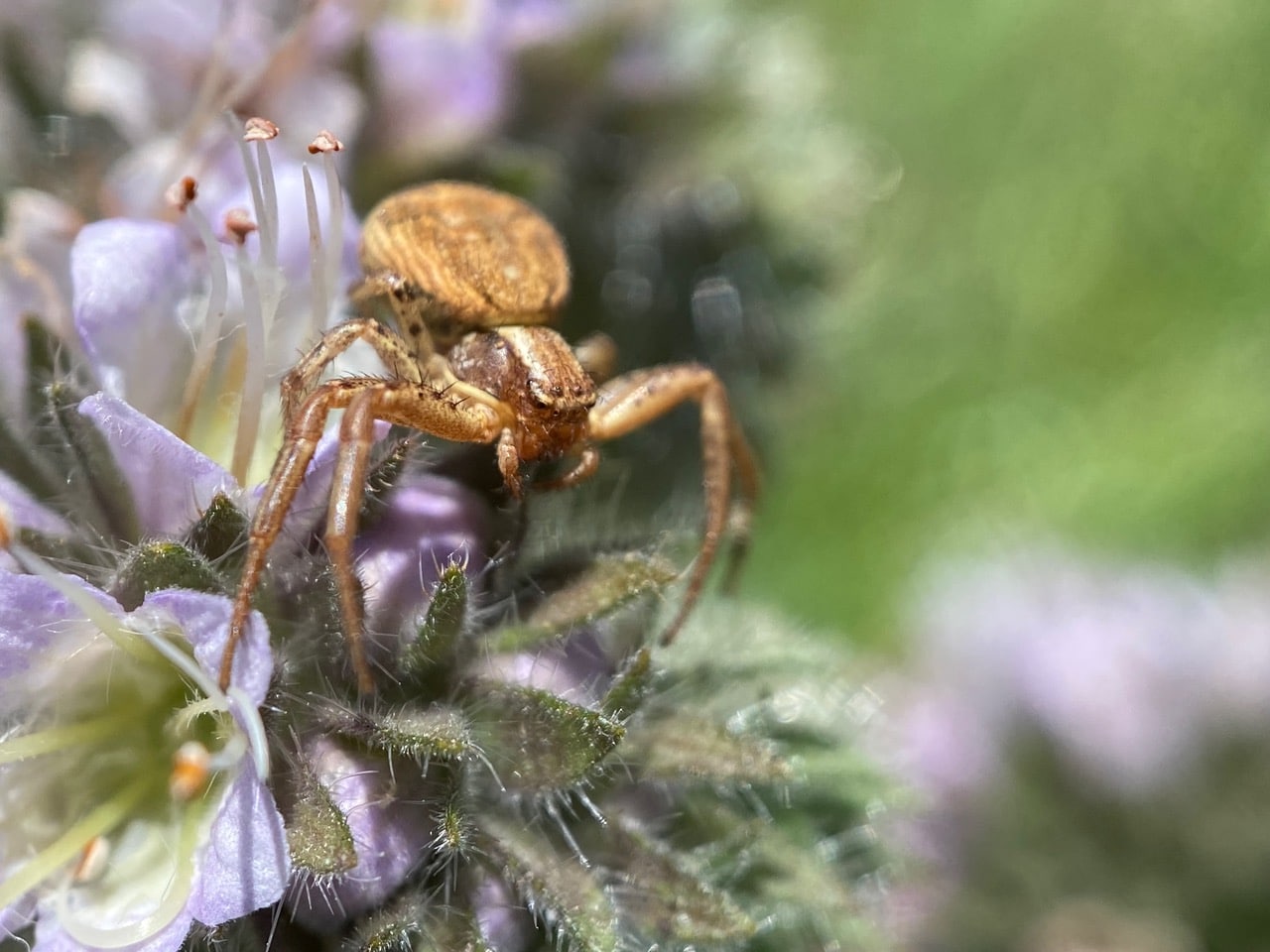
A Common Crab Spider, Xysticus cristatus (family Thomisidae) is standing in ambush on a cluster of flowers of California Phacelia, Phacelia californica.
The spider is native to Europe. Females can reach 6-8 mm in length, and males 3-5 mm long. Xysticus cristatus is usually found in low vegetation, often on the ground. It is shade intolerant and avoids woodland and closed canopy habitats, but it is otherwise found in almost every habitat type. Xysticus cristatus is an ambush hunter which spends much time sitting still, with its fore-legs spread wide, waiting for insects to blunder into them. When it hunts on the ground its prey tends to consist of ants, spiders and other soft-bodied prey. If often takes prey much larger than itself.