

Pollinator Post 5/13/24 (2)

Susan leads me to the pond in the garden where she is studying aquatic plant life. Around the small pond is this rare legume called the Loma Prieta Hoita, Hoita strobilina (family Fabaceae), endemic to California. Its large leaves are divided into three leaflets. The plant is not in bloom, but many of its leaves have been strangely folded. This one involves all the three terminal leaflets…

This one is a simply folded leaflet, much like a taco.

There is browning, and visible feeding scars on the surface of the folded leaves.
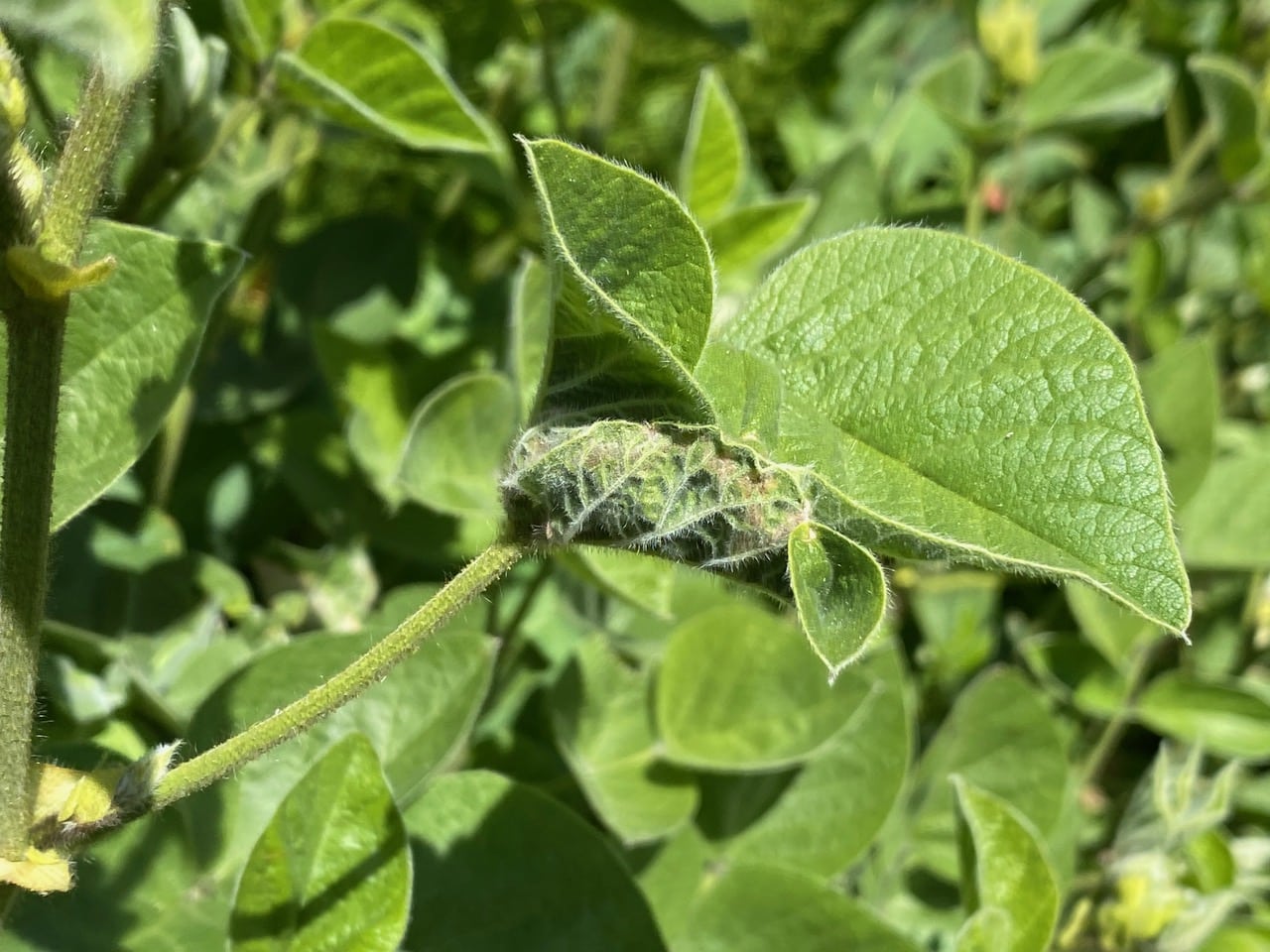

Susan carefully opens a few of the folded leaves, tearing through some silk around the edges. There is no caterpillar in this one, but it is obvious that the critter has been feeding on the surface tissue of the leaf in the safety of its retreat. The caterpillar must have left to pupate somewhere else.
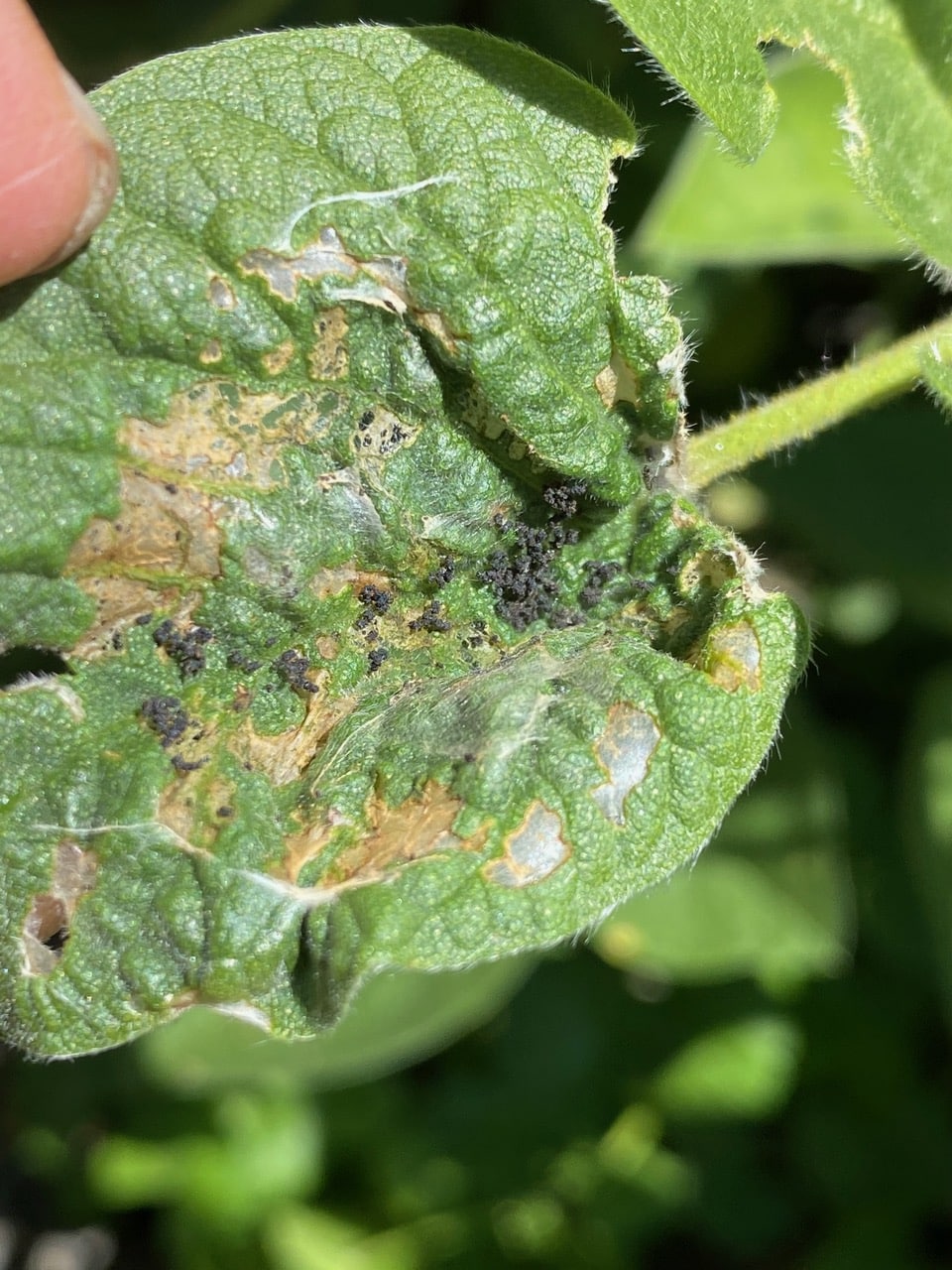
Ooh, this one is filled with dark frass (insect poop). The caterpillar is nowhere to be seen.
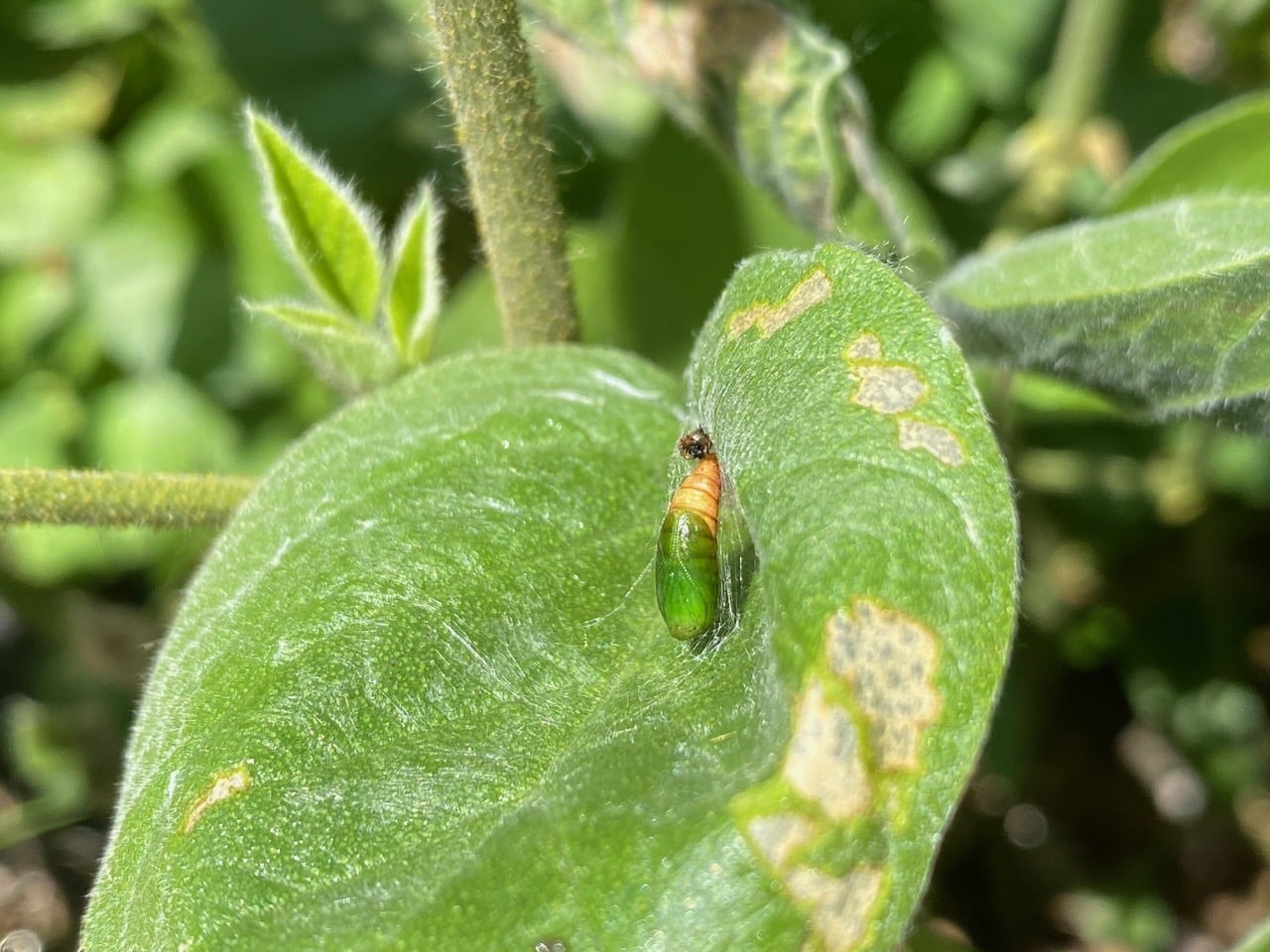 Wow, this leaf when opened up reveals a jewel of a pupa! So some of the caterpillars actually pupate in their retreats? I feel a sudden pang of guilt – will this pupa make it to adulthood now that it is exposed?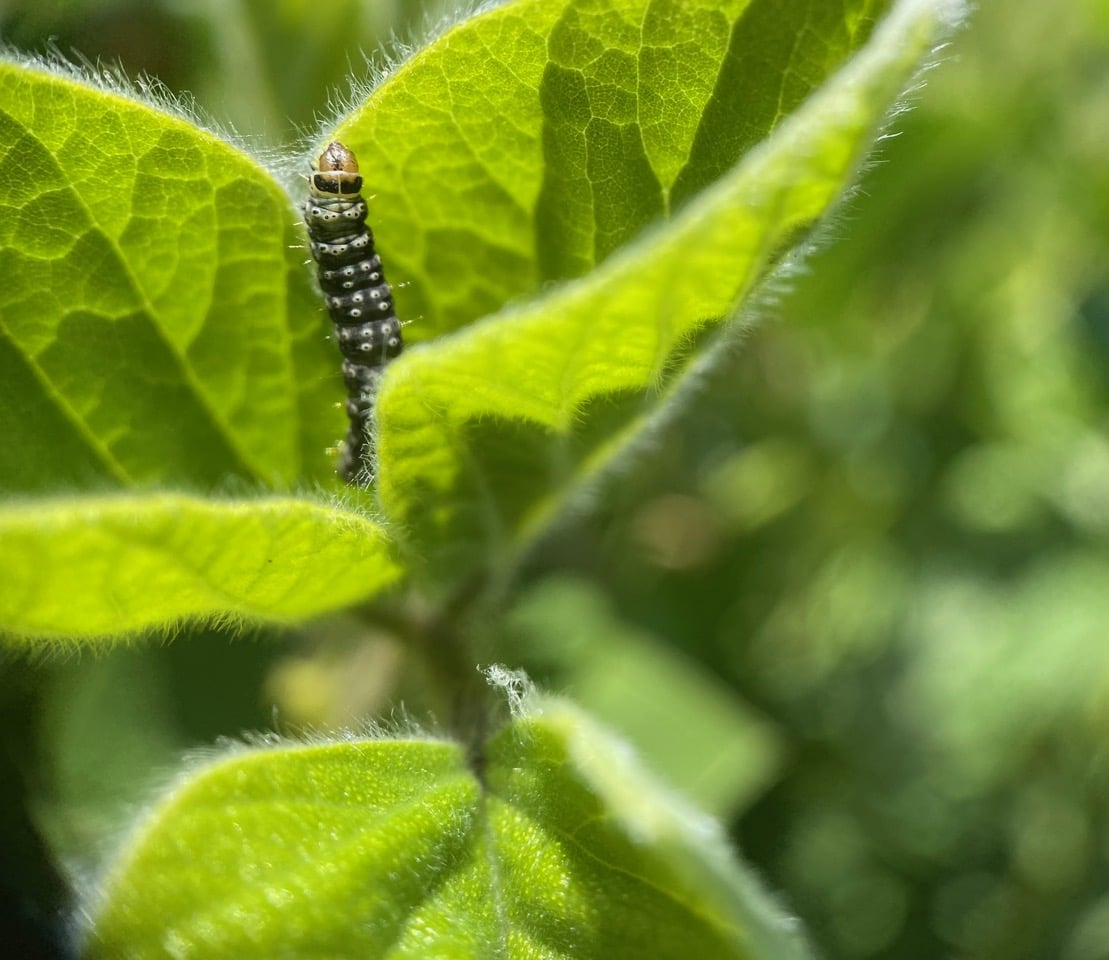
The most exciting thing is finding a little caterpillar on the Hoita in the process of drawing the terminal leaves together!

Swinging its head left and right tirelessly, the caterpillar is laying down fine strands of silk between two adjacent leaflets. Wow, never thought I would get to see this in action so clearly in broad daylight – a Tortrix caterpillar constructing its retreat!
Members of the family Tortricidae are commonly known as tortrix moths or leafroller moths. Many are economically important pests. The typical resting posture of the adult is with the wings folded back, producing a rather rounded profile. Tortricid moths are generally small, with a wingspan of 3 cm or less. Many species are drab and have mottled and marbled brown colors. Larvae of some species feed by boring into stems, roots, buds or seeds. Others feed externally and construct leaf rolls.
Leaf shelter-builders, either leaf-tiers or leaf-rollers, do not manipulate leaves directly but use their silk to draw plant surfaces together. The caterpillars impart potential energy to their silk strands by stretching them beyond their equilibrium length as they are spun out. Axial retraction of the stretched strands then draws the bound plant surfaces together. Although a single stretched strand exerts only a minuscule force, the combined force generated by many such strands attached to the same opposable plant surfaces is substantial and allows the caterpillars to manipulate leaves many times their size and mass.
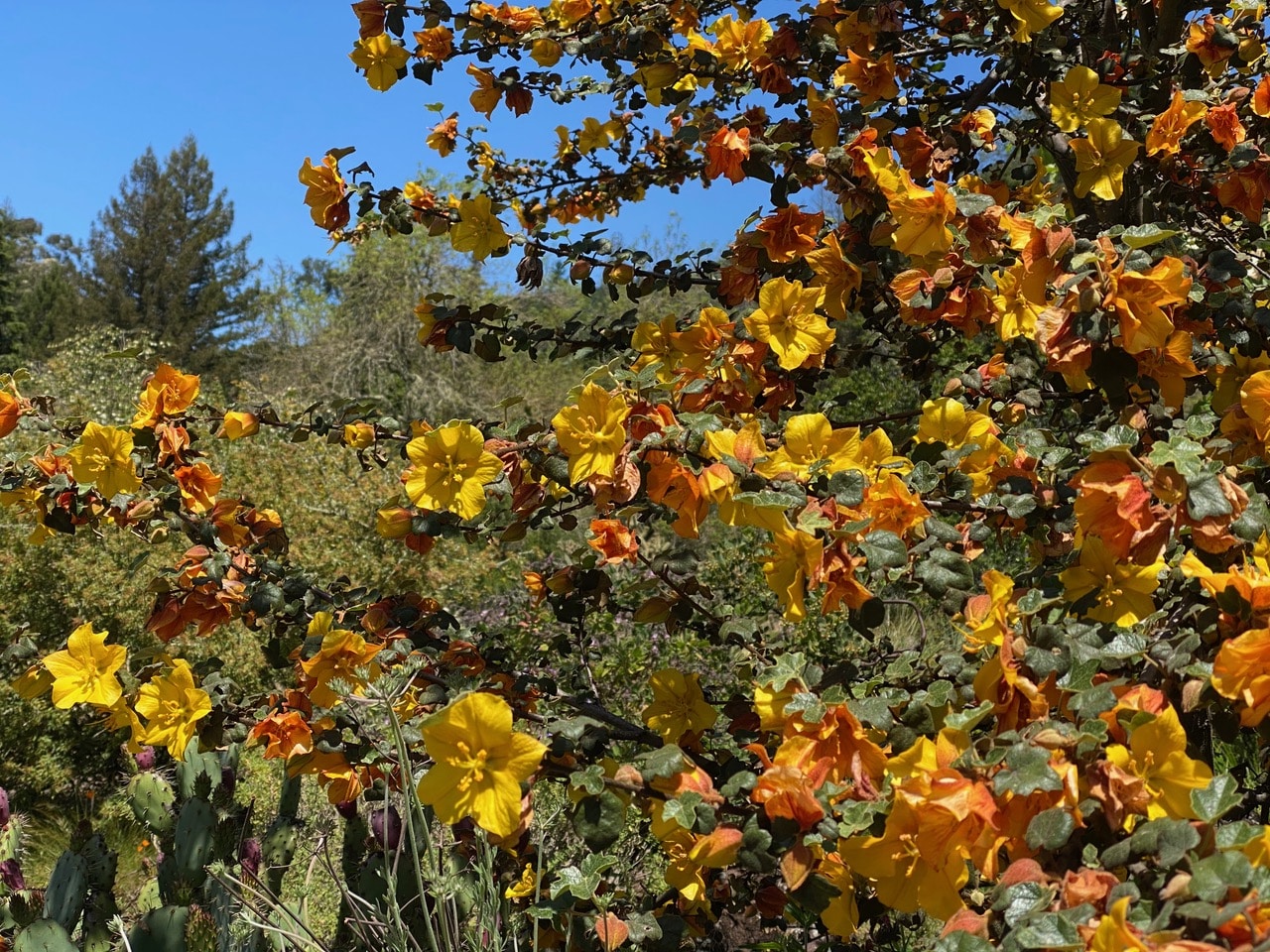
On the way out of the garden, Susan and I pause at the large Flannel Bush, Fremontodendron californicum that has been blooming for a while by the gate.
The quarterly journal of the California Native Plant Society (CNPS) Fremontia was named after this plant. It is unusual in that it belongs in the Sterculiaceae, a plant family more commonly found in the tropical regions of the world. The leaves are covered with soft fuzz, giving rise to the common name of the plant. The tough and leathery leaves are divided into three characteristic lobes.
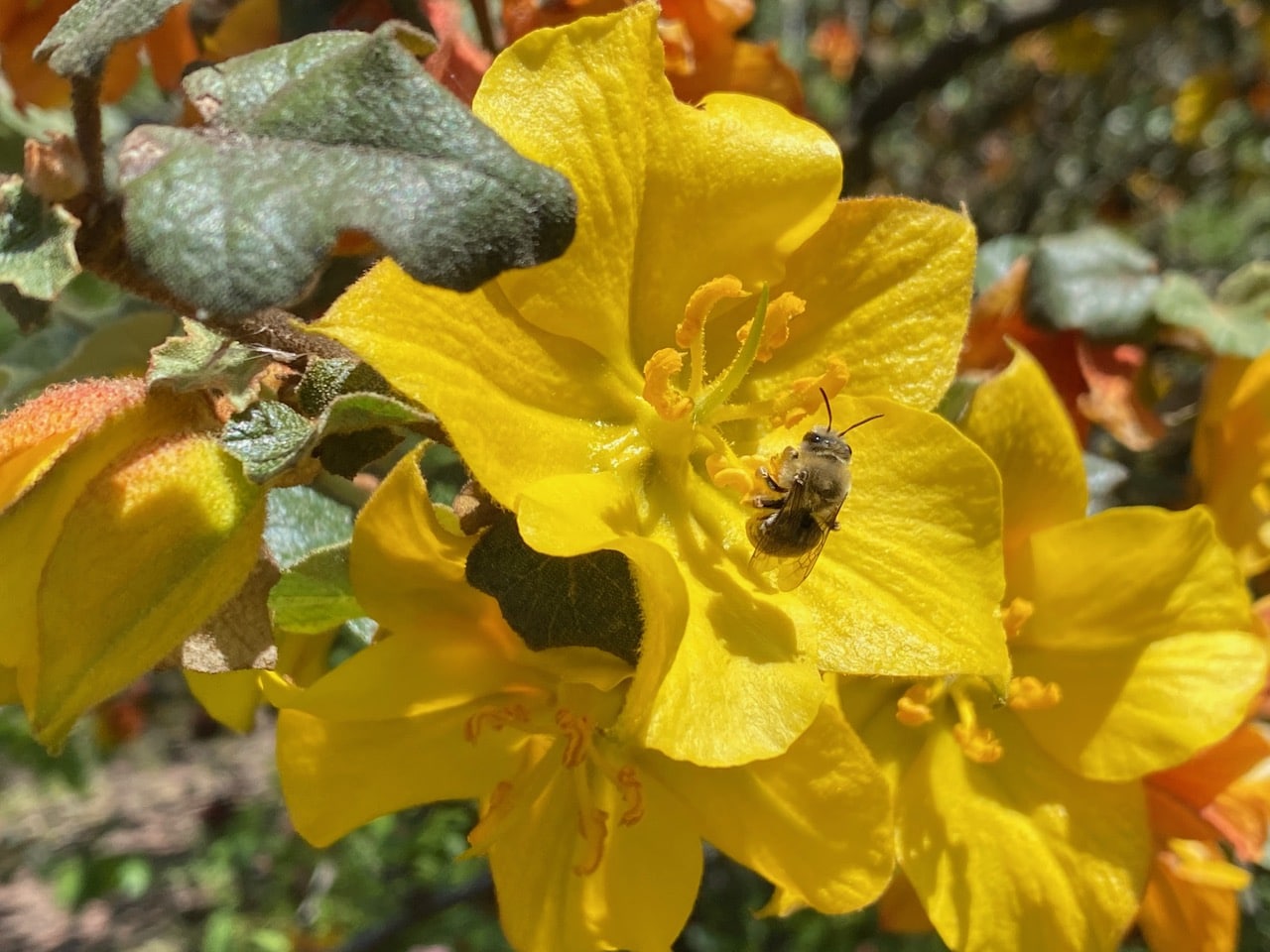
The large and attractive flowers of Flannel Bush are surprising in that it has no petals. The five showy yellow petal-like parts are actually sepals. The lower portions of the stamen filaments are fused into a tube, from which arise a single style in the middle.
Much to my delight, a bee lands on a stamen of a fresh flower at eye level.

It is a stocky bee, obviously a female bearing prodigous scopae on her hind legs. She is large enough to straddle two anthers at a time, extending her tongue occasionally to sample the pollen.
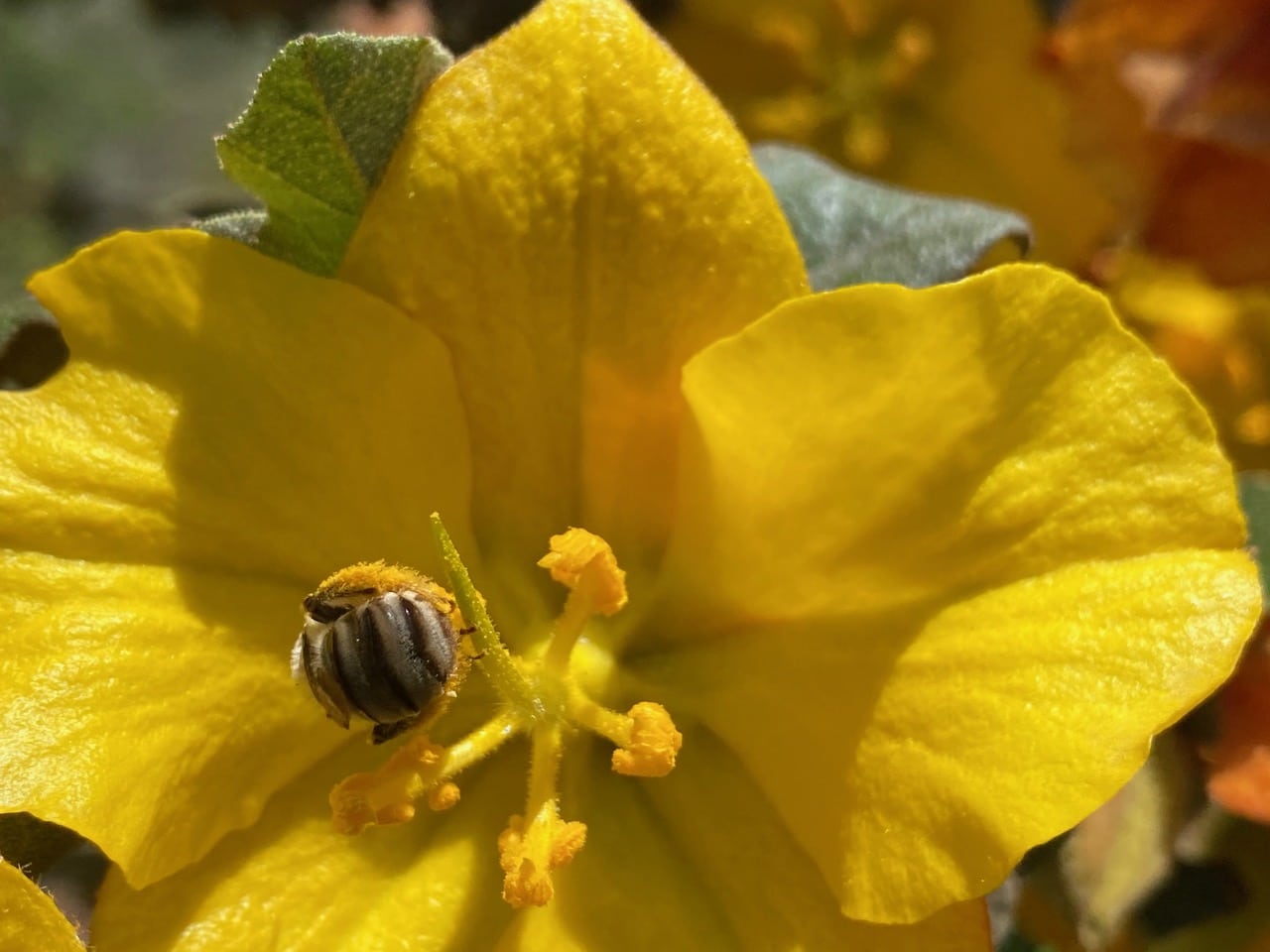
Her abdomen is subtly striped, but not with distinct hairs. iNaturalist’s AI has identified the bee as a Longhorn Bee in the subgenus Synhalonia, genus Eucera (family Apidae).
The name Eucera is Greek for “well-horned”, a reference to the long antennae of the males. Abundant throughout the United States and Canada, especially in the west, these fast-flying bees are hairy and generally large. Only one subgenus (Synhalonia) occurs in the United States and Canada. Eucera includes both specialists and generalist bees. Specialists often limit themselves to flowers in the pea family (Fabaceae). Eucera are among the first bees to emerge in the spring and are rare by August. They nest in the ground and are mostly solitary. Nest entrances have a mound of excavated soil heaped symmetrically around them. When females emerge they are mobbed by several males who have emerged earlier. Competition among the males is often intense and aggressive, resulting in tumbling “mating balls” of males clustered around a female. Once the female has been mated, however, her scent changes, and males leave her alone.

With some skillful footwork, the bee is scraping pollen from the anther and transferring it into her scopae.

The style provides a sturdy support for the bee as she works the pollen.
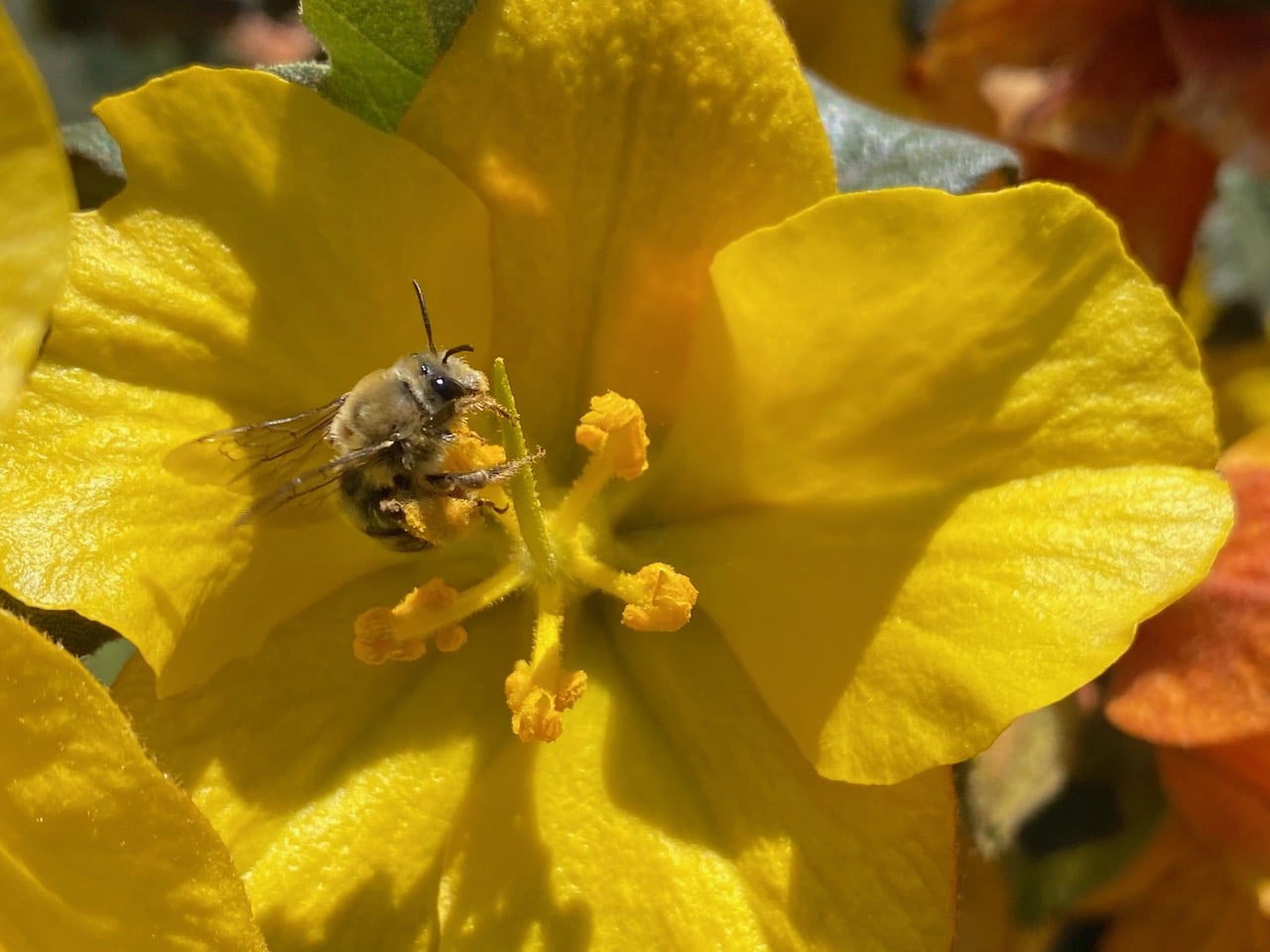
Then she climbs up the style (female part of the flower) before lifting off into the air. Any pollen she might be carrying from other flowers can easily be deposited on the surface of the style, accomplishing pollination. All in a day’s work!