

Pollinator Post 5/17/24 (2)

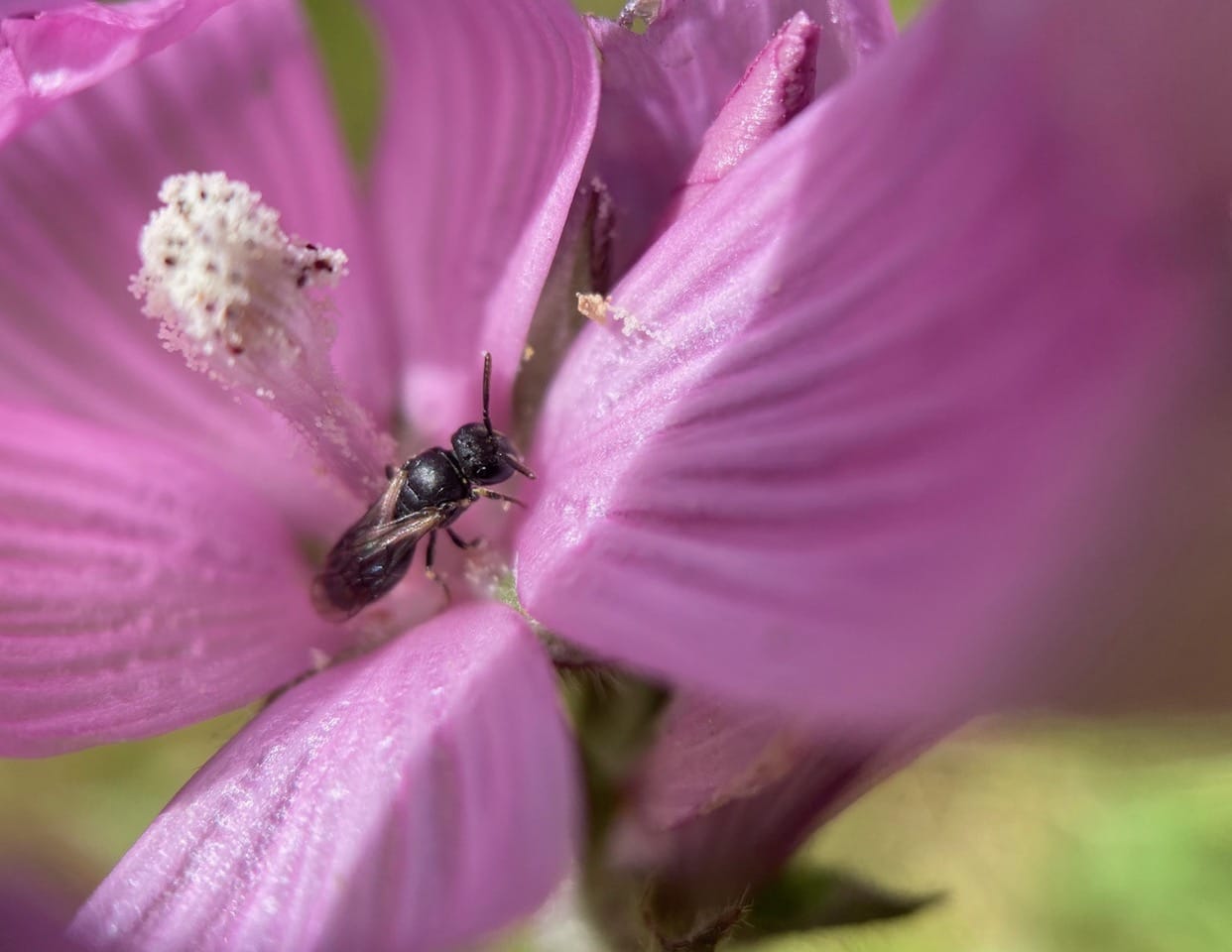
Ooh, there’s a little bee in that Checkerbloom flower, Sidalcea malviflora! Going down to the base of the corolla, she’s probably seeking nectar.


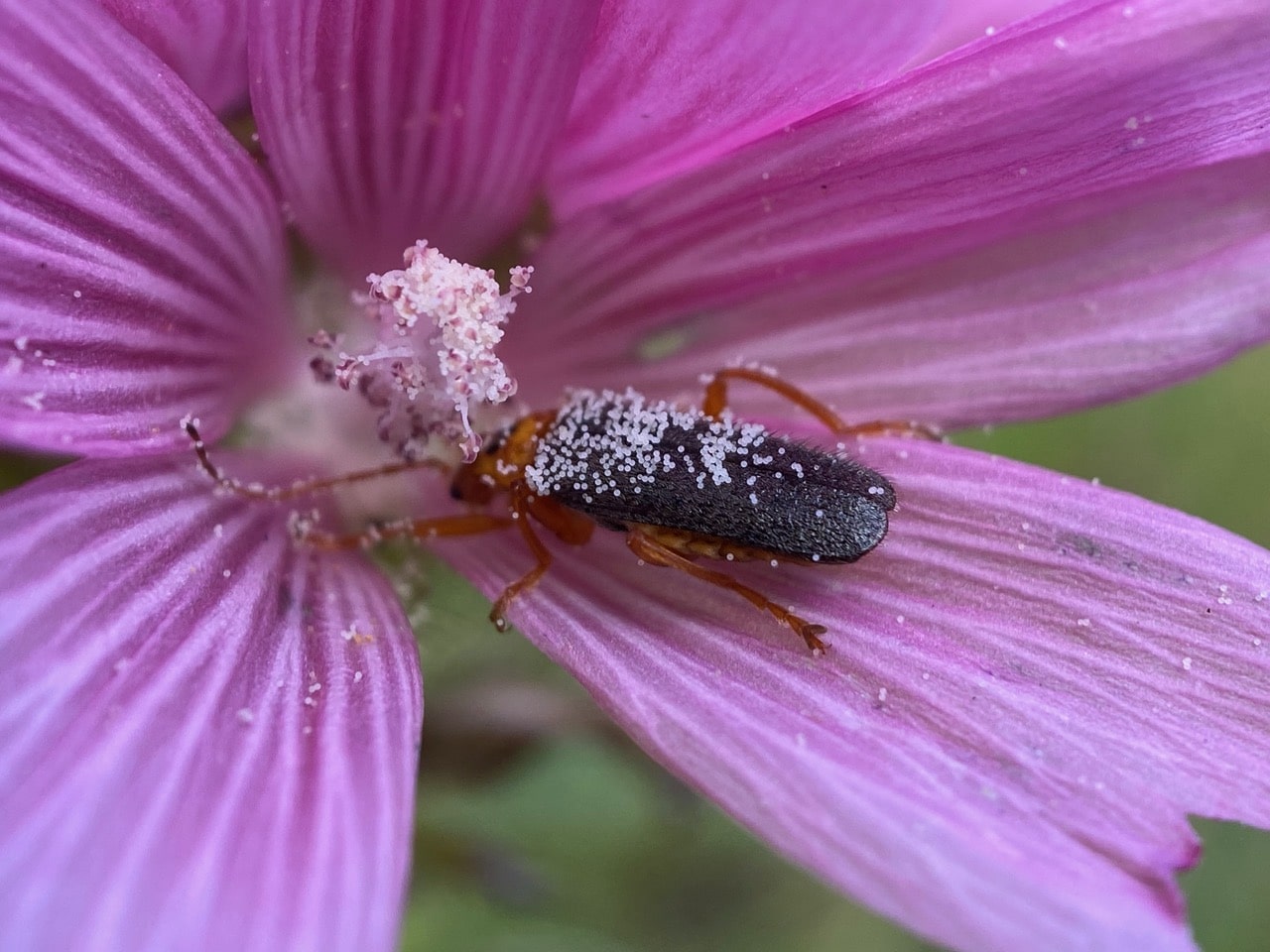
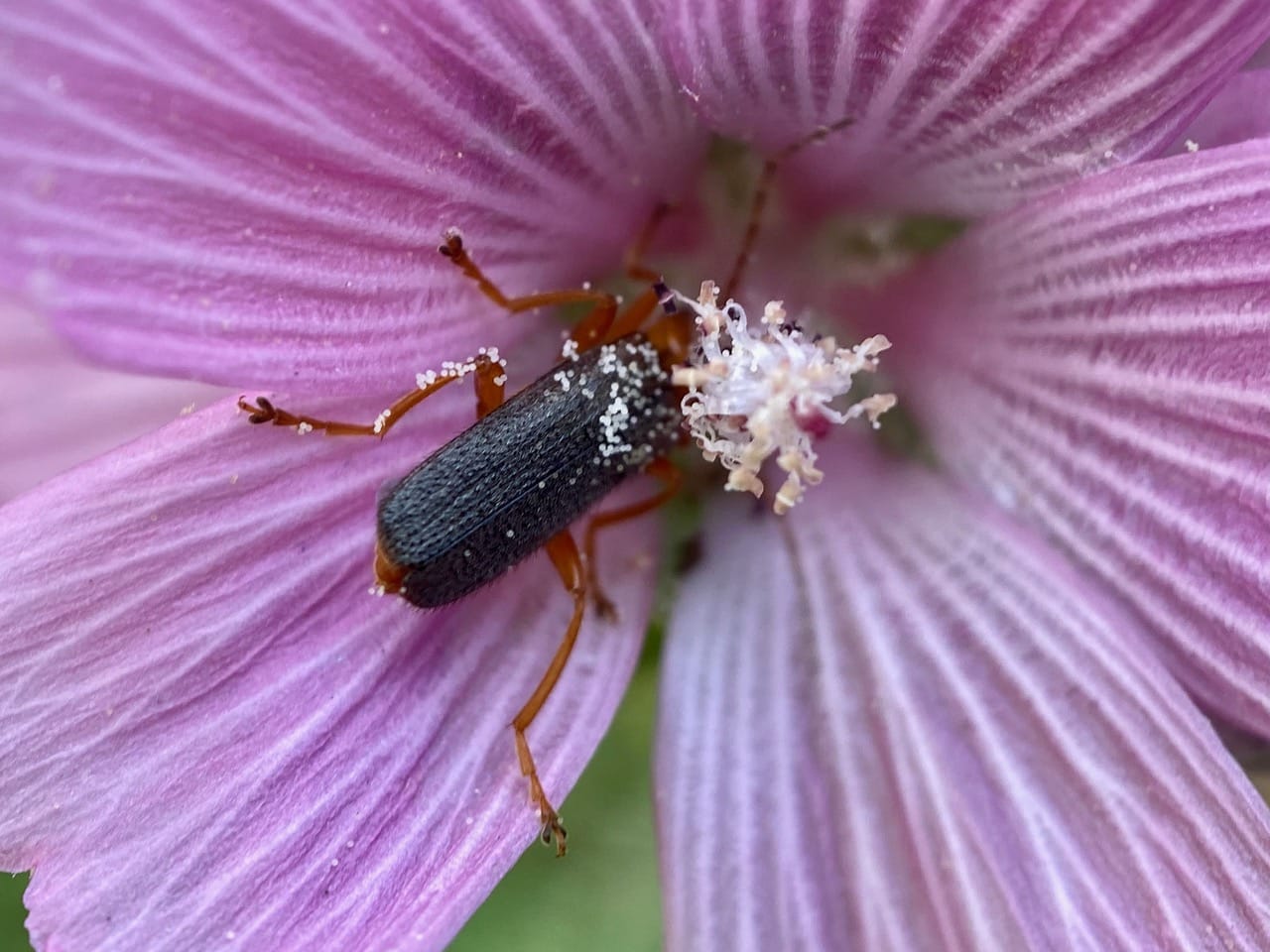 Here’s another Soldier Beetle going down an older Checkerbloom flower for nectar. The flower is at the end of its male phase, almost finished releasing pollen from the anthers at the tip of the central column of fused stamens. A female phase will follow with the extension of a multi-lobed style through the column to receive incoming pollen. The temporal separation of the sexes serves to prevent self-pollination.






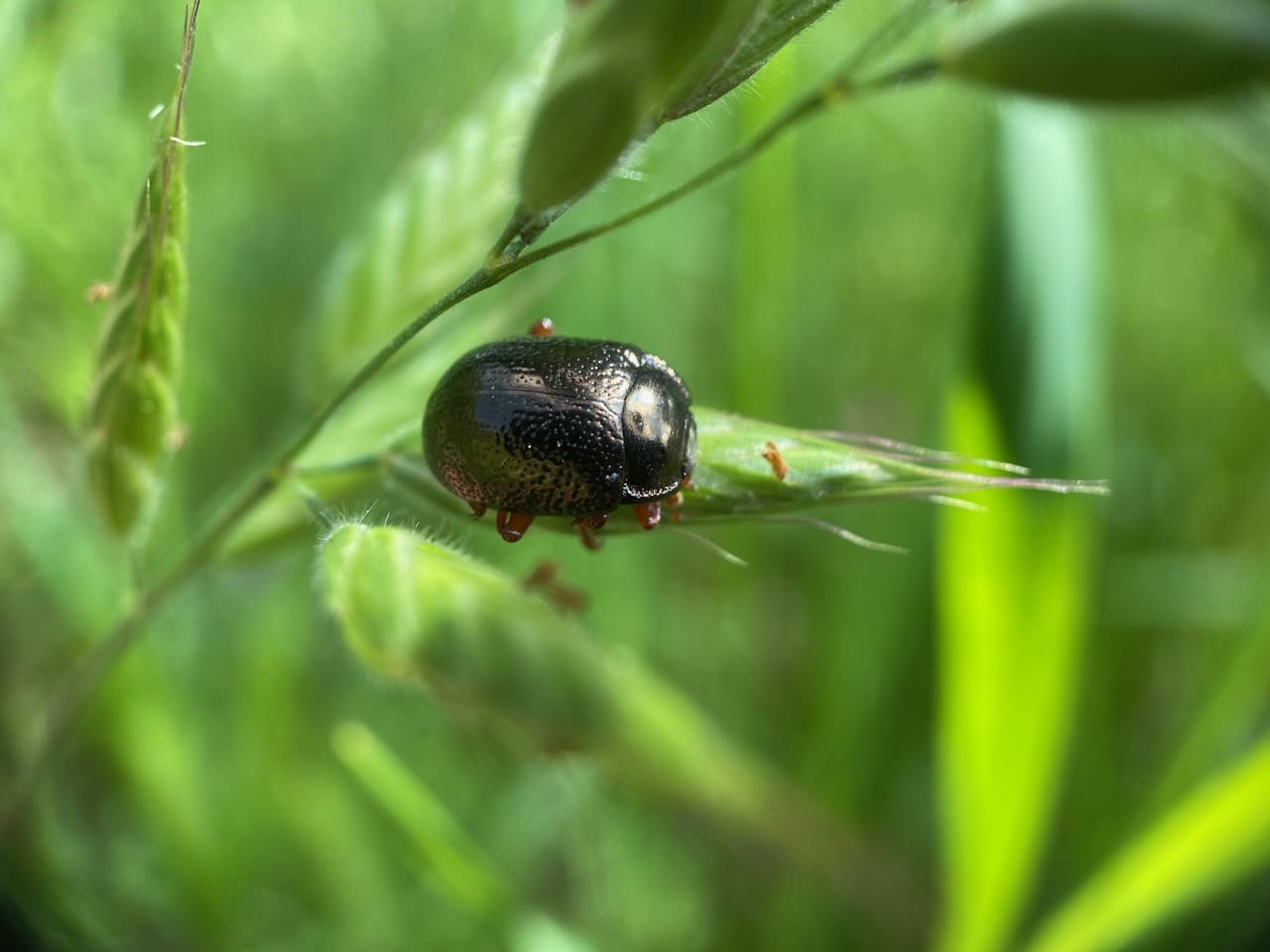 This Bronze Beetle is resting on a grass seed head, its head completely retracted under the pronotum.
Checkerbloom’s nectar is stored in the calyx, the cup formed by the sepals. Insects access the sweet stuff through the gaps between the base of the petals. It’s interesting that the bee does not have a scopa on her hind legs.
Ah, a glimpse of the bee’s face! Note the two yellow markings flanking the inner edges of her compound eyes. She is a Masked Bee, Hylaeus sp. (family Colletidae).
Hylaeus (family Colletidae) are shiny, slender, hairless, and superficially wasp-like bees. They are small, 5 to 7 mm long, usually black with bright yellow or white markings on their face and legs. These markings are more pronounced on the males. Hylaeus do not carry pollen and nectar externally, they instead store their food in the crop and regurgitate it upon returning to their nests. They are primarily generalist foragers. Hylaeus are short-tongued, but their small body size enables them to access deep flowers. Hylaeus nest in stems and twigs, lining their brood cells with self-secreted cellophane-like material. They lack strong mandibles and other adaptations for digging, using instead pre-existing cavities made by other insects.
A closer look at her face, showing the facial markings. Again, no evidence of any scopae on her. The bee has probably filled up her crop with nectar.
A Soldier Beetle (family Cantharidae) emerges from the depths of a Checkerbloom flower, its back covered with pollen. Checkerbloom produces large white pollen grains that adhere easily to insects when they seek nectar at the base of the flower.
The Soldier Beetles, family Cantharidae are relatively soft-bodied, straight-sided beetles. One of the first described species has a color pattern reminiscent of the red coats of early British soldiers, hence the common name. They are also known commonly as Leatherwings because of their soft elytra.
Soldier beetles often feed on both nectar and pollen as well as predating on other small insects. The larvae are often active, and feed on the ground, hunting snails and other small creatures. Soldier beetles are generally considered beneficial insects by gardeners.
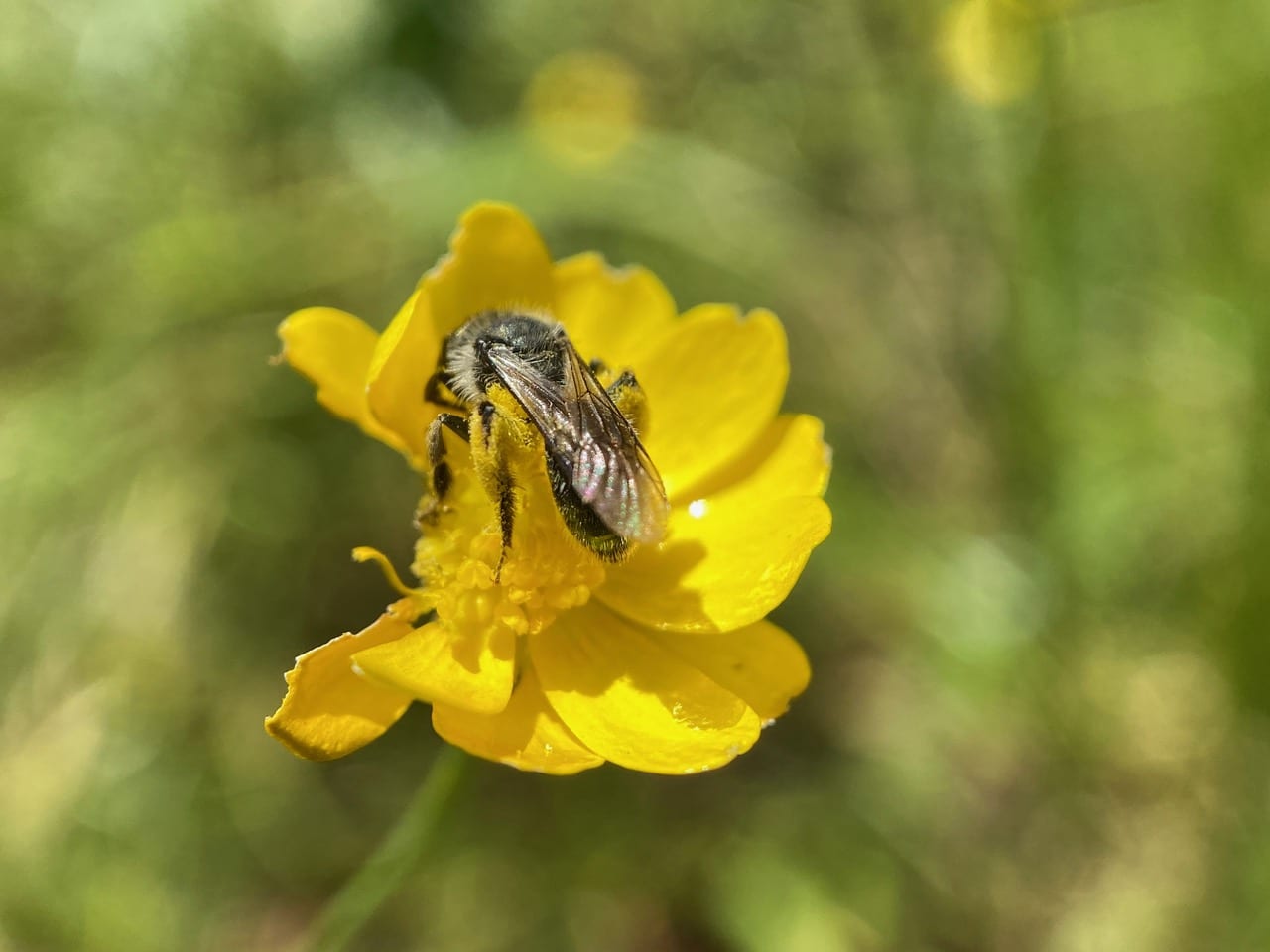
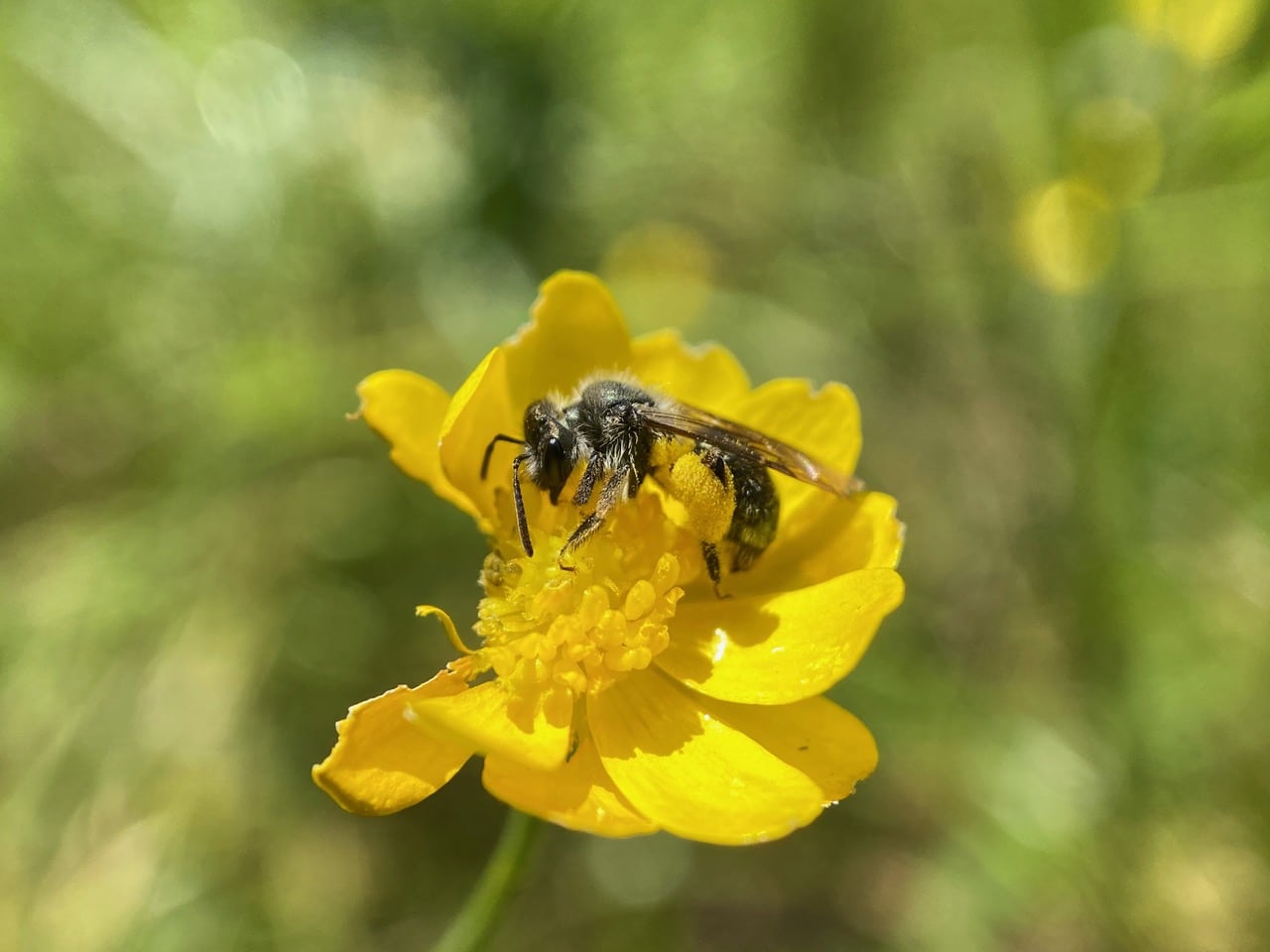
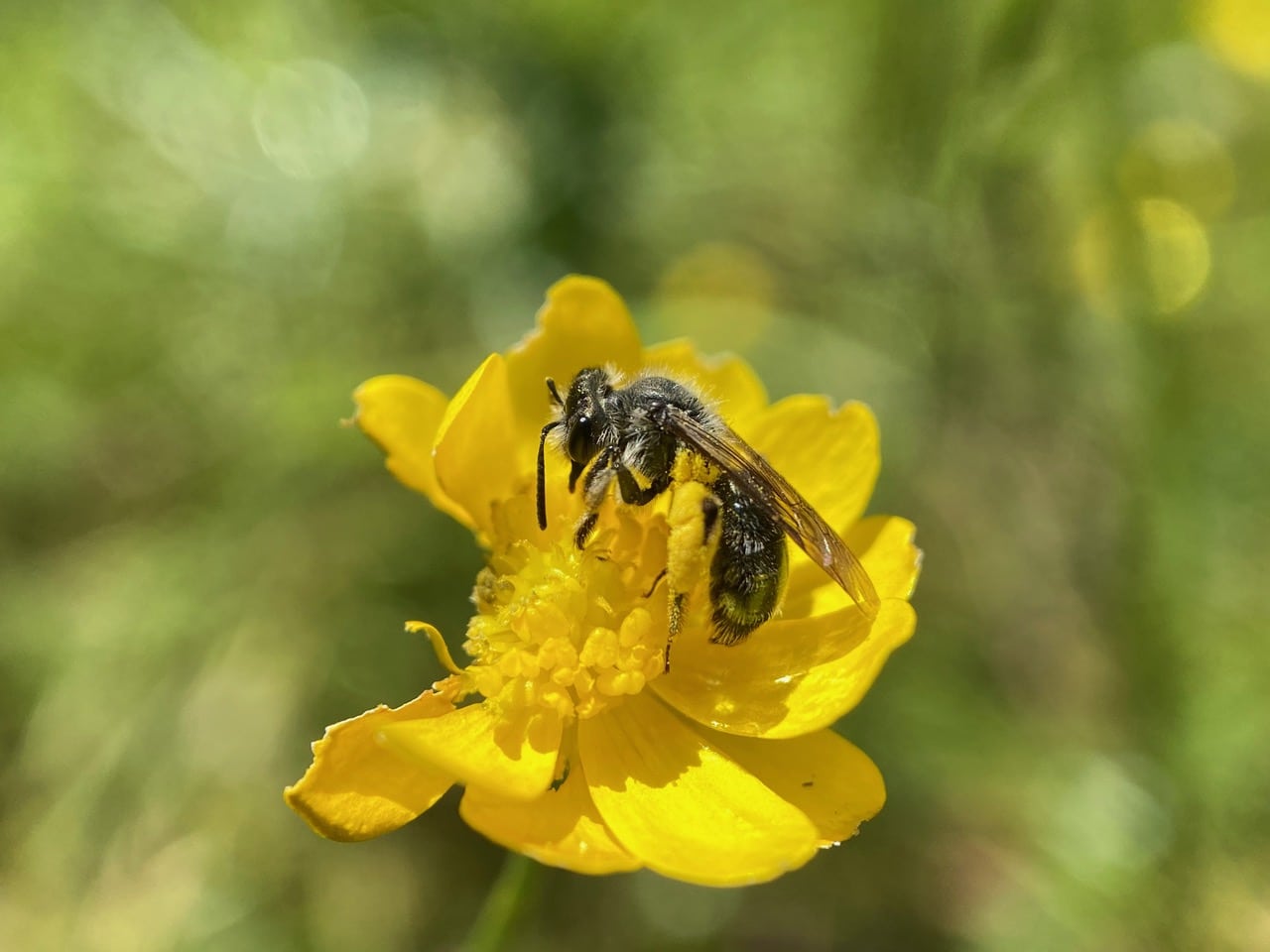
Here’s another Soldier Beetle going down an older Checkerbloom flower for nectar. The flower is at the end of its male phase, almost finished releasing pollen from the anthers at the tip of the central column of fused stamens. A female phase will follow with the extension of a multi-lobed style through the column to receive incoming pollen. The temporal separation of the sexes serves to prevent self-pollination. A few female Mining Bees, Andrena sp. (family Andrenidae) are frantically collecting pollen from the last of the California Buttercup flowers, Ranunculus californicus.
Straddling the reproductive structures of the flower, the bee uses her jaws and front legs to scrape the anthers. Her middle legs brush the pollen into the scopae on her hind legs, patting it lightly into place. All this happens simultaneously. The movements are so fast they appear as a blur as I watch. The bee pivots around the flower as she works, turning like the arm of a clock on the face of the flower.
The pollen grains are held loosely by electro-static force between the hairs of the scopae. They come off easily as the bee works on the flowers. If the pollen from a previous flower falls on the stigma in the middle of this flower, pollination is accomplished.
This view shows the bee’s propodeal corbicula located in the space between her thorax and abdomen, now pretty much filled with yellow pollen. The propodeal corbicula is a useful characteristic for identifying bees in the genus Andrena.
Bees in the family Andrenidae, commonly called miner bees or mining bees, are solitary ground-nesters. Andrenids are fairly small bees, usually dark-colored, and often banded. They are identified by the dense bristles (scopae) at the bases of the legs and the shin-like sections (tibias) of the legs, as well as by certain creases and grooves on the face and head and by unique wing venation. Many Andrenids resemble wasps – slender with long abdomen.
Most andrenids are specialist pollinators whose life cycle is timed to correspond precisely to the blooming of specific flowers. Because of this, andrenids are some of the first bees to emerge in spring, and many are active in March and April, as they visit early spring wildflowers.
It is rare to see the head of a Bronze Beetle, Chrysolina bankii (family Chrysomelidae). The head is usually retracted under the pronotum when the beetle is not active. This individual is actively exploring the terminal flowerheads of an Italian Thistle.
Leaf Beetles in the family Chrysomelidae make up one of the largest and most commonly encountered beetles. They are all phytophagous – both adults and larvae feed on all sorts of plant tissues. All species of Chrysolina are phytophagous, feeding on specific food plants, and some of them have been used for biological control of weeds.
Chrysolina bankii is a native to western Europe and the western Mediterranean Basin. It has been introduced to the US, where its range is expanding. The beetles are 8-11 mm in length. They are metallic bronze in color, with orange-brown legs. Their elytra are pitted with puncture marks. The species feed on numerous types of leaves, especially those in Asteraceae and Lamiaceae.
This Bronze Beetle is resting on a grass seed head, its head completely retracted under the pronotum.