

Pollinator Post 6/9/24 (2)
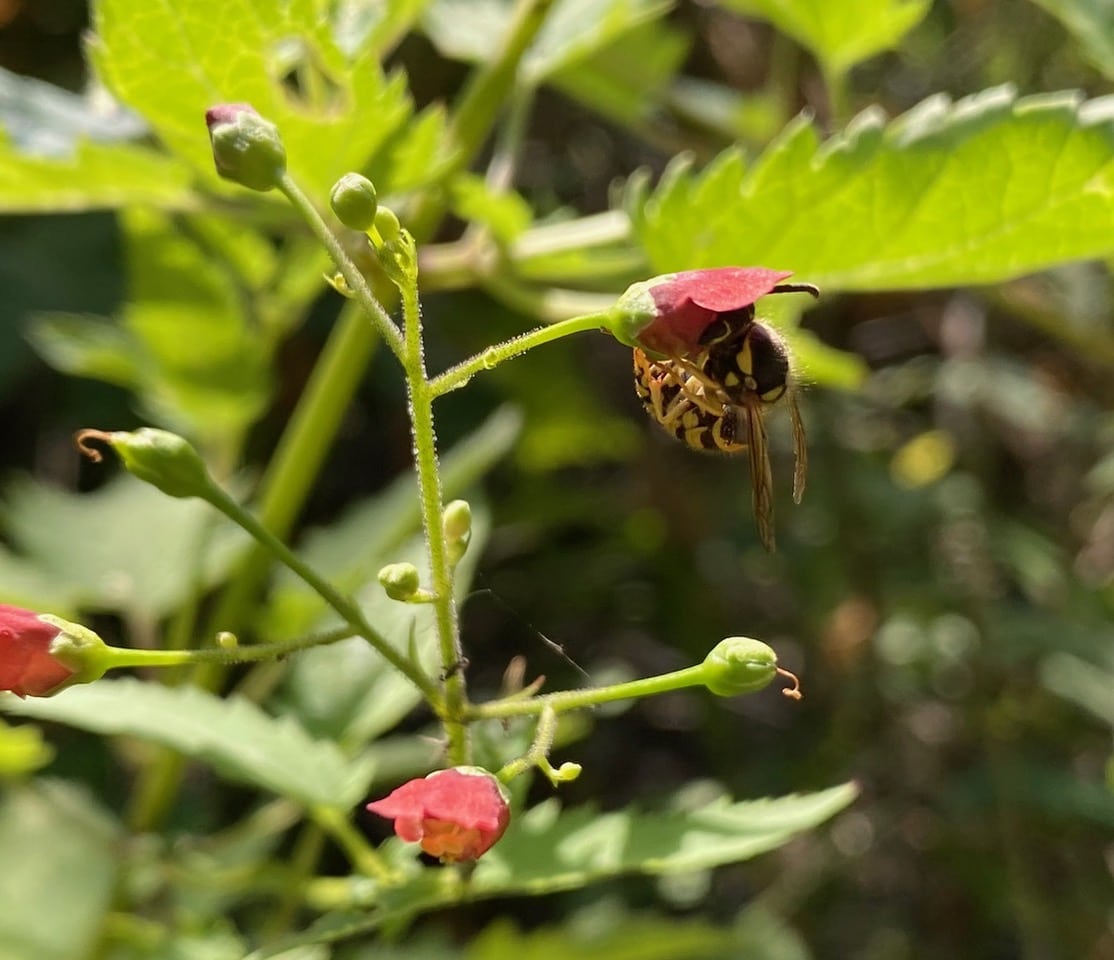
Much to my surprise, I am seeing little bee activity on the flowers of California Bee Plant, Scrophularia californica today. Gone are the Mining Bees, Andrena sp. (family Andrenidae) that used to forage so avidly on these flowers. A few bumble bees are paying some visits, but the most prominent Hymenopteran presence today are the Yellowjacket wasps.
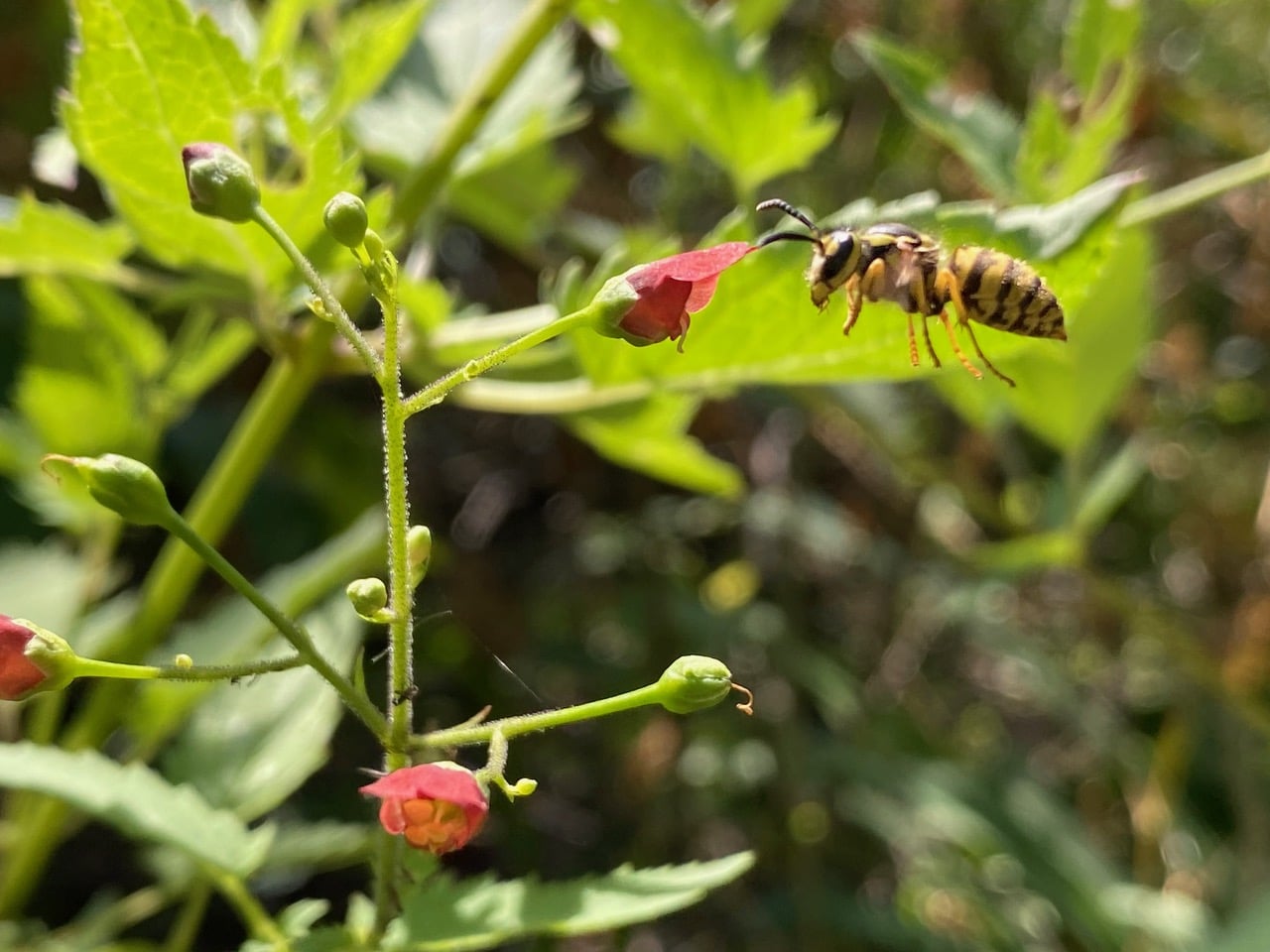



Yellowjacket is the common name for predatory social wasps of the genera Vespula and Dolicovespula (family Vespidae). Yellowjackets are social hunters living in colonies containing workers, queens, and males (drones). Colonies are annual with only inseminated queens overwintering. Queens emerge during the warm days of late spring or early summer, select a nest site, and build a small paper nest in which they lay eggs. They raise the first brood of workers single-handedly. Henceforth the workers take over caring for the larvae and queen, nest expansion, foraging for food, and colony defense. The queen remains in the nest, laying eggs. Later in the summer, males and queens are produced. They leave the parent colony to mate, after which the males quickly die, while fertilized queens seek protected places to overwinter. Parent colony workers dwindle, usually leaving the nest to die, as does the founding queen. In the spring, the cycle is repeated.
Yellowjackets have lance-like stingers with small barbs, and typically sting repeatedly. Their mouthparts are well-developed with strong mandibles for capturing and chewing insects, with probosces for sucking nectar, fruit, and other juices. Yellowjacket adults feed on foods rich in sugars and carbohydrates such as plant nectar and fruit. They also search for foods high in protein such as insects and fish. These are chewed and conditioned in preparation for larval consumption. The larvae secrete a sugary substance that is eaten by the adults.
The Western Yellowjackets typically build nests underground, often using abandoned rodent burrows. The nests are made from wood fiber that the wasps chew into a paper-like pulp. The nests are completely enclosed except for a small entrance at the bottom. The nests contain multiple, horizontal tiers of combs within. Larvae hang within the combs.
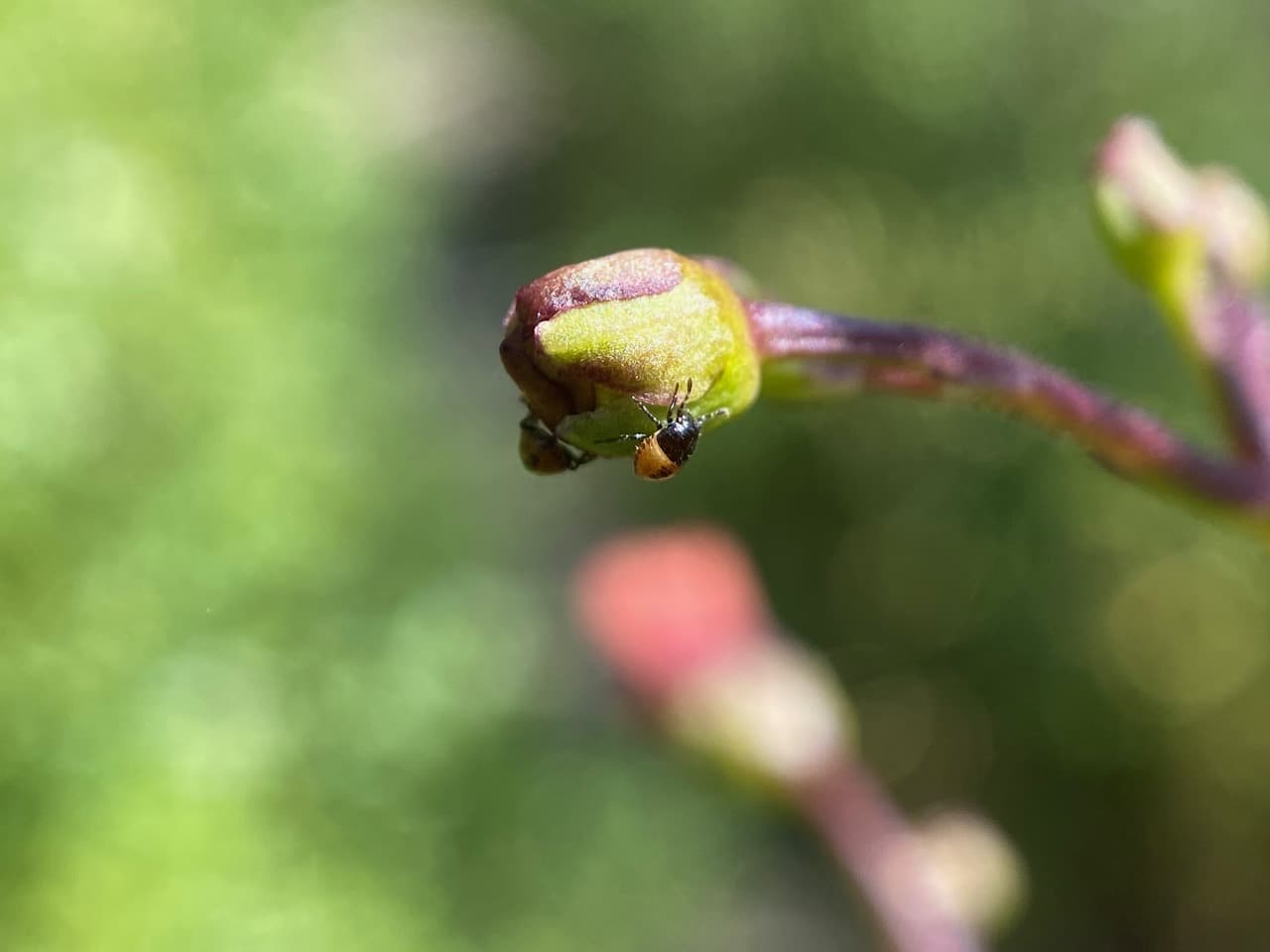
I notice something tiny and glossy on a flower bud of California Bee Plant. Closing in, I find a Stink Bug nymph (family Pentatomidae). I am willing to bet that it is the young of Cosmopepla uhleri that are so commonly seen on the Bee Plant.
Pentatomidae is a family of insects belonging to the order Hemiptera or “true bugs”. As hemipterans, the pentatomids have piercing-sucking mouthparts, and most are phytophagous, including several species that are severe pests on agricultural crops. Stink Bugs feed on plant fluids by inserting their needlelike mouthparts into stems, leaves or seed pods. While feeding, they inject materials into the plant to aid in digestion and sap removal. Penetration by the mouthparts can cause physical damage, much like stabbing the plant with a fine needle.
Here’s another one…
… and another.
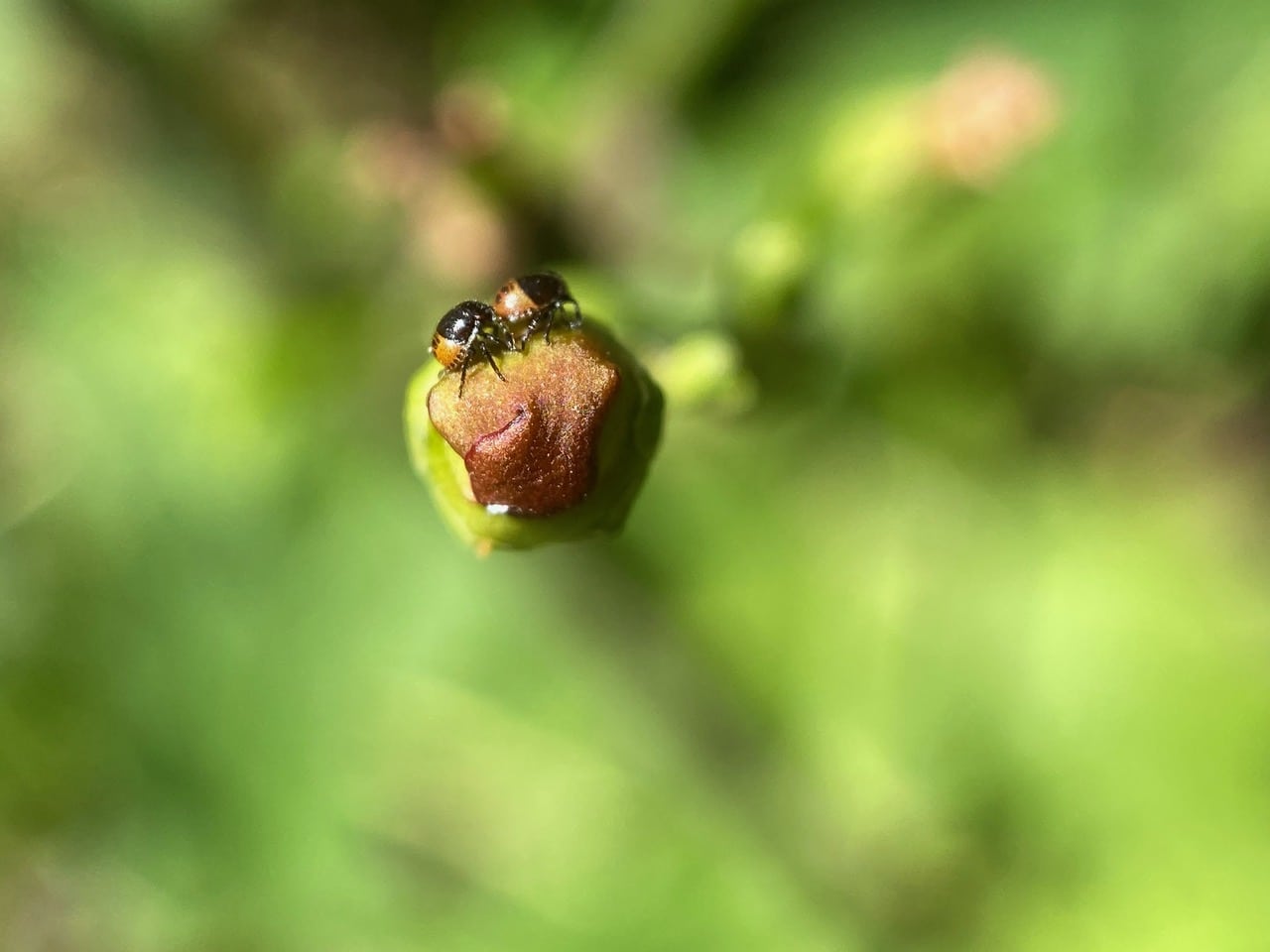
These two nymphs are on a flower bud.
These three nymphs are on a developing fruit.
“True bugs” in the order Hemiptera undergo incomplete metamorphosis without a pupal stage. The nymphs, which look like adults, develop through a series of molts, each time getting bigger after shedding their old exoskeleton. At the last molt, they transform into adults with functional wings and reproductive parts.
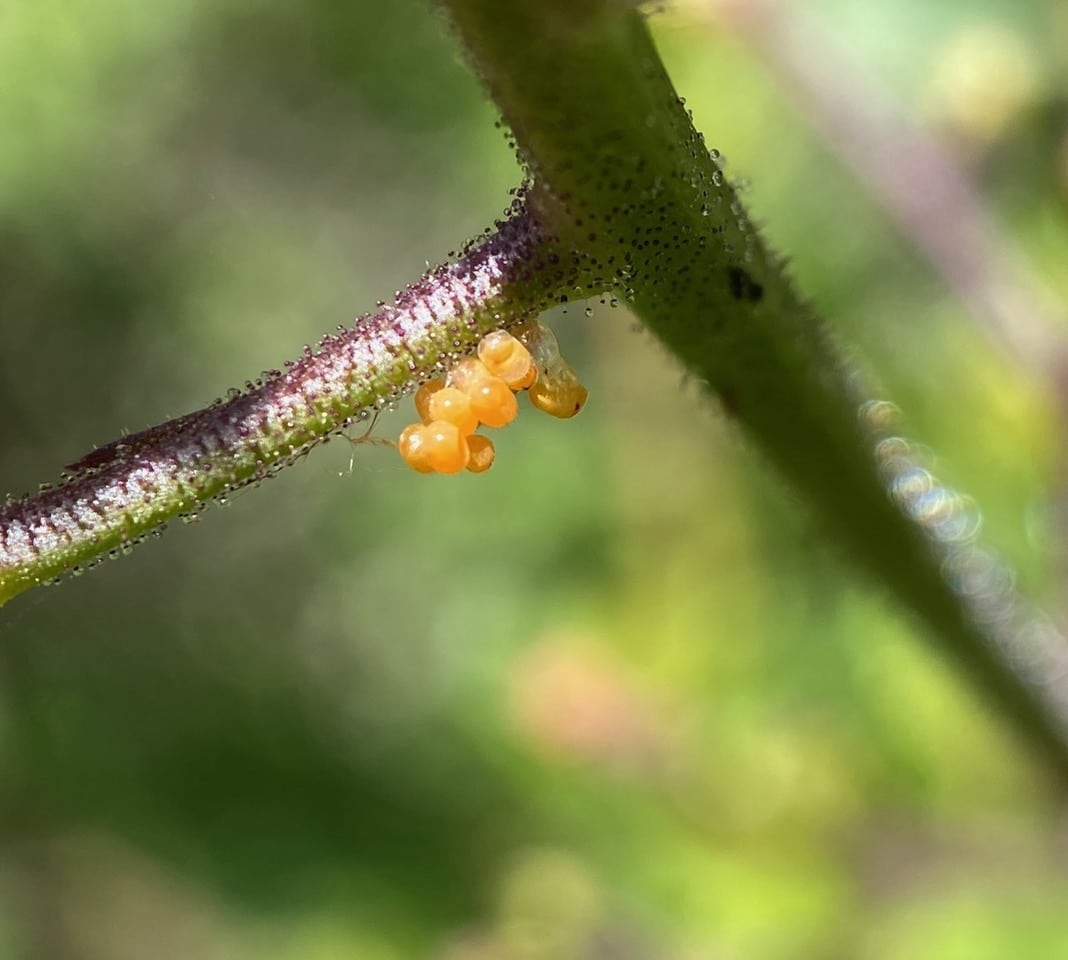
What is this cluster of orange things – insect eggs? When I took this picture, I didn’t realize that two of the eggs are in the process of hatching.
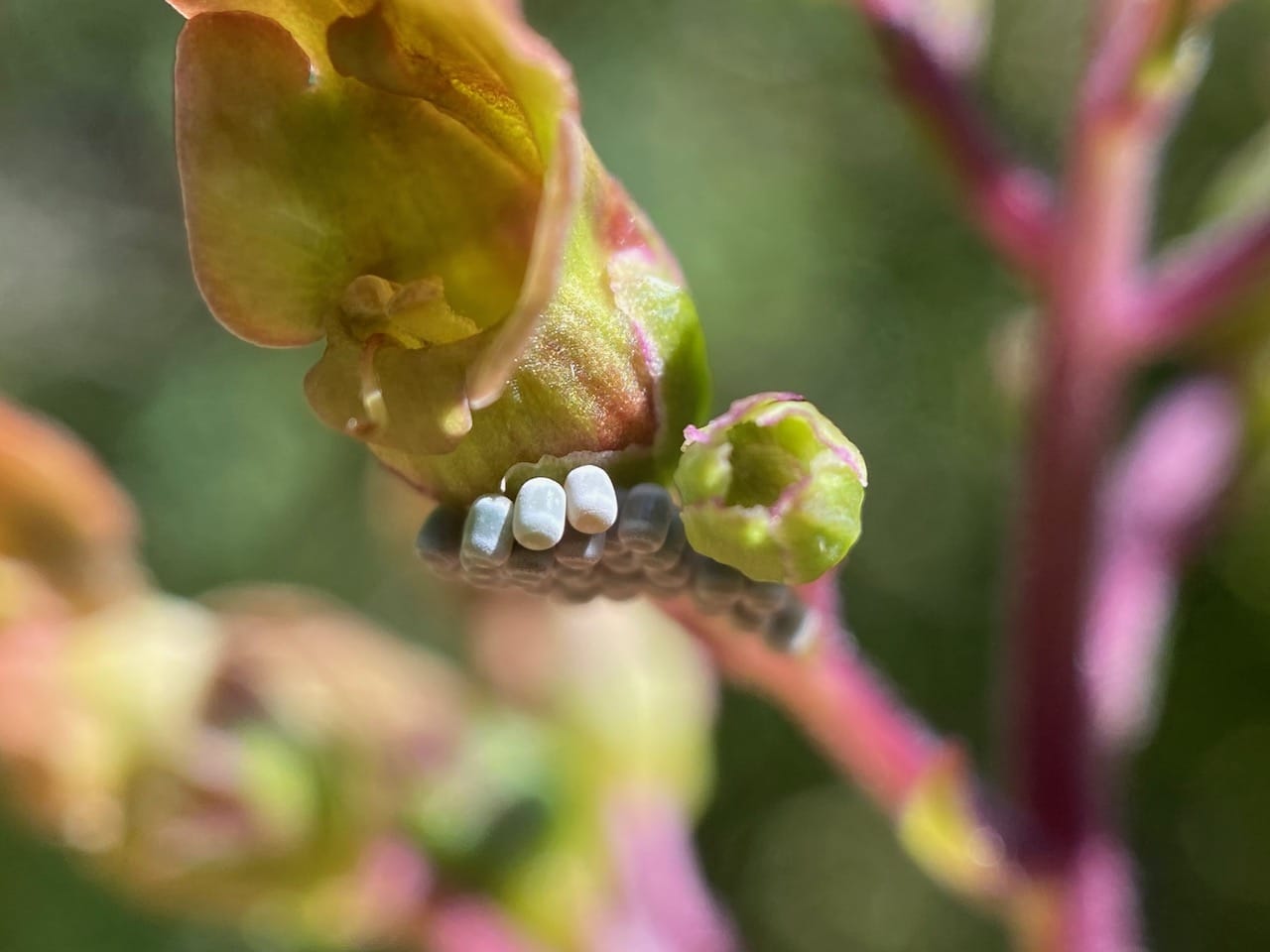
What are those whitish things on the calyx of a Bee Plant flower?
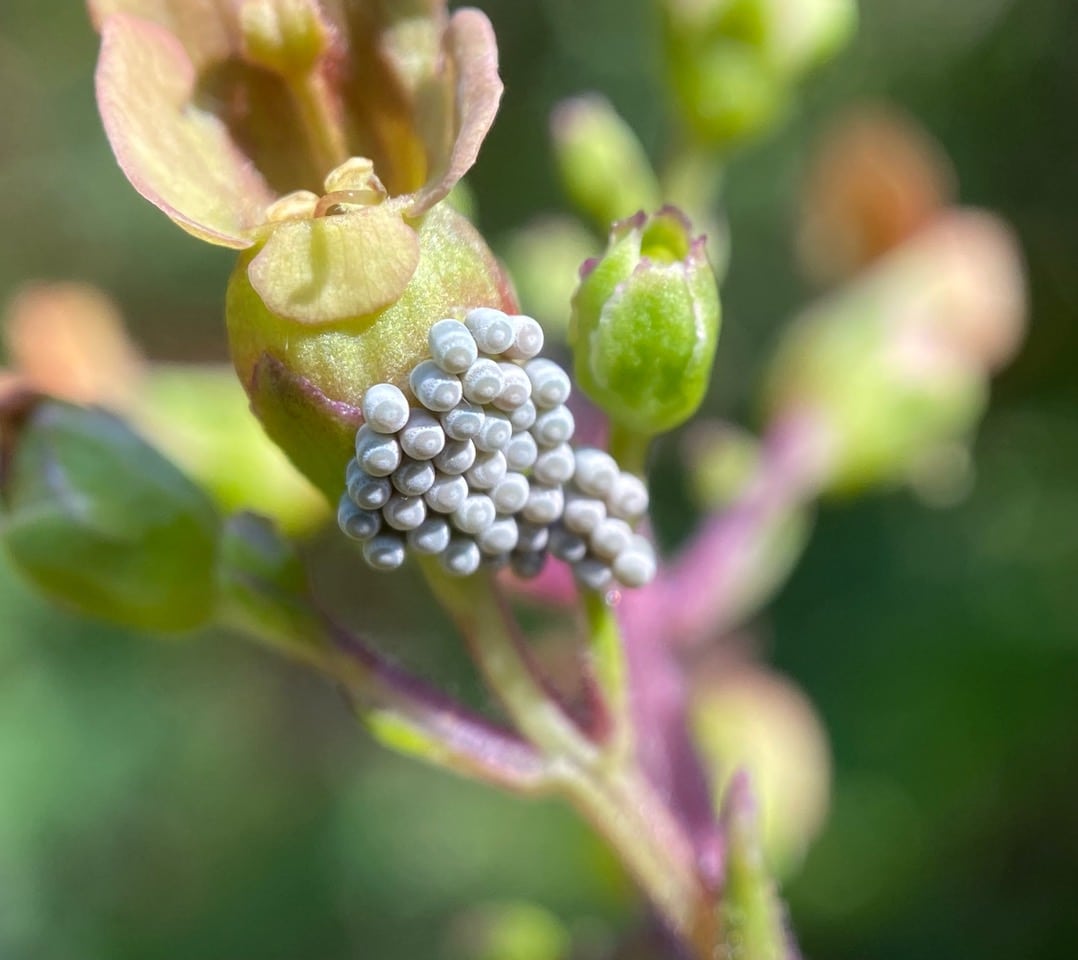
I lift the branch for a better look. There’s a cluster of Stink Bug eggs! Stink Bug eggs are easily recognizable – they are barrel-shaped with pop tops. The eggs hatch synchronously, and the nymphs stay together until their first molt.
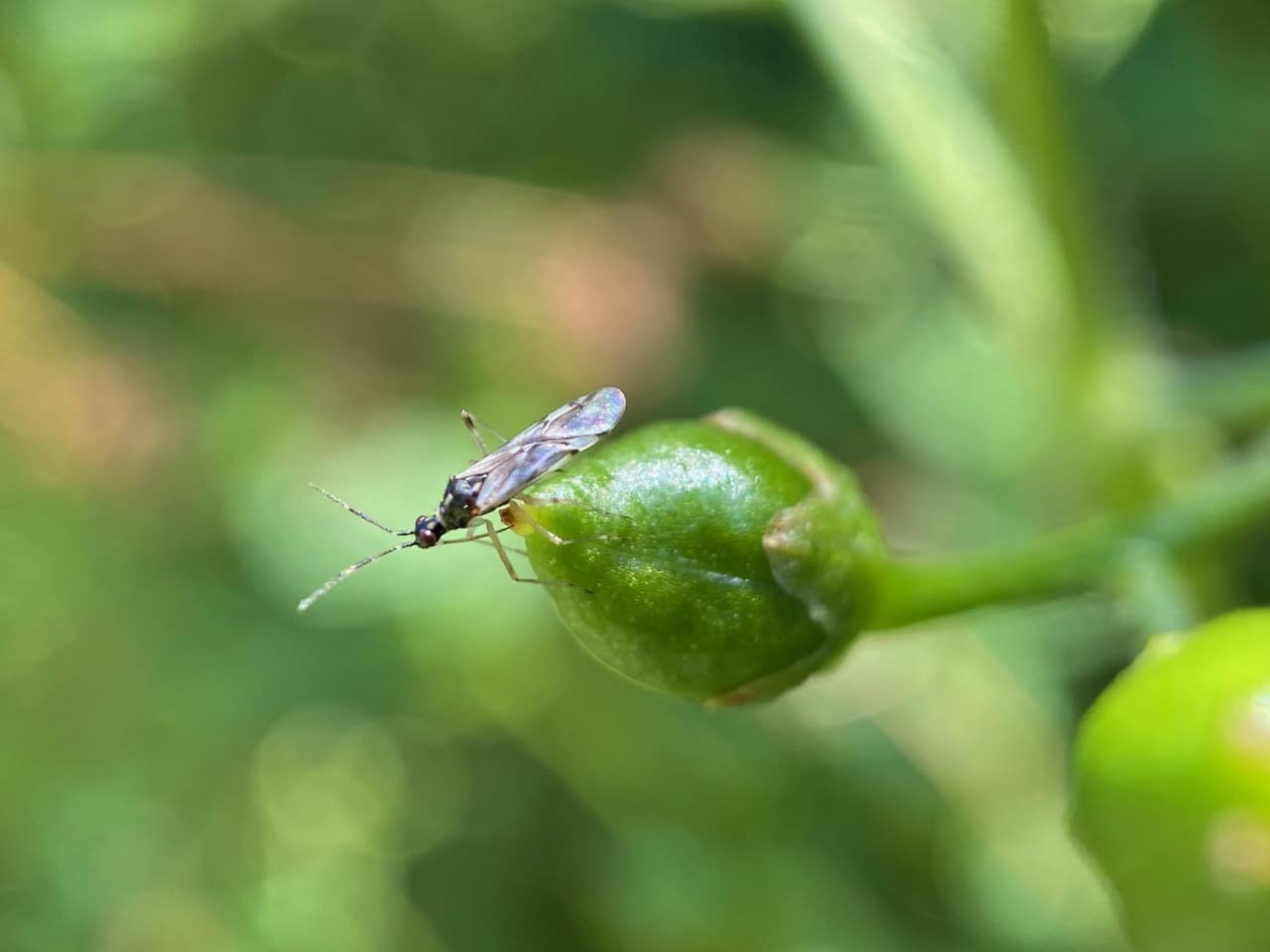
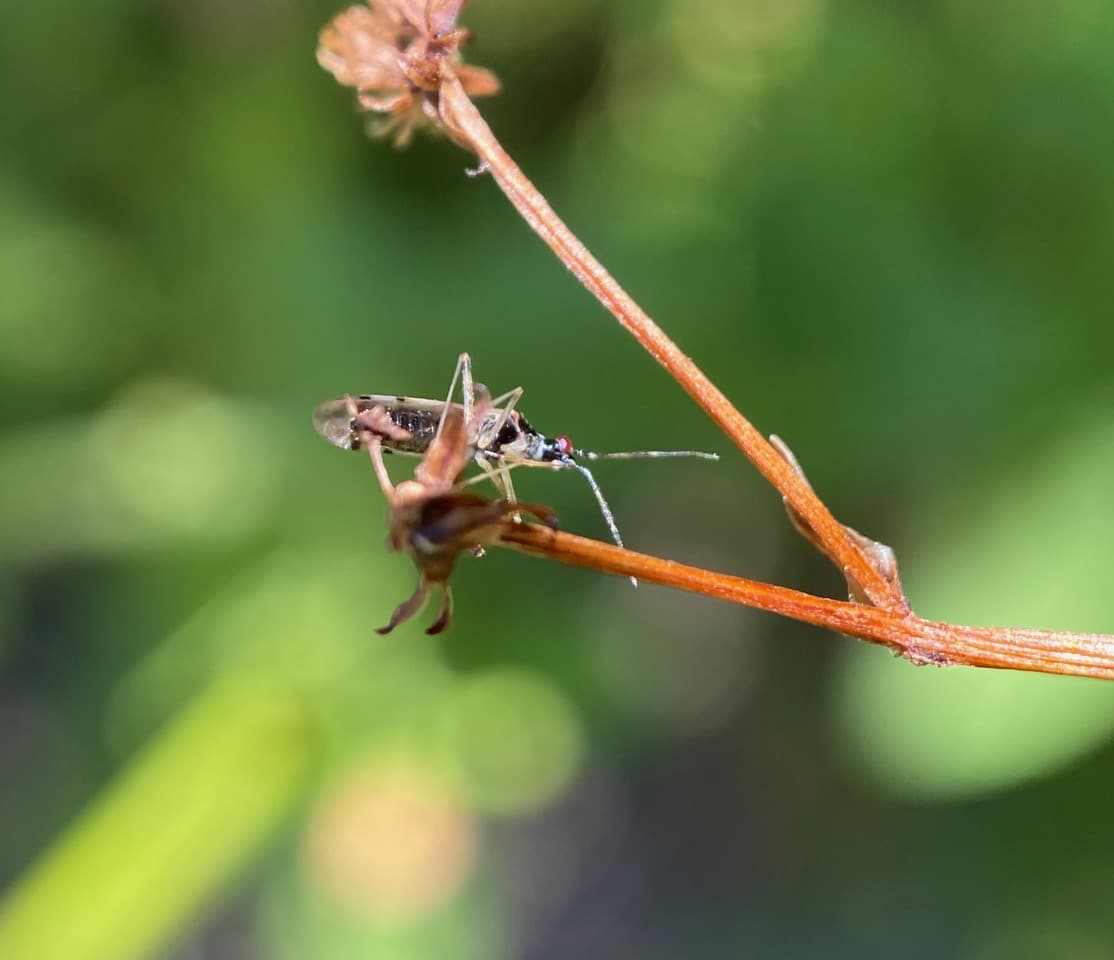
A tiny Plant Bug (family Miridae) is perched on a developing fruit of Bee Plant. Note its piercing-sucking mouthpart folded under its body.
The Plant Bug flies and lands on a twig, giving me a look at its underside. It is very similar to the Phacelia Plant Bug. I wonder if it is carnivorous or phytophagous.
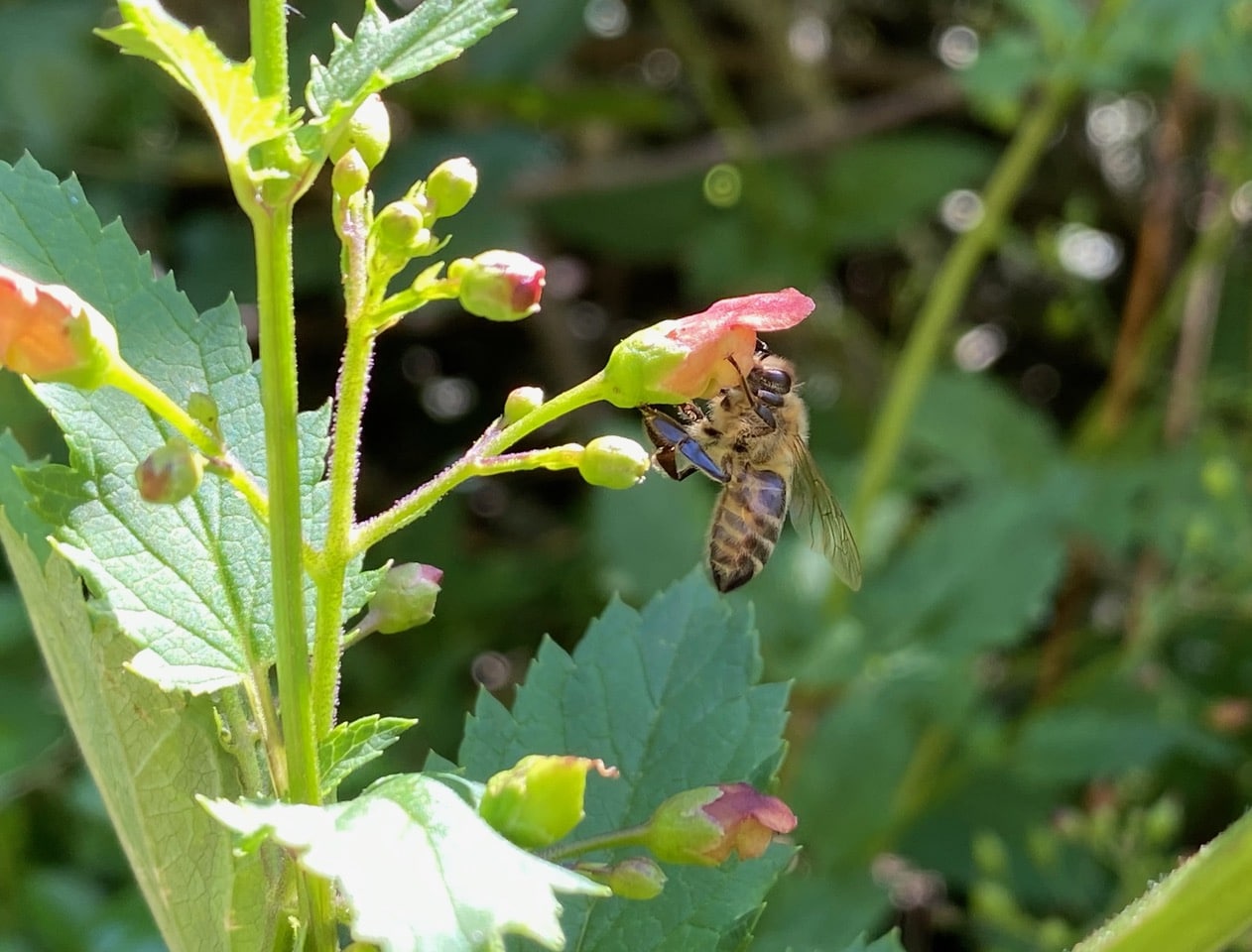
A Honey Bee, Apis mellifera (family Apidae) is visiting a Bee Plant flower. Her pollen baskets are empty. She’s probably taking nectar, and not collecting pollen.
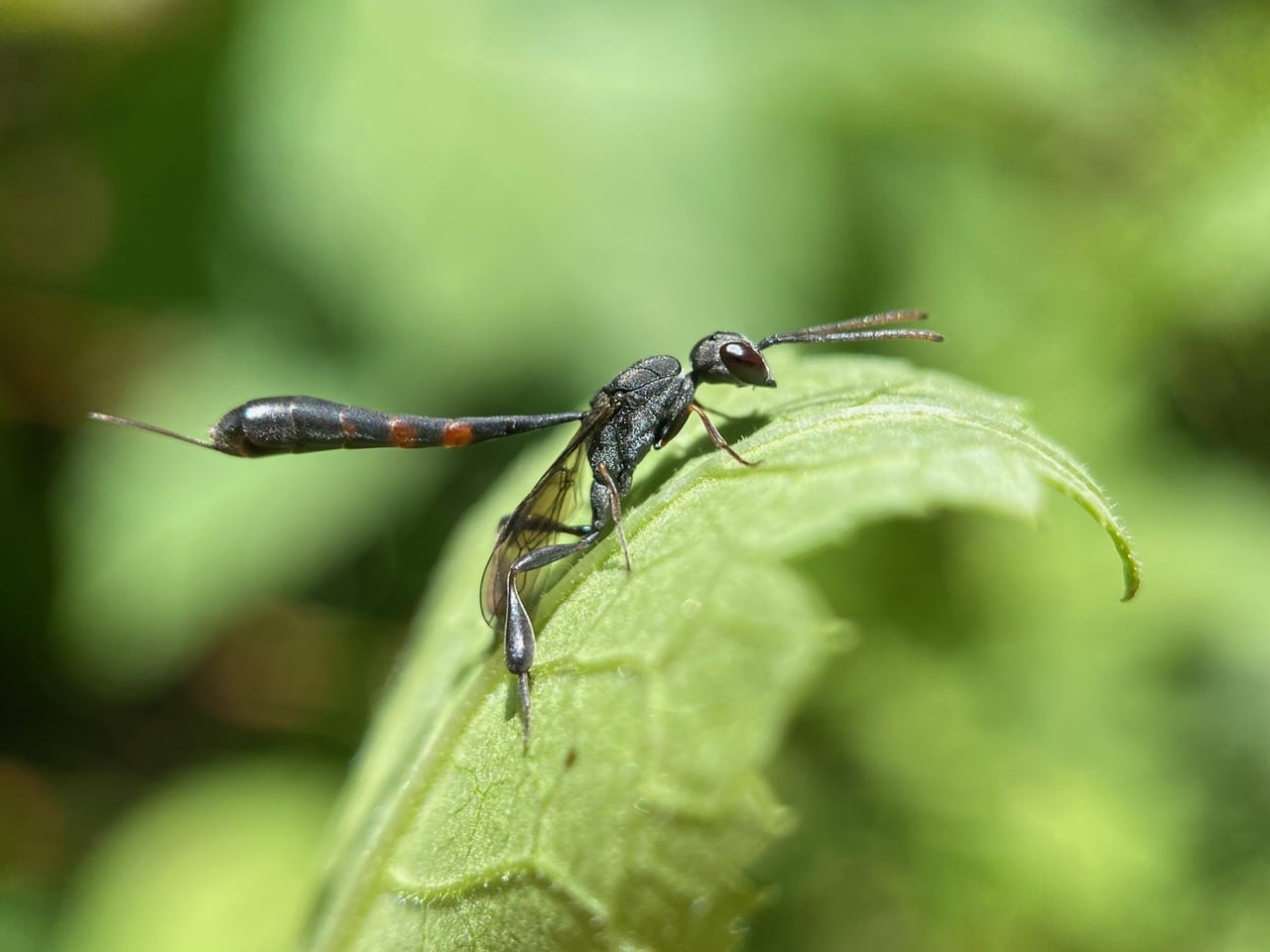
Who’s that strange creature perched on the back of a Bee Plant leaf? It is a Carrot Wasp in the genus Gasteruption (family Gasteruptiidae).
Gasteruption has a worldwide distribution. They are small wasps, from 13-40 mm depending on the species, and much of that length owing to the long ovipositor in females of some species. The wasps are so skinny they have been called “flying needles”. The wasp has a pronounced “neck” between head and thorax. The abdomen is attached high up on the thorax, not between hind legs. Hind tibia are swollen.
Adult wasps are most often found at flowers, especially those in the carrot family, Apiaceae, hence their common name of “carrot wasps”. Flight activity peaks in late spring and/or mid-summer. Carrot Wasps are parasites of solitary bees and wasps that nest in twigs or borings in wood. The female wasp needs her long ovipositor to reach the depths of a host’s tunnel and deposit an egg. The larva that hatches out prey upon the host eggs, larvae and provisions. They have been recorded in the nests of digger bees, plasterer bees, leaf-cutter bees, mud daubers, and pollen wasps.