

Pollinator Post 6/17/24 (2)
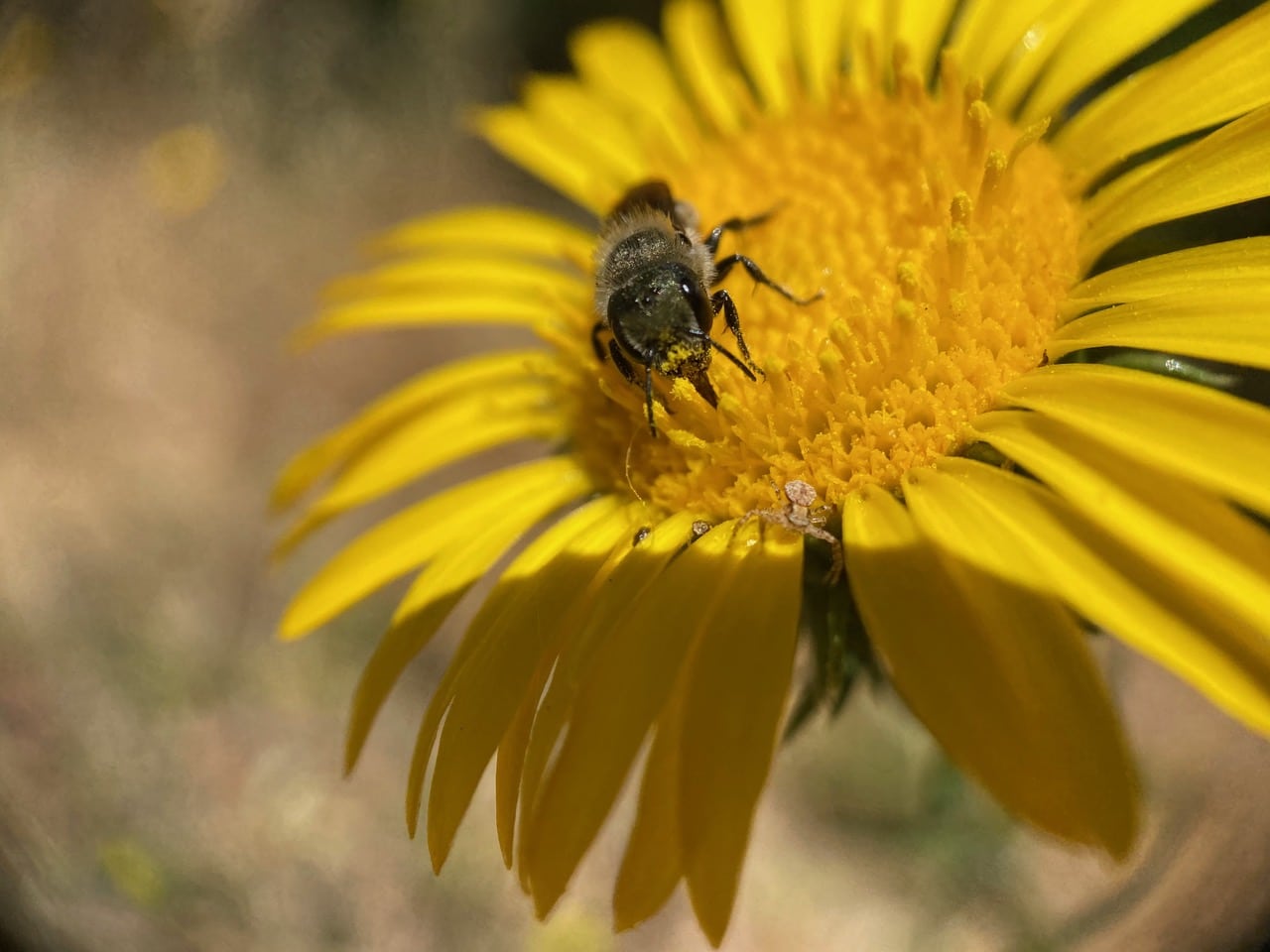
A Mason Bee, Osmia sp. (family Megachilidae) is taking nectar on a Hairy Gumweed flowerhead, Grindelia hirsutula.
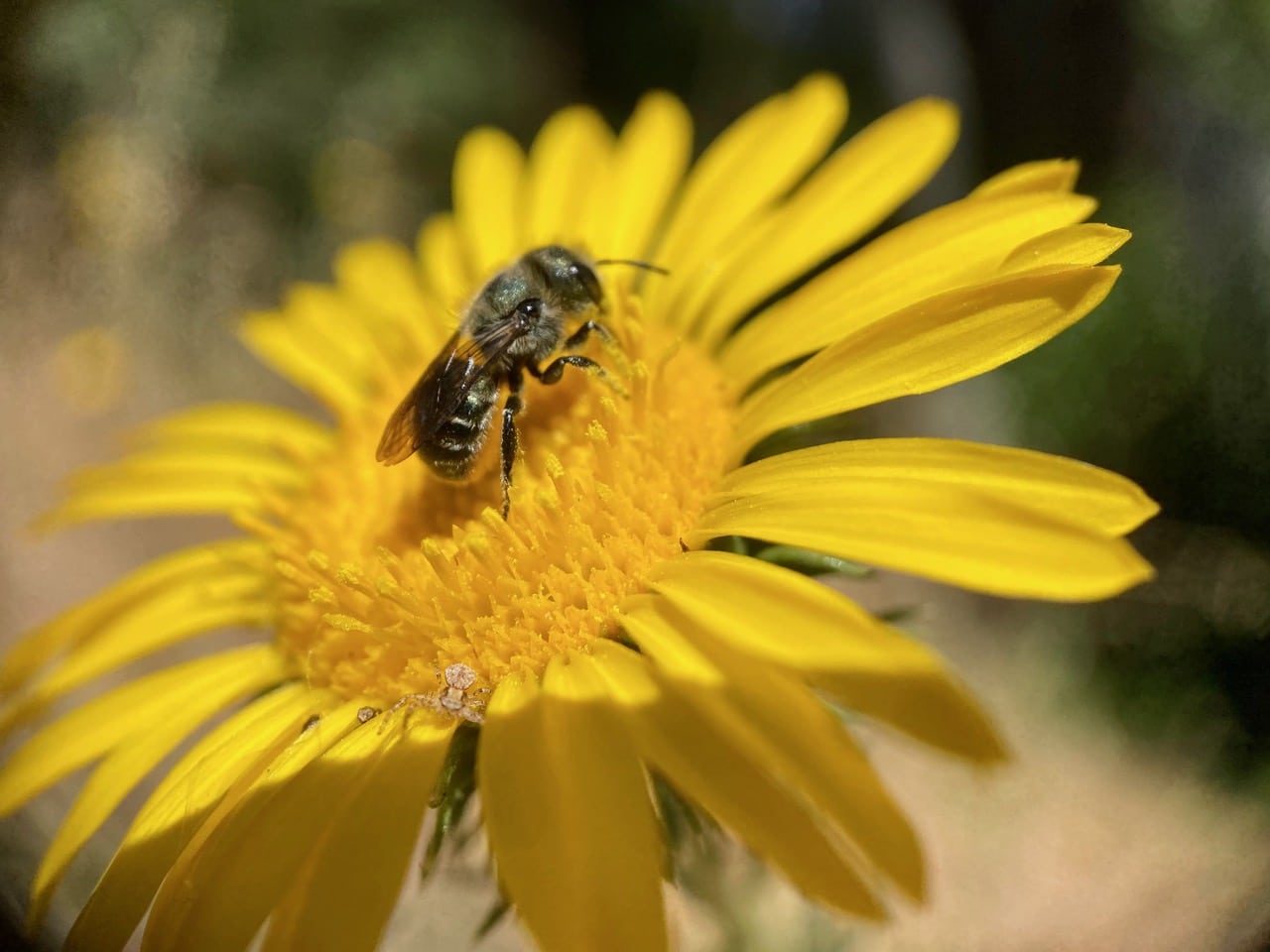
The little bee is simultaneously taking nectar and collecting pollen by gently and rapidly tapping her abdomen on the surface of the flowerhead. Note that she has no scopa on her hind leg. Her abdominal scopa is barely visible as a fuzzy yellow area on the underside of her abdomen. The bee has chosen well – the fresh flowerhead has numerous disc flowers in the male phase, dispensing pollen on top to their anther tubes.
Mason Bee is a name commonly used for species of bees in the genus Osmia, of the family Megachilidae. Mason Bees are named for their habit of using mud or other “masonry” products in constructing their nests, which are made in naturally occurring gaps/cavities such as cracks in stones, hollow stems or holes in wood made by wood-boring insects. Osmia means ‘odor’, and refers to a faint lemony scent used by these bees to mark their nest entrances. Osmia species are frequently metallic green or blue. Females have black ventral scopae (special pollen collecting hairs) on the underside of their abdomen, which are difficult to see unless laden with pollen. Ventral abdominal scopae is a feature shared by all members of the Megachilidae family, which include the wool-carder bees (genus Anthidium), and leaf-cutter bees (genus Megachile).
Mason Bees are a solitary species. Every female is fertile and makes her own nest. Each nest cell is provisioned with pollen and contains one egg which will develop into a larva. The female creates a partition of mud between the nest cells. The process continues until she has filled the cavity. She plugs the entrance to the cavity, and then may seek another nest location. The larvae that hatch out consume their provisions and begin spinning a cocoon around itself and enters pupal stage. Adults mature in fall or winter, hibernating inside its cocoon.
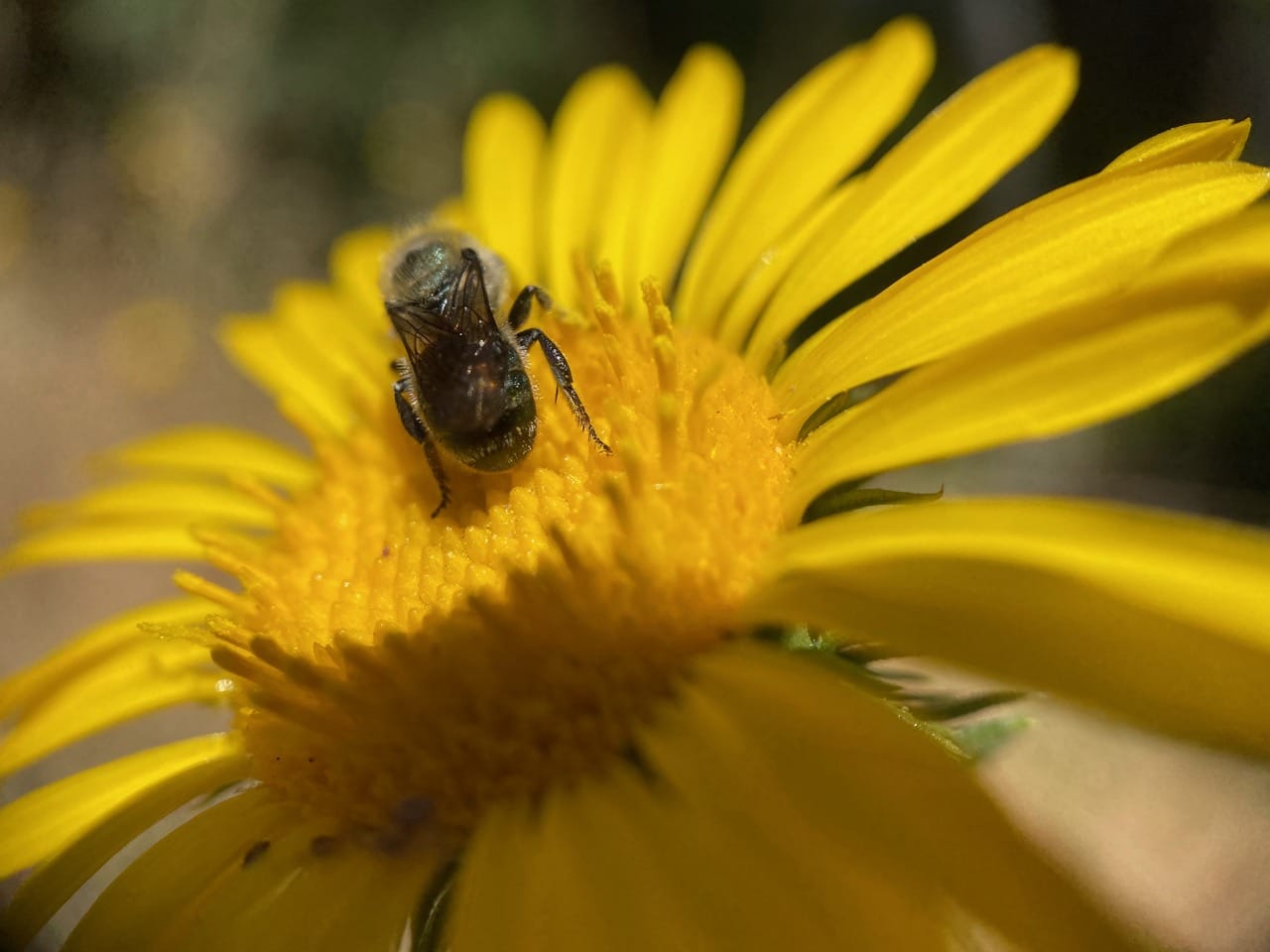
Note there’s no scopa on Osmia’s hind legs.
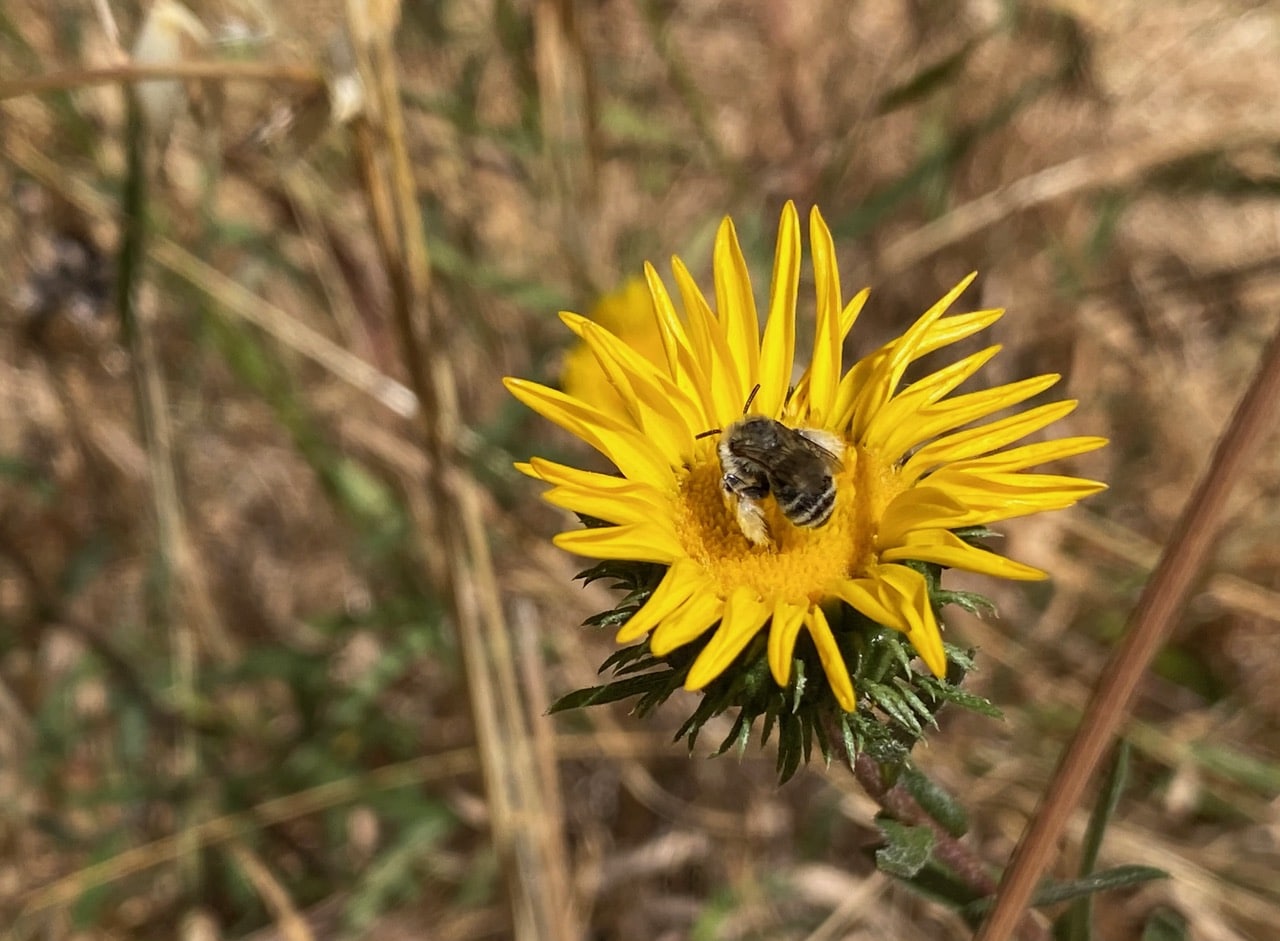
A robust bee is foraging on a Grindelia flowerhead. Judging from the size of the pollen load on her hind legs, I figure she’s probably a female Longhorn Bee, either in the genus Eucera, or genus Melissodes.
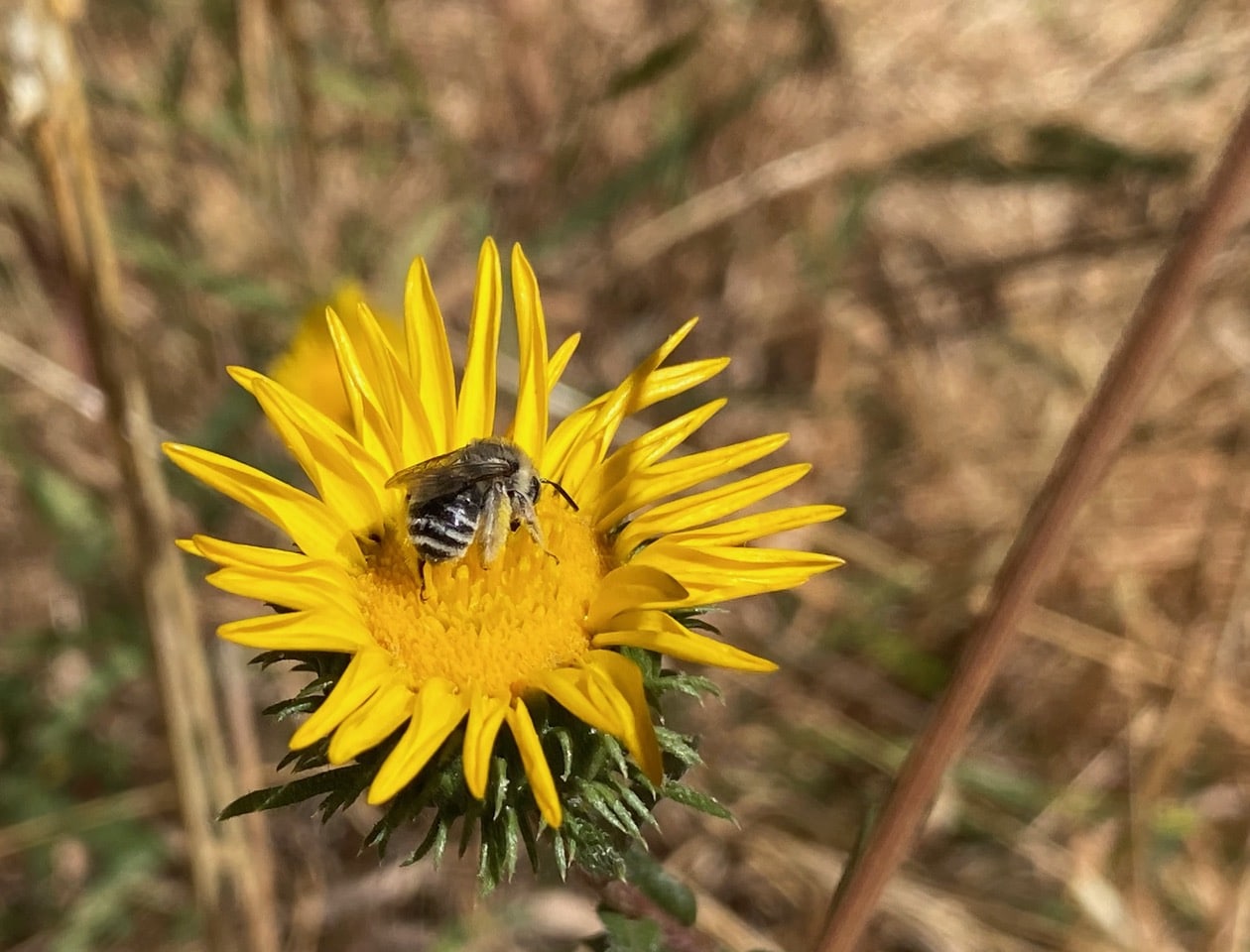
Like other members of Apidae, long-horned bees are typically quite hairy and have long tongues, making them great at acquiring nectar and pollen resources. Females have particularly long and thick hairs on their hind legs for pollen collection, and males have long antennae, hence the common name “long-horn”. Long-horned bees can be both generalist and specialists in terms of their resource collection. In our area, there are two genera which we are most likely to find in our local gardens: Eucera and Melissodes.
The Eucera genus is made up of larger bees. Males have long antennae which are completely black in color. Most Eucera are generalist, and collect resources from a wide variety of flowering plants. Those that are specialists tend to favor plants in the Asteraceae family. Eucera are typically ground nesters, with incredibly small tunnels and inconspicuous burrow openings.
The Melissodes genus is almost exclusively found in North and South America. Generally, Melissodes fly later in the year and are smaller than Eucera bees. They are sometimes called Summer Longhorn Bees. Melissodes and Eucera bees tend to prefer the same flower resources, and specialists in Melissodes also prefer plants in Asteraceae including Helianthus, Rudbeckia, and Solidago. Like the Eucera, Melissodes are also ground-nesters.
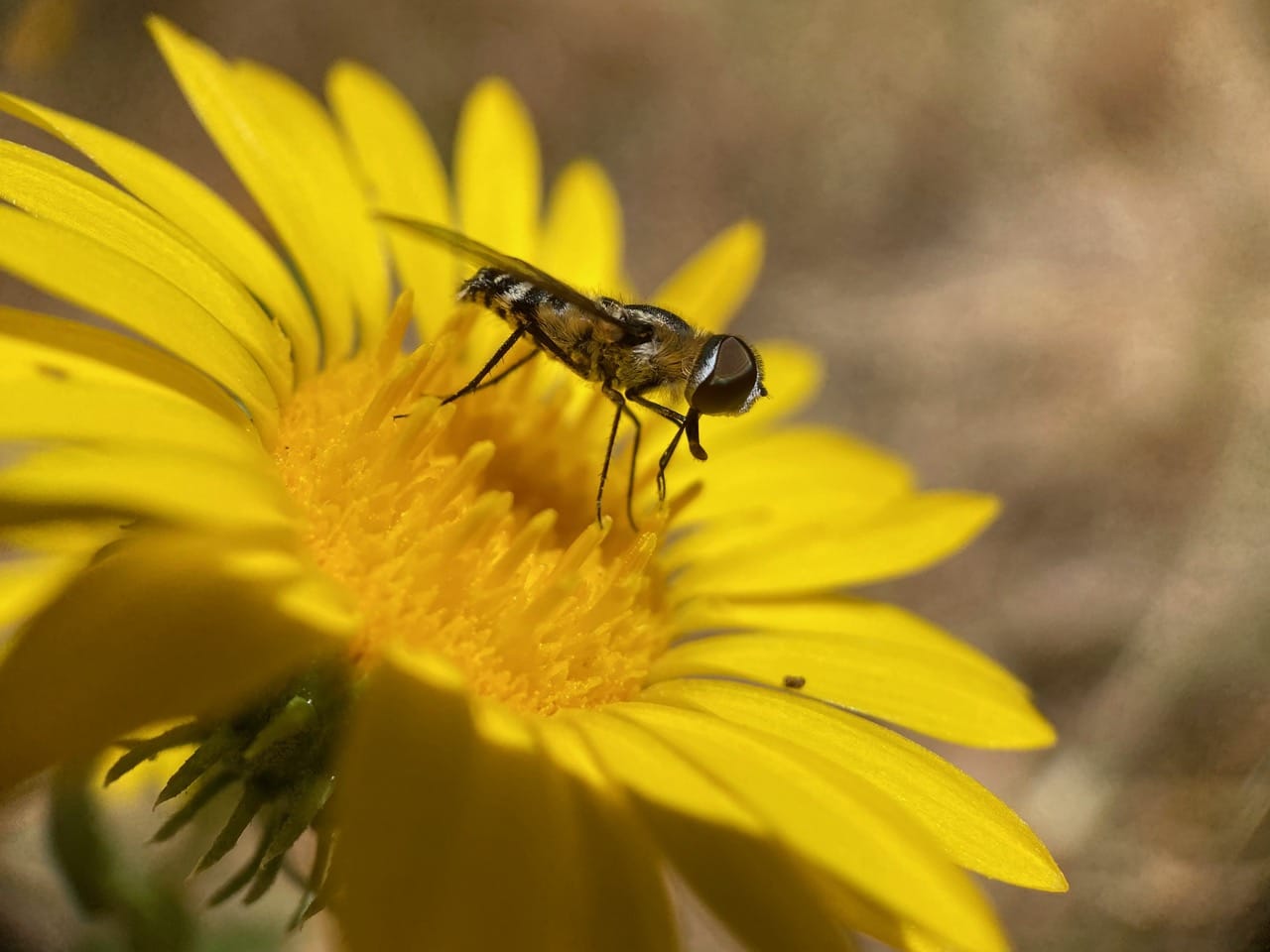
A Bee Fly, Villa lateralis (family Bombyliidae) lands on a Grindelia flowerhead.
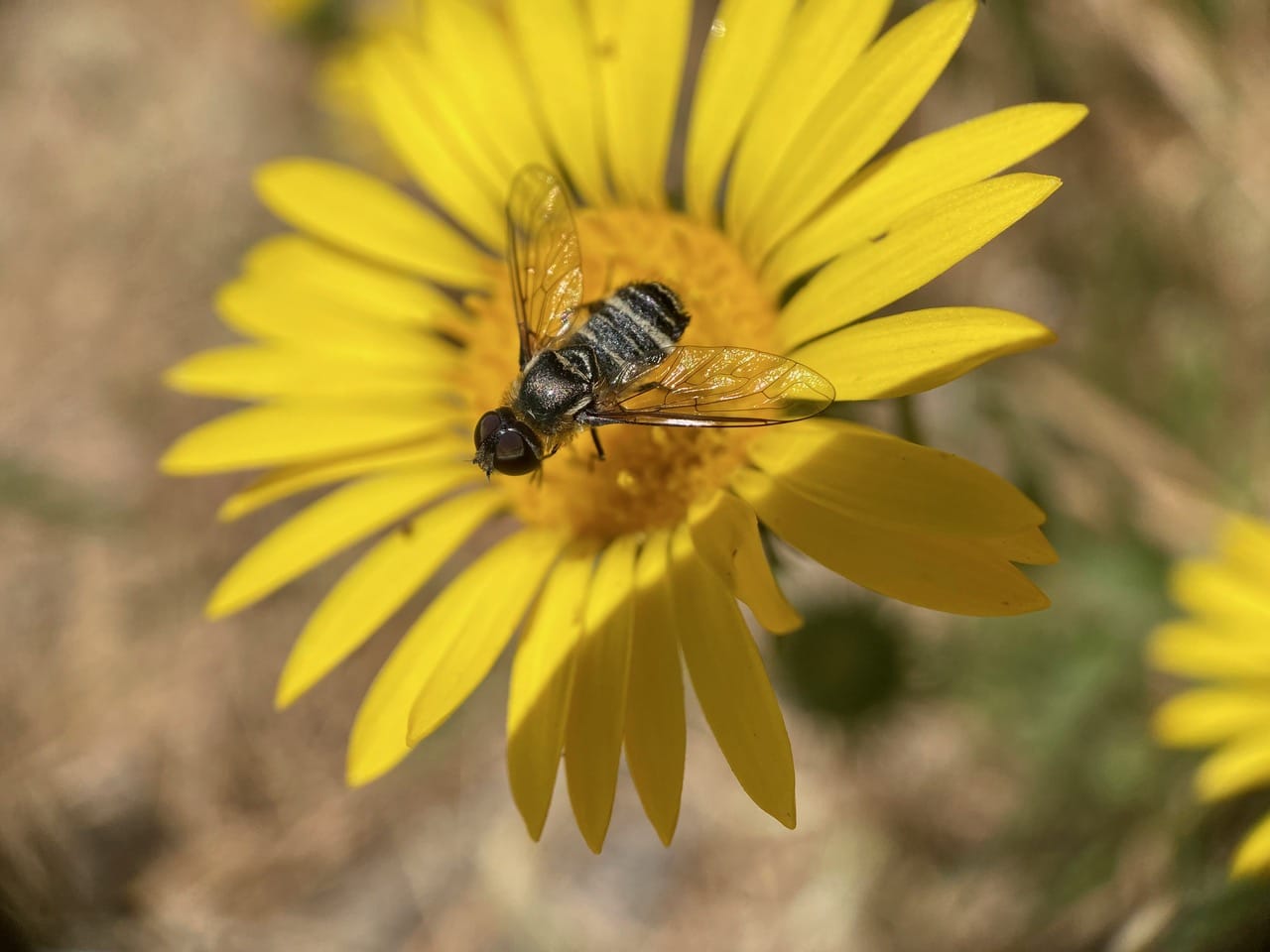
The Bee Flies belong to the family Bombyliidae. Adults generally visit flowers for nectar and pollen, some being important pollinators. Larvae generally are parasitoids of other insects. When at rest, many species of bee flies hold their wings at a characteristic “swept back” angle. The adult females usually deposit eggs in the vicinity of possible hosts, quite often in the burrows of beetles or ground-nesting bees/wasps. Bombyliidae parasitism is not host-specific, but rather opportunistic, using a variety of hosts. Adult females of the genus Villa lay eggs in mid-air and flick them towards the nest entrances of their hosts. They typically have an eversible pouch near the tip of their abdomen known as a sand chamber, which is filled with sand grains gathered before egg laying. These sand grains are used to coat each egg just before their aerial release, presumably to improve the female’s aim by adding weight.

Ooh, another female Longhorn Bee! They are easily recognizable from the large scopae on their hind legs, and also from the flowers they forage on – invariably members of the sunflower family Asteraceae. These bees are sunflower specialists.
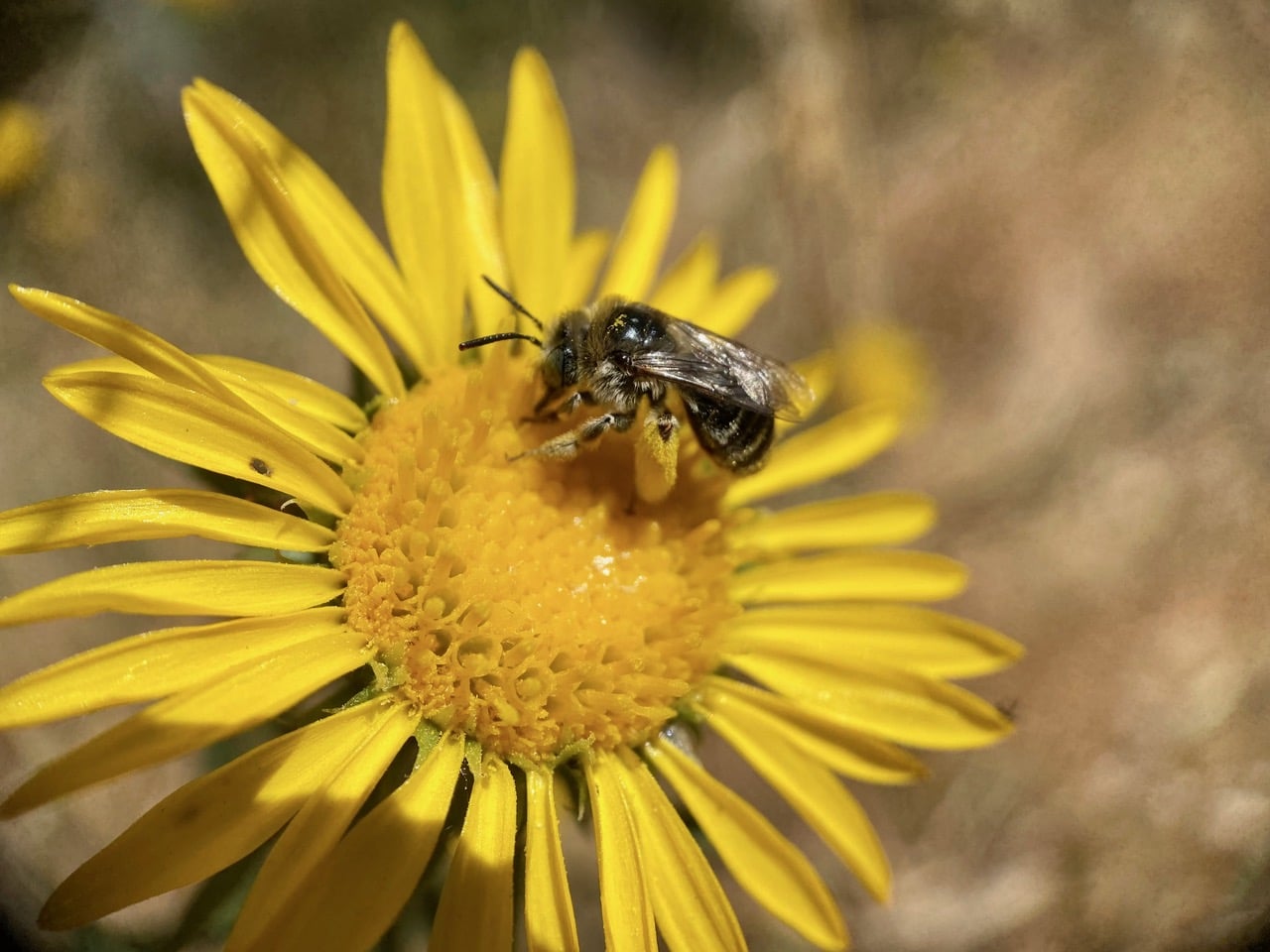
When her scopae are filled with pollen, the bee appears to be wearing big fuzzy pantaloons.

Off to the next flower!
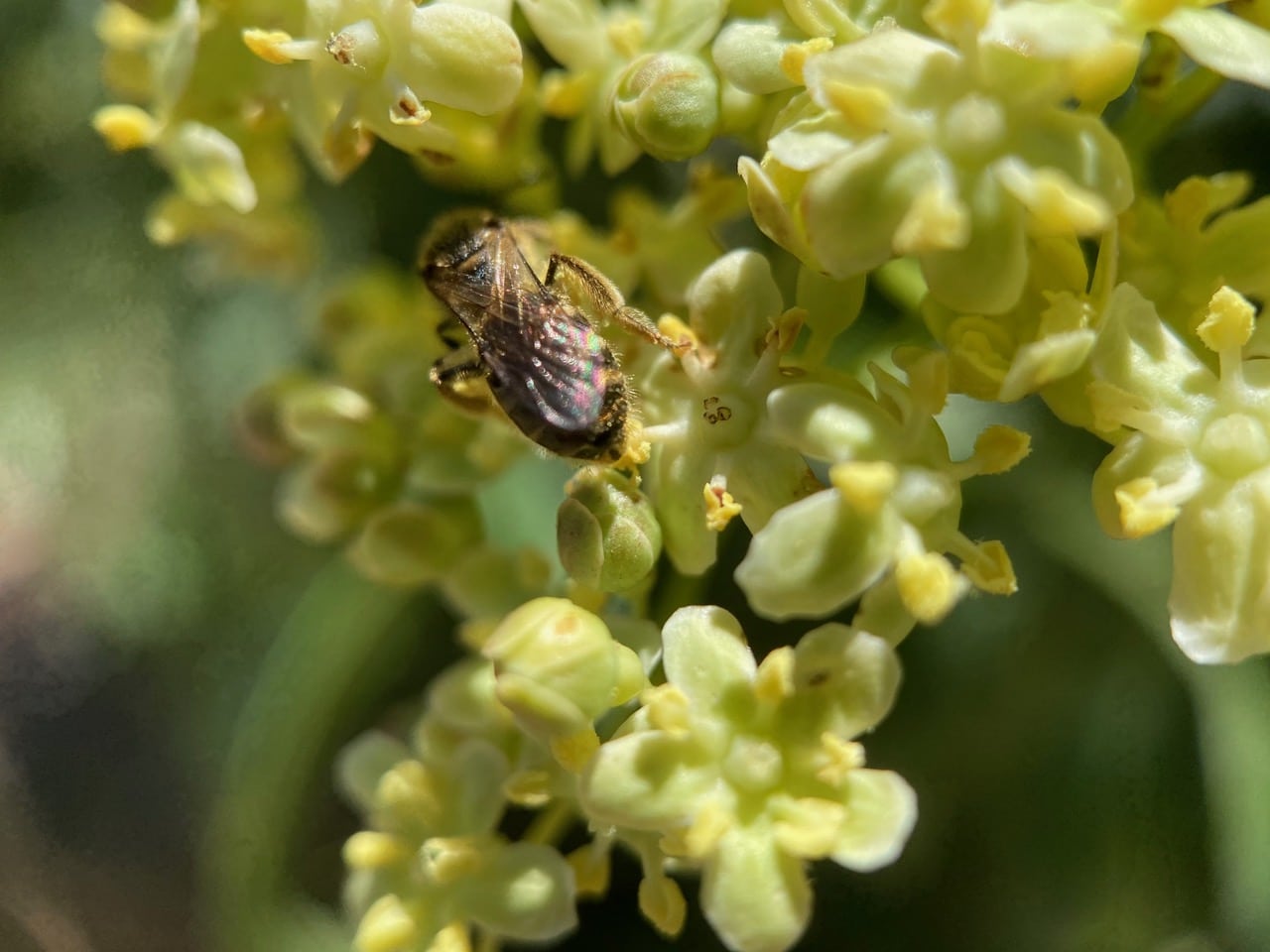
My eyes are getting more attuned to spotting small bees on the tight clusters of flowers of the Blue Elderberry, Sambucus mexicana. This appears to be a Sweat Bee, Halictus sp. (family Halictidae). Her scopae appear to be relatively empty.

The Sweat Bee is working on the anthers of the flowers and filling up her scopae with pollen.
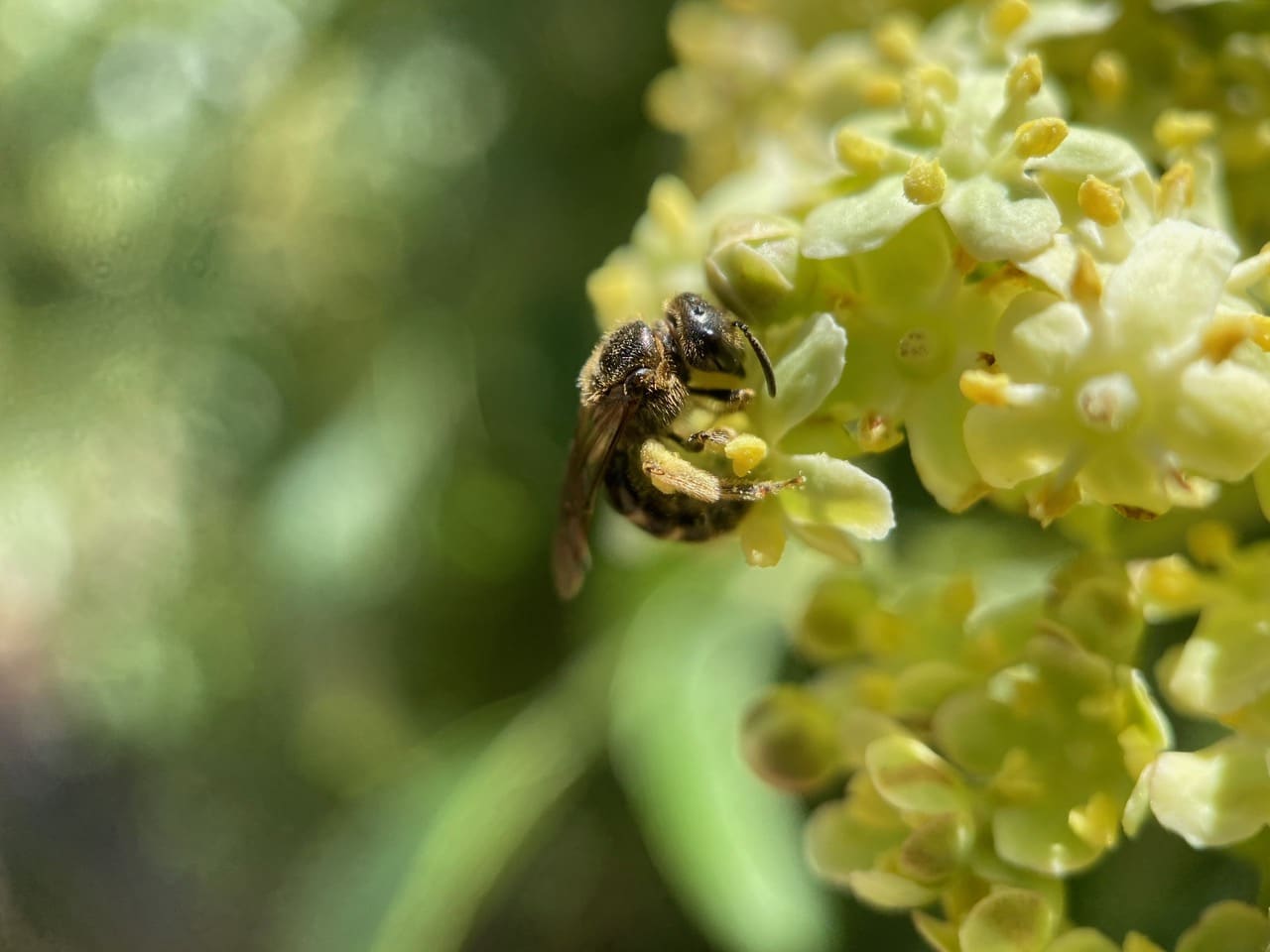
It’s all in a day’s work!

As I pass the same patch of Fennel along the road, I discover more early instar Anise Swallowtail caterpillars.
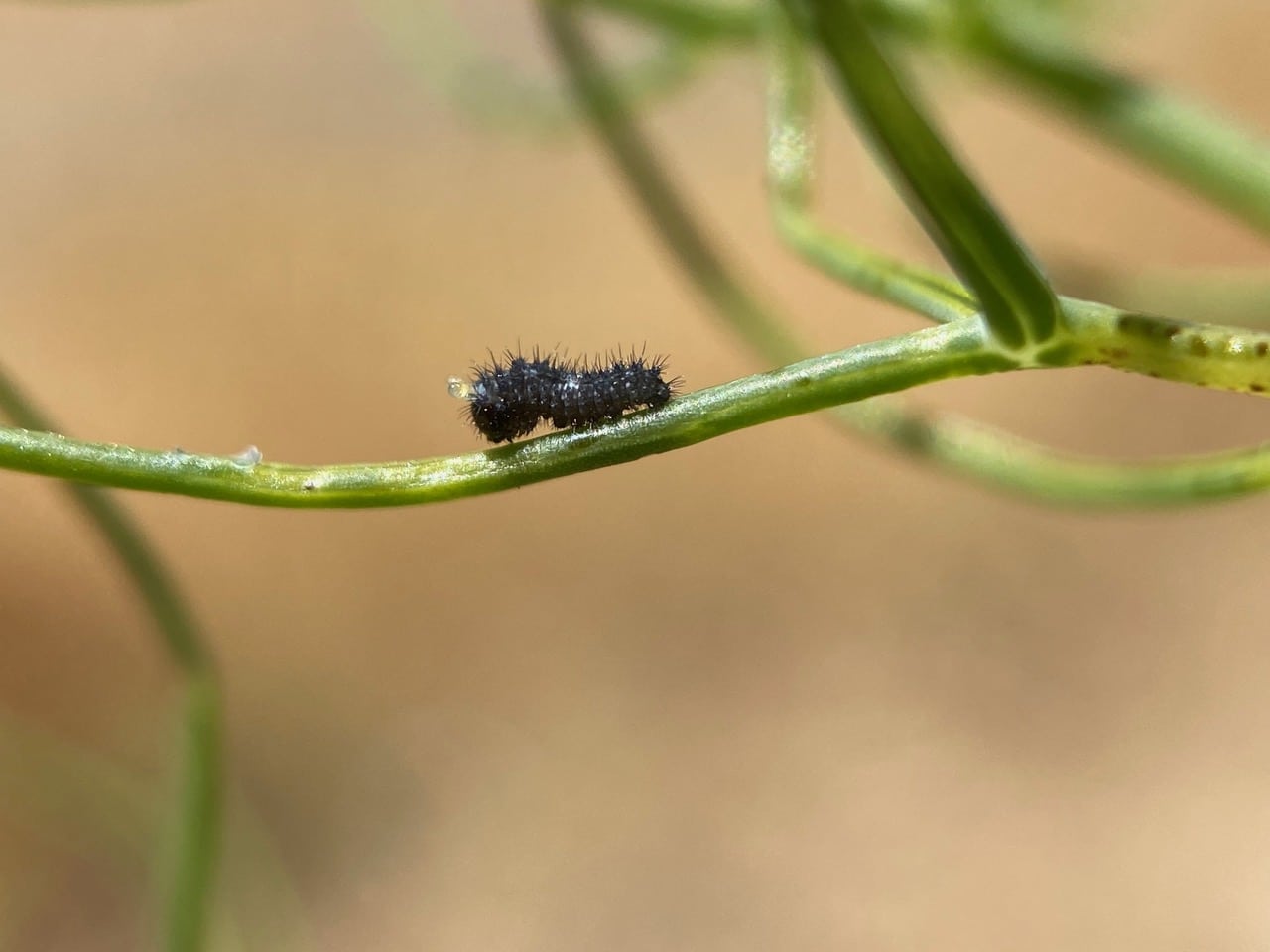
Ooh, what’s that wet-looking droplet above the caterpillar’s head? Is that its osmeterium? Even though I have reared scores of Swallowtail butterflies, I have never seen osmeterium on such small caterpillars! I had to raise the branch into the light for the photo, and maybe the disturbance has alarmed the little caterpillar and caused it to extrude its osmeterium.
The osmeterium is a defensive organ found in all Swallowtail caterpillars (family Papilionidae), in all stages. The organ is situated right behind the head and can be everted when the caterpillar feels threatened, emitting a foul smelling secretion. The everted organ resembles a fleshy forked tongue, is usually brightly colored, and might be used to startle and repel potential predators. The chemical constituents of the secretion have been shown to repel or kill ants and mantids.

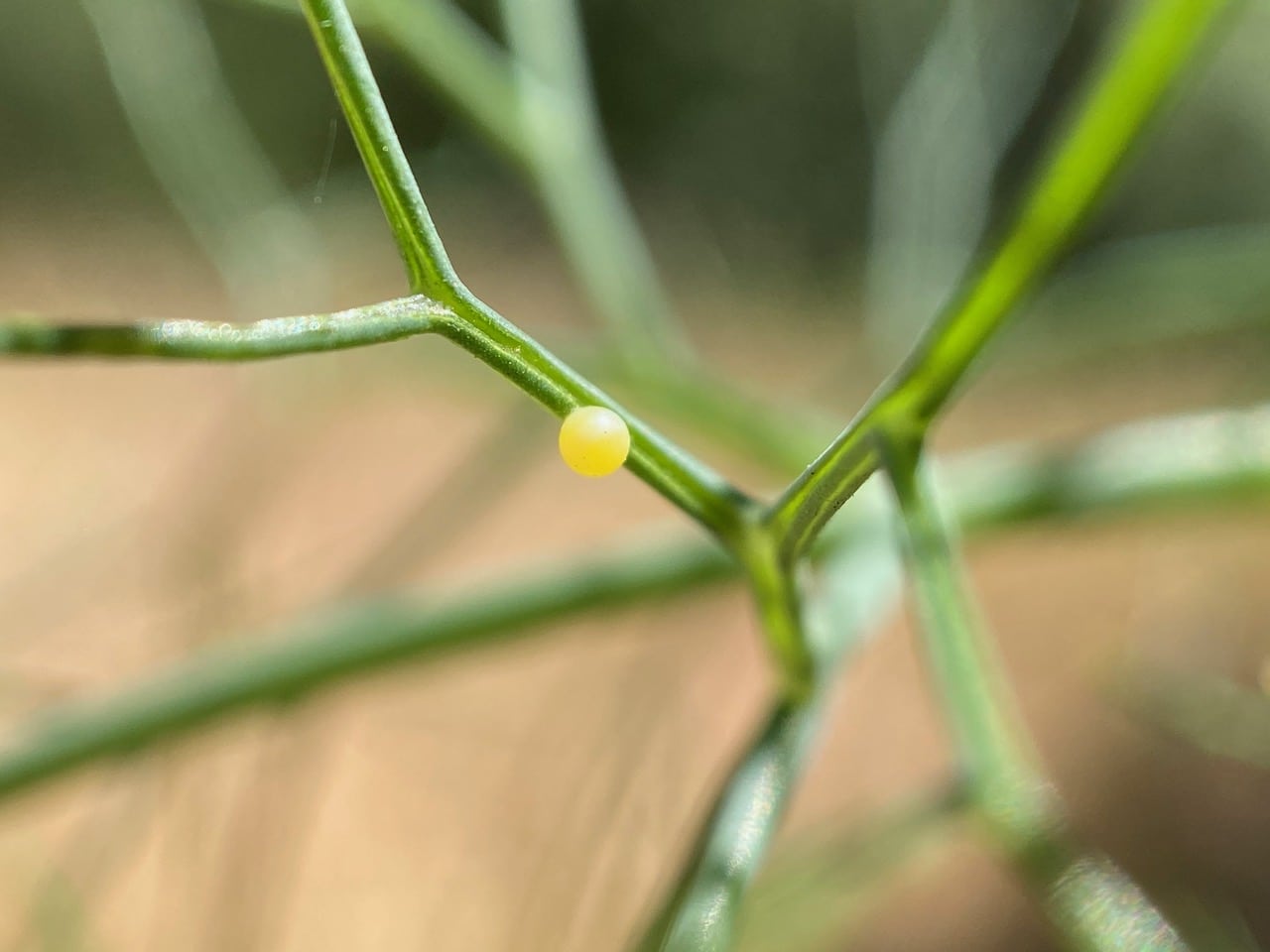
More fresh eggs on the Fennel leaves.
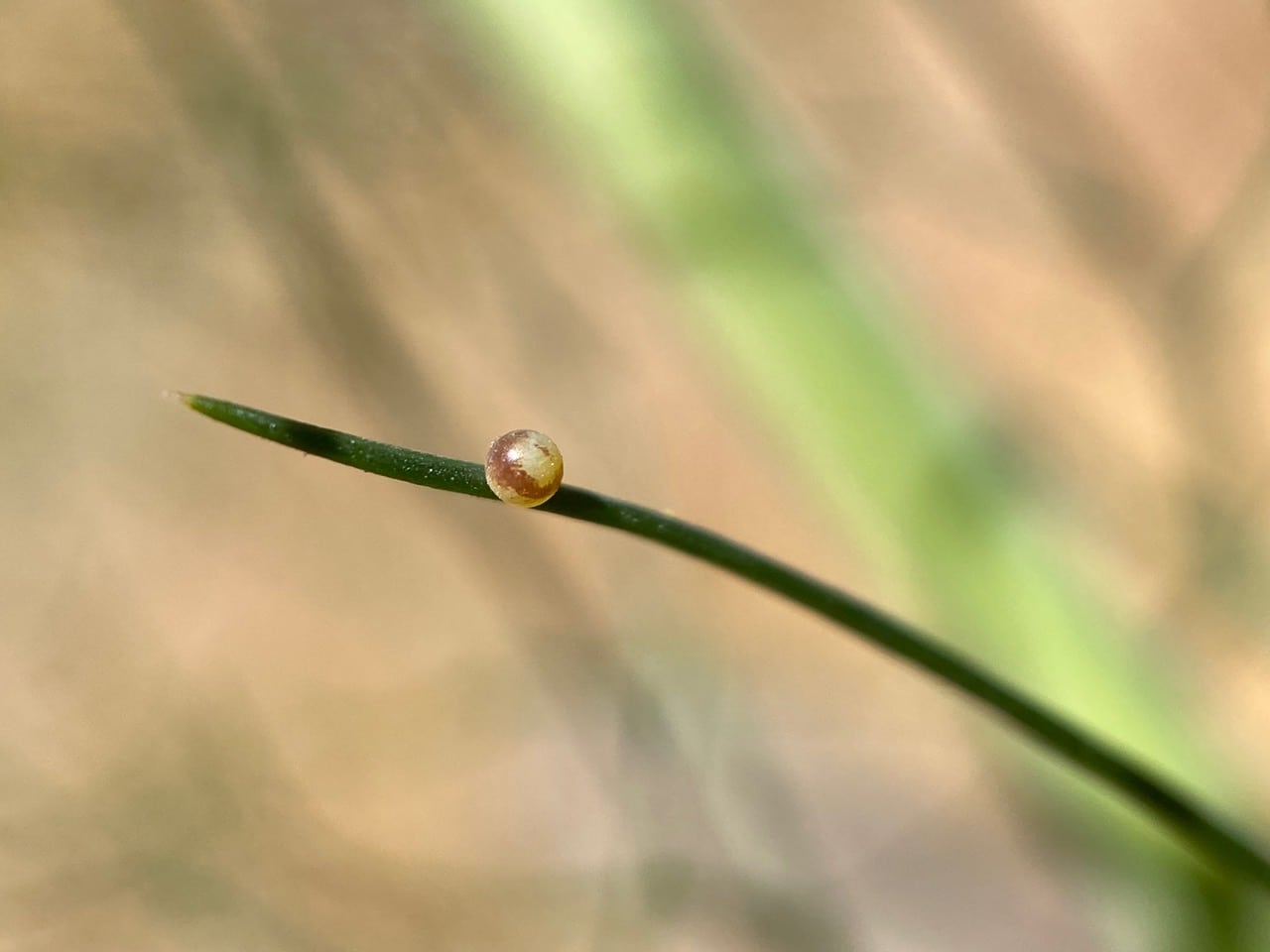
Ooh, this egg looks like it might be hatching soon! As I stop by the Fennels I have marked earlier with red yarn, a female Anise Swallowtail flies languidly among the plants, occasionally landing to lay eggs! I quickly take a video of her.