

Pollinator Post 7/5/24 (2)
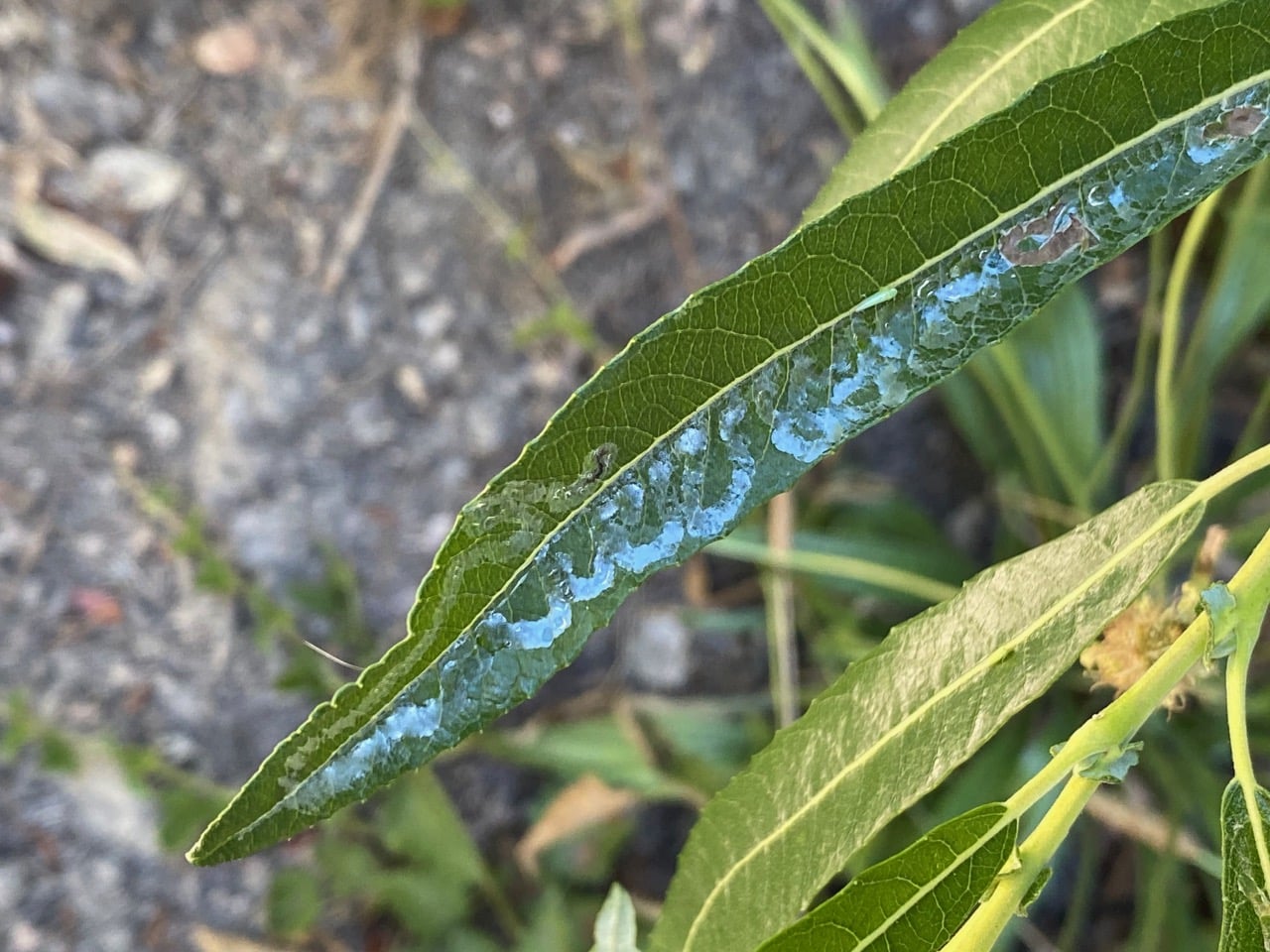
Something is glinting silver on a leaf of Arroyo Willow, Salix lasiolepis.
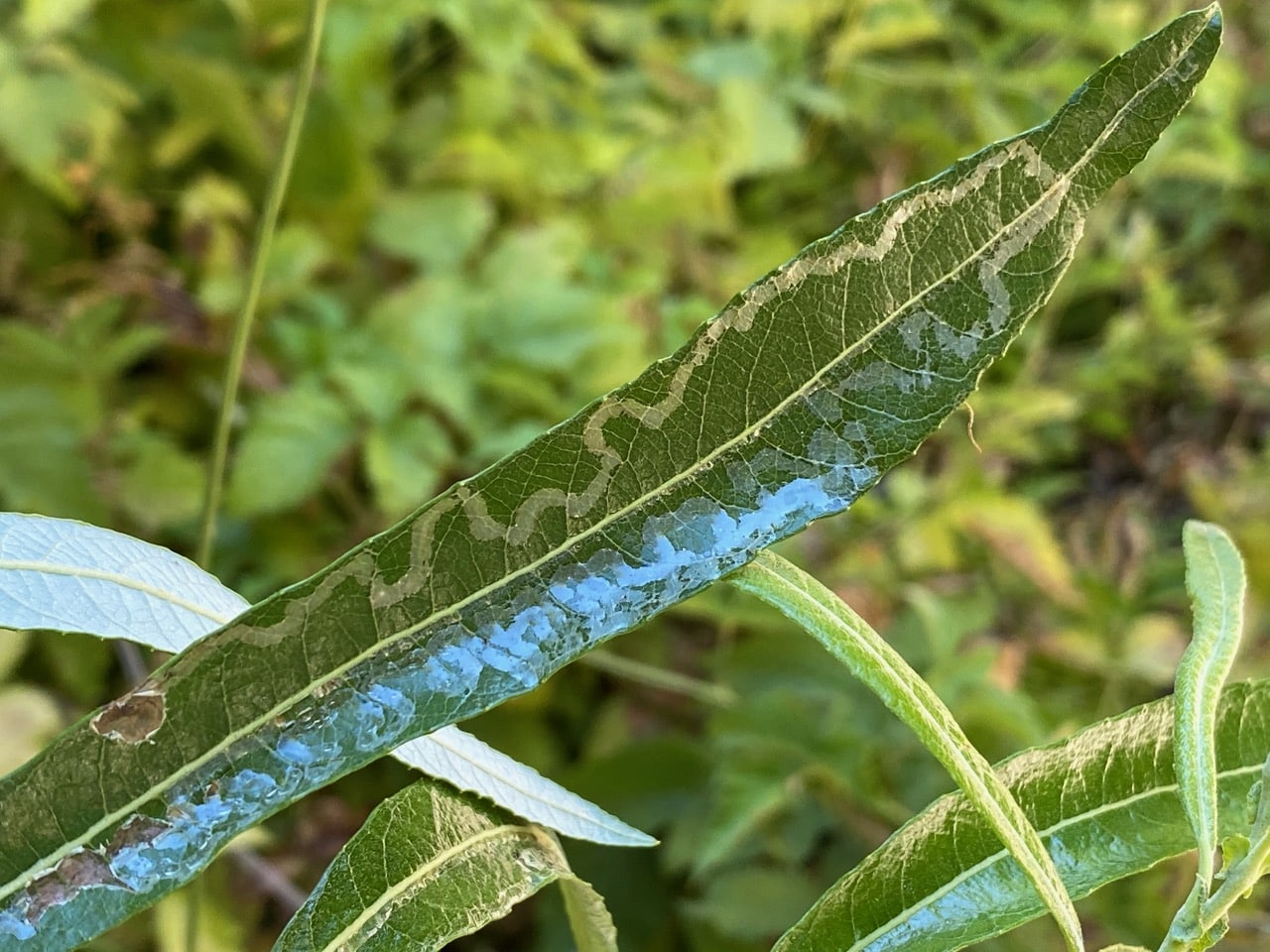
Here’s another leaf on the same plant with similar sinuous tunnels that reflect silver in the sunlight. I wonder which leaf-miner made these tunnels? Moth? Leaf-miner fly? I am able to find only one reference to a similar leaf mine on willow in California, made by a moth in the genus Stigmella sp. (family Nepticulidae).
A leaf miner is any one of numerous species of insects in which the larval stage lives in, and eats, the leaf tissue of plants. The vast majority of leaf-mining insects are moths (Lepidoptera), sawflies (Symphyta), and flies (Diptera). Some beetles also exhibit this behavior. Leaf miners are protected from many predators and plant defenses by feeding within the tissues of the leaves, selectively eating only the layers that have the least amount of cellulose, and lowest levels of defensive chemicals.
Some of the smallest moths have larvae that feed inside the foliage of their host plants, eating the soft tissue between the tougher upper and lower leaf epidermis. They often cause distinctive discolored areas where the internal leaf tissues have been consume. Leaf-mining moths occur in several families within the Lepidoptera. The pattern of the mine is fairly constant and characteristic for the species of moth. Leaf-mining moths lay their eggs on or in the foliage of suitable host plants. After hatching, the larvae tunnel through the internal leaf tissues. When they have completed their feeding, the larvae exit the mines and pupate elsewhere on the plant or in the soil. The moths overwinter as pupae, larvae or adults, depending on the species. Damage by leaf-miners is mainly cosmetic, and is unlikely to affect the plant’s health.
Nepticuliade is a family of very small moths with a worldwide distribution. They are characterized by eyecups over the eyes. These Pigmy Moths, as they are commonly called, include the smallest of all living moths, with a wingspan of 3.5-10 mm. The wings of adult moths are narrow and lanceolate, sometimes with metallic markings, and with the venation very simplified compared to most other moths. The minute larvae usually are leaf miners, but some species also mine seeds or bark of trees.
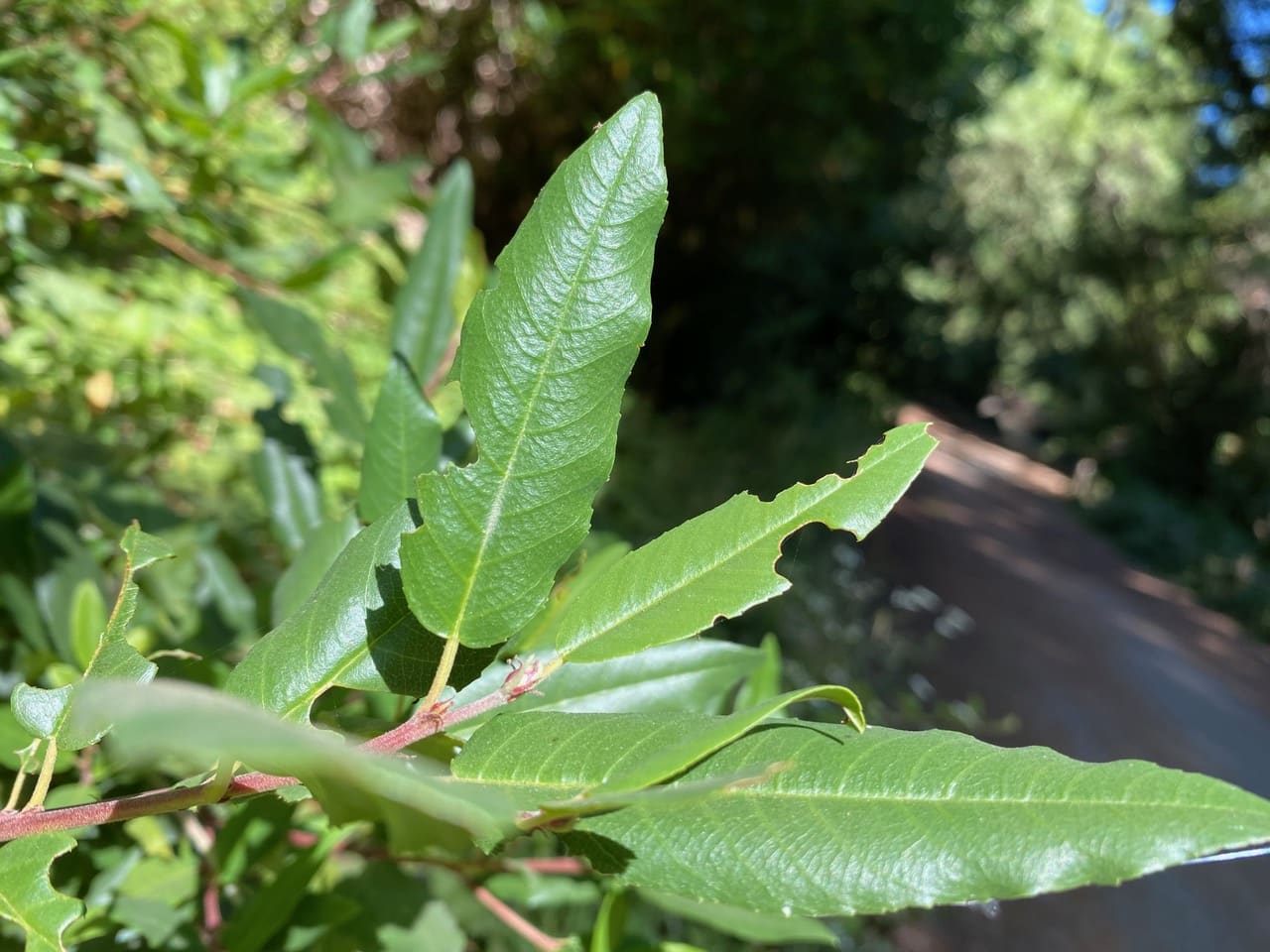
Uh oh, the Pale Swallowtail caterpillar is no longer on its Coffeeberry leaf, Frangula californica.

Much to my delight, I find it on a different leaf on the same branch instead. It appears to have grown a little bigger. Its movements surprise me, as all the other Pale Swallowtail caterpillars I have observed last year (in Skyline Gardens as well as Inspiration Point) always returned to their home leaf to rest during the day. It was very easy to track them down.
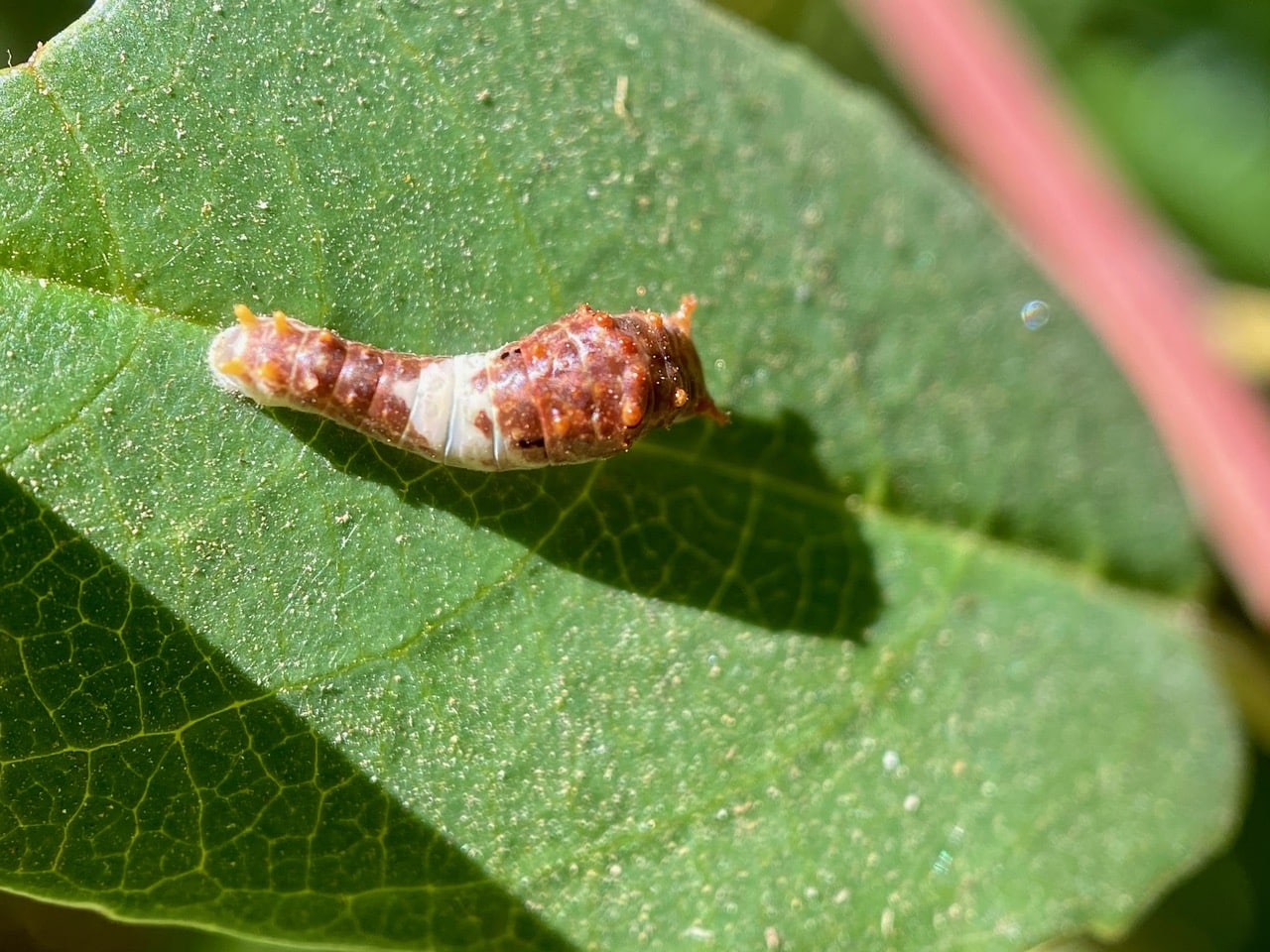
Close-up of the caterpillar, with an eagle-shaped white patch on its middle section, rendering it a bird poop mimic.
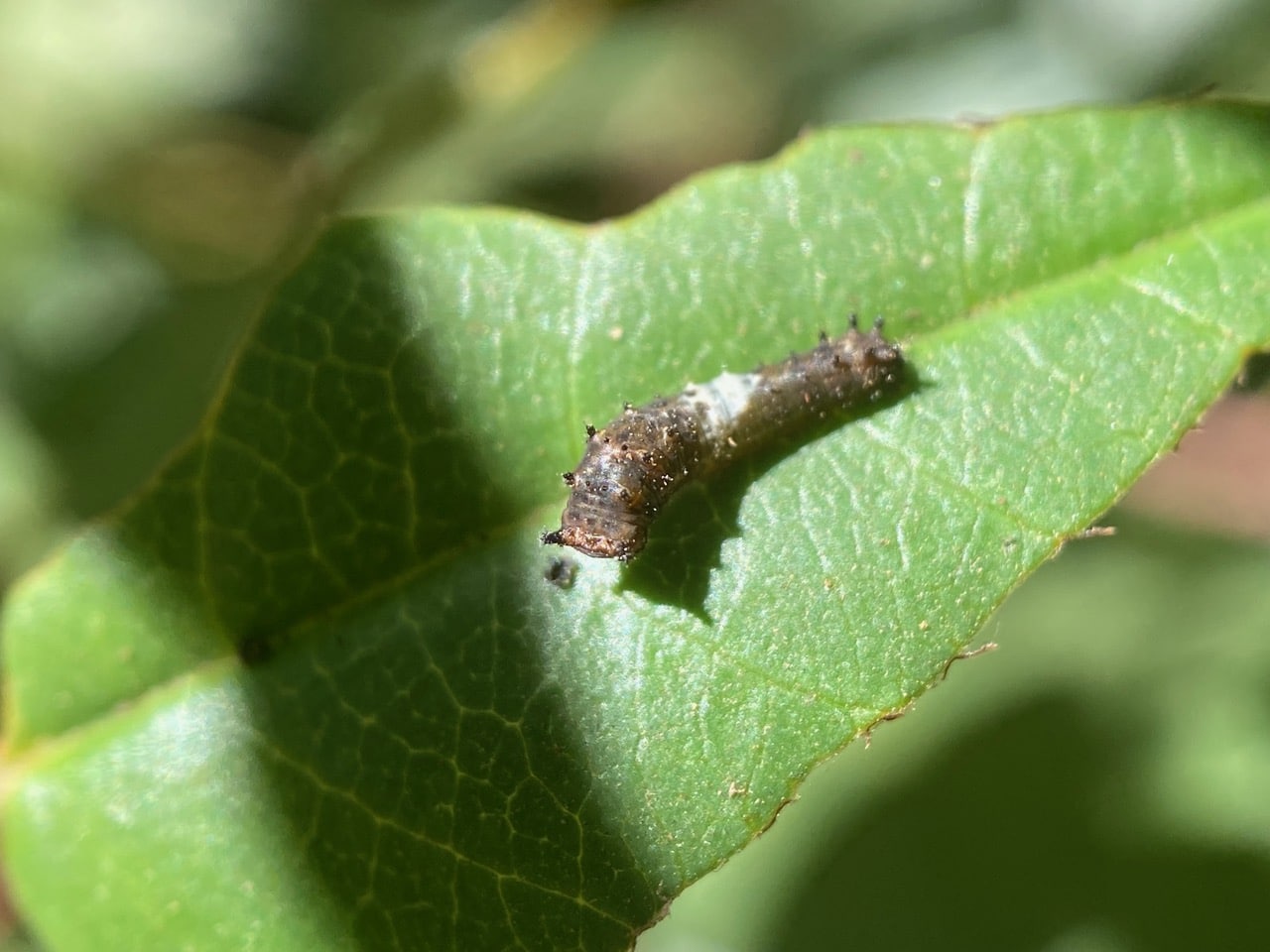
Hey, isn’t that the younger Pale Swallowtail caterpillar that went missing yesterday? It is now resting on a different leaf on the same branch. It appears to be ready to molt soon. I will call it J5, for July 5th.
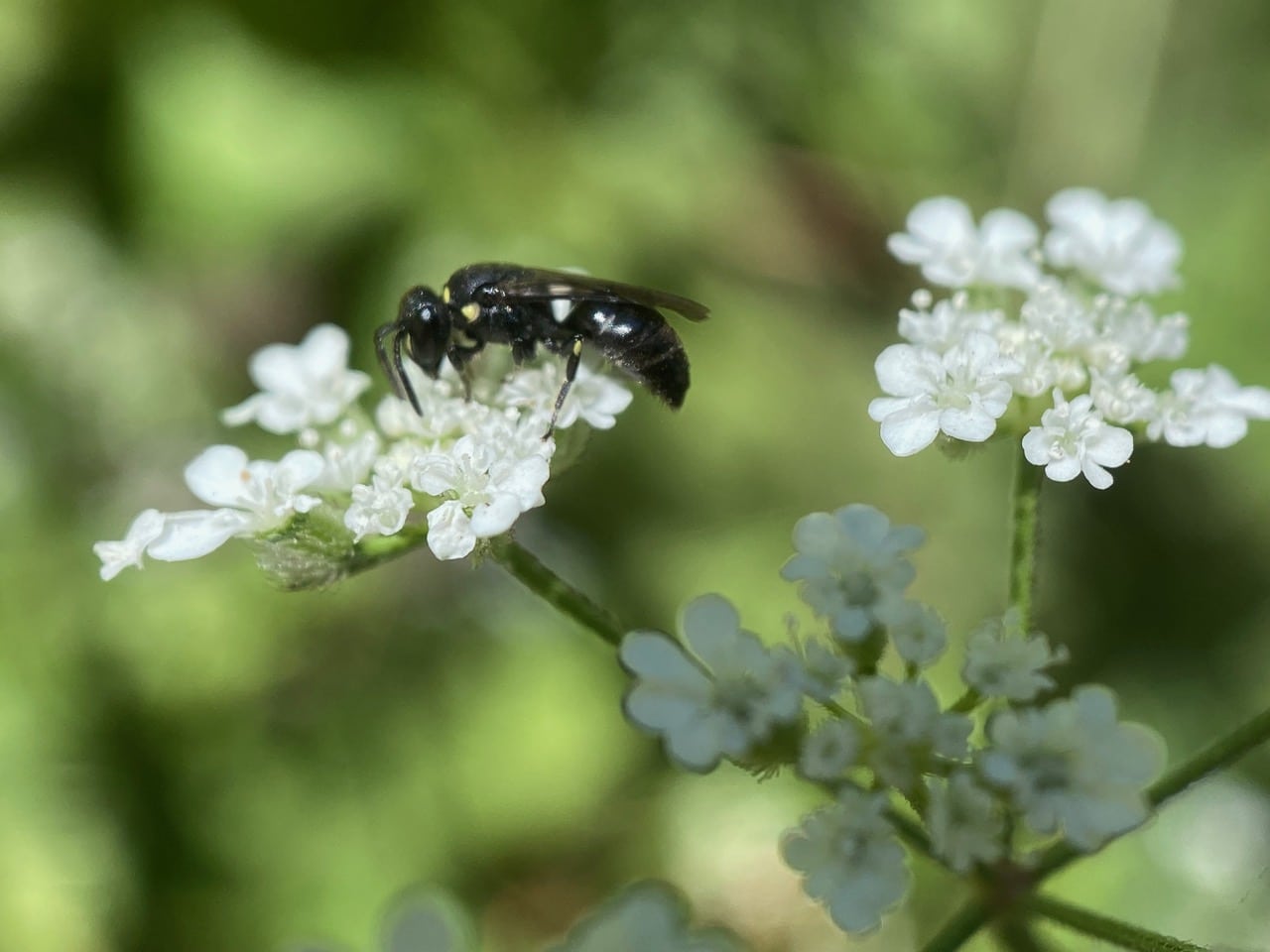
That looks like a female Masked Bee, Hylaeus sp. (family Colletidae) on a floral umbel of Common Hedge Parsley, Torilis arvensis (family Apiaceae).
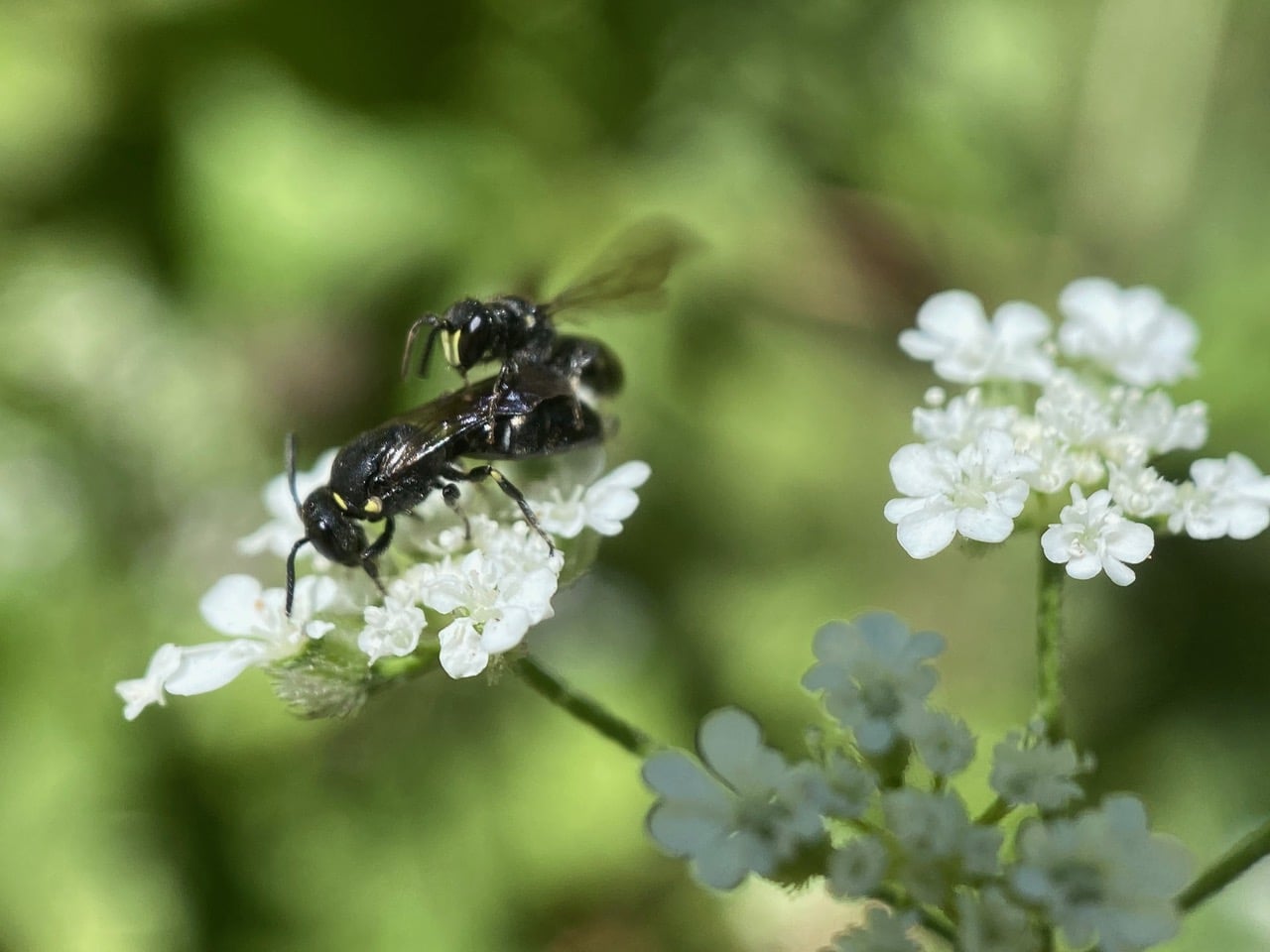
As I try for a closer look at the female Masked Bee, a male appears out of nowhere and tries to mate with her.
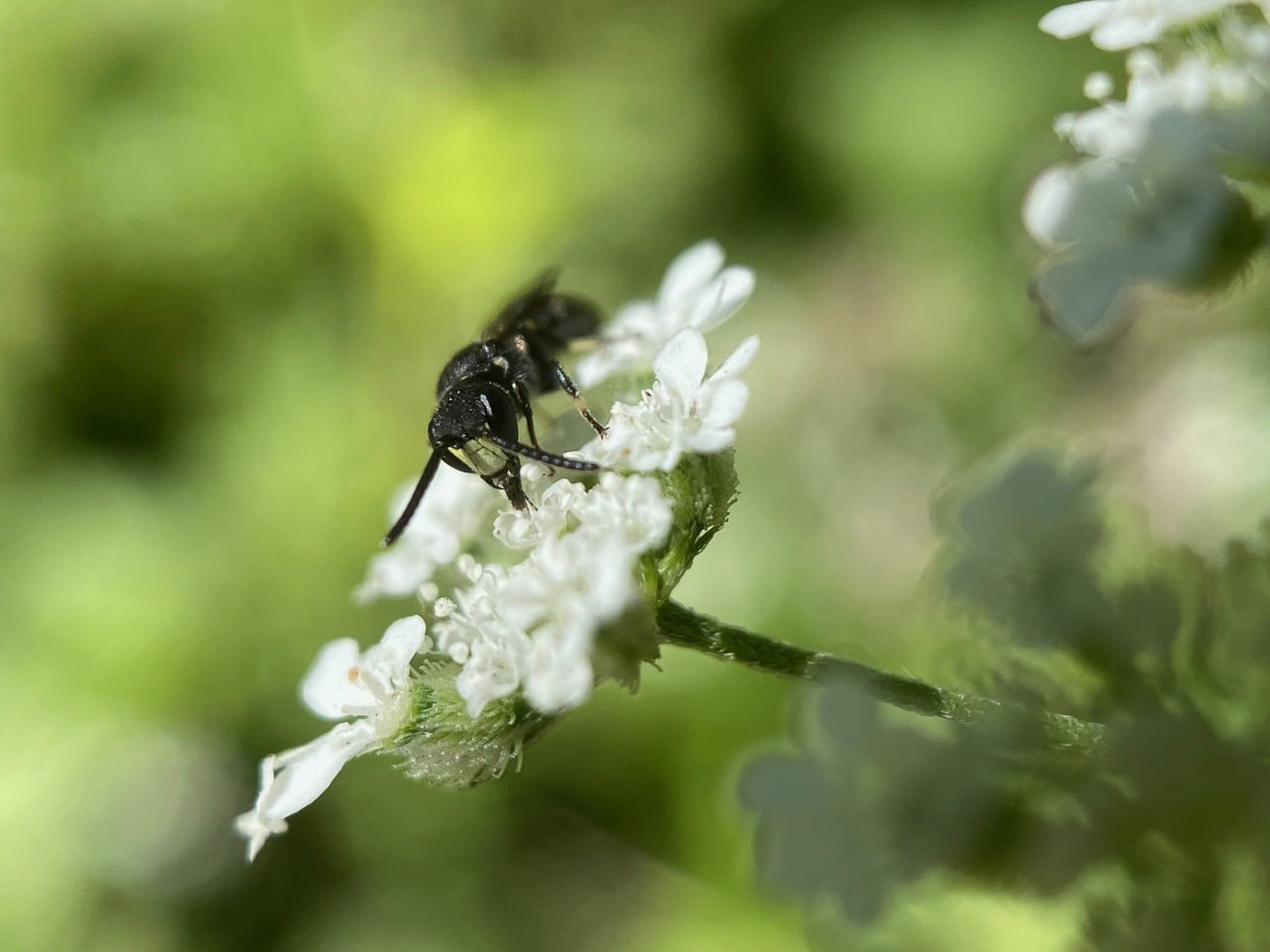
The male Masked Bee settles down on another umbel of Torilis flowers to take nectar. Note the prominent yellow marking on his face.

A small Bristle Fly, Siphona sp. (family Tachinidae) is taking nectar from a Torilis flower.
The family Tachinidae is by far the largest and most important group of parasitoid flies. All species are parasitic in the larval stage. Most adults have distinct abdominal bristles, hence the common name. Adults feed on liquids such as nectar and honeydew. They can be found resting on foliage, feeding at flowers or searching for hosts.
Most tachinids attack caterpillars, adult and larval beetles, true bugs, grasshoppers, and other insects. Females lay eggs in or on the host. Tachinid larvae live as internal parasites, consuming their hosts’ less essential tissues first and not finishing off the vital organs until they are ready to pupate. The larvae leave the host and pupate on the ground. Tachinids are very important in natural control of many pests, and many have been used in biological control programs.
Siphona is the only commonly encountered genus of Tachinidae with a long, thin, jointed proboscis. Most other genera have a straight or curved rigid proboscis. The fly is found worldwide. Where hosts are known, larvae are parasitoids of Lepidoptera (moths and butterflies).
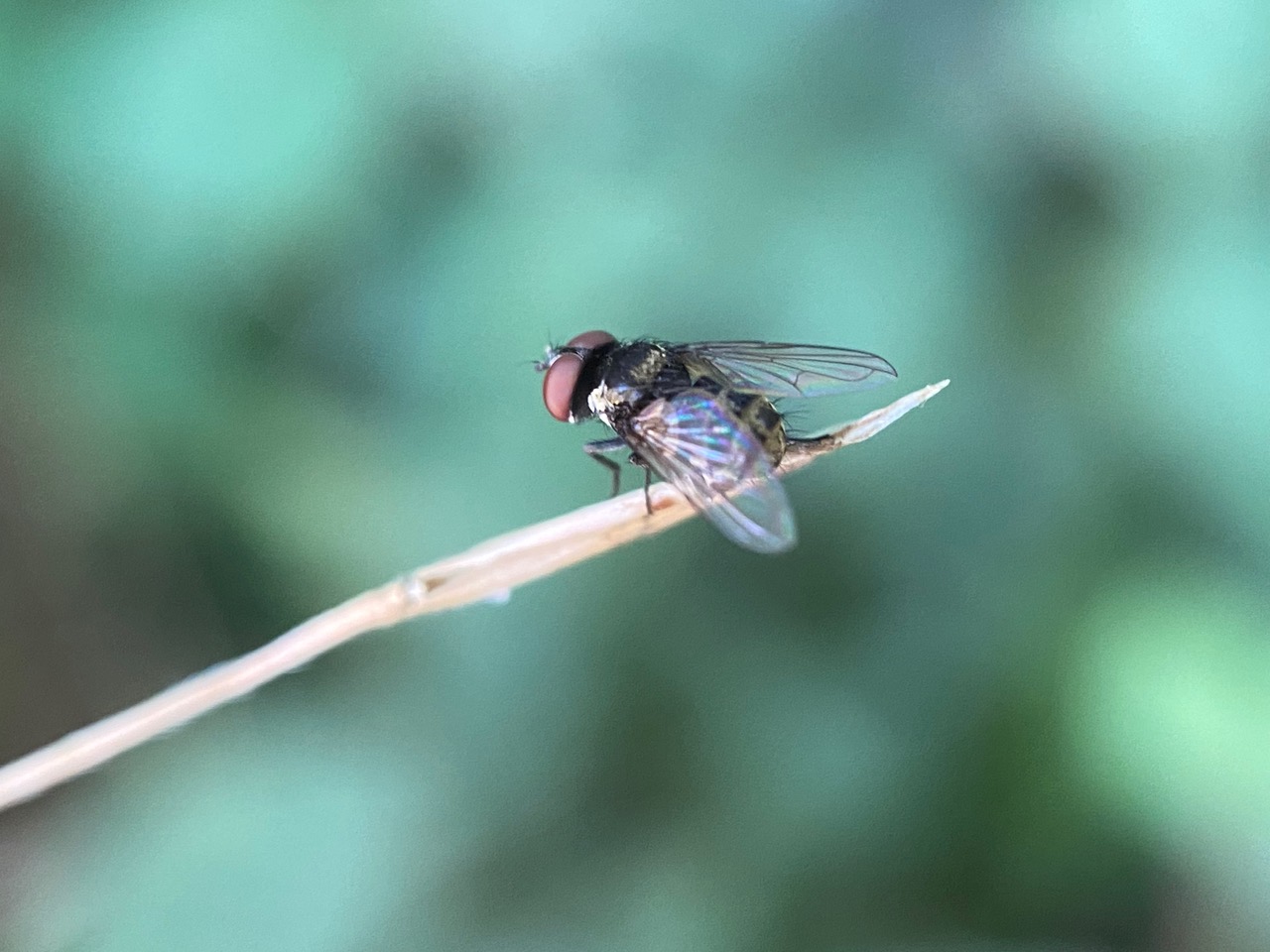
Ooh, another small Bristle Fly has landed on a twig. iNaturalist has identified it as Strongygaster sp. (family Tachinidae).
Members of genus Strongygaster, about 4-5 mm in size, are widespread in North America. They are known to parasitize various beetles (Coccinellidae, Chrysomelidae, Curculionidae, Tenebrionidae) and Lepidoptera.
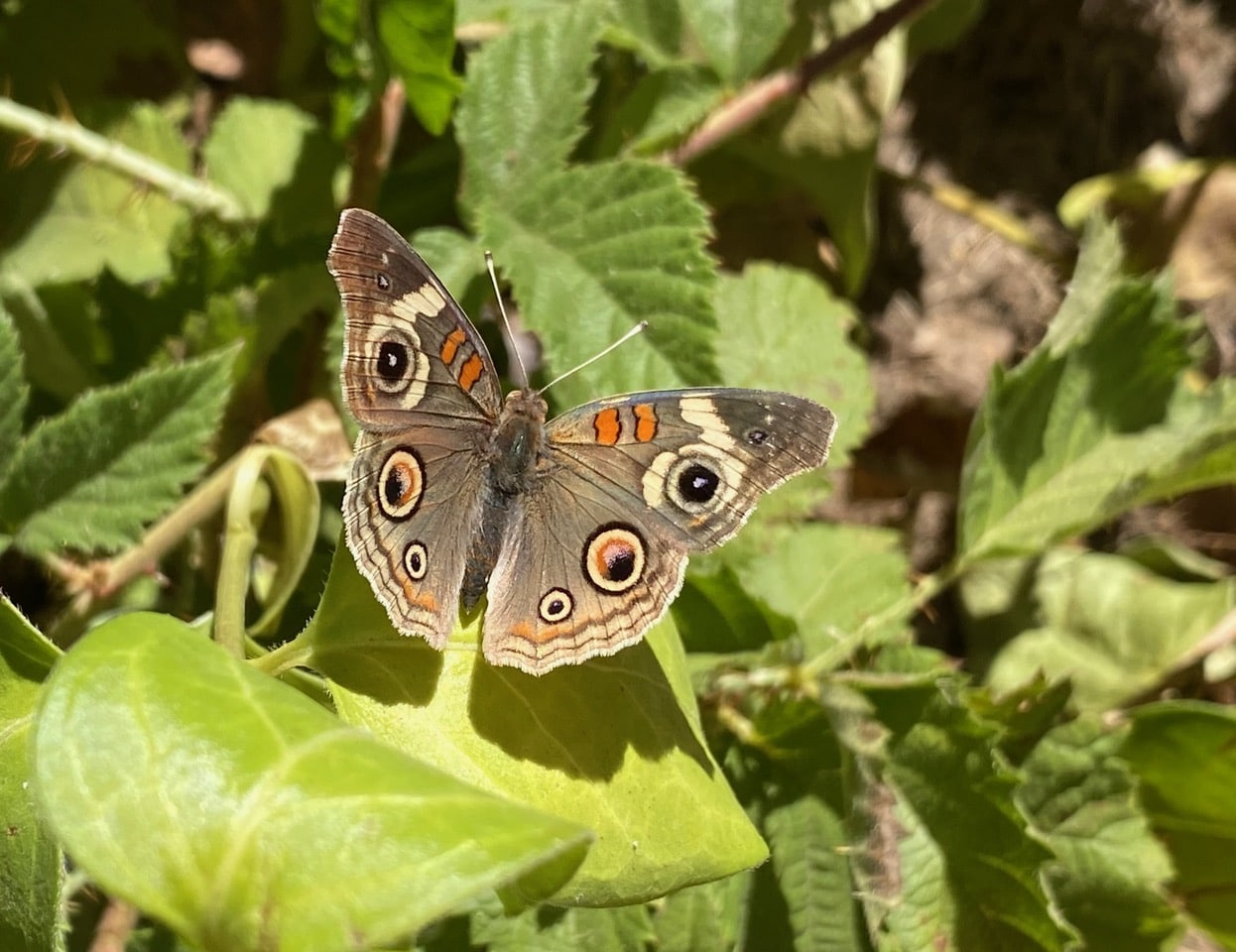
My spirit is lifted as a Gray Buckeye butterfly lands on a plant in front of me. Despite the extreme heat and the wildfires raging around us, life persists.
A butterfly enthusiast has informed me that the butterfly that I recently identified as a Common Buckeye Butterfly, Junonia coenia (family Nymphalidae) was actually a Gray Buckeye, Junonia grisea, formerly known as a subspecies of J. coenia. Apparently as of 2018, the entire Buckeye population west of the Rockies is now considered a separate species, the Gray Buckeye, J. grisea, due to some subtle morphological and genetic differences.
Named for its conspicuous target-shaped eyespots, the mainly brown Buckeye butterfly is readily identifiable. The butterfly favors open, sunny areas with low vegetation and some bare ground. Males perch during the day on low plants or bare ground to watch for females, flying periodically to patrol or to chase other flying insects. Females lay eggs singly on leaf buds or on upper side of host plant leaves. Caterpillars feed on a variety of plants including the narrowleaf plantain (Plantago lanceolata).
Narrowleaf Plantain is native to Eurasia, but has been introduced to North America where it now thrives in dry meadows and open, disturbed areas. The plant is a rosette-forming perennial herb that contains the iridoid glycosides aucubin and catalpa. These compounds make the plant inedible to some herbivores, but others are unperturbed by them – for example, the Buckeye butterfly, Junonia sp. (family Nymphalidae) whose larvae eat the leaves and sequester the iridoid glycosides, rendering themselves unpalatable to predators. Females are able to detect the iridoid glycosides and prefer to lay their eggs on leaves that contain higher levels of the chemicals.