

Pollinator Post 9/5/24

There’s a golden flash on an umbel of spent Fennel flowers. I am looking at the iridescent abdomen of a female Jumping Spider, Sassacus vitis (family Salticidae).

Sassacus vitis is native to North America, with a range spanning from Canada to Panama. It is a small jumping spider with iridescent gold abdomen and white ring around the anterior surface of abdomen. Body is covered with golden scales. Males are 3.5 mm long, females 4.5 mm. The name vitis is Latin for “grapevine”. The spider is commonly found on shrubs and vines and in fields. Best known as a common resident of vineyards.

Hey, that’s a Lady Beetle pupa on the leaf of Oregon Gumweed, Grindelia stricta!

I think it might be eclosing soon. The emergence of an adult insect from a pupa is called eclosion.
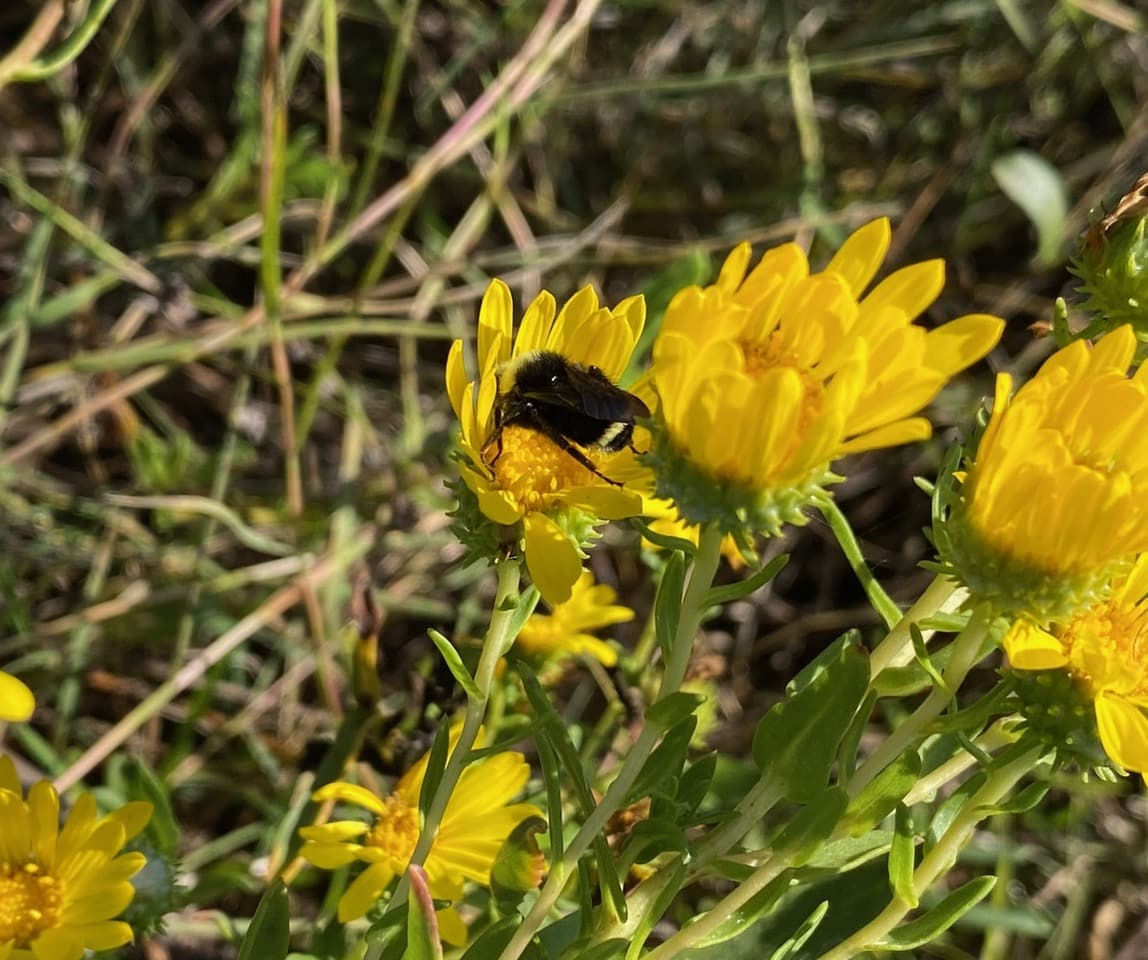
A worker Yellow-faced Bumble Bee, Bombus vosnesenskii (family Apidae) is asleep on a Grindelia flowerhead.
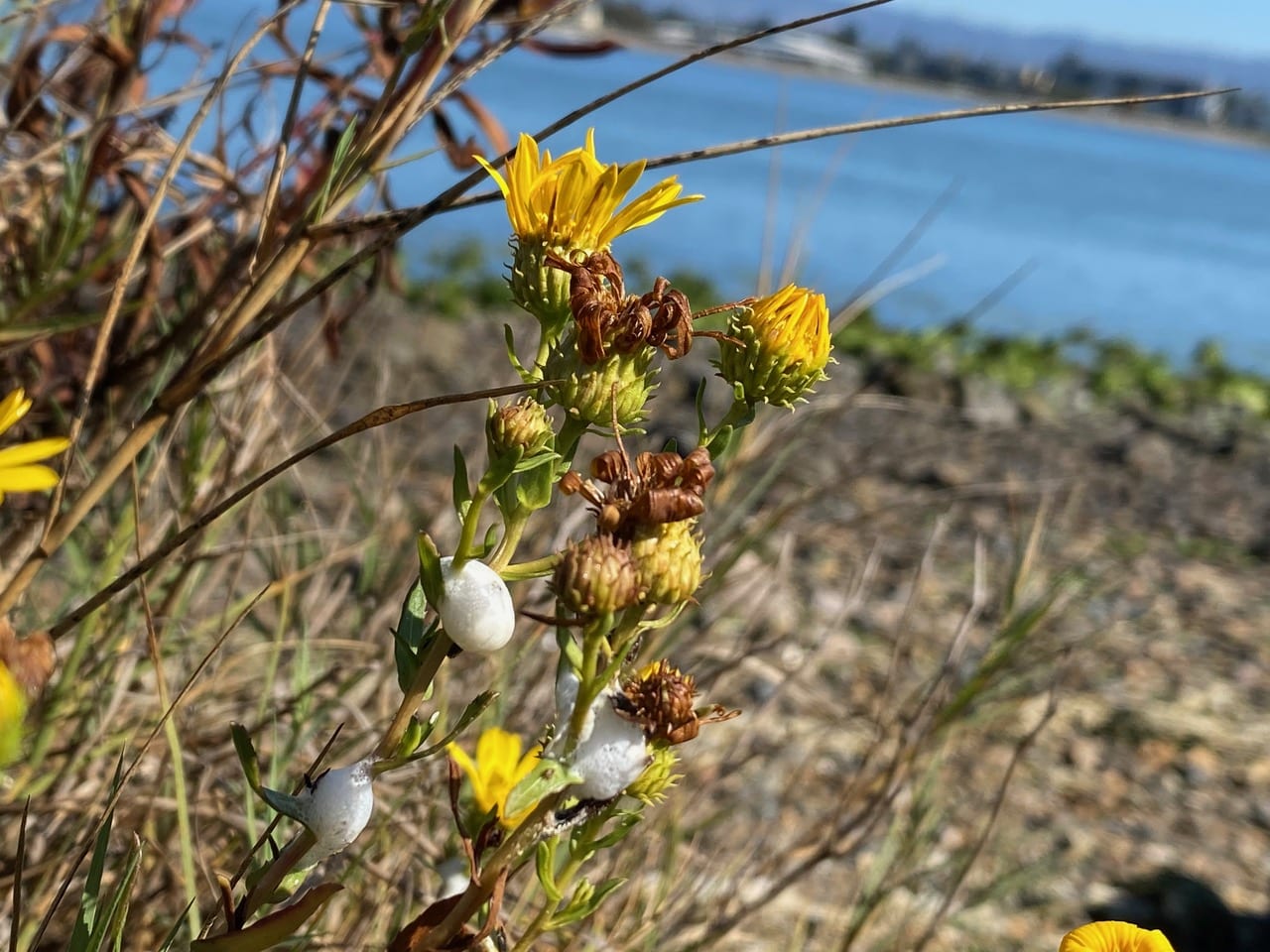 The patch of Grindelia heavily infested with Spittlebugs seems to be struggling. The flowerheads are smaller, some are deformed, and they senesce more rapidly than normal. In the most heavily affected plants, whole branches turn brown and die back. There also seems to be fewer bees visiting the flowers. Having their sap drained by the sap-sucking Spittlebugs is having a detrimental effect on the Grindelia. I wonder what in nature helps control such infestations?
The Froghoppers (superfamily Cercopoidea) are a group of “true bugs” in the order Hemiptera. Adults are capable of jumping many times their height and length, giving them their common name, but many species are best known for their plant-sucking nymphs which produce foam shelters, and are referred to as “spittlebugs”. The superfamily currently consists of three families: the Aphrophoridae, Cercopidae, and Clastopteridae. The nymphs produce a cover of foamed-up plant sap visually resembling saliva, hence the common name. Whereas most insects that feed on plant sap tap into the nutrient-rich fluid from the phloem, the spittlebugs utilize the much more dilute sap flowing upward from the roots via the xylem. The insects’ digestive system contains symbiotic bacteria that provide them with the essential amino acids. The large amount of excess water that must be excreted and the evolution of special breathing tubes allow the young spittlebug nymphs to grow in the relatively protective environment of their foam shelters. The foam serves a number of purposes. It hides the nymph from the view of predators and parasites, and it insulates against heat and cold, providing thermal as well as moisture control. It also has an acrid taste that deters predators.

A European Paper Wasp lands near a Spittlebug foam mass.
Native to Europe, the European Paper Wasp, Polistes dominula (family Vespidae) is a social insect that produces an annual colony in a paper nest. Individual colonies are established anew each spring. The overwintering stage are mated females (queens). The overwintered queens emerge from sheltered spots in spring and search out sites to establish a new colony. Nests are constructed of paper, produced from chewed wood fibers of weathered fences, porch decks and other similar sources. Larvae are fed crushed insects, usually caterpillars. As the population increases, the original queen increasingly remains in the nest as new workers take over colony activities. A few of the wasps produced later in summer are males and increasing numbers of the females become sexually mature. Mating occurs and the mated females are the surviving overwintering stage. Males and non-reproductive females do not survive winter and the nest is abandoned by late fall. European Paper Wasps will sometimes feed on sweet materials, including honeydew produced by aphids. They may also feed on damaged ripe fruits. Because of their habit of hunting caterpillars, the wasps have become one of the most important natural controls of garden pests.
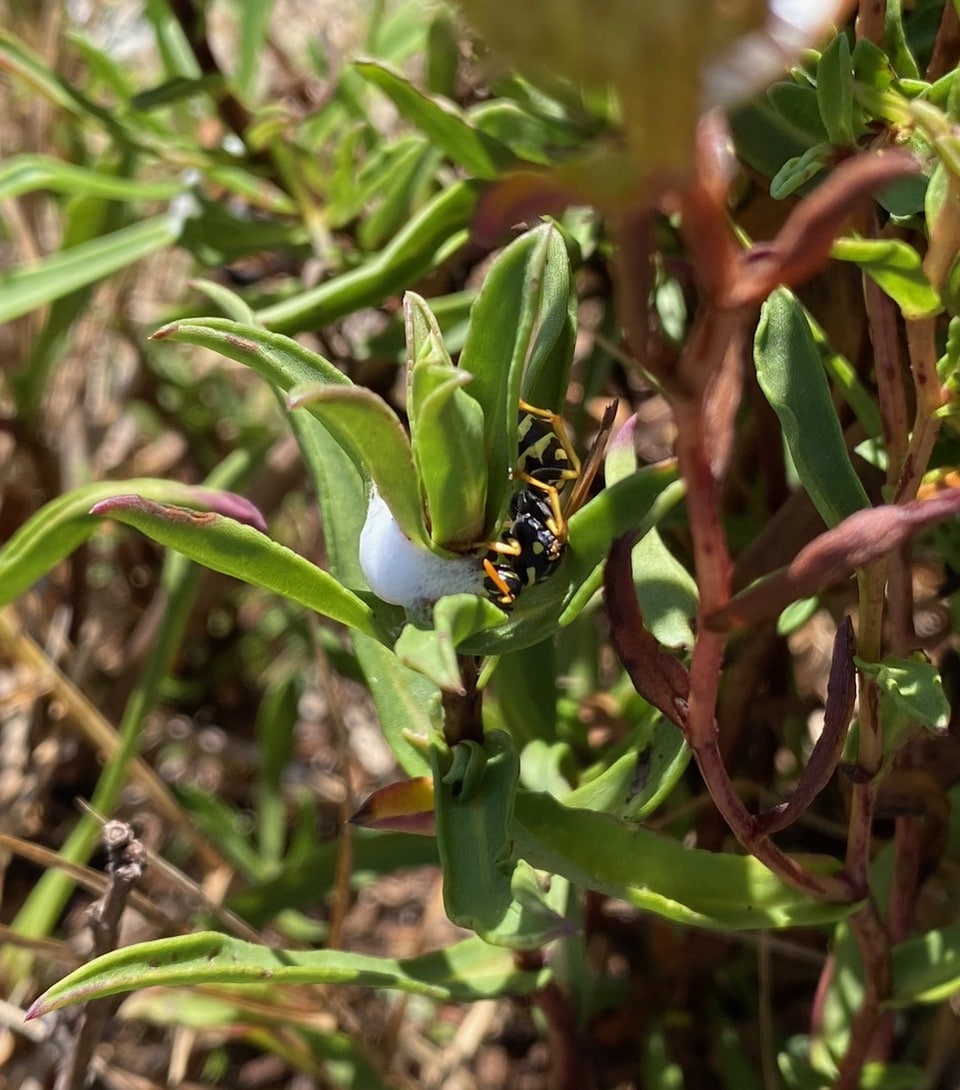
I watch in amazement as the wasp sticks its head in the foamy mass. Is it hunting for the Spittlebug nymph?

The wasp finally emerges, but I can’t see if she has caught anything.
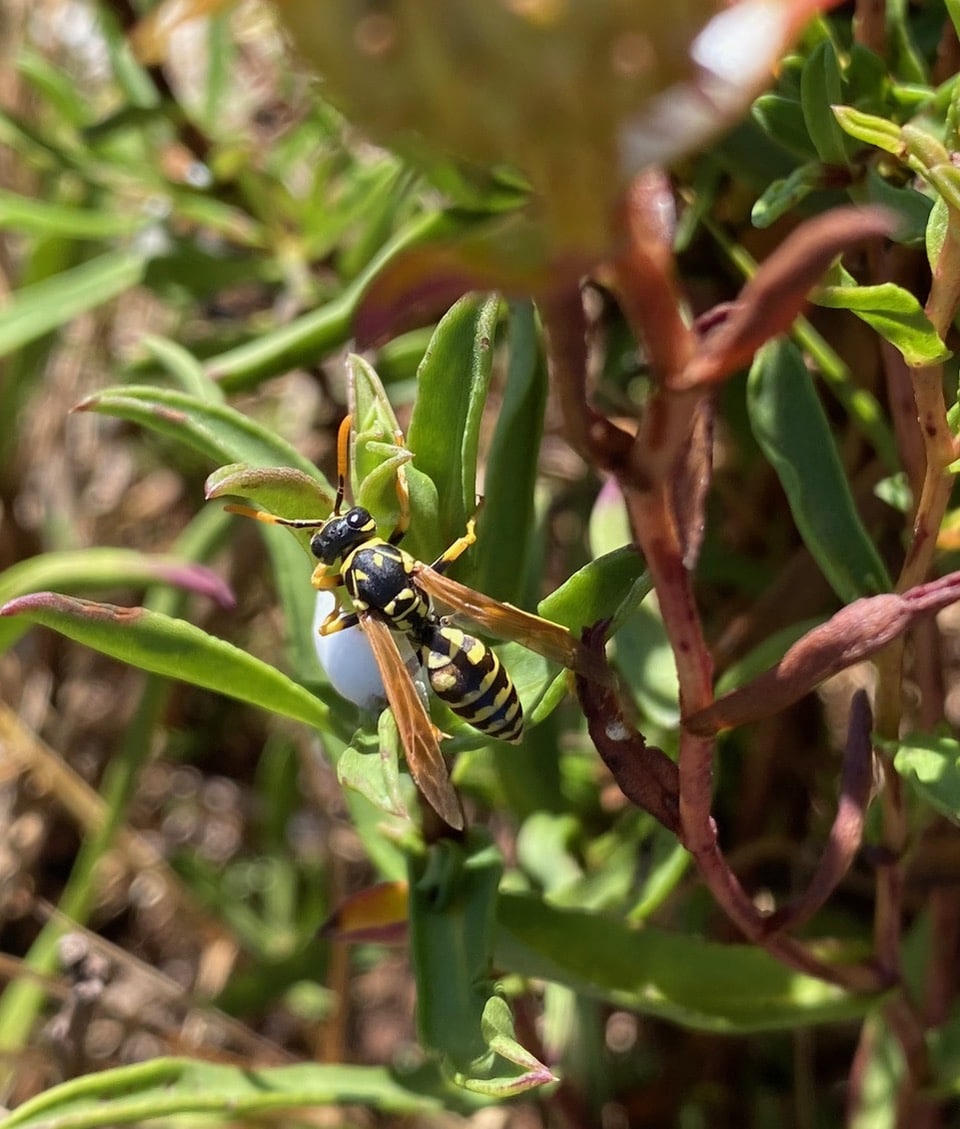
Here’s a good look at the European Paper Wasp before she flies off. Just like the paper wasp, many Yellowjackets are patrolling the Grindelia as well, occasionally landing to investigate the foamy masses. The two species appear similar at first sight, but can be easily distinguished.
Often mistaken for Yellowjacket Wasps, the European Paper Wasps can be distinguished by their slender body, and their orange-tipped antennae. Yellowjackets have shorter, thicker bodies, and they have black antennae. Paper wasps dangle their long legs when they fly, while the yellowjackets tuck their legs under their bodies when they fly. Paper wasp nests resemble an open honeycomb or upside-down umbrella. They often build their nests on man-made structures such as eaves or lawn furniture. Yellowjacket nests are covered with a surrounding envelope of paper; the nests have a single opening that is often hard to see because the nest is underground.
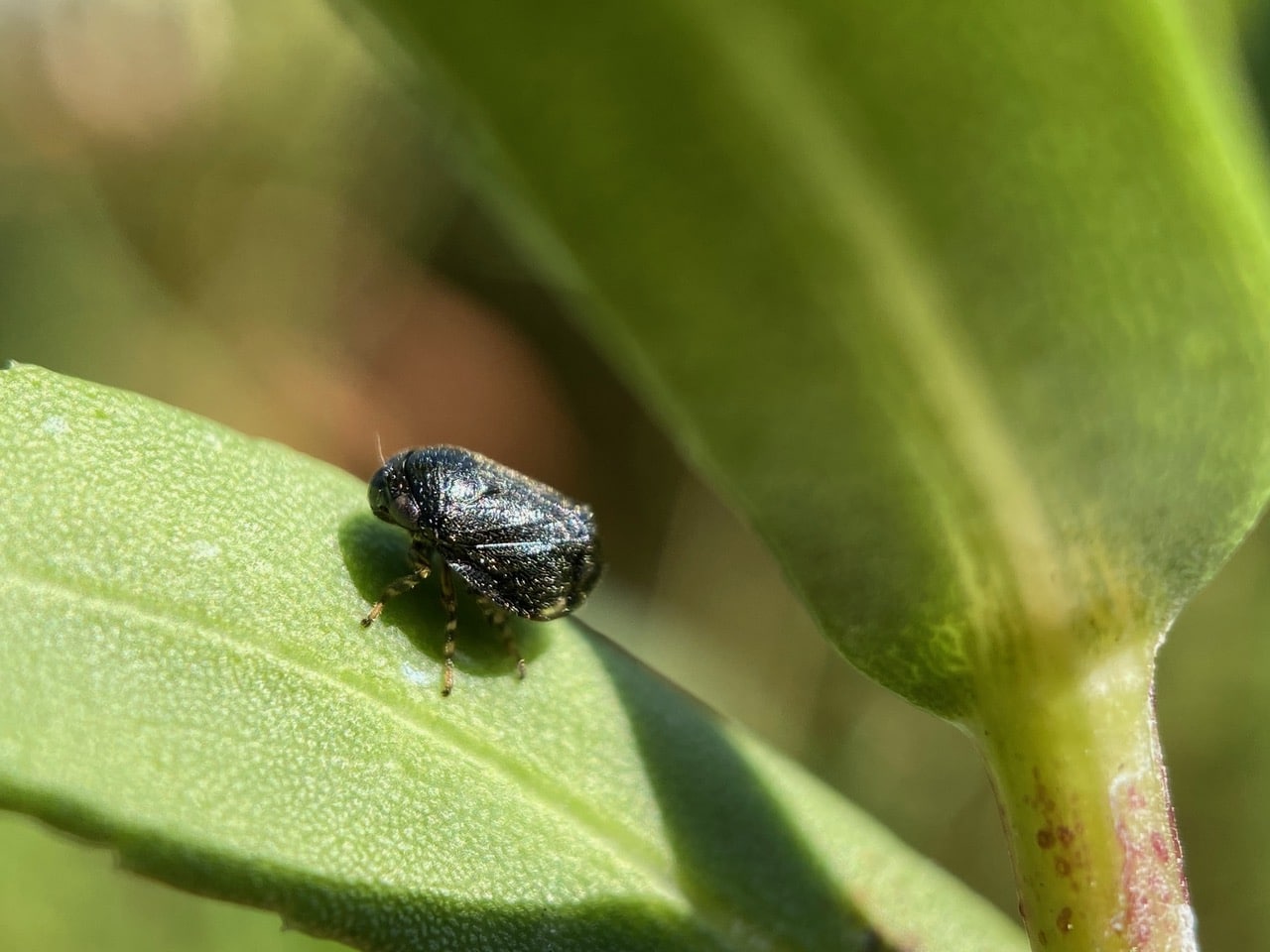
Hello, who’s that tiny black insect on the Grindelia leaf above a foam mass? iNaturalist has identified it as a Spittlebug, Clastoptera lineatocollis (family Clastopteridae).
The Froghoppers, or the superfamily Cercopoidea, are a group of “true bugs” in the order Hemiptera. Adults are capable of jumping many times their height and length, giving the group their common name, but many species are best known for their plant-sucking nymphs which produce foam shelters and are referred to as spittlebugs. The group currently consists of three families, the Aphrophoridae, Cercopidae, and Clastopteridae. The Froghoppers jump from plant to plant; some species can jump up to 28 inches vertically: excelling the performance of the fleas, relative to body weight. The Froghoppers can jump 100 time their own length, accelerating at 13,000 ft/s).

The bug makes no attempt to fly or jump away, but scampers up the stem.
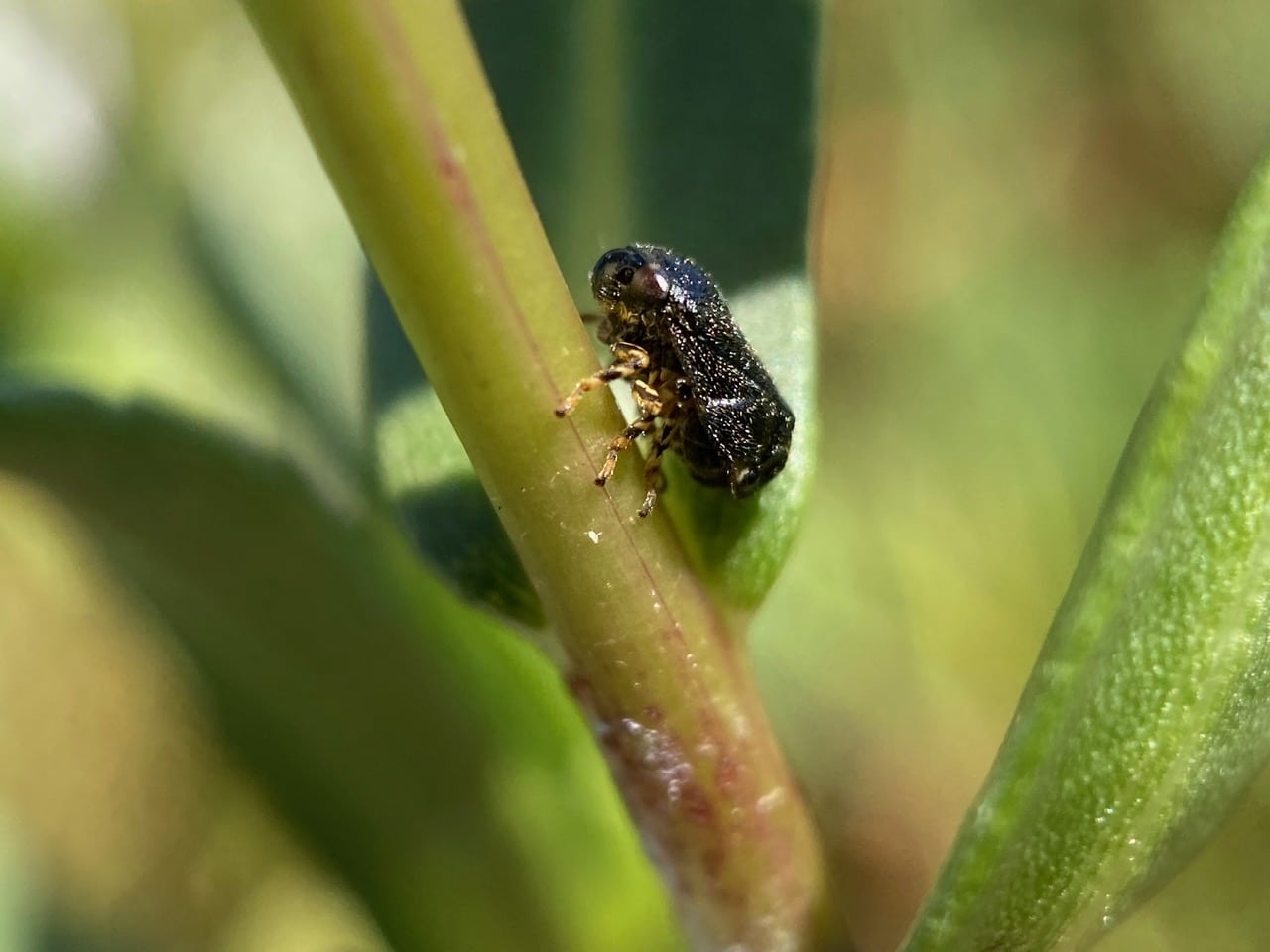
I am curious to see its mouthpart, but the bug is so dark it is difficult to make out any details.
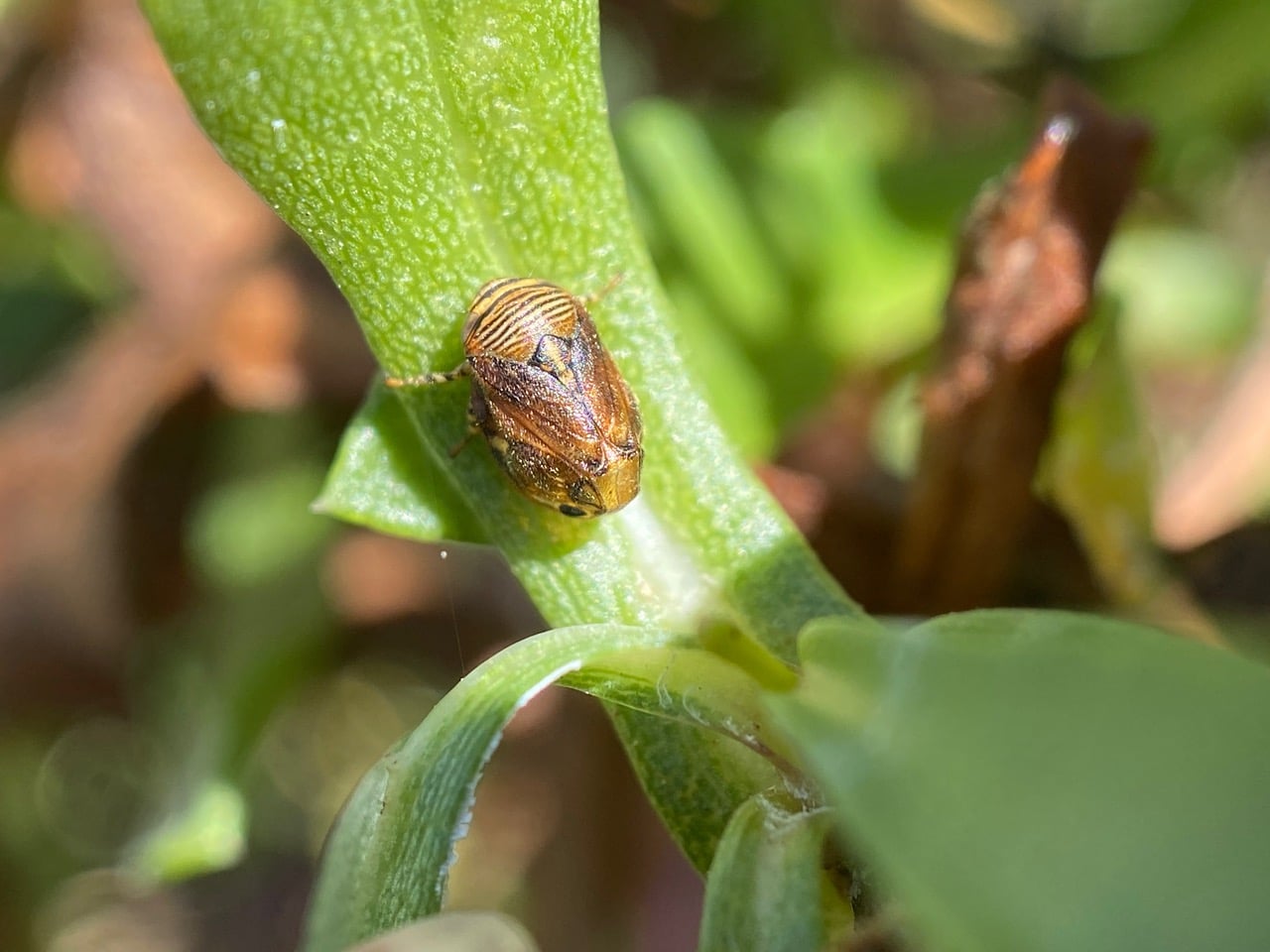
There’s a larger brown Spittlebug on a Grindelia leaf. iNaturalist has previously identified it as Clastoptera lineatocollis (family Clastopteridae). So apparently the species is sexually dimorphic – females are brown, and males are black and smaller?
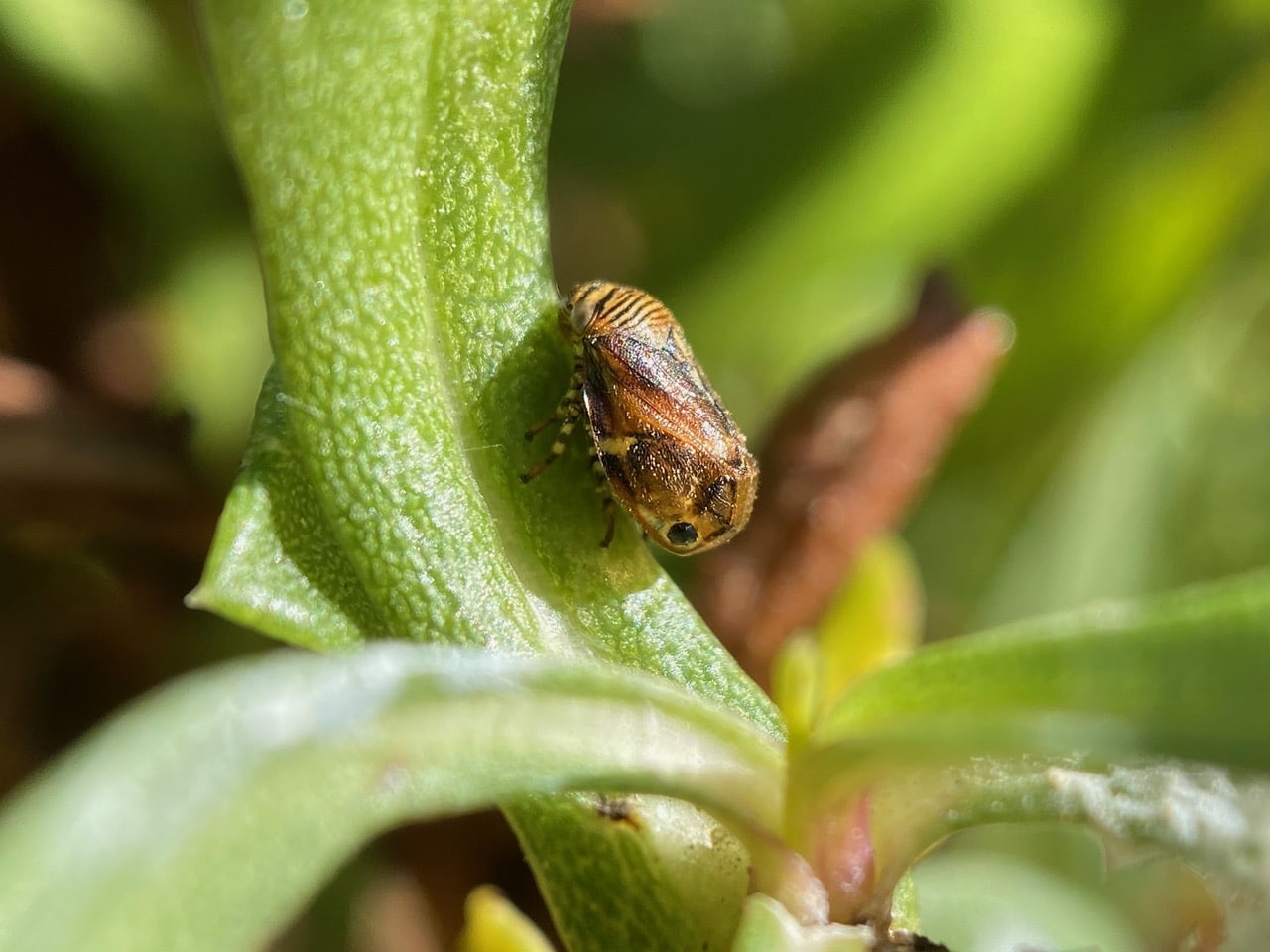
Side view of the bug shows the false eyespot on its hind wing. Members of the spittlebug family Clastopteridae have their wings modified to form false heads at the tail end, an anti-predator adaptation. So cool!

I am thrilled to come across this teneral Spittlebug that is still holding on to its old exoskeleton. A teneral insect is one that has recently molted and its exoskeleton is yet to harden and get its final coloration. In this state the insect is very vulnerable; the teneral state can last for some time.
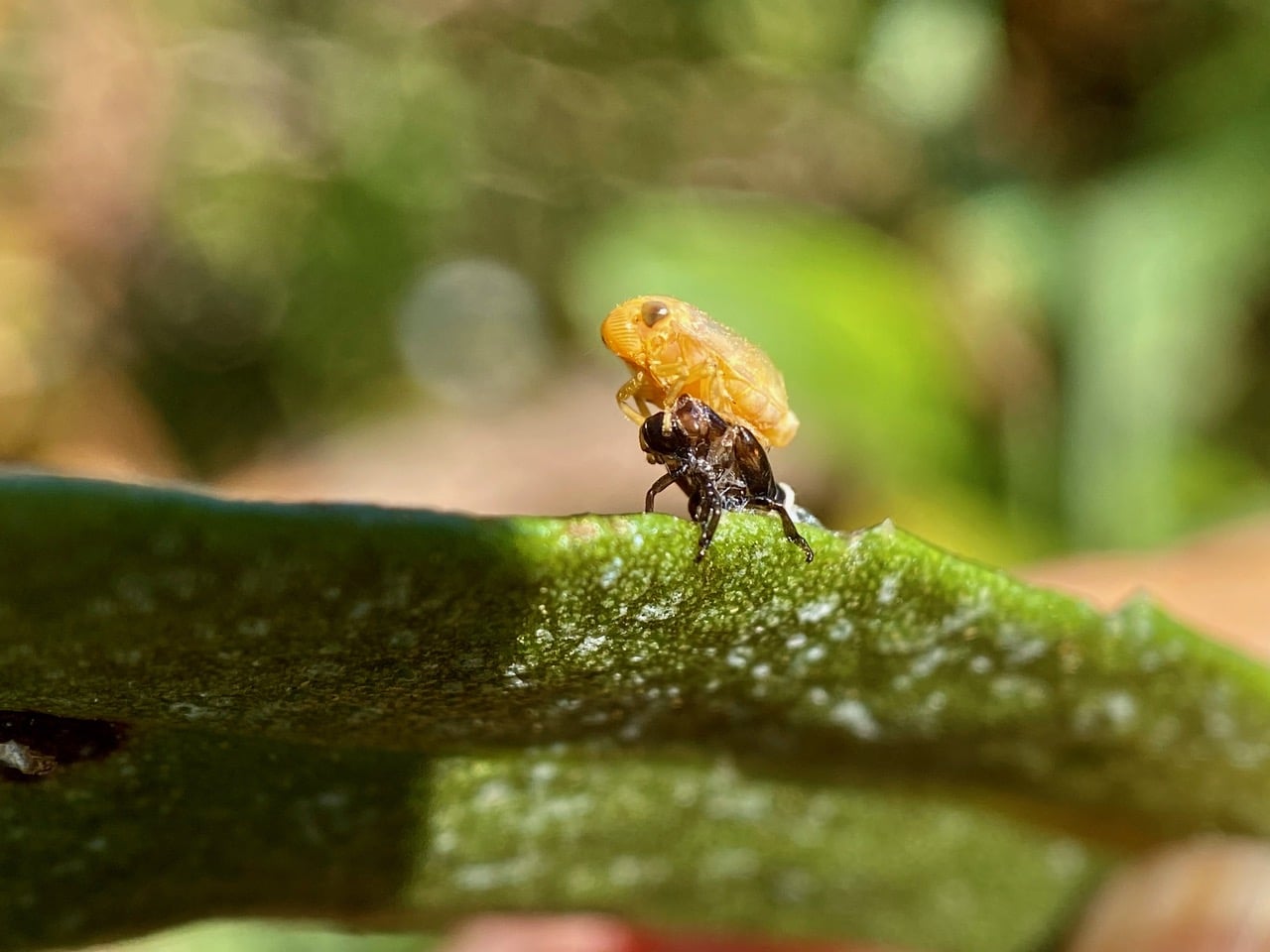
This view of the teneral Spittlebug shows its proboscis that the bug uses to penetrate plant tissues to suck sap.

Several small butterflies are fluttering over the unwieldy small plants along the shoreline. One lands on a female Pickleweed, Salicornia pacifica (family Chenopodiaceae). Ah, I recognize it immediately as I have recently seen one not far from here. It is a Western Pygmy Blue!
With a wingspan of 12-20 mm, about the size of a thumbnail, the Western Pygmy Blue, Brephidium exilis (family Lycaenidae) is one of the smallest butterflies in the world and the smallest in North America. The butterfly is found in alkaline areas such as deserts and salt marshes. The caterpillars feed on plants in the Goosefoot family Chenopodiaceae, commonly found in salty habitats. Although the species has no set breeding season, mating activity is at its peak during late summer and early fall.
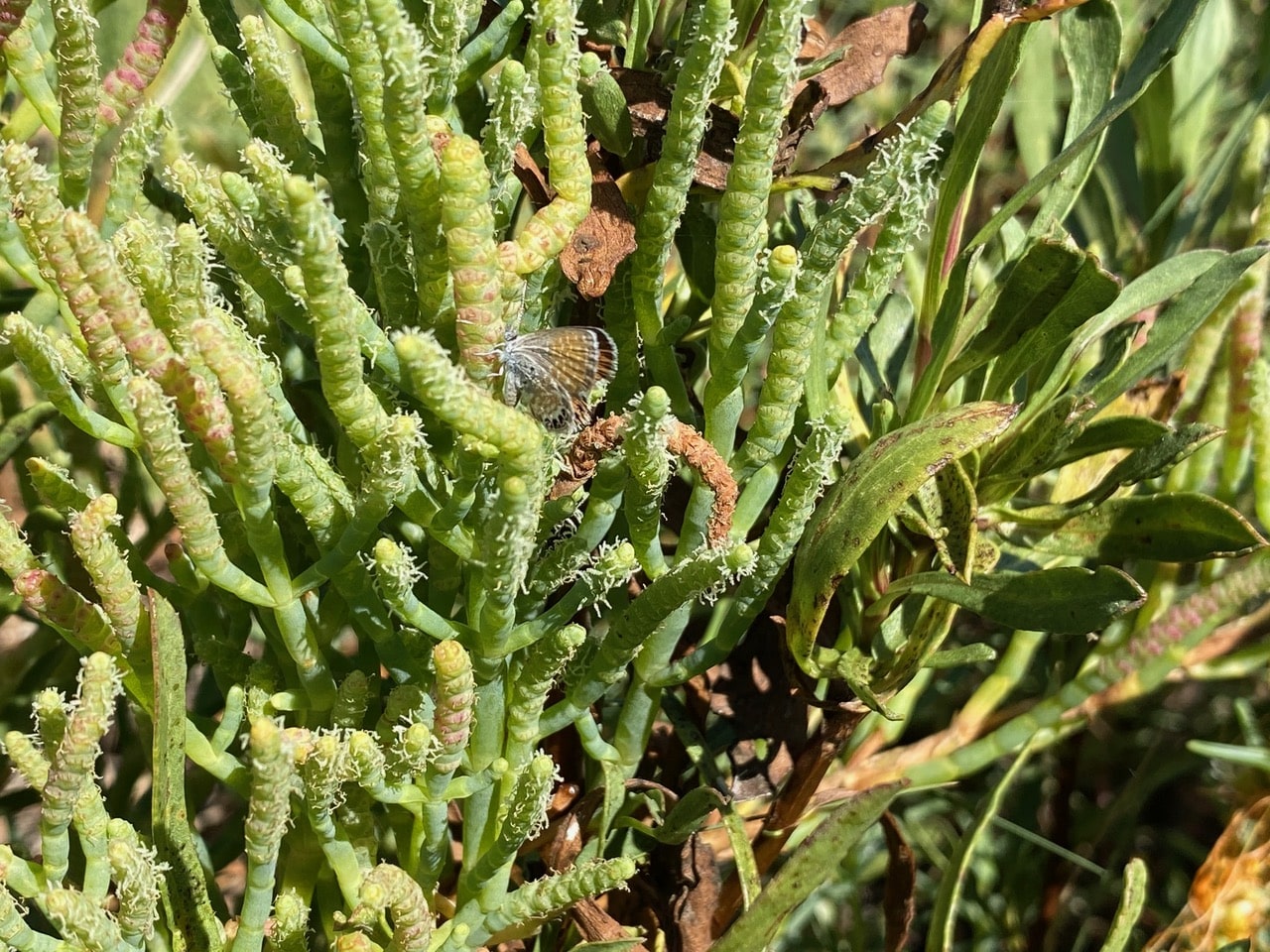
There’s another Pygmy Blue on the pickleweed, rubbing its hind wings together.

A Western Pygmy Blue is perched for some time on a Pickleweed that is parasitized by the Saltmarsh Dodder, Cuscuta salina. Is it taking nectar from the small white flowers of Dodder? Or is it laying eggs on the Pickleweed?
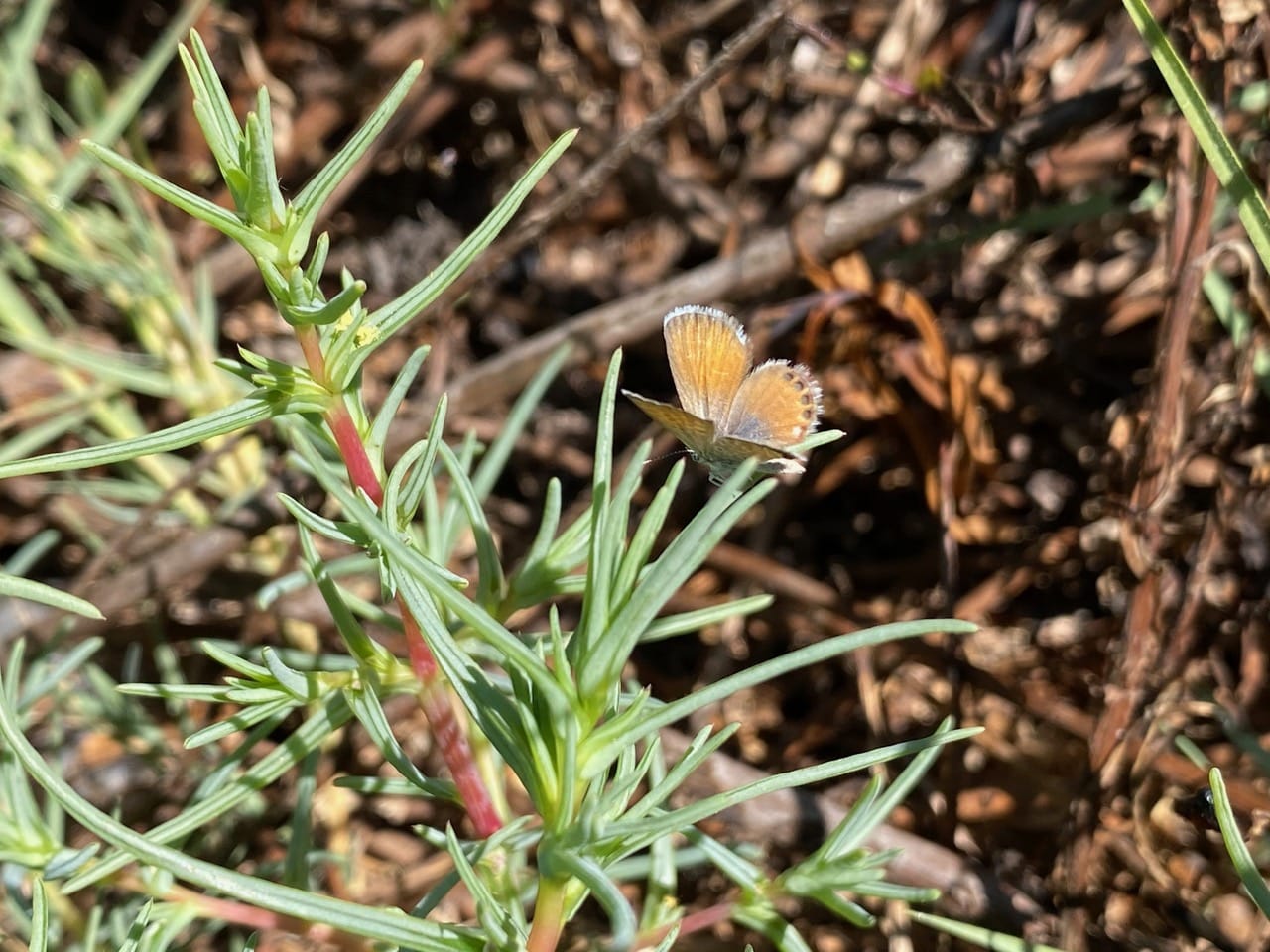
A Pygmy Blue has landed on the leaves of Fleshy Russian Thistle, Salsola soda (family Chenopodiaceae).

This Pygmy Blue is very interested in the Fleshy Russian Thistle.

Within the small patch of tangled plants, a Pygmy Blue is investigating the small flowers of the Spearleaf Saltbush, Atriplex prostrata (family Chenopodiaceae). With an abundance of the salt-loving plants in the Goosefoot family Chenopodiaceae, the Bay Farm shoreline is the perfect habitat for the Pygmy Blue whose larvae feed exclusively on these plants.
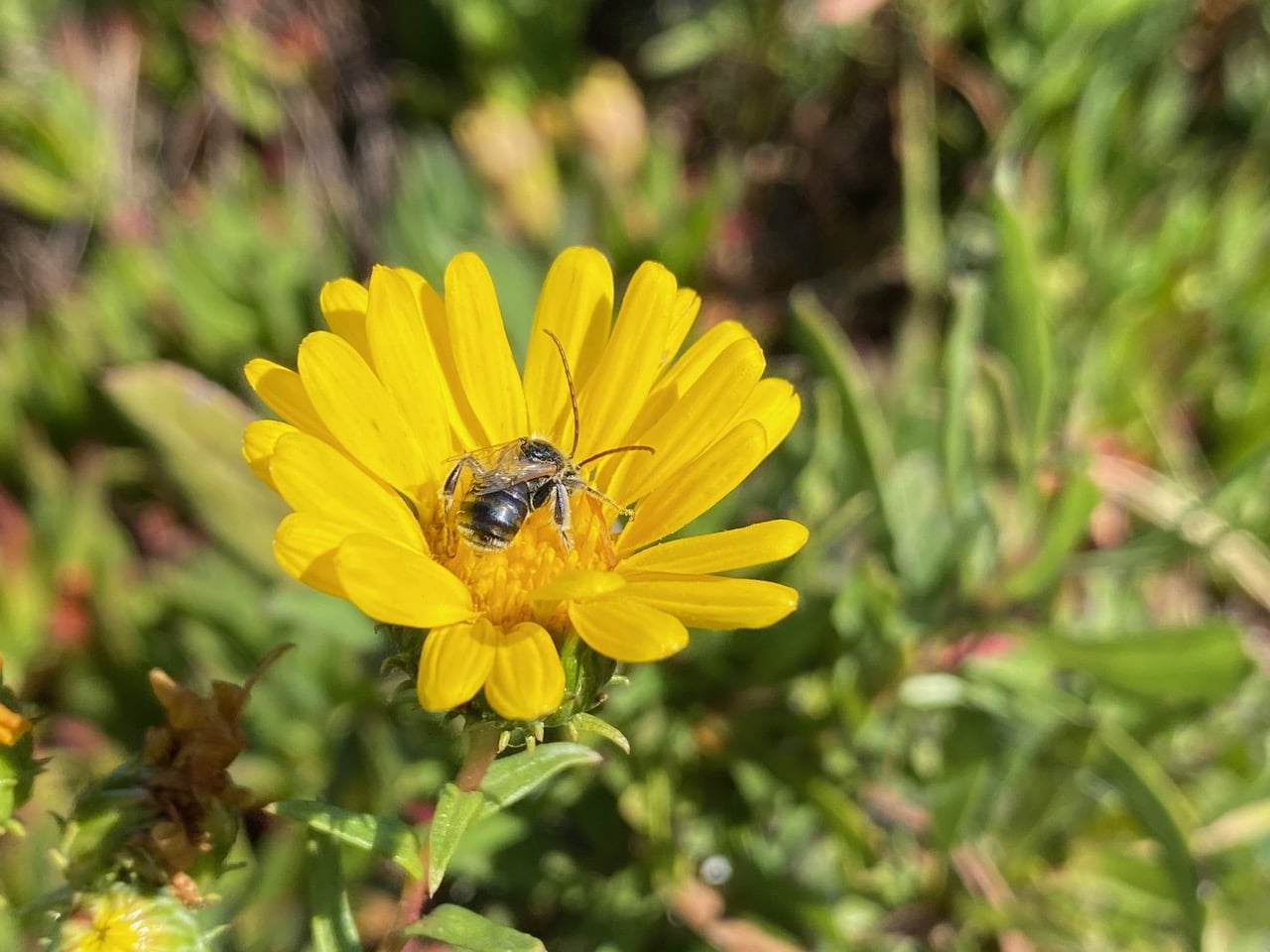
I haven’t seen any Longhorn Bees, Melissodes sp. (family Apidae) until I hit a stretch of the narrow dirt path that is bustling with their activities. Many males can be seen seeking nectar from the Grindelia flowers here. Looking down, I realize that I have come upon a nesting site of these bees. A large number of the bees are swarming over the ground along the path that is covered with salt grass and Russian Thistles. Although I don’t see any nest burrows, I am sure that they are hidden under the low vegetation.

The Summer Longhorn Bees, Melissodes sp. (family Apidae) are medium to large bees, stout-bodied, usually with gray hair on the thorax and pale hair bands on the abdomen. Males usually have yellow markings on their faces and have very long antennae from which their common name is derived. They are active May to September, with peak flight in late June to early August. The females prefer flat, bare ground for digging their solitary nests, though they sometimes nest in aggregations. Pollen is transported in scopae on the hind legs. Pollen loads are often copious and brightly colored and thus very distinguishable. Melissodes are specialists on Asteraceae – females gather pollen from flowers of Aster, Bidens, Coreopsis, Cosmos, Encelia, Gaillardia, Helianthus, and Rudbeckia ssp.