

Pollinator Post 10/26/24
I head up the hills as air quality is acceptable only at higher elevations this morning. Time to visit Inspiration Point in the Berkeley hills. Some of the Coyote Brush, Baccharis pilularis might still be in bloom.
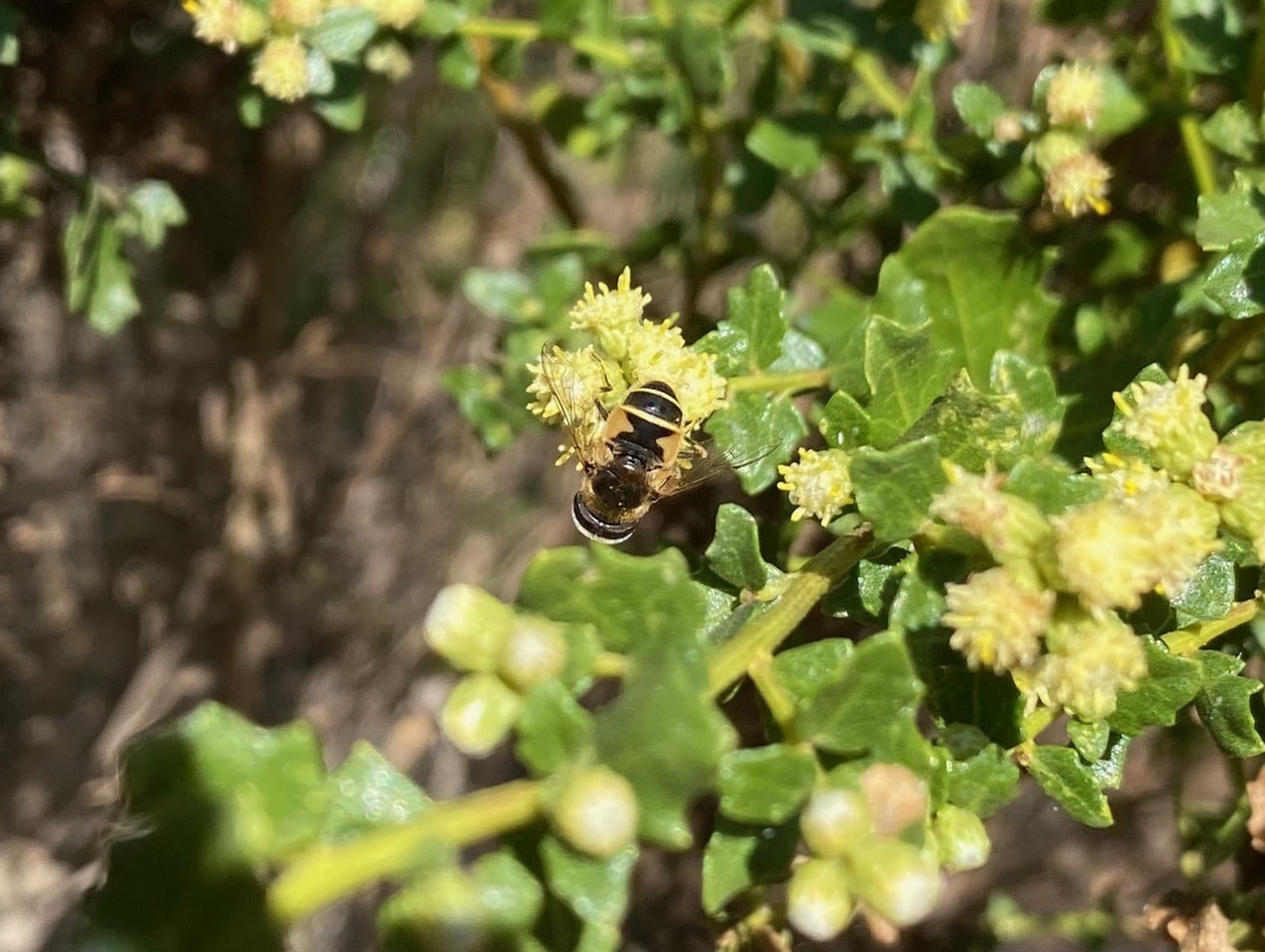
A Black-footed Drone Fly, Eristalis hirta (family Syrphidae) is foraging on a cluster of flowerheads of a male Coyote Brush.
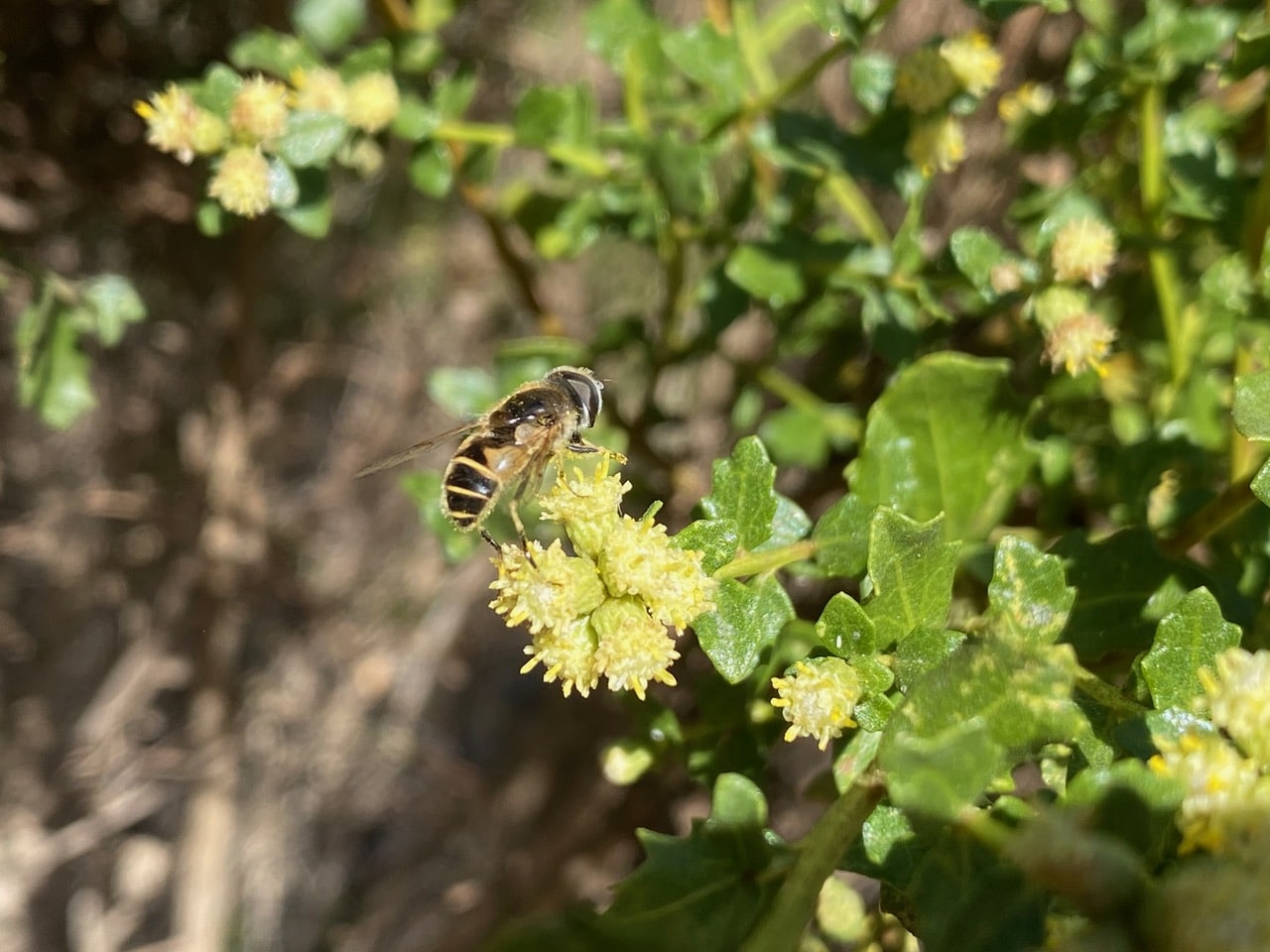
The Black-footed Drone Fly, Eristalis hirta (family Syrphidae) is a common Western North American species of hoverfly. The adults visit flowers for nectar and pollen. Larvae are aquatic filter-feeders of the rat-tailed type.
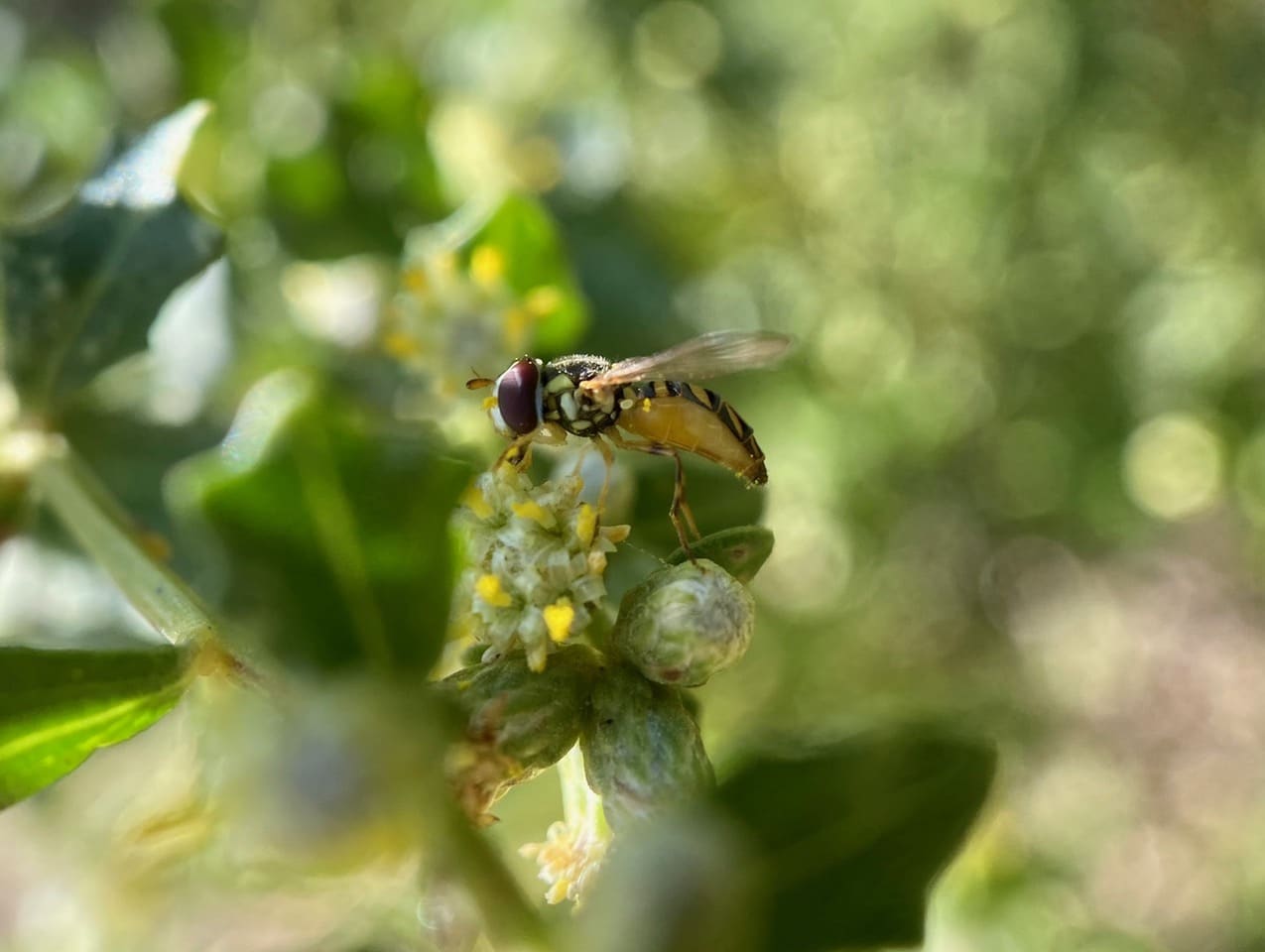
A gravid female Oblique Streaktail, Allograpta obliqua (family Syrphidae) is foraging on a male flowerhead of Coyote Brush.
The Oblique Streaktail, Allograpta obliqua (family Syrphidae) is a common North American species of hoverfly. Adults are 6-7 mm long. Females have a tapered abdomen that ends in a pointed tip. Eggs are laid on surfaces of leaves or stems near aphids. The larvae are important predators of aphids. Adults visit flowers for nectar and pollen, and are pollinators.

A Bee Fly, Villa sp. (family Bombyliidae) has landed on a cluster of male Coyote Brush flowerheads.
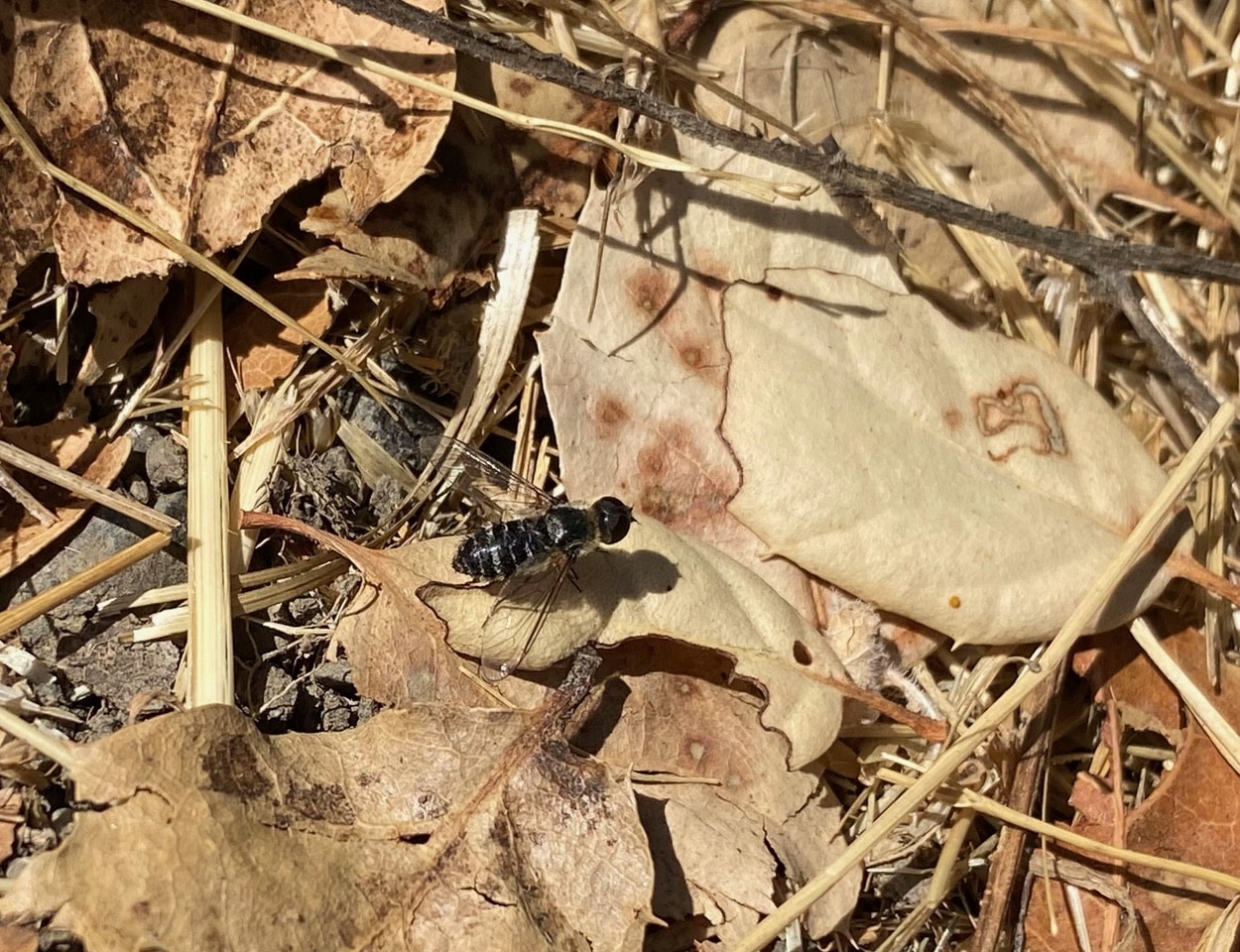
A Bee Fly, Villa sp. (family Bombyliidae) lands on the leaf litter on the ground.
The Bee Flies belong to the family Bombyliidae. Adults generally visit flowers for nectar and pollen, some being important pollinators. Larvae generally are parasitoids of other insects. When at rest, many species of bee flies hold their wings at a characteristic “swept back” angle. The adult females usually deposit eggs in the vicinity of possible hosts, quite often in the burrows of beetles or ground-nesting bees/wasps. Bombyliidae parasitism is not host-specific, but rather opportunistic, using a variety of hosts. Adult females of the genus Villa lay eggs in mid-air and flick them towards the nest entrances of their hosts. They typically have an eversible pouch near the tip of their abdomen known as a sand chamber, which is filled with sand grains gathered before egg laying. These sand grains are used to coat each egg just before their aerial release, presumably to improve the female’s aim by adding weight.
This Fly Torpedoes a Bindweed Bee’s Nest | Deep Look – YouTube
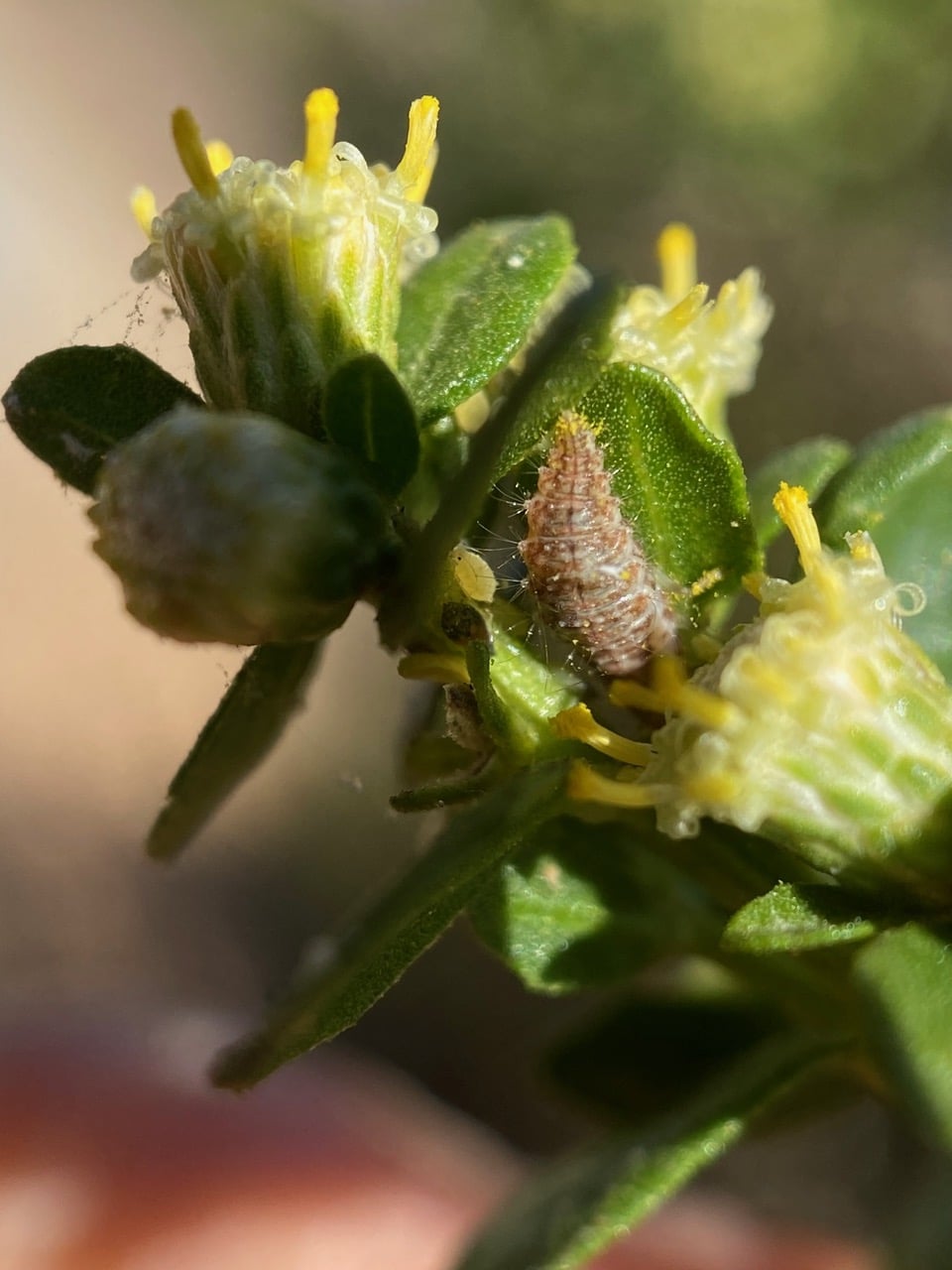
Hey, that looks like the rear end of a Green Lacewing larva (family Chrysopidae) tucked between several flowerheads of a male Coyote Brush.
.jpg)
Lacewings are insects in the large family Chrysopidae of the order Neuroptera. Adults are crepuscular or nocturnal. They feed on pollen, nectar and honeydew supplemented with mites, aphids and other small arthropods. Eggs are deposited at night, hung on a slender stalk of silk usually on the underside of a leaf. Immediately after hatching, the larvae molt, then descend the egg stalk to feed. They are voracious predators, attacking most insects of suitable size, especially soft-bodied ones (aphids, caterpillars and other insect larvae, insect eggs). Their maxillae are hollow, allowing a digestive secretion to be injected in the prey. Lacewing larvae are commonly known as “aphid lions” or “aphid wolves”. In some countries, Lacewings are reared for sale as biological control agents of insect and mite pests in agriculture and gardens.
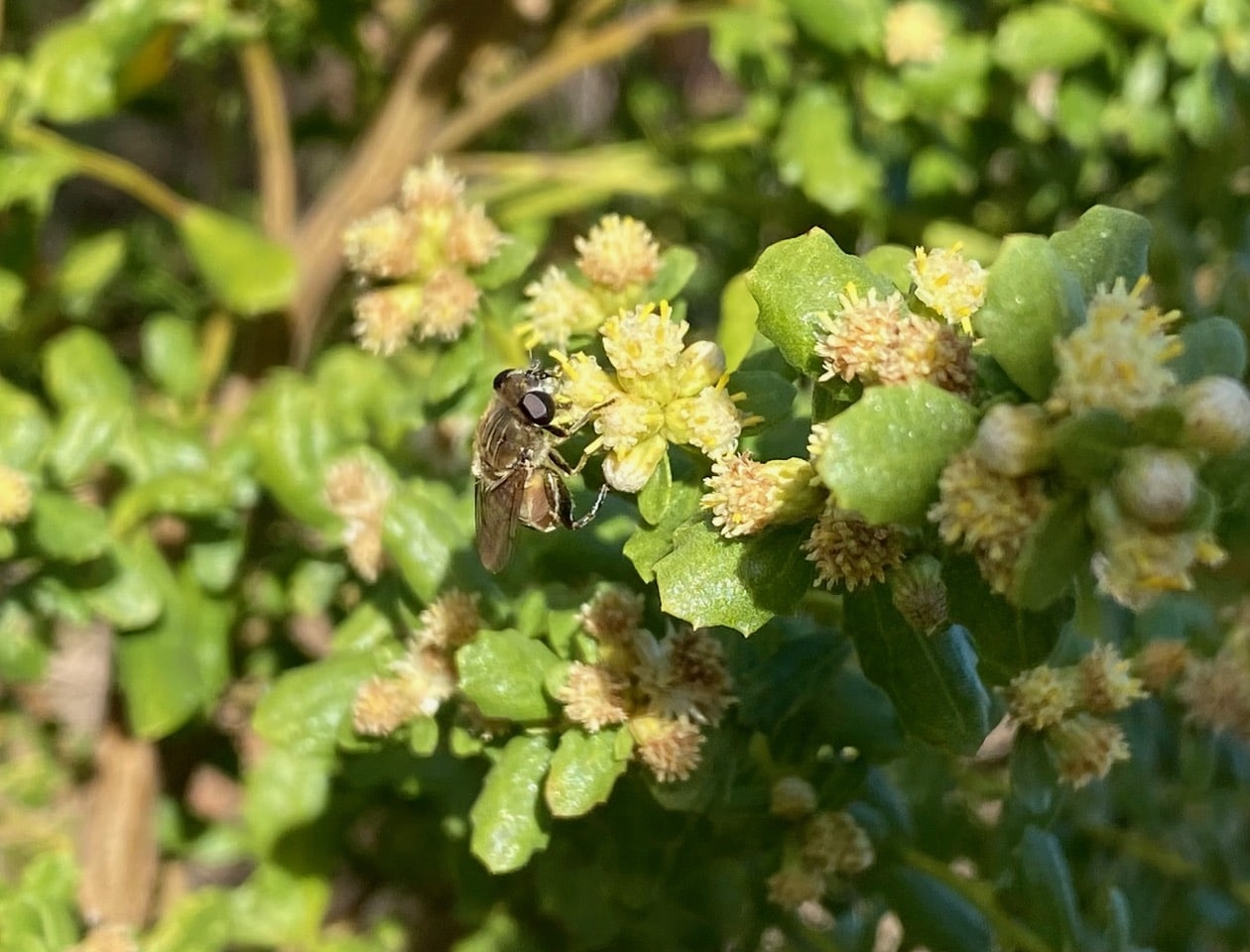
An unfamiliar fly lands on a cluster of male Coyote Brush flowerheads.
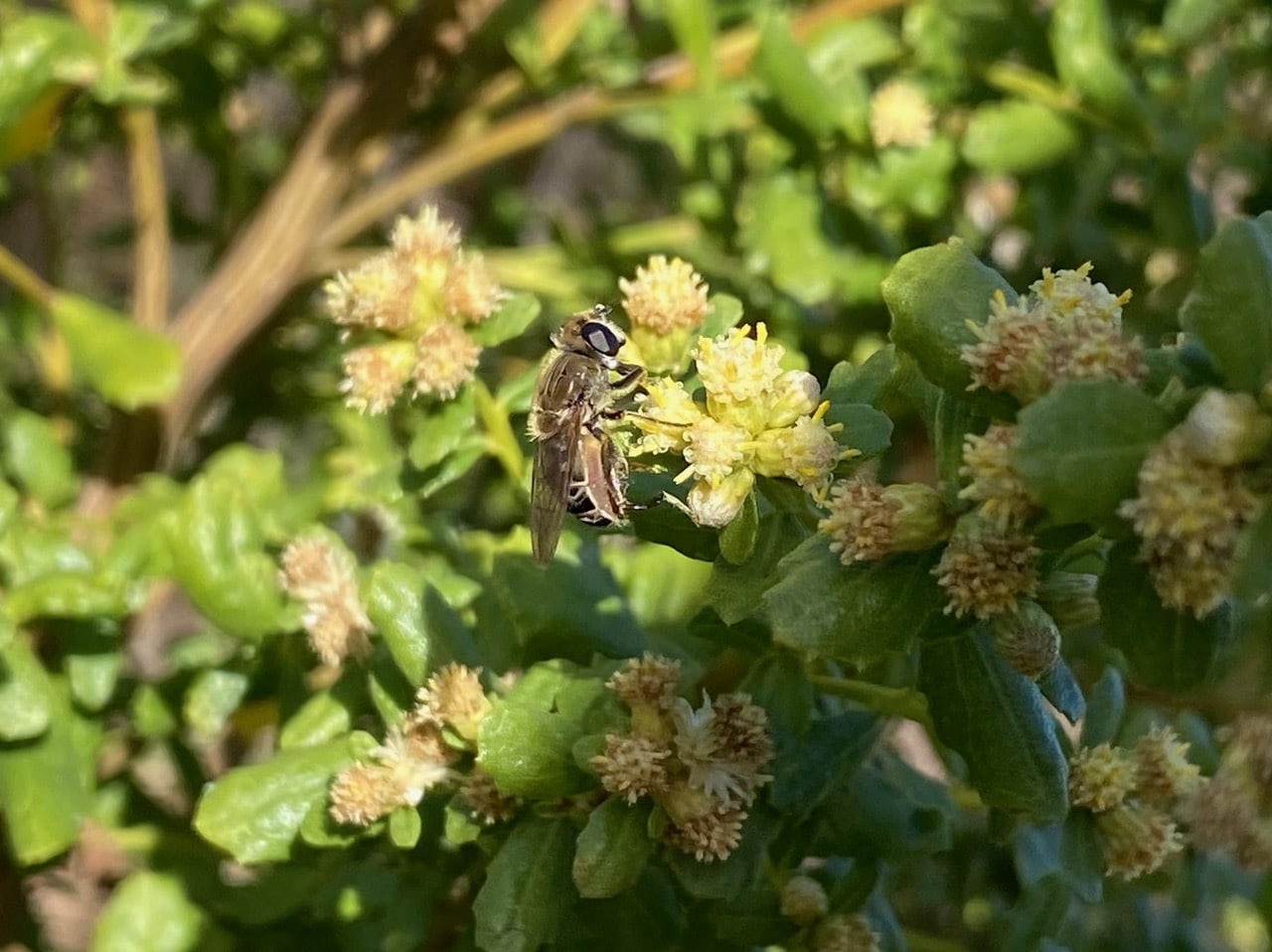
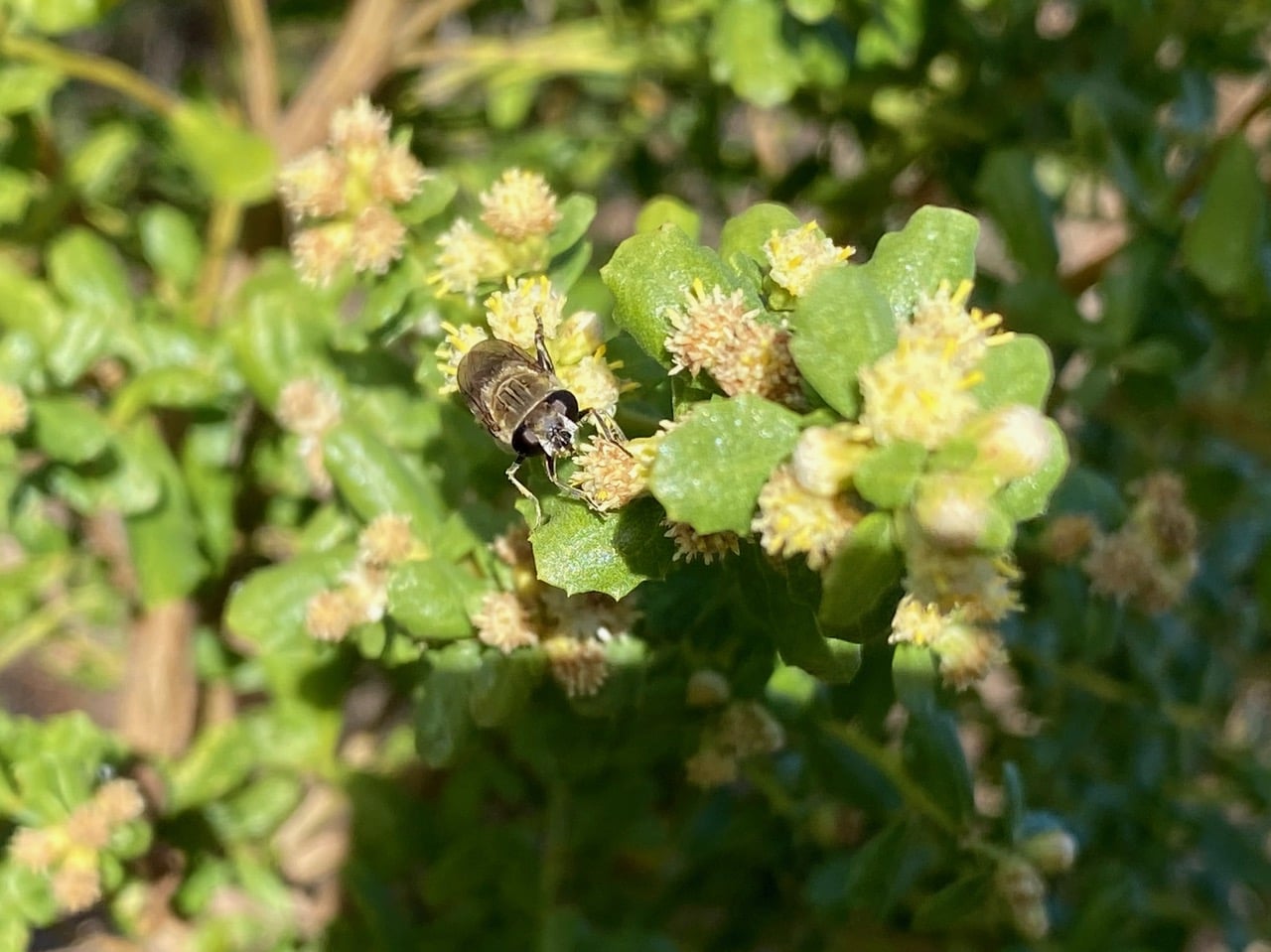
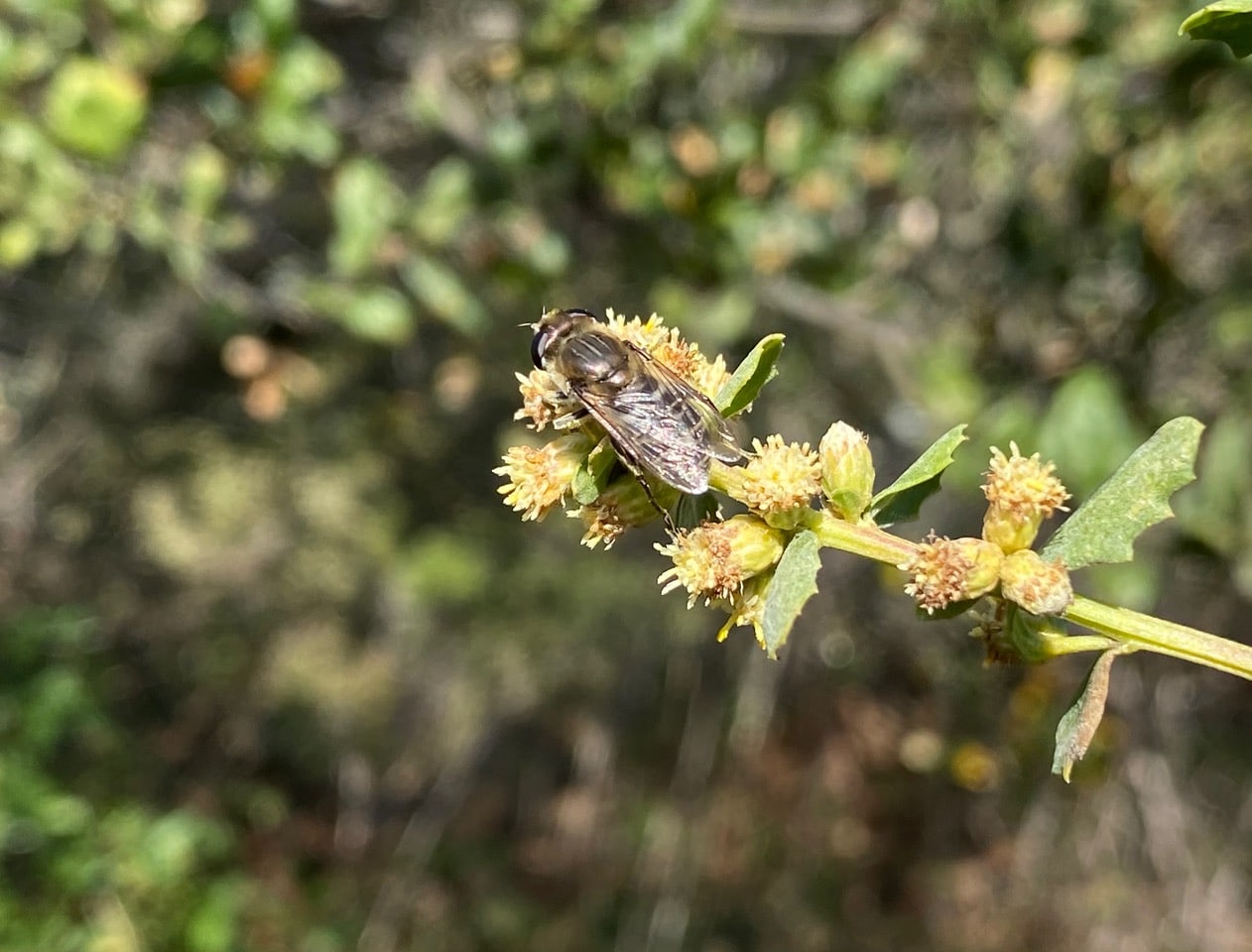
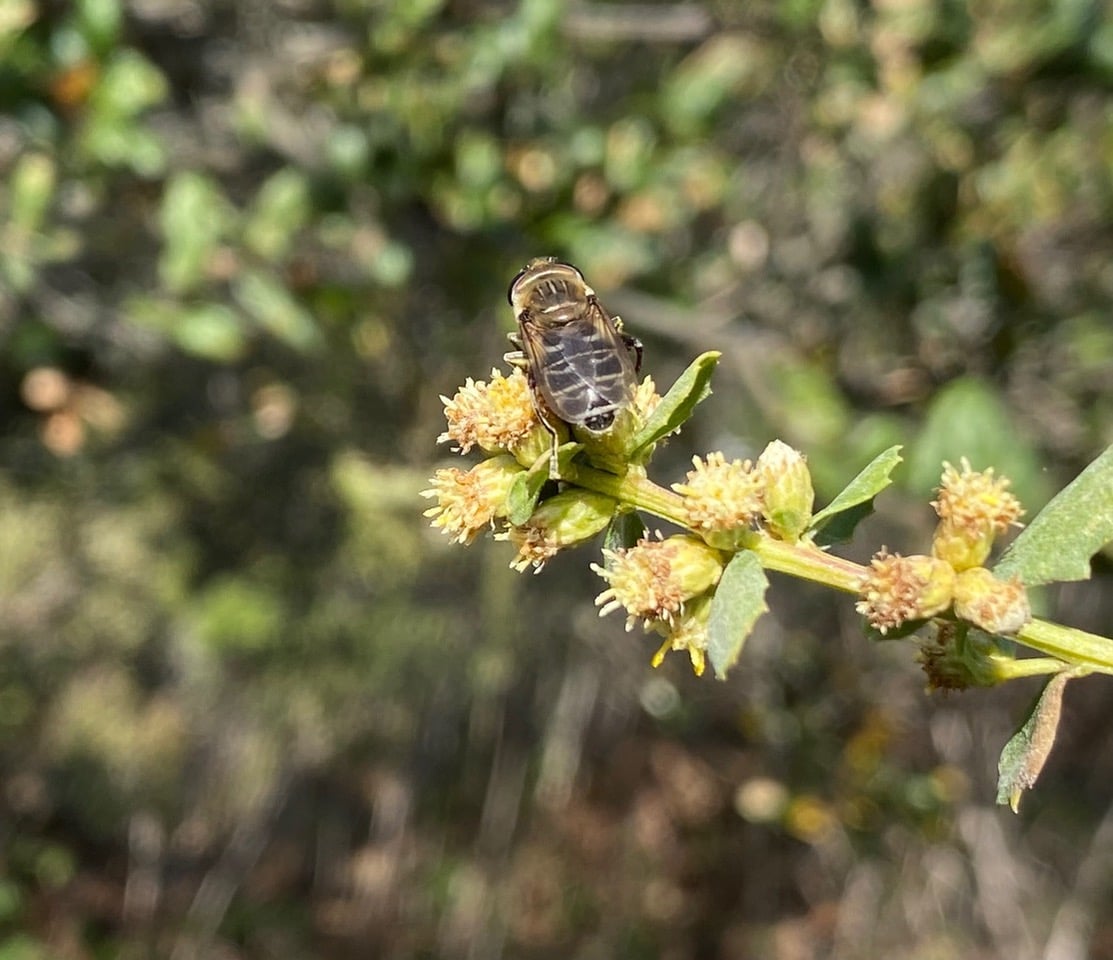
Ah, at this angle I get a fairly clear view of its abdominal markings through its wings. A Common Sickleleg?
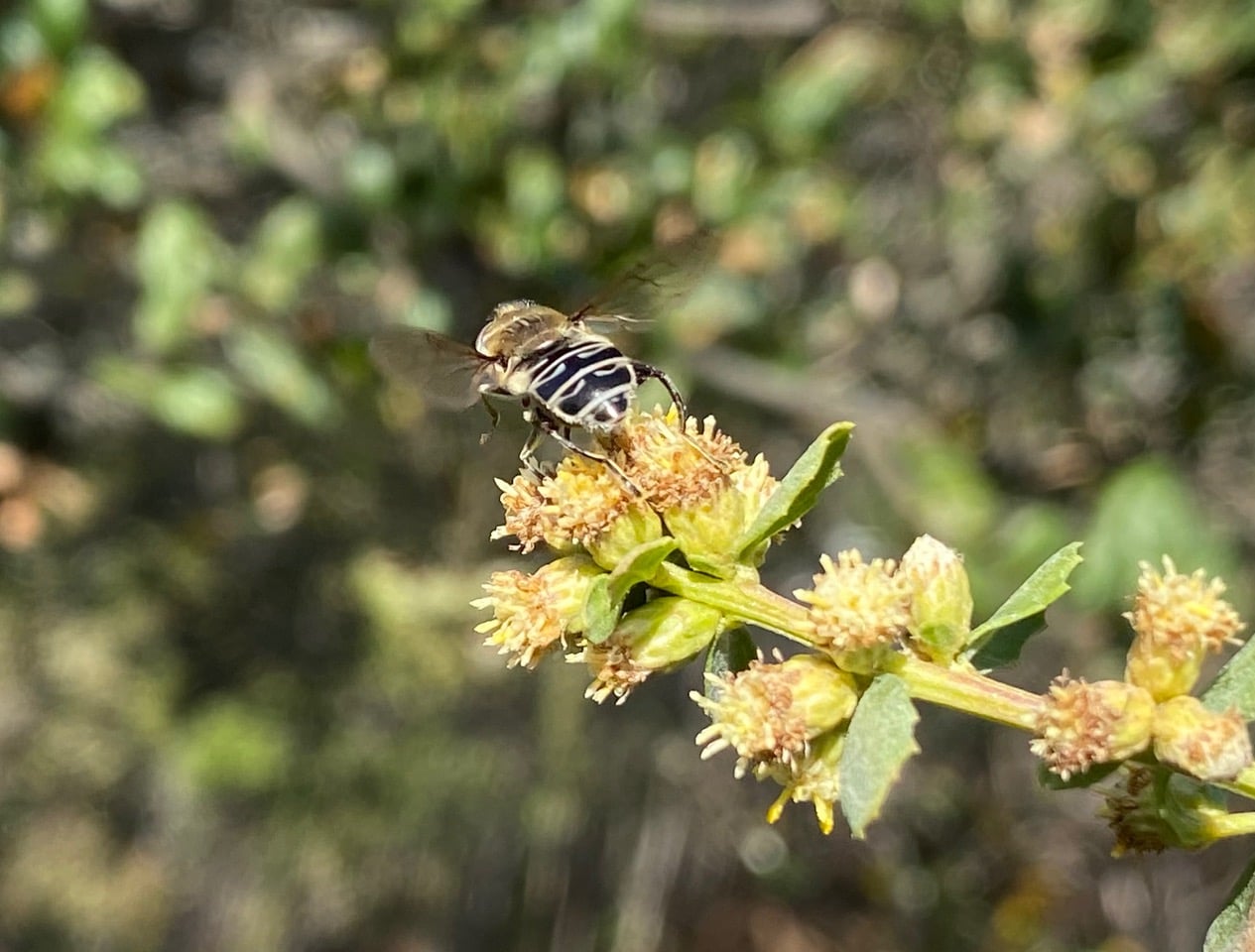
As the fly lifts off, we get a clear view of its abdominal markings. It is indeed the Common Sickleleg, Asemosyrphus polygrammus (family Syrphidae).
The hover fly is found in western North America. Appropriately, Polygrammus means “marked with many lines”, probably referring to the patterns on the thorax. The common name ‘sickle-leg’ probably refers to the bow-shaped tibia of the hind legs. Adults visit flowers for nectar and pollen. Larvae are rat-tail maggots. The maggots are most commonly found in dank and decaying environments such as compost, pond margins, and tree rot holes. The larvae feed on the decomposing material which is poor in oxygen but rich in organic matter. The “tails” are the siphons or breathing tubes that extend from their rear end to enable the larvae to breathe while submerged in the wet substrate. When mature, the larvae climb out to pupate on dry land. The larvae are important decomposers/recyclers and the adult flies are important pollinators.
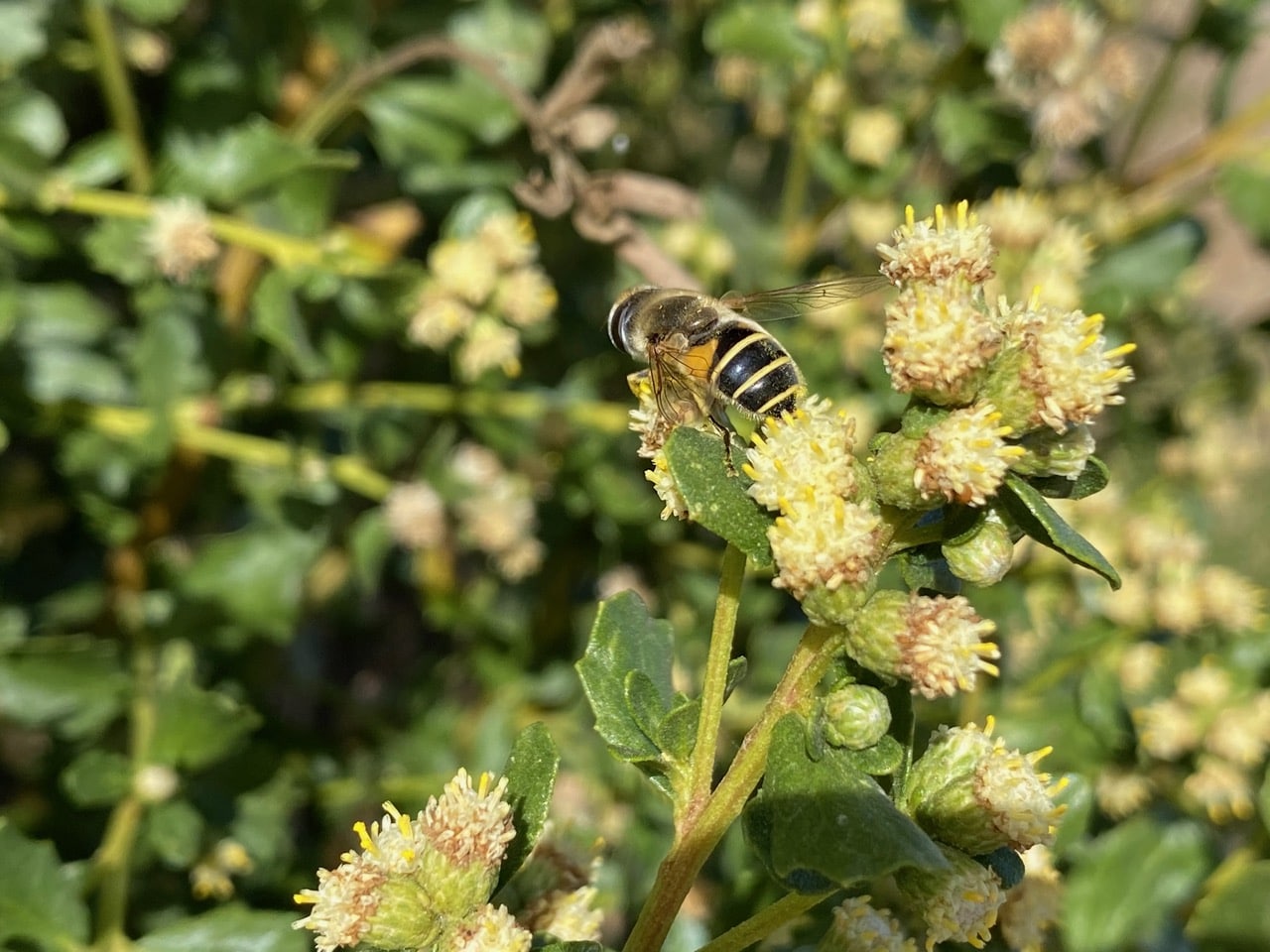
Another Black-footed Drone Fly, Eristalis hirta (family Syrphidae) on the flowers of Coyote Brush.
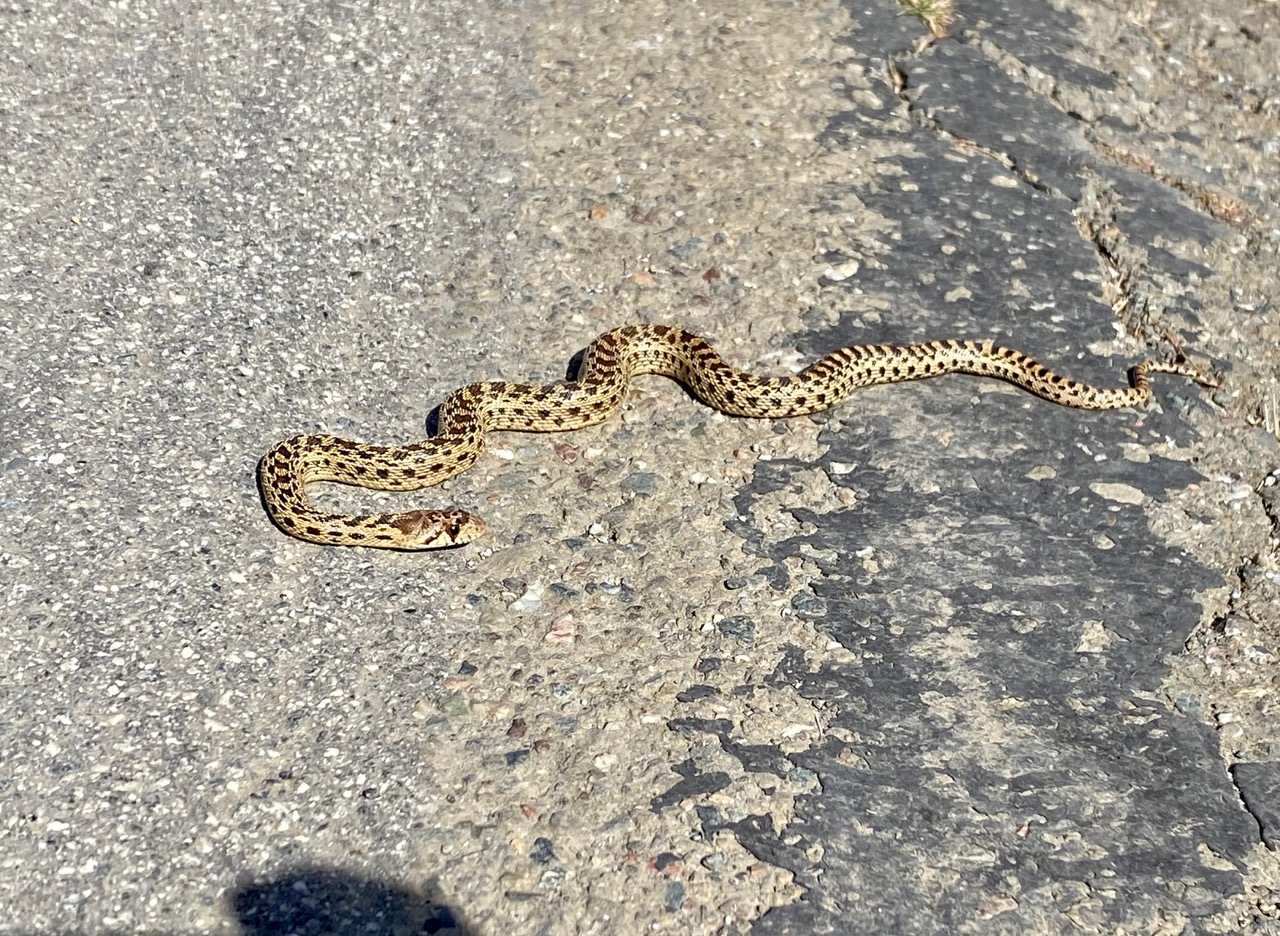
A 3-year-old boy has spotted a 3-foot long snake on the paved path from the stroller he is sharing with his baby brother. His nervous parents inch their way forward, wondering out loud whether it was a rattle snake. One look at the tip of the tail, the head, and the shiny scales, and I assure them that it’s nothing to worry about – it’s a gopher snake. A rattle snake would have a rattle at the tip of its tail, its head would be triangular, and its skin would have a matted look.
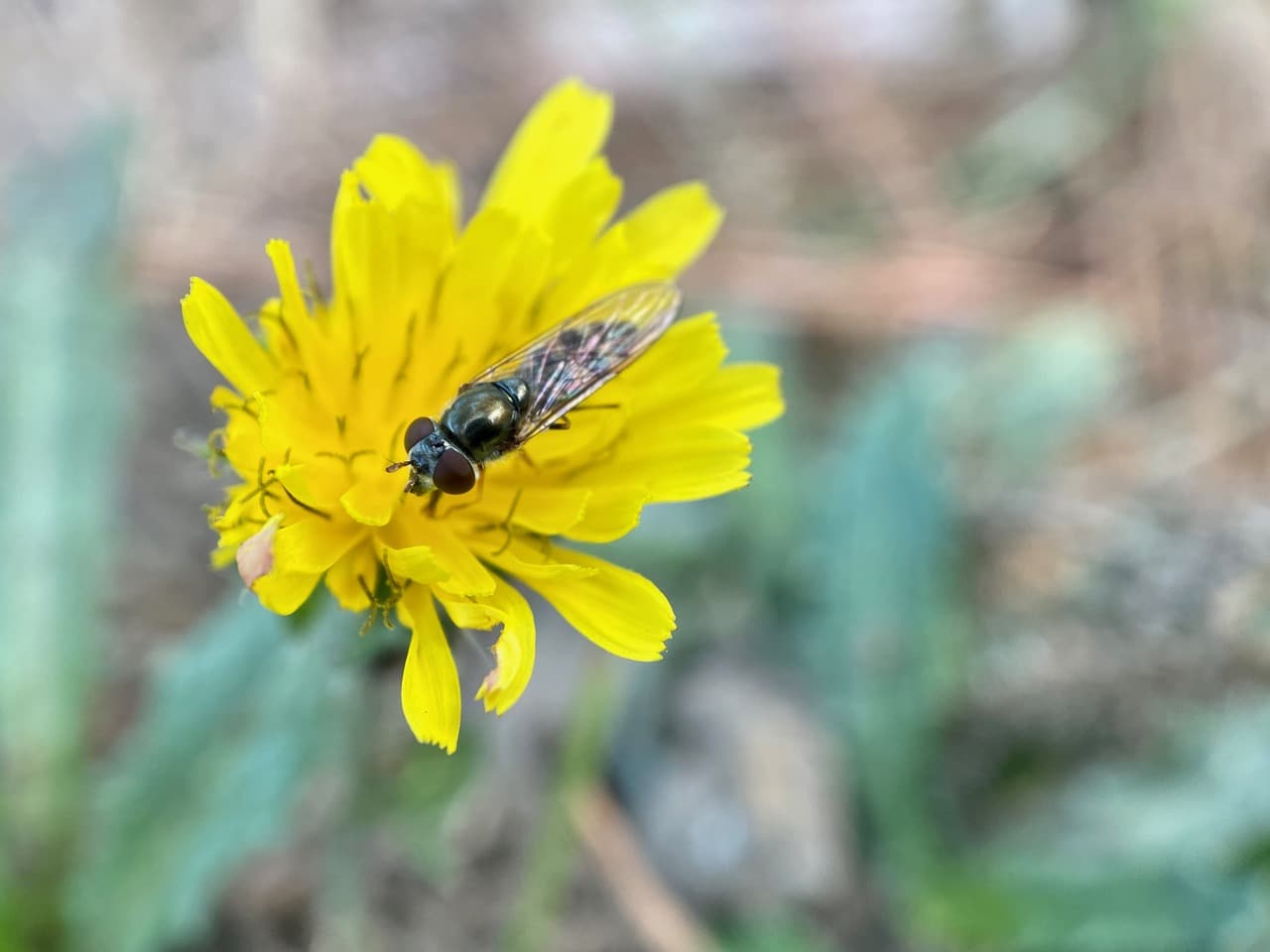
A dusky fly with a metallic thorax lands on a flowerhead of Bristly Oxtongue, Helminthotheca echioides. It is a Sedgesitter, Platycheirus sp. (family Syrphidae).
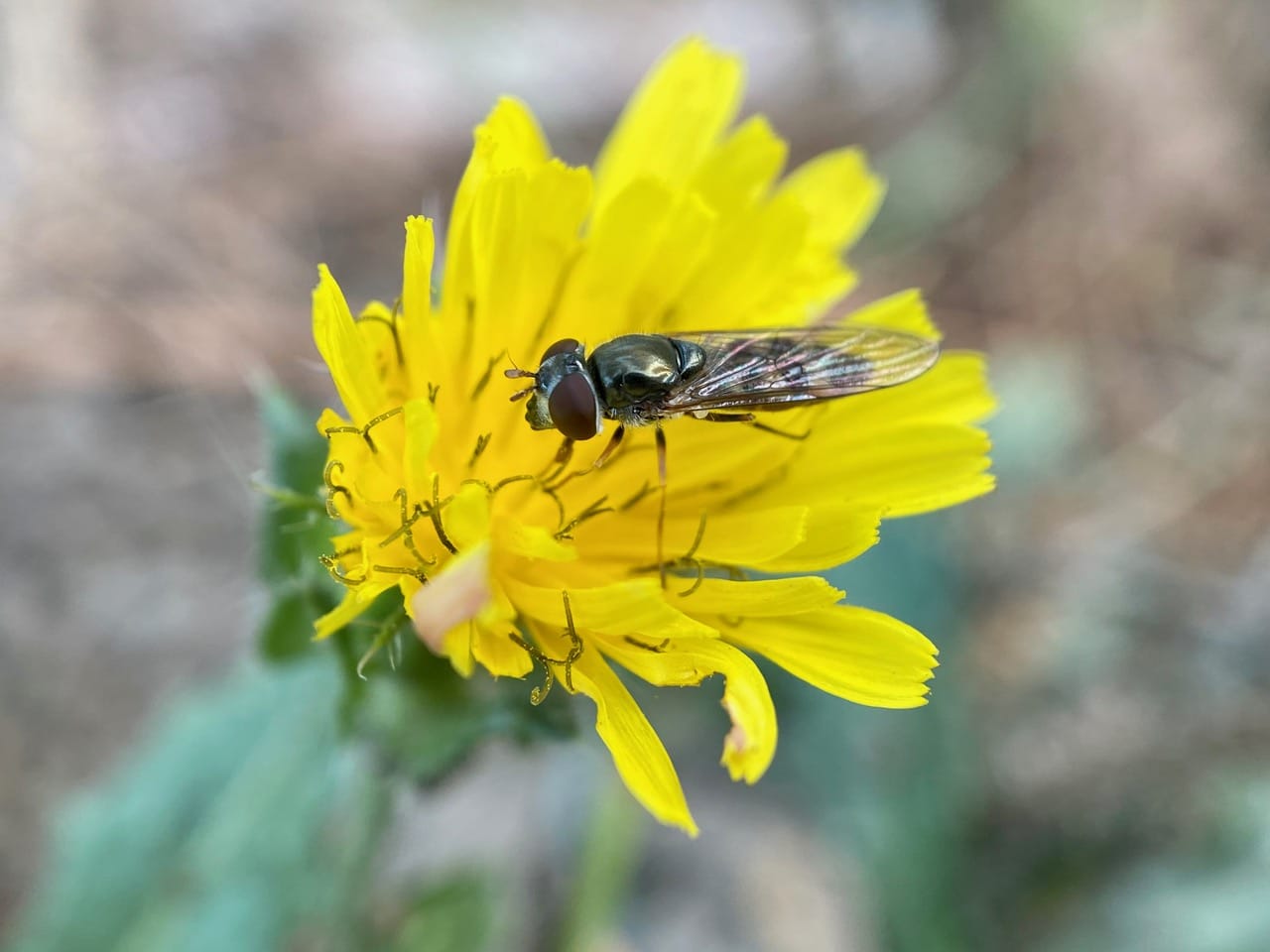
The Platycheirus hoverfly is commonly found in grass and herb vegetation. Adults of many species feed on pollen of wind-pollinated plants, such as Salix, Plantago, Poaceae, Cyperaceae, but they visit other flowers also. Many stay active during cold and rainy weather. Larvae feed on aphids.