

Pollinator Post 1/14/25

I have come to the East Bay Regional Parks Botanic Gardens to check for pollinators on the Fetid Adder’s Tongue, Scoliopus bigalovii in the redwoods section I found on my last visit on 1/11/24.
This notice is posted on the front gate of the garden. No problem – the West Gate leads directly to the redwood section!
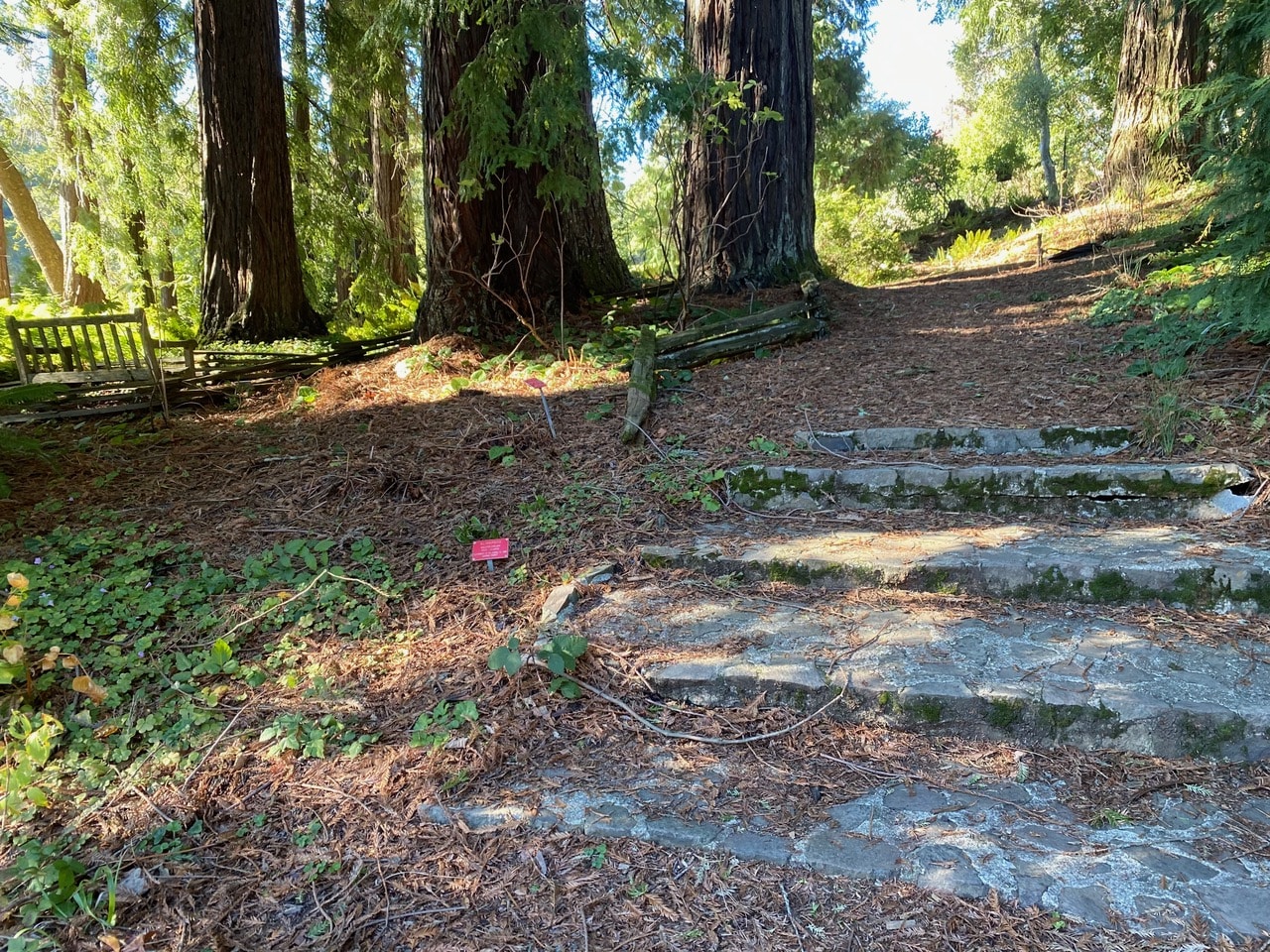
The red tag on the ground marks the spot. The small clumps of Fetid Adder’s Tongue, Scoliopus bigelovii can be found right behind the label.
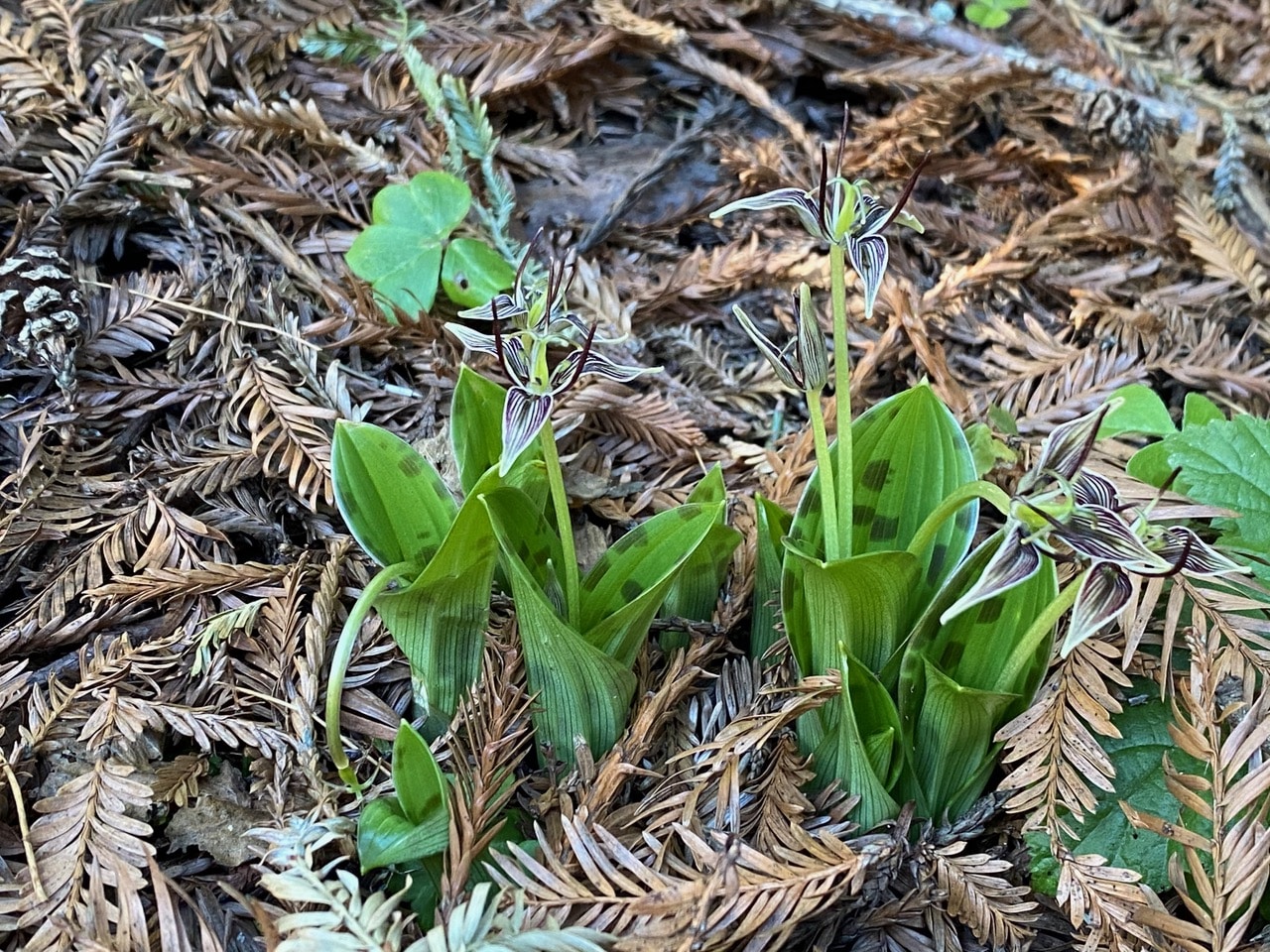
There they are. The erect flower stalks rise vertically from the spacious tube formed by the paired spotted leaves. The well-camouflaged flowers are only about 4 inches above the ground, sometimes partially buried under fallen redwood leaves.
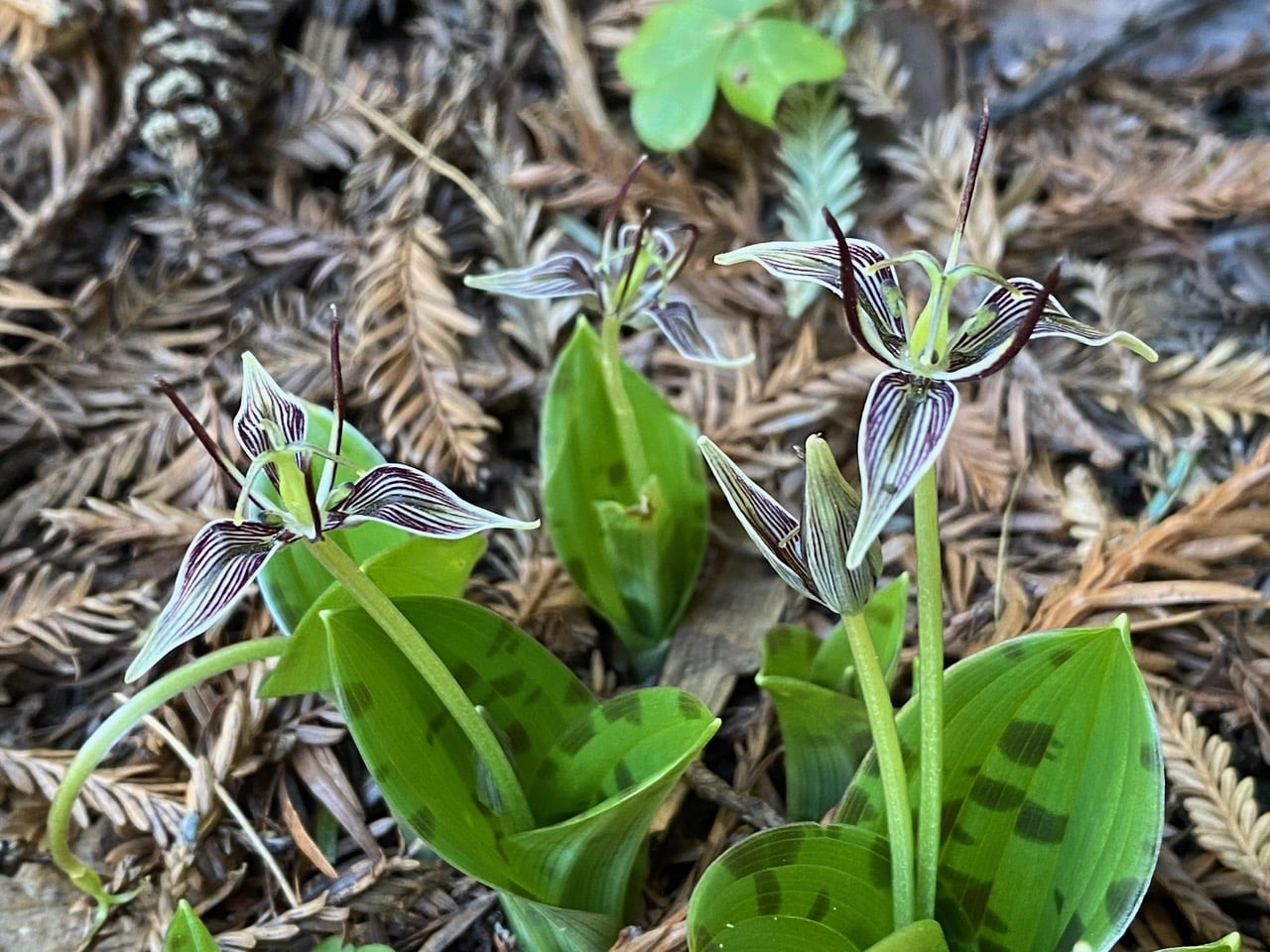
I quickly check each flower for any small insects such as fungus gnats (family Mycetophilidae). No, none is around. The flowers of Fetid Adder’s Tongue emit an odd scent that attracts the gnats. While perched on the sepals and probing for nectar at the center of the flower, the gnat’s body may pick up pollen released from the three large anthers hanging above it. Flying to another flower, the gnat may inadvertently transfer the pollen onto the stigmas at the tip of the stout, three-pronged style, effectively pollinating the flower in the process.
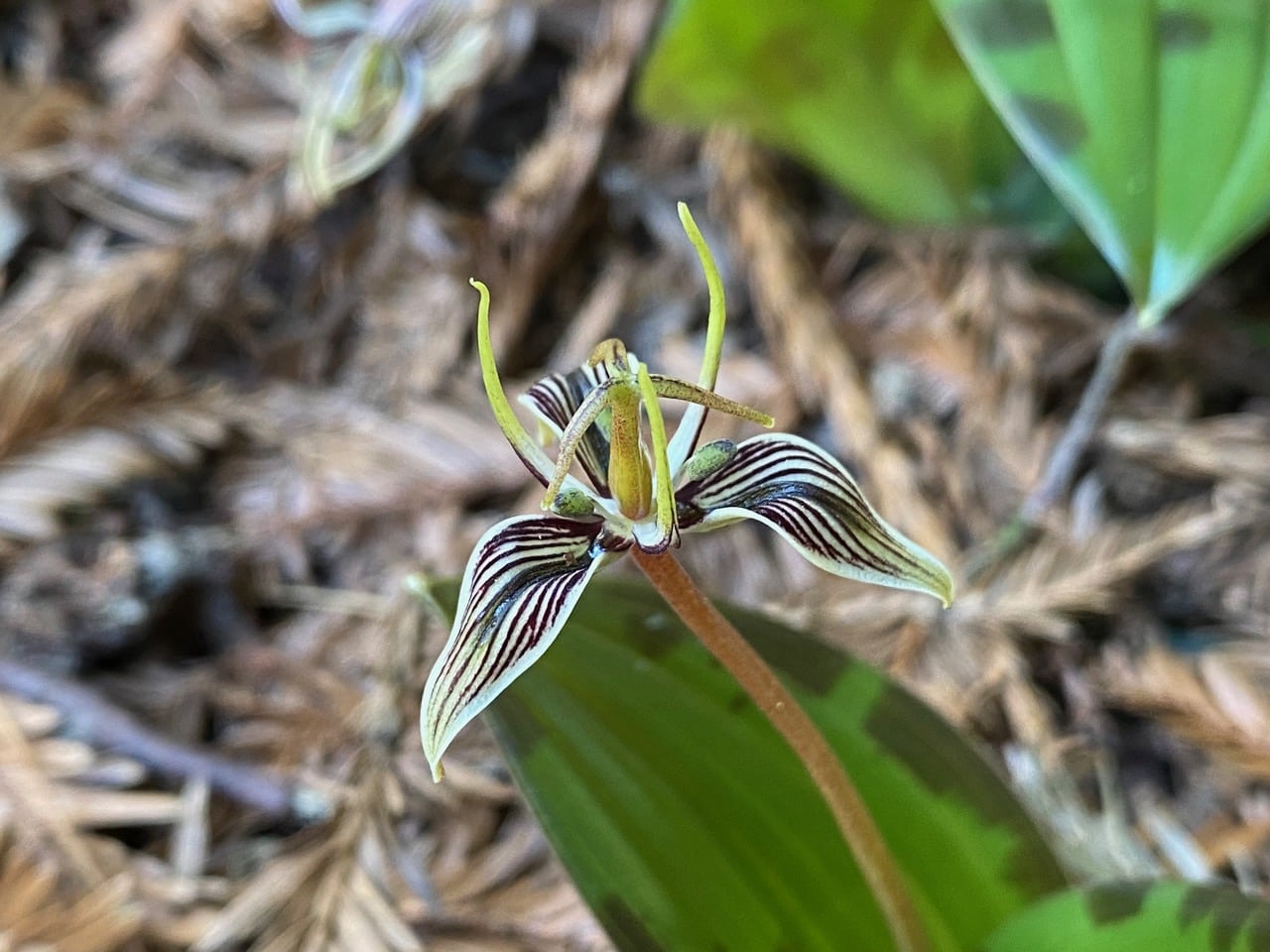
Learn about the Fetid Adder’s Tongue and how the flower is pollinated:
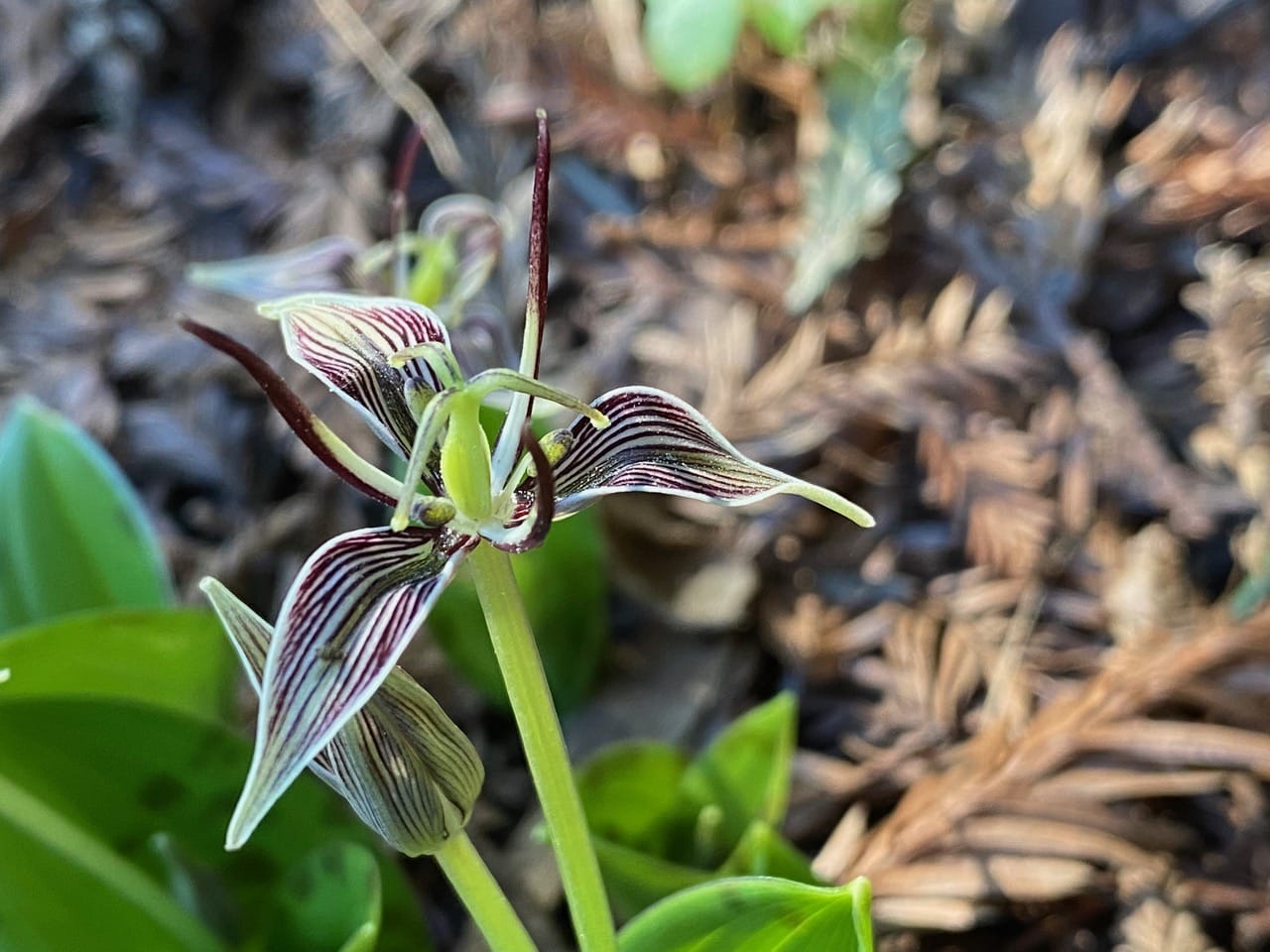
Do you see the powdery pollen on the sepals that are shed by the egg-shaped anthers positioned right above them?
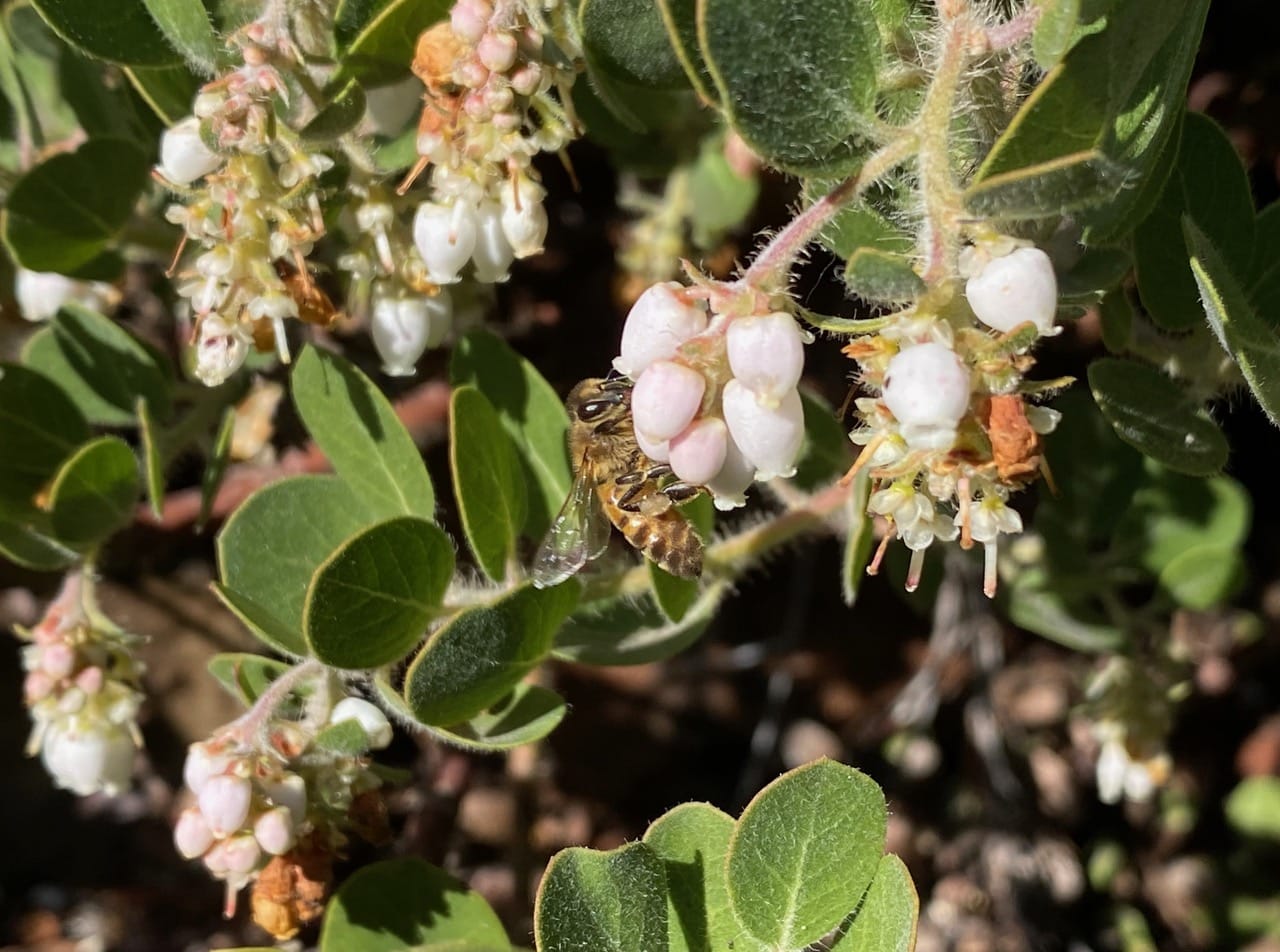
Many Honey Bees, Apis mellifera (family Apidae) are out foraging on the manzanita flowers today. Unlike the bumble bees, Honey Bees are not capable of sonication (or buzz pollination), so they can’t access the hidden pollen in the manzanita flowers. However, the bees have long enough tongues to reach the nectar inside the flowers.
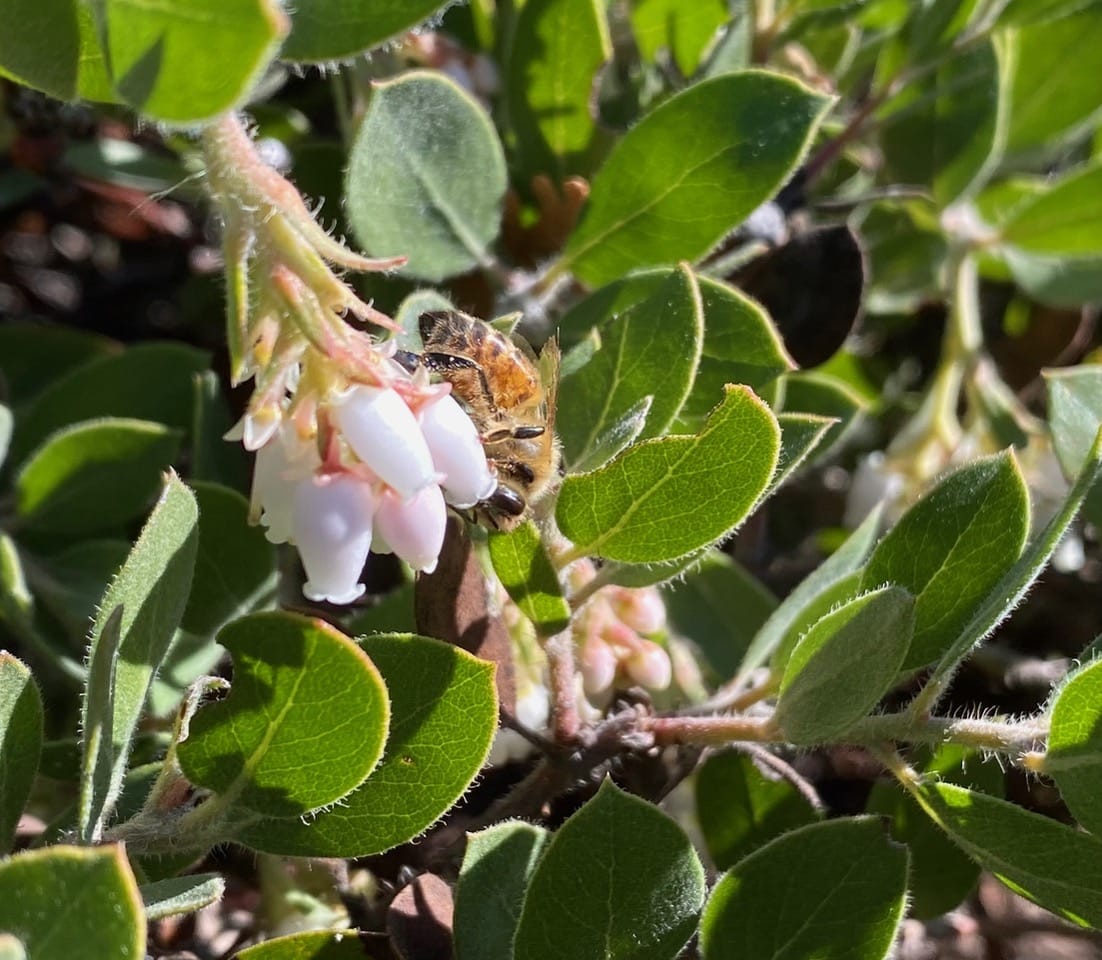
A Honey Bee probes a manzanita flower for nectar.
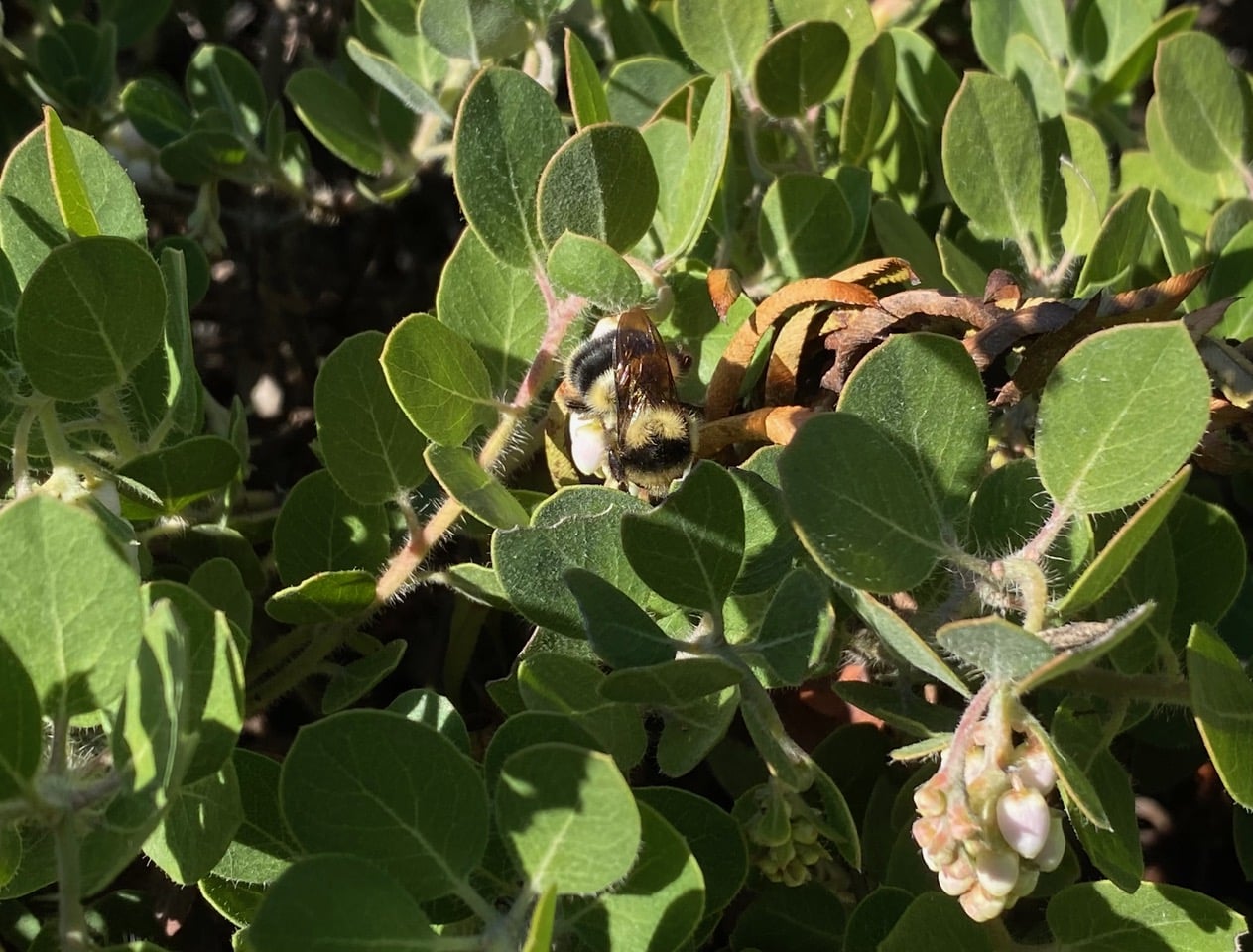
A queen Black-tailed Bumble Bee, Bombus melanopygus (family Apidae) is foraging skillfully on a cluster of manzanita flowers.
Bombus melanopygus is a species of bumble bee native to western North America, widely distributed from the Pacific to the Rocky Mountains, and from Alaska to Baja California. The species is found in various habitats, including agricultural and urban areas. The bees feed on many types of plants, including manzanitas, Ceanothus, golden bushes, wild buckwheats, lupines, penstemons, rhododendrons, willows, sages, and clovers. They nest underground or aboveground in structures.
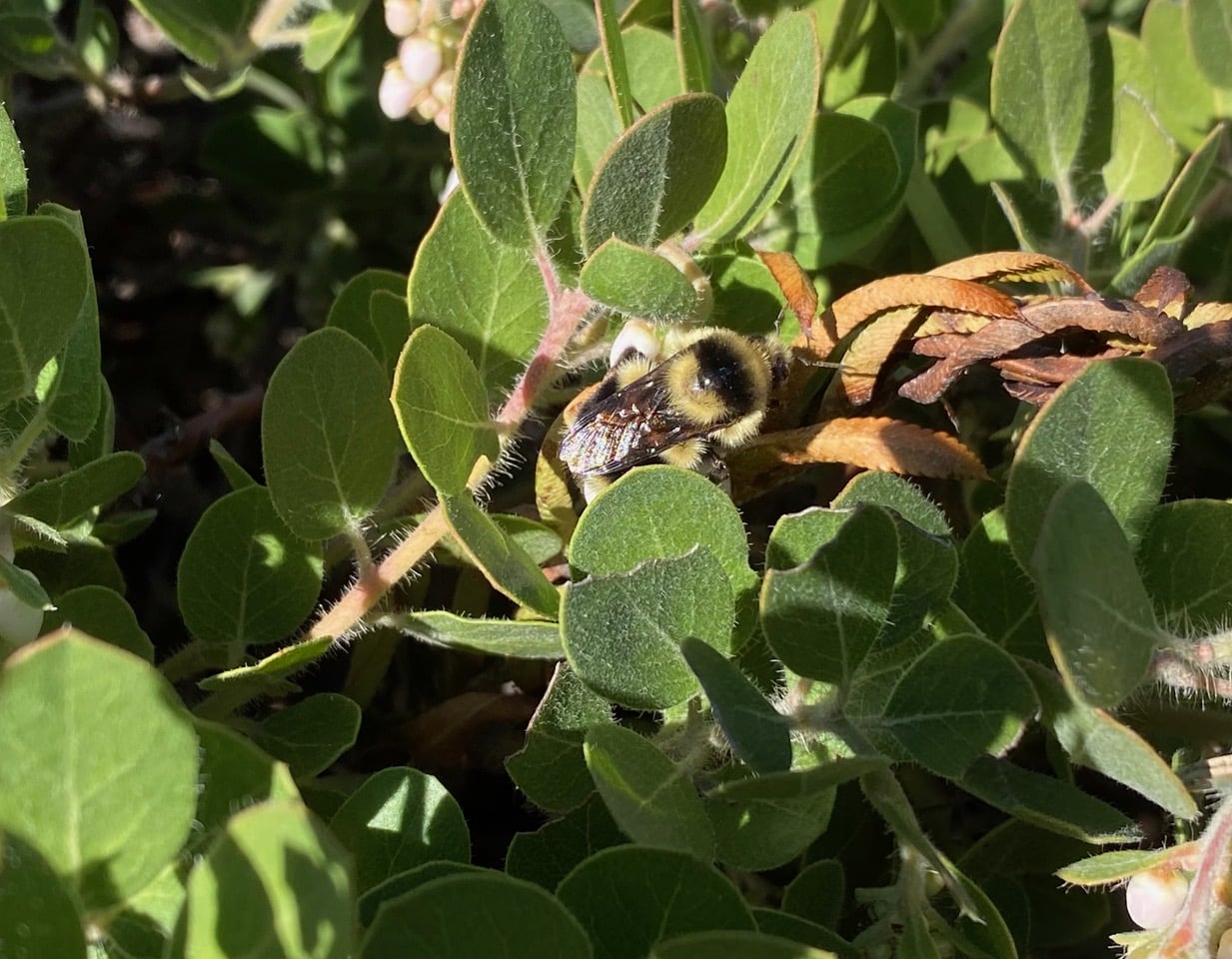
This queen is foraging on foot, scrambling from one cluster of flowers to another through the dense foliage.
Bumble bees are social and live in colonial hives. Many of the large individuals seen early in the season are queens. They are the only members of their colony to survive the winter, hibernating until the days begin to warm and their host plants are in bloom. These queens have mated before they went into hibernation. Now their first order of business is to each find a nesting site (usually an abandoned rodent burrow), lay eggs, brood and nurture the first batch of workers. Hence forth, the queens stay behind in the hive to concentrate on laying eggs while the workers take on hive duties and foraging. Bumble bees are among the most cold tolerant bees, and are usually the first bees we see out foraging. This is why it’s important for us to plant early blooming natives to support the queen bumble bees.
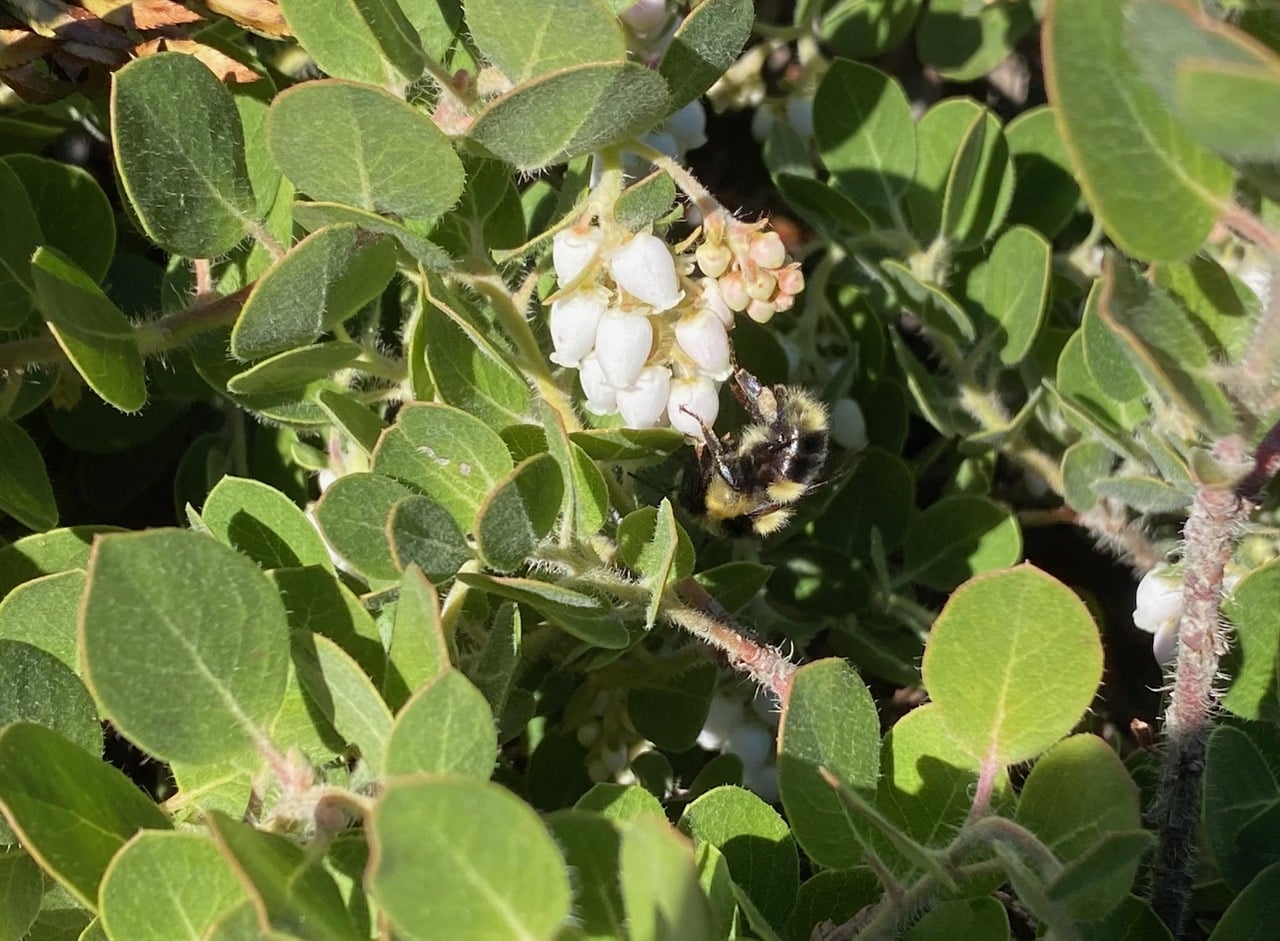
A few worker Black-tailed Bumble Bees are zipping about foraging on the manzanita flowers in breakneck speed. Some colonies must have been established in the vicinity, thanks to the abundance of manzanita in this garden. There is hardly any other floral resources for the bees this early in the season.
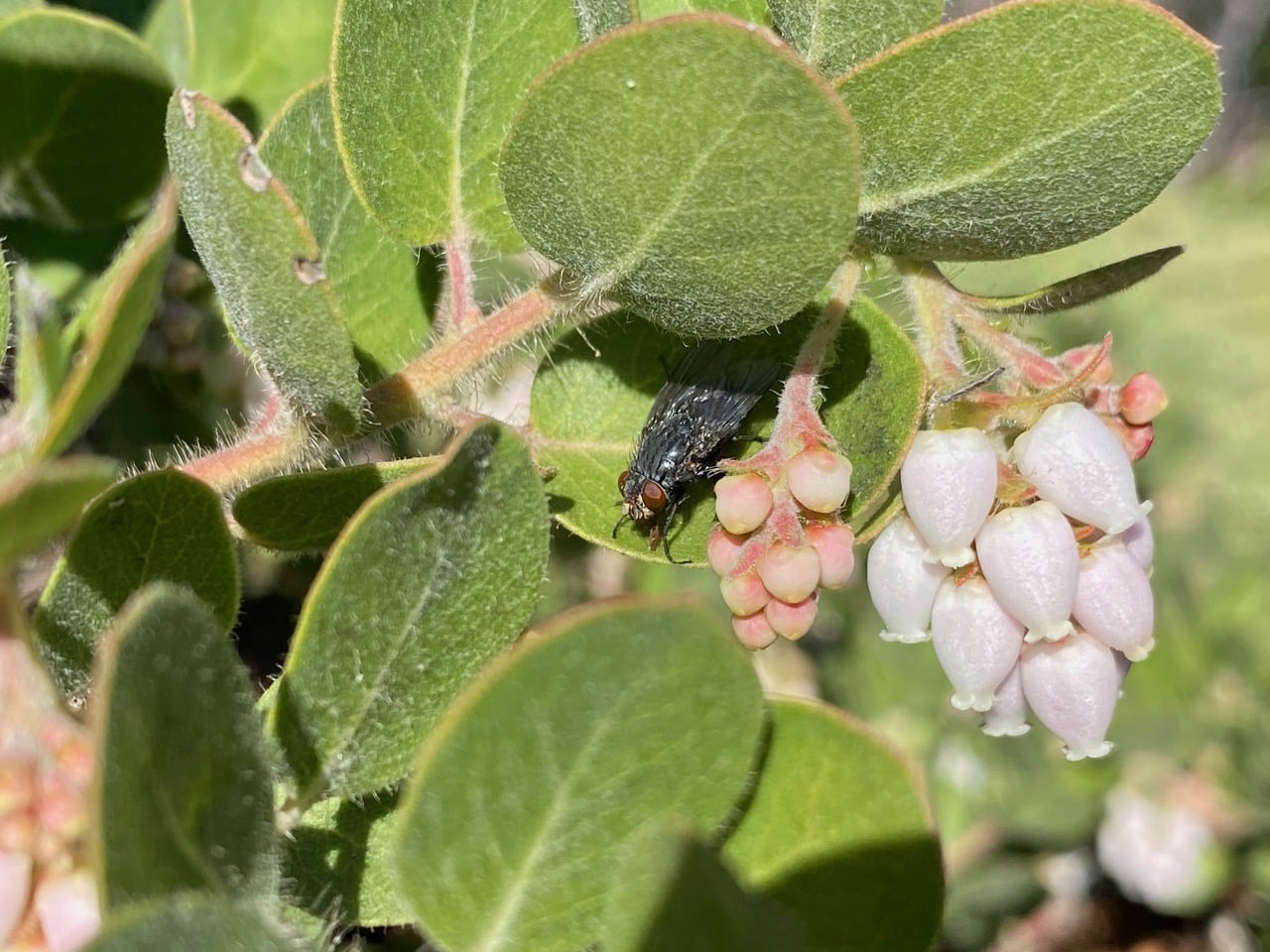
A Bluebottle Fly, Calliphora sp. (family Calliphoridae) forages around the flowers of manzanita.
The Calliphoridae are variously known as blow flies, carrion flies, greenbottles, and bluebottles. Adults are usually brilliant with metallic sheen, often with blue, green, or black thoraces and abdomens. There are three cross-grooves on the thorax; calypters are well developed. Females visit carrion both for proteins and egg laying. The larvae that hatch feed on dead or necrotic tissue, passing through three instars before pupation. After the third instar, the larva leaves the corpse and burrows into the ground to pupate. Adult blow flies are occasional pollinators, being attracted to flowers with strong odors resembling rotting meat. The flies use nectar as a source of carbohydrates to fuel flight.

A tiny black-and-yellow wasp zips around the manzanita flowers frenetically. I thought it was a solitary wasp until it gets close enough. It is actually a very small yellowjacket, about half the size of the yellowjackets I usually encounter. iNaturalist has identified it as a Common Aerial Yellowjacket, Dolicovespula arenaria (family Vespidae).
The species is widely distributed in the North American continent. Nests are found in arboreal to subterranean habitats. The nests are made from paper-like material and are usually found in trees and shrubs. In urban settings, nests are frequently found on buildings. A queen initiates a colony in the spring by choosing a site and building a small paper nest where she lays eggs. The queens feeds the larvae that hatch from the eggs. These larvae eventually become workers and the colony continues to grow and peaks in the summer. In general, these colonies flourish for about a year before they dwindle as the winter sets in. D. arenaria workers are known to prey on live arthropods of a wide variety such as grasshoppers, crickets, caterpillars, spiders, flies, lacewings, and even lady beetles. Unique to D. arenaria is the observed spraying of venom out of their stings. The mechanism allows for a greater release of alarm pheromone in the venom, which is key to elicit the attack behavior of yellowjackets.
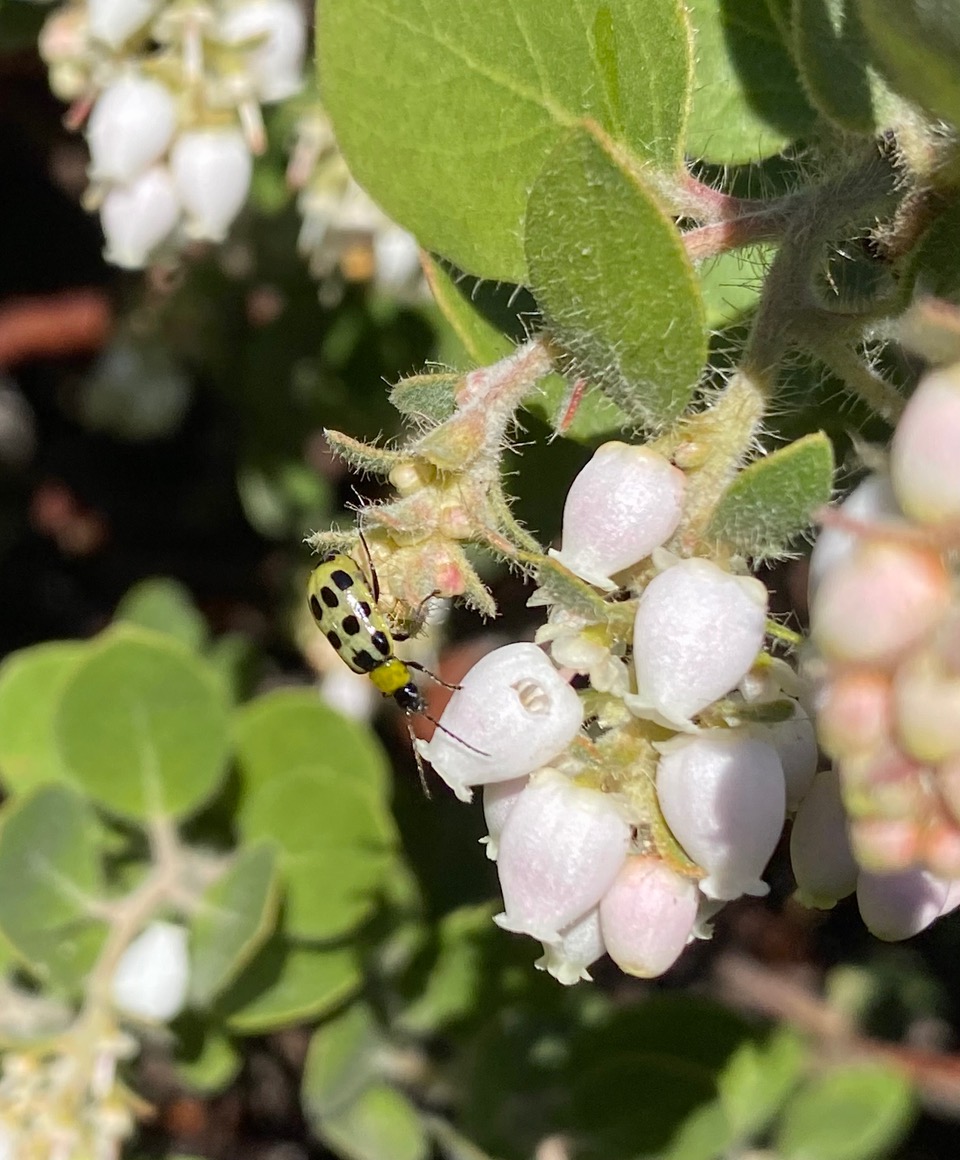
My first Spotted Cucumber Beetle, Diabrotica undecimpunctata (family Chrysomelidae) of the year! Pretty soon, these beetles with indiscriminate appetite will be found in all the plants in the garden. Did this individual chew the hole on the side of that manzanita flower?
Native to North America, the beetle can be a major agricultural pest, causing damage to crops in the larval as well as adult stages of their life cycle. Larvae, sometimes known as rootworms feed on the roots of emerging plants. In the adult stage the beetles cause damage by eating the flowers, leaves, stems and fruits of the plant.
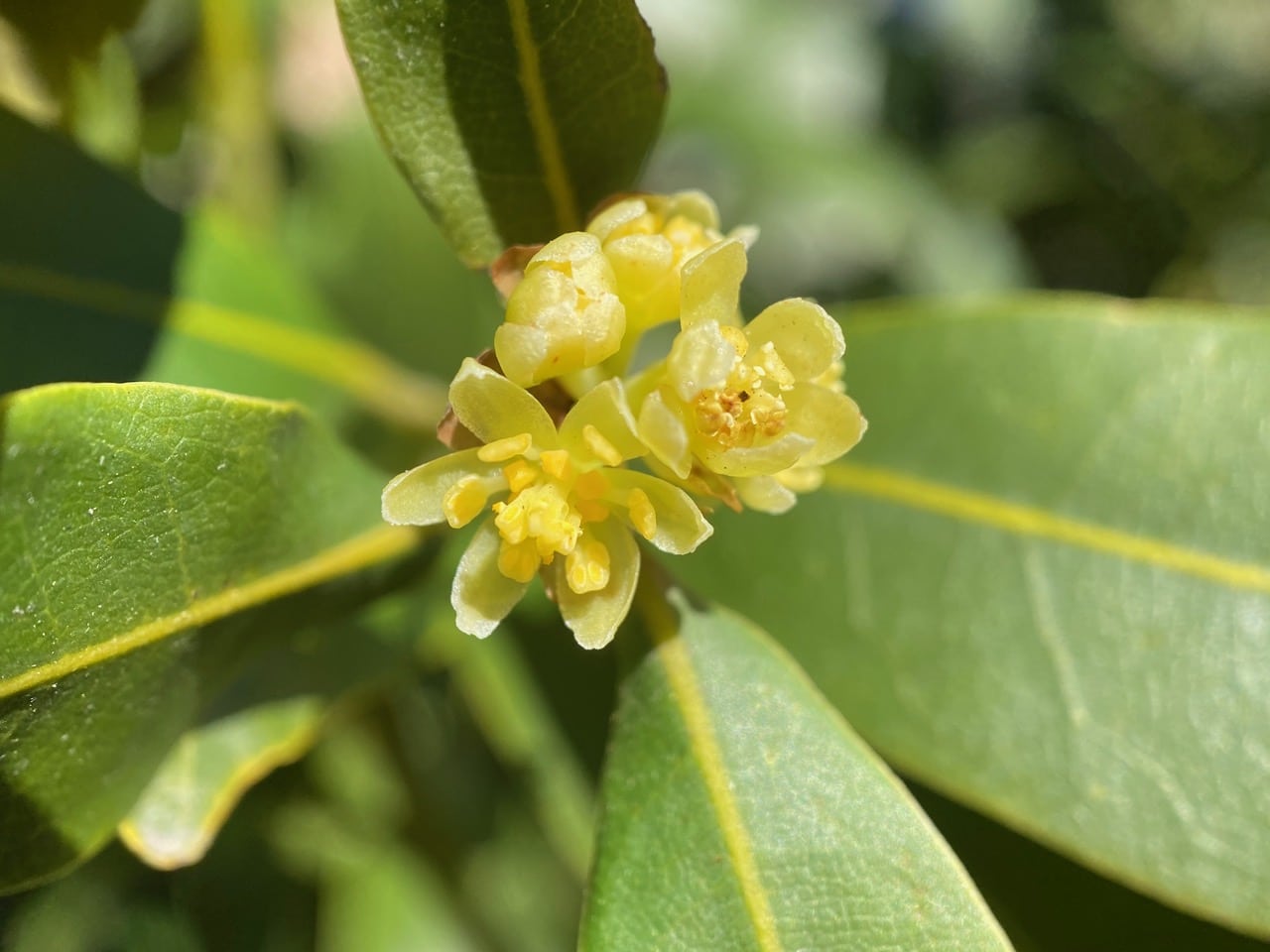
As the garden is rather noisy from all the construction/ maintenance work, I decide to leave and go for a walk at Inspiration Point close by. A California Bay with low hanging branches is in full bloom. Although it is known that these flowers are pollinated by small insects, there is no mention in the literature what these insects are. Obviously they have to be winter-active.
To figure out its pollination, it might be useful to understand the anthesis of the bay flower. Flower anthesis is the period when a flower opens and becomes sexually functional, allowing for pollination. The relative timing of development of male versus female flowers or floral parts can be an important feature in reproductive biology. With so many flowers to look at, I can almost piece together the whole flowering progression.
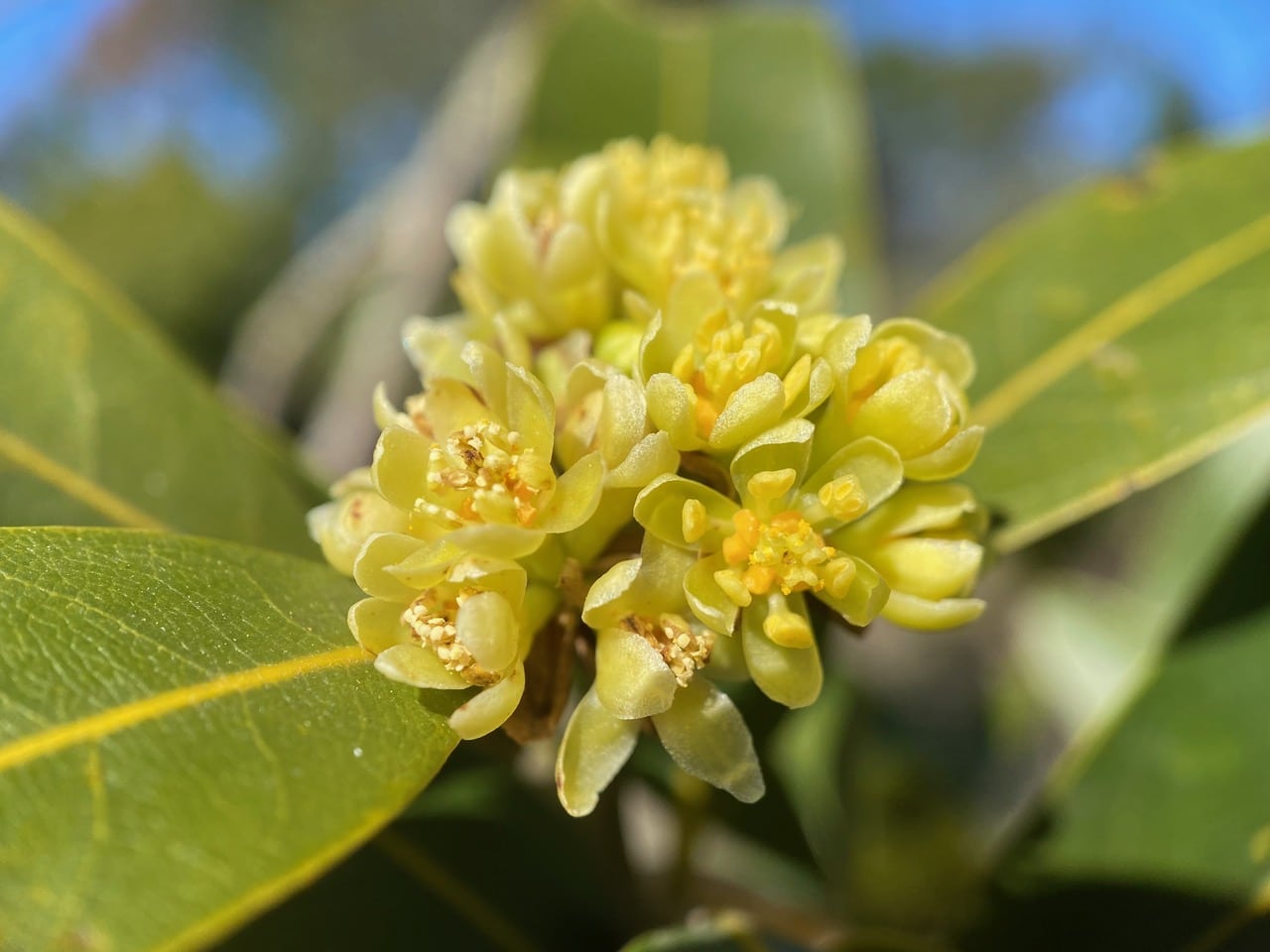
California Bay is an odd ball in our native flora – it belongs to the Lauraceae family that occurs mainly in warm temperate and tropical regions. No surprise that the Bay flower structure is unlike any other we are familiar with.
The flowers do not have petals but they do have 6 creamy-white sepals. Stamens are found in two rows – the outer row has six and the inner row three. For the inner row, there are two large yellow glands associated with each stamen. The stamens have four anther sacs – they give the stamen a paw-like appearance. The ovary is superior and includes a stigma that is mostly white. As the flower matures, the four anther sacs (covered with pollen) “pop out” of discrete sockets on the paw-like stamen, appearing like yellow “claws” at the tips of the paw. Since the flowers are small, these details are only observable with a magnifying lens. But it is well worth a peek.

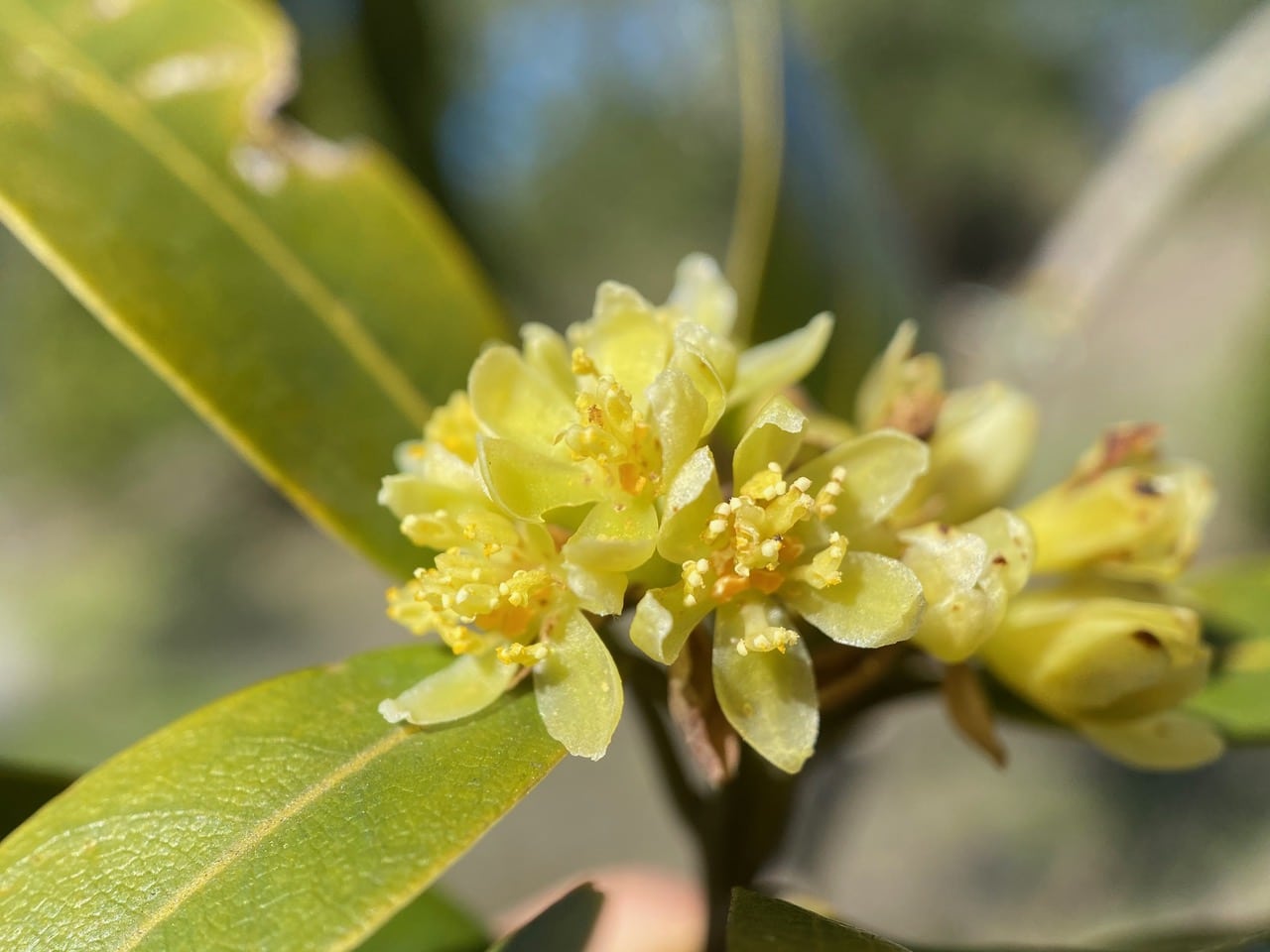

Who pollinate these winter-blooming flowers? I have seen Non-biting Chironomid midges visit the flowers, and suspect that they might be responsible for pollinating the flowers.
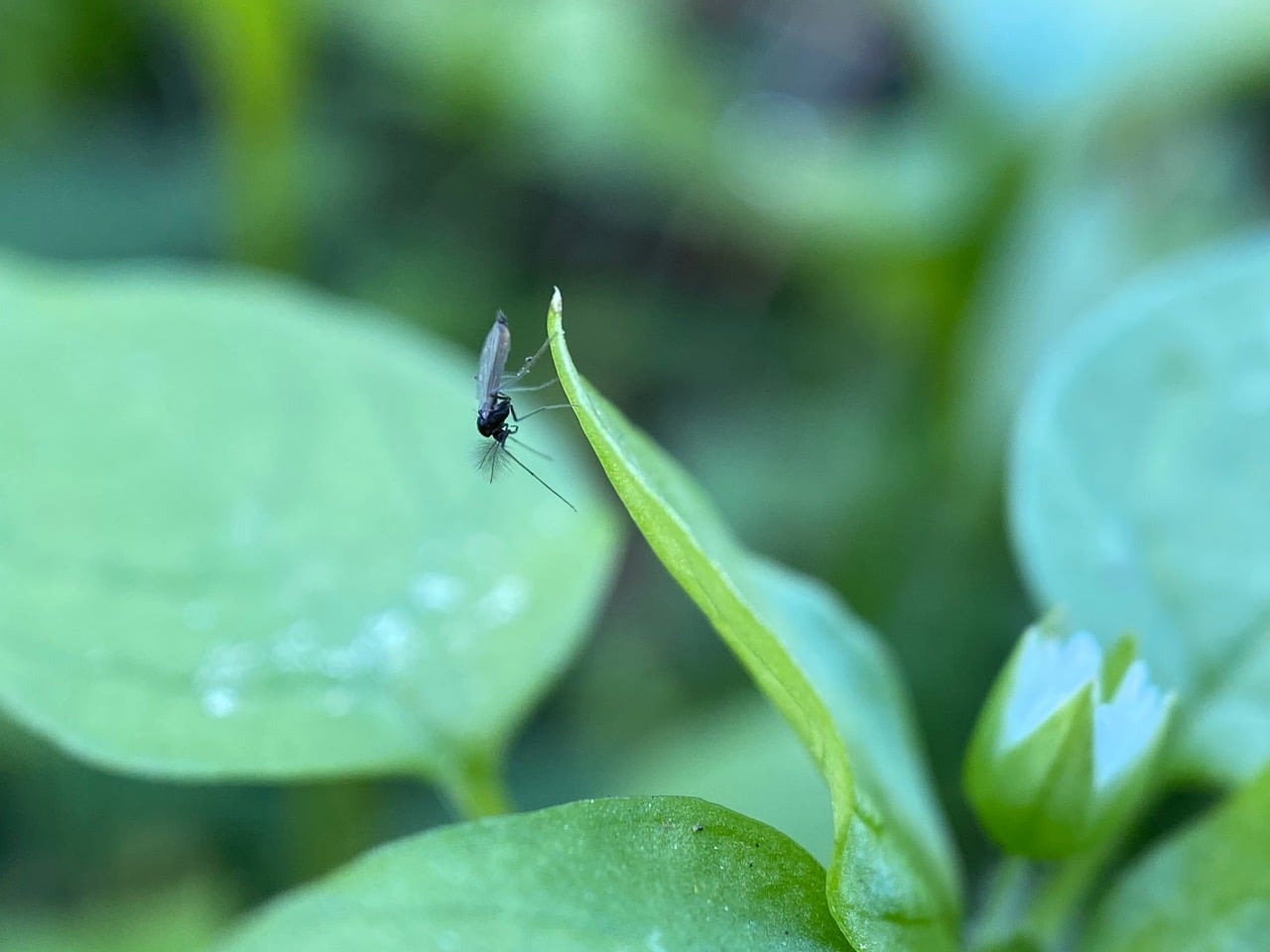
In a shady spot by the trail, a male Non-biting Midge (family Chironomidae) is perched on a leaf of Common Chickweed, Stellaria media.
The Chironomidae is a large and diverse family of flies, with over 20,000 species known world-wide. Adult midges are small, most measuring 1-10 mm long, with narrow bodies and long legs. They resemble mosquitos, but do not bite. Males have long, feathery (plumose) antennae. Adults are short-lived. They feed on fly droppings, nectar, pollen, honeydew, and various sugar-rich materials. Larvae are mostly aquatic or semi-aquatic; most occur in freshwater habitats, a few occur in decaying matter, under bark, in moist ground, or tree holes. Larvae are mostly scavengers/detritivores. Collectively, they play a vital role in freshwater ecosystems as primary consumers. They harvest an enormous amount of energy from detritus and are important food items for fish, amphibians, birds, and predatory insects such as dragonflies and dance flies. Adult Chironomids can be pests when they emerge in large numbers, forming mating swarms over water or road surfaces.
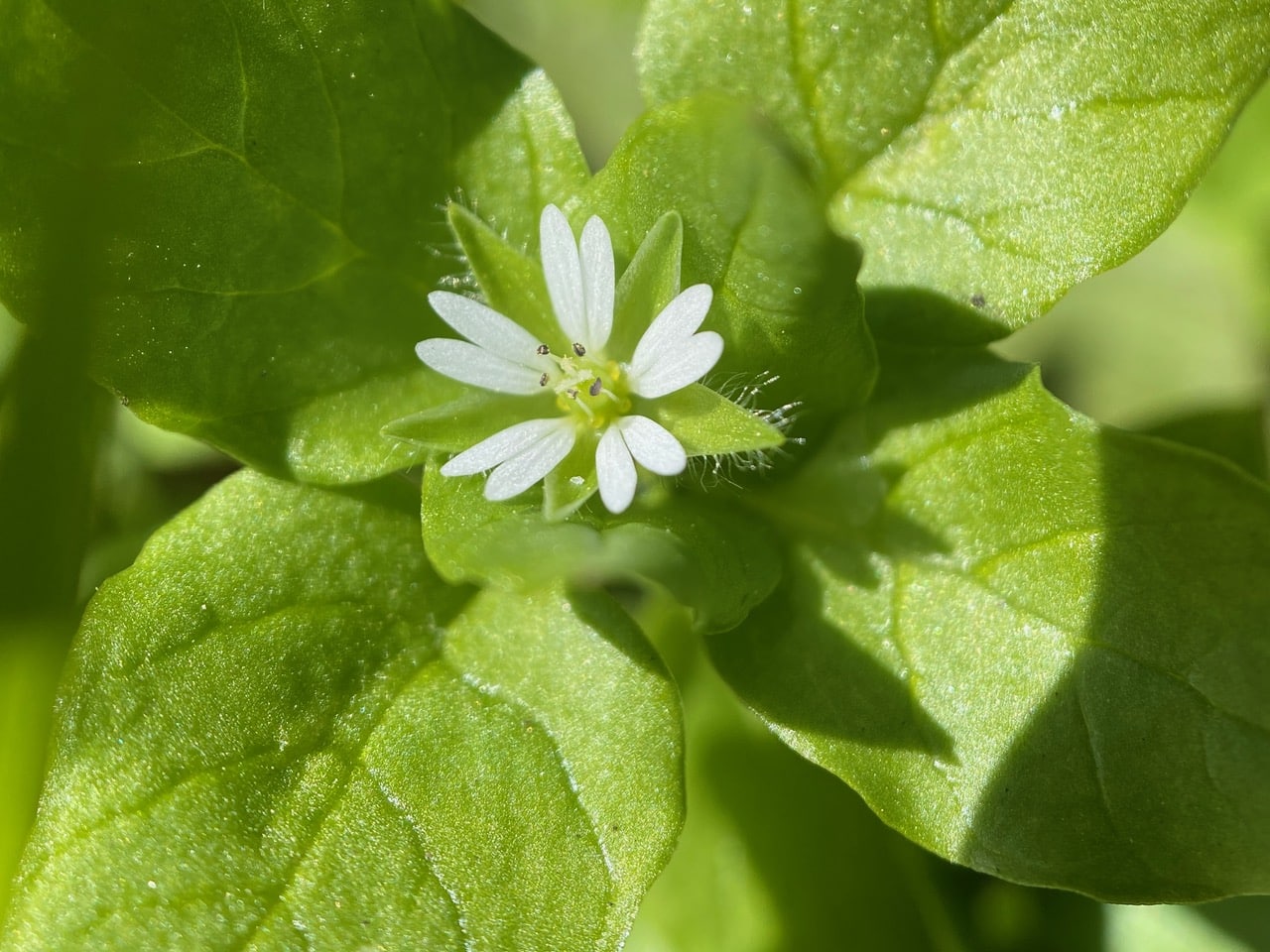
The Common Chickweed, Stellaria media has started to bloom in sunnier spots along the trail.
The species is a small annual herb in the family Caryophyllaceae. It is native to Eurasia and naturalized throughout the world, where it is a weed of waste ground, farmland and gardens. It is sometimes grown as a salad crop or for poultry consumption. The flowers are small, less than 1 cm in diameter, with 5 bifid white petals, nestled inside the larger sepals. There are 3 to 8 stamens and 3 styles. The flowers are pollinated by tiny Dance Flies in the family Hybotidae that feed on pollen and nectar. The larvae of several species of moths feed on the chickweed. The plant is eaten by chickens and wild birds.
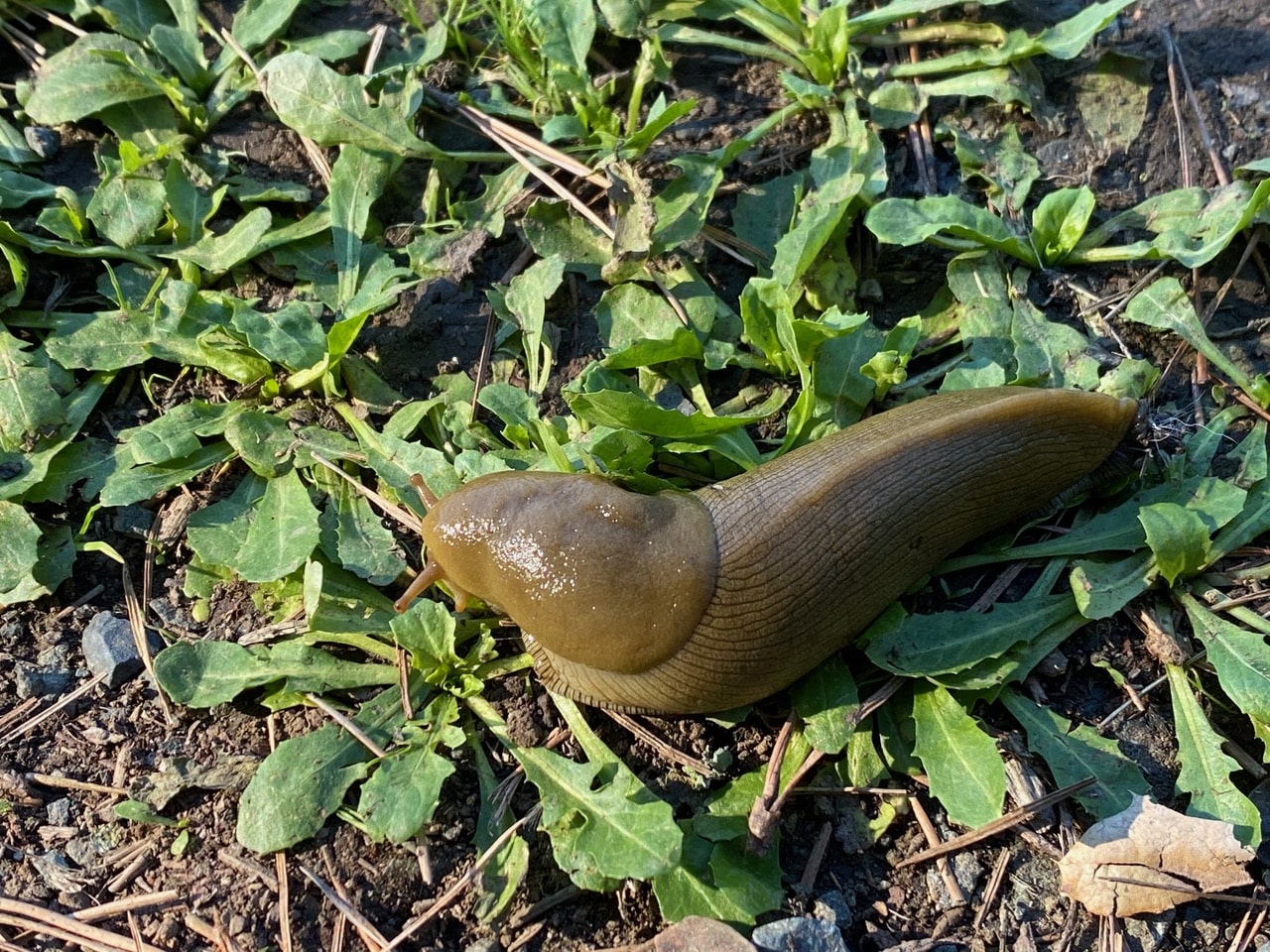
A Banana Slug, Ariolimax columbianus is feeding on tender weeds by the trail.
Our coastal forests are home to the largest slug in North America and the second largest slug worldwide. The Banana Slug, Ariolimax columbianus grows up to 8” in length and can live for 7 years. The slugs crawl along their own slime trails in the moist habitat provided by the conifers. They are detritivores, feeding on fallen leaves, live plants, fungi and animal wastes.