

Pollinator Post 1/20/25 (1)

I take a walk along Sanborn Drive in Joaquin Miller Park this clear, cold and windy morning.
Near the parking lot, old fallen logs have been left to rot on the roadside in unsightly piles. Probably the right thing to do ecologically, to allow nutrients locked up in the trees to recycle back into the soil. I wonder if the state of disarray has not been aided by people or animals looking for bugs. A preschool nature program regularly meets at the park, and I have seen the kids chipping away at the logs.

I approach a yellowish-orange clump peeking from the crevice of a log, thinking it might be a Witch’s Butter fungus. It turns out to be something more exciting! A Plasmodial Slime Mold has aggregated to form clumps of sporangia in preparation for reproduction.
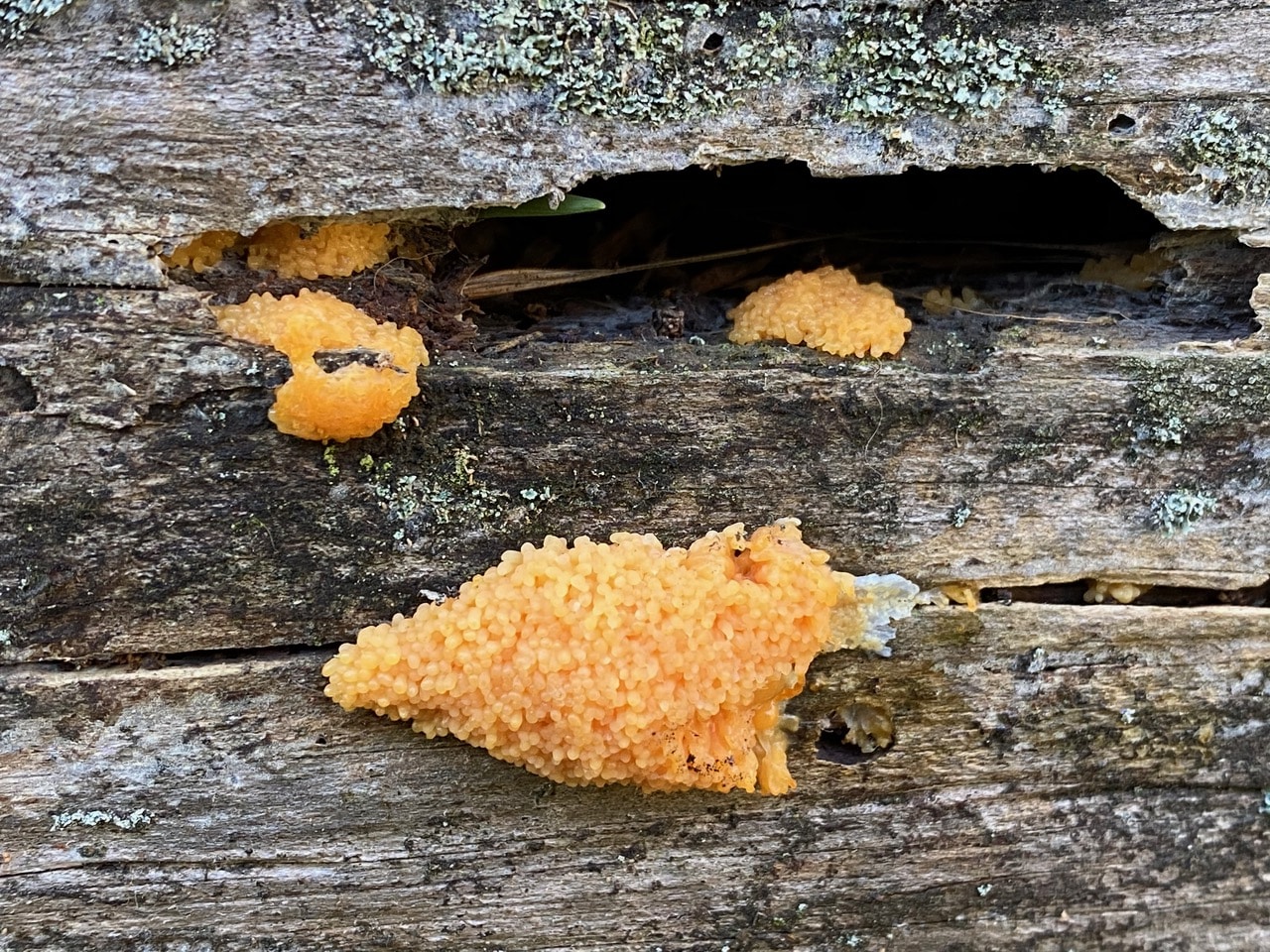
Our slime mold appears to be an immature sporangium (or fruiting body) of Tubifera montana. If I came back tomorrow, the thing would look quite different, probably unrecognizable. These fast developing organisms turn color and change shapes rapidly, eventually releasing countless spores into the air.
Slime Molds are fungus-like organisms that have previously been classified as fungi, but are now placed in Myxomycetes, in the kingdom Protista. The life cycle of slime molds consists of two distinct stages. During the amoeboflagellate stage, slime molds exist as typical single celled organisms. These amoeboid cells feed on bacteria, grow and multiply by fission. This stage eventually progresses to the plasmodium stage, usually by fusion of compatible amoeboflagellates. Morphologically the plasmodium is a veiny network with a viscous, slimy consistency. The plasmodium is multinucleate and can occupy an area larger than one square meter. However, it is technically still a single cell, as it undergoes many nuclear divisions without cellular divisions. The plasmodium feeds on bacteria, fungi, and other microorganisms, ingesting them through phagocytosis.
When conditions are right, the plasmodium will begin to produce fruiting bodies, or sporangia. Slime mold sporangia exhibit a wide variety of colors, shapes and sizes and are often quite beautiful. The primary function of sporangia is to produce and disperse the spores by which slime molds are propagated. The spores of Myxomycetes are microscopic and lightweight, and can be carried by wind for considerable distances. Under the right conditions, the spores germinate into the single-celled amoeboflagellates, and the cycle is repeated.
Mostly associated with cool and moist habitats, slime molds are commonly found in forests, often developing on the bark of living trees, on decaying logs, stumps, dead leaves and other organic litter.

This paler clump appears to be developing the orange coloration.
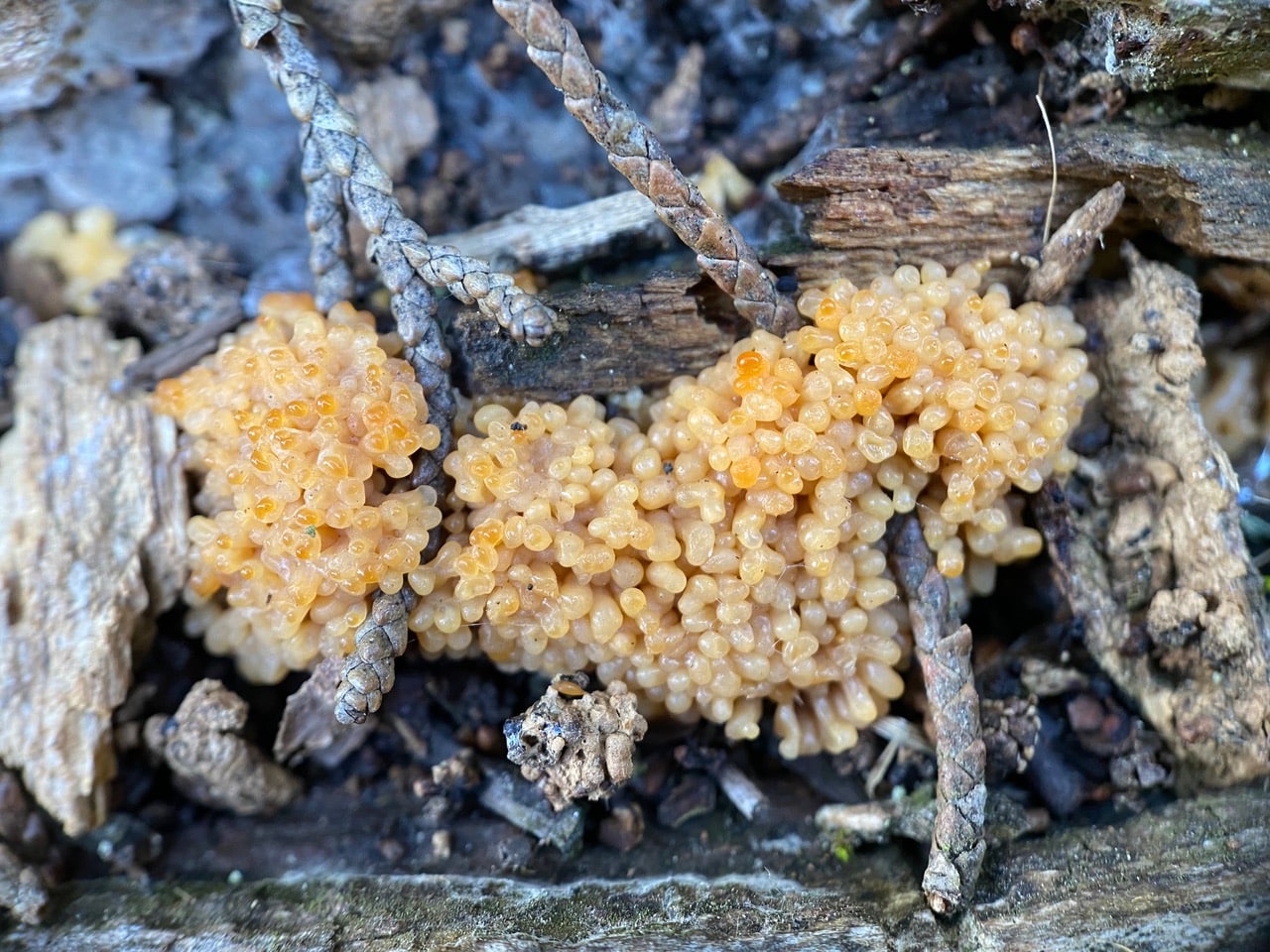
Close-up of the developing sporangia of the slime mold, Tubifera montana.
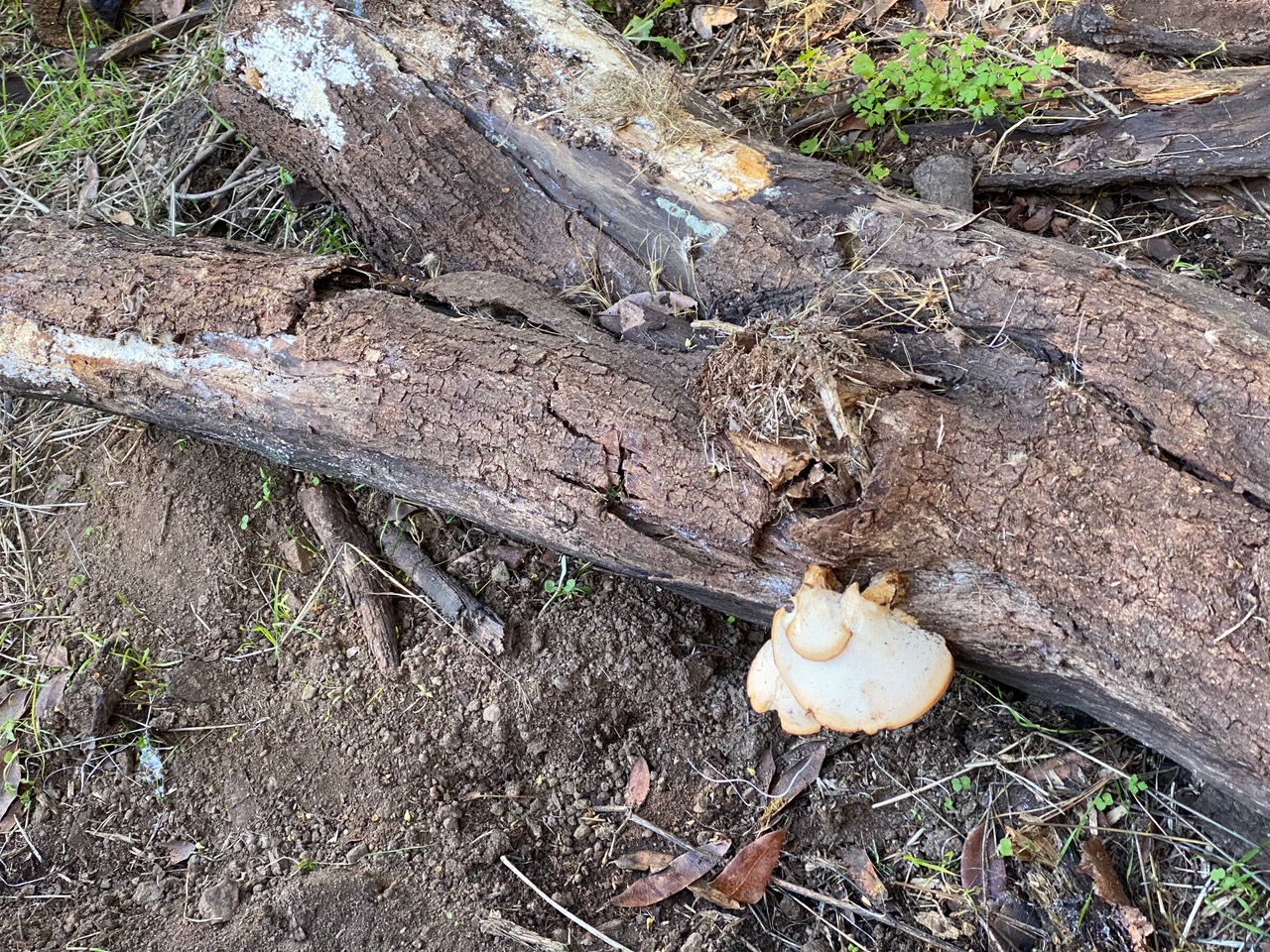
A rotten log seems to have been turned over from its original position on the ground.

The fungus growing on the overturned log is showing its underside consisting of a pored, sponge-like surface.

I carefully roll the log to its original upright position. Now I can see the top of the fungi. See those silvery tracks on the dark wood? Those were left by the snail that has been taking bites out of the mushrooms. iNaturalist has helped identify the fungus as the Tuberous Polypore, Polyporus tuberaster. It grows from a large sclerotium-like tuber (a hard mass of mycelium that stores food reserves, enabling the fruiting body to survive harsh environmental conditions) that can resemble buried wood or a potato. The yellow-brown cap can be convex to flat or even funnel-shaped. The species is edible but tough. The generic name Polyporus means “having many pores”, and the fungi in this genus do indeed have tubes terminating in pores rather than gills on their spore forming surface.
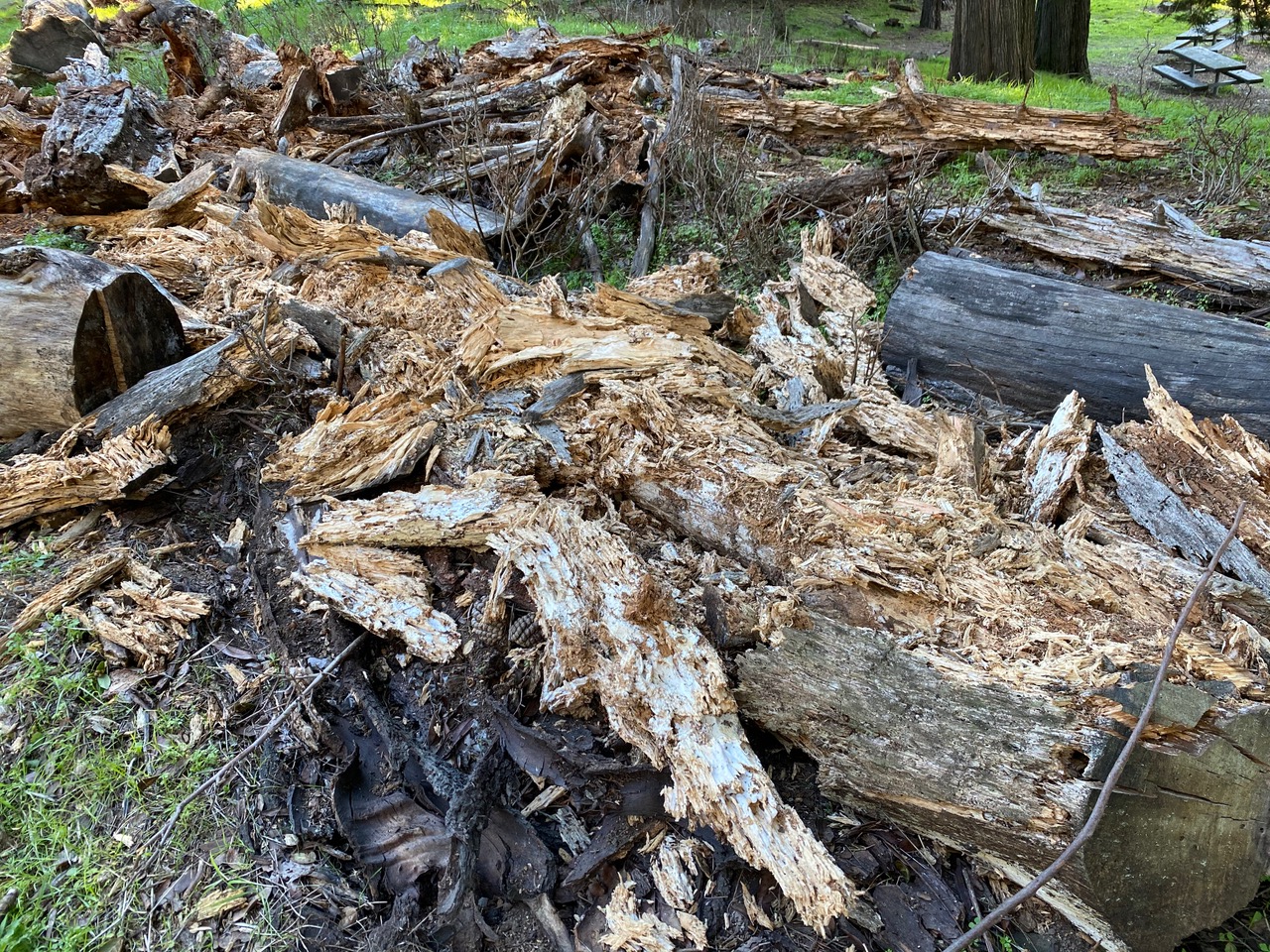
There’s white stuff growing on the spongy, fibrous wood that is left of this rotten log.
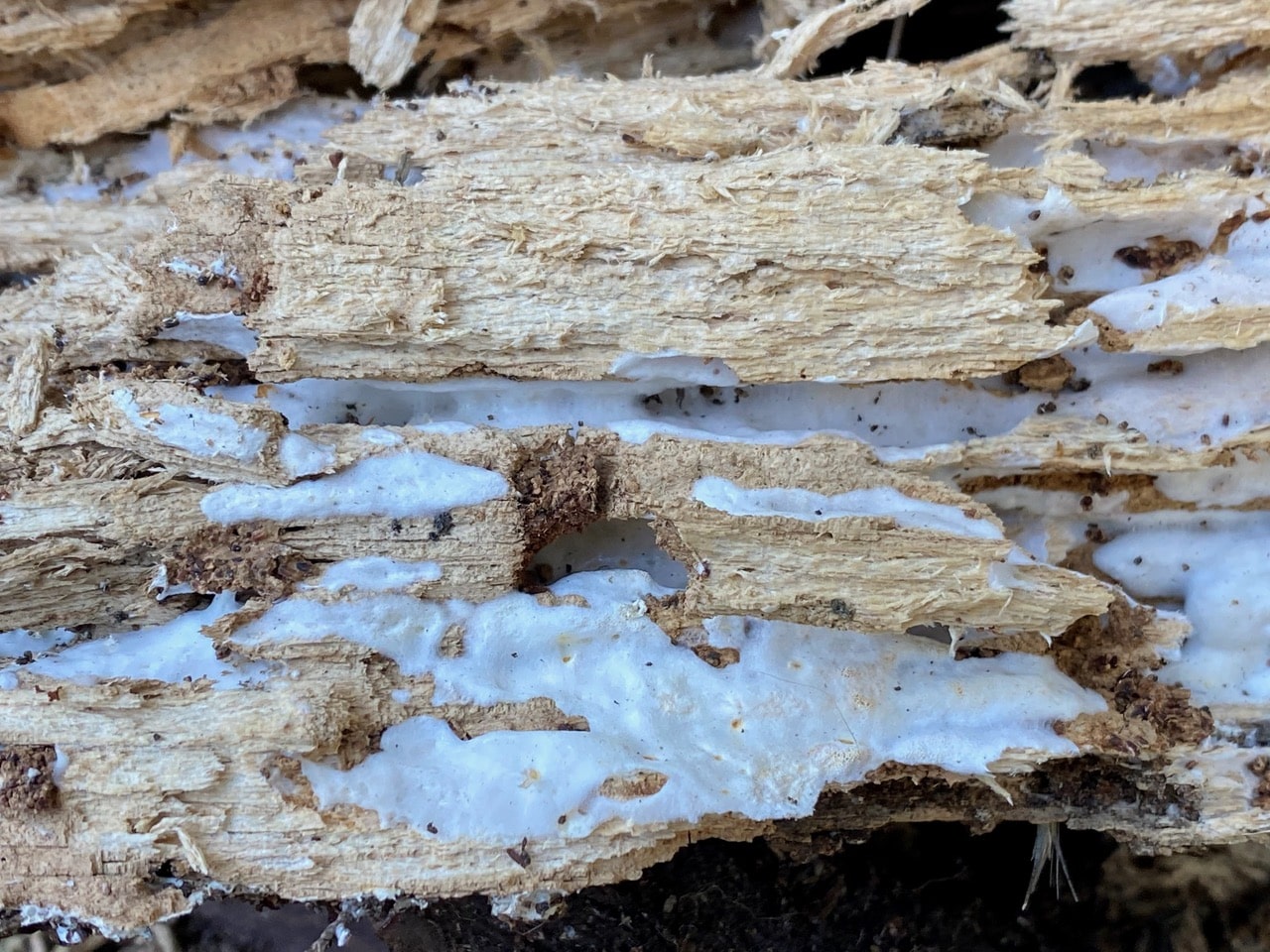
Close-up of the fungus that causes the white rot.
White rot and brown rot fungi are two main types of wood-decaying fungi that break down different components of wood. White rot fungi degrade cellulose and lignin, which are both components of plant cell walls. They leave behind a bleached, fibrous residue that is soft, spongy or stringy. White rot fungi are more aggressive than brown rot fungi, causing wood to decompose more quickly.
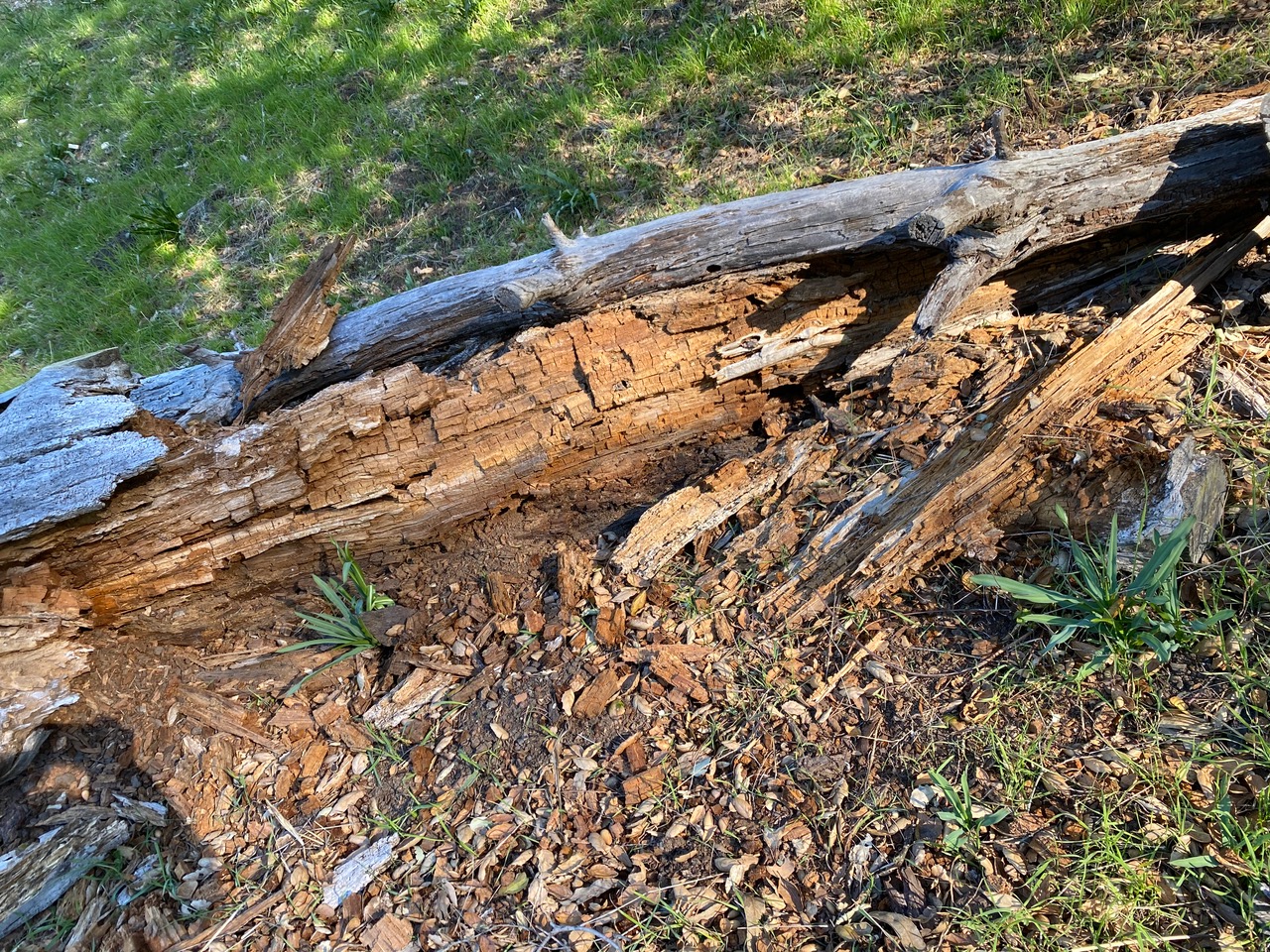
Just a little further along the road, I find a log that is exhibiting typical brown rot.

Brown rot fungi degrade cellulose and hemicellulose, but leave lignin mostly intact. The soft flexible fibers in the wood are gone, leaving a brownish residue that breaks into cubical fragments of much more rigid, hard, crumbly texture. Brown rot is commonly seen in conifers (gymnosperms). This log is most likely a former Monterey Pine, Pinus radiata so common in this park. Planted in the days of Joaquin Miller, the aging trees are now dying in droves, felled by severe winter storms.