

Pollinator Post 10/2/25 (1)
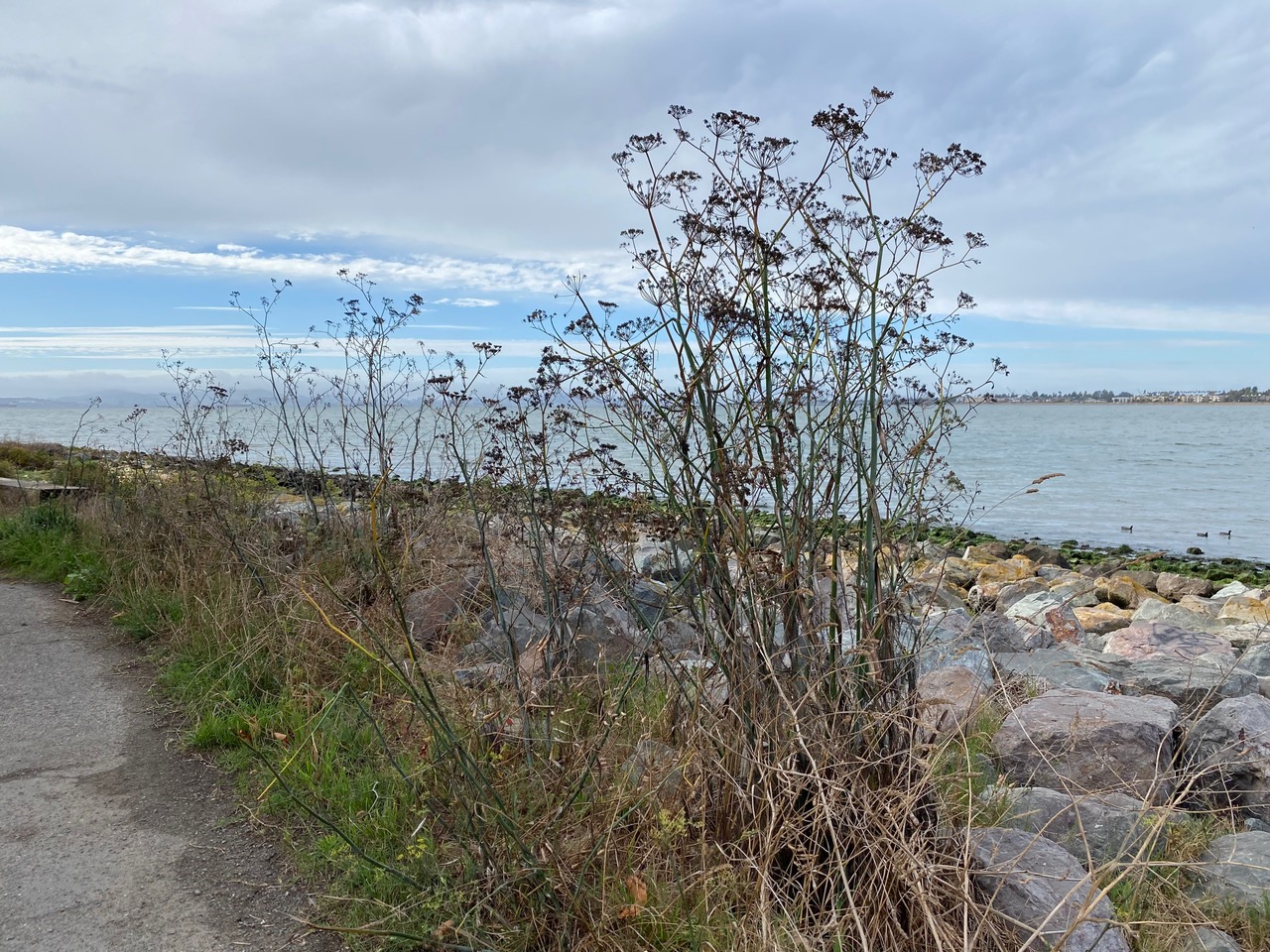
We had a good, soaking rain this morning and the air feels clean. I find myself exploring the shoreline of Bay Farm Island again in the afternoon just as the sky clears.
Most of the Fennel, Foeniculum vulgare along the shore are going dormant.
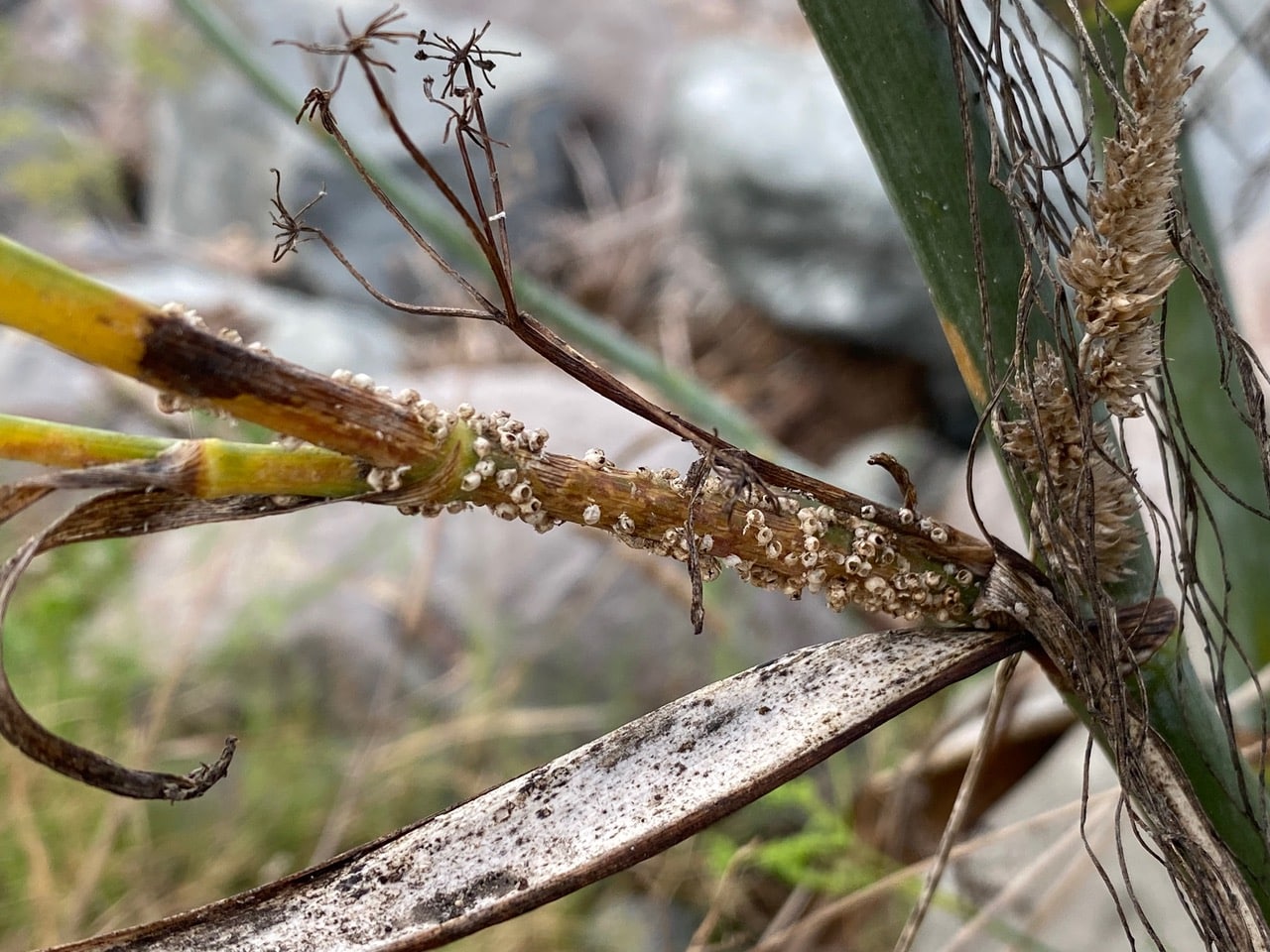







What are those crusty things on the old, disintegrating Fennel stem?
Closer inspection reveals the skeletons of aphid mummies, each with a gaping hole in its abdomen. I have passed these Fennels hundreds of times before and have even seen an occasional Lady Beetle on them, but never thought to look for aphids – Duh!
Aphids (family Aphididae) are small sap-sucking insects in the order Hemiptera. Aphids usually feed passively on phloem of plants. Once the phloem vessel is punctured, the sap, which is under pressure, is forced into the aphid’s food canal. Aphids produce large amounts of a sugary liquid waste called “honeydew”. A fungus called sooty mold can grow on honeydew deposits that accumulate on leaves and branches, turning them black.
A typical life cycle involves flightless females giving live birth to female nymphs, – who may also be already pregnant, an adaptation called telescoping generations – without the involvement of males. Maturing rapidly, females breed profusely so that the population multiplies quickly. Winged females may develop later in the season, allowing the insects to colonize new plants. In temperate regions, a phase of sexual reproduction occurs in the autumn, with the insects often overwintering as eggs. The life cycle of some species involves an alternation between two species of host plants. Some species feed on only one type of plant, while others are generalists, colonizing many plant groups. Some ants have a mutualistic relationship with aphids, tending them for their honeydew and protecting them from predators.
Aphid Mummy Wasps, Aphidius sp. (family Braconidae) are small wasps, typically less than 1/8 in. long. The female wasp lays a single egg in an aphid. When the egg hatches, the wasp larva feeds inside the aphid. As the larva matures the aphid is killed and becomes bloated and mummified, usually turning tan or golden in color. The adult parasitoid chews its way out of the mummy leaving a hole.
Ooh, look, there’s an old, faded Lady Beetle pupa attached to the base of a dried leaf next to the aggregation of aphid mummies. Both adult and larval Lady Beetles are voracious predators of aphids. The plant has had help from parasitoid wasps as well as the lady beetles in getting rid of the pesky aphids.
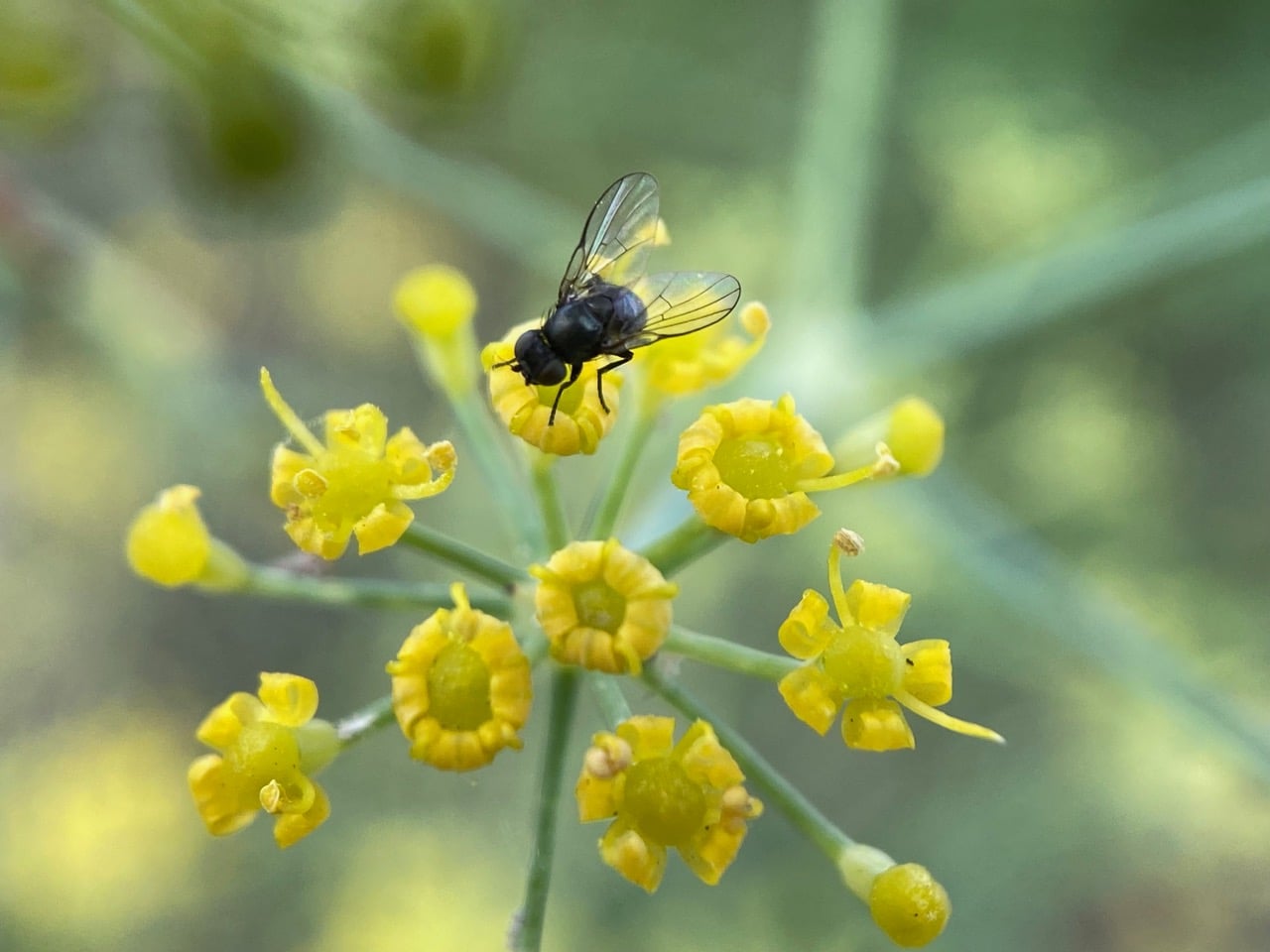
A tiny fly, about 3 mm long, is perched on a Fennel flower, cleaning its mouthparts.
For a fly this size, I immediately think of a Leaf-miner Fly (family Agromyzidae).
The Agromyzidae are a family commonly referred to as the Leaf-miner Flies, for the feeding habits of their larvae, most of which are leaf miners on various plants. They are small flies, most species in the range of 2-3 mm. Agromyzidae larvae are phytophagous, feeding as leaf miners, less frequently as stem miners or stem borers. A few live on developing seeds, or produce galls. There is a high degree of host specificity. A number of species attack plants of agricultural or ornamental value, so are considered pests. The shape of the mine is often characteristic of the species and therefore useful for identification. Adults occur in a variety of habitats, depending on the larval host plants.
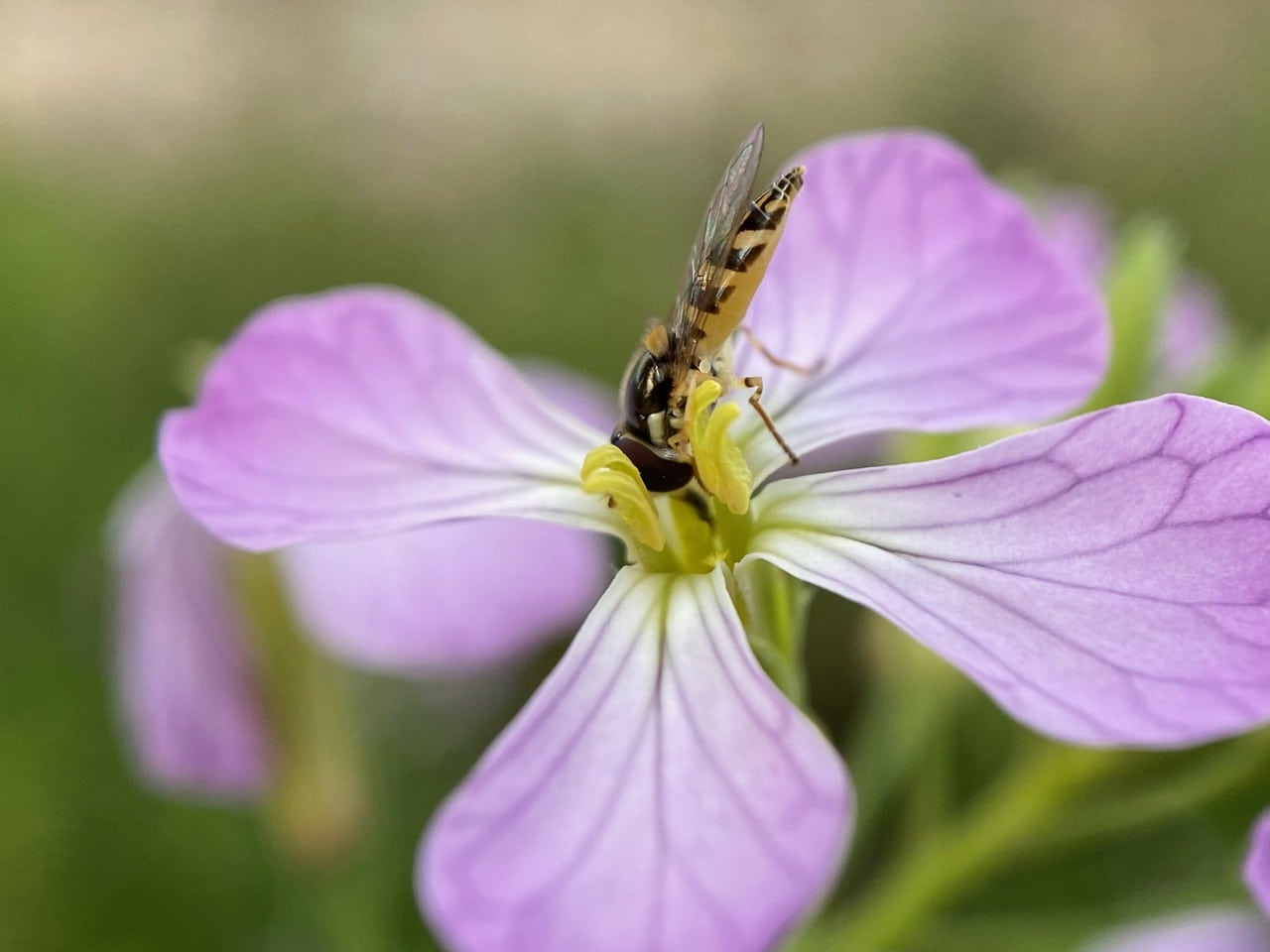
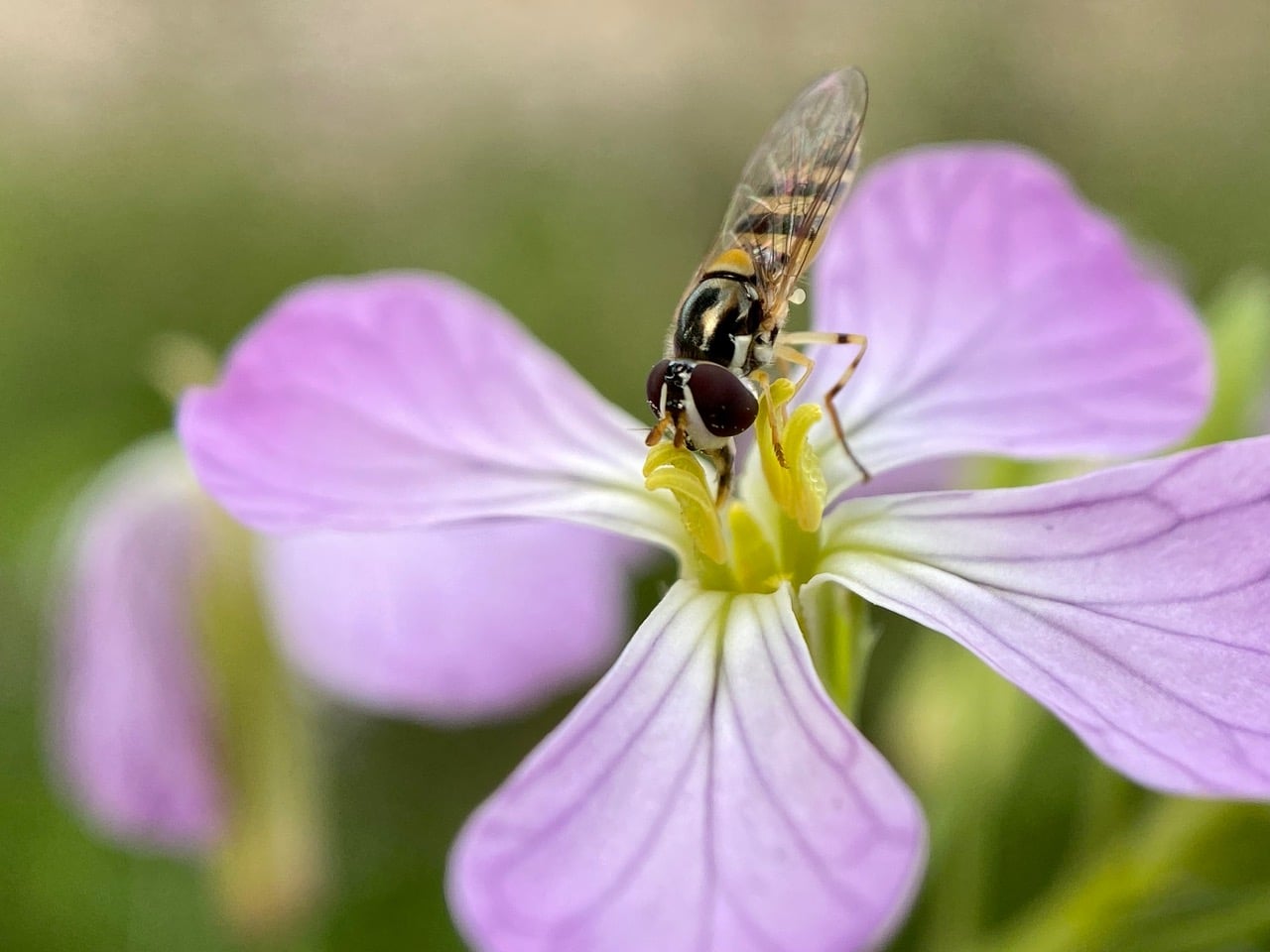
A female Oblique Streaktail, Allograpta obliqua (family Syrphidae) is taking nectar from a flower of Wild Radish, Raphanus raphanistrum.
Hover Flies, also called flower flies or Syrphid flies, make up the insect family Syrphidae. The adults of many species feed mainly on nectar and pollen, and are often seen hovering and nectaring at flowers. They are important pollinators of flowering plants in many ecosystems worldwide. The larvae feed on a wide range of foods. In many species, the larvae are insectivores and prey on aphids, thrips, and other plant-sucking insects. In other species, the larvae are saprotrophs, eating decaying plant and animal matter in the soil or in ponds and streams.
Many species of Hover Flies exhibit Batesian mimicry; they are brightly colored, with bands of yellow resembling the bees and wasps. The mimicry provides the fly with some measure of protection from potential predators, although the flies are harmless and lack a sting.
Although small in size (6-7 mm long), the Oblique Streaktail is easily recognizable for the unique pattern on its black-and-yellow abdomen. It is a common North American species of hover fly. Adults visit flowers for nectar and pollen, and are pollinators. Females lay eggs on plant surfaces near aphids. Larvae feed on the aphids.
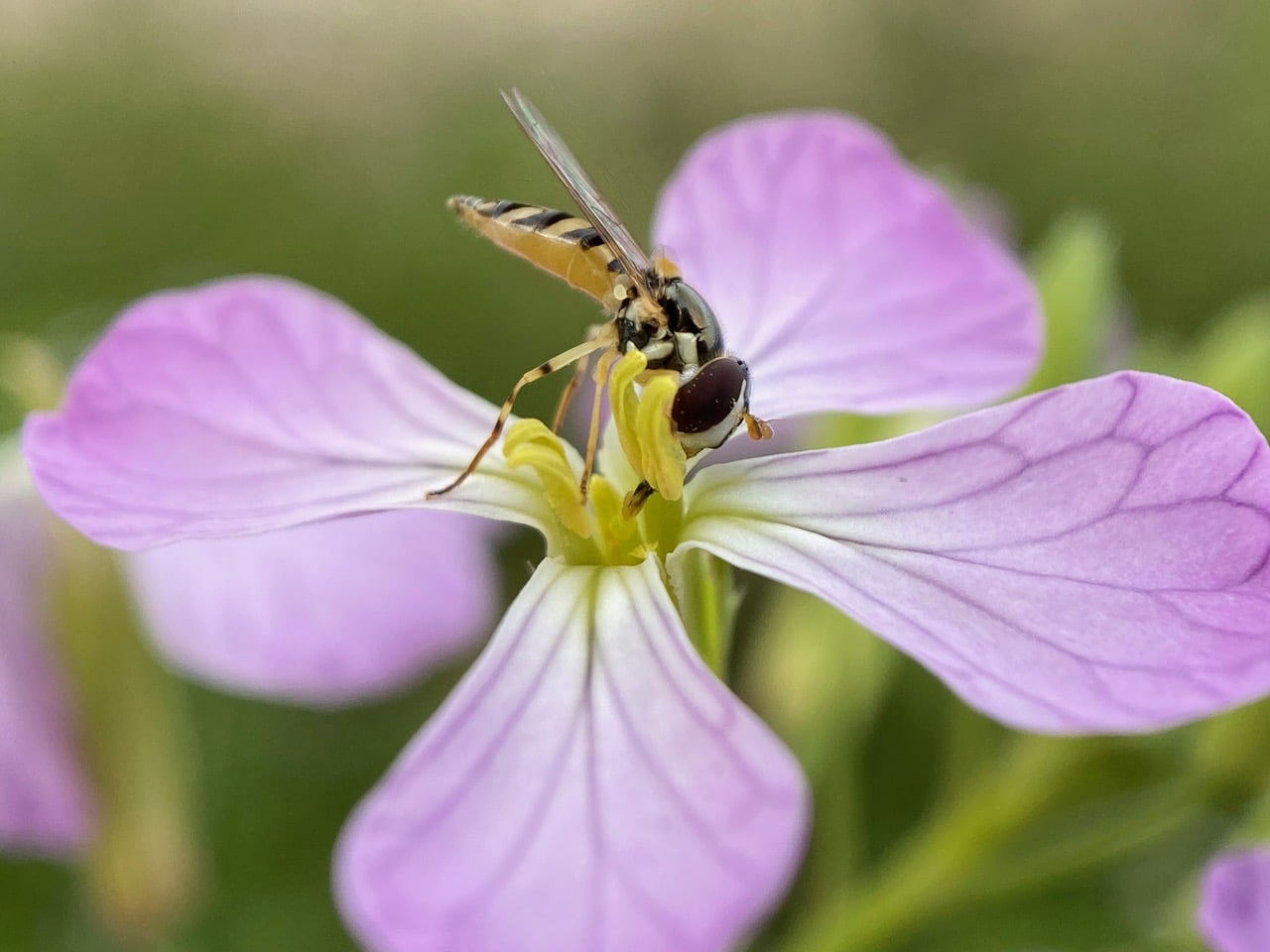
In this dorsal view, the unique abdominal pattern of the Oblique Streaktail is visible through its clear wings. The fly’s eyes do not meet on top of the head, and its abdomen ends in a pointed tip – both features tell us that it is a female.
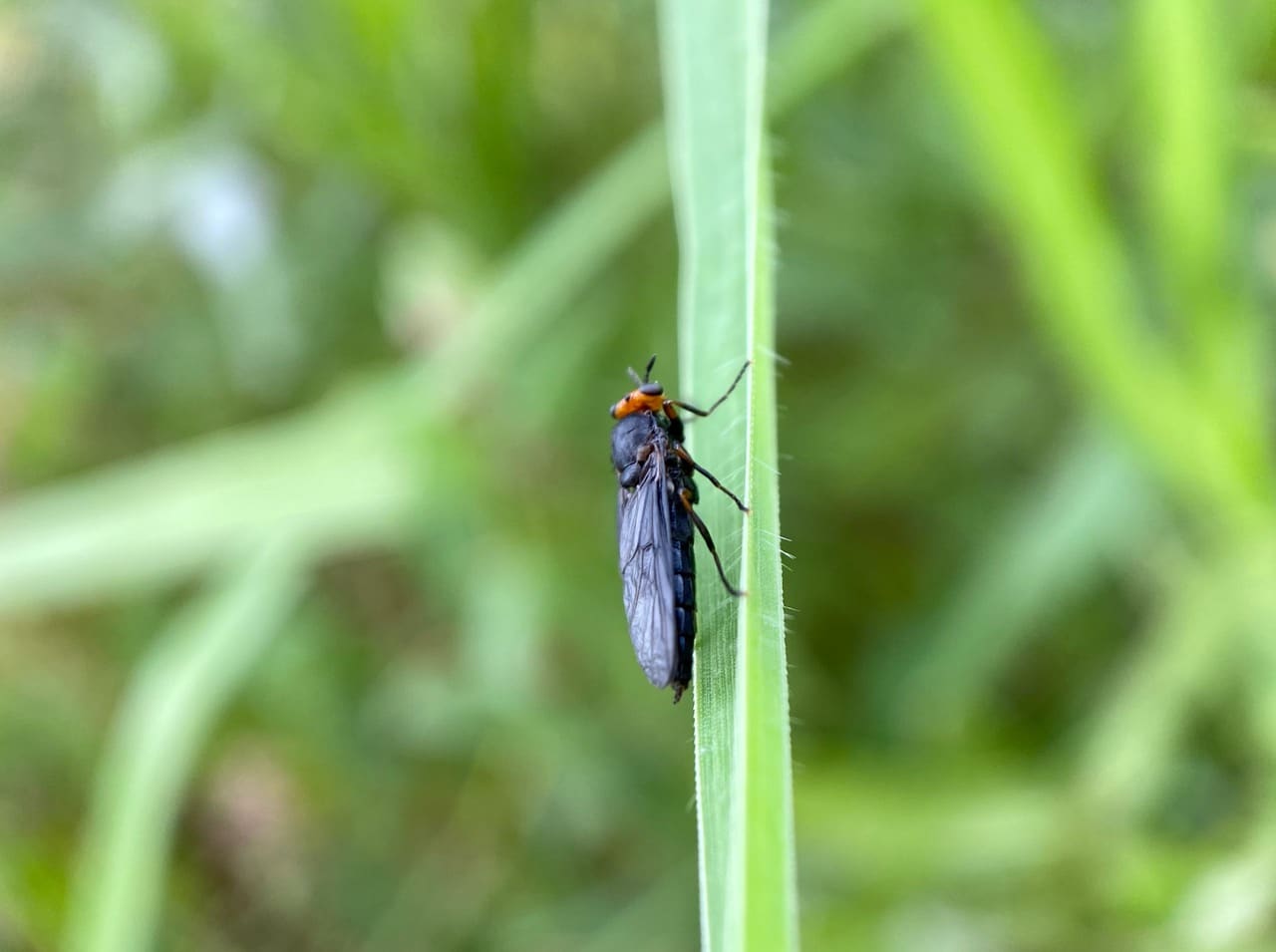
A small black fly is perched on a blade of grass. Its eyes are set far apart on a red head – characteristic of a female Sugarcane Soldier Fly, Inopus rubriceps (family Stratiomyidae).
The Sugarcane Soldier Fly, Inopus rubriceps (family Stratiomyidae) is native to eastern Australia where it infests such crops as corn, pastures, and sugarcane. The fly was accidentally introduced into California over 50 years ago. It is now infesting lawns in San Francisco and other Bay Area counties. Damage to turf and other members of the grass family results from withdrawal of sap from roots of host plants by the larvae and possibly, injection of a toxin into the plant.
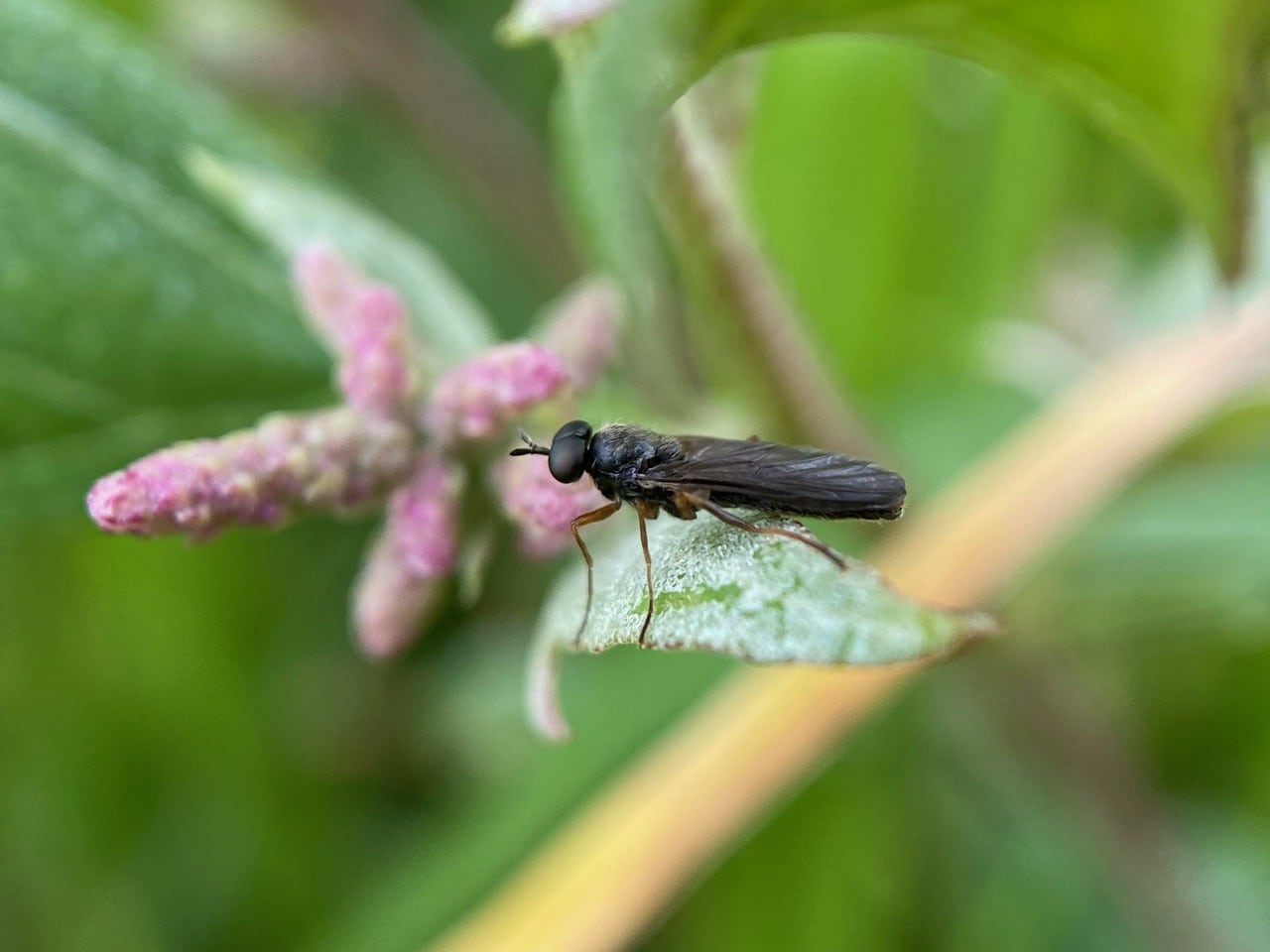
In California adults occur in large numbers from late September to early November each year. Eggs are deposited in crevices in the soil. The adults are sexually dimorphic. Females have tiny red heads with eyes set far apart. The smaller males have large eyes that occupy the whole surface of the head.
A male Sugarcane Soldier Fly has landed on a leaf of Creeping Saltbush, Atriplex prostrata. He is all eyes, the better to spot the girls!
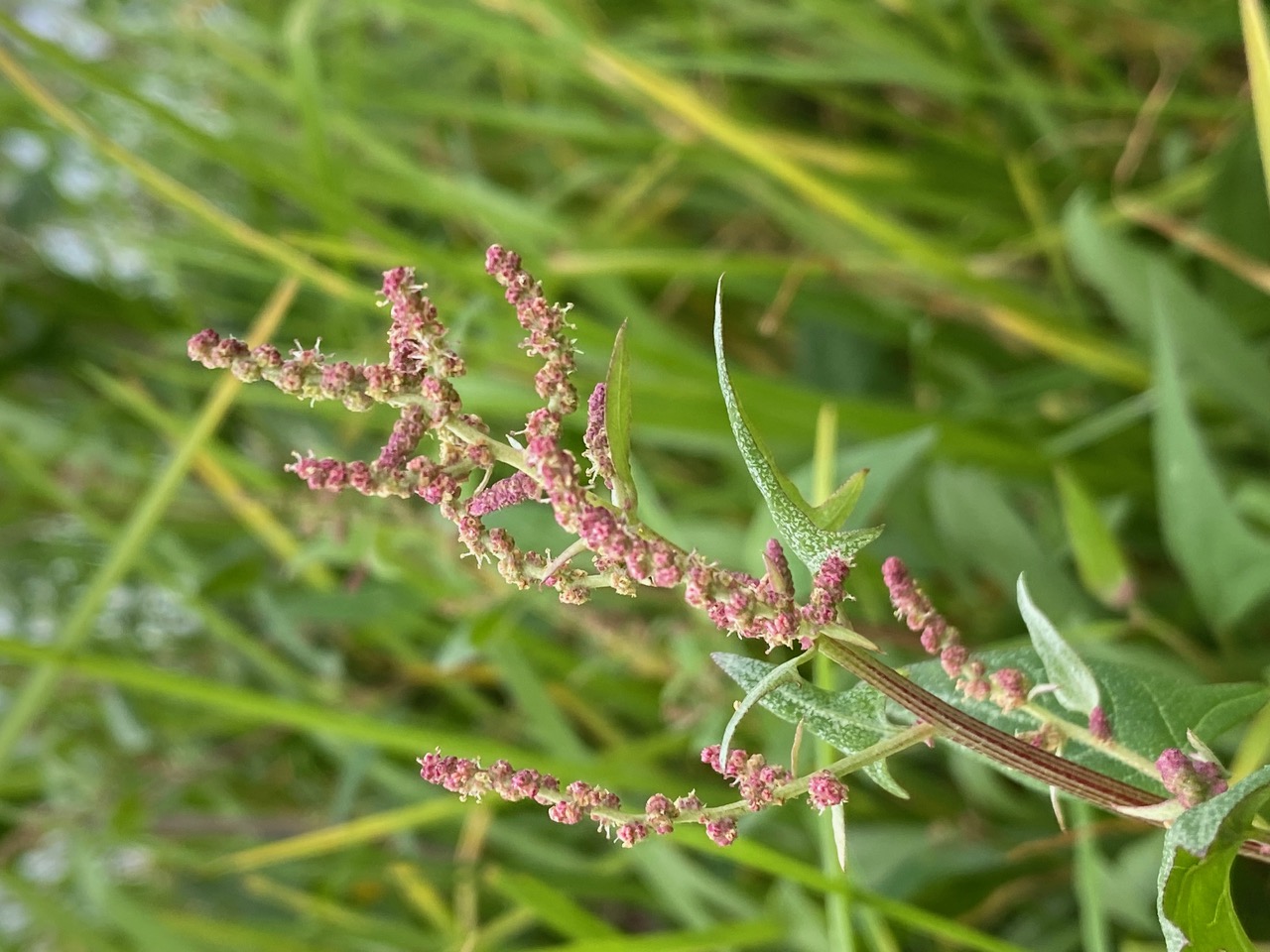
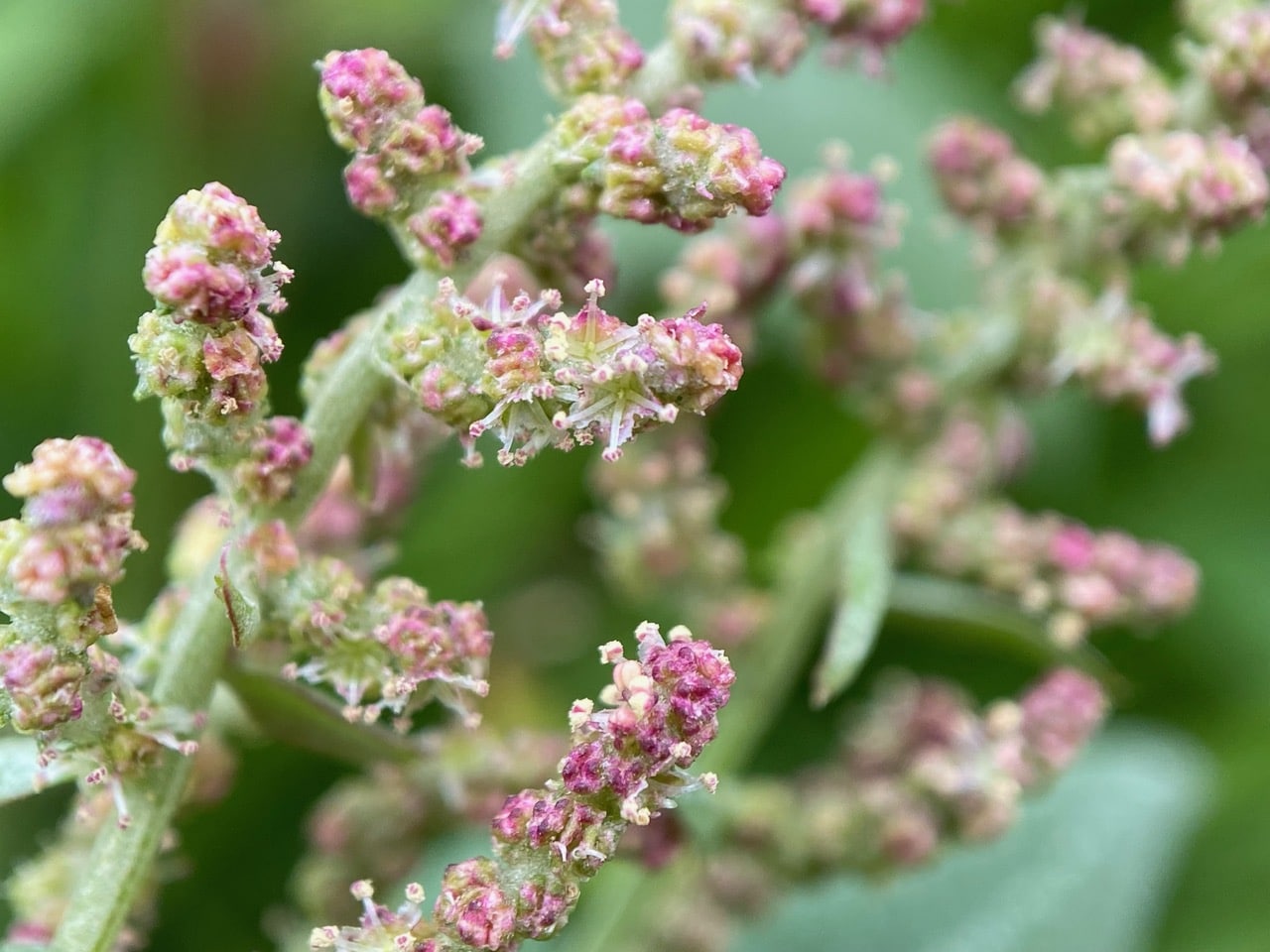
Though not obvious, the Creeping Saltbush, Atriplex prostrata is in glorious bloom along the shore now.
Saltbush flowers are unisexual, with male flowers having five stamens and a calyx, while female flowers lack stamens and are enclosed by two distinct, often thickened bracteole that form the fruit. Flowers are often wind-pollinated and clustered into small bead-like formations called glomes or spikes. Plants are typically dioecious, with male and female flowers on separate individuals, but can also be monoecious (on the same plant) or even triocious, with plants able to change sex in response to environmental conditions.
This Creeping Saltbush must be male – I see only male flowers on the crowded spikes. Each flower has five stamens and a five-lobed reddish calyx, and no petals. Each stamen has a two-lobed anther that releases yellow pollen.
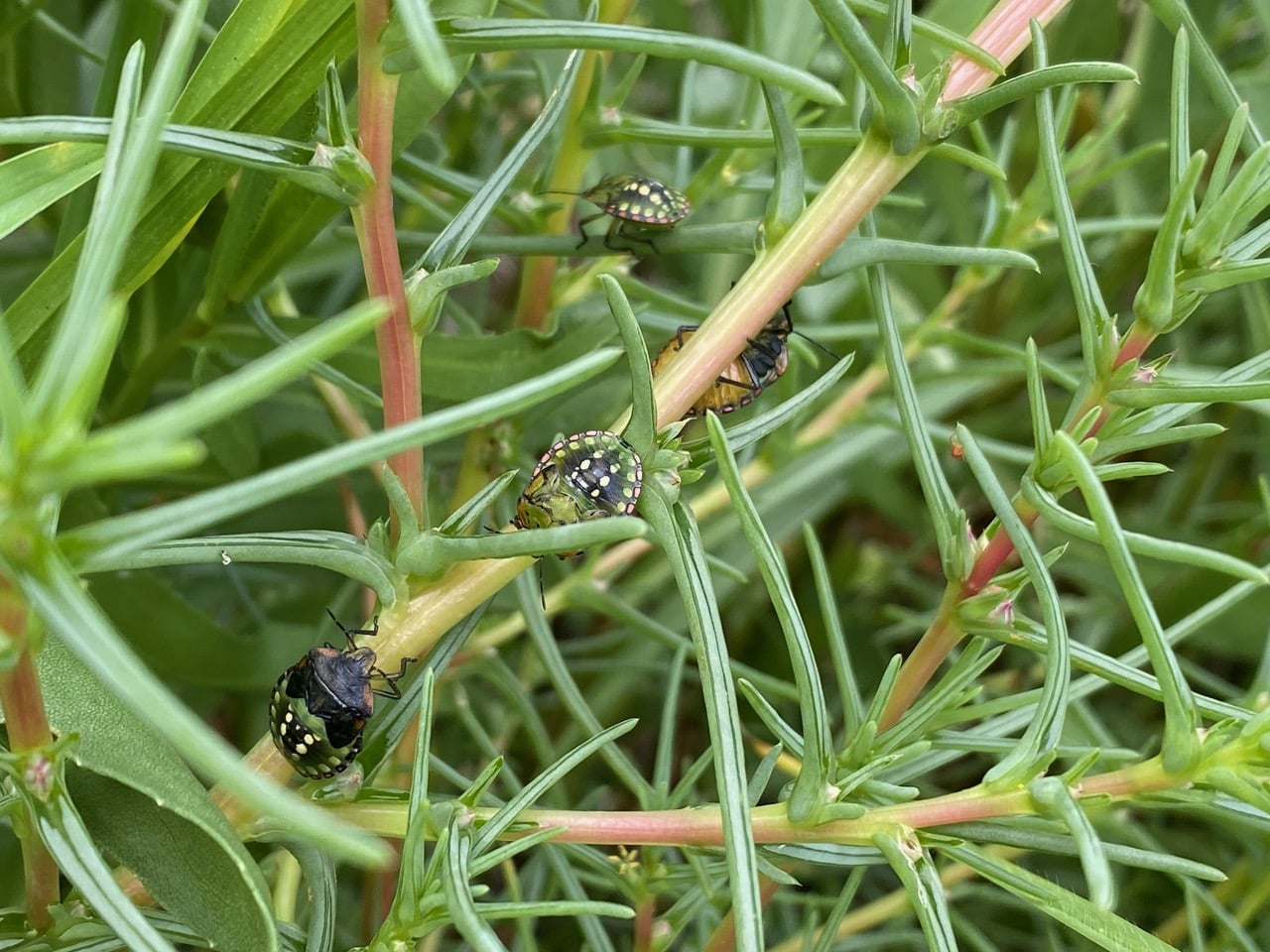
Wow, there’s a bonanza of juvenile Southern Green Stink Bugs, Nezara viridula (family Pentatomidae) on the Fleshy Russian Thistle, Salsola soda.
Pentatomidae is a family of insects belonging to the order Hemiptera or “true bugs”. As hemipterans, the pentatomids have piercing-sucking mouthparts, and most are phytophagous, including several species that are severe pests on agricultural crops. Stink Bugs feed on plant fluids by inserting their needlelike mouthparts into stems, leaves or seed pods. While feeding, they inject materials into the plant to aid in digestion and sap removal. Penetration by the mouthparts can cause physical damage, much like stabbing the plant with a fine needle.
All Pentatomids have 5-segmented antennae (hence their family name, Penta – five and tomos – section.) They generally have a large triangular scutellum in the center of the back. The adult is generally shield-shaped when viewed from above. The common name of Stink Bug refers to their ability to release a pungent defensive spray when threatened, disturbed, or crushed.
The Southern Green Stink Bug, Nezara viridula (family Pentatomidae) is a plant-feeding stink bug. Believed to have originated in Ethiopia, it can now be found across the world. Because of its preference for certain species of legumes, such as beans and soybeans, it is an economically important pest on such crops.
The stink bug nymphs appear to be in their fourth instar. The one in the middle, with the green wing pads is likely the most mature.
As “true bugs” or Hemipterans, Stink bugs undergo incomplete metamorphosis. This three-stage life cycle involves hatching from an egg into a nymph, which is a smaller, wingless version of the adult, followed by a process of molting (shedding its exoskeleton) until it becomes a fully developed, winged adult. True bugs do not have a pupal stage.
Stink Bug nymphs progress through five distinct developmental stages called instars, starting with tiny first instars that remain near the egg mass. As they molt and grow larger through the second, third, fourth, and fifth instars, their coloration changes to resemble the adult, developing distinct wing pads and abdominal patterns. At the final molt, functional wings and reproductive parts come online as the adult emerges.
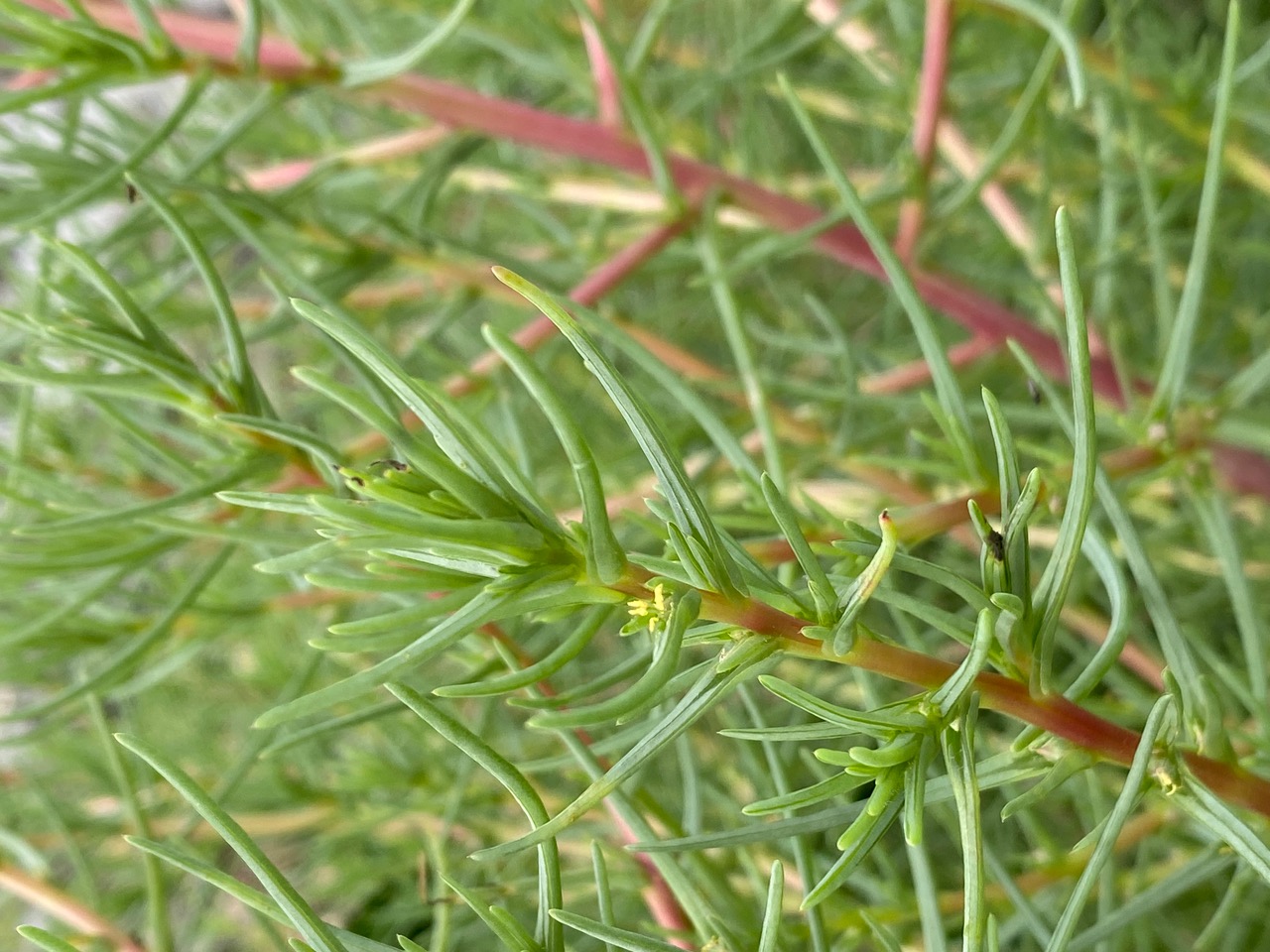
What’s that spot of yellow at the leaf axil of the Fleshy Russian Thistle, Salsola soda?
Salsola soda (Fleshy Russian Thistle, Oppositeleaf Russian Thistle, or Glasswort) is native to southern Europe and inhabits vernal pools, swamps, mudflats and salt marshes. It is widespread in the San Francisco Bay region, in estuaries, especially in disturbed areas. It is also found in undisturbed salt marsh areas in the southern San Francisco Bay. The plant has floating fruits that serve to distribute their seeds on tidal currents.
Closer inspection of the leaf axil reveals five stamens dispensing copious pollen, the male parts of a flower. There are apparently five green, membranous sepals, or tepals fused into a cup or tube.
The flowers of the Salsola genus are small, inconspicuous, and lack petals. They are typically bisexual. There are five stamens, which are the pollen-producing parts of the flower. The flower has a single pistil with an ovary. As the flower matures, the five membranous green sepals develop into papery, fan-shaped, translucent, pinkish wings that wrap around the one-seeded fruit.
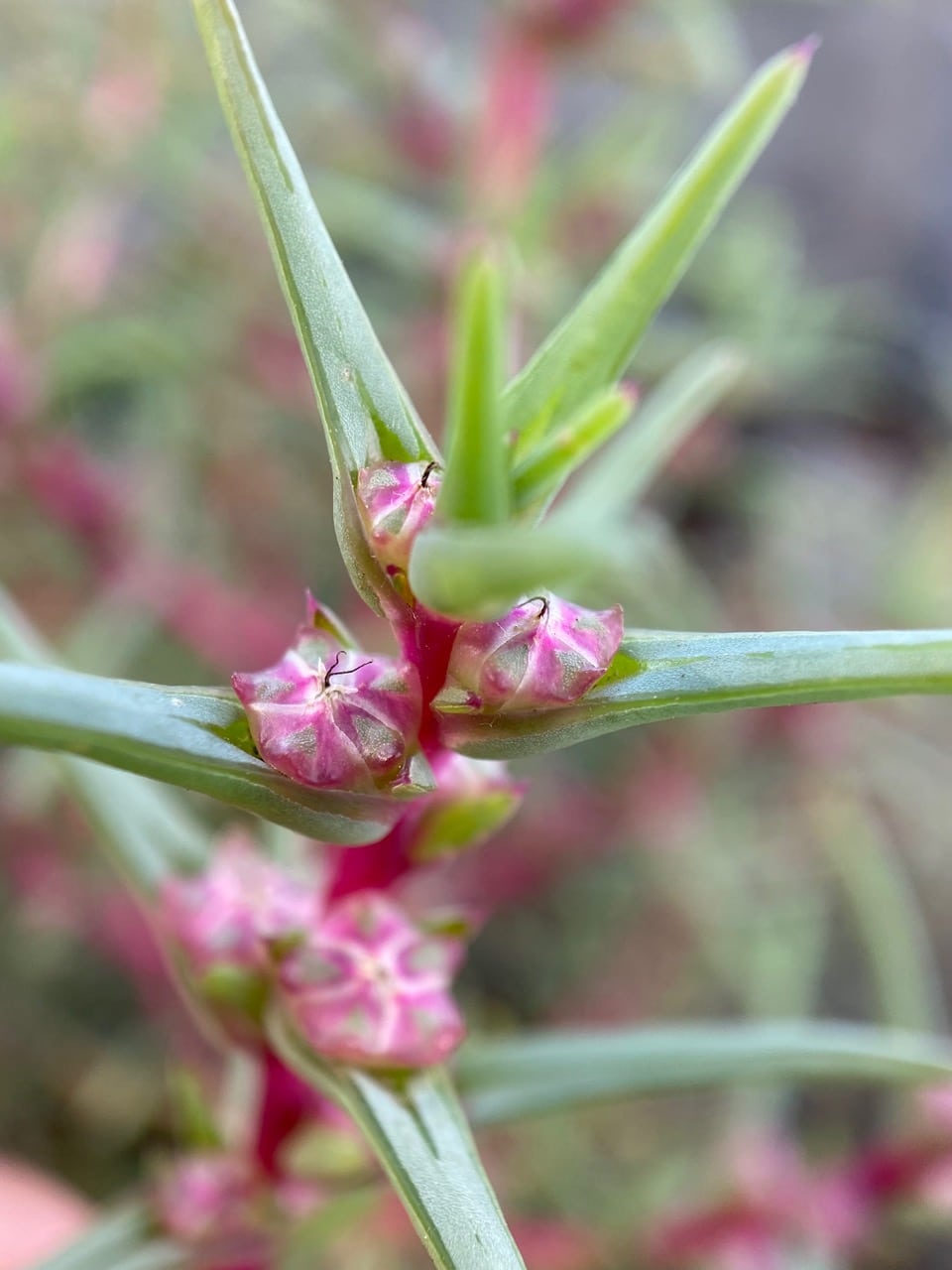
Whimsical, colorful fruits are already evident on the leaf axils of a more mature plant.
After fertilization, a small, one-seeded fruit called a utricle develops. It is covered by the persistent, hardened, and winged sepals. Once mature, the buoyant fruits can detach and float on water and serve to distribute their seeds on tidal currents. Ingenious!
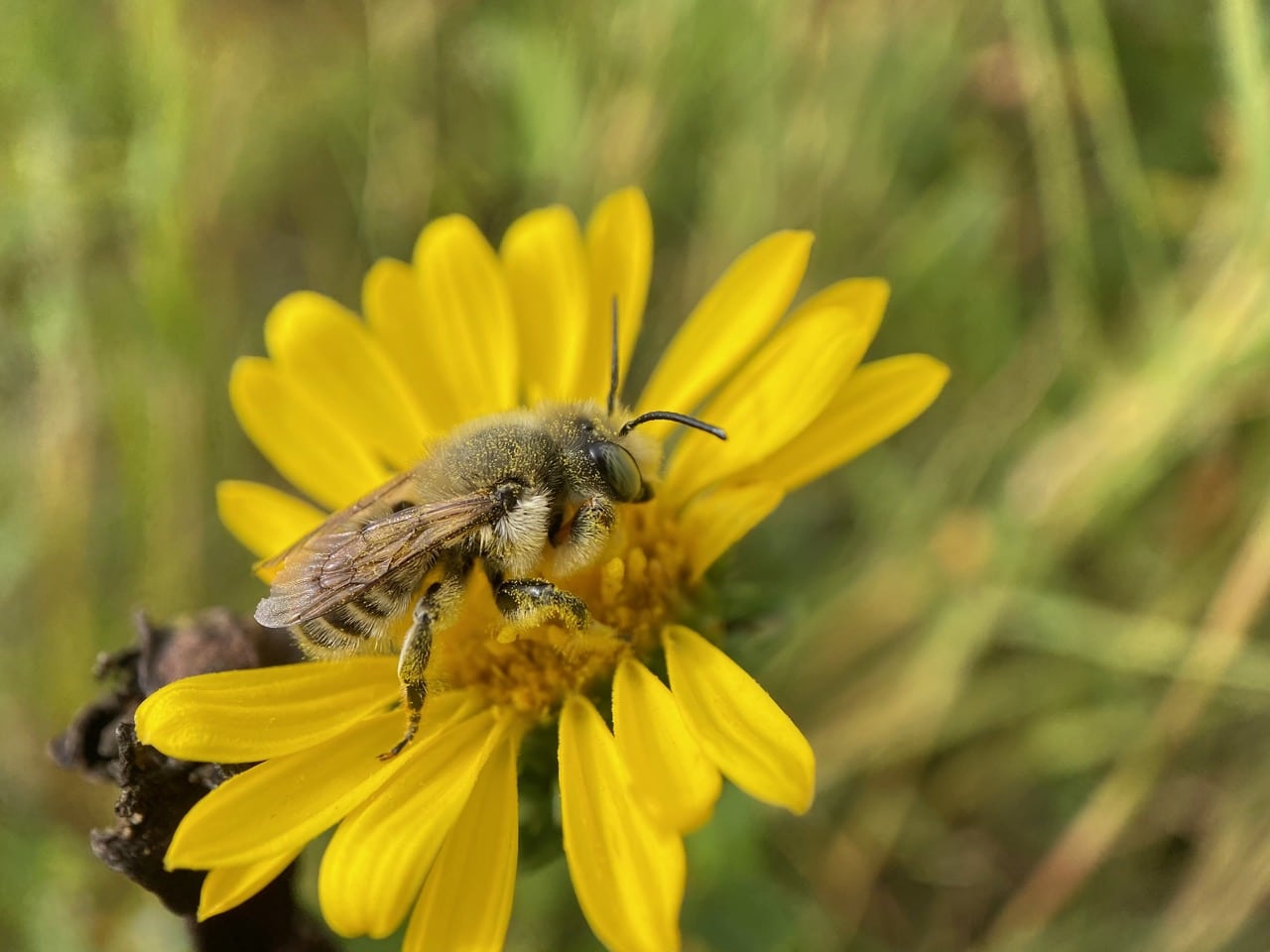
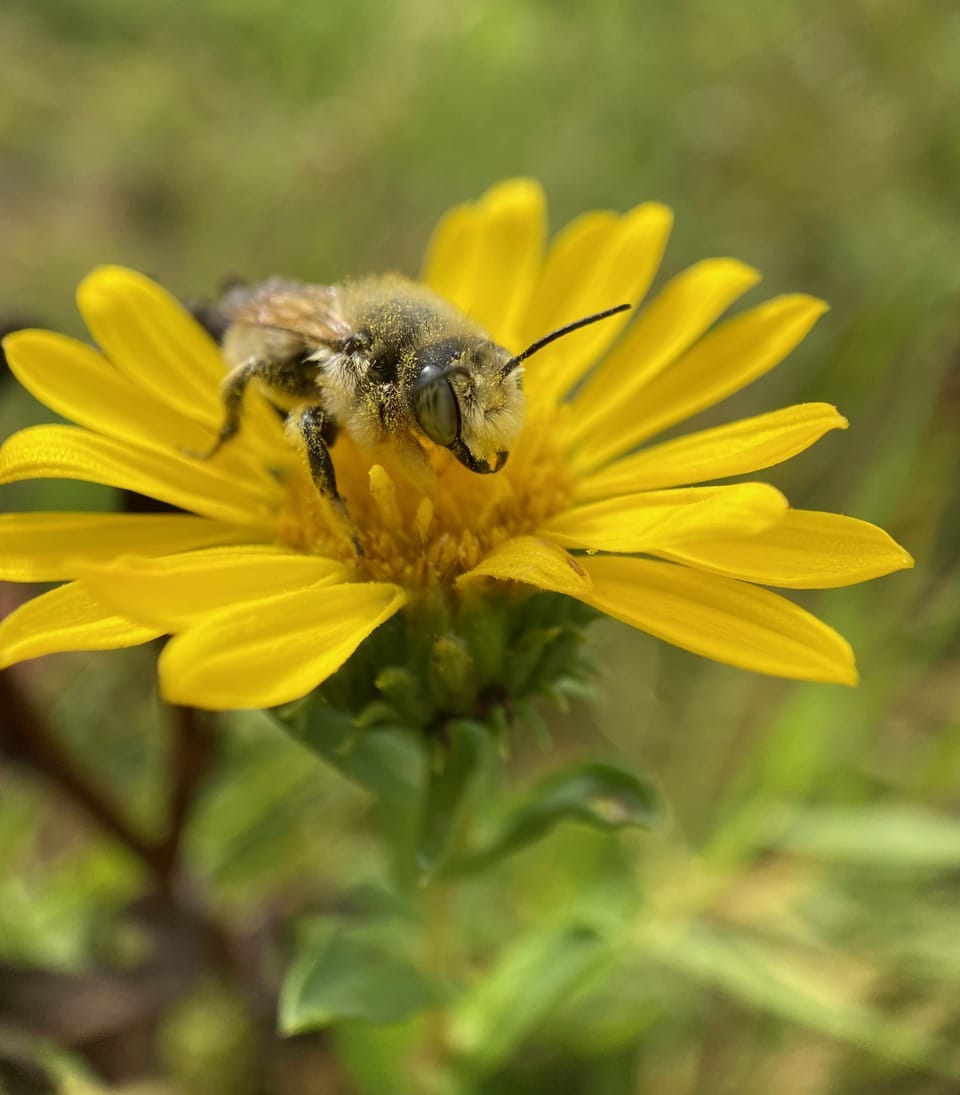
A male Western Leafcutter Bee, Megachile perihirta (family Megachilidae) is perched motionless on a flowerhead of Oregon Gumweed, Grindelia stricta. I think it is asleep (Insects don’t have eyelids) – I can get really close for this macro shot without disturbing it.
Note the dense hair on the male Leafcutter Bee’s face, and his large mandibles. A female of the species would have even more powerful jaws, for cutting leaves. Males do not construct nests and do not cut leaves.
The scientific name Megachilidae translates as “large lipped” in Greek, referring to their large lips and strong jaws that are well-suited for collecting of nest-building materials. Another characteristic of the family is the way the females carry pollen on the scopa on the underside of their abdomen.
Leaf-cutter Bees, Megachile sp. (family Megachilidae) are stout-bodied, usually with pale hair on the thorax and stripes of white hairs on the abdomen. Females usually have a triangular abdomen with a pointed tip, and males’ faces are covered with dense, pale hair. Flight season is from May into September, with peak activity from June to August. Solitary females construct nests in tubular cavities, including hollow stems, tree holes, and abandoned beetle burrows in wood. Many use holes drilled into wood, straws, or other manufactured tunnels. Females cut pieces from leaves or flower petals for use in the construction of brood cells. Most Megachile females are generalists when foraging for pollen. Pollen is transported in dense scopae on the underside of the abdomen.
Photos of Western Leafcutter Bee (Megachile perihirta) · iNaturalist
As I watch, the bee stirs and begins to sluggishly take nectar on the Grindelia flowerhead.
North America is home to many leafcutter bees, but the Western Leafcutter, Megachile perihirta is one of the largest. The species ranges on the west coast from British Columbia south to northern Mexico. From a distance, the female can be mistaken for a honey bee. She is about the same size as a worker honey bee and enjoys many of the same flowers, but her head is disproportionately large because it houses the bulky muscles that operate her large mandibles. While most leafcutter bees nest above ground in tubes and tunnels, the Western Leafcutter nests underground. Often a small group of females live in a community and burrow into soil, gravel, or sand. Although they are generalist foragers, the Western Leafcutters, Megachile perihirta prefer flowers in the Asteracea family for nectar and pollen; the composite flowerheads offer a flat surface on which numerous florets are clustered. The bees are frequently seen foraging on Seaside Daisy, Grindelia, Asters, Sunflowers, Cosmos, and Dahlia.
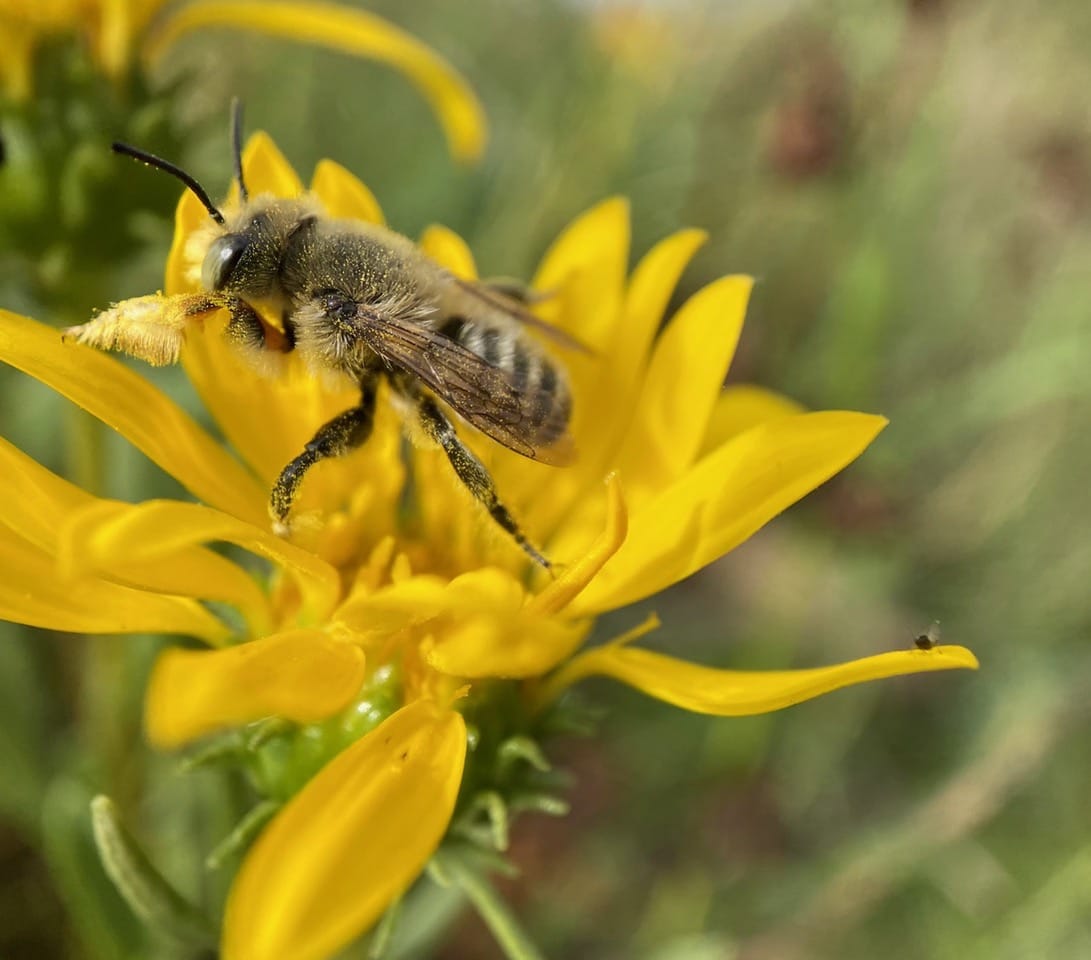
As the bee leaves, I catch a glimpse of his reddish foreleg. Note the long hairs on the tarsal segments of his foreleg.
The male Western Leafcutter Bee is covered with a dense fur coat, and there are long fringes hanging from his extra-wide forelegs. These fringe-lined legs are crucial during the mating processs. The male uses his hairy legs – the portion known as the tarsus – to cover the eyes of the female during copulation, probably to keep her calm and receptive. The fringes are also associated with odor glands on the male’s legs, allowing them to release pheromones close to the female’s antennae. The fringes are part of the modified front legs that help the male grasp the female’s wings and abdomen to hold her in place during mating.


Like other male bees, the male Leafcutters do not intentionally collect pollen to provision the nest. However, their furry body tends to attract pollen grains (by electrostatic attraction) as they seek nectar, and these can be transferred to other flowers they subsequently visit, effectively pollinating them. Males are good pollinators too.