Showcase Feature
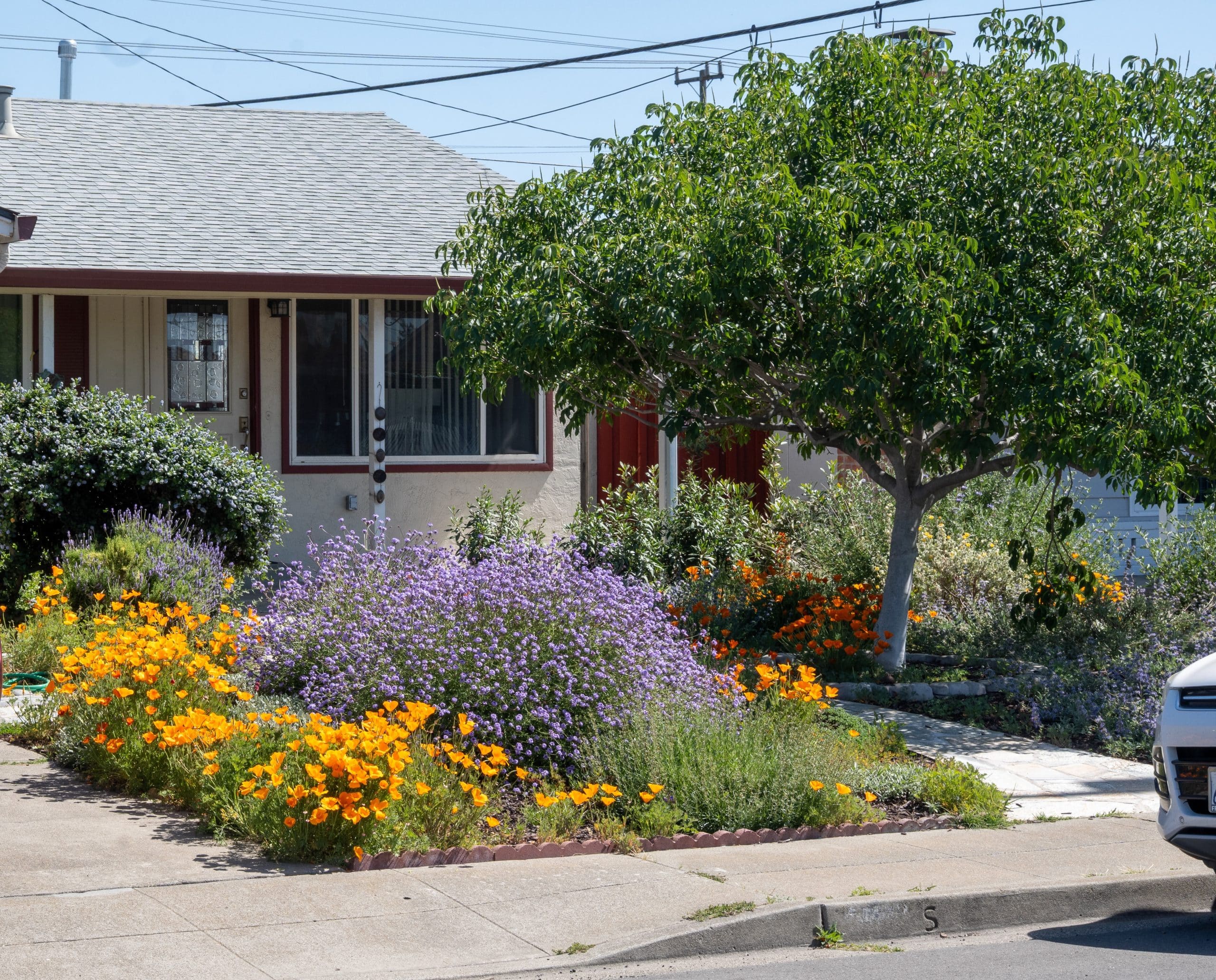
Jennifer, who attended the first Tour in 2005, had long dreamed of having a beautiful native plant garden that would attract birds, native bees and butterflies, and that she could share with others. Now, that dream has come true.
The first steps on the journey to her the creation of her inviting, low-maintenance, water-conserving garden were to remove the gingko and the large and constricting photinia hedge, and to plant a buckeye in the lawn.
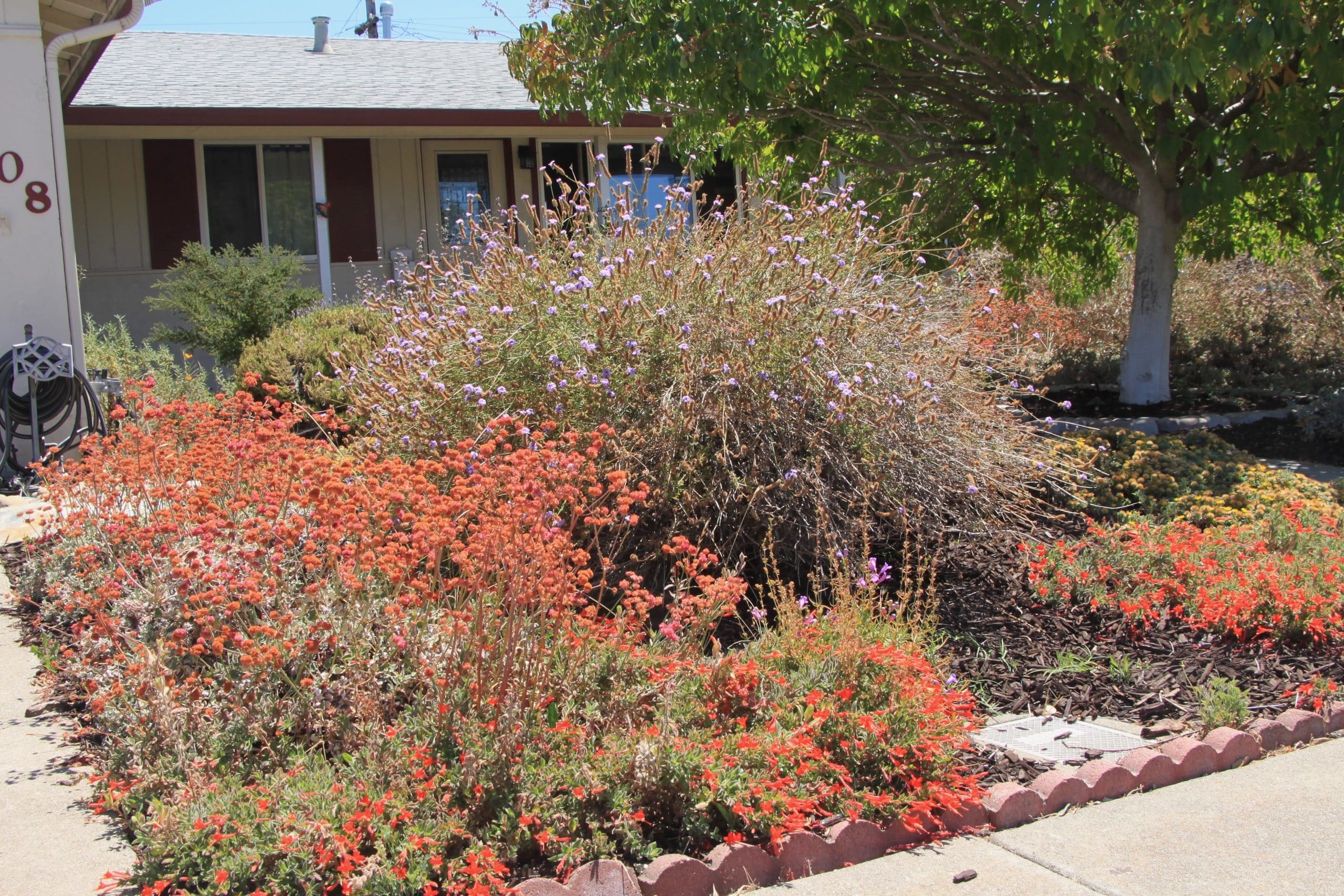
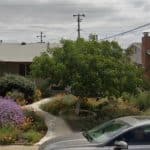
In 2018 California NativeScapes designed and installed a native plant garden around what was by then a substantial buckeye. California NativeScapes now does quarterly maintenance, and Jennifer and her husband do light weeding between their visits—though Jennifer says, “Now that the garden is mature, it pretty much takes care of itself.”
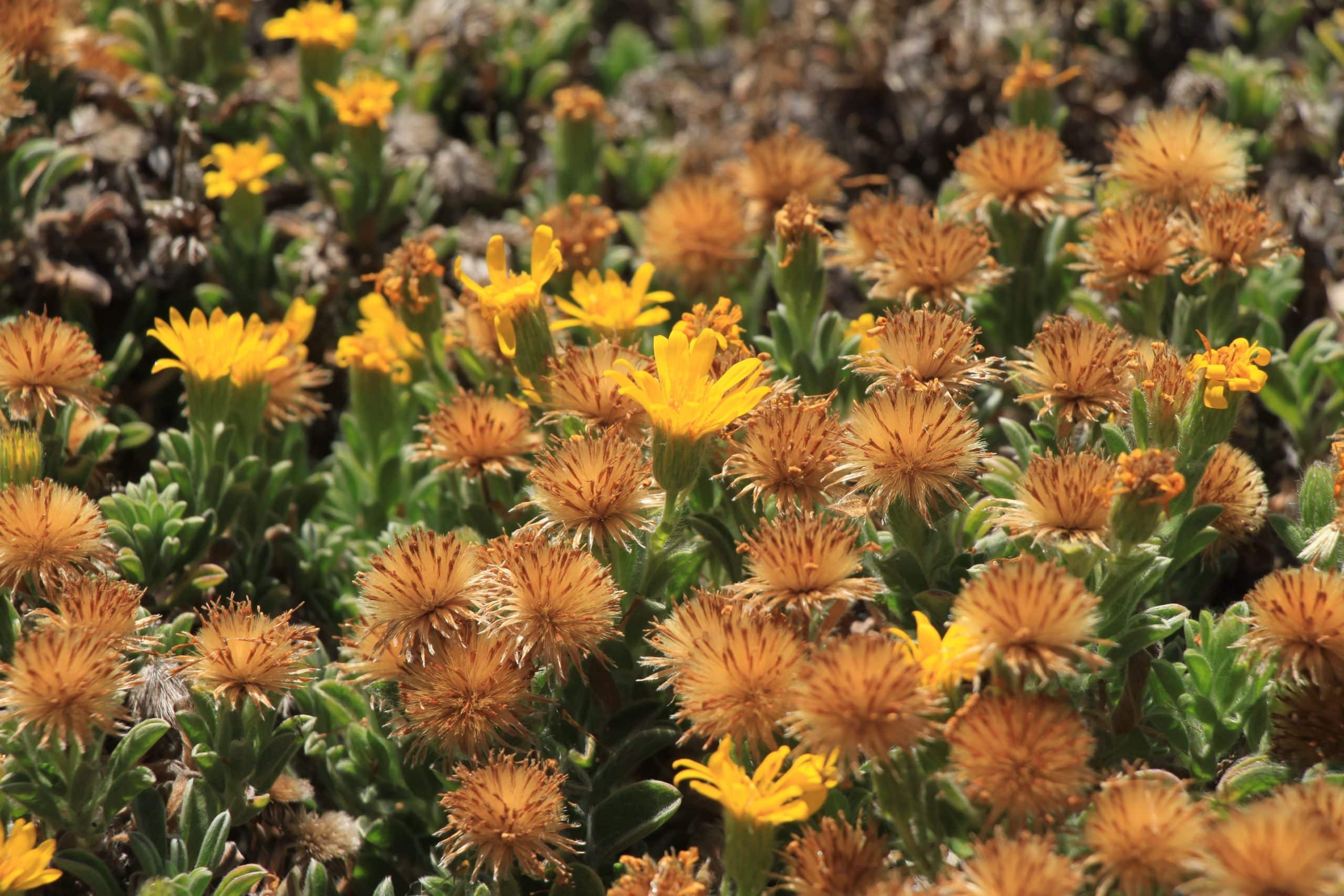
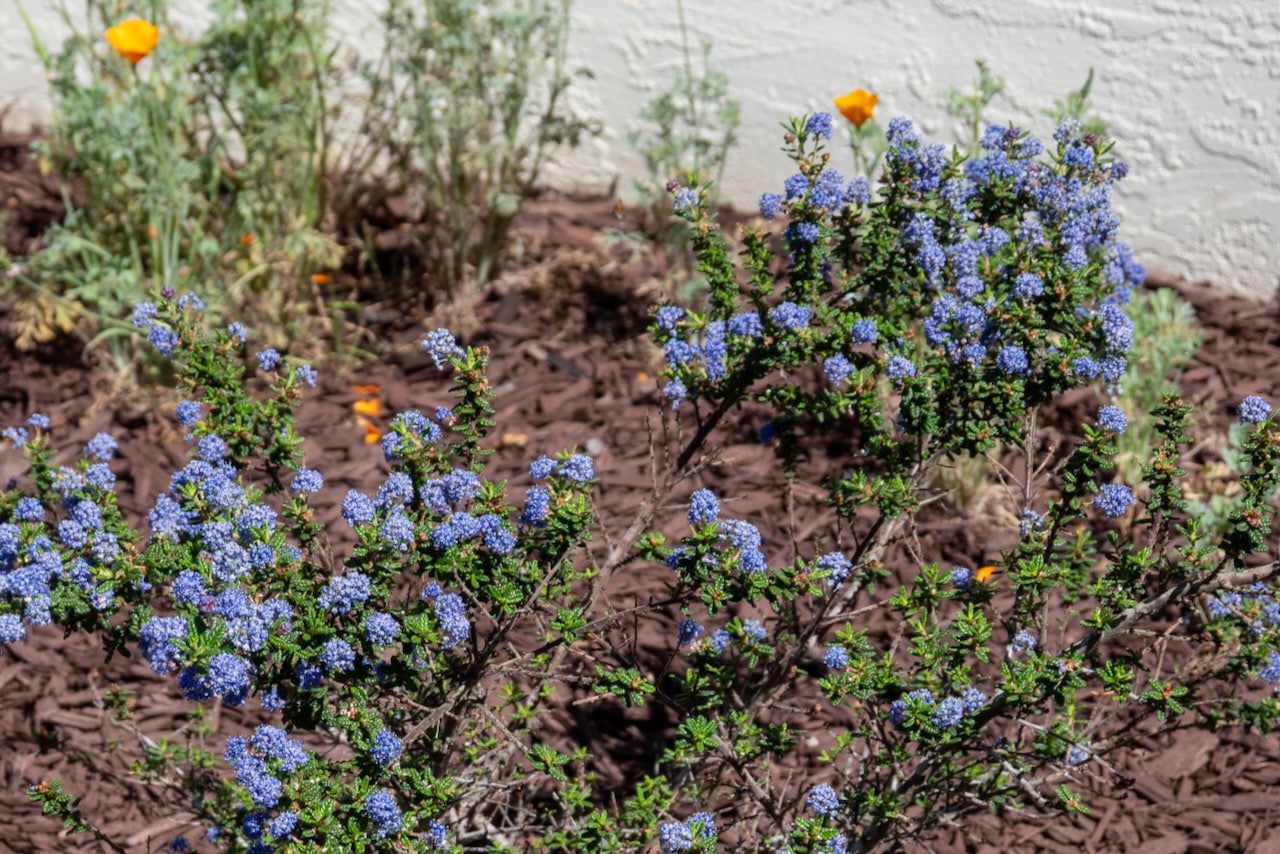
California lilac, coffeeberry, Cleveland and ‘Bees Bliss’ sages, deer grass, and California and rosy buckwheats provide greenery and stability throughout the year. Fire engine red fuchsia, cheery yellow golden aster, and the cream-to-pink blossoms of the buckwheats brighten the garden in summer and fall.
Other Garden Attractions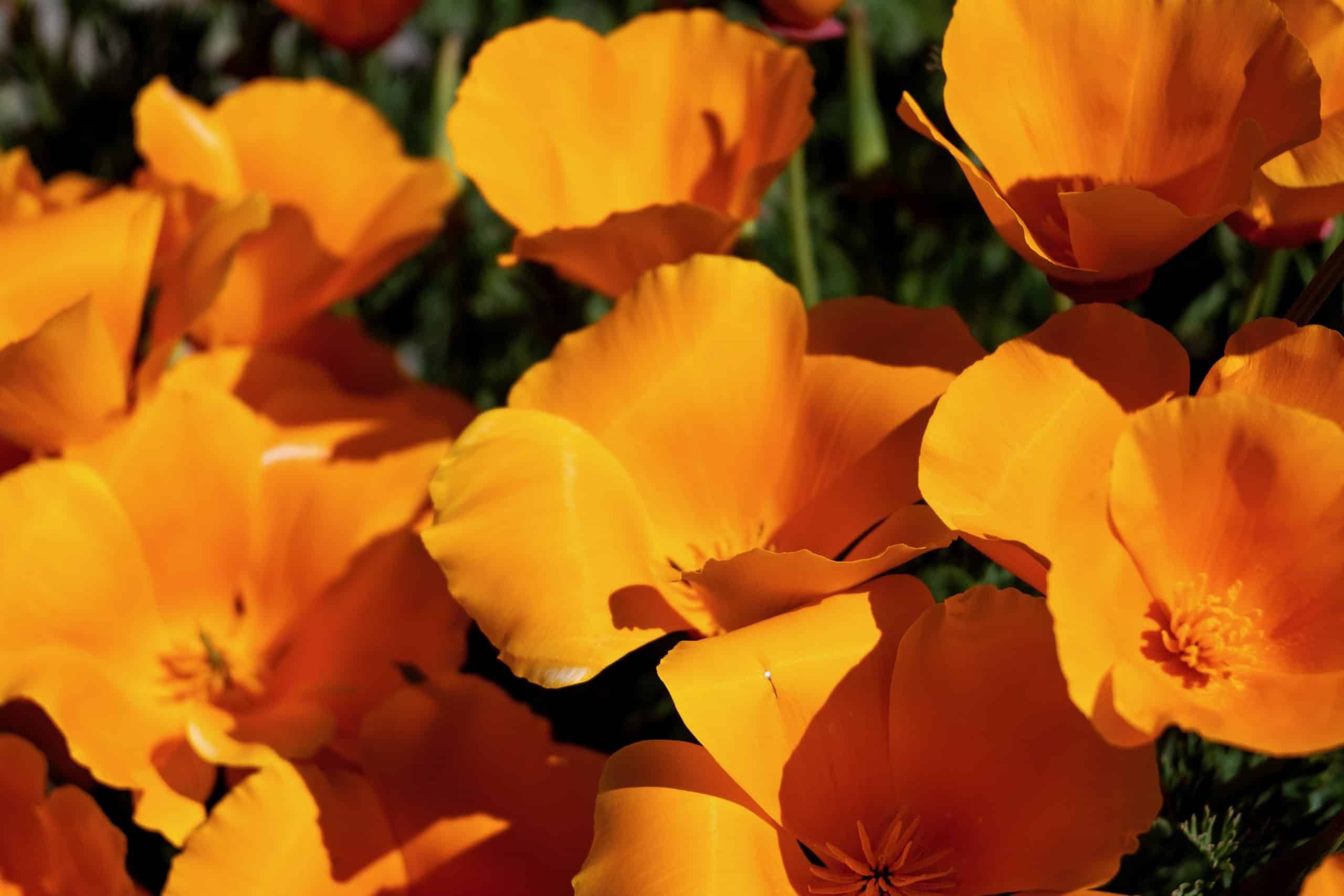
• The garden is on a drip system (Netafim).
Gardening for Wildlife
Jennifer and her husband love their three cats, Snickerdoodle, Bandit and Skýr. To keep their cats safe—from being hit by a car, poisoned, injured by other animals, or from contracting diseases and parasites — and also to keep birds safe, as cats, according to research from the Smithsonian, are the #1 threat to birds, killing billions of birds in North America every year – Jennifer’s cats are kept indoors.
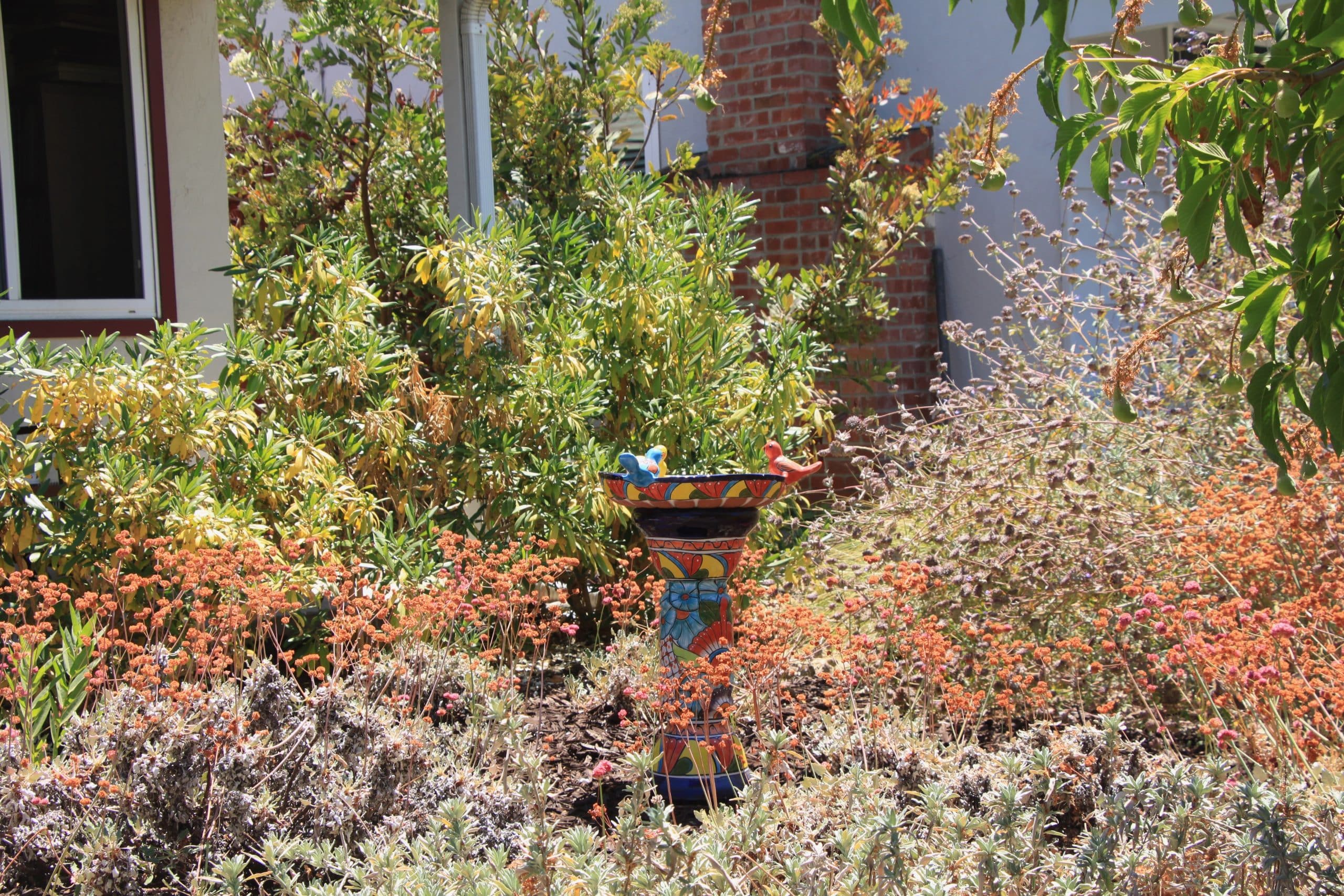
Recently, mockingbirds nested in or near Jennifer’s garden, and she watched the parents bring bright red toyon berries to their fledglings. Anna’s hummingbirds and butterflies sip nectar from the Cleveland sages and buckeye. Searching for insects, towhees scratch in the leaf litter and Bewick’s wrens hop through the branches, also hoping to find a snack. The birdbath provides a source of clean drinking water: setting out an elevated (so the birds are not prey to cats), clean, filled birdbath is one of the best things you can do for our avian friends.

Screenshot
Fiery skippers and butterflies, including the dove-colored to brilliant blue-gray gray hairstreak, with its distinctive orange dots on its hind wings, flit through the garden. Bumble, carpenter, and metallic green sweat bees gather nectar and pollen from the many flowering plants available to them. Aptly named hover flies (which mimic bees and wasps but don’t sting) zip about, often stopping mid-flight to gaze at…who knows what? Hover flies are a gardener’s best friend, scarfing up aphids like there is no tomorrow. Be sure and leave the leaves, as that is where hoverfly larvae (and many butterfly and moth pupa) overwinter.
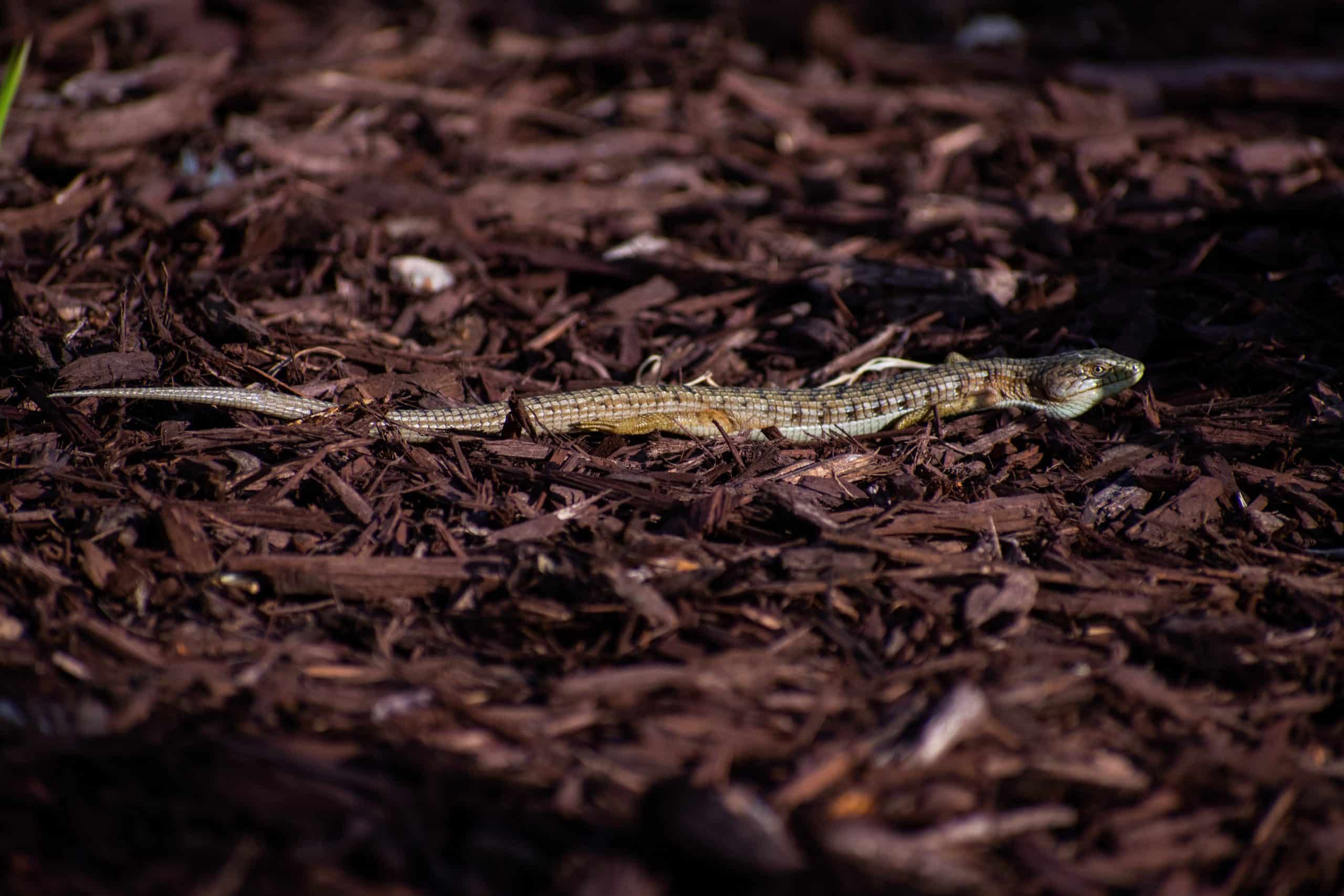
When not snacking on insects, Western fence and alligator lizards bask in the sun.
Keystone species (watch this talk by Doug Tallamy!)
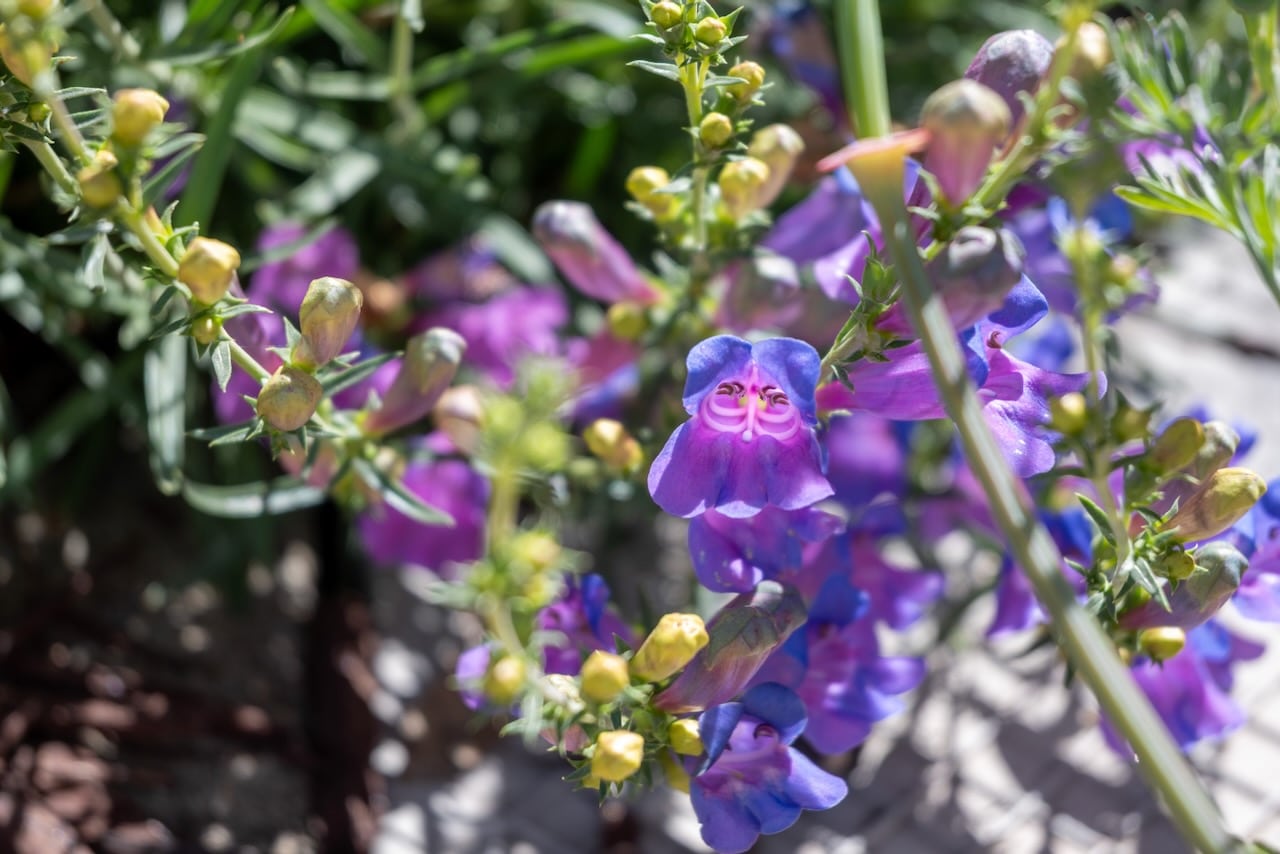
Keystone species—our own, local ecological powerhouse plants—in this garden include California lilac, aster, California and rosy buckwheat, coffeeberry, and penstemon.
Green Home Features
* Electric vehicle
At least partially wheelchair accessible? Yes
Photos
Click to see as a slideshow:
-
- Screenshot