Showcase Feature
This charming garden is built in the heart of South Berkeley on a small lot, yet designed to feel like an endless, wild, seasonal place in nature. Aesthetic pruner Leslie Buck first wrote about her garden in her New York Time’s reviewed garden memoir, Cutting Back—My Apprenticeship in the Gardens of Kyoto.
 Leslie designed, and aesthetically prunes, the garden using traditional Japanese garden design principles, and built it on a tight budget, purchasing tiny plants and seeds, recycling materials, and scouting for used furniture. The colorful front “Coastal Garden” has a tropical feel with year-round flowers. The back “Woodland Garden” displays a forest-ringed blue-eyed grass meadow and hidden sitting area. This garden is designed for beauty in all seasons, and features a gurgling bathtub pond and a ground-level frog pond built from urbanite (salvaged pieces of the old driveway), and an owl box constructed of reused wood from Leslie’s 114 year old Victorian home. Come meander the wood chip paths in this low-maintenance garden, which is never raked or blown and is always naturally pruned, and enjoy the plants that have attracted wildlife, such as a musical cricket and singing Pacific chorus frog.
Other Garden Attractions
- Leslie creates native bouquets; she also features seasonal garden pics showcased on her nature-only Instagram and Facebook pages @Lesliebuckauthor.
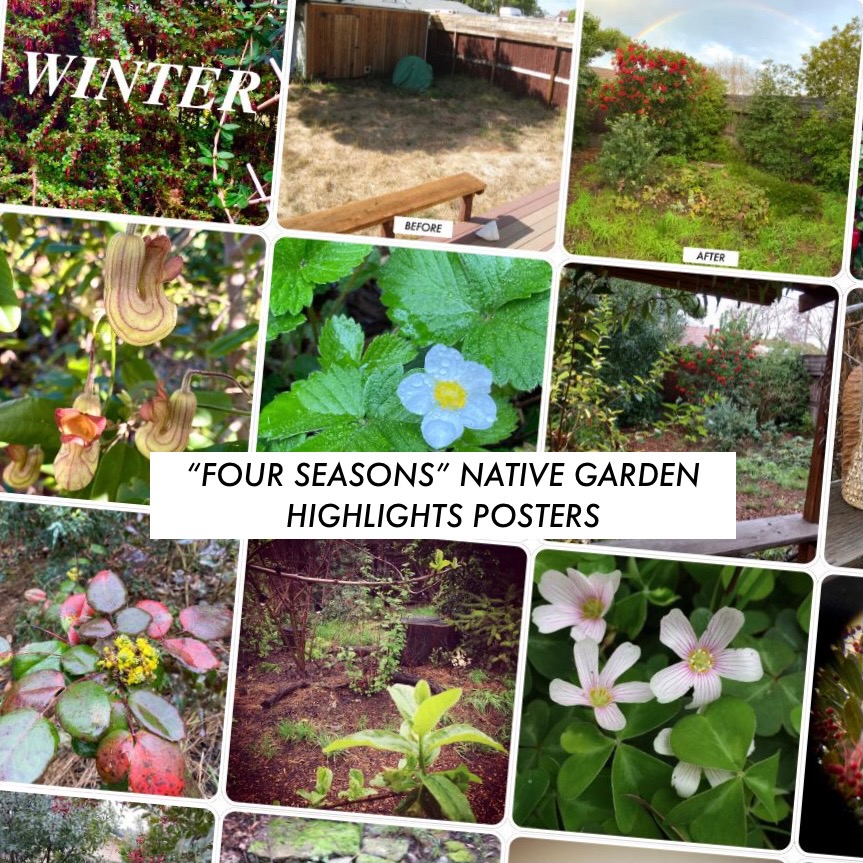
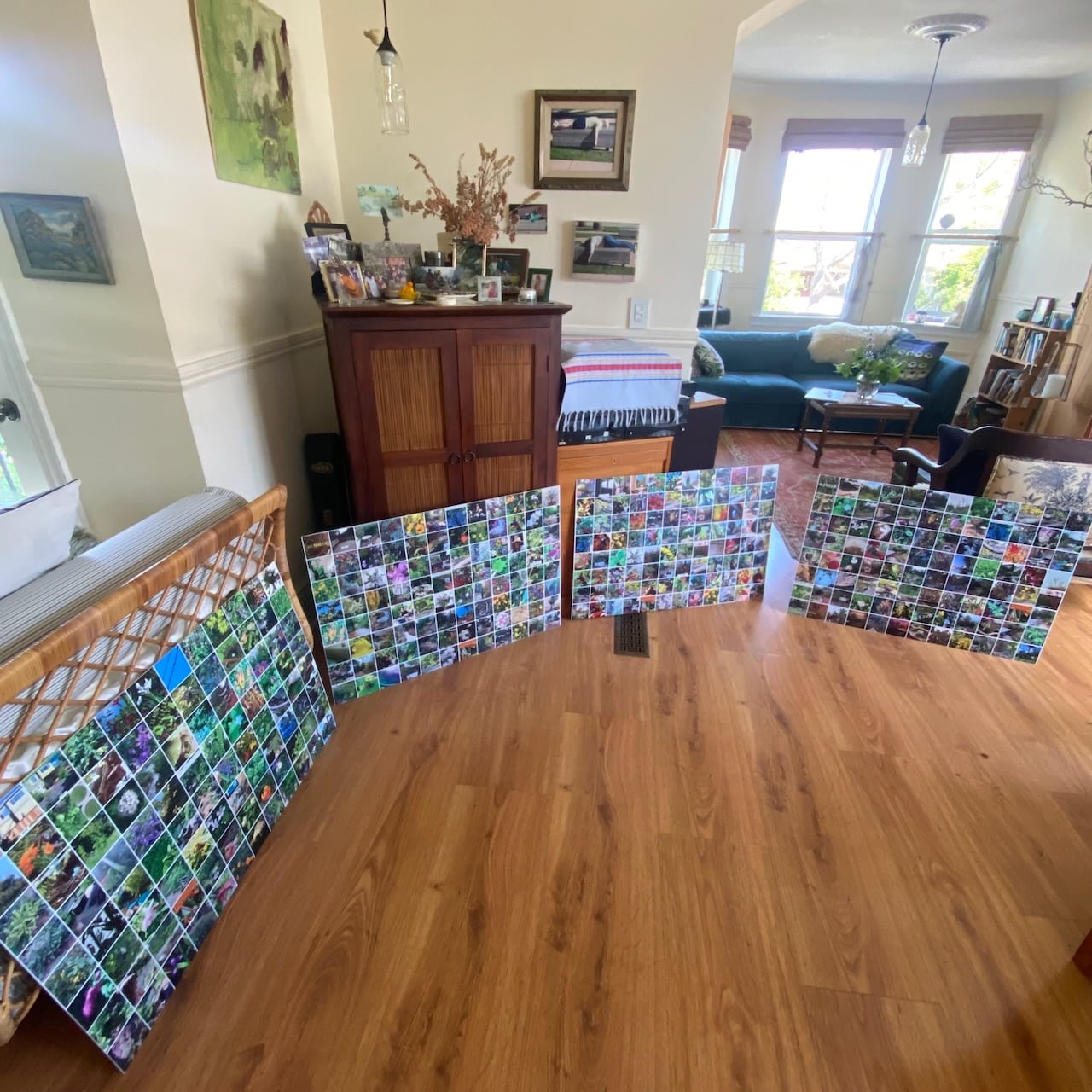
- Check out the “Four seasons in a California Garden” photo display, which was skillfully composed by Maria Geonczy. Each display board contains 98 photos of Leslie’s South Berkeley garden, taken in summer, winter, spring and fall.
Gardening for Wildlife
Leslie designed the garden to be a refuge for people, but it became one for wildlife as well. A green-tailed towhee showed up in Leslie’s garden 2024; this bird has only been documented as seen in the San Francisco Bay Area two times before!
Iridescent blue-black pipevine swallotail butterflies lay eggs on the Dutchman’s pipevine; the only plant they can reproduce on.
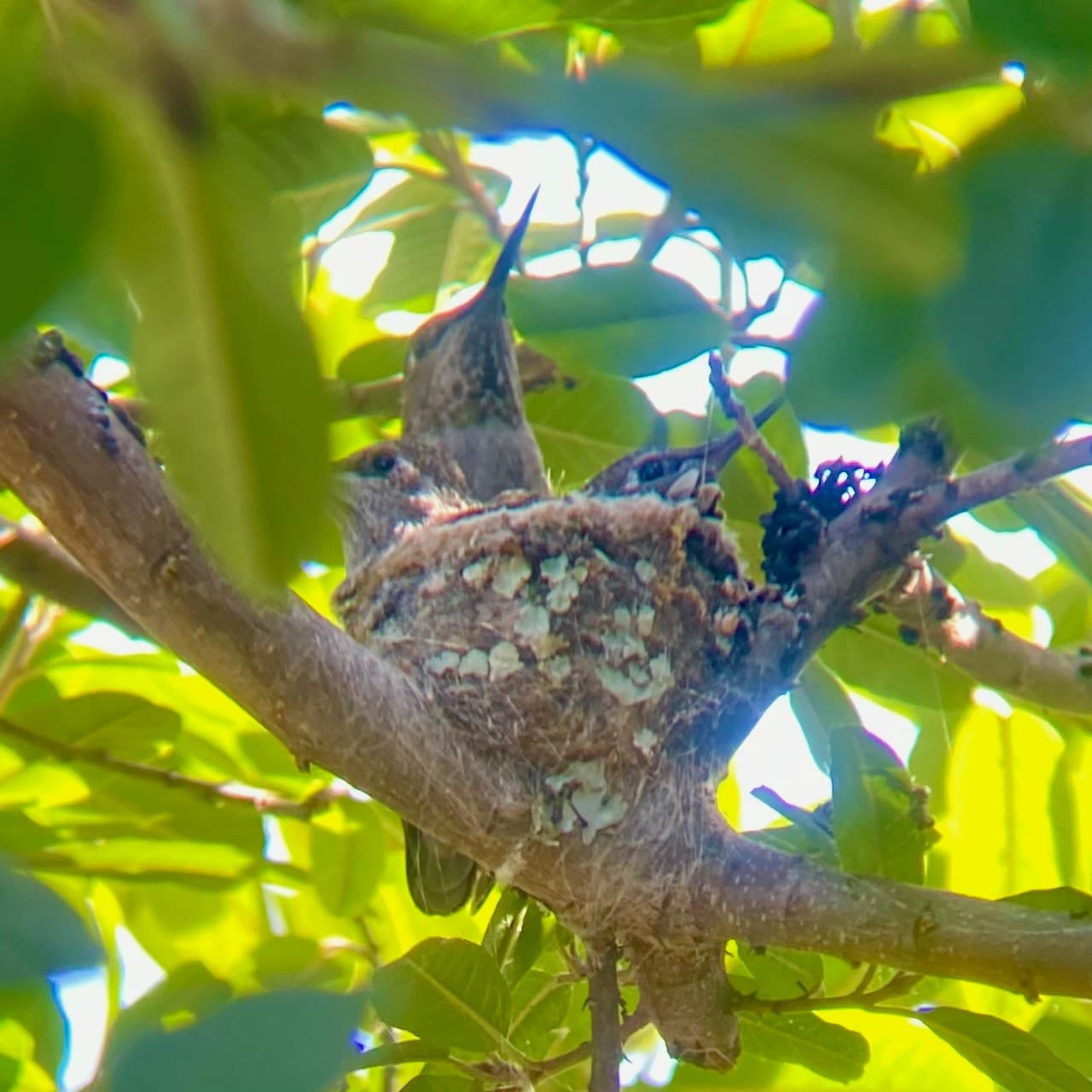
Berries, such as the pink-flowering current, give birds treats, and keystone, or “super-feeder” plants, such as holly-leafed cherry, provide birds with protein (in the form of insects and caterpillars) all year. The early-blooming manzanita provides nectar for pollinators in the winter, and berries for birds in the spring. Coffeeberry flowers furnish bees with pollen, and twin berry flowers offer hummingbirds nectar. The blue-eyed grass meadow self-scatters seeds for foraging birds. Piles of twigs and leaves create “habitat nests”— attracting the garden’s first cricket, which provides evening concerts in late summer. Near the pond lives a frog that sings for a mate each spring. All habitat plants are labeled accordingly.
Talks in the Garden
12:00 “Inside/out: how to make small garden rooms feel larger” by Leslie Buck
Video
Pruning Native Plants
“Gardening with California native plants” by Leslie Buck (Zoom-quality video)
Wondering what to make for dinner? Try this great recipe!
Rooreh-Roarin’ Cream of Miner’s Lettuce Soup
Miner’s lettuce makes a delicious, fresh salad, or deep green soup, very similar to spinach salad or soup. Nature acts as the farmer here, since miner’s lettuce grows naturally with winter rains, all through spring, and it regrows every year on its own!
Photos
Click to see as a slideshow: